NICOSIA, Cyprus (AP) — There’s a chance the dreaded buzz of propellers heard on Ukrainian battlefields is coming from drones built in a country with a population of just over a million on Europe’s southeastern fringe: Cyprus.
Manufacturer Swarmly says there are more than 200 of its H-10 Poseidon drones helping Ukrainian artillery batteries pinpoint enemy targets on the ground in all kinds of weather, racking up more than 100,000 hours in the air over the last three years.
Click to Gallery
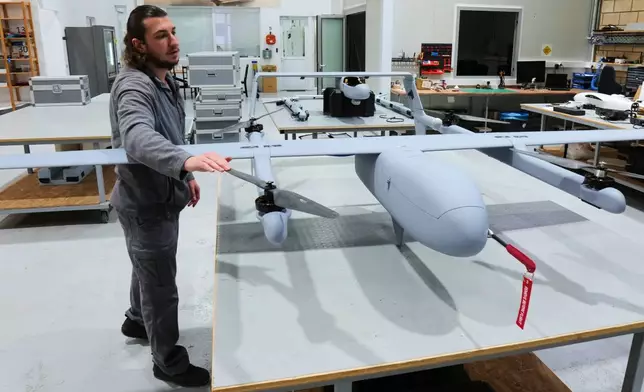
An employee works on an under-construction drone at a manufacturing factory in Limassol, Cyprus, Tuesday, Jan. 27, 2026. (AP Photo/Petros Karadjias)
An employee works on an under-construction drone at a manufacturing factory in Limassol, Cyprus, Tuesday, Jan. 27, 2026. (AP Photo/Petros Karadjias)
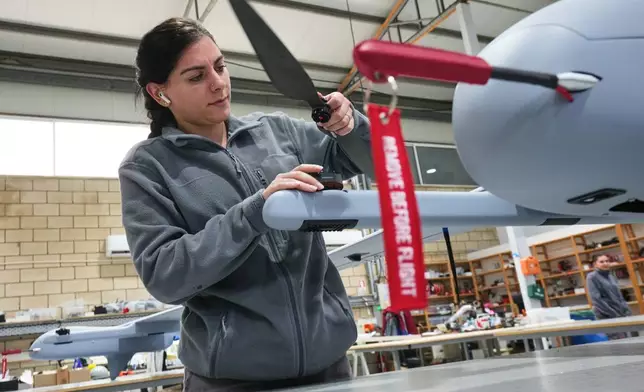
Employees, in the background, work beside an under-construction drone at a manufacturing factory in Limassol, Cyprus, Tuesday, Jan. 27, 2026. (AP Photo/Petros Karadjias)
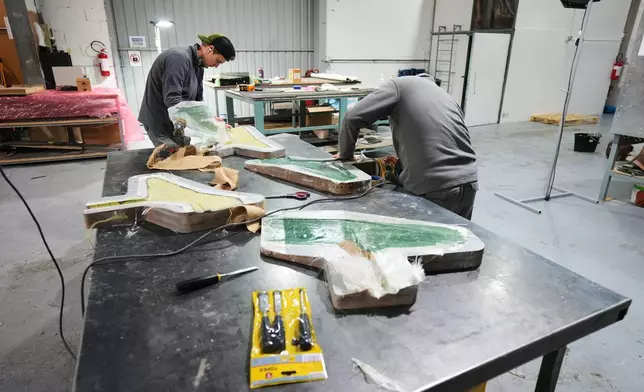
Employees work on a drone at a drone manufacturing factory in Limassol, Cyprus, Tuesday, Jan. 27, 2026. (AP Photo/Petros Karadjias)
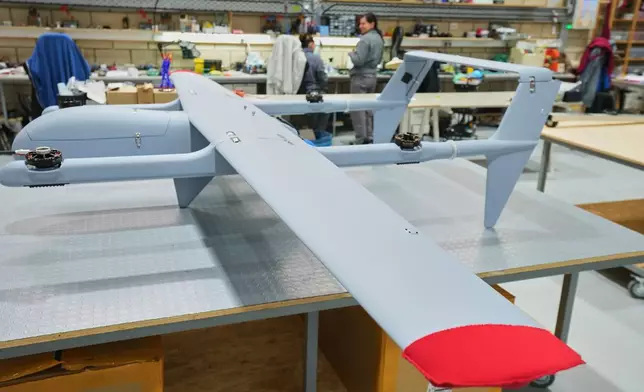
A H-10 Poseidon drone is seen at a military camp in Mosfiloti village in Nicosia district, Cyprus, Monday, Jan. 12, 2026. (AP Photo/Petros Karadjias)
Its 5,000-square-meter (54,000-square-foot) factory, where the whir of grinders shaping composite plastics reverberates off the walls, has become a major source of uncrewed vehicles shipped to countries such as Indonesia, Benin, Nigeria, India and Saudi Arabia, according to company officials. Most of the factory floor is reserved for uncrewed aerial vehicle manufacture. But tucked in a secure storage area is a selection of Swarmly's super-fast marine drones replete with high-definition cameras and .50-caliber machine guns.
Russia's invasion of Ukraine has driven even the smallest European Union member countries to develop their home-grown, high-tech defense industries, just as necessity has made Kyiv a world leader in cutting-edge UAV technology. Many EU countries have partnered with Kyiv to develop that technology, and Ukraine’s front lines are usually their testing grounds.
Like Cyprus, the Baltic countries and Denmark have revved up their domestic drone and counter-drone technology. In Greece, drones are part of a 25-billion euro ($29-billion) overhaul of its armed forces.
“The example of Swarmy, as well as other important companies based in small EU countries, is a testament to the serious effort made by the private sector in Europe to innovate and build mass production capacity of defense items, including uncrewed systems,” said Federico Borsari, an expert with the Washington-based Center for European Policy Analysis.
UAVs are reshaping warfare by offering less militarily capable countries some leverage over superior adversaries. Drones aren't going to completely replace big-ticket weaponry like tanks, artillery and warplanes, said Borsari. But they offer flexibility and bang for the buck, making them a formidable force multiplier.
Take Swarmly's explosives-packed, satellite-guided Hydra marine drone. Each one costs 80,000 euros ($94,500), which means deploying a group of them to neutralize a billion-euro warship can be a bargain, said company director Gary Rafalovsky.
This sort of naval weapon taking out a much larger warship is already evidenced by Houthi attacks from Yemen, according to Fabian Hinz, a research fellow for missile technologies and UAVs at the International Institute for Strategic Studies, Europe.
Barriers to entry for undercapitalized companies are low, he added, because UAVs are often designed and assembled from components cheaply and readily available on the global market.
“And that, of course, means that basically you don’t have to have a great industrial investment at first that you need with other military capabilities. You don’t need decades of experience in certain material sciences or these kinds of things,” Hinz said.
In Denmark, a pair of companies focusing on anti-drone devices have reported a surge in new clients, and some of the devices were to be shipped to Ukraine to assist in jamming Russian technology on the battlefield. Ukraine in September said it was partnering with Danish companies to build missile and drone components at a factory in Denmark.
In the Baltic country of Lithuania, scientists and business partners have joined forces under the name VILNIUS TECH to develop UAVs, automated mine detection and other military technologies. The state-run ammunition factory Giraite says it has increased production capacity by 50% since 2022.
Greece for the first time showcased its homemade drones and counter-drone technology during a full tactical exercise in November as NATO urged Europe's defense sector to pick up the pace.
“We need capabilities, equipment, real firepower and the most advanced technology,” NATO Secretary-General Mark Rutte warned during a visit to Romania earlier that month. “Bring your ideas, test your ingenuity and use NATO as your test bed.”
Even as drone development accelerates, Borsari cautioned that the advantages of UAVs are often tempered by numerous variables like the harsh conditions in which they sometimes fly, operators’ training and skill levels, as well as the depth of logistical support to keep them functional.
Russia's war in Ukraine and the Trump administration’s mixed messages that have strained relations with NATO allies have forced European leaders to reckon with the need to become more self-reliant on defense. So the EU has made billions of euros available to encourage investment and bolster its collective deterrent capability.
That's been a boost to nations like Cyprus, which assumed the six-month EU presidency on Jan. 1. Last week, the EU’s executive arm approved financial assistance for eight members including Spain, Croatia, Portugal, Bulgaria, Belgium, Romania and Cyprus.
Cyprus is set to receive final approval from EU leaders for some 1.2 billion euros ($1.4 billion) in low-cost, long-term loans under the EU’s 150-billion-euro joint ($177-billion) procurement program called Security Action for Europe (SAFE).
Its nascent defense industry is already made up of around 30 companies and research centers that produce technology for both civilian and military sectors, including robotics, communications networks, anti-drone systems and even satellite communications and surveillance, said Panayiotis Hadjipavlis, chief of the armaments and defense capabilities development directorate within Cyprus' Defense Ministry.
“We have niche capabilities on very high-tech products and this has to be taken seriously into account,” Hadjipavlis told The Associated Press in his office, where the helmet from his fighter pilot days hung on a nearby coat rack.
Major defense industry players, he added, are among those who should take note.
Associated Press writer Liudas Dapkus in Vilnius, Lithuania contributed.

An employee works on an under-construction drone at a manufacturing factory in Limassol, Cyprus, Tuesday, Jan. 27, 2026. (AP Photo/Petros Karadjias)
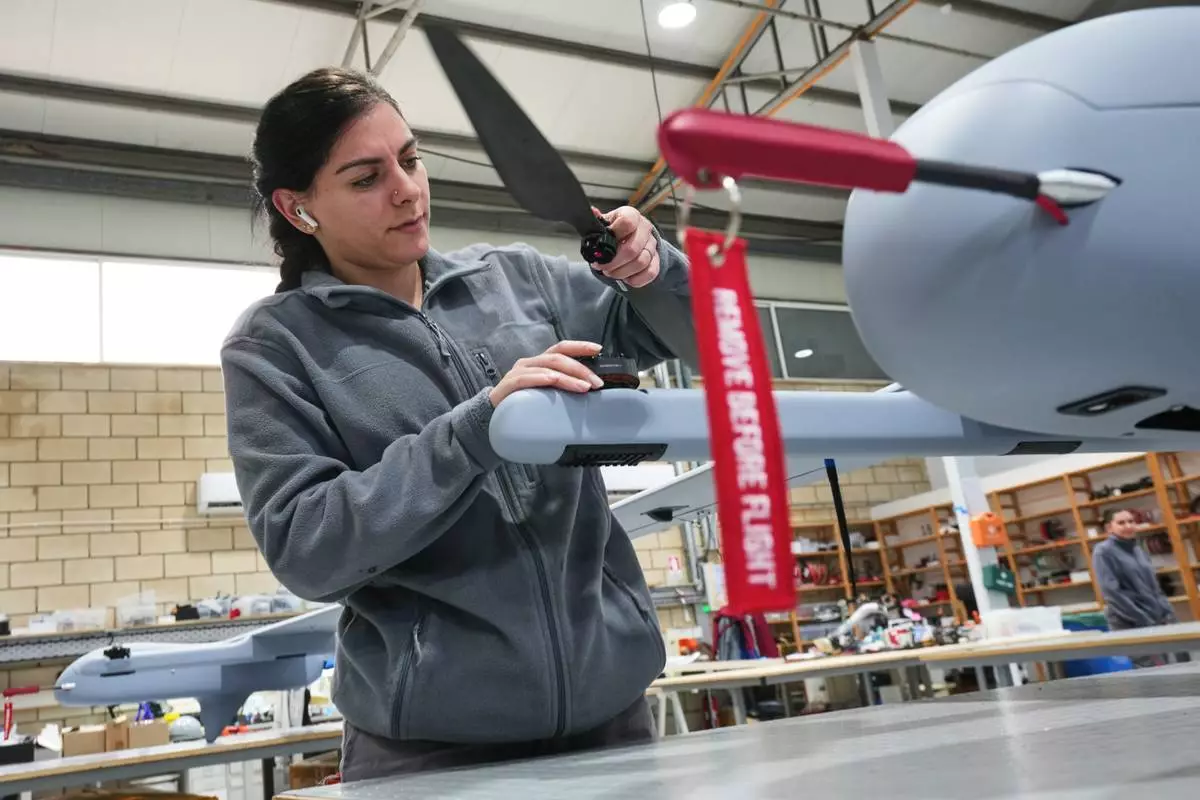
An employee works on an under-construction drone at a manufacturing factory in Limassol, Cyprus, Tuesday, Jan. 27, 2026. (AP Photo/Petros Karadjias)

Employees, in the background, work beside an under-construction drone at a manufacturing factory in Limassol, Cyprus, Tuesday, Jan. 27, 2026. (AP Photo/Petros Karadjias)
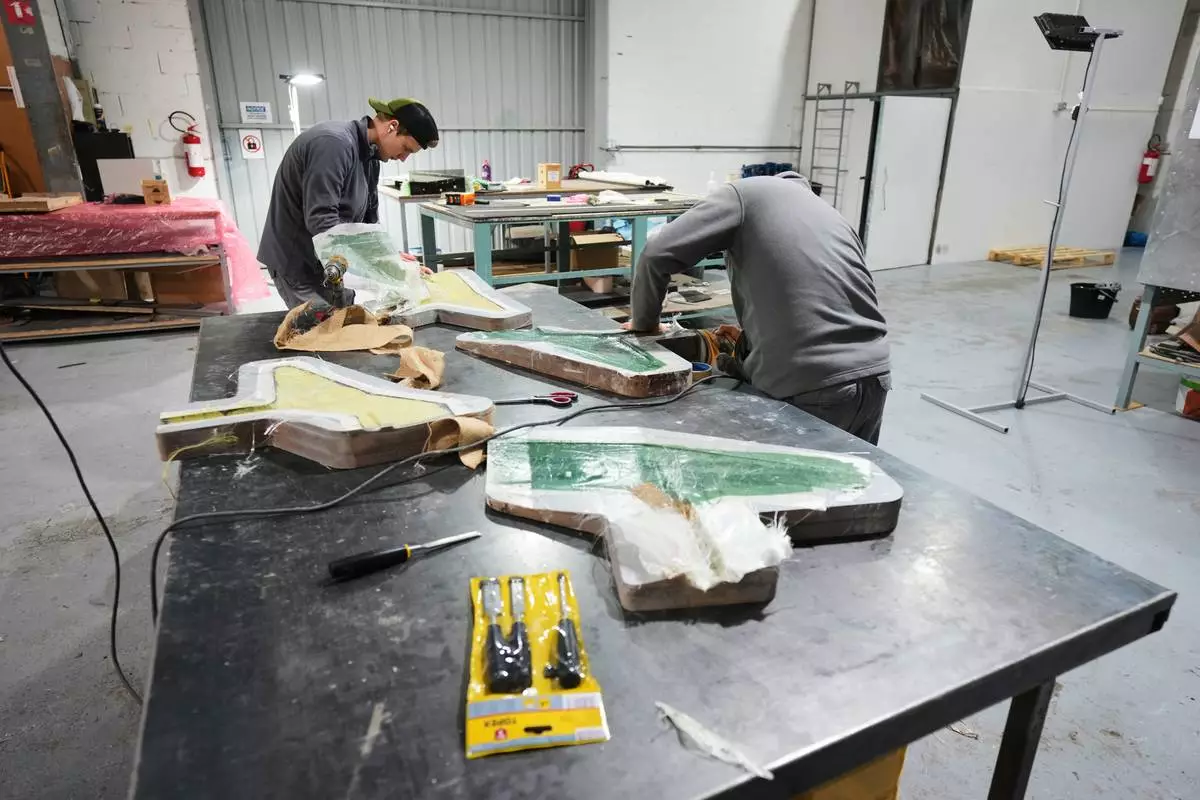
Employees work on a drone at a drone manufacturing factory in Limassol, Cyprus, Tuesday, Jan. 27, 2026. (AP Photo/Petros Karadjias)

A H-10 Poseidon drone is seen at a military camp in Mosfiloti village in Nicosia district, Cyprus, Monday, Jan. 12, 2026. (AP Photo/Petros Karadjias)
CREIGHTON, Neb. (AP) — Rick and Jane Saint John chose to live in the small town of Creighton, Nebraska, for one main reason: its hospital.
The couple has a child with nonverbal autism and epilepsy who requires up to three hospital visits a week. And Creighton's critical access hospital has been a lifeline for Jane: not only is she employed there, but three years ago, doctors saved her life when she contracted bacterial pneumonia. If she had waited another day for care, doctors said, her organs would have begun to shut down.
“And if we had had to drive the hour to the Yankton (South Dakota) hospital," Rick Saint John said, his voice breaking with emotion, "it could have cost her her life.”
So the Saint Johns were shocked to hear that Avera Creighton Hospital faces financial peril. A $50 billion government fund meant to transform rural health care will do little to help. It's a problem that millions of Americans in rural areas are awakening to as they realize there's no windfall coming for the vulnerable hospitals near their homes.
Hundreds of rural hospitals across the country are facing closures after years of funding problems. The issue was compounded last summer by the Trump administration's massive cuts to Medicaid, the government's safety net for low-income Americans, whose reimbursements have long helped hospitals meet their bottom lines.
Outcry over the funding cuts prompted Republican lawmakers to create $50 billion in new rural health grants, but critics say that funding is intended for innovative health care delivery solutions — not propping up hospitals buckling under current pressures.
“It won’t pay to keep the lights on. And it won’t turn the lights back on once they’ve been turned off,” said Dr. Ben Young, an infectious disease specialist and policy expert with public health advocacy group Wellness Equity Alliance.
Rural Americans’ health care worries reflect broader national concerns about access and rising prices of care as the cost of living spikes — anxieties that could prove pivotal in this year’s midterm elections.
The $50 billion Rural Health Transformation Program included in President Donald Trump's tax-and-spending law last year was billed by Republicans as a way to help hospitals in rural areas. Last summer, Health Secretary Robert F. Kennedy Jr. touted it as the “biggest infusion in history” for rural hospitals and pledged it will “restore and revitalize these communities.”
Hospitals and health industry experts have warned that while the fund — $10 billion per year allocated across all states for five years — offers some support to struggling rural hospitals, it won’t save them. One reason is that the sum doesn't come close to offsetting the $137 billion that rural hospitals expect to lose over the next decade, according to health research nonprofit KFF. Millions of people are expected to lose Medicaid benefits as a result of new Medicaid work requirements going into effect in 2027 — changes the Trump administration has maintained will crack down on fraudsters rather than cut off eligible enrollees.
Administrators say the new $50 billion fund is not meant to shore up ailing rural hospitals or maintain the status quo, but to transform rural health care through tech, workforce and other innovations. Centers for Medicare and Medicaid Services Administrator Dr. Mehmet Oz in a December video said it “gives states the tools to design solutions that last, not Band-Aids that fail.”
The White House echoed that Wednesday, saying the fund is intended to fund “big ideas” to improve rural health care access long-term.
“Decades of mismanagement by career politicians in Washington have left rural communities with limited care options," White House spokesman Kush Desai said.
State applications show a wide range of proposals. Some pitches sought to improve emergency medical services and modernize rural facilities, while others looked to make school lunches healthier, expand physical fitness programs, beef up telehealth and expand AI-driven technologies to help monitor patients.
Avera Creighton Hospital CEO Theresa Guenther argues her hospital is not in danger of closing. but conceded that Medicaid cuts will be painful — a sentiment shared by most rural hospitals, she said.
“Medicaid cuts will have an impact to us, and we — as well as many others — will have to figure out what that looks like moving forward,” she said. Her hospital hopes to get a piece of the $50 billion fund to help manage patients' chronic diseases — like diabetes — and to help cover workforce costs.
Nebraska, which received $218 million for the rural health grants' first installment, plans to spend some $90 million on healthier food options at schools, recruiting more health care workers and mobile sensors to remotely monitor chronically ill patients in rural areas, among other things. But for rural critical access hospitals at risk of closing, it offers $10 million to “right size” them by getting rid of inpatient care, where bed occupancy is typically low.
Republican state Sen. Barry DeKay said hospitals like Creighton's are vital, despite it's low occupancy rate. The hospital is in his district; even his mother received life-extending care there following a hip replacement. He's worried that the Medicaid cuts could hurt all the state's rural hospitals.
“I'll try to be working as hard as I can to get as much money to rural hospitals — whether it's in my district or any other rural district in the state,” he said.
Rick Saint John acknowledged he knows little about how Nebraska will use the federal funds, but he thinks it should go to helping hospitals like Creighton’s remain intact.
“The hospital is very important to this community, and for more than just medical care,” he said, citing job losses if the hospital loses services or closes.
The fund has seen pushback from hospital groups over an issue that's shaping up as important for 2026 voters.
The Colorado Hospital Association sent a letter in December to state lawmakers accusing them of ignoring input from rural hospitals during the application process.
The Nebraska Hospital Association, which endorsed Republican U.S. Sen. Deb Fischer’s 2024 reelection bid based on her advocacy for rural health care, has criticized both the cuts and the $50 billion fund. Fischer voted last summer for the Medicaid cuts.
That and other efforts by the state to limit Medicaid spending sends a message “that access to health care is not a priority," the group said.
Some Republican state lawmakers across the country have expressed unease with parts of the fund and have sought ways to use it to help struggling rural hospitals.
Under pressure, some rural states are making their own moves to help.
Wyoming enacted a law allowing rural hospitals to file Chapter 9 bankruptcy, normally reserved for financially stressed cities to reorganize debts and repay creditors while protecting them from legal action.
In North Dakota, during a special session to allocate the state’s federal rural health funds, the Republican-led Legislature passed an unrelated bill that aims to rescue a rural hospital with a low-interest loan of up to $5 million administered through the state-owned bank.
It's hoped the plan will keep the hospital open in a vast rural area where it employs 5% of the surrounding county's residents, hospital board member Matt Hager said.
Young, the expert with Wellness Equity Alliance, sees dark days ahead for rural hospitals.
“I am not optimistic in the short term,” he said. “Because these hospitals are facing immediate financial shortfalls, are barely financially operating currently, and they need operating support now.”
Swenson reported from New York. Associated Press writer Jack Dura contributed to this report from Bismarck, North Dakota.

Avera Creighton Hospital CEO Theresa Guenther is seen in her office, Feb. 24, 2026, in Creighton, Neb. (AP Photo/Margery A. Beck)

Nebraska State Sen. Barry DeKay, R-Niobrara, is seen on the floor of the Nebraska State Capitol, Feb. 5, 2026, in Lincoln, Neb. (AP Photo/Margery A. Beck)

Jane and Rick Saint John hold hands on Feb. 24, 2026, as they recall how Jane received life-saving care three years ago at Avera Creighton Hospital, in rural Creighton, Neb. (AP Photo/Margery A. Beck)

Jane and Rick Saint John discuss how important their local hospital, Avera Creighton Hospital, is in their rural community, Feb. 24, 2026, in Creighton, Neb. (AP Photo/Margery A. Beck)
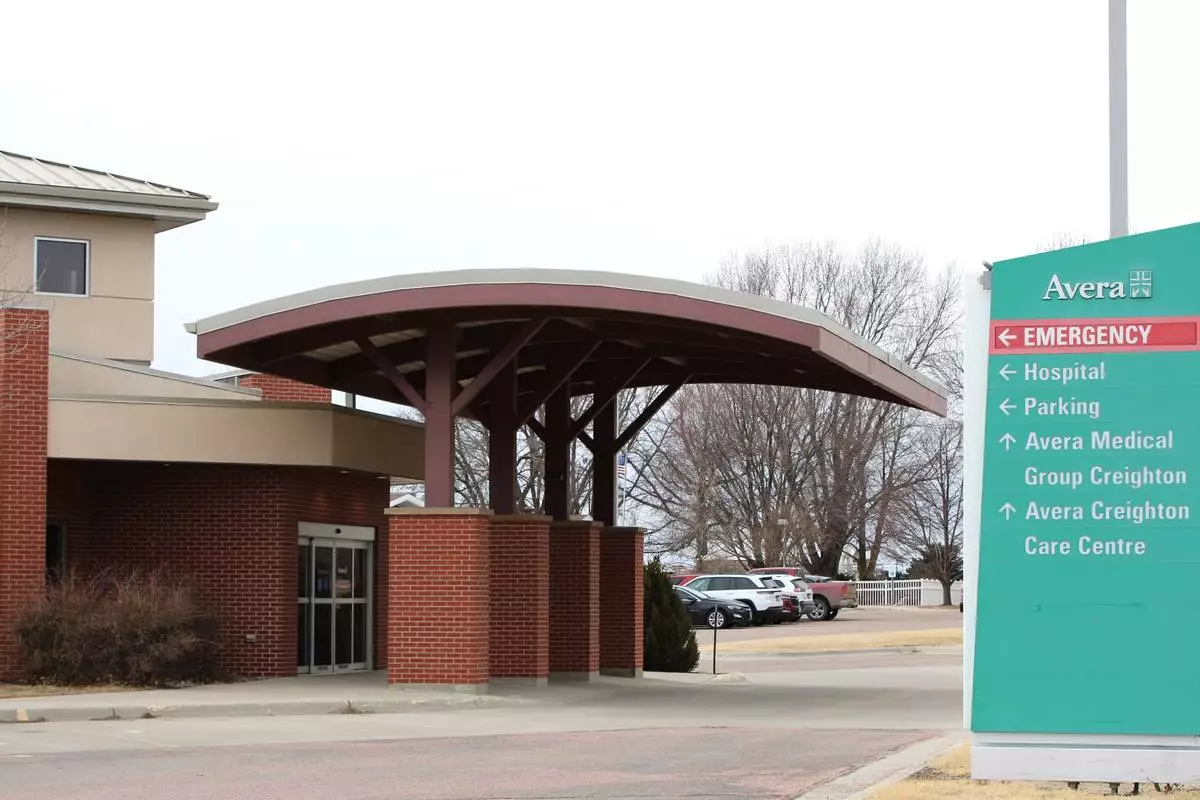
Avera Creighton Hospital is seen on Feb. 24, 2026, in Creighton, Neb. (AP Photo/Margery A. Beck)