|
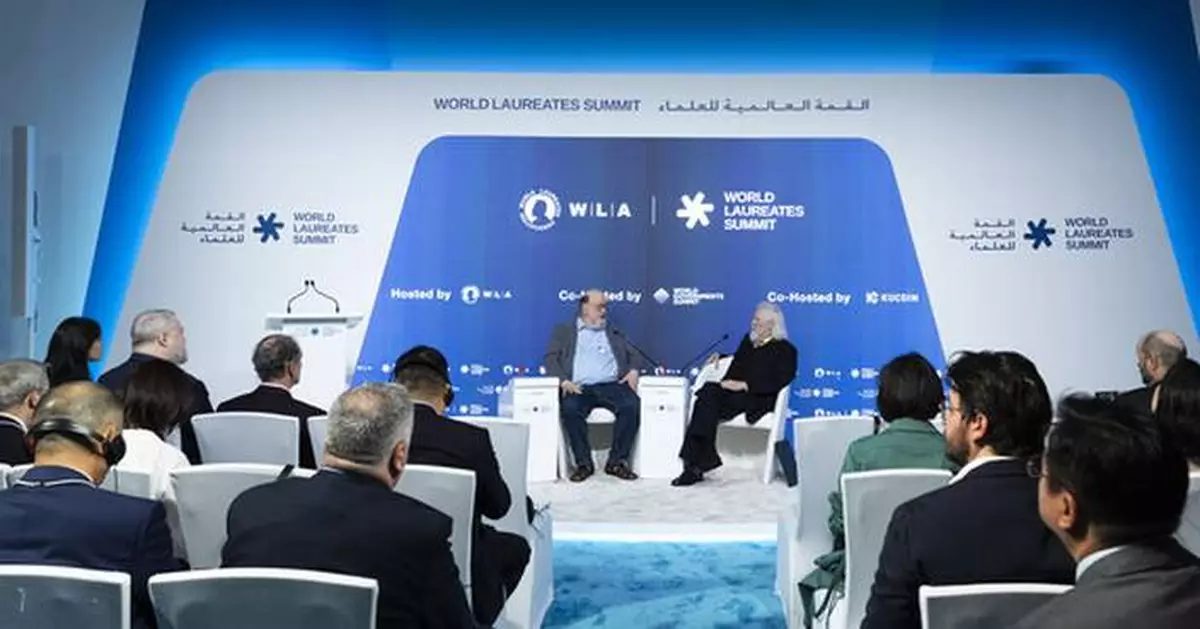
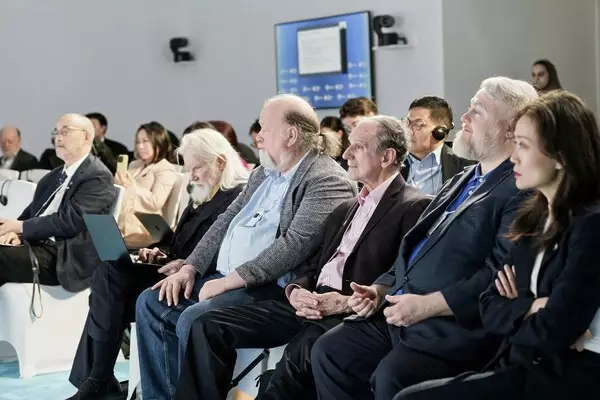
PROVIDENCIALES, Turks and Caicos Islands, Feb. 3, 2026 /PRNewswire/ -- As the World Laureates Summit (WLS) entered its second day—co-hosted by KuCoin—one of the headline sessions, "Science in the Web3 Era: Foundations & Opportunities," convened world-leading cryptographers, economists, and technologists to examine how blockchain is reshaping trust, security, and scientific collaboration at a global scale. The forum was moderated by Sabina Liu, Managing Director of KuCoin EU.
Opening the session, Sabina invited scientists and the audience to examine "how trust is created, sustained, and transformed in a digital civilization," highlighting its growing intersection with economics, cybersecurity, governance, and science.
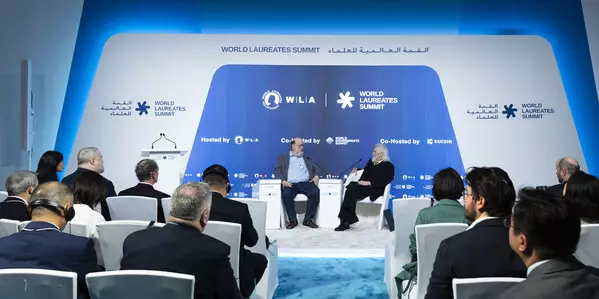
Keynote remarks from Martin Hellman traced blockchain's roots from timestamping and hash-based integrity to modern decentralized trust. Thomas J. Sargent framed consensus economically, highlighting incentive alignment, credibility, and coordination among self-interested actors.
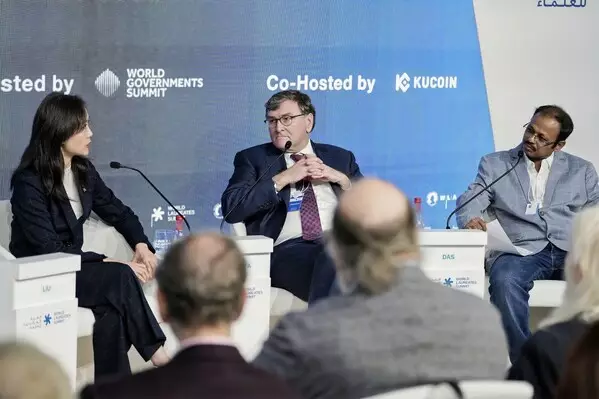
In the closing panel, Sabina joined W. Scott Stornetta and Ashok Kumar Das to examine how decentralized systems can coexist with sovereign frameworks—and how trust infrastructure can unlock economic and scientific value. The discussion centered on key Web3 trade-offs: regulation and sovereign money, authenticity amid deepfakes, "sovereign-grade" security with privacy, and blockchain as a bridge between physical signals (IoT/sensors) and digital intelligence, including AI and DeSci.
"Blockchain started as a technical response to establish trust without centralized authority," said Sabina. "Today, it has become a foundational infrastructure for security, economics, governance, and science. What this forum made clear is that the next phase of Web3 will be defined by resilient cryptography, credible consensus, verifiable identity, and systems that materially reduce the cost of trust for global collaboration."
Held in the UAE ahead of the World Governments Summit, the forum reflected KuCoin's commitment to supporting technology that strengthens foundational science and the underlying logic of financial infrastructure—advancing blockchain not just as an innovation, but as a long-term trust layer. As governments, institutions, and scientists grapple with AI, digital assets, and data integrity, KuCoin views forums like WLS as critical bridges between frontier research and real-world deployment—connecting policy, innovation, and infrastructure at a moment when trust itself has become strategic.
About KuCoin
Founded in 2017, KuCoin is a leading global crypto platform trusted by over 40 million users across 200+ countries and regions. The platform delivers innovative and compliant digital-asset services, offering access to 1,000+ listed tokens, spot and futures trading, institutional wealth management, and a Web3 wallet.
Recognized by Forbes and Hurun, KuCoin holds SOC 2 Type II and ISO 27001:2022 certifications, underscoring its commitment to top-tier security. With AUSTRAC registration in Australia and a MiCA license in Austria, KuCoin continues expanding its regulated footprint under CEO BC Wong, building a reliable and trusted digital-asset ecosystem.
Learn more: www.kucoin.com
PROVIDENCIALES, Turks and Caicos Islands, Feb. 3, 2026 /PRNewswire/ -- As the World Laureates Summit (WLS) entered its second day—co-hosted by KuCoin—one of the headline sessions, "Science in the Web3 Era: Foundations & Opportunities," convened world-leading cryptographers, economists, and technologists to examine how blockchain is reshaping trust, security, and scientific collaboration at a global scale. The forum was moderated by Sabina Liu, Managing Director of KuCoin EU.
Opening the session, Sabina invited scientists and the audience to examine "how trust is created, sustained, and transformed in a digital civilization," highlighting its growing intersection with economics, cybersecurity, governance, and science.
Keynote remarks from Martin Hellman traced blockchain's roots from timestamping and hash-based integrity to modern decentralized trust. Thomas J. Sargent framed consensus economically, highlighting incentive alignment, credibility, and coordination among self-interested actors.
In the closing panel, Sabina joined W. Scott Stornetta and Ashok Kumar Das to examine how decentralized systems can coexist with sovereign frameworks—and how trust infrastructure can unlock economic and scientific value. The discussion centered on key Web3 trade-offs: regulation and sovereign money, authenticity amid deepfakes, "sovereign-grade" security with privacy, and blockchain as a bridge between physical signals (IoT/sensors) and digital intelligence, including AI and DeSci.
"Blockchain started as a technical response to establish trust without centralized authority," said Sabina. "Today, it has become a foundational infrastructure for security, economics, governance, and science. What this forum made clear is that the next phase of Web3 will be defined by resilient cryptography, credible consensus, verifiable identity, and systems that materially reduce the cost of trust for global collaboration."
Held in the UAE ahead of the World Governments Summit, the forum reflected KuCoin's commitment to supporting technology that strengthens foundational science and the underlying logic of financial infrastructure—advancing blockchain not just as an innovation, but as a long-term trust layer. As governments, institutions, and scientists grapple with AI, digital assets, and data integrity, KuCoin views forums like WLS as critical bridges between frontier research and real-world deployment—connecting policy, innovation, and infrastructure at a moment when trust itself has become strategic.
About KuCoin
Founded in 2017, KuCoin is a leading global crypto platform trusted by over 40 million users across 200+ countries and regions. The platform delivers innovative and compliant digital-asset services, offering access to 1,000+ listed tokens, spot and futures trading, institutional wealth management, and a Web3 wallet.
Recognized by Forbes and Hurun, KuCoin holds SOC 2 Type II and ISO 27001:2022 certifications, underscoring its commitment to top-tier security. With AUSTRAC registration in Australia and a MiCA license in Austria, KuCoin continues expanding its regulated footprint under CEO BC Wong, building a reliable and trusted digital-asset ecosystem.
Learn more: www.kucoin.com
** The press release content is from PR Newswire. Bastille Post is not involved in its creation. **
"Trust Is the New Infrastructure": A Featured Forum at KuCoin Co-Hosted WLS Examines Blockchain's Role in a Post-Quantum, AI-Driven World
"Trust Is the New Infrastructure": A Featured Forum at KuCoin Co-Hosted WLS Examines Blockchain's Role in a Post-Quantum, AI-Driven World
"Trust Is the New Infrastructure": A Featured Forum at KuCoin Co-Hosted WLS Examines Blockchain's Role in a Post-Quantum, AI-Driven World
HANGZHOU, China, April 3, 2026 /PRNewswire/ -- A team led by principal investigators Bobo Dang and Ting Zhou at Westlake University/Westlake Laboratory reported in Science a high-throughput platform for engineering fast-acting covalent protein therapeutics. Their work, titled "A high-throughput selection system for fast-acting covalent protein drugs," opens new avenues for next-generation biologics.
Covalent small-molecule drugs have shown great success in cancer therapy by forming irreversible bonds with their targets. This has inspired efforts to extend covalent strategies to protein therapeutics, especially engineered miniproteins. However, their development is limited by a kinetic mismatch: Miniproteins are rapidly cleared in vivo, whereas covalent bond formation is typically slow. In addition, high-throughput platforms for systematically optimizing covalent protein reactivity have been lacking.
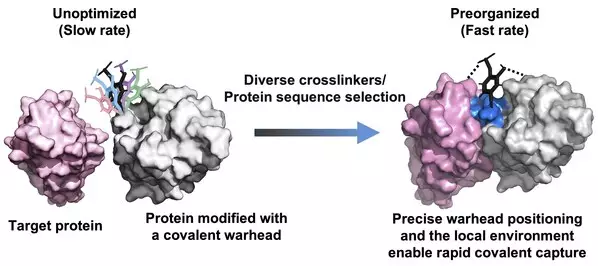
To address this challenge, the researchers proposed that precise spatial positioning of chemical warheads within protein scaffolds could enable molecular preorganization, thereby accelerating covalent bond formation without increasing intrinsic reactivity (Fig. 1).
Based on this concept, the team developed a high-throughput platform that combines yeast surface display with chemoselective protein modification to screen diverse crosslinkers and millions of protein variants. By optimizing warhead placement and the local chemical environment, the platform enables rapid and irreversible target engagement.
Using this platform, the researchers developed a covalent antagonist targeting PD-L1, termed IB101. Structural analysis revealed that IB101 forms a defined binding pocket that precisely positions the warhead in a reactive conformation, greatly accelerating covalent bond formation. Functionally, IB101 effectively blocks the PD-1/PD-L1 immune checkpoint pathway and demonstrates strong antitumor activity in mouse models. Notably, despite its short in vivo half-life, IB101 achieves durable target engagement and tumor suppression, outperforming conventional antibody-based therapies under comparable conditions.
The platform was further applied to cytokine engineering, leading to the development of a covalent IL-18 variant, IB201. This engineered cytokine rapidly forms a covalent interaction with its receptor, enhancing signaling strength and duration. In vivo studies showed that IB201 induces potent antitumor immune responses without detectable systemic toxicity. These results highlight the potential of covalent engineering to improve the efficacy and safety of cytokine-based therapies.
Beyond immunotherapy targets, the platform was also applied to develop a covalent inhibitor targeting the receptor-binding domain (RBD) of SARS-CoV-2. This molecule achieves durable viral neutralization, demonstrating the versatility of the approach across different therapeutic modalities.
This study establishes a general strategy for engineering fast-acting covalent protein therapeutics. By enabling covalent bond formation on timescales compatible with rapid in vivo clearance, the platform overcomes a fundamental limitation in the field.
These findings provide a new framework for designing biologics with both rapid kinetics and sustained target engagement, with broad implications for cancer immunotherapy, antiviral therapy, and beyond.
Media Contact:
Chi Zhang
media@westlake.edu.cn
+86-15659837873
** This press release is distributed by PR Newswire through automated distribution system, for which the client assumes full responsibility. **
Fast-Acting Covalent Protein Drugs From a New High-Throughput Platform