WASHINGTON (AP) — Bullied and buffeted by President Donald Trump’s tariffs for the past year, America’s longstanding allies are desperately seeking ways to shield themselves from the president’s impulsive wrath.
U.S. trade partners are cutting deals among themselves —- sometimes discarding old differences to do so — in a push to diversify their economies away from a newly protectionist United States. Some European governments and institutions are reducing their use of U.S. digital services such as Zoom and Teams.
Central banks and global investors are dumping dollars and buying gold. Together, their actions could diminish U.S. influence and mean higher interest rates and prices for Americans already angry about the high cost of living.
Last summer and fall, Trump used the threat of punishing taxes on imports to strong-arm the European Union, Japan, South Korea and other trading partners into accepting lopsided trade deals and promising to make massive investments in the United States.
But a deal with Trump, they’ve discovered, is no deal at all.
The mercurial president repeatedly finds reasons to conjure new tariffs to impose on trading partners that thought they had already made enough concessions to satisfy him.
Just months after reaching his agreement with the EU, Trump threatened new tariffs on eight European countries for opposing his attempts to seize control of Greenland from Denmark – though he quickly backed down. And last month, he said he’d slap 100% tariffs on Canada for breaking with the United States by agreeing to reduce Canadian tariffs on Chinese electric vehicles.
“Our trading partners are discovering that the largely one-sided deals they concluded with the U.S. provide little protection,’’ said former U.S. trade negotiator Wendy Cutler, senior vice president at the Asia Society Policy Institute. “As a result, trade diversification efforts by our partners are on turbo charge, looking to reduce dependence on the U.S.’’
Trump supporters such as Paul Winfree, who was deputy director of the White House Domestic Policy Council during Trump’s first term, are wary of the relative decline in U.S. Treasury note holdings by foreign central banks and view the national debt as a vulnerability rivals would like to exploit.
Winfree, CEO of the Economic Policy Innovation Institute, a think tank, said that some of Trump's advisers do not feel America has fully benefited from the dollar's status as the world's dominant currency.
“But the fact remains that every other country is jealous of our status, and many of our adversaries would love to challenge the U.S. dollar and Treasuries,” he said.
White House spokesman Kush Desai insists America's standing on the global stage has not been diminished.
“President Trump remains committed to the strength and power of the U.S. Dollar as the world’s reserve currency," he said.
The most eye-opening deal so far has been the pact announced last week between the 27-country EU and India, the world’s fastest growing major economy. Negotiators had been at it for nearly two decades before they closed the agreement.
Likewise, an EU trade deal announced two weeks ago with the Mercosur nations of South America took a quarter century of negotiation. It will create a free-trade market of more than 700 million people.
“Some of these deals have been in the works for quite some time,’’ said Maurice Obstfeld, a senior fellow at the Peterson Institute for International Economics and former chief economist at the International Monetary Fund. “The pressure from Trump made them more eager to accelerate the process and reach agreement.’’
EU exporters were jubilant over the India deal. VDMA, a group of European machinery and plant engineering companies, welcomed lower Indian tariffs on machinery.
“The free trade agreement between India and the EU brings much needed oxygen to a world increasingly dominated by trade conflicts,” VDMA’s executive director, Thilo Brodtmann, said in a statement. “With this agreement, Europe is sending a clear signal in favor of rules-based trade and against the law of the jungle.”
On Monday, Trump went on social media to announce his own deal with India. The U.S., he posted, would reduce tariffs on Indian imports after India agreed to stop buying oil from Russia, which has used the sales to fund its four year war in Ukraine.
The president said that India would reduce its tariffs on American products to zero and buy $500 billion worth of American products. Trade lawyer Ryan Majerus, a partner at the King & Spalding and a trade official in the Biden administration and during Trump's first term, said that businesses and legal analysts were awaiting official White House documents spelling out details of the deal.
Trump is banking on there being limits to other countries’ ability to pull away from the United States. America has the world’s biggest economy and consumer market. “We have all the cards,’’ Trump told Fox Business this month.
Countries like South Korea, dependent on America’s market and military protection, can’t afford to ignore Trump’s threats. On Monday, for example, the president said he was increasing tariffs on South Korea goods because the country’s legislature has been slow to approve the trade framework announced last year. On Tuesday, the country’s Finance Ministry responded by saying its chief, Koo Yun-cheol, would push lawmakers to quickly approve a bill to invest $350 billion as promised in the agreement.
"The U.S was trying to identify a counterpart that would find it difficult to refuse U.S. demands outright, given the depth of its economic and security ties,” said Cha Du Hyeogn, an analyst at South Korea’s Asan Institute for Policy Studies.
Or consider Canada, which sends 75% of its exports to its southern neighbor. “Canada and U.S. will always be tightly linked through international trade,” said Obstfeld, a professor at the University of California, Berkeley. “We’re talking about adjustments more or less on the margin.’’
But the world’s growing rejection of Trump’s policies is already having an impact, driving down the value of the dollar, long the currency of choice for global commerce, to its lowest level since 2022 last week versus several competing currencies.
Syracuse University political scientist Daniel McDowell, author of the book “Bucking the Buck: U.S. Financial Sanctions and the International Backlash against the Dollar,” sees a vibe shift under Trump: Foreign countries and investors want to reduce their exposure to the United States, which has moved from a source of security and stability to a driver of instability and unpredictability under Trump.
“Trump has shown that he is willing to use foreign countries’ economic dependence on the U.S. as leverage against them in negotiations,” McDowell said. “As global perceptions of the US are changing, it is only natural that investors — public and private alike — are reconsidering their relationship with the dollar.”
Kurtenbach reported from Bangkok. Associated Press videographer Yong Jun Chang in Seoul and AP Business Writer Kelvin Chan in London contributed to this report.
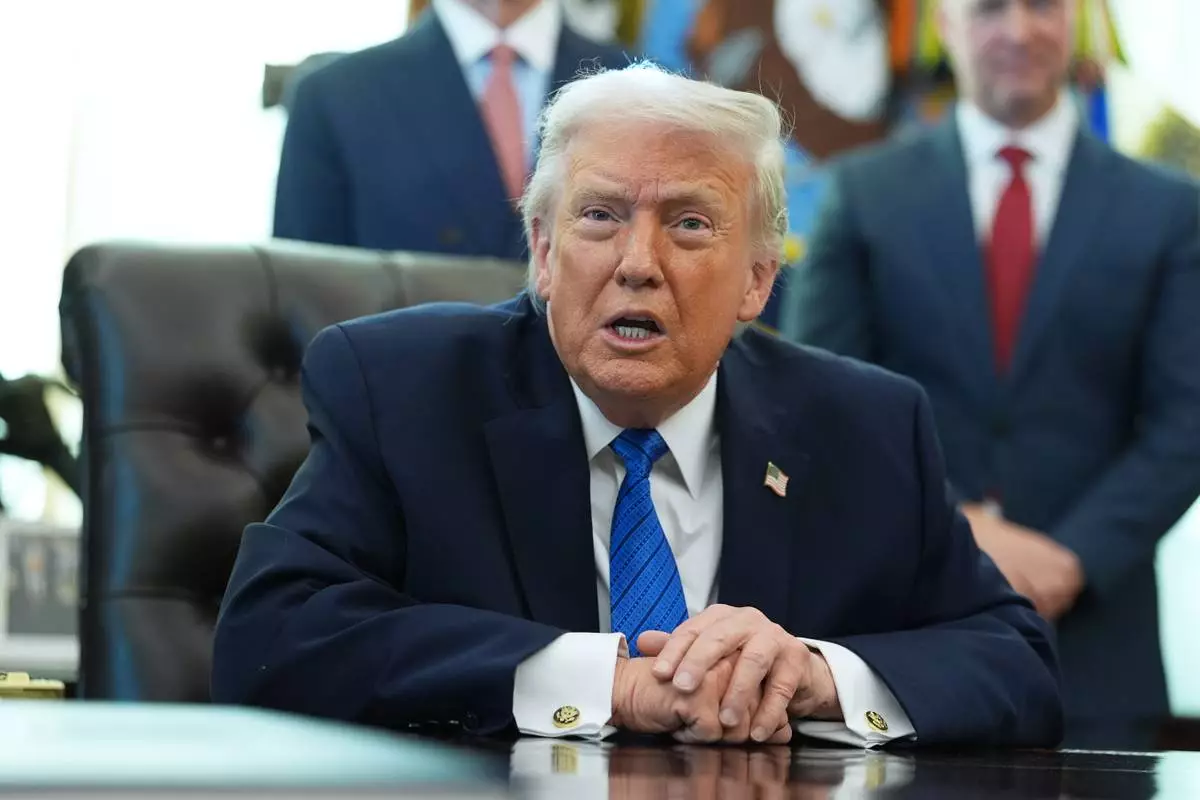
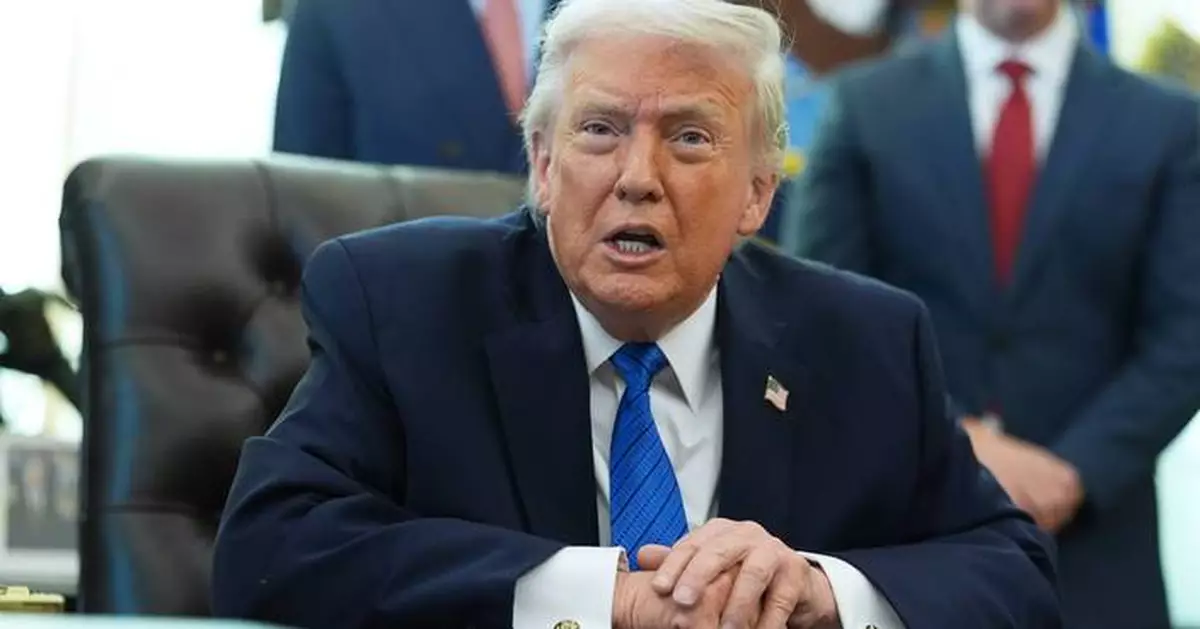
President Donald Trump speaks during an event in the Oval Office of the White House, Friday, Jan. 30, 2026, in Washington. (AP Photo/Evan Vucci)