|
- Hyundai Mobis and its global partners have formed a global alliance for Holographic Windshield Display (HWD)
- The alliance combines capabilities in systems (Hyundai Mobis), optics (ZEISS), film (tesa), and automotive glass (Sekurit), targeting mass production starting by 2029
- HWD utilizes the vehicle's front windshield as a giant display, separating driver and passenger screens to ensure both safety and convenience
SEOUL, South Korea, Feb. 3, 2026 /PRNewswire/ -- Hyundai Mobis (KRX 012330) has partnered with global leading companies to secure the next-generation vehicle display market. Hyundai Mobis announced on the 3rd the launch of the "Quad Alliance" with European specialist companies, each possessing leading technologies in their respective fields, for the mass production of Holographic Windshield Displays (HWD).
This technology development alliance includes Germany's ZEISS, which possesses world-class optical technology; Germany's tesa, a global leading company in tape adhesion; and France's Saint-Gobain Sekurit, Europe's top automotive glass manufacturer, joining forces with Hyundai Mobis. Hyundai Mobis plans to expand the collaborative ecosystem to four companies and pursue the actual commercialization of HWD by 2029.
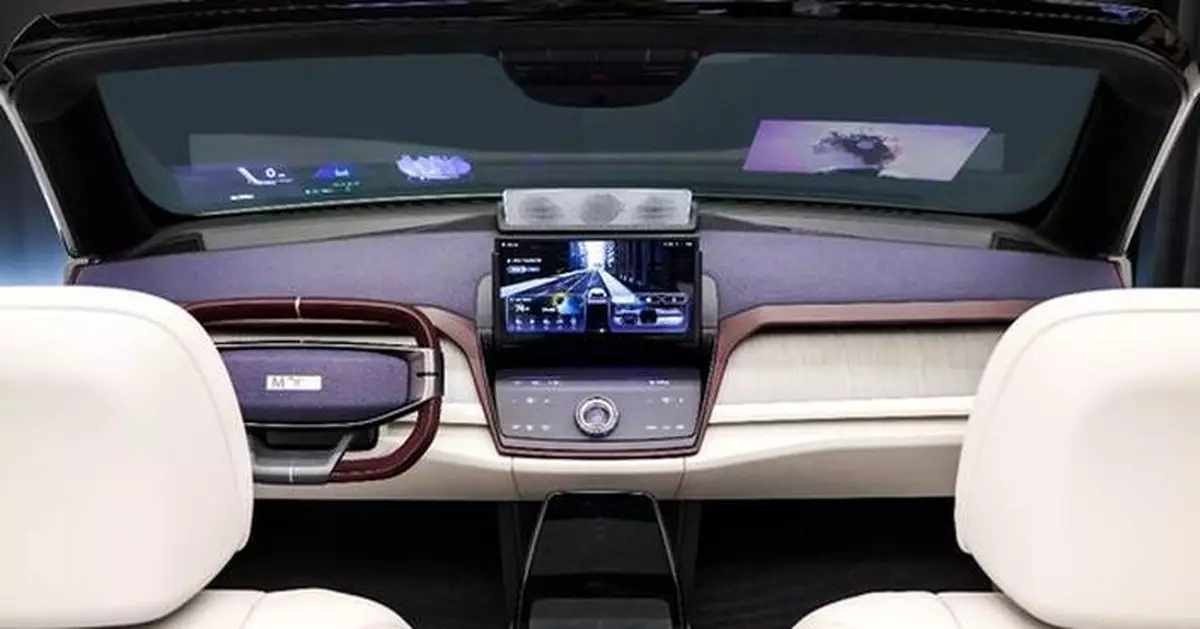
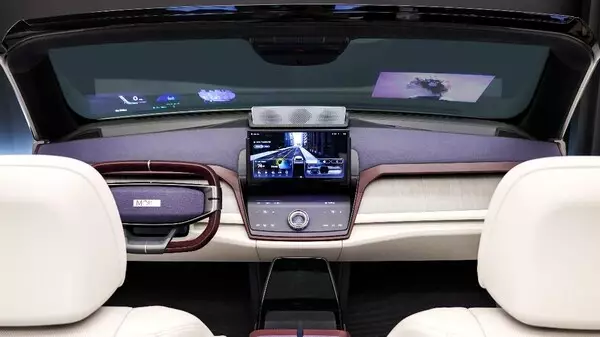
The Holographic Windshield Display (HWD) is an innovative technology that utilizes the vehicle's front windshield as a massive display without a separate physical screen, enabling drivers to view driving information without distracting their gaze. Its key advantage lies in precisely projecting diverse driving information and infotainment images onto the eye level of the driver and passenger using a special 'Holographic Optical Element (HOE)' film laminated within the windshield glass.
HWD employs holographic optical element(HOE) with a transmittance of 92% or higher (clear glass level) and an overwhelming brightness exceeding 10,000 nits (twice the level of outdoor LED billboards), providing clear image quality even in bright daylight environments. Furthermore, leveraging the precise light redirection feature of HOE, the system is designed to prevent the driver from viewing the passenger-side screen. This allows the passenger to safely enjoy various infotainment features like video viewing and gaming even while driving. This technology maximizes driving safety and space utilization, and is expected to emerge as a core technology for future mobility.
Through this four-party alliance, Hyundai Mobis will oversee the system design and integration of the overall HWD system and the image-projecting projector, leveraging its expertise in vehicle interface solutions. ZEISS will handle the optical design and master development of the HOE film, while tesa will ensure reliable and precise mass replication of holographic films. Sekurit will handle the precision process of bonding the film to the windshield glass.
This technology collaboration signifies the establishment of a 'one-stop supply chain solution' encompassing everything from HWD's optical design to HOE replication and system assembly. Hyundai Mobis' strategy is to secure both mass-production quality and reliability by proactively establishing a supply chain ecosystem, on top of its leading technological capabilities.
Meanwhile, Hyundai Mobis has garnered significant interest from major customers by successively unveiling advanced models featuring this technology at global exhibitions including CES, the German IAA, and the Shanghai Motor Show. Notably, at CES 2026 held in the US last month, it won an Innovation Award, once again proving its technological competitiveness.
"Through this core technology that unlocks the future of automotive displays, we will provide differentiated value to our customers," said Jung Soo-kyung, Executive Vice President and Head of the Automotive Electronics Business Unit at Hyundai Mobis. "We will closely collaborate with global partners through the mass production phase to maximize our technological competitiveness and firmly establish our image as a leader in innovative technology in the global market."
About Hyundai Mobis
Hyundai Mobis is a leading global automotive supplier delivering mobility solutions across core components—including electronic control, electrification, automotive semiconductors, braking, chassis, and steering.
Focusing on autonomous driving, connectivity, and electrification, the company integrates software and hardware to advance smart mobility. Backed by an R&D headquarters in Korea and technology centers in the United States, Germany, China, and India, Hyundai Mobis supports customers worldwide. Building on its R&D and manufacturing capabilities, the company is expanding into future mobility domains such as robotics. For more information, please visit http://www.mobis.com.
Media Contact
Choon Kee Hwang : ckhwang@mobis.com
Jihyun Han : jihyun.han@mobis.com
- Hyundai Mobis and its global partners have formed a global alliance for Holographic Windshield Display (HWD)
- The alliance combines capabilities in systems (Hyundai Mobis), optics (ZEISS), film (tesa), and automotive glass (Sekurit), targeting mass production starting by 2029
- HWD utilizes the vehicle's front windshield as a giant display, separating driver and passenger screens to ensure both safety and convenience
SEOUL, South Korea, Feb. 3, 2026 /PRNewswire/ -- Hyundai Mobis (KRX 012330) has partnered with global leading companies to secure the next-generation vehicle display market. Hyundai Mobis announced on the 3rd the launch of the "Quad Alliance" with European specialist companies, each possessing leading technologies in their respective fields, for the mass production of Holographic Windshield Displays (HWD).
This technology development alliance includes Germany's ZEISS, which possesses world-class optical technology; Germany's tesa, a global leading company in tape adhesion; and France's Saint-Gobain Sekurit, Europe's top automotive glass manufacturer, joining forces with Hyundai Mobis. Hyundai Mobis plans to expand the collaborative ecosystem to four companies and pursue the actual commercialization of HWD by 2029.
The Holographic Windshield Display (HWD) is an innovative technology that utilizes the vehicle's front windshield as a massive display without a separate physical screen, enabling drivers to view driving information without distracting their gaze. Its key advantage lies in precisely projecting diverse driving information and infotainment images onto the eye level of the driver and passenger using a special 'Holographic Optical Element (HOE)' film laminated within the windshield glass.
HWD employs holographic optical element(HOE) with a transmittance of 92% or higher (clear glass level) and an overwhelming brightness exceeding 10,000 nits (twice the level of outdoor LED billboards), providing clear image quality even in bright daylight environments. Furthermore, leveraging the precise light redirection feature of HOE, the system is designed to prevent the driver from viewing the passenger-side screen. This allows the passenger to safely enjoy various infotainment features like video viewing and gaming even while driving. This technology maximizes driving safety and space utilization, and is expected to emerge as a core technology for future mobility.
Through this four-party alliance, Hyundai Mobis will oversee the system design and integration of the overall HWD system and the image-projecting projector, leveraging its expertise in vehicle interface solutions. ZEISS will handle the optical design and master development of the HOE film, while tesa will ensure reliable and precise mass replication of holographic films. Sekurit will handle the precision process of bonding the film to the windshield glass.
This technology collaboration signifies the establishment of a 'one-stop supply chain solution' encompassing everything from HWD's optical design to HOE replication and system assembly. Hyundai Mobis' strategy is to secure both mass-production quality and reliability by proactively establishing a supply chain ecosystem, on top of its leading technological capabilities.
Meanwhile, Hyundai Mobis has garnered significant interest from major customers by successively unveiling advanced models featuring this technology at global exhibitions including CES, the German IAA, and the Shanghai Motor Show. Notably, at CES 2026 held in the US last month, it won an Innovation Award, once again proving its technological competitiveness.
"Through this core technology that unlocks the future of automotive displays, we will provide differentiated value to our customers," said Jung Soo-kyung, Executive Vice President and Head of the Automotive Electronics Business Unit at Hyundai Mobis. "We will closely collaborate with global partners through the mass production phase to maximize our technological competitiveness and firmly establish our image as a leader in innovative technology in the global market."
About Hyundai Mobis
Hyundai Mobis is a leading global automotive supplier delivering mobility solutions across core components—including electronic control, electrification, automotive semiconductors, braking, chassis, and steering.
Focusing on autonomous driving, connectivity, and electrification, the company integrates software and hardware to advance smart mobility. Backed by an R&D headquarters in Korea and technology centers in the United States, Germany, China, and India, Hyundai Mobis supports customers worldwide. Building on its R&D and manufacturing capabilities, the company is expanding into future mobility domains such as robotics. For more information, please visit http://www.mobis.com.
Media Contact
Choon Kee Hwang : ckhwang@mobis.com
Jihyun Han : jihyun.han@mobis.com
** The press release content is from PR Newswire. Bastille Post is not involved in its creation. **
Hyundai Mobis Forms Global Alliance for Next-Generation Display Technologies
HANGZHOU, China, April 3, 2026 /PRNewswire/ -- A team led by principal investigators Bobo Dang and Ting Zhou at Westlake University/Westlake Laboratory reported in Science a high-throughput platform for engineering fast-acting covalent protein therapeutics. Their work, titled "A high-throughput selection system for fast-acting covalent protein drugs," opens new avenues for next-generation biologics.
Covalent small-molecule drugs have shown great success in cancer therapy by forming irreversible bonds with their targets. This has inspired efforts to extend covalent strategies to protein therapeutics, especially engineered miniproteins. However, their development is limited by a kinetic mismatch: Miniproteins are rapidly cleared in vivo, whereas covalent bond formation is typically slow. In addition, high-throughput platforms for systematically optimizing covalent protein reactivity have been lacking.
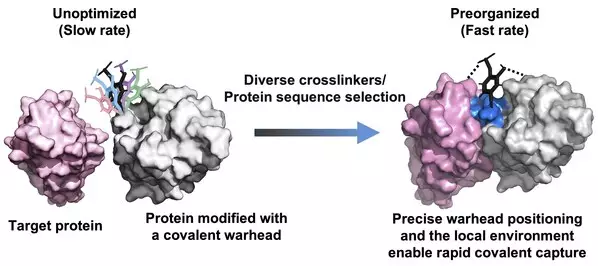
To address this challenge, the researchers proposed that precise spatial positioning of chemical warheads within protein scaffolds could enable molecular preorganization, thereby accelerating covalent bond formation without increasing intrinsic reactivity (Fig. 1).
Based on this concept, the team developed a high-throughput platform that combines yeast surface display with chemoselective protein modification to screen diverse crosslinkers and millions of protein variants. By optimizing warhead placement and the local chemical environment, the platform enables rapid and irreversible target engagement.
Using this platform, the researchers developed a covalent antagonist targeting PD-L1, termed IB101. Structural analysis revealed that IB101 forms a defined binding pocket that precisely positions the warhead in a reactive conformation, greatly accelerating covalent bond formation. Functionally, IB101 effectively blocks the PD-1/PD-L1 immune checkpoint pathway and demonstrates strong antitumor activity in mouse models. Notably, despite its short in vivo half-life, IB101 achieves durable target engagement and tumor suppression, outperforming conventional antibody-based therapies under comparable conditions.
The platform was further applied to cytokine engineering, leading to the development of a covalent IL-18 variant, IB201. This engineered cytokine rapidly forms a covalent interaction with its receptor, enhancing signaling strength and duration. In vivo studies showed that IB201 induces potent antitumor immune responses without detectable systemic toxicity. These results highlight the potential of covalent engineering to improve the efficacy and safety of cytokine-based therapies.
Beyond immunotherapy targets, the platform was also applied to develop a covalent inhibitor targeting the receptor-binding domain (RBD) of SARS-CoV-2. This molecule achieves durable viral neutralization, demonstrating the versatility of the approach across different therapeutic modalities.
This study establishes a general strategy for engineering fast-acting covalent protein therapeutics. By enabling covalent bond formation on timescales compatible with rapid in vivo clearance, the platform overcomes a fundamental limitation in the field.
These findings provide a new framework for designing biologics with both rapid kinetics and sustained target engagement, with broad implications for cancer immunotherapy, antiviral therapy, and beyond.
Media Contact:
Chi Zhang
media@westlake.edu.cn
+86-15659837873
** This press release is distributed by PR Newswire through automated distribution system, for which the client assumes full responsibility. **
Fast-Acting Covalent Protein Drugs From a New High-Throughput Platform