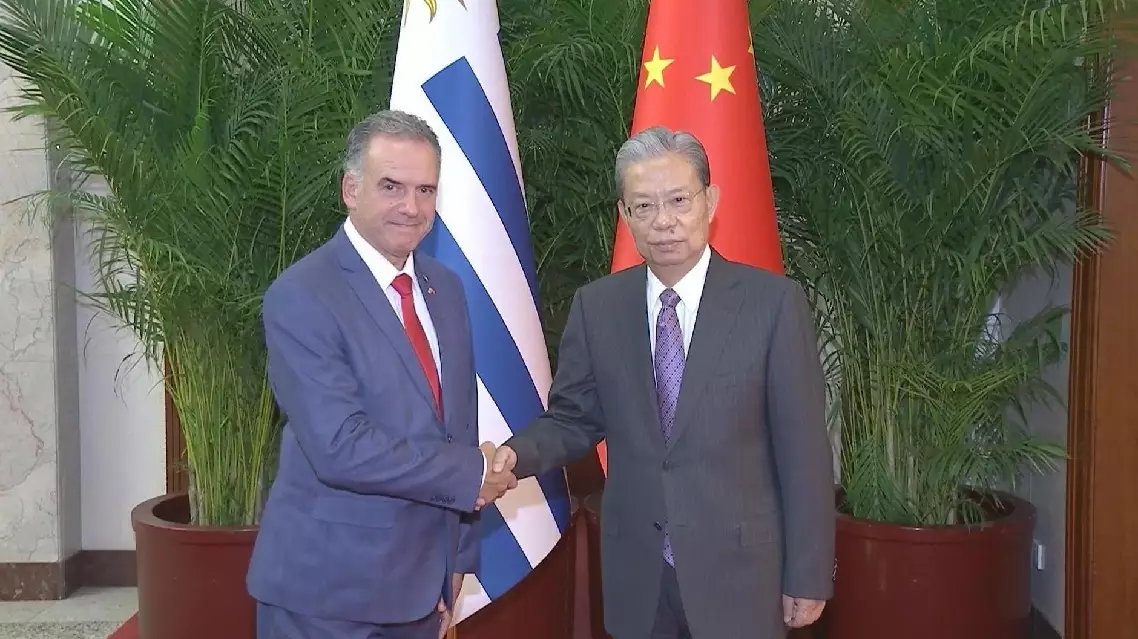
Japanese Prime Minister Sanae Takaichi's controversial remarks on Taiwan, coupled with Tokyo's military expansion, have drawn sharp criticism from international observers who say they endanger the post-WWII peace order.
During a Diet session on Nov. 7, 2025, Takaichi said that the Chinese mainland's "use of force on Taiwan" could constitute a "survival-threatening situation" for Japan and implied the possibility of armed intervention in the Taiwan Strait.
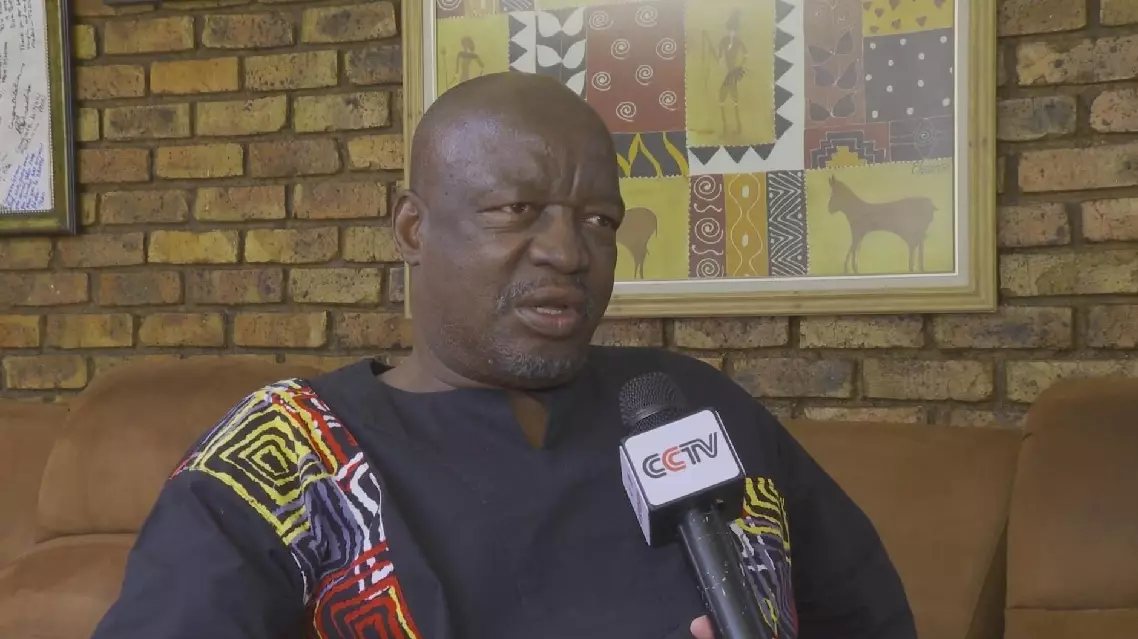
"I think the remarks really do pose a threat to the post-World War II international order. After WWII, there were a number of treaties that the countries had to sign after that particular war. And the idea really was to learn lessons from the past. And one of the fundamental principles of the post-WWII era was the idea that nations should be bound by the treaties, treaties that bring together members of the United Nations in order to cultivate world peace," said Wynter Kabimba, former Justice Minister of Zambia.
Further elaborating on the risks to regional stability, Rui Tyitende, a Namibian political analyst, highlighted the consequences of external interference.
"They tend to aggravate the security situation within the region. It creates a very tense, contentious international system. So these kind of tensions are not good for global peace and security. Maybe they are also reminiscing about the Japanese empire that was there before 1945. The world is changing and perhaps they are thinking we need to change with the world, no matter how dangerous that might be," said Tyitende.
The criticism extended to specific issues of sovereignty and historical responsibility, as noted by Abbey Makoe, editor-in-chief of the Global South Media Network based in South Africa.
"She seems to be determined to cause some conflict and tension unnecessarily. Consent that a power such as Japan, which is a former colonial master, particularly in the area of Taiwan, can be the one that comes back all these years later. The whole world is subscribing to UN (General Assembly) Resolution 2758, which recognizes that there is only one China in the whole world. We will never allow colonialism to come back through the back door," said Makoe.
The collective criticism underscores growing unease over Japan's political direction and its implications for regional stability and the rules-based international system.
Observers warn Takaichi's Taiwan remarks threaten post-WWII peace order