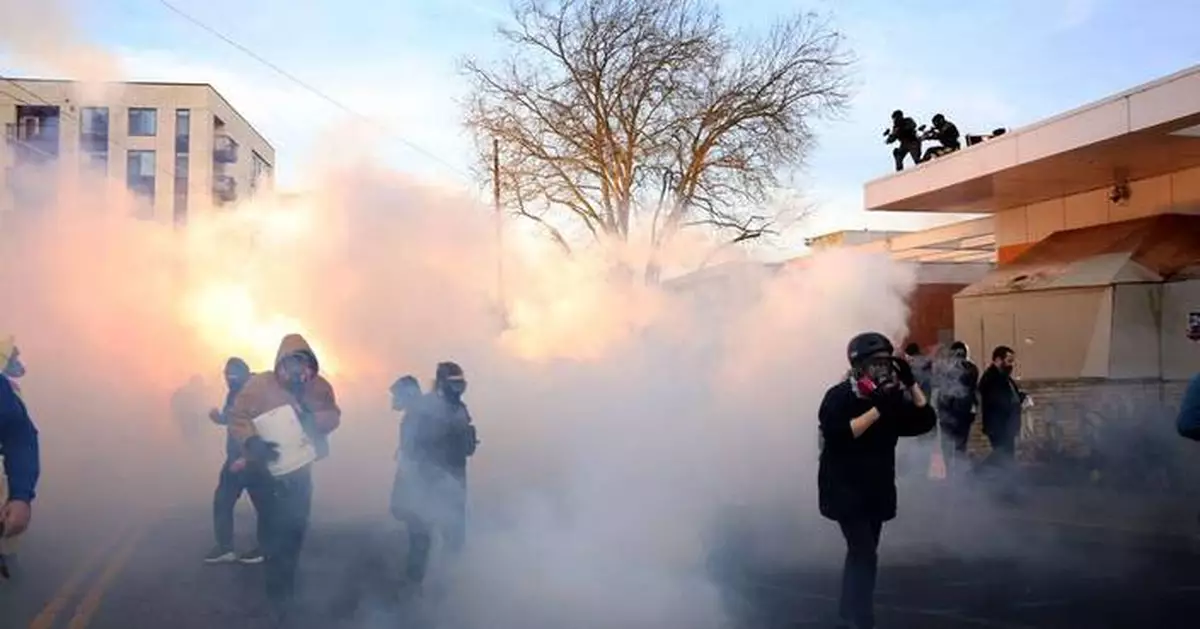
PORTLAND, Ore. (AP) — A judge in Oregon on Tuesday temporarily restricted federal officers from using tear gas at protests at the U.S. Immigration and Customs Enforcement building in Portland, just days after agents launched gas at a crowd of demonstrators including young children that local officials described as peaceful.
U.S. District Judge Michael Simon ordered federal officers not to use chemical or projectile munitions on people who pose no imminent threat of physical harm, or who are merely trespassing or refusing to disperse. Simon also limited federal officers from firing munitions at the head, neck or torso “unless the officer is legally justified in using deadly force against that person.”
Simon, whose temporary restraining order is in effect for 14 days, wrote that the nation "is now at a crossroads.”
“In a well-functioning constitutional democratic republic, free speech, courageous newsgathering, and nonviolent protest are all permitted, respected, and even celebrated,” he wrote. “In helping our nation find its constitutional compass, an impartial and independent judiciary operating under the rule of law has a responsibility that it may not shirk.”
The ruling came in response to a lawsuit filed by the ACLU of Oregon on behalf of protesters and freelance journalists covering demonstrations at the flashpoint U.S. Immigration and Customs Enforcement building.
The suit names as defendants the Department of Homeland Security and its head Kristi Noem, as well as President Donald Trump. It argues that federal officers’ use of chemical munitions and excessive force is a retaliation against protesters that chills their First Amendment rights.
The Department of Homeland Security said federal officers have “followed their training and used the minimum amount of force necessary to protect themselves, the public, and federal property.”
“DHS is taking appropriate and constitutional measures to uphold the rule of law and protect our officers and the public from dangerous rioters," spokesperson Tricia McLaughlin said.
Cities across the country have seen demonstrations against the administration's immigration enforcement surge.
Last month, a federal appeals court suspended a decision that prohibited federal officers from using tear gas or pepper spray against peaceful protesters in Minnesota who aren’t obstructing law enforcement. An appeals court also halted a ruling from a federal judge in Chicago that restricted federal agents from using certain riot control weapons, such as tear gas and pepper balls, unless necessary to prevent an immediate threat. A similar lawsuit brought by the state is now before the same judge.
The Oregon complaint describes instances in which the plaintiffs — including a protester known for wearing a chicken costume, a married couple in their 80s and two freelance journalists — had chemical or “less-lethal” munitions used against them.
In October, 83-year-old Vietnam War veteran Richard Eckman and his 84-year-old wife Laurie Eckman joined a peaceful march to the ICE building. Federal officers then launched chemical munitions at the crowd, hitting Laurie Eckman in the head with a pepper ball and causing her to bleed, according to the complaint. With bloody clothes and hair, she sought treatment at a hospital, which gave her instructions for caring for a concussion. A munition also hit her husband’s walker, the complaint says.
Jack Dickinson, who frequently attends protests at the ICE building in a chicken suit, has had munitions aimed at him while posing no threat, according to the complaint. Federal officers have shot munitions at his face respirator and at his back, and launched a tear-gas canister that sparked next to his leg and burned a hole in his costume, the complaint says.
Freelance journalists Hugo Rios and Mason Lake have similarly been hit with pepper balls and tear gassed while marked as press, the complaint says.
“Defendants must be enjoined from gassing, shooting, hitting and arresting peaceful Portlanders and journalists willing to document federal abuses as if they are enemy combatants,” the complaint states.
The owner and residents of the affordable housing complex across the street from the ICE building have filed a separate lawsuit, similarly seeking to restrict federal officers’ use of tear gas because residents have been repeatedly exposed over the past year.
Local officials have also spoken out against use of chemical munitions. Portland Mayor Keith Wilson demanded ICE leave the city after federal officers used such munitions Saturday at what he described as a “peaceful daytime protest where the vast majority of those present violated no laws, made no threat, and posed no danger to federal forces.”
“To those who continue to work for ICE: Resign. To those who control this facility: Leave,” Wilson wrote in a statement Saturday night.
The protest was one of many similar demonstrations nationwide against the immigration crackdown in cities like Minneapolis, where in recent weeks federal agents killed two people, Alex Pretti and Renee Good.
Associated Press writers Steve Karnowski in Minneapolis and Sophia Tareen in Chicago contributed.
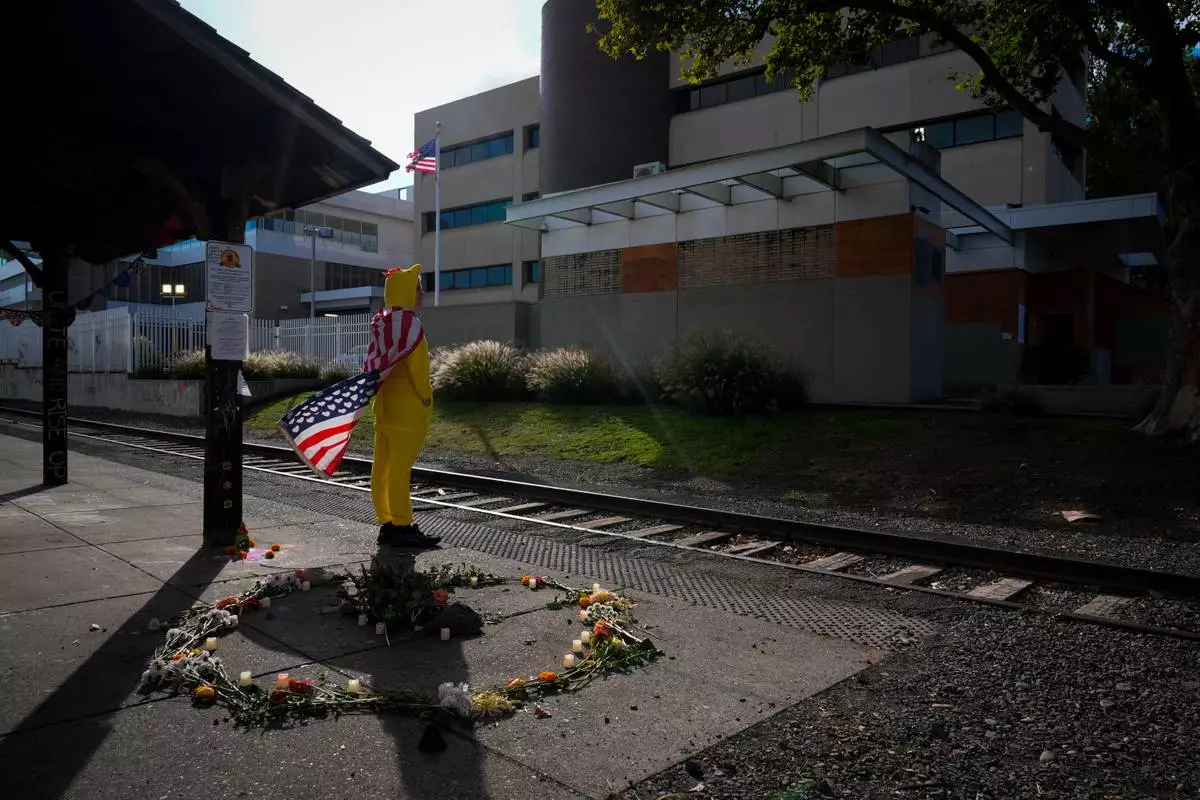
FILE - Jack Dickinson, dressed in a chicken costume, looks to other protesters outside a United States Immigration and Customs Enforcement (ICE) facility in Portland, Ore., Monday, Oct. 20, 2025. (AP Photo/Jenny Kane,File)
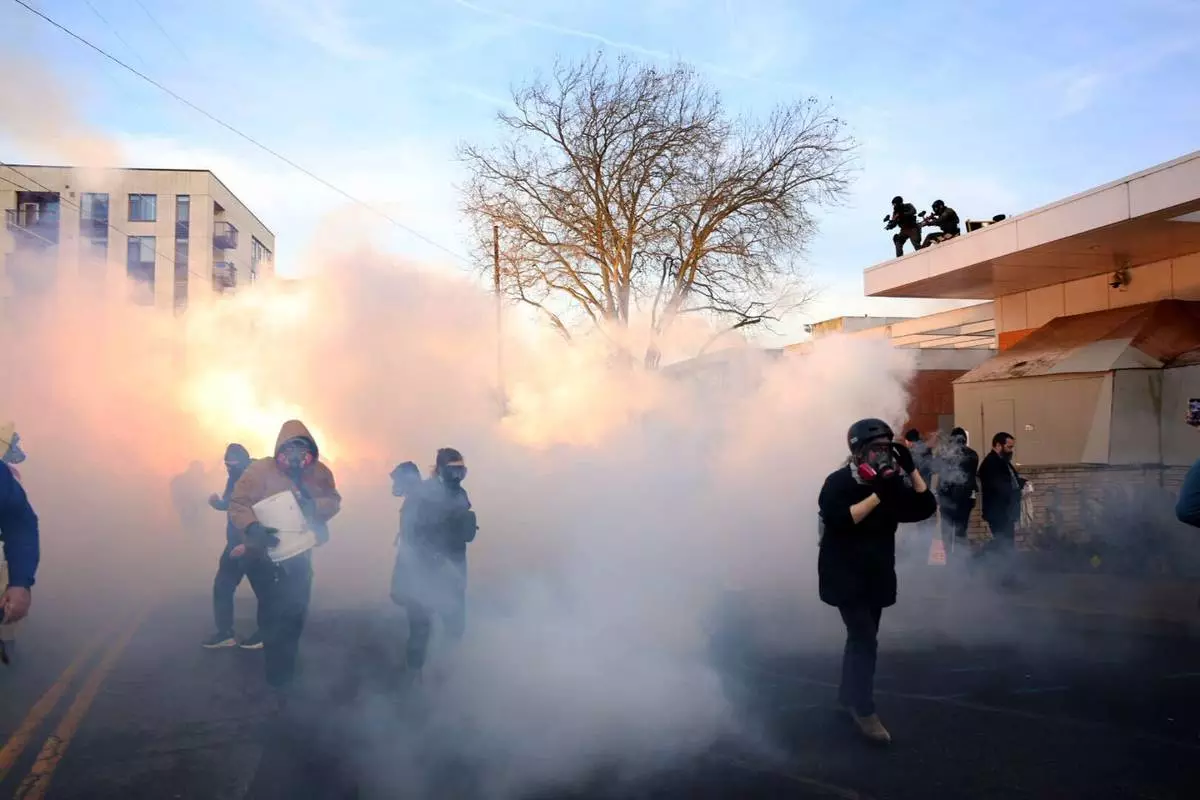
Federal agents lobbed tear gas and flash bangs at protesters in front of the ICE building on Jan. 31, 2026, in Portland, Ore. (Allison Barr/The Oregonian via AP)
Cameron Boozer was at the center of everything for Duke this season.
The 6-foot-9, 250-pound forward proved tough enough to score through physical play. Rangy enough to space the floor and shoot from outside. Deft enough as a passer to find teammates, whether against constant double teams coming for him as the top name on every scouting report or while running the entire offense from up top.
“You just want to affect winning in whatever way you can,” Boozer said.
The high-end NBA prospect did that all season for a team that won 35 games, reached No. 1 in the AP Top 25 poll, claimed the top overall seed for March Madness and reached the NCAA Tournament's Elite Eight. Now he's The Associated Press men’s college basketball national player of the year, only the fifth freshman to earn the honor and the second in a row for a Duke program that keeps adding to the longest list of winners in the country.
“It just goes to show more about what our team has done, just because I think that really helps awards like this, having great team success,” Boozer told the AP. “It’s really just not me.”
Boozer, named unanimous first-team AP all-American last month, received 59 of 61 votes from AP Top 25 voters in results released Friday. BYU freshman AJ Dybantsa, another potential top NBA pick, received the other two votes after averaging a national-best 25.5 points per game.
Boozer, son of Duke and longtime NBA player Carlos Boozer, ranked averaged 22.5 points (ninth in Division I) and 10.2 rebounds (12th) while finishing tied for the national lead with 22 double-doubles. He also averaged 4.1 assists while posting efficient shooting numbers at 55.6% overall and 39.1% from 3-point range.
He joins fellow Blue Devils star Cooper Flagg last year, another Duke player in Zion Williamson (2019), Kentucky’s Anthony Davis (2012) and Texas star Kevin Durant (2007) as freshmen to win the AP award. Each went No. 1 or No. 2 in the NBA draft that year.
“I’m very grateful just that I’m even in those (NBA) conversations,” Boozer said. “I think a lot of people dream of being where I am. Sometimes you’ve got to take a step back and just remember that once upon a time, you were a kid dreaming to be here. So I think it’s very special.”
His coaches think the same of him.
“We’ve been fortunate enough the last two years to have two of the best freshmen to ever play in college basketball back to back,” Duke associate head coach and former Blue Devils player Chris Carrawell said. “And Cam is right up there.
Boozer is Duke's ninth AP winner, each coming from a different player. UCLA is the next closest with five winners, though that included Kareem Abdul-Jabbar (1967 and 1969) and Bill Walton (1972 and 1973) as two-time selections.
UCLA, Ohio State and Duke rival North Carolina are the only other programs with as many as three different players to win the award.
Boozer arrived at Duke alongside twin brother Cayden after the two led Miami's Columbus High to four straight state championships. By late February, the Blue Devils were starting a four-week reign atop the AP Top 25 that would carry to March Madness. Boozer — who said he looks at winning as a skill — routinely posted top performances in Duke's biggest games, including during a rugged nonconference slate.
He matched a season high with 35 points in a November win against Arkansas. He followed with 29 points against defending national champion Florida. He also had big performances at Michigan State (18 points, 15 rebounds) and flirted with a triple-double (18 points, 10 rebounds, seven assists) in a February win against Michigan.
Along the way, he pushed through bumps and shoves. He closed Sunday's season-ending loss to UConn with 27 points and his right eye swollen from a first-half blow.
“There’s no agenda other than figuring out a way to win,” Wolverines coach Dusty May said. “I’ve seen him play a number of times this year where there’s six guys in the paint, and it’s not as if he’s jumping 40, 50 inches off the floor. His desire to rebound the ball, to set physical screens, to play to his advantages, is as impressive as any freshman that I can recall.”
The other challenge was managing the scrutiny that comes from expectations for greatness. A missed shot. A turnover. The 3-for-17 shooting while battling rising frustration and Virginia shot-blocker Ugonna Onyenso in the ACC title game.
“He does a great job of flushing it and not letting it dwell on him too much,” Cayden said. “That’s something he’s always been able to do since we were younger. Obviously I talk to him when he needs me to. And I sometimes just understood that, hey, he’s going through something, give him some space for a little bit and he’ll figure it out.”
Cameron said getting away for time alone and putting down the phone helps. He points to prayer and even a recent effort to read more.
The rest of the time, though, he'll throw himself into becoming a better player. There's comfort in that routine, the results yet to fail him.
“I think just being prepared alleviates pressure," Cameron said. "Being ready for a game, watching film, working out, knowing you put your time in, being confident in yourself — I think all that takes away a lot of the pressure that people talk about. At the end of the day, pressure really is what you put on yourself.”
AP March Madness bracket: https://apnews.com/hub/ncaa-mens-bracket and coverage: https://apnews.com/hub/march-madness
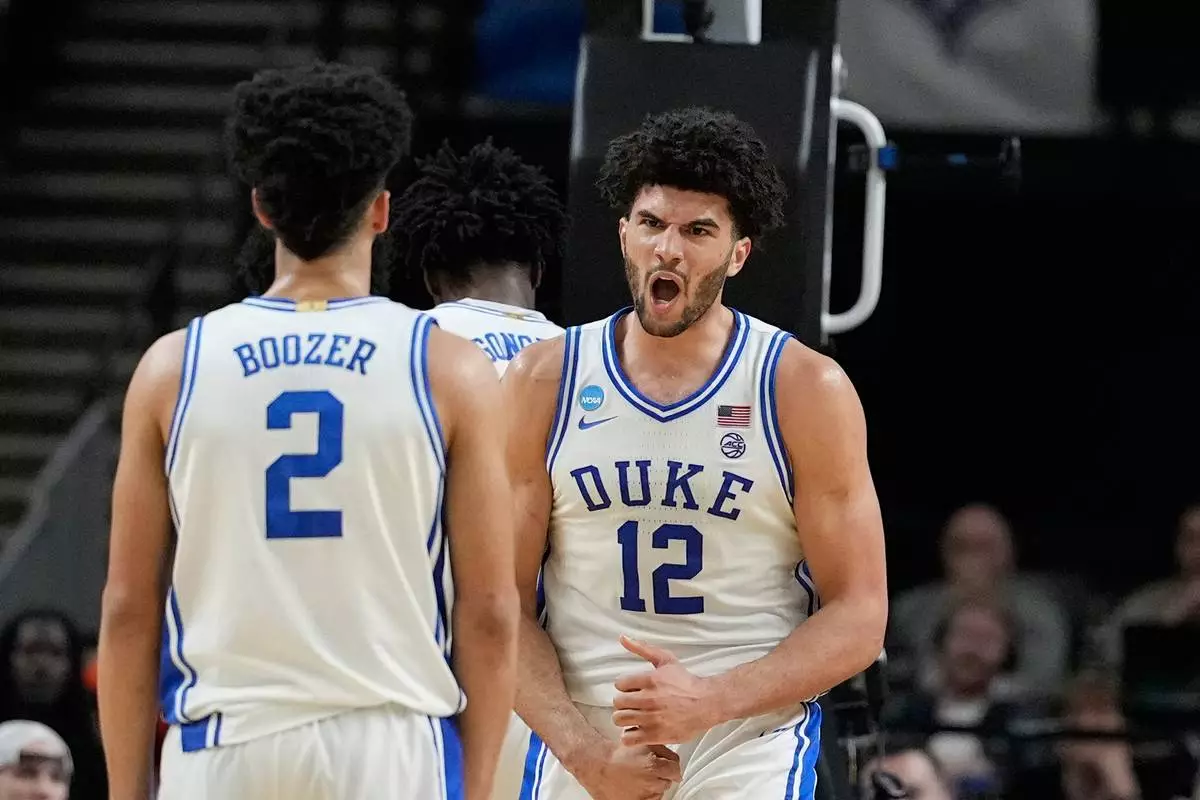
Duke forward Cameron Boozer (12) reacts after scoring during the second half in the second round of the NCAA college basketball tournament against TCU, Saturday, March 21, 2026, in Greenville, S.C. (AP Photo/Brynn Anderson)
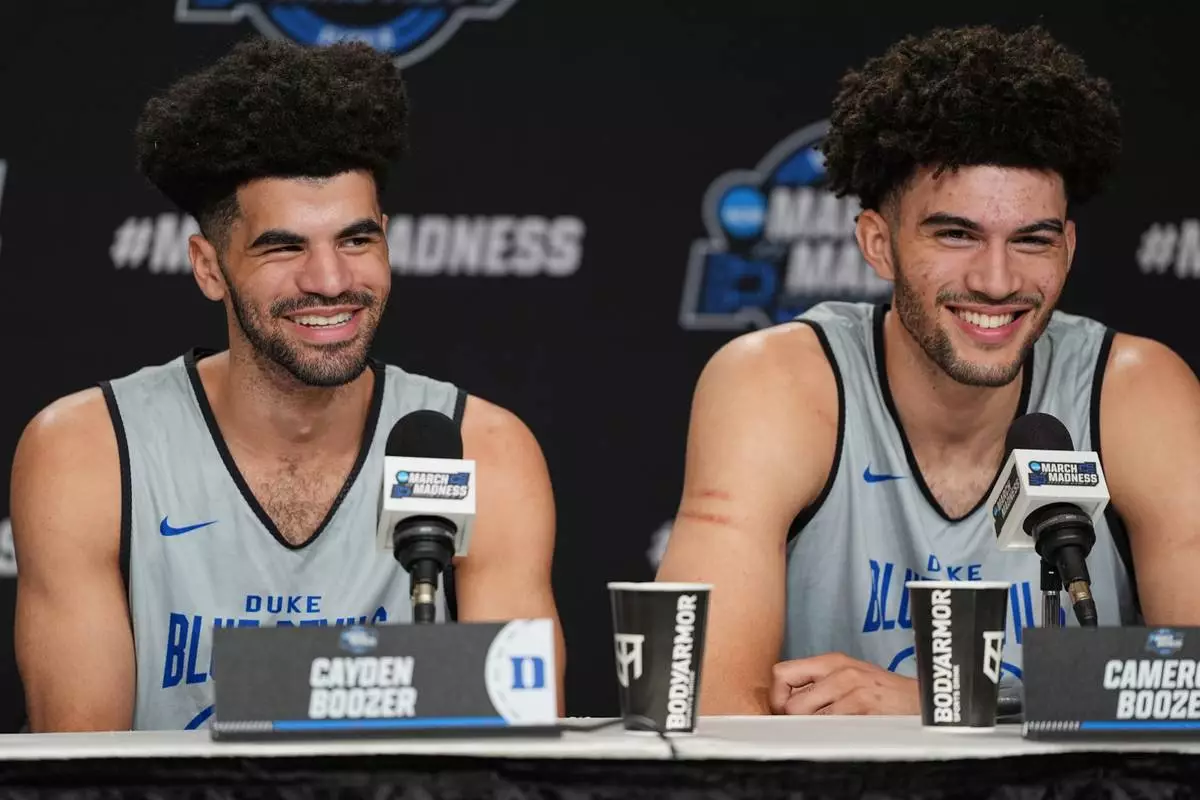
Duke guard Cayden Boozer, left, and Duke forward Cameron Boozer, right, share a laugh during a press conference ahead of a game against UConn in the Elite Eight of the NCAA college basketball tournament Saturday, March 28, 2026, in Washington. (AP Photo/Abbie Parr)
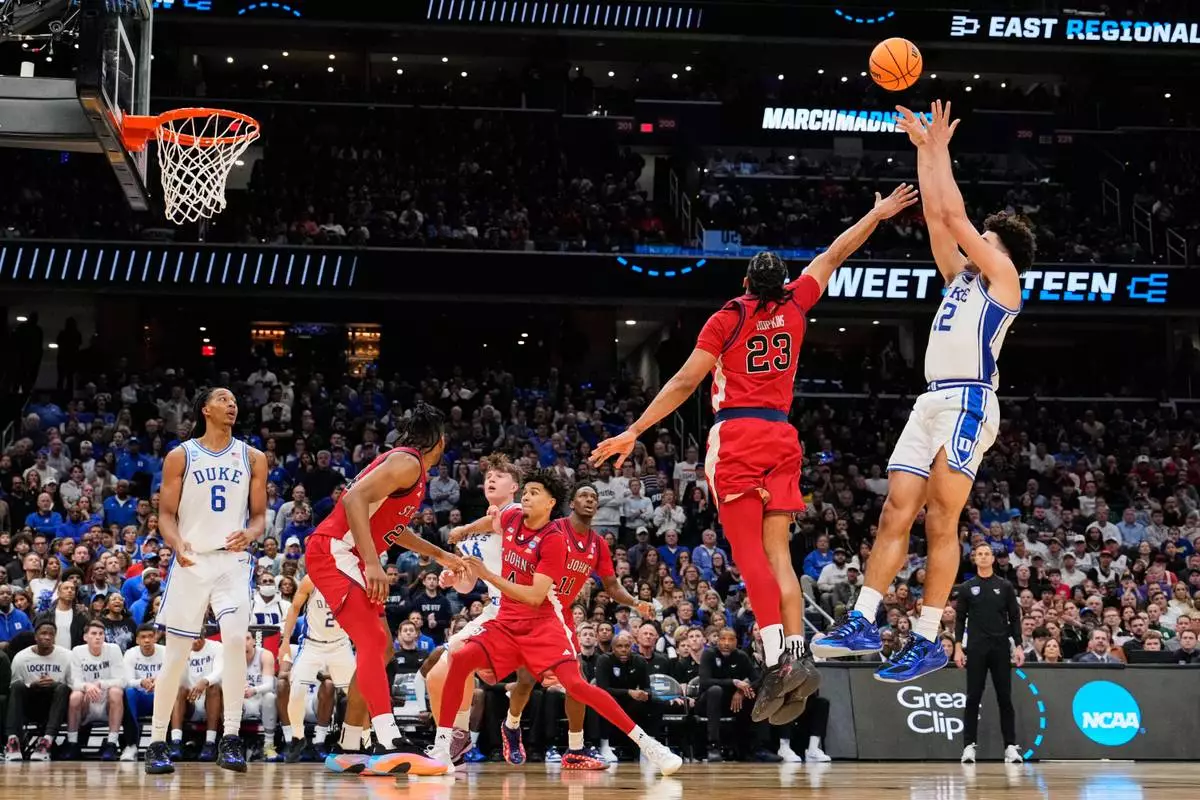
Duke forward Cameron Boozer (12) shoots over St. John's forward Bryce Hopkins (23) during the second half in the Sweet 16 of the NCAA college basketball tournament, Friday, March 27, 2026, in Washington. (AP Photo/Abbie Parr)
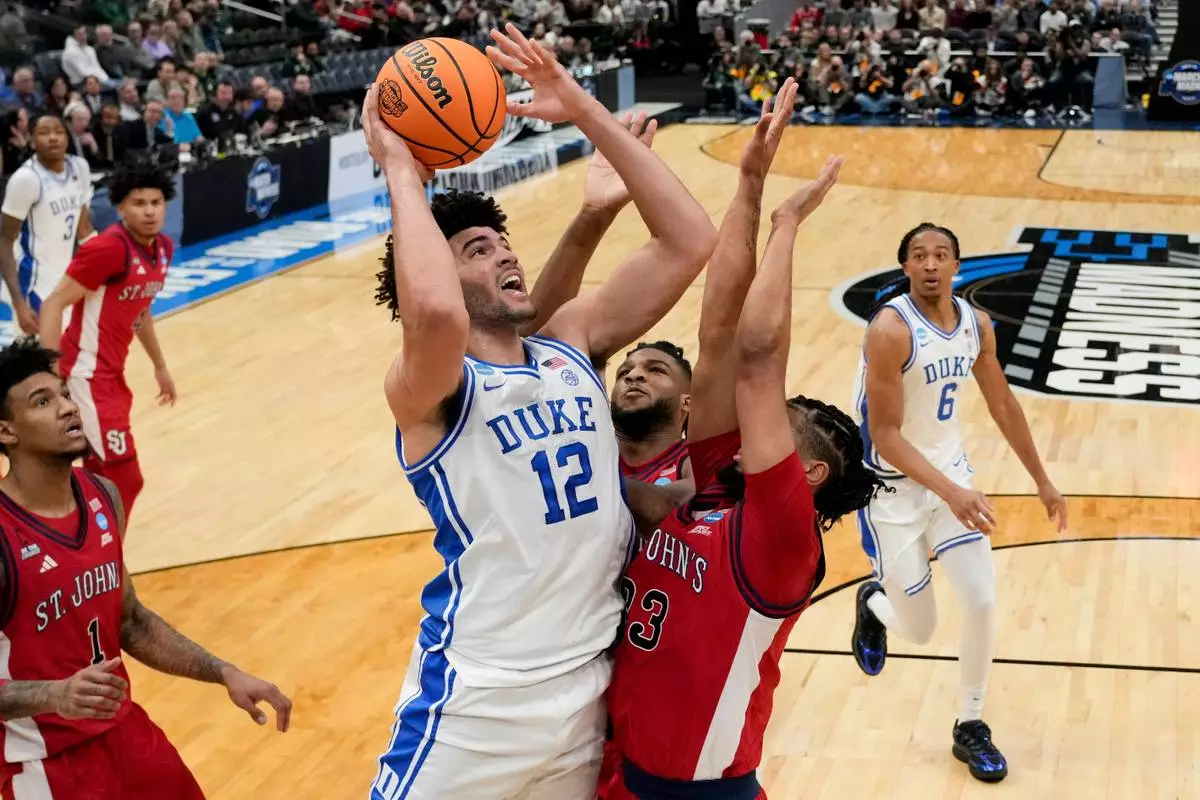
Duke forward Cameron Boozer (12) shoots over St. John's forward Bryce Hopkins (23) during the first half in the Sweet 16 of the NCAA college basketball tournament, Friday, March 27, 2026, in Washington. (AP Photo/Stephanie Scarbrough)