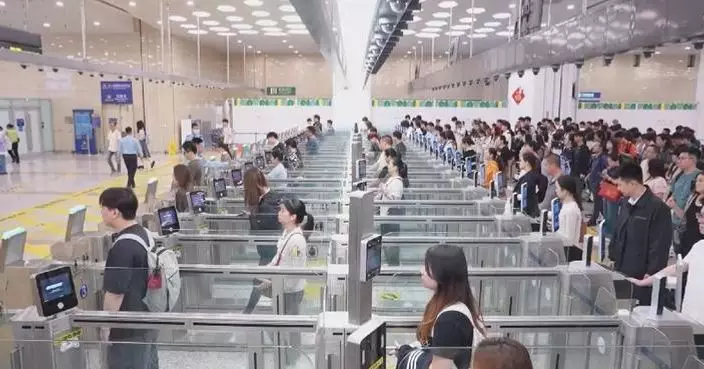
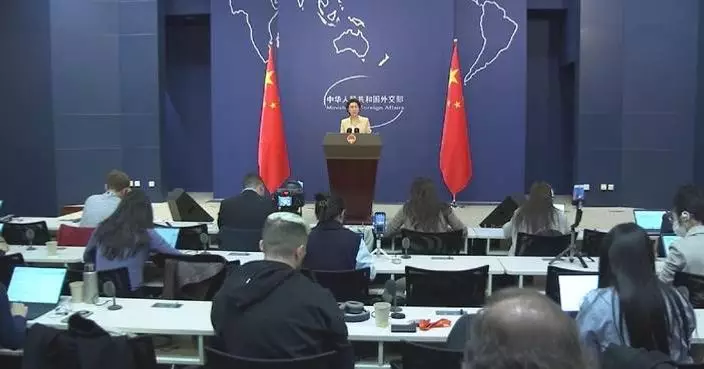
An estimated 182.48 million cross-regional passenger trips were expected nationwide on the second day of China's 2026 Spring Festival travel rush on Tuesday, as transport authorities are stepping up services to ensure smooth and safe journeys for holiday travelers.
With the annual travel rush now underway, people across the country are setting out for family reunions, with railway, highway and civil aviation authorities increasing capacity, adding services and optimizing operations to meet the surging demand and safeguard orderly travel during the peak period.
On the railway network, China was expected to handle 11.15 million passenger trips on Tuesday. A total of 879 additional passenger trains were scheduled to operate to ease congestion on busy routes. As of 8 a.m. on Tuesday, the national railway ticketing platform 12306 had sold a cumulative 84.49 million tickets for the Spring Festival travel period.
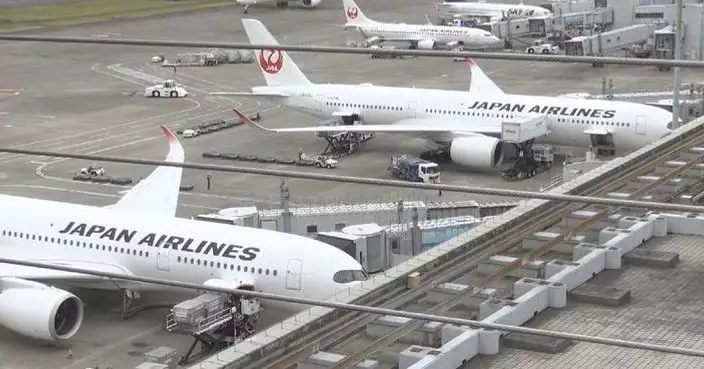
Civil aviation passenger numbers continued to rise, with airlines and airports nationwide expected to guarantee 19,352 flights and transport about 2.25 million passengers on Tuesday, representing a 0.7 percent increase from the previous day and a 2.5 percent rise compared with the same period in 2025.
Airlines and airports have strengthened information services to help travelers access timely and accurate flight updates.
On the roads, China's highway network operated smoothly on Tuesday. The Total road passenger flow, including non-commercial trips by private cars on expressways and national and provincial highways, as well as commercial road passenger transport, was estimated at 168.47 million.
Passenger flows on medium-and long-distance routes of more than 600 kilometers have surged in multiple regions.
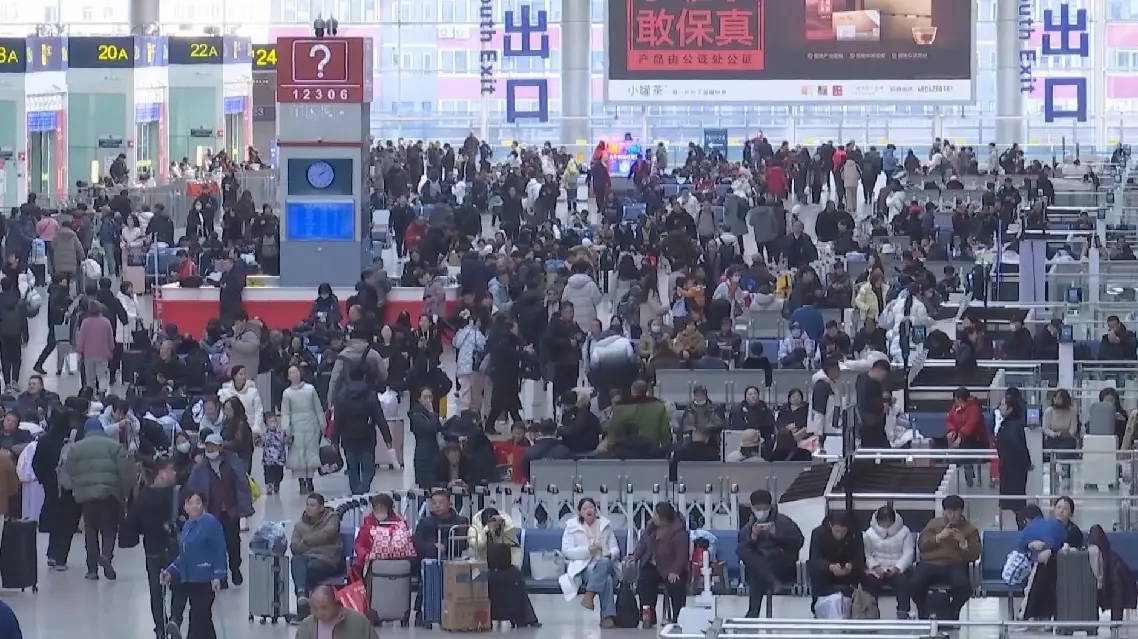
China expects 182 mln cross-regional passenger trips on 2nd day of Spring Festival travel rush
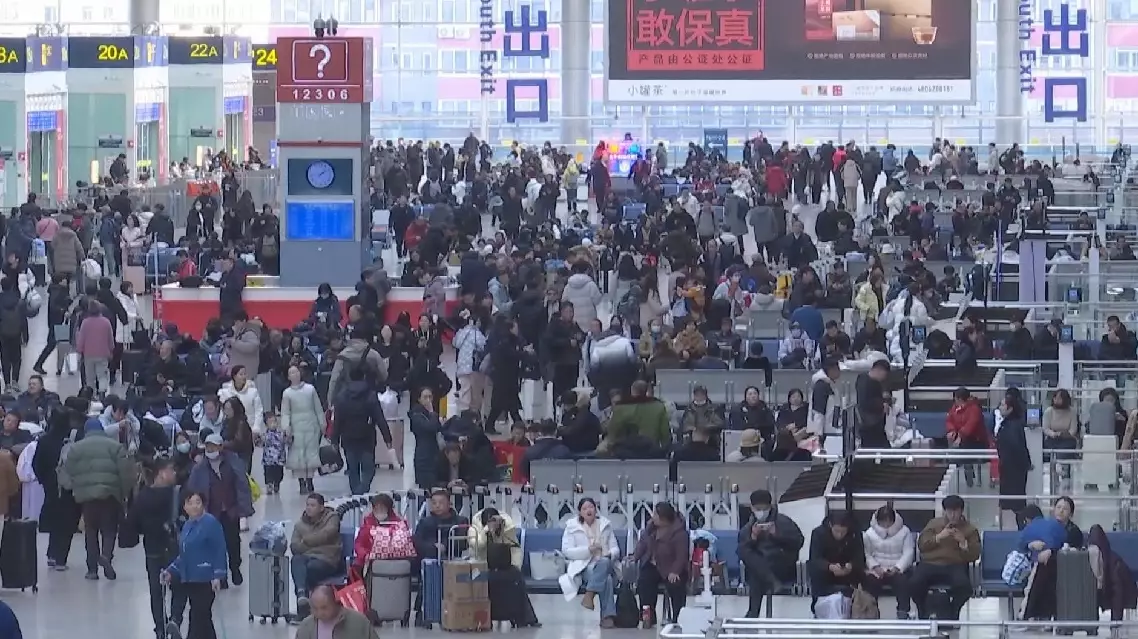
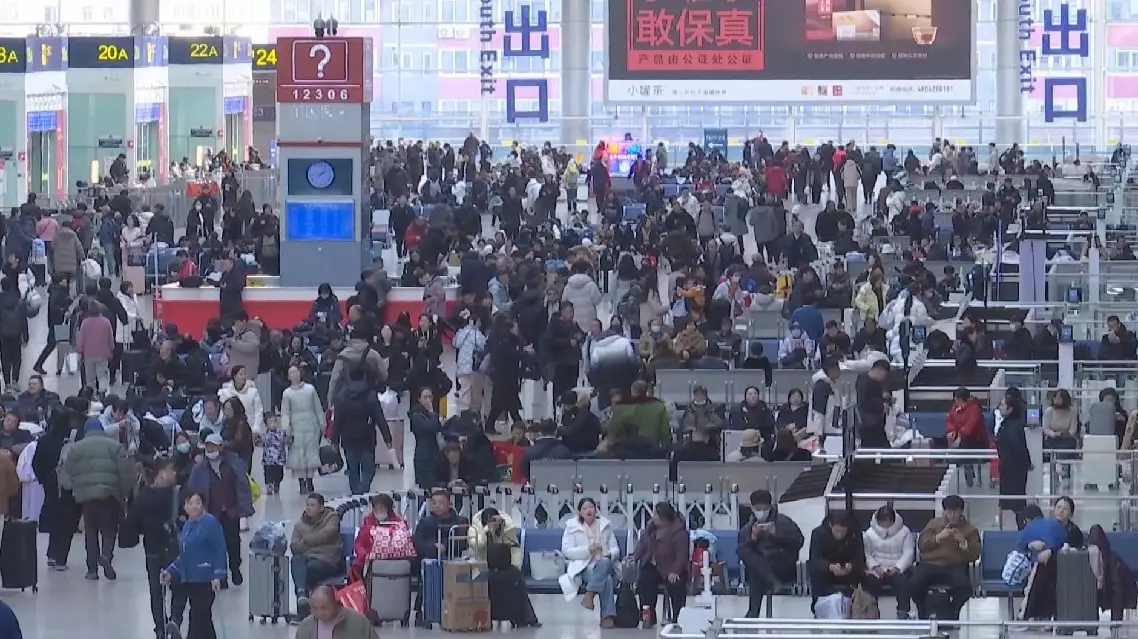
China's "No. 1 central document" for 2026 offers a directional guidance for future modern agricultural development, which features enriched connotation, a more complete industrial system, and higher value-added products, said Zhu Weidong, deputy director of the Office of the Central Rural Work Leading Group on Wednesday.
China unveiled its "No. 1 central document" for 2026 on Tuesday, outlining plans to advance agricultural and rural modernization and to promote all-around rural revitalization.
As the first policy statement released by China's central authorities each year, the document is seen as an indicator of policy priorities.
"The meaning of agriculture has evolved with the times, with its multiple functions becoming more obvious and industrial boundaries expanding continuously. The development of sci-tech-driven, eco-friendly, quality-focused, and brand-oriented agriculture has emerged as a new trend. Meanwhile, the integrated development of primary, secondary and tertiary industries in rural areas continues to foster new industries and new business formats. Building agriculture into a modern large-scale industry does not mean that the larger the scale of its production and operation is, the better it would be. Instead, it emphasizes enriching the connotation of agriculture, establishing a more complete industrial system, and producing goods with higher added value," said Zhu, also also deputy director of the Office of the Central Financial and Economic Affairs Commission, at a press conference in Beijing.
To realize this vision, Zhu made further elaboration from three aspects.
"This can be construed from three aspects. First, it involves simultaneous development of farming, forestry, animal husbandry and fisheries. Agriculture is not only about growing and harvesting grain, but also about promoting establishment of a diversified food supply system. Second, it requires integration of production and sales. The focus must extend beyond production to include post-production development, so as to enhance agricultural quality and efficiency. And third, it focuses on fusion of agriculture with culture and tourism. To meet the changing consumption demands of urban and rural residents, it is essential to upgrade rural tourism and develop 'small yet beautiful' cultural and tourism formats to promote rural economic prosperity," he said.
China's No. 1 central document for 2026 offers guidance for modern agricultural development: official