LCQ 3: Foster care service
Following is a question by Reverend Canon the Hon Peter Douglas Koon and a reply by the Secretary for Labour and Welfare, Mr Chris Sun, in the Legislative Council today (February 4):
Question:
It is learnt that the number of foster families has continued to decrease in recent years, making it difficult to find matches for children in need. In this connection, will the Government inform this Council:
(1) whether it will consider reviewing the substitute mechanism for foster families, including not deducting allowances during reasonable substitute periods and establishing district-based substitute support networks, such as setting up a "partner family" mechanism to enable foster families to assist each other in providing short-term care for foster children when necessary; if so, of the details; if not, the reasons for that;
(2) whether it will consider formulating an inflation-linked foster care allowance for maintenance of foster children's expenses and an incentive payment for foster families, and increasing these amounts to cover foster children's reasonable expenses on learning and development activities (e.g. tutorial fees), as well as recognising the selfless contributions of foster parents; if so, of the details; if not, the reasons for that; and
(3) as there are views that community recognition for foster families is insufficient, whether, in order to commend the contributions of foster families and promote the building of a foster family-friendly society, the Government will encourage the business sector to launch a "Foster-Friendly Card" to provide foster parents with concessions on transport, shopping, and arts, cultural, leisure and recreational services, etc.; if so, of the details; if not, the reasons for that?

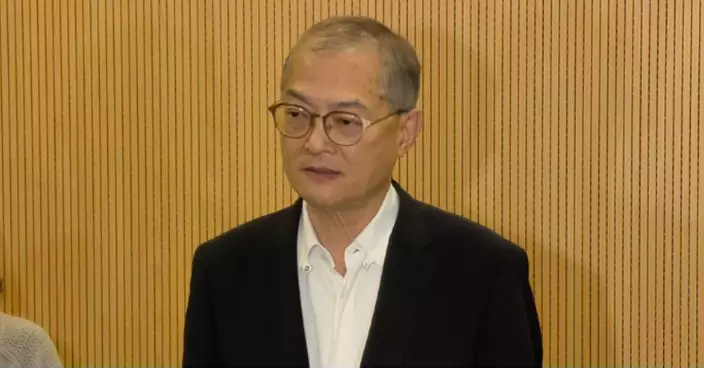
The Secretary for Labour and Welfare, Mr Chris Sun, Photo source: reference image
Reply:
President,
Residential Child Care Services subsidised by the Social Welfare Department (SWD) can be categorised into institutional and non-institutional services, which provide 24-hour free-of-charge transitional residential care and protection for children and young persons who temporarily cannot be adequately cared for by their families due to various reasons. Foster care is a type of non-institutional service for children under the age of 18 who cannot be adequately cared for by their families due to various family issues or emergencies, so that they can continue to enjoy family life until they can reunite with their families or a long-term alternative welfare arrangement is reached.
The consolidated reply to the three parts of the question raised by the Reverend Canon the Hon Peter Douglas Koon is as follows:
To ensure children in need receive appropriate care and to encourage suitable families to join foster care service, the SWD regularly disburses allowances and incentive payment to foster parents, including Maintenance Grant for Foster Children and Incentive Payment for Foster Parents. At the same time, an additional incentive payment is also provided to foster families taking care of children with special needs or children under six years old. Furthermore, when a child is placed in a foster family, the foster parents will receive a one-off setting-up grant. These allowances and payments are adjusted annually according to the Composite Consumer Price Index.
Maintenance Grant for Foster Children is provided for foster parents to cover the foster children's monthly living expenses, including food and daily necessities. According to the existing mechanism, if a foster child is arranged by the responsible caseworker to temporarily leave the foster home for home leave, the Incentive Payment for Foster Parentsand the additional incentive payment will continue to be disbursed to the foster parents without deduction, while the Maintenance Grant for Foster Children will be deducted according to the number of days the child is temporarily away from the foster home.
If foster parents need to take leave for various reasons and cannot take care of their foster child, the foster child will be arranged to receive care service at another foster home. During the relief care arrangement period, foster care allowance will be disbursed to the foster family providing relief care to the foster child concerned until the foster child returns to the original foster family.
To improve the arrangement of relief care, the SWD launched a "one-plus-one" recruitment scheme in January 2024 to encourage members of the public who are interested in providing foster care services to submit applications together with their relatives and friends for taking care of the same foster child, so that they can swiftly stand in for one another when one party is temporarily unable to provide care. The "one-plus-one" scheme facilitates mutual support between the shared households and also saves the need for a foster child to be arranged to stay in an unfamiliar living environment.
To further strengthen support for foster care services, the Government has implemented a series of enhancement measures recent years, including substantially increasing the incentive payment for foster parents starting from April 2024 to encourage interested parties to become foster families. The monthly incentive payment of ordinary foster care service has been increased more than double from around $5,000 to about $11,000; and that for emergency foster care service has been doubled from around $6,600 to about $13,000. In the past three years, the number of registered foster families increased from 978 in 2023-24 to 1 112 in 2025-26 (as at end-2025), representing an increase of about 14 per cent.
Moreover, starting from January 2025, the Government has allocated additional resources to strengthen support to foster parents and enhance service quality, including increasing manpower of social workers in non-governmental organisations (NGOs), providing training and professional support for foster parents, providing extra support for foster children with special learning or care needs and arranging early assessments and appropriate professional rehabilitation therapy and training for them. Additional allowances are also provided for foster children to cover the expenses for extra-curricular activities, tuition classes and interest classes, etc., thereby meeting their learning and developmental needs.
In order to recognise the contributions of foster families and promote the building of a foster-friendly society, the SWD annually holds parent-child activities for foster families which provide an opportunity for foster children to express their gratitude to the foster parents. Besides, the SWD regularly holds the Foster Families Service Award Presentation Ceremony to present awards to foster families to give recognition to their care and outstanding contributions to foster children, and at the same time call on more people to join the service with a view to bringing love and care for more children in need. In addition, the SWD has been collaborating with NGOs that provide foster care services to promote foster care through various channels and media, including inviting foster parents to share their experiences of caring for foster children on media platforms so as to recognise their dedication and contribution and raise public awareness of foster care services.
The SWD will continue to review the utilisation of foster care services and will maintain communication with NGOs providing foster care services to ensure that foster care services can meet the needs of foster children and safeguard their well-being.