VISTA, Calif.--(BUSINESS WIRE)--Feb 4, 2026--
M2 Ingredients, the largest vertically integrated functional mushroom grower and ingredient supplier in the Western Hemisphere, today announced the launch of the M2 Center of Innovation, a state-of-the-art food, beverage, and supplement R&D application lab designed to accelerate innovation and elevate industry standards for functional mushroom product development.
This press release features multimedia. View the full release here: https://www.businesswire.com/news/home/20260204077179/en/
The M2 Center of Innovation brings together the most experienced functional mushroom R&D teams in the industry with a purpose-built facility to support brands developing next-generation functional foods, beverages, and supplements across formats including RTDs, ready-to-mix powders, gummies, capsules, shots, bars, and more.
“This is a major step forward not just for M2, but for the entire functional mushroom industry,” said Jeff Rogers, CEO of M2 Ingredients. “Brands have historically had to choose between ingredient suppliers and true innovation partners. The M2 Center of Innovation eliminates tradeoff by combining deep scientific rigor with real-world formulation and application expertise. This will be a powerful asset for our partner brands and a catalyst for faster, more confident innovation.”
Unlike traditional application labs, the M2 Center of Innovation is fully integrated with M2’s cultivation, processing, and scientific research teams. This vertical integration allows common formulation challenges such as solubility, suspension, flavor pairing, and sensory performance to be addressed at the ingredient level.
The Center of Innovation will be led by Jay Schmalz, R&D Innovation Manager at M2 Ingredients, and supported by M2’s in-house team of food scientists, formulation experts, and researchers with decades of experience developing functional foods, beverages, and supplements for leading consumer brands.
According to Dr. Sandra Carter, Founder of M2 Ingredients, the launch represents a defining moment for the category.
“This Center of Innovation reflects the infrastructure the functional mushroom space has been missing,” Dr. Carter said. “It is designed to help brands move beyond concepts and into market-ready products that deliver on both efficacy and experience. We believe this will fundamentally change how functional mushroom products are developed and commercialized.”
Chief Science Officer, Dr. Julie Daoust, noted that the Center was shaped by her own experience leading R&D and innovation teams on the consumer brand side earlier in her career.
“This is the partner I always wished I had when I was responsible for bringing new products to market,” said Dr. Daoust. “A team that understands ingredient science, formulation realities, scale-up challenges, and commercialization timelines all at once. The M2 Center of Innovation allows brands to innovate without having to build a full internal R&D infrastructure, while still delivering products that truly work.”
The M2 Center of Innovation is now open and actively collaborating with food, beverage, and supplement brand partners.
About M2 Ingredients
M2 Ingredients is leading the future of functional mushrooms as the most clinically supported functional mushroom ingredient supplier for food, beverage, and supplement brands. Vertically integrated, M2 organically grows and ships from Southern California and is backed by the industry’s largest scientific and R&D team. Visit M2 Ingredients to get samples and create products backed by real science and credible claims.
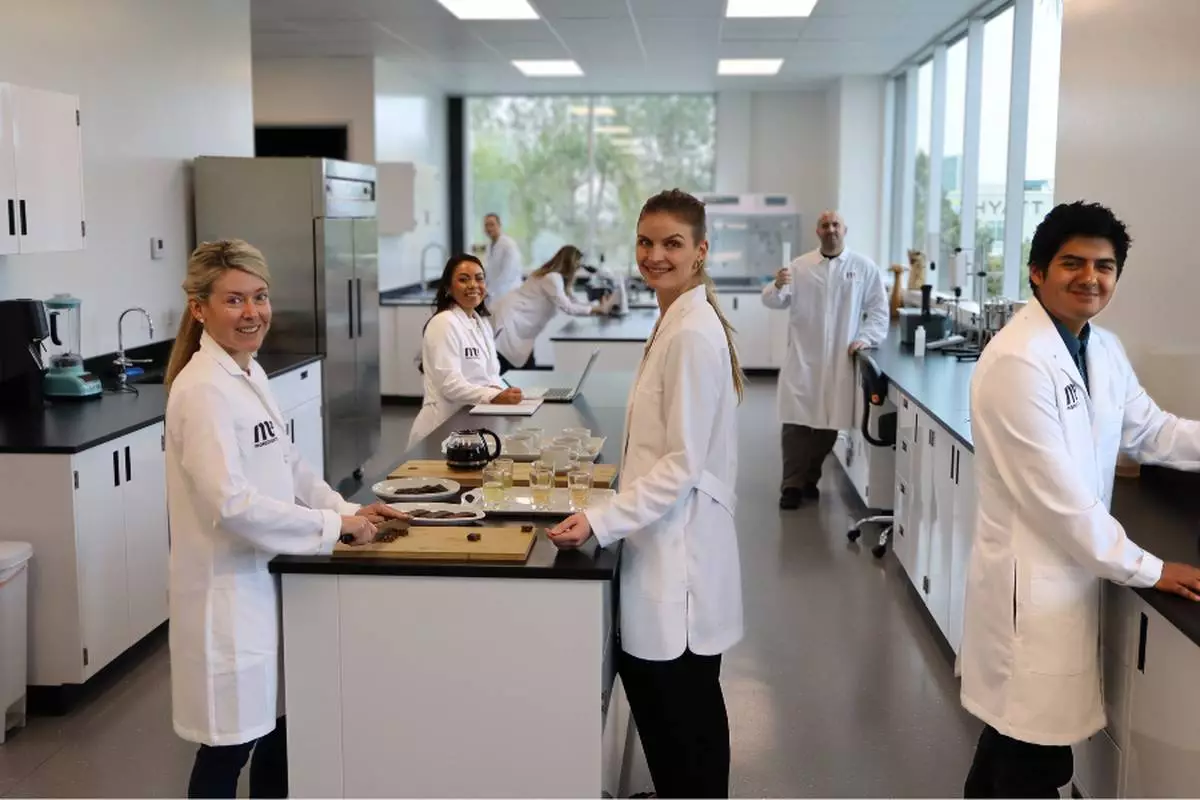
Inside the M2 Center of Innovation, our food science team brings deep, hands on expertise across brewed coffee, coffee pods, instant coffee, functional beverages, energy drinks, carbonated functional beverages, gummies, chocolate, bars, and more. This team works alongside our partners to turn functional mushroom science into finished products that perform, scale, and win in the market.
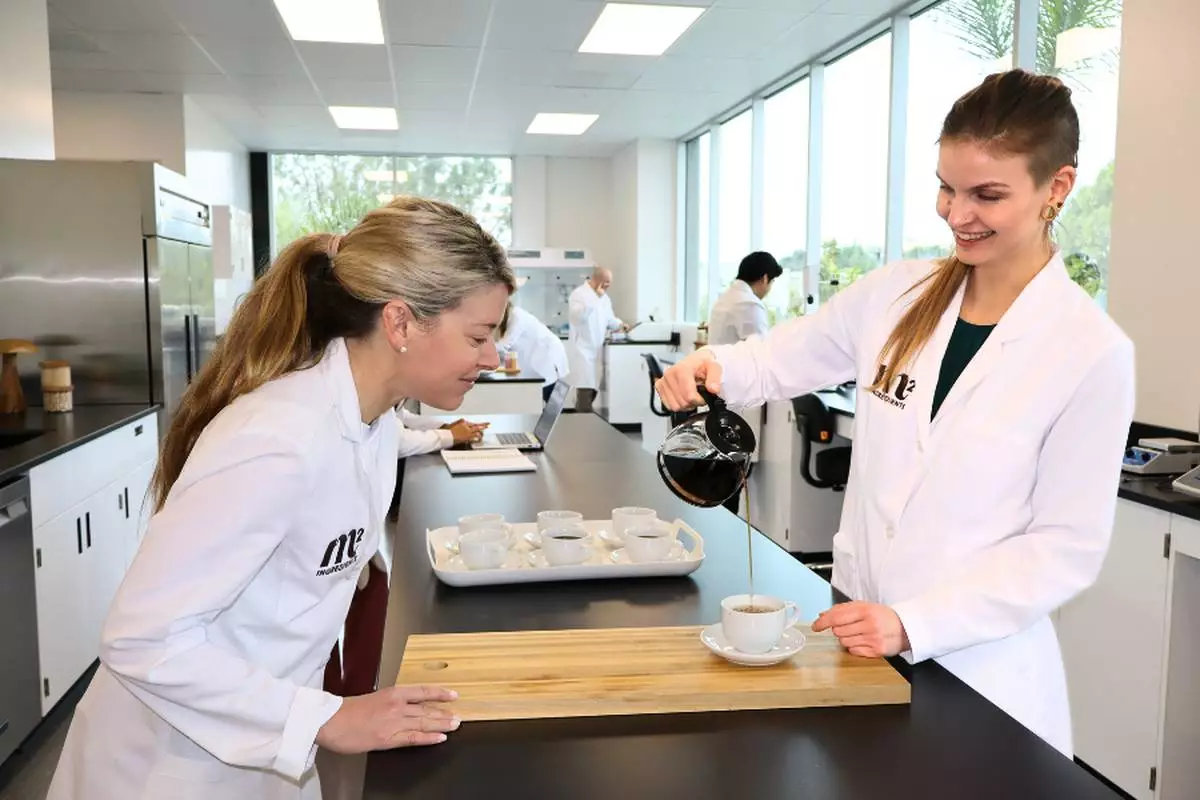
M2’s new Center of Innovation will help support the rapidly growing mushroom coffee and functional beverage industry. The M2 team has developed new solutions to reduce settling, enhance bioactivity, and deliver a more neutral flavor profile. The team is ready to partner with coffee, beverage, and food brands of all sizes, supporting them from ideation through production.
DUBAI, United Arab Emirates (AP) — Iran fired on targets across the Middle East while American and Israeli airstrikes hit the Islamic Republic early Friday as the war neared the end of its fifth week unabated and the U.N. Security Council prepared to meet over Tehran’s stranglehold on the Strait of Hormuz.
Despite claims from the U.S. and Israel that Iran’s military capabilities have been all but destroyed, Tehran has continued to keep the pressure on Israel and its Gulf Arab neighbors. Bahrain and Kuwait both reported early morning barrages from Iran, while Israel warned of incoming missiles.
Activists reported strikes around Tehran and the central city of Isfahan, but it wasn’t immediately clear what was hit.
Iran’s attacks on Gulf region energy infrastructure and its tight grip on the Strait of Hormuz, through which a fifth of the world’s oil and natural gas transits in peacetime, have sent oil prices skyrocketing and is impacting global economies.
Spot prices of Brent crude, the international standard, were around $109 early Friday, up more than 50% from Feb. 28 when Israel and the U.S. started the war with their attacks on Iran.
Shipping had flowed freely through the strait before the war, but U.S. President Donald Trump has said it’s not now Washington’s responsibility to get the waterway reopened, instead putting the onus on others, saying this week that the countries that depend more on fuel shipped through Hormuz should “build some delayed courage” and go “take it.”
The U.N. Security Council was expected to vote Saturday on a proposal from Bahrain that would authorize defensive action to ensure vessels can safely transit the strait. Bahrain’s initial draft would have allowed countries to “use all necessary means” to secure the strait, but Russia, China and France — who have veto power on the Council — expressed opposition to approving the use of force.
Speaking Thursday in South Korea, French President Emmanuel Macron said the American expectation that the Strait of Hormuz could be reopened by force was unrealistic.
Macron said a military operation “would take an infinite amount of time and would expose anyone passing through the strait to coastal threats from (Iran’s) Revolutionary Guard." He added that reopening of the strait “can only be done in coordination with Iran,” through negotiations that would follow a potential ceasefire.
Talks organized by Britain and involving more than 40 countries focused on political rather than military means to secure the strait. The nations, which didn't include the U.S., urged increased diplomatic pressure on Iran and possible sanctions.
More than 1,900 people have been killed in Iran during the war, while 19 have been reported dead in Israel. More than two dozen people have died in Gulf states and the occupied West Bank, while 13 U.S. service members have been killed.
More than 1,300 people have been killed and more than 1 million displaced in Lebanon, where Israel has launched a ground invasion in its fight with the pro-Iranian Hezbollah militant group. Ten Israeli soldiers have also died there.
Rising reported from Bangkok. AP journalists Sylvie Corbet in Paris and Edith M. Lederer at the United Nations contributed to this report.
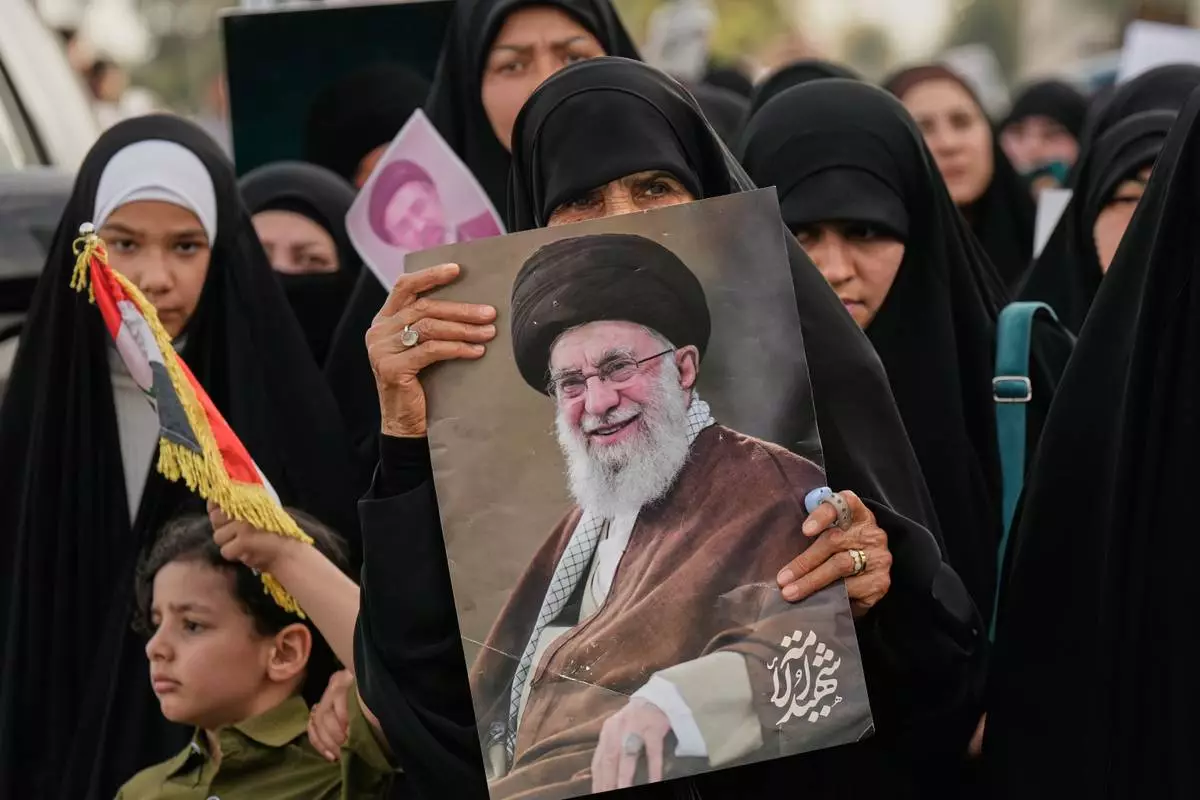
Iraqi women hold a portrait of Iran's late Supreme Leader Ayatollah Ali Khamenei and his son Ayatollah Mojtaba Khamenei, during a protest against U.S. and Israeli attacks on multiple cities across Iran, in the Shi'ite district of Kazimiyah in Baghdad, Iraq, Friday, April 3, 2026. (AP Photo/Hadi Mizban)
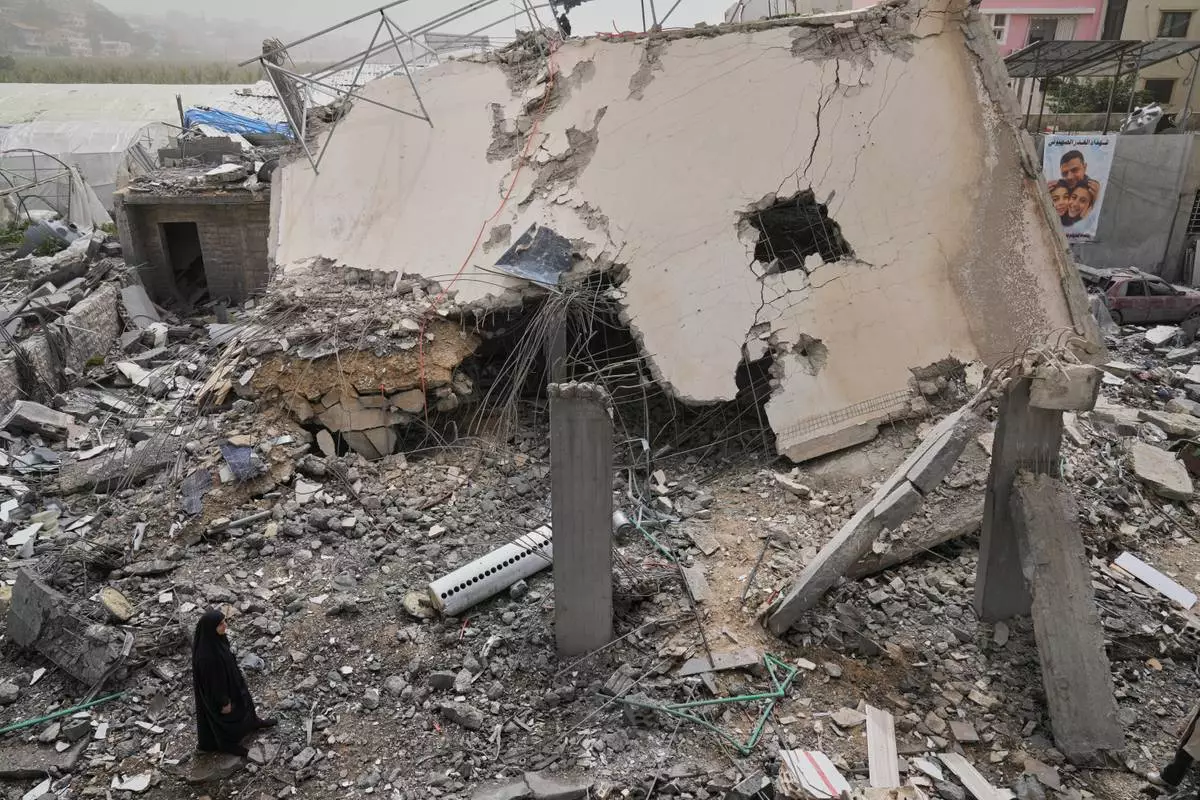
A woman checks a destroyed house that was hit in an Israeli airstrike in Saksakiyeh village, south Lebanon, Friday, April 3, 2026. (AP Photo/Hussein Malla)
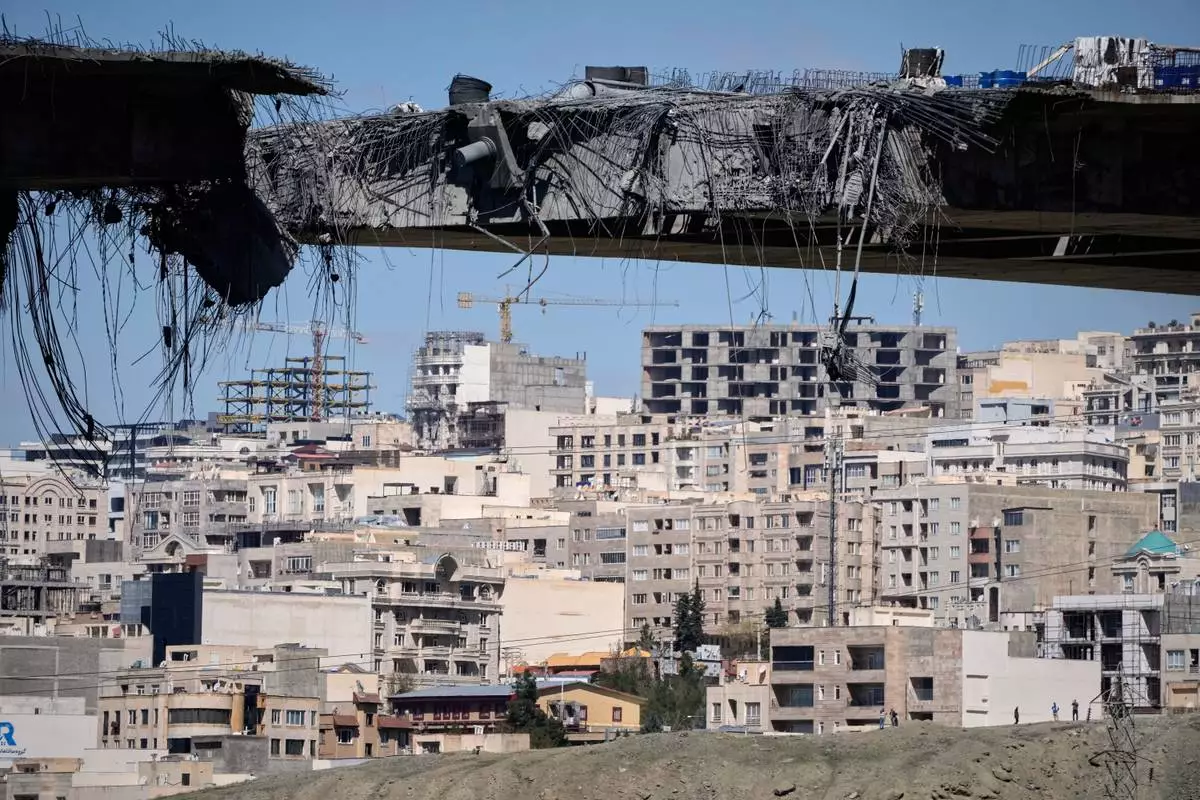
A bridge struck by U.S. airstrikes on Thursday is seen in the town of Karaj, west of Tehran, Iran, Friday, April 3, 2026. (AP Photo/Vahid Salemi)
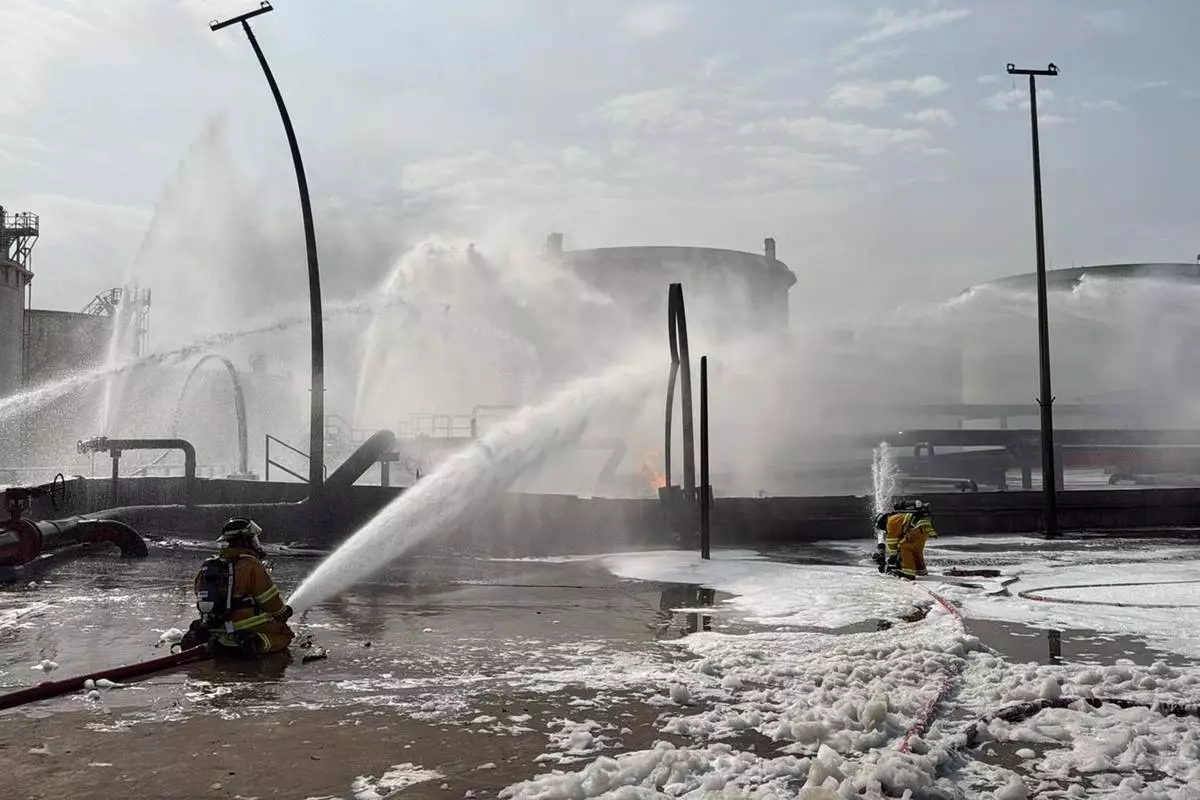
FILE - This image released by Bahrain's Interior Ministry shows firefighters extinguishing flames after an Iranian projectile struck an industrial area in Ma'ameer, Bahrain, March 9, 2026. (Bahrain Interior Ministry via AP, File)
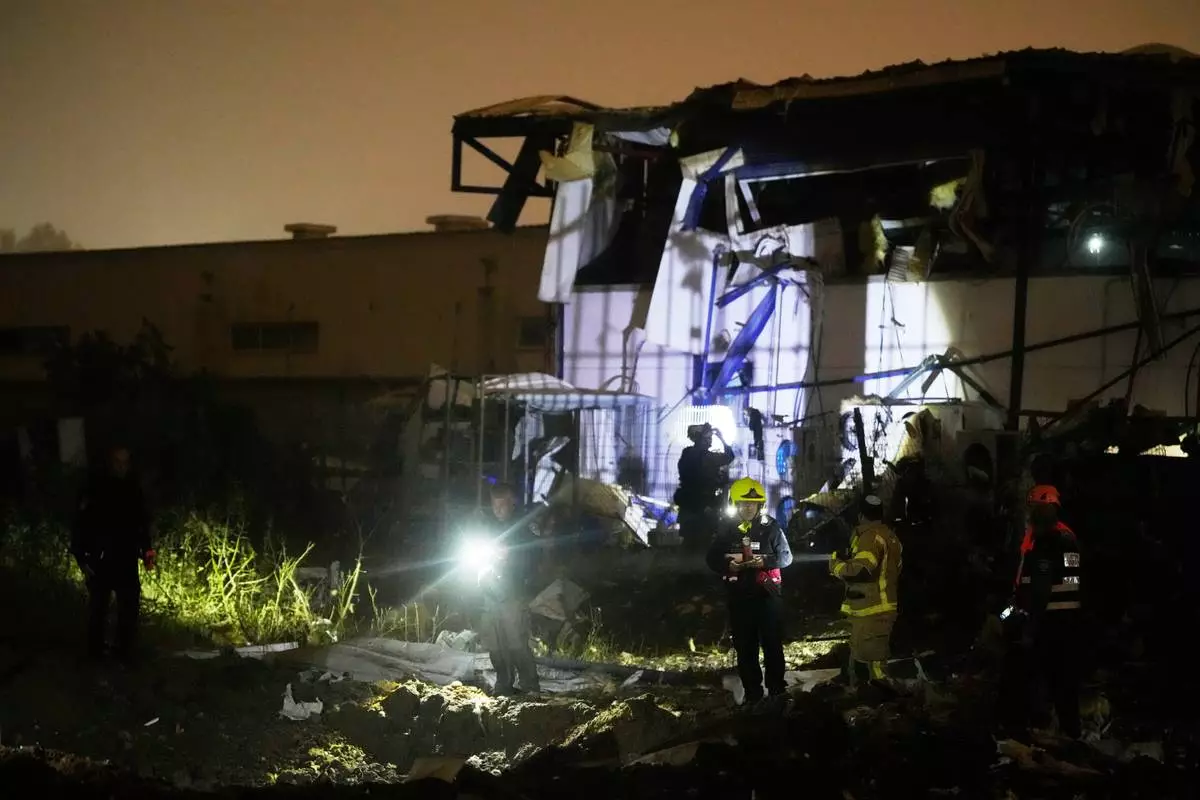
Israeli security forces and rescue teams inspect a site struck by an Iranian missile in Petah Tikva, Israel,Thursday, April 2, 2026. (AP Photo/Ohad Zwigenberg)

A boy who fled with his family following Israeli strikes in southern Lebanon sits inside the van they are using as shelter in Sidon, Lebanon, Thursday, April 2, 2026. (AP Photo/Emilio Morenatti)
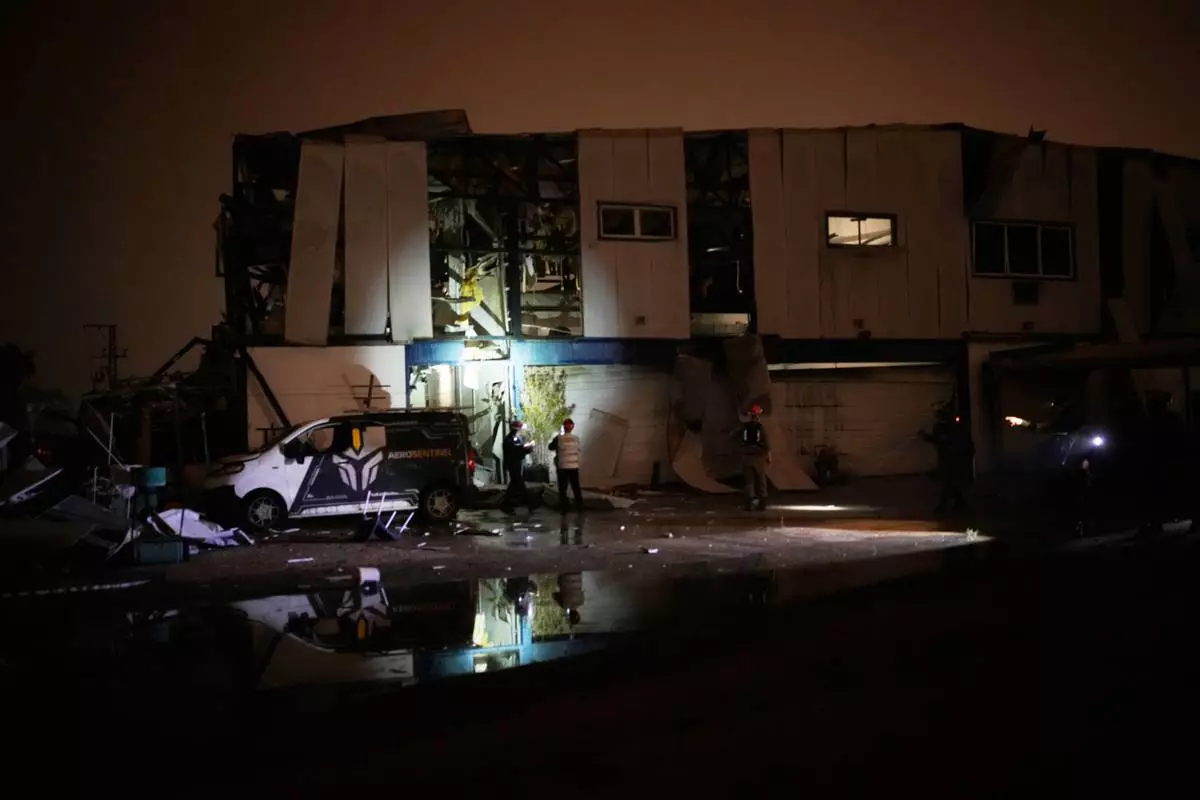
Israeli security forces and rescue teams inspect a site struck by an Iranian missile in Petah Tikva, Israel,Thursday, April 2, 2026. (AP Photo/Ohad Zwigenberg)