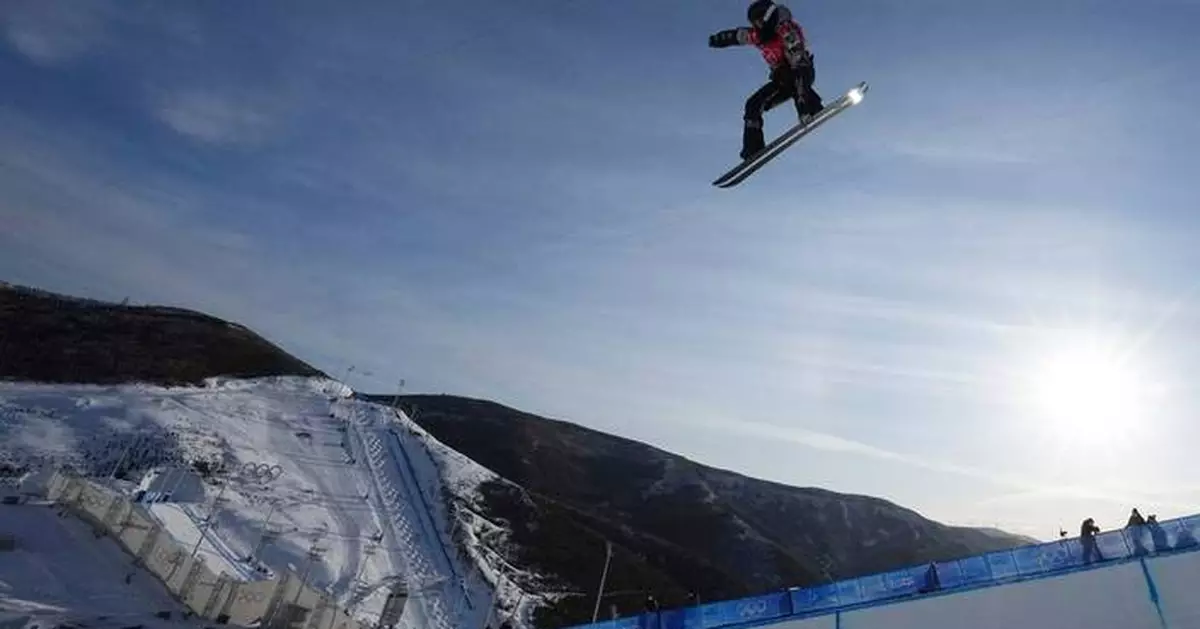
LIVIGNO, Italy (AP) — A backside double cork 1080! Followed by a cab triple cork 1440! Holy Crail, that was a sweet grab!
The snowboarders and freestyle skiers will be speaking a language all their own as they “shred some gnar” (ride some gnarly conditions) at the Milan Cortina Winter Olympics.
Can't tell a melon from a method grab? No worries. Here's a cheat sheet of some terms you might hear when the action starts in Livigno, Italy.
Halfpipe: Imagine a massive tunnel that you could drive a truck through, slice the top off, then transform it into hard-packed snow. That is the halfpipe where snowboarders and freeskiers take turns zooming across its inclined slope to gather speed before launching into a series of acrobatic jumps. The halfpipe at the Livigno ski resort hosting these Olympic events measures 220 meters (240 yards) in length, 22 meters (24 yards) in width, and rises to 7.2 meters (23.6 feet) in height.
Slopestyle: A course located on a slope where snowboarders and freestyle skiers take turns trying to put together the most polished and demanding series of tricks coming off rails and molded bumps for aerial lift. The Livigno slopestyle course allows for jumps that can exceed 25 meters (27 yards).
Big air: The third of the “park” events consists of athletes performing one single “big” jump. The Livigno big air jump ramp peaks at over 40 meters (yards).
180, 360, 540, 1440: The degrees of a spinning trick completed in a single jump. 360 is 1 complete spin, 720 two spins, etc. The most spins completed in competition are 6 1/2. That's a 2340, both on snowboard and skis, and the massive spins like that almost always come in big air. On the halfpipe, anyone who pulls off a 1440 will be in contention for a medal. Important for street credibility: 2340 and the like are pronounced “twenty-three forty,” not "two thousand, three-hundred and forty."
Backside: Facing backwards going into a rail on a slopestyle course, as well as when a rider or skier faces uphill when completing a spin on a jump. Frontside means a rider faces downhill when completing a spin.
Cork: A head-over-heels flip that produces a corkscrew effect. A double cork is two flips, a triple cork, three, etc. Triple corks are the trick that could win the men's halfpipe.
Grabs: How the snowboarder reaches down and holds the board during a jump. There are many, but among those that come up for the top riders: Mute (front hand grabs the toe edge), melon (front hand grabs the back edge), stalefish (grab heel edge with rear hand). method (a melon but with a little flair, tweaking the board up and twisting) and, of course, the crail (both hands and back leg should be straight; do not try this at home). Judges look to see whether the rider actually grabs the board, not just places their hand on top of it, and some of these grabs need to be executed between bindings.
Grabs, Part 2: Freeskiing has its own glossary of these grabs, including Japan (behind and across to grab opposite ski) and seat belt (imagine putting a seatbelt on, but by bringing the buckle up to grab the latch).
Goofy: When a snowboarder leads with his “bad foot.” For a right-handed person, it would mean leading with the right foot.
Kicker: Another term for a slopestyle jump.
Lip: The top edge of the halfpipe.
Switch: Riding backwards, also called a “fakie.”
Tomahawk: A steak Shaun White ate at the X Games in Aspen that doubles as his preferred name for what's more commonly known as the Double McTwist 1260, a trick with 3 1/2 spins (two of them head over heels) that starts with a backside spin and is still considered one of the toughest out there.
Cab: A basic of most halfpipe rides, it's named after a skateboarder, Steve Caballero. It starts with a switch approach into a frontside spin.
Yolo: “You Only Live Once.” This is a Cab, double cork 1440 that was the focal point of the 2014 Olympics. White saw Swiss rider Iouri “iPod” Podladtchikov land it in the lead-up, then went about trying to perfect it himself; it was the iPod who pulled it off at the Olympics to win gold. The Yolo is still a relevant trick but in a sign of how much things have changed, it's now a triple cork (or two) — not on the board eight years ago — that will likely win this year's Olympics.
AP Olympics: https://apnews.com/hub/milan-cortina-2026-winter-olympics
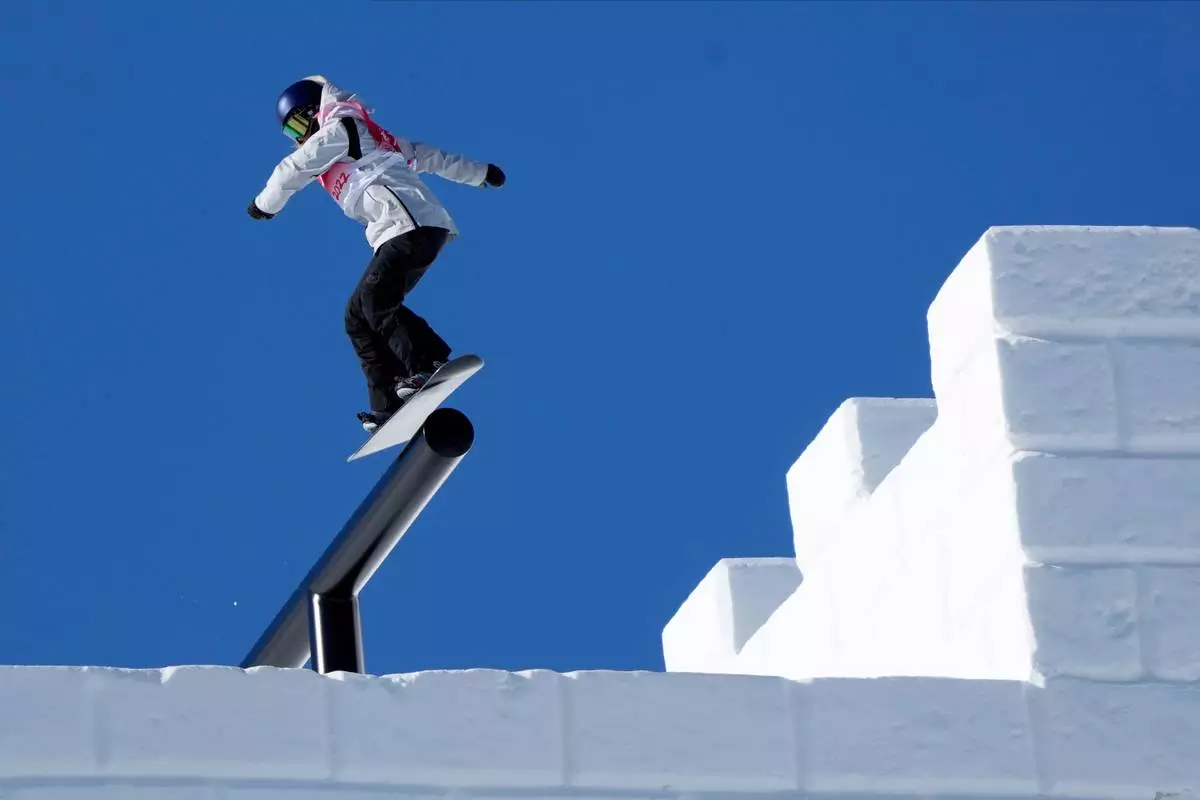
FILE - Austria's Anna Gasser competes during the women's slopestyle finals at the 2022 Winter Olympics, Feb. 6, 2022, in Zhangjiakou, China. (AP Photo/Lee Jin-man, File)
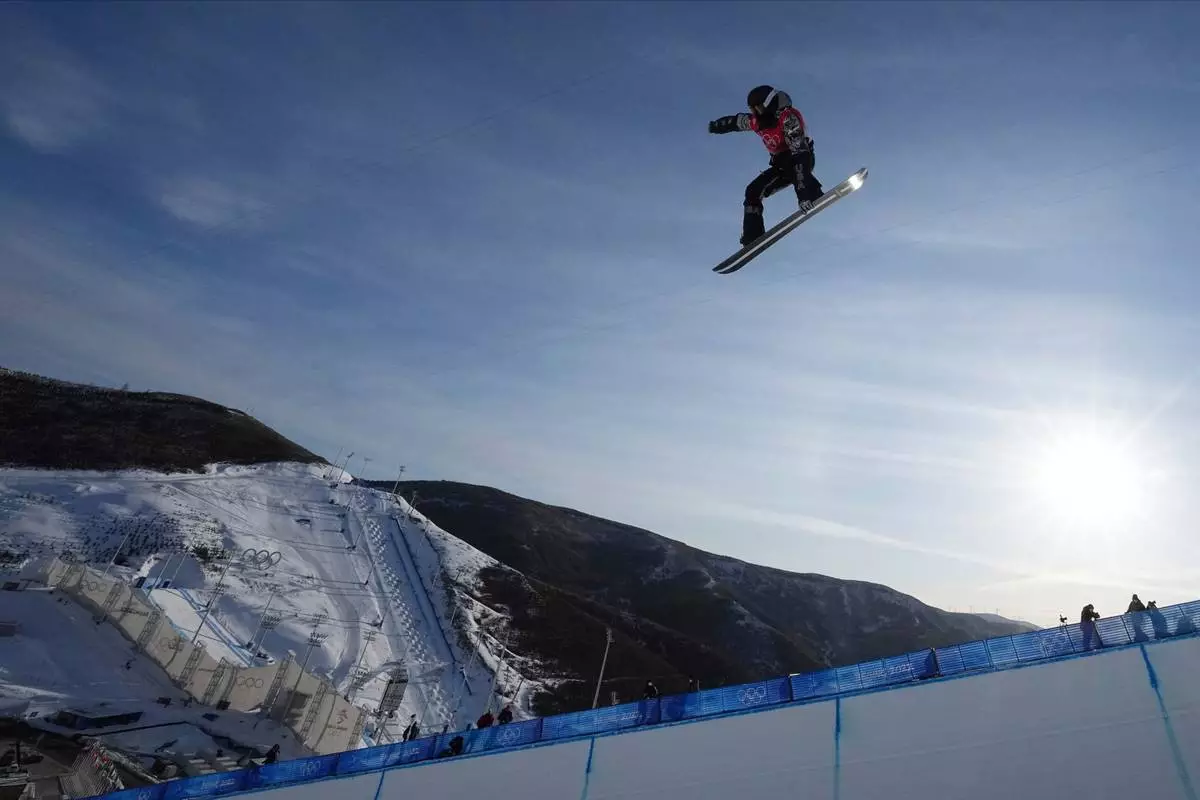
FILE - United States' Shaun White trains before the men's halfpipe finals at the 2022 Winter Olympics, Feb. 11, 2022, in Zhangjiakou, China. (AP Photo/Gregory Bull, File)
President Donald Trump tried to put some teeth into his latest attempt to save college sports.
The threat of cutting funding to cash-starved schools that don’t comply is real, even if the stricter rules that come out of the executive order he signed Friday could take a while to figure out.
In the order signed hours before the women’s Final Four tipped off one of the biggest weekends in college sports Trump went after eligibility rules, transfers and the spiraling costs associated with an industry that now pays its players millions of dollars per year.
He called on federal agencies to ensure schools are following the rules and threatened to choke off federal grants and funding, a similar approach his administration has taken to force universities around the country to alter policies involving diversity, equity and inclusion, transgender rights and even the kinds of classes they offer.
In some ways, forcing those changes might seem like child’s play once college sports figures this out. The NCAA, the newly created College Sports Commission, the four power conferences, dozens more smaller ones and hundreds of educational institutions all have a say here: It’s a big reason Congress, which Trump instructed to act quickly, has been stuck for more than a year on this.
Trump’s order was his second since one last July and it was a laundry list of proposed fixes, many of which lawmakers and college leaders have been pushing for since the approval of a $2.8 billion settlement changed the face of games that were once played by pure amateurs.
He called for “clear, consistent and fair eligibility limits, including a five-year participation window," and wants to limit athletes to one transfer with one more available once they get a four-year degree.
At a college sports roundtable last month, Trump said he anticipated any order he signed would trigger litigation. Athletes have largely won the freedom to transfer almost at will via the portal along with the ability to be paid by schools that are now doling out more than $20 million a year to their athletes.
As much as the changes he directs, Trump’s call for the Education Department, the Federal Trade Commission and the attorney general’s office to evaluate “whether violations of such rules render a university unfit for Federal grants and contracts” stands out as a way to force change.
Several universities across the country have made policy changes to comply with federal orders and avoid funding-related showdowns with the government. Yet big-named schools like Penn State and Florida State are facing huge debts.
“I haven’t read it, obviously, but I certainly appreciate his interest in the issue," NCAA President Charlie Baker said at the women's Final Four in Phoenix. "And from what I saw, some of the social media traffic, it’s pretty clear that he made clear that we need congressional action to sort of seal the deal on a number of these things, which is good, because we do.”
ACC Commissioner Jim Phillips praised the president's order, saying “there continues to be significant momentum to preserve the athletic and academic opportunities for the next generation of student-athletes and we appreciate the ongoing efforts.”
Attorney Mit Winter, who follows college sports law, said the order is likely to set up a situation where the NCAA and schools have to decide whether to follow a federal court order or an executive order.
“Federal court orders prohibit the NCAA from making athletes sit out a season if they transfer more than once and prohibit the NCAA from enforcing rules that limit collectives from being involved in recruiting,” he said. "The EO appears to direct the NCAA to create rules that would likely violate both of these court orders. Will the NCAA create rules that do that? And if they do, will schools follow them?
"Either way, we’re likely going to see litigation challenging the EO by athletes and third parties.”
Winter added that the order also appears to urge schools to pay new revenue share amounts.
“Most schools are paying 90-95% of their rev-share funds to men's basketball and football players,” he said. "And those funds are already promised via contracts signed with those athletes. Will the order purport to make schools not adhere to those contracts?”
AP Sports Writers Maura Carey, David Brandt and Eric Olson contributed.
Get poll alerts and updates on the AP Top 25 throughout the season. Sign up here. AP college football: https://apnews.com/hub/ap-top-25-college-football-poll and https://apnews.com/hub/college-football

President Donald Trump pauses as he finishes speaking about the Iran war from the Cross Hall of the White House on Wednesday, April 1, 2026, in Washington. (AP Photo/Alex Brandon, Pool)