MINNEAPOLIS--(BUSINESS WIRE)--Feb 4, 2026--
U.S. Bank has named two new senior leaders to its Payments: Merchant and Institutional (PMI) team as the company continues to bolster and transform its Payments businesses.
This press release features multimedia. View the full release here: https://www.businesswire.com/news/home/20260204358051/en/
Peter Geronimo has joined U.S. Bank to lead the company’s new PMI Sales Distribution team. This new team will further enable U.S. Bank to deliver a holistic approach to clients, combining exceptional relationship management and payments expertise to best serve clients’ needs.
Geronimo most recently served as Managing Director and Head of North American Sales for Commercial Bank, Services at Citi. In addition to his 16 years of experience in treasury, payments and working capital, he has a successful track record for driving strategic growth through an engaging sales culture, navigating complex organizations to deliver exceptional client experiences. Geronimo is based in New York City.
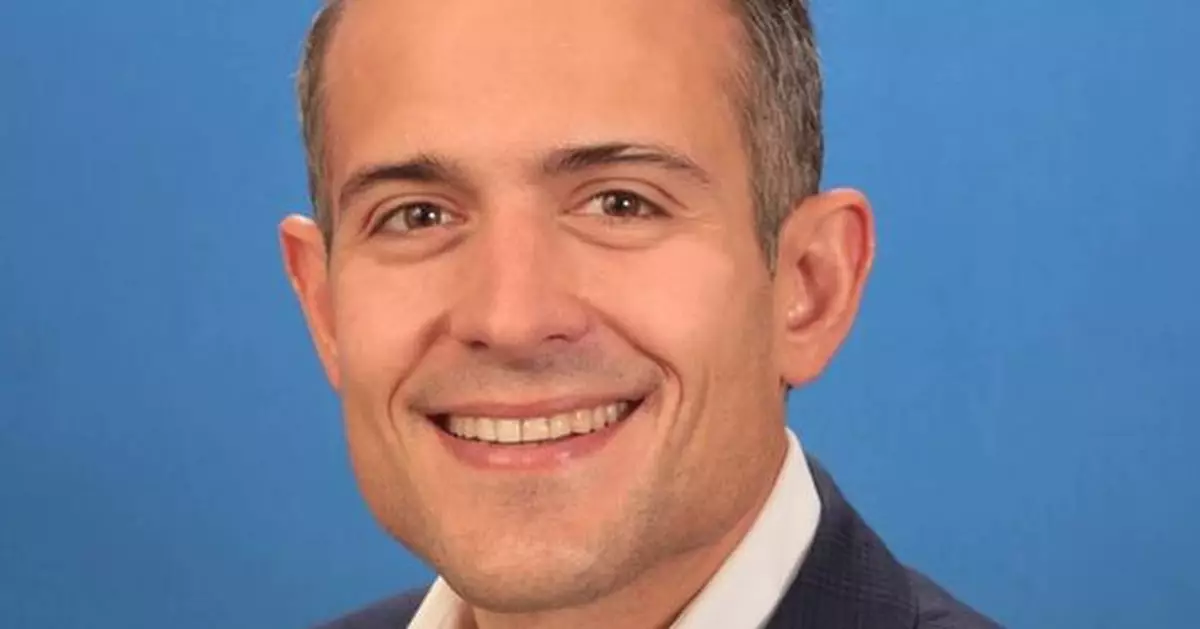
Raj Gazula has also joined the bank to lead strategy and serve as the Chief Administrative Officer for PMI. Gazula brings nearly 30 years of experience to the role, with deep payments and strategy experience. He led Wholesale Payments at Truist including treasury solutions, merchant acquiring and commercial cards. Prior to that, he led the strategy and transformation work for the Corporate and Institutional Group when Sun Trust integrated with BB&T. Gazula is based in Atlanta.
Both Geronimo and Gazula will report to Mark Runkel, vice chair and head of PMI at U.S. Bank.
“I’m delighted to welcome Peter and Raj to the PMI team,” said Runkel. “U.S. Bank has deep experience, diverse global capabilities and longevity in payments. Peter and Raj are joining at an important time in our transformation journey. The work we’ve done over the past year has allowed us to reimagine how we harness our payments capabilities, simplify and streamline the client experience and more effectively meet our clients’ needs now and as they grow.”
Payments transformation has been one of three strategic growth priorities at U.S. Bank over the past year, along with organic growth and expense management. PMI is a global business encompassing merchant acquiring, card issuing and money movement for mid-market to large institutional companies.
About U.S. Bancorp
U.S. Bancorp, with approximately 70,000 employees and $692 billion in assets as of December 31, 2025, is the parent company of U.S. Bank National Association. Headquartered in Minneapolis, the company serves millions of customers locally, nationally and globally through a diversified mix of businesses including consumer banking, business banking, commercial banking, institutional banking, payments and wealth management. U.S. Bancorp has been recognized for its approach to digital innovation, community partnerships and customer service, including being named one of Fortune’s most admired superregional banks. Learn more at usbank.com/about.

Raj Gazula

Peter Geronimo
ATLANTA (AP) — The Georgia General Assembly ended its annual session early Friday without a plan for new equipment to overhaul the state's voting system by a July deadline, plunging into doubt the future of elections in the political battleground.
The lawmakers' failure to offer a solution after months of debate raises uncertainty about how Georgians will vote in November and leaves confusion that could end in the courts or a special legislative session.
“They’ve abdicated their responsibility,” Democratic state Rep. Saira Draper said of inaction by Republicans who control the legislature.
Currently, voters make their choices on Dominion Voting machines, which then print ballots with a QR code that scanners read to tally votes. Those machines have been repeatedly targeted by President Donald Trump following his 2020 election loss, and Trump’s Georgia supporters responded by enacting a law in 2024 that bans using barcodes to count votes.
But state law still requires counties to use the machines. No money has been allocated to reprogram them, and lawmakers failed to agree on a replacement.
“We’ll have an unresolvable statutory conflict come July 1,” said House Governmental Affairs Committee Chairman Victor Anderson, a Cornelia Republican who backed a proposal to keep using the machines in 2026 that Senate Republicans declined to consider.
Republican House Speaker Jon Burns said he would meet with Gov. Brian Kemp and “take his temperature” on the possibility of a special session.
Kemp spokesperson Carter Chapman said he Republican governor will examine the situation.
“We’ll analyze all bills, as well as the consequence of those that did not pass,” Chapman said Friday.
House Republicans and Democrats backed Anderson's plan, which would have required that Georgia choose a voting process that didn't use QR codes by 2028. Election officials preferred that solution.
“The Senate has shown that they’re not responsible actors,” Draper said. She added that Lt. Gov. Burt Jones, a Trump-endorsed Republican running for governor, seemed more interested in keeping Trump's backing than “doing right by Georgia voters.”
A spokesperson for Jones didn't immediately respond to a request for comment early Friday.
Joseph Kirk, Bartow County election supervisor and president of the Georgia Association of Voter Registration and Election Officials, said he’ll look to the secretary of state for guidance and assumes a judge will rule to instruct election officials how to proceed.
“This is uncharted territory,” he said.
Robert Sinners, a spokesperson for Republican Secretary of State Brad Raffensperger, who is also running for governor, said officials are “ready to follow the law and follow the Constitution.”
Burns told reporters that his chamber was seeking to minimize changes this year.
“You can’t change horses in the middle of the stream,” Burns said.
Anderson said without action, the state could be required to use hand-marked and hand-counted paper ballots in November.
Election officials say switching to a new system within just a few months, as advocated by some Republicans, would be nearly impossible.
“They made no way for this to happen except putting a deadline on it," Cherokee County elections director Anne Dover said of the switch away from barcodes. Dover said one problem under some plans is that a very large number of ballots would have to be printed.
Lawmakers seemed more concerned about scoring political points than making practical plans, Paulding County Election Supervisor Deidre Holden said.
“If anyone is resilient and can get the job done, it’s all of us election officials, but the legislators need to work with us, and they need to understand what we do before they go making laws that are basically unachievable for us,” Holden said.
Supporters of hand-marked paper ballots say voters are more likely to trust in an accurate count if they can see what gets read by the scanner.
Right-wing election activists lobbied lawmakers for an immediate switch to hand-marked paper ballots, but the House turned away from a Senate proposal to do so.
Anderson said he wasn’t sure if a special session could escape those political crosswinds, but said Georgia lawmakers must fix the problem.
“This is a legislative problem,” Anderson said. “It’s a legislative solution that has to happen.”
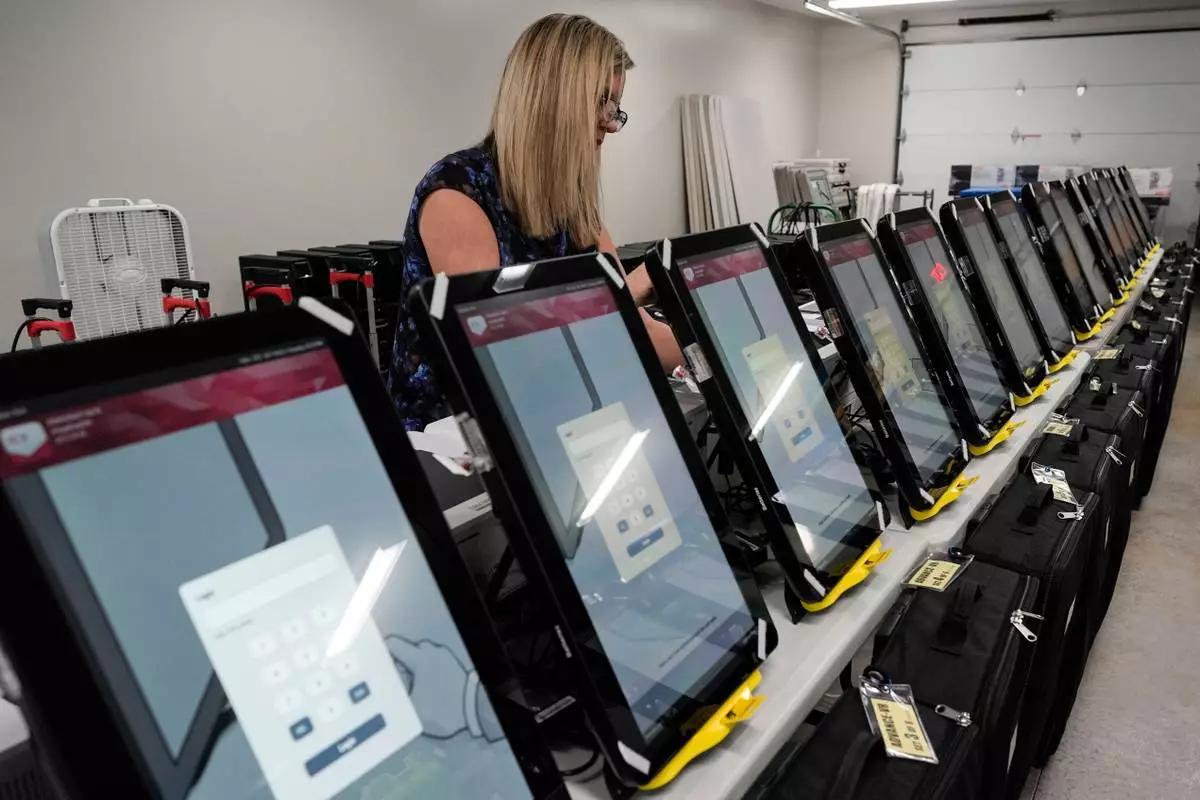
FILE - Voting machines are seen at the Bartow County Election office, Jan. 25, 2024, in Cartersville, Ga. (AP Photo/Mike Stewart, File)