China's trade-in program has stimulated sales of consumer goods in the country so far this year, generating sales of 92.56 billion yuan (about 13.34 billion U.S. dollars) for automobiles, home appliances, digital and smart products in January, according to the latest official data released by the Chinese Ministry of Commerce.
The program benefited a total of 16.13 million purchases during the month.
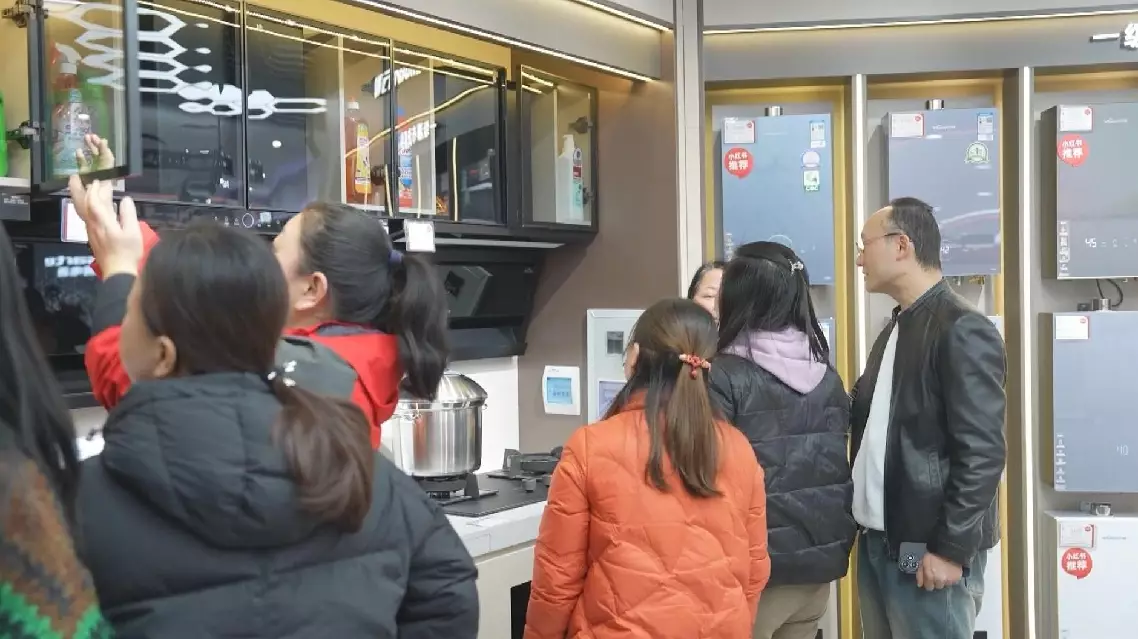
In January, the sales volume of the main categories of home appliances and digital and smart products exceeded 15 million units, with the sales revenue nearing 59 billion yuan (8.5 billion U.S. dollars).
Offline sales accounted for nearly 80 percent of the total, showing a year-on-year increase of 20 percent.
The trade-in program has not only boosted offline physical retail but also stimulated consumption in fields such as entertainment, transportation and catering, creating a positive cycle where trade-ins drive customer flow and diversify revenue streams.
The data showed that green and smart products have been particularly popular among customers. In January, online sales of Grade 1 energy efficiency water heaters and television sets increased by 35.7 percent and 28.9 percent year-on-year, respectively.
Mid-to-high-end mobile phones accounted for over 70 percent of the total phone sales.
Smart glasses, included in the subsidy program for the first time, achieved sales of about 7.12 million yuan (1.04 million U.S. dollars) during the month.
China's trade-in program stimulates sales of digital, smart products
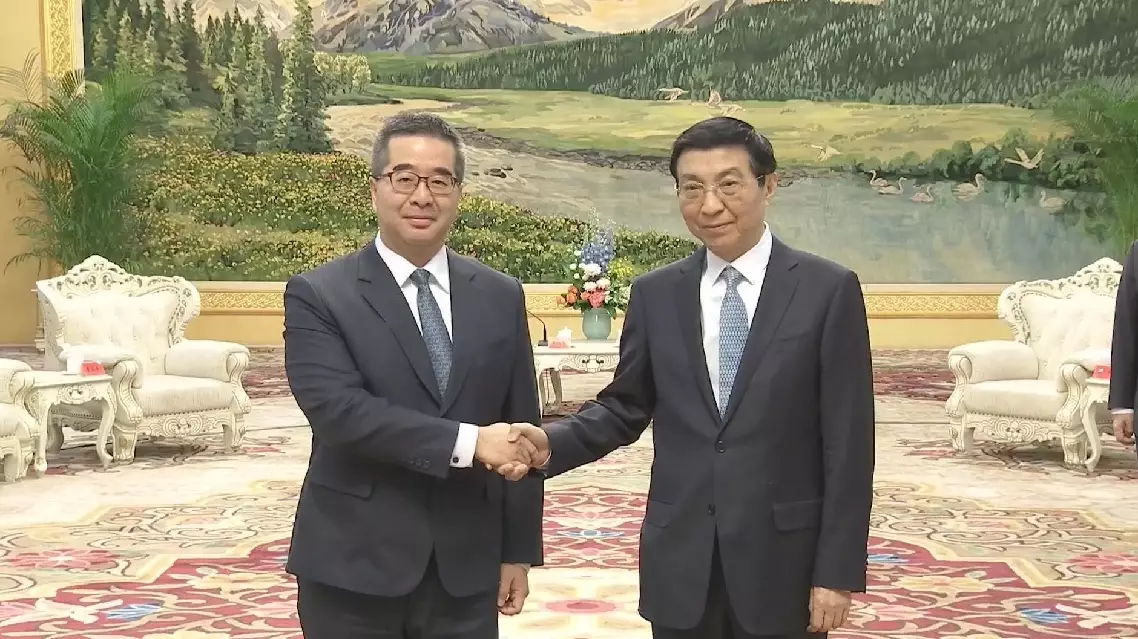
Top political advisor Wang Huning on Wednesday met with the Taiwan delegation attending the think tank forum co-hosted on Tuesday by research institutes affiliated with the Communist Party of China (CPC) and the Chinese Kuomintang (KMT) party.
Extending congratulations on the success of the forum, Wang, a member of the Standing Committee of the Political Bureau of the CPC Central Committee, said that the mainland will strengthen exchanges with Taiwan's political parties, including the KMT, as well as with groups and people from all sectors of Taiwan.
Wang, also chairman of the National Committee of the Chinese People's Political Consultative Conference, said that the mainland will unite Taiwan compatriots to advance exchanges and cooperation, and deepen integrated development across the Taiwan Strait.
Adhering to the 1992 Consensus and opposing "Taiwan independence" is the common political foundation of exchanges between the CPC and the KMT, and the fundamental precondition for the peaceful development of cross-Strait relations, which should not waver at any time, he stressed.
He urged joint efforts to firmly grasp the destiny of the Chinese nation and resolutely oppose "Taiwan independence" separatism and interference by external forces, and to further expand the space for exchanges and cooperation for compatriots on both sides of the Strait.
All Taiwan compatriots and enterprises are welcome to take part in the implementation of the 15th Five-Year Plan, Wang said, urging the CPC and the KMT to take the lead in doing anything that benefits compatriots on both sides of the Strait and cross-Strait exchanges and cooperation.
Hsiao Hsu-tsen, vice chairman of the KMT who led the Taiwan delegation, said he hopes that Chinese people on both sides of the Strait will replace confrontation with exchanges and conflict with consultation, and work together for the rejuvenation of the Chinese nation.
The Tuesday forum was attended by over 100 participants from both sides of the Strait, including think tank members of the CPC and the KMT, as well as representatives and experts from various fields such as tourism, industry, science and technology, healthcare, and environmental protection.
Top political advisor meets Taiwan delegates to CPC, KMT think tank forum
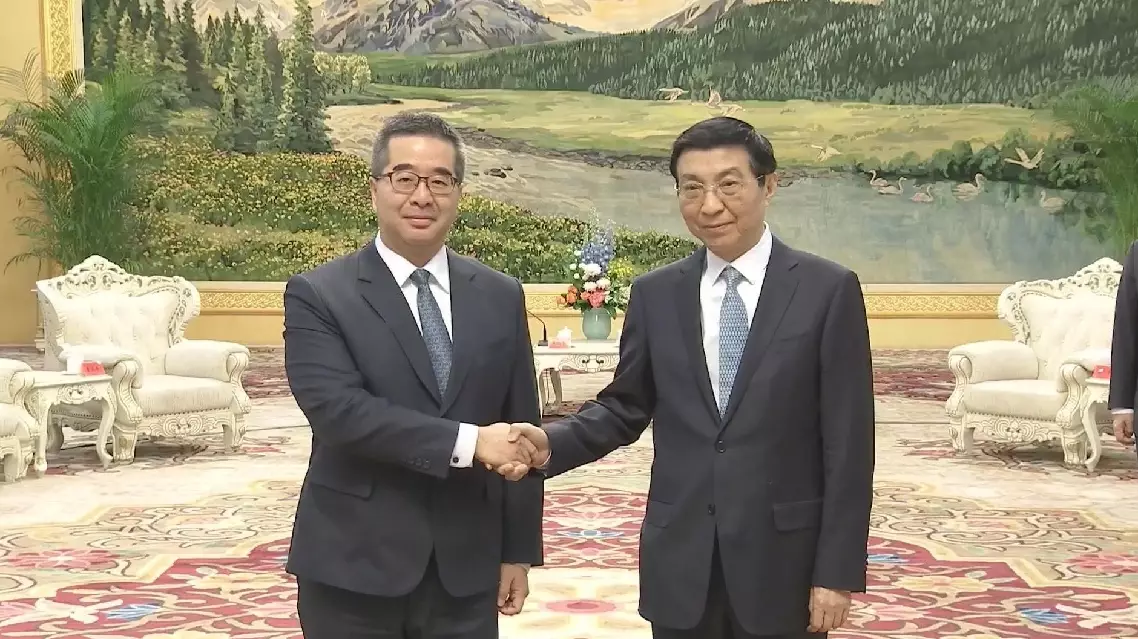
Top political advisor meets Taiwan delegates to CPC, KMT think tank forum