|
Arasan Announces ISO 26262 Functional Safety Certification for its ultra low power MIPI D-PHY IP
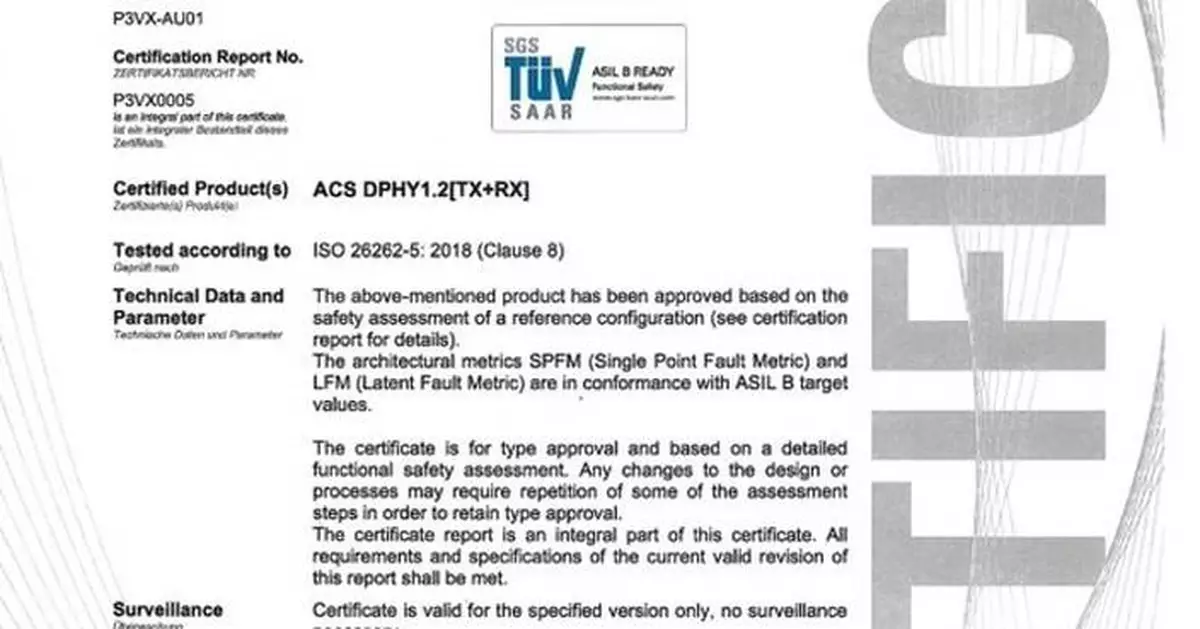
SAN JOSE, Calif., Feb. 4, 2026 /PRNewswire/ -- Arasan Chip Systems, the industry's first provider of IP for the MIPI standards today announced that its 2'nd generation ultra low power MIPI® D-PHY IP has achieved ISO 26262 functional safety certification. Arasan has been an executive member of the MIPI Association since 2005 and offers the broadest MIPI IP portfolio. The ISO 26262 certified MIPI D-PHY IP is available for immediately licensing on foundry nodes from 40nm to 4nm. Additional safety collateral and technical details are available to qualified customers upon request under NDA.
The ISO 26262 Certified MIPI D-PHY IP is seamlessly integrated with Arasan's ISO 26262 Certified MIPI CSI-2 IP for Camera Applications and MIPI DSI-2 IP for Display Applications providing a Total ISO 26262 Certified MIPI Display and Camera IP Solution. Arasan also offers its VESA DSC Encoder and Decoder IP seamlessly integrated with its DSI-2 and D-PHY IP for the display interface in SoC's. The MIPI D-PHY IP can be configured as Tx only or Rx only to save on area and power.
ISO 26262 Certification confirms that Arasan's MIPI D-PHY IP seamlessly integrated with its DSI-2 IP and CSI-2 IP meets stringent automotive safety requirements, supporting system developers as they design advanced driver assistance systems (ADAS), digital cockpits, surround-view systems, and other camera and display‑intensive automotive platforms.
"With the growing number of cameras and high‑resolution displays in modern vehicles, reliable high‑speed connectivity is critical," said Prakash Kamath, CTO at Arasan Chip Systems. "Achieving ISO 26262 certification for our latest version of the MIPI D-PHY IP demonstrates our commitment to delivering proven, automotive‑grade IP that customers can deploy with confidence in safety‑critical designs."
Arasan also offers the MIPI I3C IP which can be used for camera or display control in addition to audio IP like MIPI Soundwire and MIPI SWI3S. All digital IP's come with seamlessly integrated PHY IP and software stack.
Arasan Chip Systems is a leading provider of standards‑based silicon IP, delivering high‑quality interface, memory, and system IP to customers worldwide. Arasan's IP is used in billions of devices across mobile, automotive, consumer, and enterprise markets. For more information on Arasan MIPI D-PHY IP, please visit https://www.arasan.com/products/mipi/mipi-phys/d-phy-1-2/
About Arasan:
Arasan Chip Systems has been an active member of the MIPI Association since 2005, providing IP solutions for mobile storage and connectivity interfaces. With over a billion chips shipped incorporating Arasan's MIPI IP, the company has established a reputation for delivering high-quality, silicon-proven Total IP Solutions, encompassing digital IP, AMS PHY IP, Verification IP, HDK, and Software. Arasan's focus lies in mobile SoCs, which have evolved to encompass a wide range of applications, from PDAs in the mid-'90s to today's automobiles, drones, and IoT devices. Arasan remains at the forefront of this "Mobile" evolution, providing standards-based IP that forms the foundation of Mobile SoCs.
Arasan Announces ISO 26262 Functional Safety Certification for its ultra low power MIPI D-PHY IP
SAN JOSE, Calif., Feb. 4, 2026 /PRNewswire/ -- Arasan Chip Systems, the industry's first provider of IP for the MIPI standards today announced that its 2'nd generation ultra low power MIPI® D-PHY IP has achieved ISO 26262 functional safety certification. Arasan has been an executive member of the MIPI Association since 2005 and offers the broadest MIPI IP portfolio. The ISO 26262 certified MIPI D-PHY IP is available for immediately licensing on foundry nodes from 40nm to 4nm. Additional safety collateral and technical details are available to qualified customers upon request under NDA.
The ISO 26262 Certified MIPI D-PHY IP is seamlessly integrated with Arasan's ISO 26262 Certified MIPI CSI-2 IP for Camera Applications and MIPI DSI-2 IP for Display Applications providing a Total ISO 26262 Certified MIPI Display and Camera IP Solution. Arasan also offers its VESA DSC Encoder and Decoder IP seamlessly integrated with its DSI-2 and D-PHY IP for the display interface in SoC's. The MIPI D-PHY IP can be configured as Tx only or Rx only to save on area and power.
ISO 26262 Certification confirms that Arasan's MIPI D-PHY IP seamlessly integrated with its DSI-2 IP and CSI-2 IP meets stringent automotive safety requirements, supporting system developers as they design advanced driver assistance systems (ADAS), digital cockpits, surround-view systems, and other camera and display‑intensive automotive platforms.
"With the growing number of cameras and high‑resolution displays in modern vehicles, reliable high‑speed connectivity is critical," said Prakash Kamath, CTO at Arasan Chip Systems. "Achieving ISO 26262 certification for our latest version of the MIPI D-PHY IP demonstrates our commitment to delivering proven, automotive‑grade IP that customers can deploy with confidence in safety‑critical designs."
Arasan also offers the MIPI I3C IP which can be used for camera or display control in addition to audio IP like MIPI Soundwire and MIPI SWI3S. All digital IP's come with seamlessly integrated PHY IP and software stack.
Arasan Chip Systems is a leading provider of standards‑based silicon IP, delivering high‑quality interface, memory, and system IP to customers worldwide. Arasan's IP is used in billions of devices across mobile, automotive, consumer, and enterprise markets. For more information on Arasan MIPI D-PHY IP, please visit https://www.arasan.com/products/mipi/mipi-phys/d-phy-1-2/
About Arasan:
Arasan Chip Systems has been an active member of the MIPI Association since 2005, providing IP solutions for mobile storage and connectivity interfaces. With over a billion chips shipped incorporating Arasan's MIPI IP, the company has established a reputation for delivering high-quality, silicon-proven Total IP Solutions, encompassing digital IP, AMS PHY IP, Verification IP, HDK, and Software. Arasan's focus lies in mobile SoCs, which have evolved to encompass a wide range of applications, from PDAs in the mid-'90s to today's automobiles, drones, and IoT devices. Arasan remains at the forefront of this "Mobile" evolution, providing standards-based IP that forms the foundation of Mobile SoCs.
** The press release content is from PR Newswire. Bastille Post is not involved in its creation. **
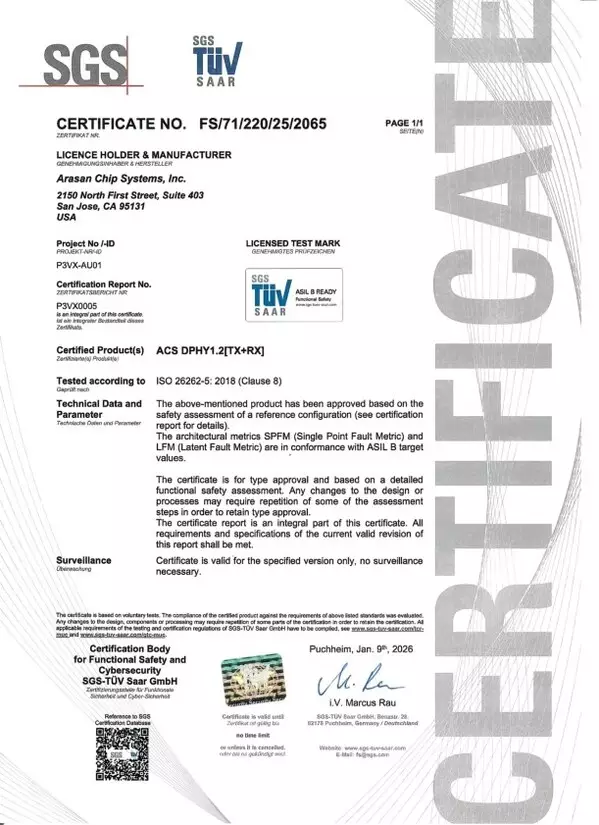
Arasan's ultra low power MIPI D-PHY IP achieves ISO26262 Certification
POMONA, Calif., April 4, 2026 /PRNewswire/ -- As families prepare for Easter, a season defined by family reunions, outdoor festivities, and shared traditions, Nework, an audiovisual and collaborative solutions provider for education, business, and home, is redefining seasonal entertainment with its MoveMate Series Portable TVs. Designed for ultimate mobility and premium performance, the MoveMate lineup offers a sophisticated way to bring digital entertainment into every corner of the holiday celebration. To celebrate the season, Nework has launched its Spring Sale, featuring an instant $60 discount across the series. The MoveMate AI is now available for $599.99, while the MoveMate Hi-Fi flagship is priced at $689.99.
Redefining Holiday Entertainment
The Nework MoveMate Hi‑Fi exemplifies how technology can enrich Easter gatherings with minimal effort. During backyard brunches or patio parties, the device functions as a mobile backdrop, effortlessly rolling from the kitchen to the lawn on its silent casters. Its professionally tuned 44W audio system, complete with quad speakers and a dedicated subwoofer, fills open spaces with warm, room‑enveloping sound, making it ideal for holiday playlists, family movies, or ambient visuals that add charm to spring celebrations. The 27‑inch FHD display provides crisp imagery at any angle, while the rotatable and height‑adjustable design ensures clear views whether placed beside a picnic table or within a cozy indoor corner.
As spring evenings warm up, outdoor movie nights have become a beloved seasonal ritual. After an afternoon of egg hunts, the MoveMate Hi‑Fi can be wheeled onto the grass to create an instant open‑air cinema. Its powerful audio performance strengthens the sense of immersion, while Bluetooth, Wi‑Fi 6, and streaming app compatibility ensure quick and smooth setup. For families who enjoy capturing shared memories on camera, the device's HD camera adds a layer of convenience and security with a physical privacy cover.
A Modern Gift for the Modern Home
For families seeking a standout Easter surprise, the MoveMate Hi‑Fi also lends itself to creative gifting. Instead of filling oversized baskets with candy or toys, households are presenting the portable TV as the "grand prize" of Easter morning. As a premium yet practical gift, it brings long‑term entertainment value through its smart system, which offers access to streaming platforms, cooking apps, video‑call tools, and more. The built‑in battery delivers up to eight hours of wireless use, supporting the spontaneity of holiday activities.
The Nework MoveMate AI presents another compelling option for family use and Easter gifting. With a 27‑inch multi‑touch display, up to 16 hours of battery life, and EDLA‑certified Android 14 smart features, the MoveMate AI offers versatility for both entertainment and productivity. It functions as a cooking companion during Easter meal preparations, streaming step‑by‑step recipes or hosting video chats with distant relatives. Its adjustable stand and five‑wheel mobility make repositioning effortless in busy kitchens or living rooms, while the Qualcomm octa‑core processor ensures smooth performance across apps, from YouTube tutorials to streaming platforms.
This renewed focus on adaptive home technology aligns with Nework's vision. "At Nework, technology should adapt to people's lives, not the other way around. The MoveMate series is designed to bring flexibility, connection, and joy to everyday moments, especially during meaningful occasions like Easter," said the CEO of Nework.
As families across the United States embrace more flexible, mobile, and immersive entertainment experiences, the MoveMate Series continues to stand out as a forward‑thinking lifestyle upgrade. Whether used indoors for cooking, outdoors for movie nights, or as a creative Easter morning reveal, it offers a premium blend of functionality and festive delight.
For more information, please visit https://nework.us/, or connect with Nework:
Facebook: https://www.facebook.com/neworkus
LinkedIn: https://www.linkedin.com/company/nework-us/
X: https://x.com/Nework_us
Instagram: https://www.instagram.com/nework.us
YouTube: https://www.youtube.com/@Nework-us
** This press release is distributed by PR Newswire through automated distribution system, for which the client assumes full responsibility. **

Elevate Easter Celebrations: Nework Introduces MoveMate Series Portable TVs for Effortless Family Moments