SAN JOSE, Calif.--(BUSINESS WIRE)--Feb 4, 2026--
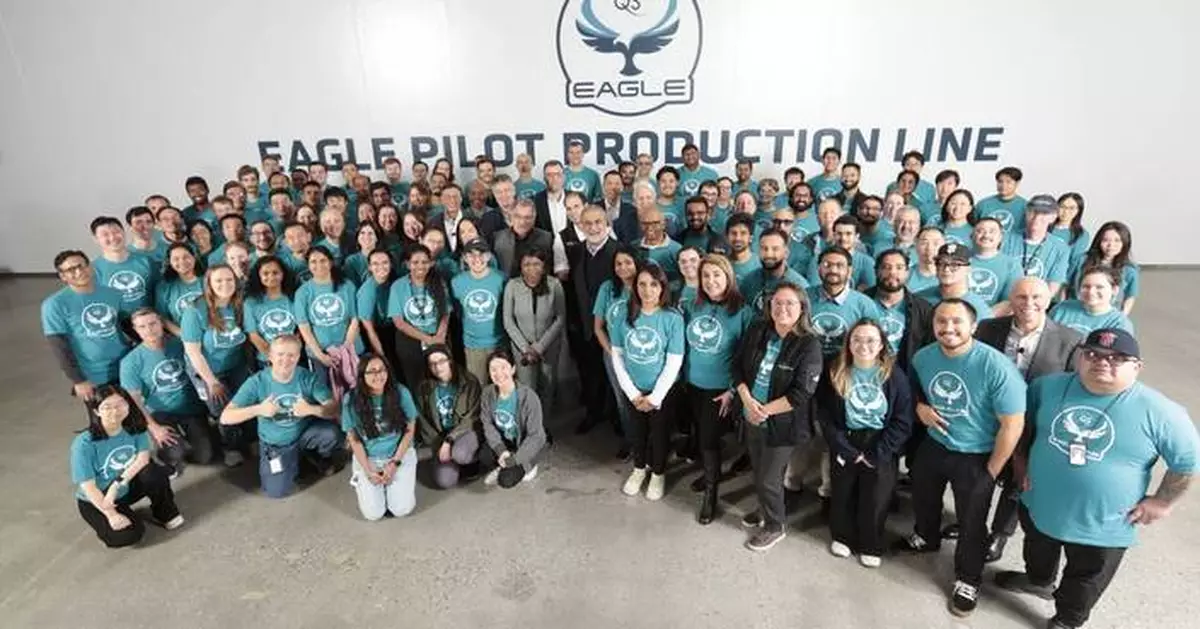
QuantumScape Corporation (NASDAQ: QS), a global leader in next-generation solid-state lithium-metal battery technology, today celebrated the inauguration of its newly installed Eagle Line at its facility in San Jose. The event was attended by automotive OEM customers, QS ecosystem partners and government officials, and included a showcase tour of the Eagle Line.
This press release features multimedia. View the full release here: https://www.businesswire.com/news/home/20260204999555/en/
The Eagle Line is a suite of equipment, materials and highly automated processes, forming the blueprint for production of QS technology. It incorporates QS’s groundbreaking Cobra process, a unique and highly scalable method for producing the proprietary QS separator.
Upon ramp-up, the Eagle Line will produce QS battery cells to support customer sampling and testing, technology demonstrations, and product integration efforts. It is also intended to demonstrate scalable production of QS technology to enable licensing partners to manufacture at gigawatt-hour scale in their own facilities. In addition, the Eagle Line will serve as a platform to develop and test further technology and process improvements at meaningful scale, enabling QS’s advanced development efforts.
“We’re proud to show the Eagle Line to the world for the first time,” said Dr. Siva Sivaram, president and CEO of QS. “The Eagle Line is a powerful platform to demonstrate scalable production of our solid-state technology and serve customer demand for better batteries. This is the next major step in the commercialization of our technology.”
“The Eagle Line is a real technical achievement on the part of our team,” said Dr. Luca Fasoli, COO of QS. “After deploying the Cobra process, we rapidly moved to scale up our cell build process to increase output, scalability, automation and quality. I’m proud of the intense effort that went into making the Eagle Line a reality.”
About QuantumScape Corporation
QuantumScape is on a mission to revolutionize energy storage to enable a sustainable future. The company’s next-generation solid-state lithium-metal battery technology is designed to enable greater energy density, faster charging and enhanced safety to support the transition away from legacy energy sources toward a lower carbon future. For more information, visit www.quantumscape.com.
Forward-Looking Statements
Certain information in this press release may be considered “forward-looking statements,” within the meaning of Section 27A of the Securities Act of 1933, as amended, and Section 21E of the Securities Exchange Act of 1934, as amended, including, without limitation, statements regarding the development, commercialization, and high-volume scale-up of QS’s battery technology, the anticipated benefits from successful installation and operation of production equipment for the Eagle line, including the implementation of the Cobra process; the anticipated ramp-up of production to support customer sampling, testing, and product integration; the ability of the Eagle Line to serve as a blueprint for scale manufacturing by licensing partners, and the potential impacts of QS’s technology for electric vehicles and other applications, among others. These forward-looking statements are based on management’s current expectations, assumptions, hopes, beliefs, intentions and strategies regarding future events and are based on currently available information as to the outcome and timing of future events. Because forward-looking statements are inherently subject to risks and uncertainties, some of which cannot be predicted or quantified, you should not rely upon forward-looking statements as predictions of future events. The events and circumstances reflected in the forward-looking statements may not be achieved or occur and actual results could differ materially from those projected in the forward-looking statements due to various risks, including the successful development and commercialization of our solid-state battery technology, achieving technical and financial milestones, building out of high-volume processes and otherwise scaling production, achieving the performance, quality, consistency, reliability, safety, cost and throughput required for commercial production and sale, changes in economic and financial conditions, market demand for EVs, retaining key personnel, competition, regulatory changes, broader economic conditions, and other factors, including those discussed in the section titled “Risk Factors” in our Annual Report and Quarterly Reports and other documents filed with the Securities and Exchange Commission from time to time. Except as otherwise required by applicable law, the company disclaims any duty to update any forward-looking statements.
![The QuantumScape team celebrates the inauguration of the Eagle Line [Credit: Stephen Ly / QuantumScape]](https://image.bastillepost.com/1200x/wp-content/uploads/global/2026/02/5c4d124860614954bd8b6d9010d9faad_Eagle_Line_PR_photo.jpg.webp)
The QuantumScape team celebrates the inauguration of the Eagle Line [Credit: Stephen Ly / QuantumScape]
LOS ANGELES (AP) — It was early morning on a recent Saturday and The Greyhound Bar & Grill in Los Angeles was abuzz with soccer fans clapping, hooting and hollering. Their eyes were glued to the TV screens, tables littered with beer pints and pitchers and other boozy libations.
Paris Saint-Germain and Arsenal were facing off in the Champions League final, and by 9:20 a.m. — less than a half hour into the game — the patrons inside this crowded bar had already purchased $1,300 in alcohol.
“It’s just a better vibe when you’re a little buzzed,” said Madeline Guillen, 28, who was drinking a mimosa with friends. “That’s a big thing about sports. I think sports and drinking go hand-in-hand.”
Drinking alcohol while watching sports is common in many countries, and millions of soccer fans will be doing so this summer during the FIFA World Cup games in Mexico, Canada and the United States. But imbibing boozy drinks during what could be a sizzling June and July has some experts worried. They say mixing alcohol with extreme heat poses extra risks, especially people drinking excessively who may not be hydrating enough, staying cool, or have underlying health conditions.
Here's what to know about the science of extreme heat and drinking alcohol, plus tips from experts if you’re going to be drinking while watching soccer on a hot summer's day.
Climate change, caused by burning coal, oil and gas, is making heat deadlier worldwide, especially in the summer, and that's raising worries about soccer players and fans suffering heat stress during the games. Heat also influences how people drink alcohol and whether they end up in the hospital.
Various studies from around the world show that drinking alcohol peaks in the summer, and that people living in hotter climates are more likely to binge drink, according to a study from Mexico.
There is also sometimes a “hedonic effect” where people drink to ease the discomfort of feeling hot, said Nathan Morris, assistant professor in thermoregulation at the University of Colorado, Colorado Springs. “We drink alcohol, we feel good, and so it masks that normal drive to do something to cool yourself down,” which can lead to heat stress.
“Maybe we stay out in the heat longer. Maybe we drink less cold water. Maybe we’re less likely to use a fan or seek an air conditioned space,” he added. “I think that might be where we’re seeing more of the strain on the body.”
International research has also established links between heavy drinking and sports spectators. One paper from Australia found that participants self-reported consuming an average of five drinks in just over two hours while watching Australian football games. In a 2023 study, researchers found that higher temperatures resulted in more alcohol-related hospital visits in New York state.
Heat exhaustion happens when your body loses too much water and salt from excessive sweating. When the body can no longer cool itself, heat stroke occurs, which can cause confusion, loss of consciousness and even death. Heat combined with humidity — the kind of weather in host cities like Miami, Houston and Monterrey, Mexico — makes it harder for sweat to evaporate to cool the body.
Alcohol primarily affects the central nervous system — your body's master processing center responsible for your thoughts, feelings and movements. It can cause headaches, vomiting, dizziness, a loss of coordination and balance. It also makes you pee more.
When you combine fluid loss from sweating on a hot day with increased urination from drinking alcohol, it can lead to dehydration, which can make you feel the effects of drinking faster, according to the National Institute on Alcohol Abuse and Alcoholism. Additionally, studies show drinking on a hot day makes it less likely you'll wear sunscreen, and that alcohol reduces the amount of heat exposure needed to get sunburnt.
“If you put together hot weather, summer, crowd, during the World Cup, people are sweating more, so they’re losing liquids from their body," said Dr. Lorenzo Leggio, physician and scientist with the National Institutes of Health. “On top of that, you drink excessive amount of alcohol that is leading you to more urination."
When high temperatures are combined with drinking, it can have a “synergistic effect" that can cause symptoms including thirst, headaches and dizziness, he said.
Fabiano Amorim, associate professor at the University of New Mexico, has studied the effects of alcohol in hot environments among construction workers. He and other researchers found that if workers drank the night before, health markers including blood pressure, core and skin temperatures and heart rate were elevated, and their urine and sweat production were lower at work the next day.
“Alcohol on the previous night effects your ability to deal with heat and stresses your kidneys ... putting you in a higher risk of heat-related illness,” he said. Although World Cup fans won't be physically exerting themselves like construction workers, their findings still apply, Amorim said. Spectators could be in crowded places with limited air flow or exposed to the sun for hours.
“People are going to accumulate days of drinking,” he said. “They want to have fun, they come from one game to the other, they watch games, etc. It means there is a cumulative effect from one day to the other.”
The elderly, people with alcohol disorders, heart conditions and other chronic health issues are among the most vulnerable.
The best way to mitigate risks is to not drink at all, said Leggio. But if you're going to, eat a meal before, drink plenty of water, pick drinks with low concentrations of alcohol, and imbibe in moderation.
Before taking your first sip, Morris suggests taking regular precautions such as putting on a hat and sunscreen and ensuring you have other cold, non-alcoholic beverages at hand. Also, have a friend with you who can jump into action if you start feeling unwell. “Buddy systems are always really important with heat stress," he said.
Amorim recommends seeking shade, which can reduce heat stress on the human body between 25% and 35% throughout the day and can be 20 F to 45 F (11 C to 25 C) cooler than surfaces without it. He echoed to drink plenty of water and apply some on your skin to help cool you off. Eating cold slushies and popsicles are a good idea, too.
Leggio suggests being aware of early signals from your body.
“Feeling dizzy, feeling a little confused, having blurred vision, not being able to see well in your surrounding," he said. “And if you do feel any of these symptoms, ask for help right away.”
Medical staff will be stationed throughout the stadiums and at Fan Festivals.
Back at the bar in Los Angeles, Daniel Tran, 41, was calming his nerves with a cold beer Saturday morning while rooting for Arsenal. He plans to attend several World Cup games and Fan Festivals in L.A.
“If it's a really hot day, I’ll try to either hydrate the night before, make sure I get electrolytes, and also maybe not drink as much," he said, adding: “Pace yourself.”
There will be 104 games, after all.
The Associated Press receives support from the Walton Family Foundation for coverage of water and environmental policy. The AP is solely responsible for all content. For all of AP’s environmental coverage, visit https://apnews.com/hub/climate-and-environment
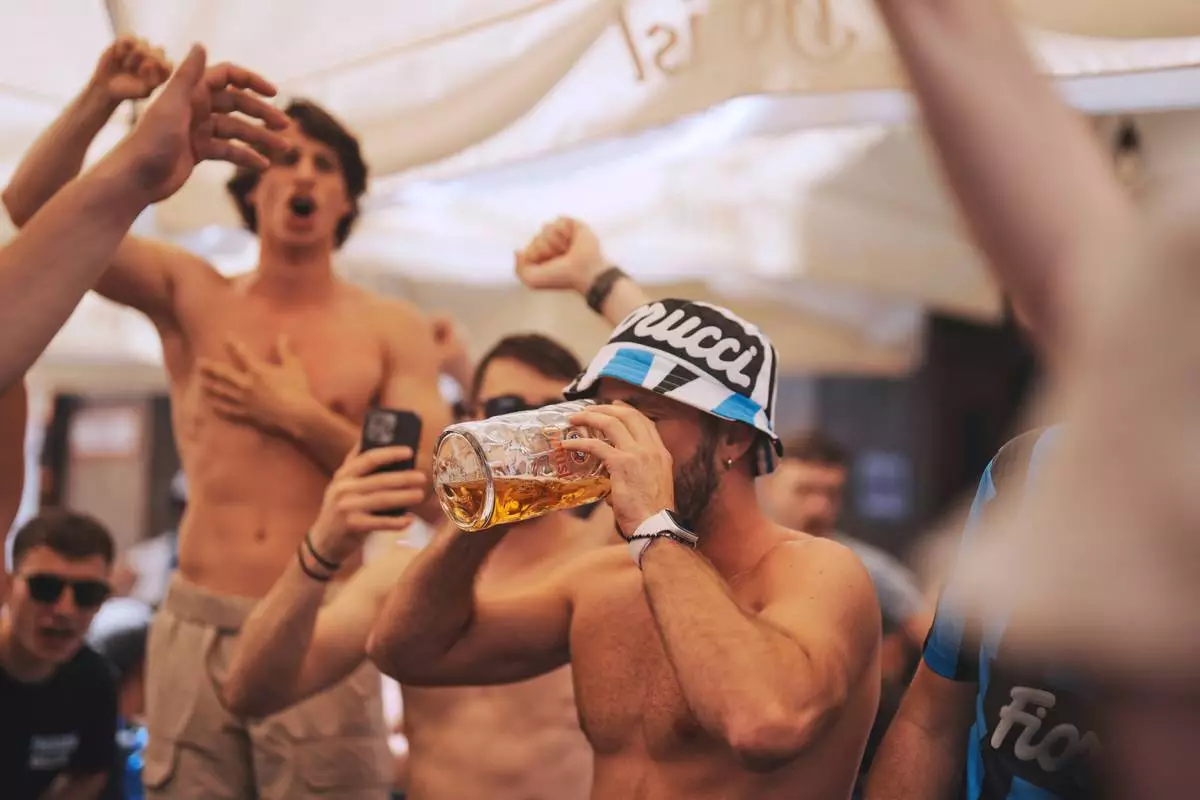
FILE - An Inter fan drinks a beer in the city center ahead of the Champions League final soccer match between Paris Saint-Germain and Inter Milan in Munich, Germany, May 31, 2025. (AP Photo/Markus Schreiber, File)
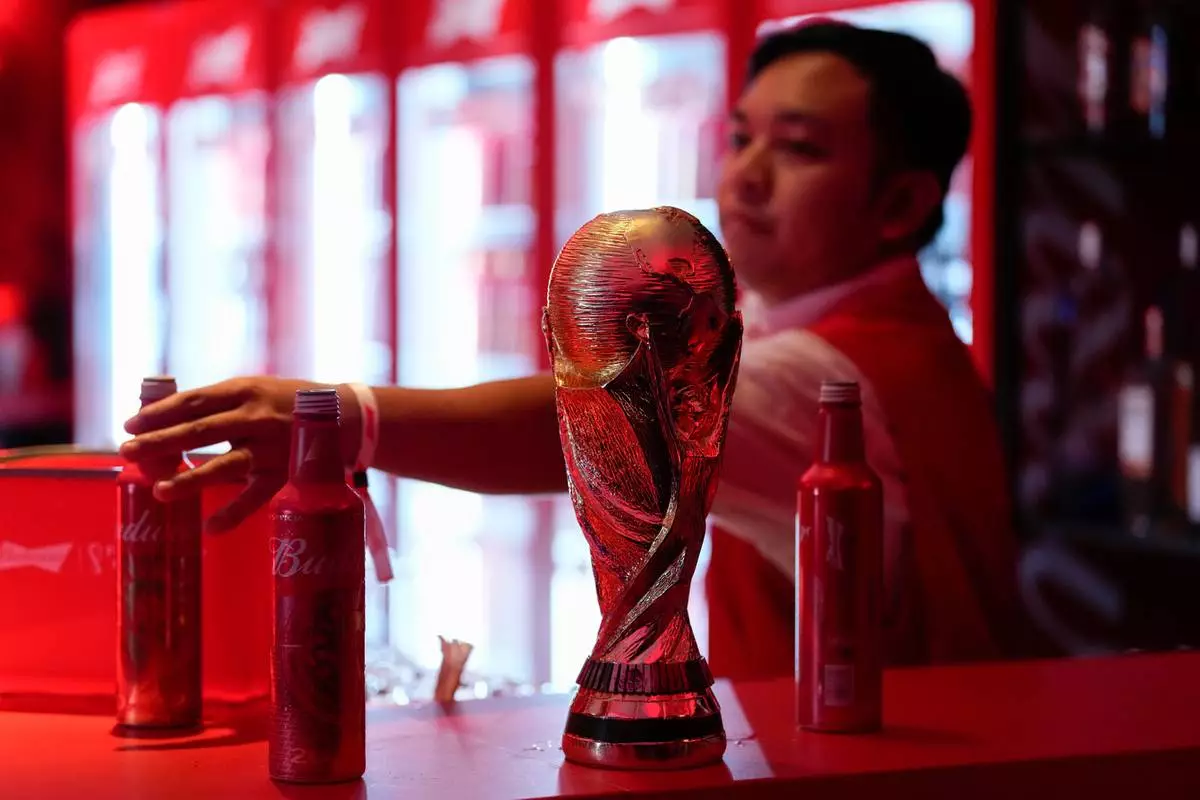
FILE - A bartender clears bottles of Budweiser beer from the bar near a replica of the FIFA World Cup trophy at an official U.S. Soccer fan party at the Budweiser World Club, in Doha, Qatar, Nov. 20, 2022. (AP Photo/Ashley Landis, File)
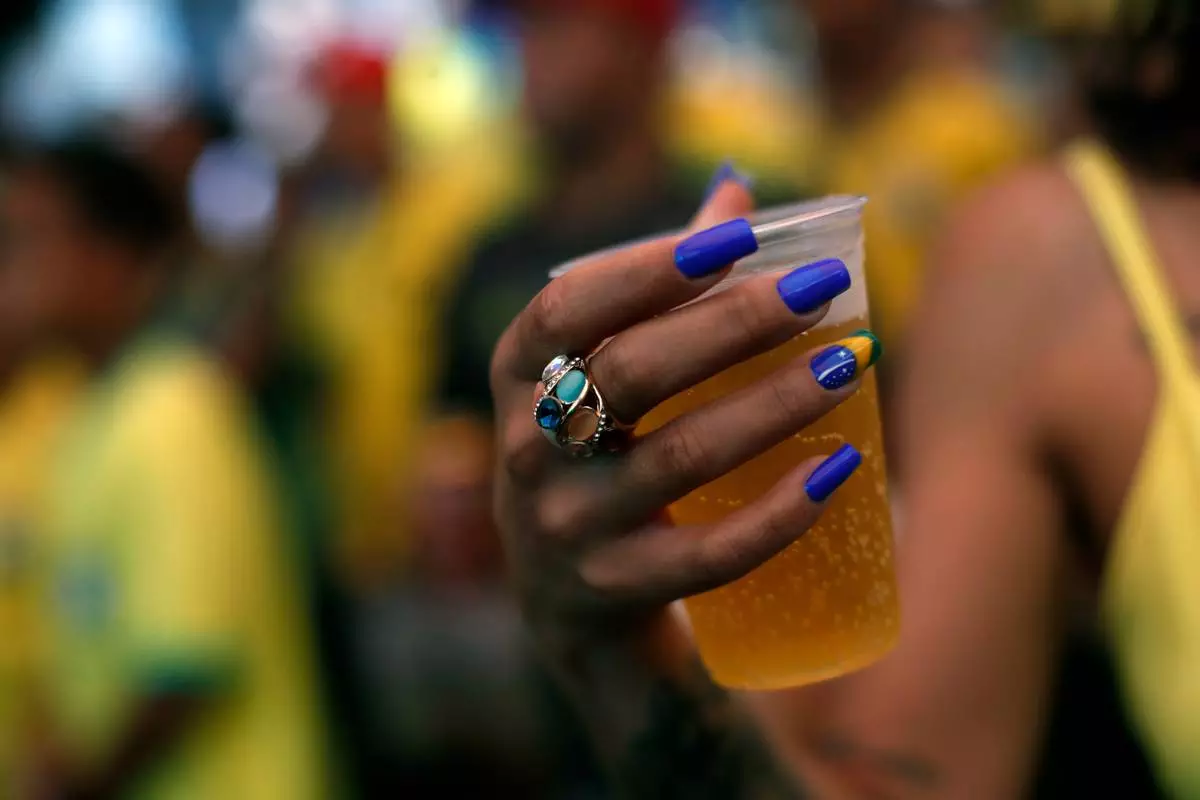
FILE - A soccer fan, with nails painted with a Brazil flag, holds a beer while watching the team's World Cup match against Serbia on a screen set up in the Rocinha favela in Rio de Janeiro, Brazil, Nov. 24, 2022. (AP Photo/Bruna Prado, File)
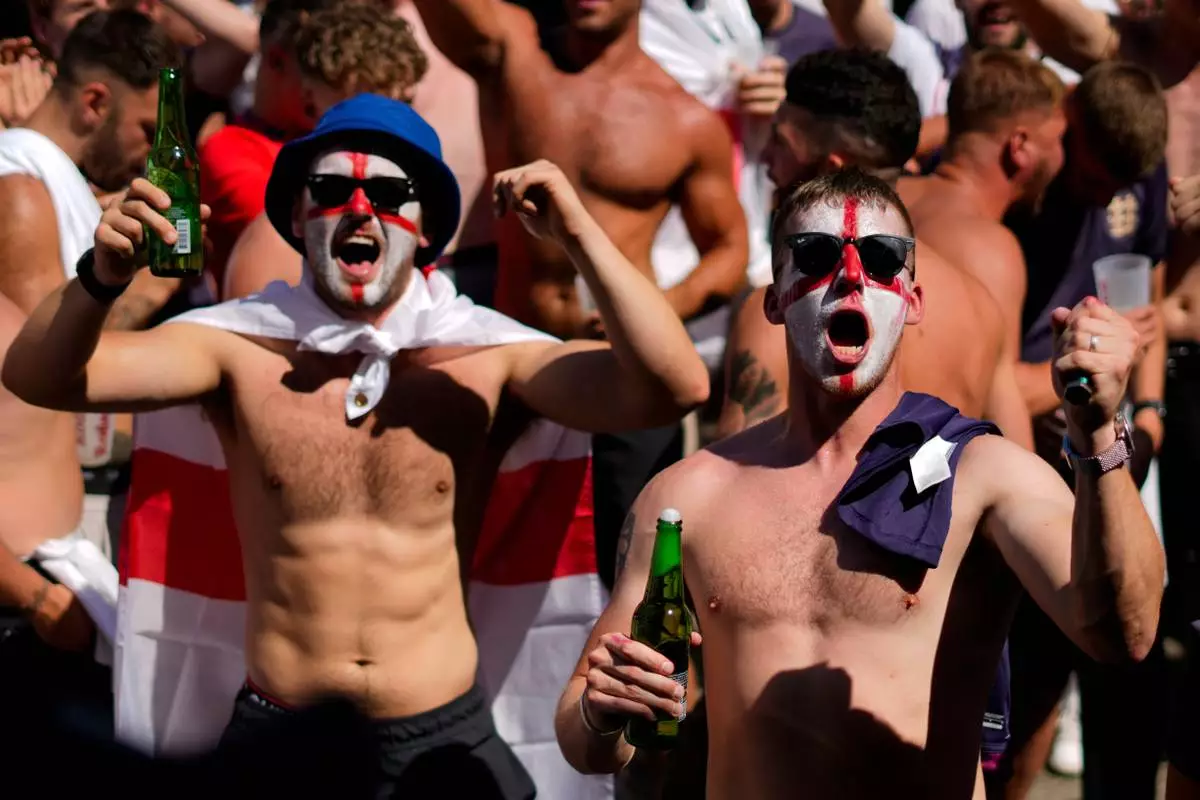
FILE - Men with face painted in the colors on the England flag chant slogans and drink beers at Breitscheidplatz before the start of the final match between Spain and England at the Euro 2024 soccer tournament in Berlin, Germany, July 14, 2024. (AP Photo/Ariel Schalit, File)
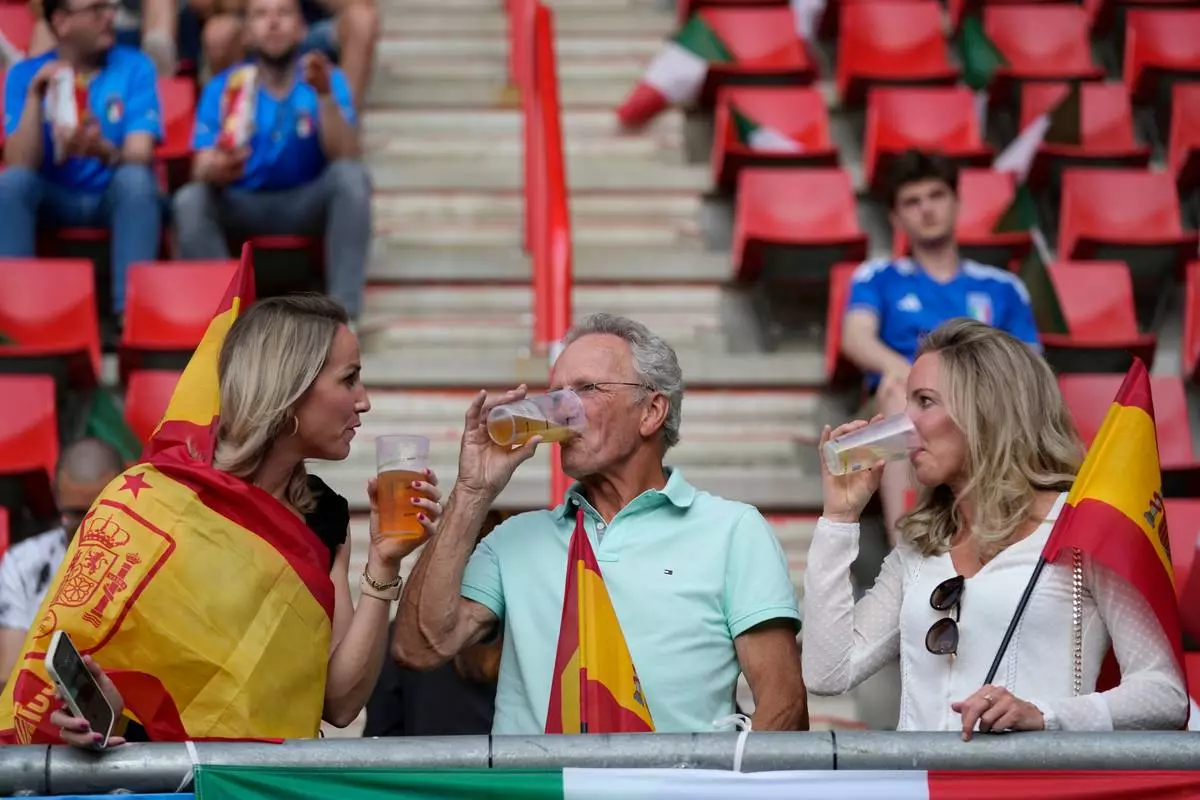
FILE - Fans have a drink on the stands while waiting for the start of the Nations League semifinal soccer match between Spain and Italy at De Grolsch Veste stadium in Enschede, eastern Netherlands, June 15, 2023. (AP Photo/Peter Dejong, File)
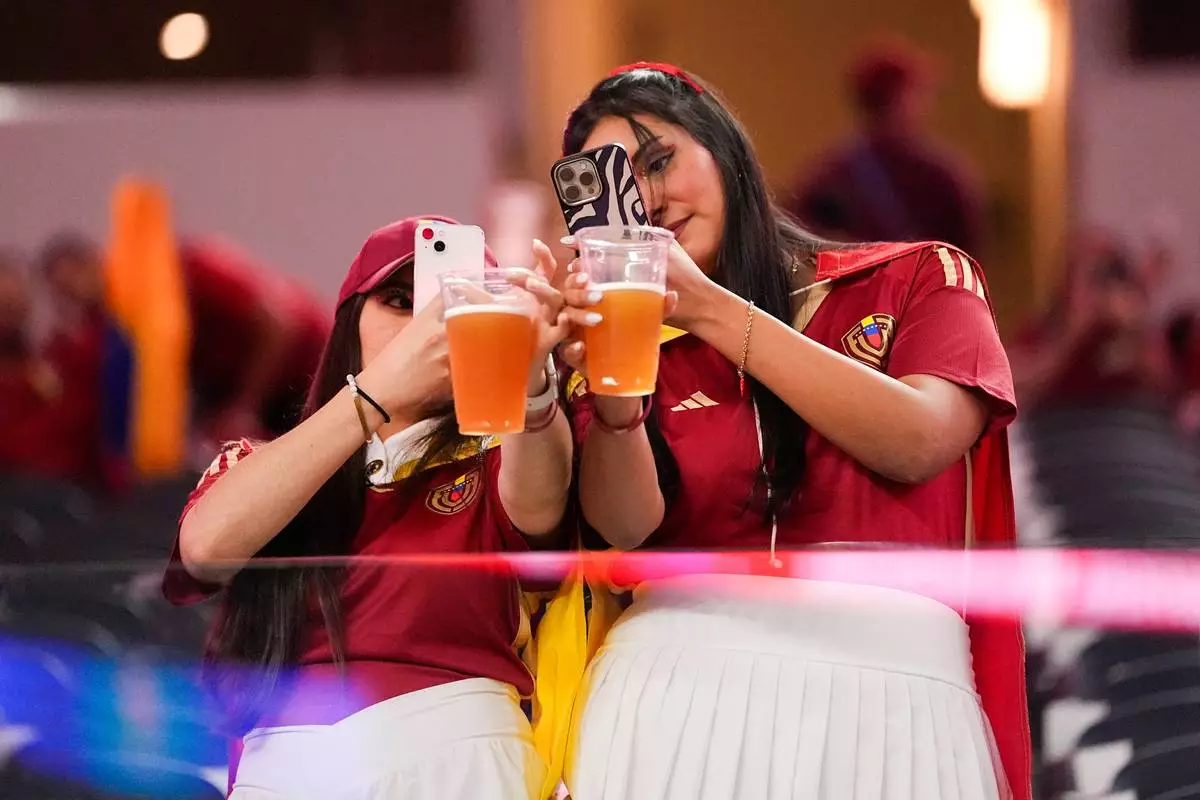
FILE - Venezuela fans take photos of their beers before a Copa America quarterfinal soccer match between Venezuela and Canada, July 5, 2024, in Arlington, Texas. (AP Photo/Julio Cortez, File)
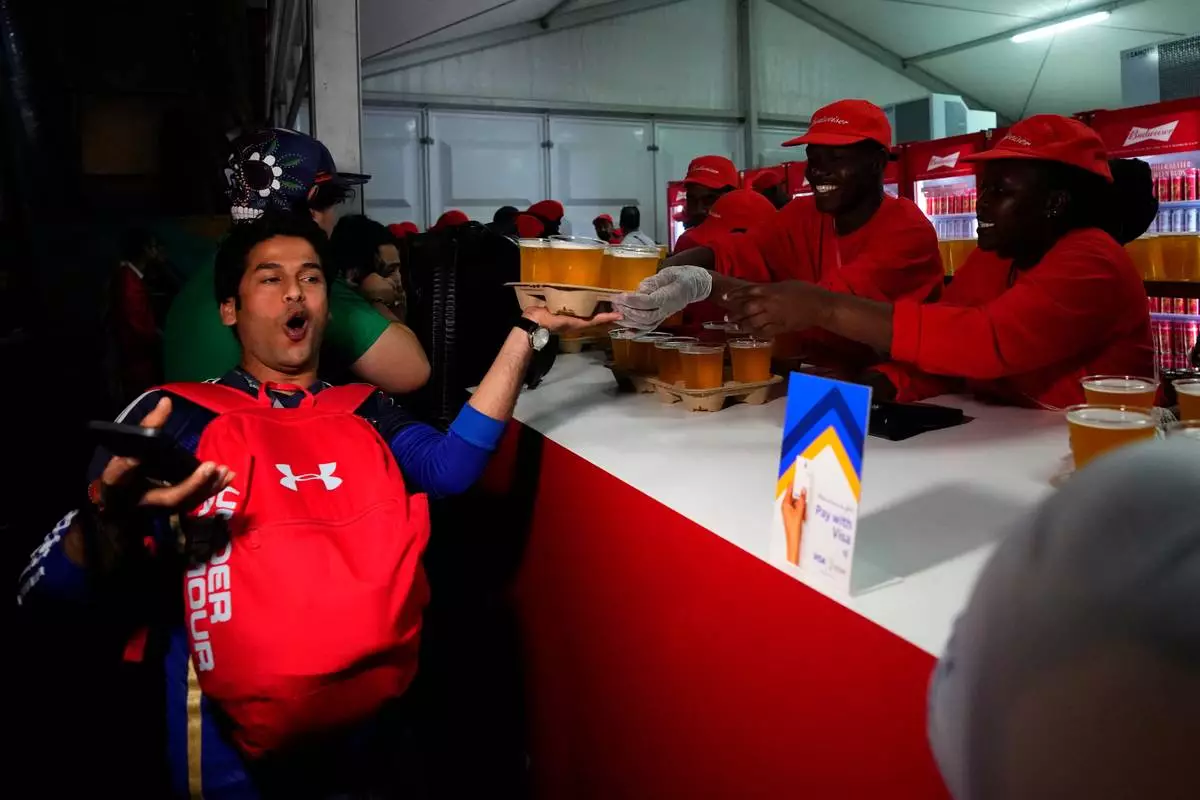
FILE - A man buys beers at a fan zone ahead of the FIFA World Cup, in Doha, Qatar, Nov. 19, 2022. (AP Photo/Petr Josek, File)
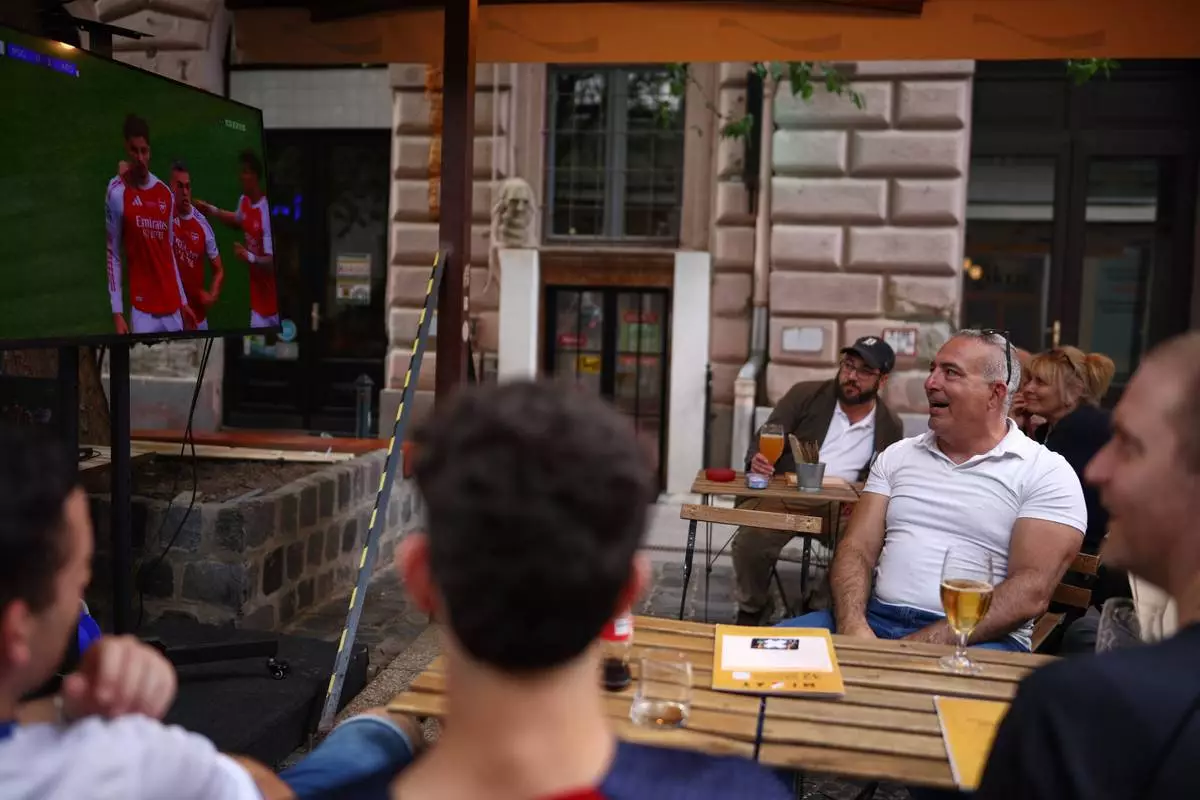
FILE - Fans watch the Champions League final soccer match between Paris Saint-Germain and Arsenal in Budapest, Hungary, May 30, 2026. (AP Photo/Rudolf Karancsi-Albert, File)
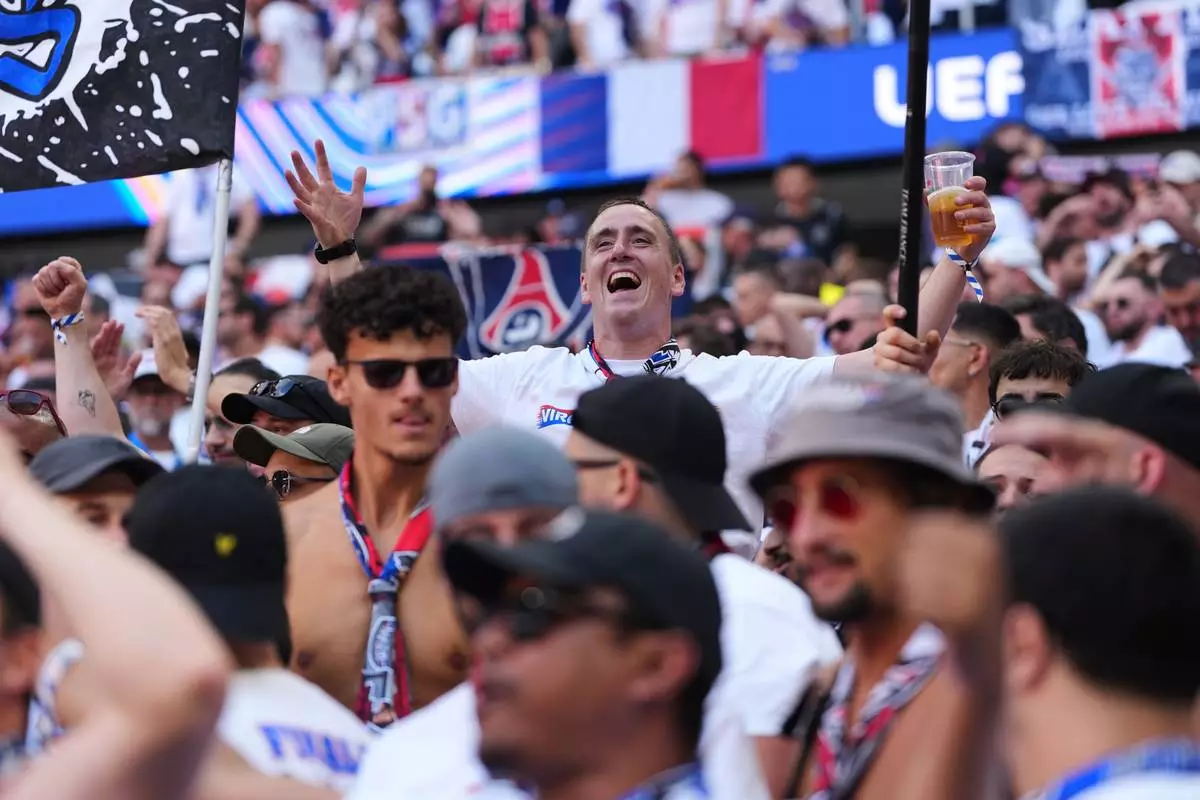
FILE - PSG fans cheer for their team before the Champions League final soccer match between Paris Saint-Germain and Arsenal in Budapest, Hungary, May 30, 2026. (AP Photo/Andreea Alexandru, File)