MILAN (AP) — All the worries, strife and scrutiny that lingered around the construction of the main hockey arena for the Milan Cortina Olympics dissipated as the first game there into a celebration for the host country.
Fans in the lively, near-full crowd chanted, “Italia! Italia!" throughout. Host Italy's women's team beat France 4-1 on Thursday, and while the conditions may not have been perfect, getting through an official game marked a milestone for much-talked-about Milano Santagiulia Ice Hockey Arena.
Click to Gallery
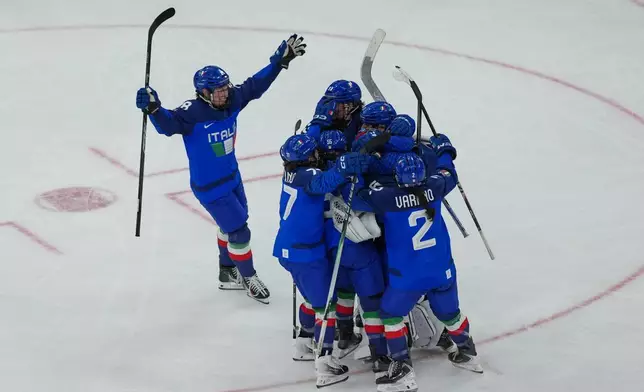
Italy's Franziska Stocker (18) skates to celebrate with teammates after winning a preliminary round match of women's ice hockey against France at the 2026 Winter Olympics, in Milan, Italy, Thursday, Feb. 5, 2026. (AP Photo/Carolyn Kaster)
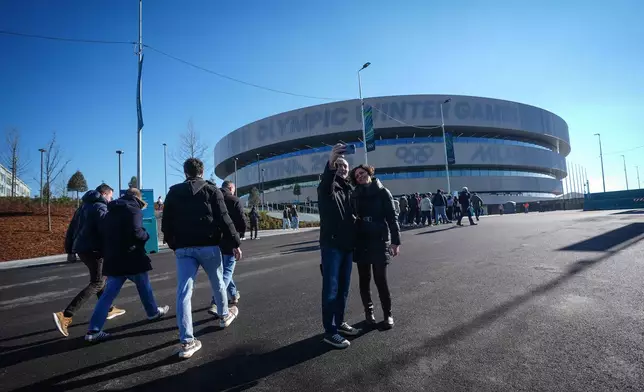
Spectators pose for a selfie outside Milano Santagiulia ice hockey arena before Italy and France play a women's hockey game at the Milan Cortina Winter Olympics, in Milan, on Thursday, Feb. 5, 2026. (Darryl Dyck /The Canadian Press via AP)
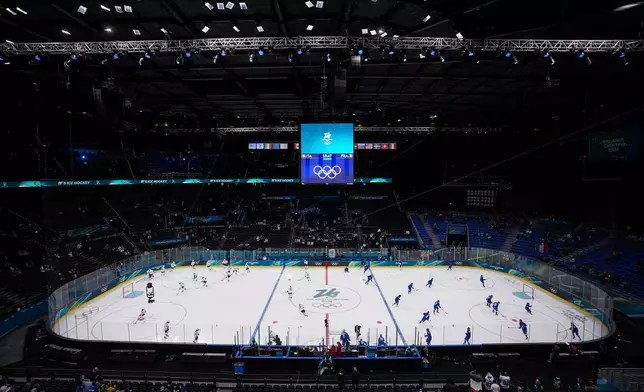
France and Italy players take part in the pregame skate before playing a women's hockey game at the Milano Santagiulia ice hockey arena, at the Milan Cortina Winter Olympics, in Milan, on Thursday, Feb. 5, 2026. (Darryl Dyck /The Canadian Press via AP)
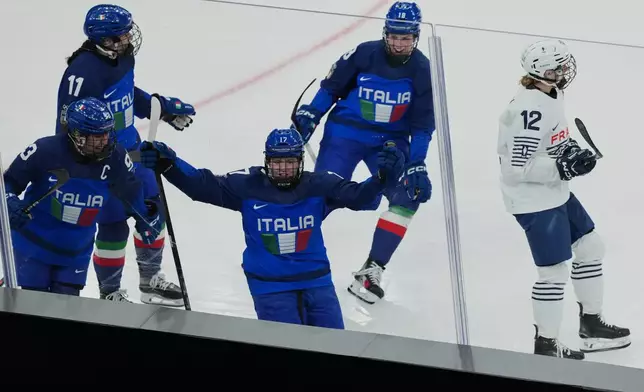
Italy's Matilde Fantin (17) celebrates scoring a goal in the third period with Italy's Nadia Mattivi (93), Italy's Justine Reyes (11), Italy's Franziska Stocker (18), as France's Estelle Duvin (12) skates away during a preliminary round match of women's ice hockey between Italy and France at the 2026 Winter Olympics, in Milan, Italy, Thursday, Feb. 5, 2026. (AP Photo/Carolyn Kaster)
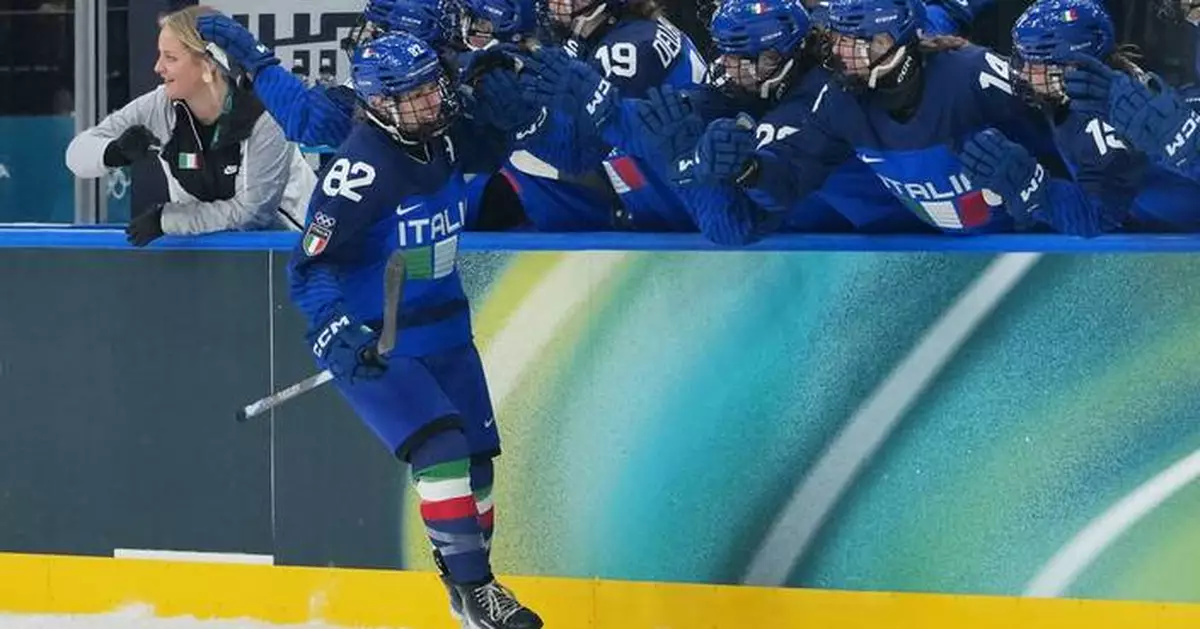
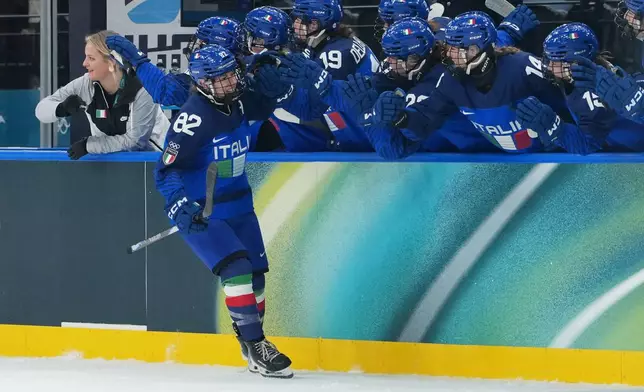
Italy's Kayla Tutino (82) celebrates after scoring a goal in the first period during a preliminary round match of women's ice hockey against France at the 2026 Winter Olympics, in Milan, Italy, Thursday, Feb. 5, 2026. (AP Photo/Carolyn Kaster)
“I believe in the Olympic Committee and the Italians and that they would get it done,” Italy's Laura Fortino said. “The ice was great, the atmosphere is great and we’re happy to be here.”
There were years of concerns about whether the arena would be finished in time for the Olympics, and it needed a rush to the eleventh hour, including work happening as late as Wednesday — less than 24 hours before puck drop. This was the real test of the new ice surface that needed to be fixed up after a series of test events
Ice master Don Moffatt had doubts as recently as early last week when his preparation hit yet another snag. When meaningful hockey finally took place, it drew mixed but mostly positive reviews.
“Quality of the ice-wise, I think it was fine,” said Gabrielle de Serres, who scored France's only goal. “It’s a bit warm in there. It’s a little sweaty on the ice. With all the bodies, it obviously gets warmer. Today was a sunny day, so on top of that, midday game’s going to be kind of hot out there.”
Italy fell behind in the game, and Amie Varano thought the ice aided the comeback.
“It was solid,” said Varano, who's from Massachusetts. "I felt like we were flying as a team. We’re a fast team, so I feel like the ice was prepared for us and, yeah, it was great. I loved it.”
The ice conversation might quiet for a few days, though it's sure to become a topic of conversation again when NHL players arrive Sunday and begin practicing before the men’s tournament begins Wednesday. The U.S. and Canada women's game is also at the big rink on Tuesday night.
The capacity now is just 11,600, down from an estimated 14,700, after the decision was made to not add the extra seats in an effort to stay as on-schedule as possible to get the building done. There were 10,000 or more in attendance for Italy-France, and fans were into the game from the start.
“It was probably one of the most fun games I’ve ever played,” Italy goaltender Martina Fedel said. “The atmosphere was unbelievable. I don’t think we thought it was going to be anything like that.”
Varano could not find words to describe a day she and her teammates have been talking about for three months. Fortino shed some tears of joy skating around the rink afterward as the emotions poured out.
“It just hits such to the heart,” Fortino said. “We all deserve it. We’ve worked so hard.”
AP Winter Olympics: https://apnews.com/hub/milan-cortina-2026-winter-olympics
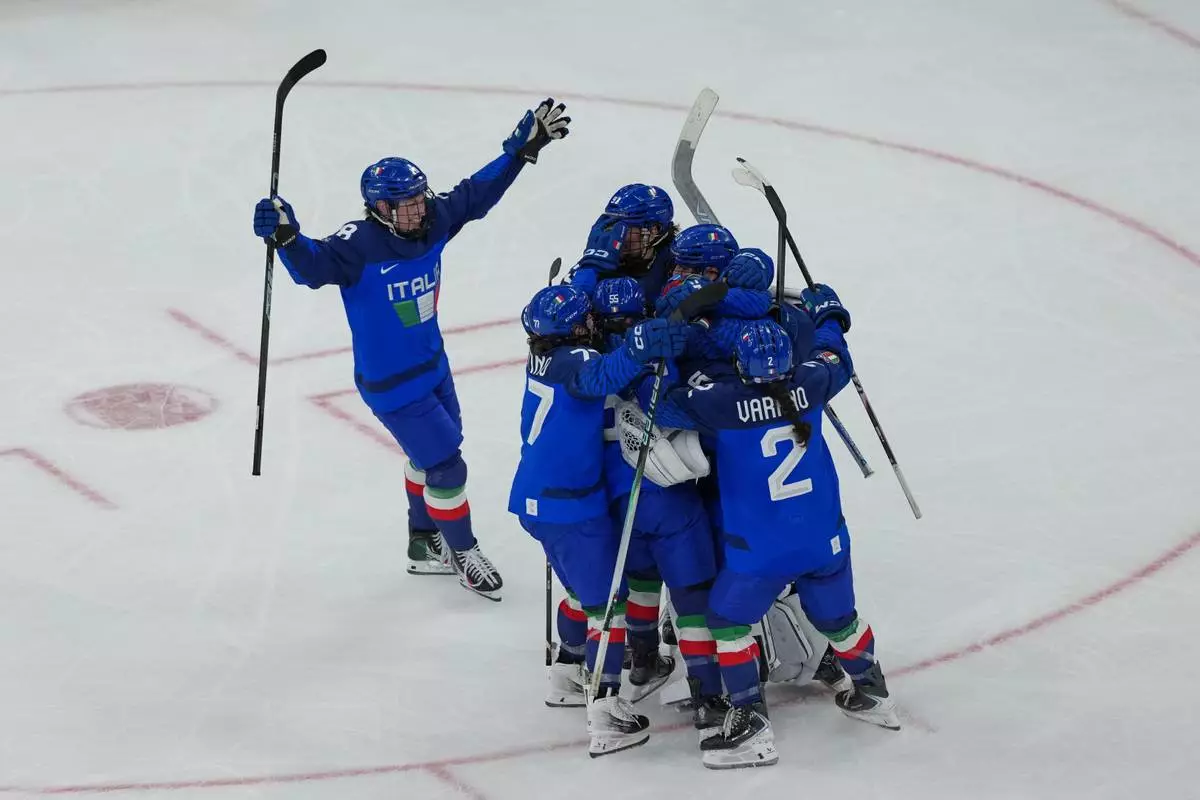
Italy's Franziska Stocker (18) skates to celebrate with teammates after winning a preliminary round match of women's ice hockey against France at the 2026 Winter Olympics, in Milan, Italy, Thursday, Feb. 5, 2026. (AP Photo/Carolyn Kaster)
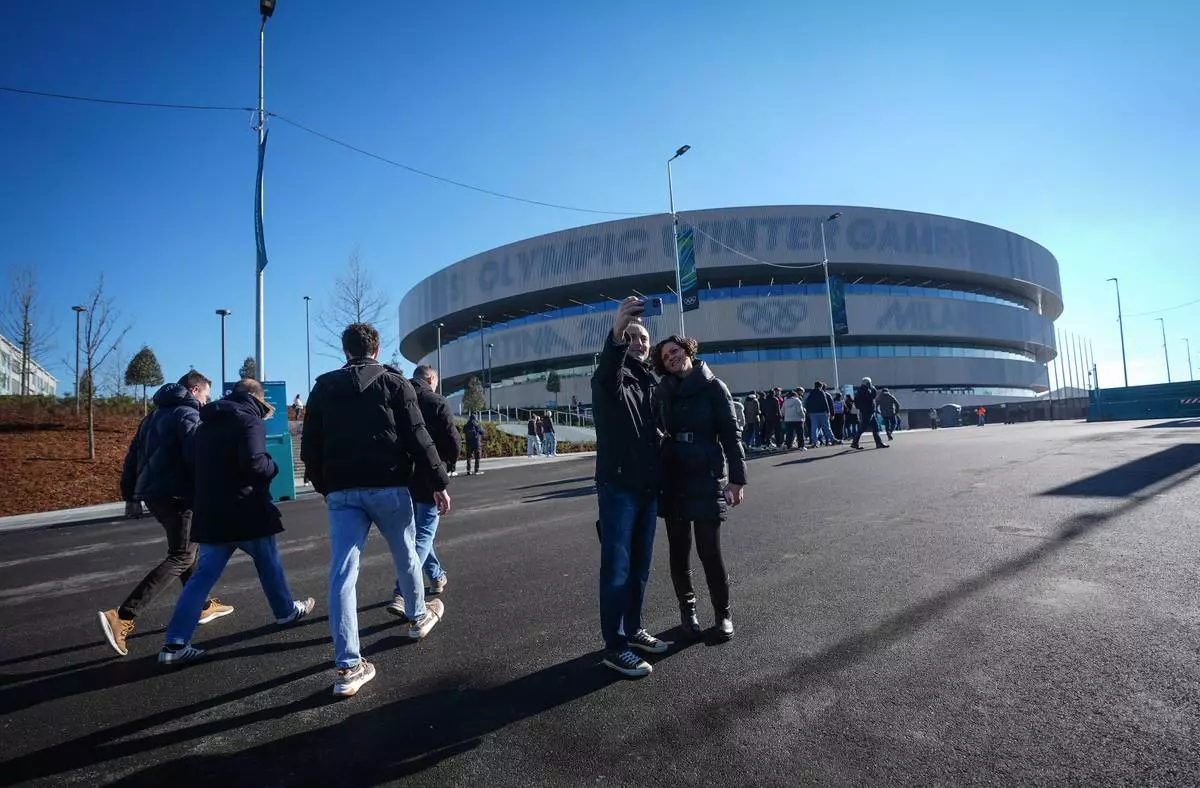
Spectators pose for a selfie outside Milano Santagiulia ice hockey arena before Italy and France play a women's hockey game at the Milan Cortina Winter Olympics, in Milan, on Thursday, Feb. 5, 2026. (Darryl Dyck /The Canadian Press via AP)
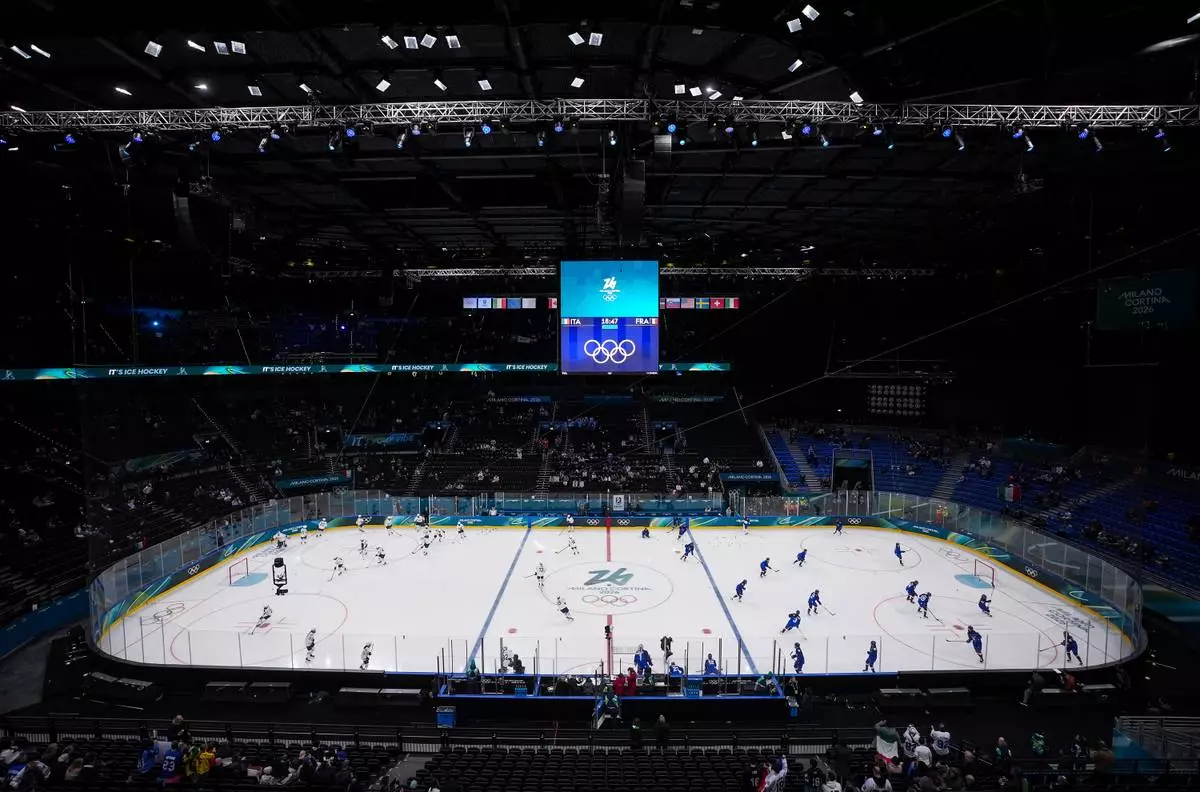
France and Italy players take part in the pregame skate before playing a women's hockey game at the Milano Santagiulia ice hockey arena, at the Milan Cortina Winter Olympics, in Milan, on Thursday, Feb. 5, 2026. (Darryl Dyck /The Canadian Press via AP)
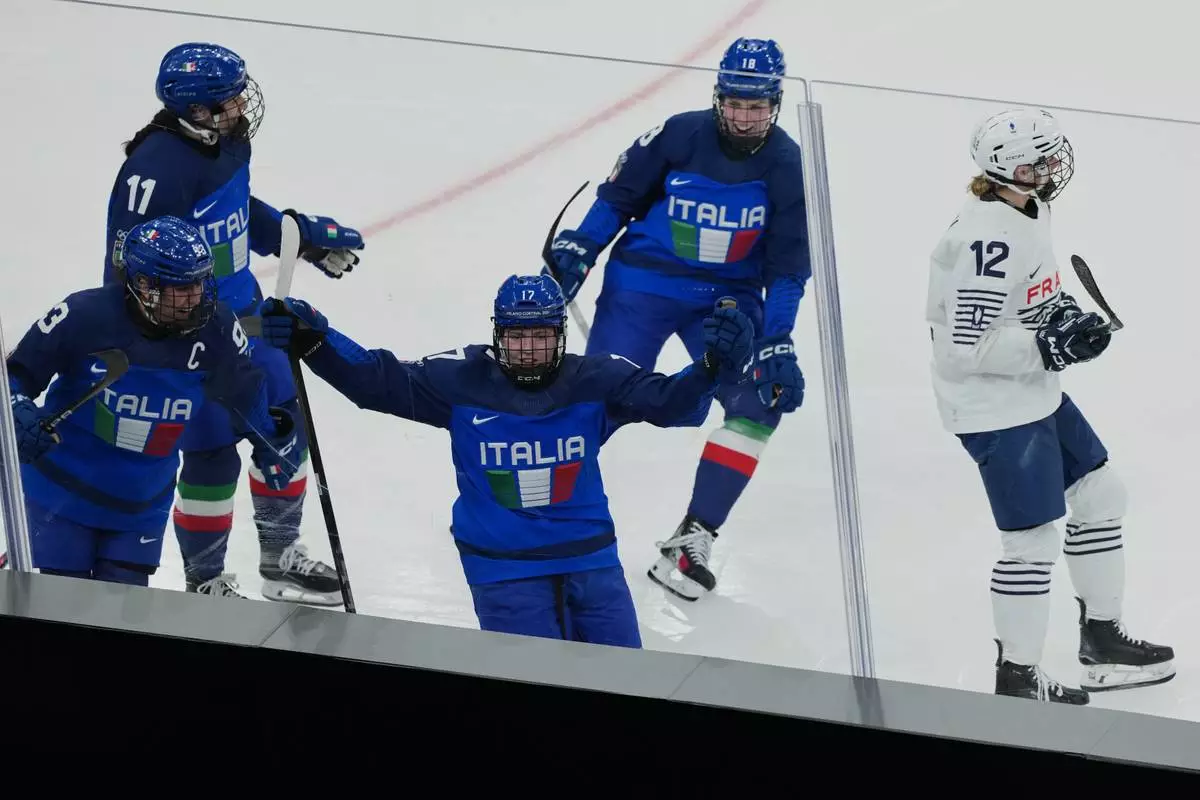
Italy's Matilde Fantin (17) celebrates scoring a goal in the third period with Italy's Nadia Mattivi (93), Italy's Justine Reyes (11), Italy's Franziska Stocker (18), as France's Estelle Duvin (12) skates away during a preliminary round match of women's ice hockey between Italy and France at the 2026 Winter Olympics, in Milan, Italy, Thursday, Feb. 5, 2026. (AP Photo/Carolyn Kaster)
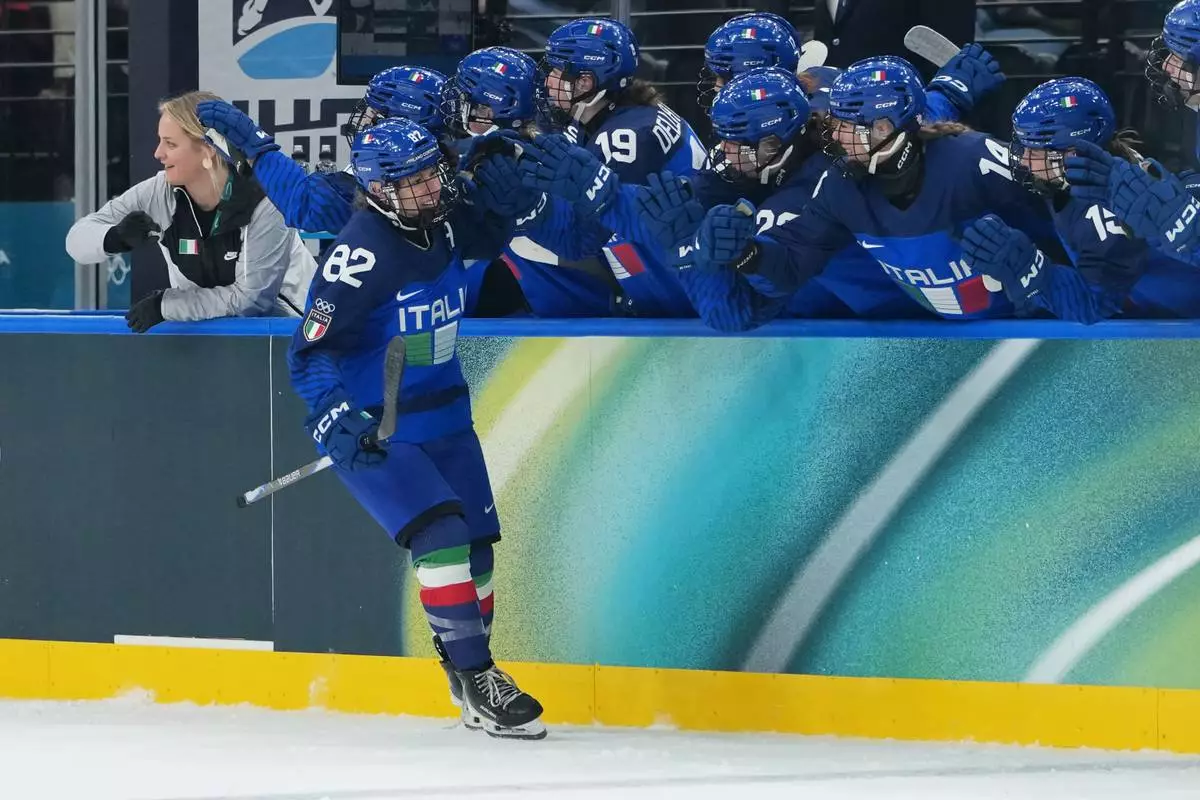
Italy's Kayla Tutino (82) celebrates after scoring a goal in the first period during a preliminary round match of women's ice hockey against France at the 2026 Winter Olympics, in Milan, Italy, Thursday, Feb. 5, 2026. (AP Photo/Carolyn Kaster)
HELSINGBORG, Sweden (AP) — NATO allies and defense officials expressed bewilderment Friday at U.S. President Donald Trump’s announcement that he would send 5,000 U.S. troops to Poland just weeks after ordering the same number of forces pulled out of Europe.
The apparent change of mind came after weeks of statements from Trump and his administration about reducing — not increasing — the U.S. military footprint in Europe. Trump's initial order set off a flurry of action among military commanders and left allies already doubtful about America's commitment to Europe's security to ponder what forces they might have to backfill on NATO's eastern flank with Russia and Ukraine.
Earlier this month, the Trump administration said it was reducing levels in Europe by about 5,000 troops, and U.S. officials confirmed about 4,000 service members were no longer rotating into Poland from Germany. The dispatch to Germany of U.S. personnel trained to fire long-range missiles was also halted.
But in a post on Truth Social on Thursday, Trump said he would now send "an additional 5,000 Troops to Poland,” citing his strong ties with Polish President Karol Nawrocki, whom Trump endorsed in elections last year.
“It is confusing indeed, and not always easy to navigate,” Swedish Foreign Minister Maria Malmer Stenergard told reporters Friday at a meeting she was hosting of her NATO counterparts, including U.S. Secretary of State Marco Rubio.
Ministers from the Netherlands and Norway were sanguine about Trump’s latest move, as was Latvian Foreign Minister Baiba Braže, who said allies knew the U.S. troop “posture was being reconsidered, and now there is no change of posture. For now.”
U.S. defense officials also expressed confusion. “We just spent the better part of two weeks reacting to the first announcement. We don’t know what this means either,” said one of two officials who spoke on condition of anonymity to discuss sensitive military matters.
But Rubio said Washington’s allies understand that changes in the U.S. troop presence in Europe will come as the Trump administration reevaluates its force needs. “I think there’s a broad recognition that there are going to be eventually less U.S. troops in Europe than there has historically been for a variety of reasons,” he said.
The latest surprise came despite a U.S. pledge to coordinate troop deployments, including one from NATO’s top military officer, U.S. Lt. Gen. Alex Grynkewich, on Wednesday.
Trump's initial announcement that he would withdraw troops came as he fumed over remarks by German Chancellor Friedrich Merz, who said that the U.S. was being “humiliated” by the Iranian leadership and criticized what he called a lack of strategy in that war.
Trump told reporters that the U.S. would be cutting even more than 5,000 and also announced new tariffs on European cars. Germany is the continent’s biggest auto producer.
Rubio insisted that Trump’s decision “is not a punitive thing. It’s just something that’s ongoing.”
About 80,000 U.S. troops are stationed in Europe. The Pentagon is required to keep at least 76,000 troops and major equipment on the continent unless NATO allies are consulted and there is a determination that such a withdrawal is in U.S. interests.
The withdrawal of 5,000 troops might drop numbers below that limit.
But Trump's latest post suggests that troop numbers in Europe would not change. Polish Foreign Minister Radek Sikorski welcomed the decision to send more forces to his country, saying it ensures that “the presence of American troops in Poland will be maintained more or less at previous levels.”
NATO Secretary-General Mark Rutte also welcomed the move. On Thursday, before Trump took to Truth Social again, Rutte had underlined that it was important for Europe to take care of its own security. “We have a process in place. This is normal business,” he told reporters.
At NATO headquarters in Brussels, meanwhile, U.S. officials briefed the allies on the Pentagon's aims for its commitments to the NATO Force Model, which involves contingency planning for Europe’s defense in the event of serious security concerns. It was widely expected that a further reduction of U.S. forces would be coming.
Asked whether any cuts were announced, Rutte said: “I’m afraid it’s much more complicated than that.” He said the procedure “is highly classified” and declined to give details.
Rubio played down concerns about a shift in U.S. force levels in Europe, saying: "Every country has to constantly reevaluate what their needs are, what their commitments are around the world, and how to properly structure that.”
Cook reported from Brussels. Associated Press writer Emma Burrows in London contributed.
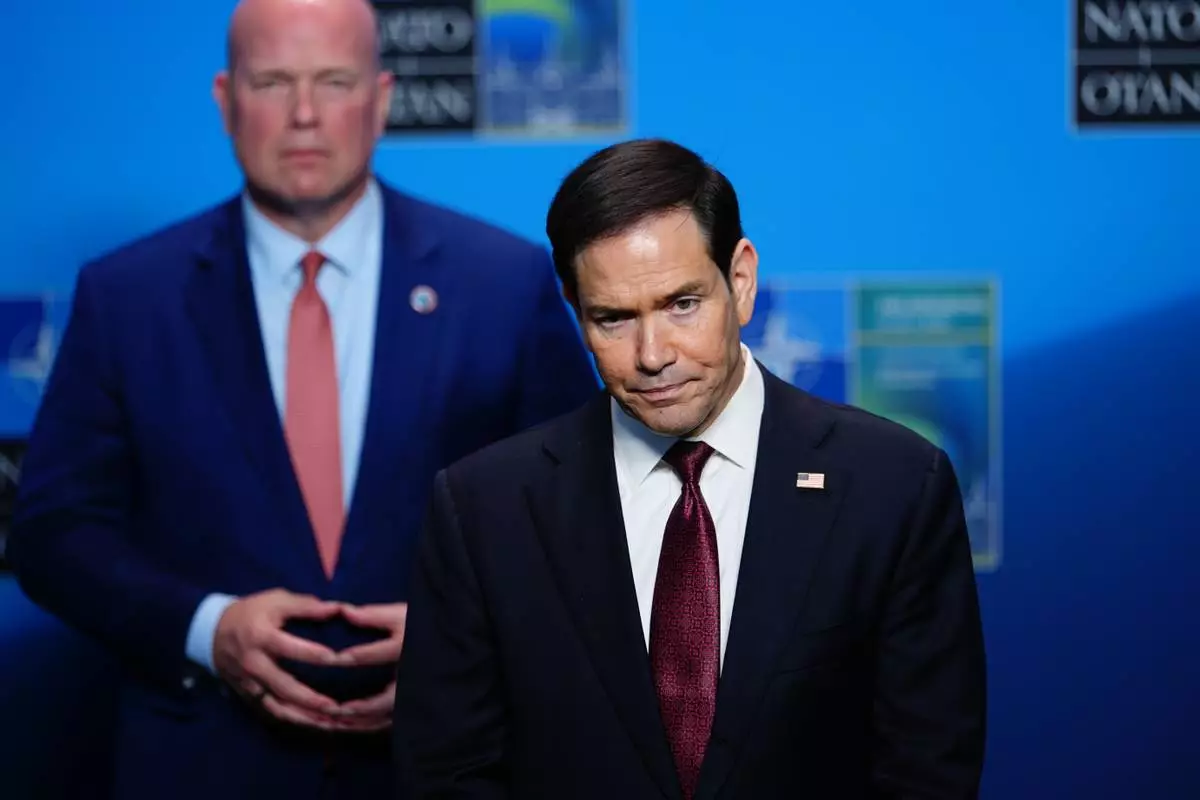
United States Secretary of State Marco Rubio speaks with journalists during a meeting of NATO foreign ministers in Helsingborg, Sweden, Friday, May 22, 2026. (AP Photo/Julia Demaree Nikhinson, Pool)
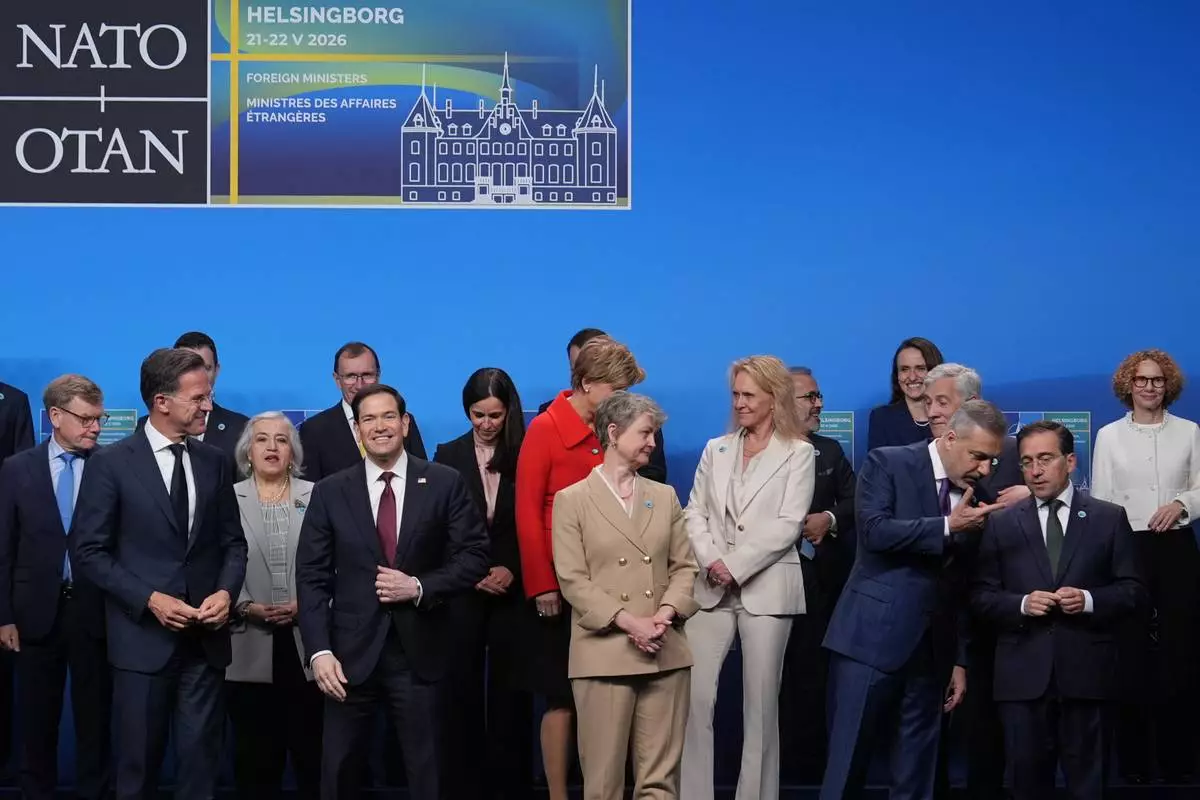
United States Secretary of State Marco Rubio, front second left, and NATO Secretary General Mark Rutte, front left, speak with each other during a group photo at a meeting of NATO foreign ministers in Helsingborg, Sweden, Friday, May 22, 2026. (AP Photo/Julia Demaree Nikhinson, Pool)
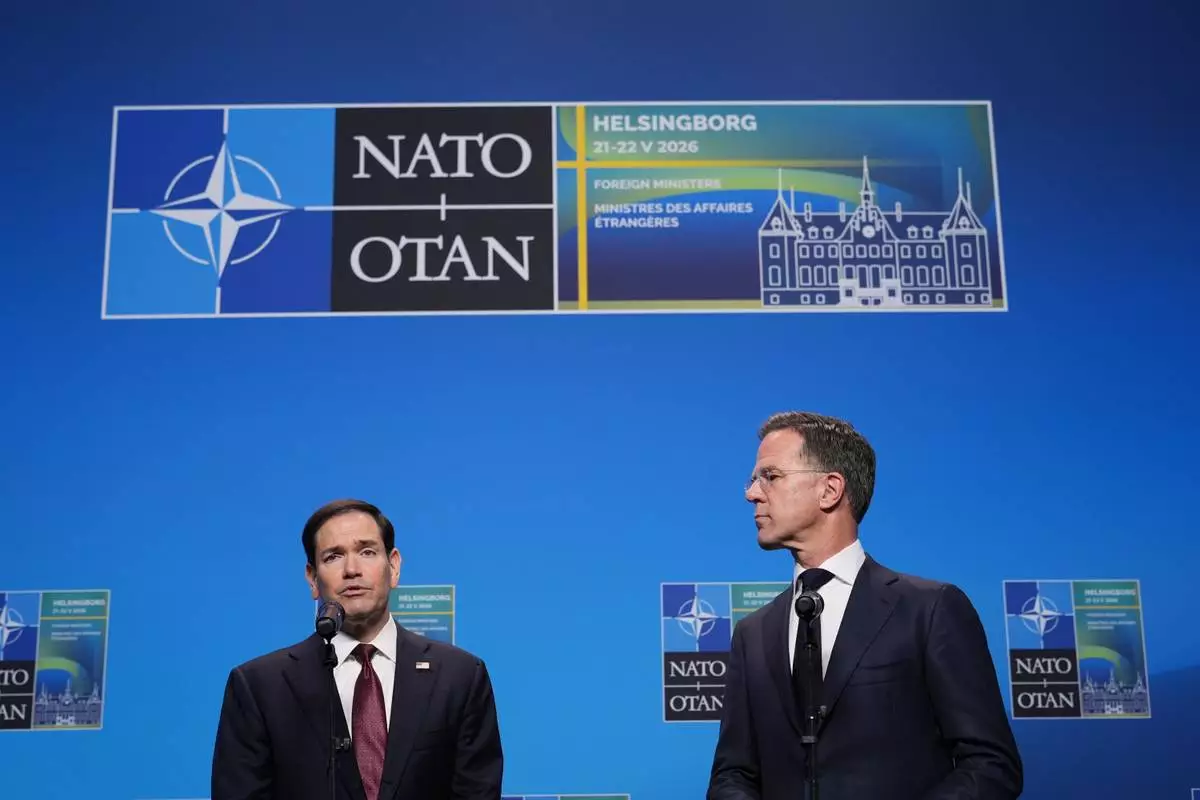
United States Secretary of State Marco Rubio, left, and NATO Secretary General Mark Rutte look at each other as they deliver a statement during a meeting of NATO foreign ministers in Helsingborg, Sweden, Friday, May 22, 2026. (AP Photo/Julia Demaree Nikhinson, Pool)
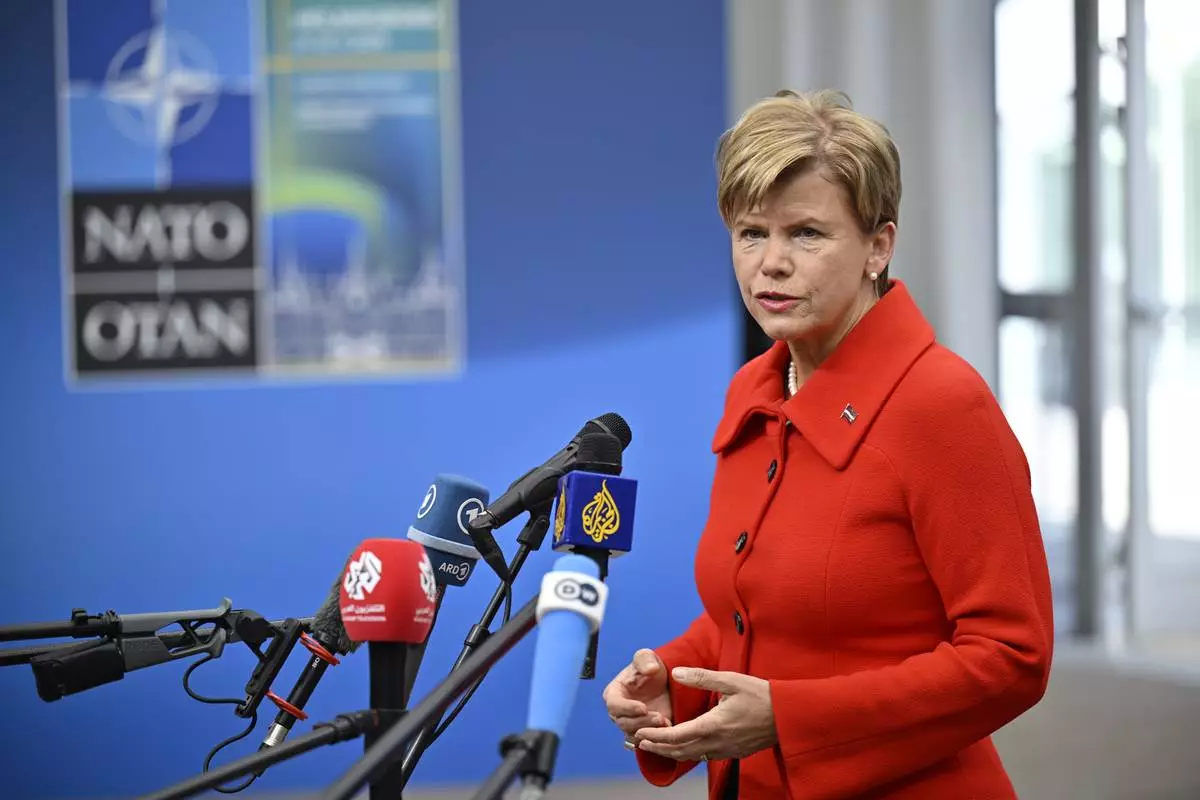
Latvian Foreign Minister Baiba Braže speaks at the doorstep of the NATO foreign ministers' meeting at Sea U in Helsingborg, Sweden, Friday, May 22, 2026. (Johan Nilsson/TT News Agency via AP)
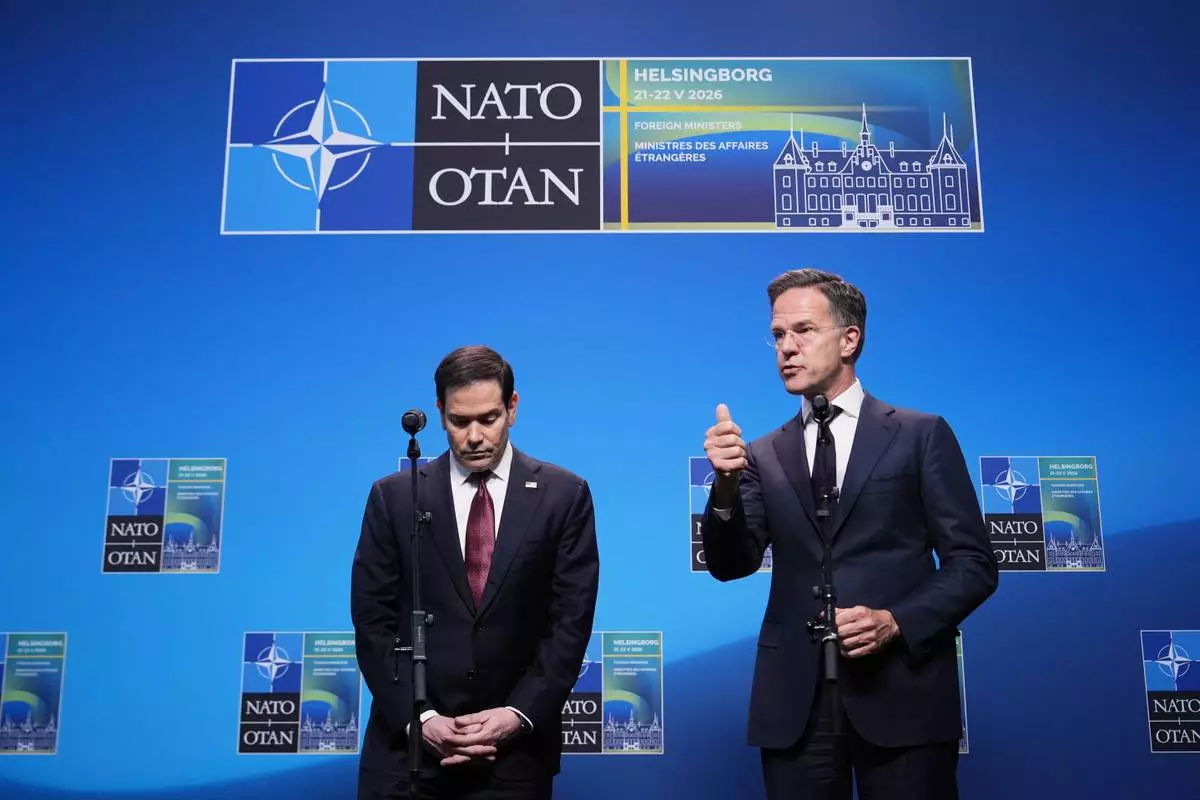
United States Secretary of State Marco Rubio, left, and NATO Secretary General Mark Rutte deliver a statement during a meeting of NATO foreign ministers in Helsingborg, Sweden, Friday, May 22, 2026. (AP Photo/Julia Demaree Nikhinson, Pool)
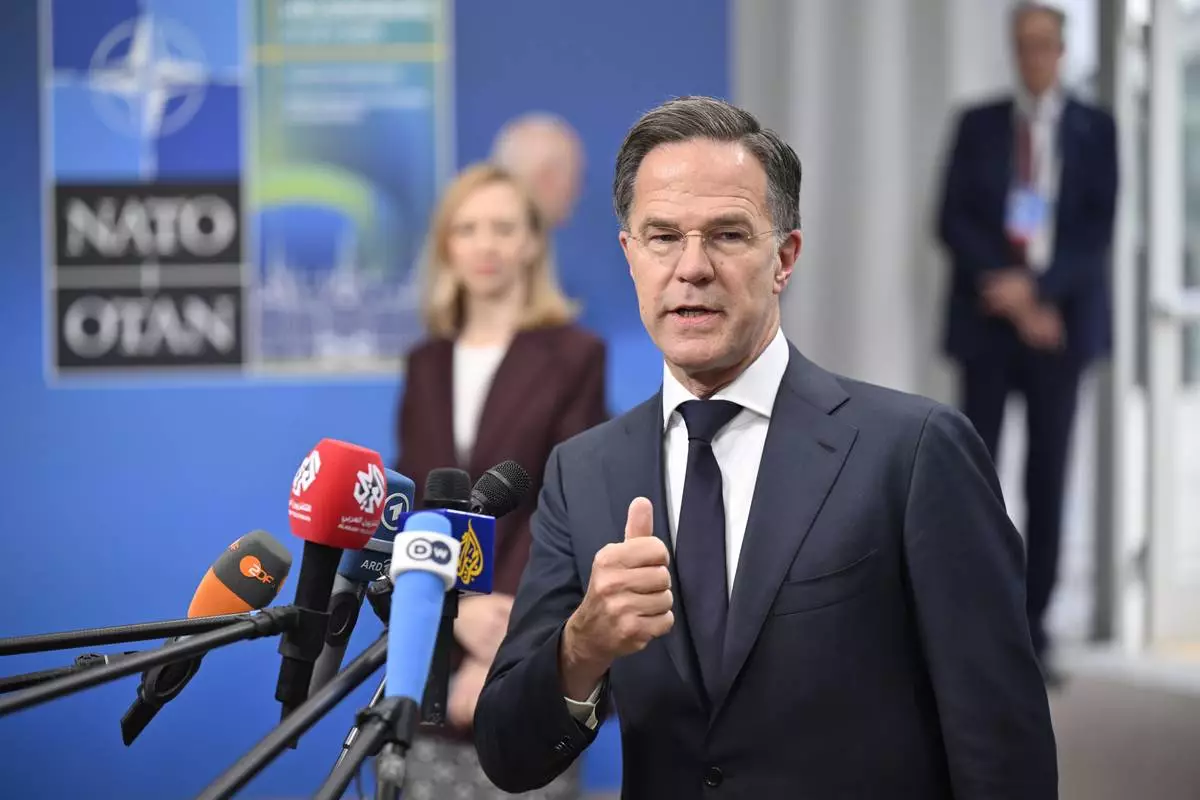
NATO Secretary General Mark Rutte speaks to media at the NATO Foreign Ministers' meeting in Helsingborg, Sweden, Friday, May 22, 2026. (Johan Nilsson/TT News Agency via AP)
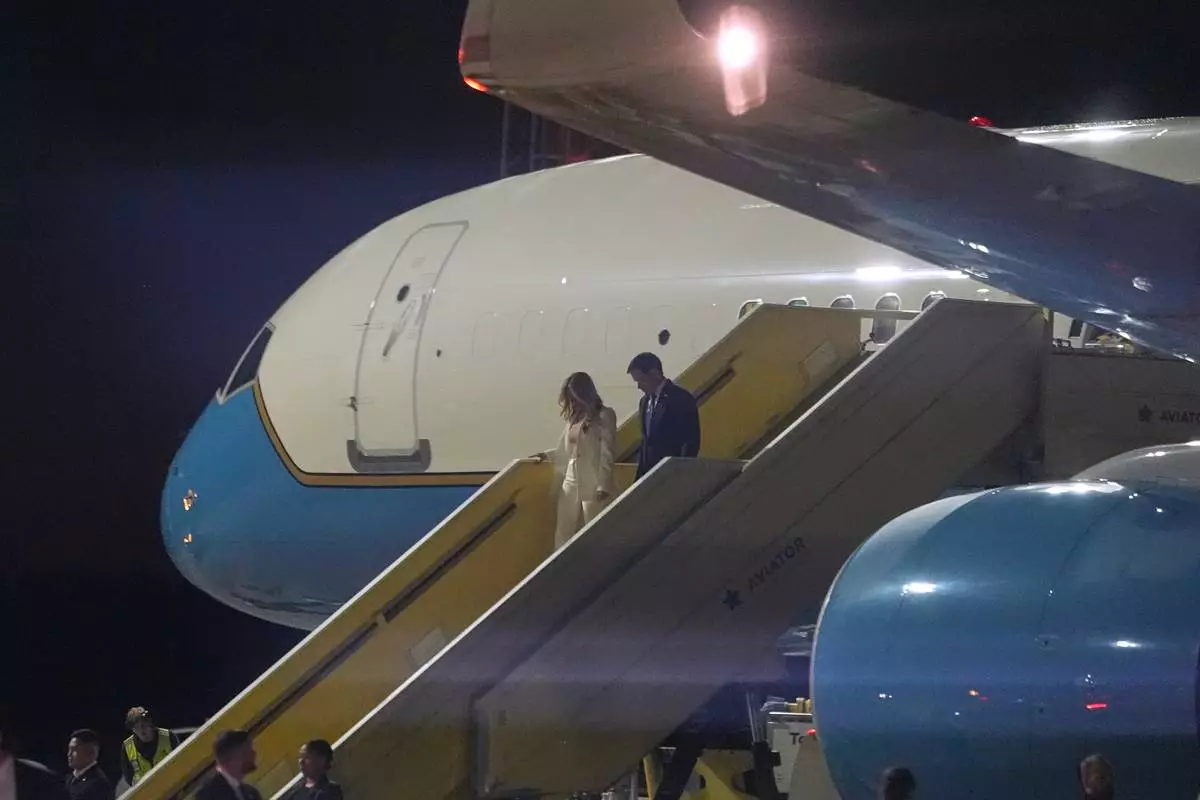
Secretary of State Marco Rubio arrives with his wife Jeanette at Malmo Airport, Friday, May 22, 2026, in Malmo-Sturup, Sweden, ahead of a NATO foreign ministers meeting. (AP Photo/Julia Demaree Nikhinson, Pool)
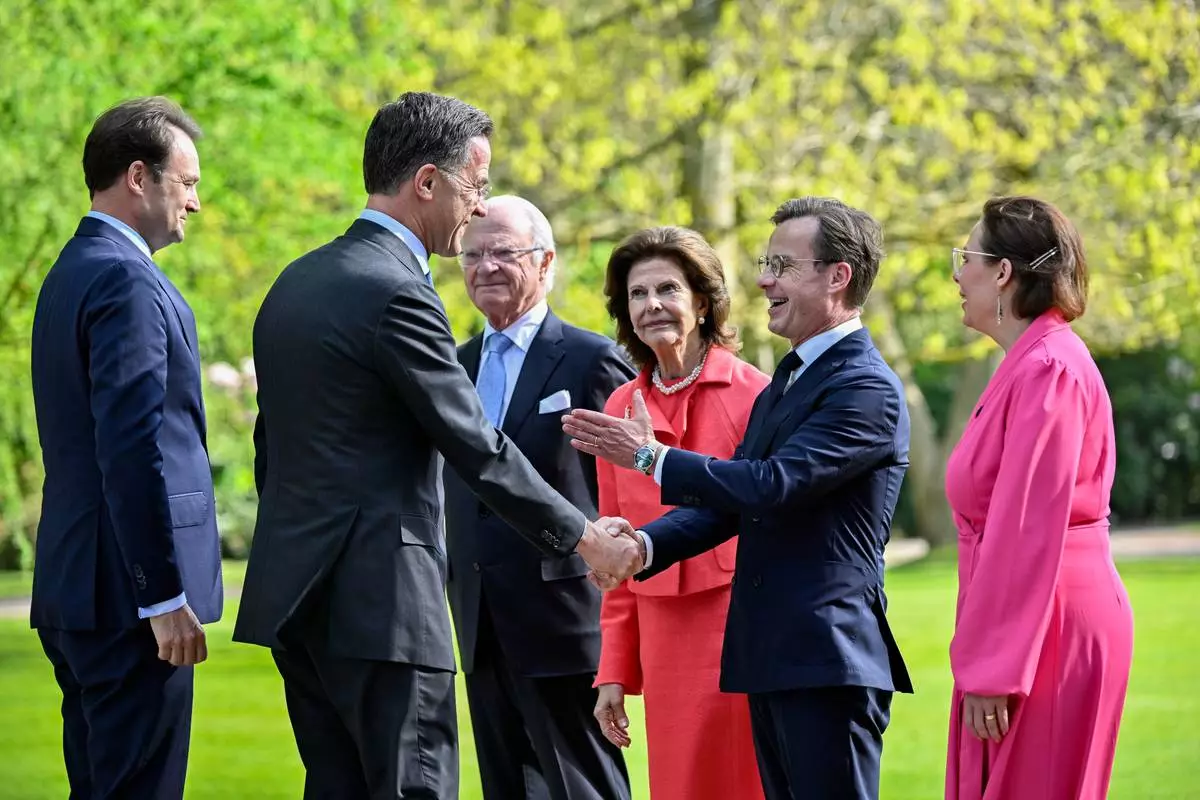
NATO Secretary General Mark Rutte, second from left, shakes hands with Prime Minister of Sweden Ulf Kristersson, as he is greeted by King Carl Gustaf of Sweden, Queen Silvia of Sweden and Minister for Foreign Affairs of Sweden Maria Malmer Stenergard, right, before a dinner at Sofiero Castle in Helsingborg, Sweden, Thursday May 21 2026. (Johan Nilsson/TT News Agency via AP)
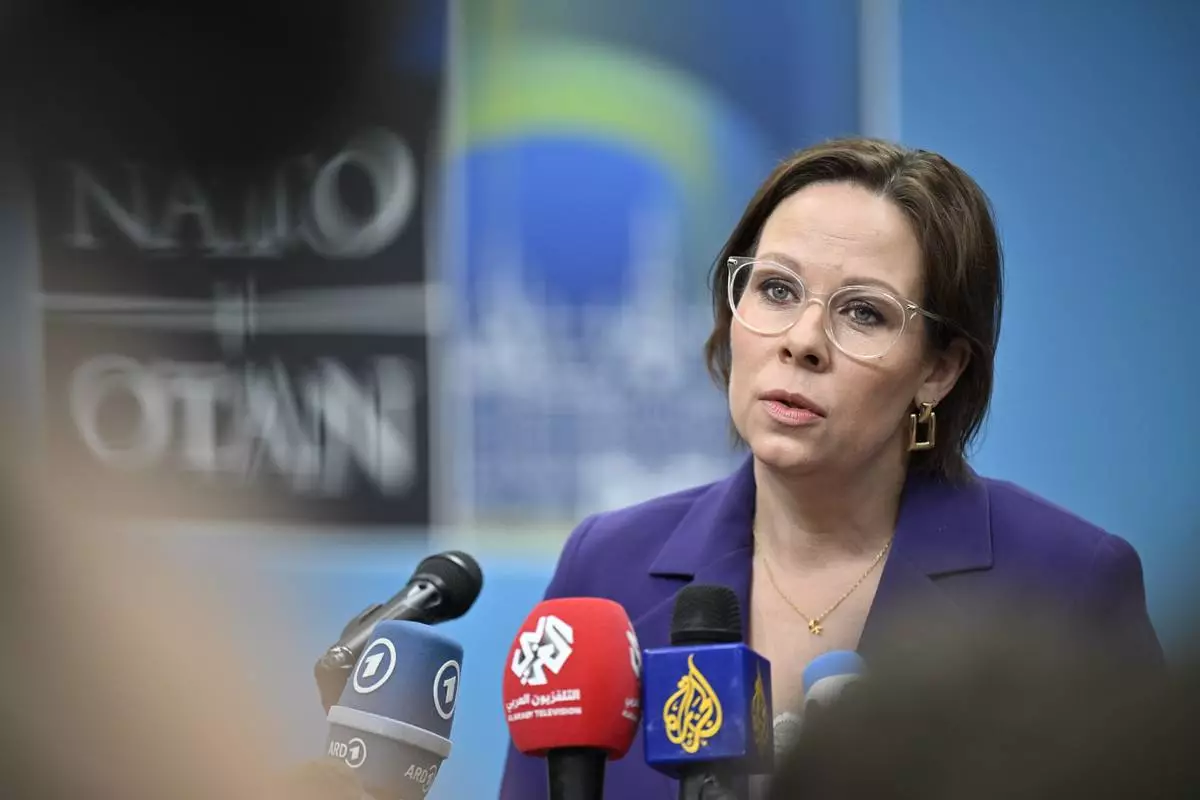
Swedish Foreign Minister Maria Malmer Stenergard speaks to media at the NATO Foreign Ministers' meeting in Helsingborg, Sweden, Friday, May 22, 2026. (Johan Nilsson/TT News Agency via AP)