SAN FRANCISCO--(BUSINESS WIRE)--Feb 5, 2026--
The gaming industry just hit its “GPT moment.” On January 30, 2026, Google’s release of Genie 3 —a world model capable of generating real-time, interactive video—signaled a paradigm shift. For the first time, we saw an AI that doesn’t just "play" a video; it simulates a world where a user can control a character via WASD keys with consistent physical logic.
This press release features multimedia. View the full release here: https://www.businesswire.com/news/home/20260203939367/en/
However, while Google has provided the raw "engine" of this new era, the challenge of turning a stochastic video generator into a commercially viable game platform remains. This is where LinearGame, a startup with roots in Silicon Valley and Singapore, enters the fray with Yoroll.ai.
Beyond Simulation: The "Engine-less" Paradigm
For decades, game development has been a game of simulation. Developers use heavyweight engines like Unity or Unreal to calculate 3D geometry, light bounce, and collision physics. It is a high-cost, high-friction process that requires massive asset pipelines and specialized labor.
Yoroll.ai is proposing a radical departure: the "Engine-less" game. Instead of simulating 3D space, the platform uses generative video as its primary rendering layer.
The Technical Secret Sauce: The Three-Layer Architecture
The primary hurdle for AI-generated games has always been "hallucination"—the tendency for AI to lose track of objects or logic over time. To solve this, Yoroll.ai has pioneered a Three-Layer Architecture that ensures narrative and mechanical consistency:
Finding Product-Market Fit in Interactive Film
Yoroll.ai isn't aiming to replace Call of Duty overnight. Instead, it has identified its "North Star" in interactive cinematic experiences. The platform allows creators to transform text prompts, photos, and short clips into branching narratives—think Black Mirror: Bandersnatch but with the infinite replayability and low production cost of AI.
The economic shift is staggering. LinearGame estimates that its AI workflow reduces production costs to 1/100th of traditional interactive film projects. What previously required a crew of dozens and years of development can now be accomplished by a team of 1–3 people in a single month. This massive productivity gain is designed to ignite a "Roblox moment" for cinematic storytellers, enabling TikTok-native creators and indie filmmakers to become game designers.
The Road to 2026 and Beyond
As Genie 3 begins to stabilize the technical foundation of interactive world models, platforms like Yoroll.ai are building the necessary infrastructure to turn those models into a new category of entertainment. We are moving toward a world where the boundary between "watching" and "playing" disappears—and where the next blockbuster game might be prompted into existence rather than programmed.

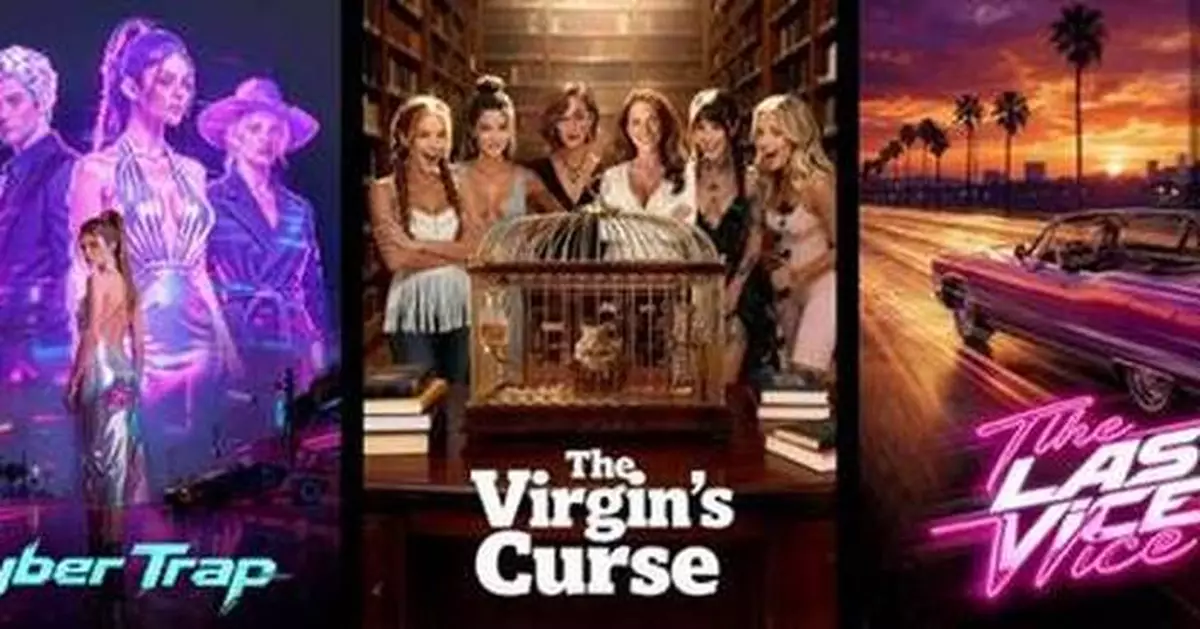
Featured Games: Create and play various types of AI interactive video games
NEW YORK (AP) — Not long ago, New York City Mayor Zohran Mamdani was demonized by leaders of both political parties. On Thursday night, the 34-year-old democratic socialist was celebrated as a political force, the face of the region's sports renaissance, even the leader of “Mamdanistan."
In a rally with Bernie Sanders, I-Vt., that drew thousands to a Brooklyn theater, the emboldened mayor delivered a fiery message to Democratic leaders in Washington — and even those considering 2028 presidential bids — as he worked to elevate a slate of likeminded candidates in Tuesday's New York primaries.
“People often ask me what I think of the state of the Democratic Party. This slate here today is our answer," Mamdani declared. "The Democratic Party must change.”
“The party of the past will not be what leads us into the future. We need a Democratic Party with backbone."
He shared the stage with three congressional candidates, including two running against Democratic incumbents. All three identify, or have identified, as democratic socialists. They promised to “abolish ICE,” condemned the “genocide” in Israel and vowed to "tax the rich" if elected.
The collection of congressional candidates he’s backing represent a political gamble for Mamdani, whose picks may not win Tuesday, and a potential headache for Democratic leaders, who fear that Mamdani’s allies may push the party too far left. It's the latest way Mamdani is testing the limits of his newfound political muscle, even if it means challenging his own party’s leadership.
Sanders cheered him on Thursday night, noting that democratic socialists fighting for working-class voters like Mamdani have been elected across the country in recent months.
“The politics and the policies of the democratic establishment are no longer good enough,” Sanders charged. “In this dangerous and unprecedented moment in American history, tinkering around the edges just won’t work.”
Establishment Democrats are not pleased with the mayor's decisions.
Mamdani endorsed political organizer Darializa Avila Chevalier over Rep. Adriano Espaillat, the chairman of the Congressional Hispanic Caucus, in New York's 13th District, which includes parts of upper Manhattan and the Bronx.
Mamdani is also backing former New York City Comptroller Brad Lander, who is running against incumbent Rep. Dan Goldman in New York's 10th District. And in New York's 7th, he's supporting democratic socialist state Assembly Member Claire Valdez against outgoing Rep. Nydia Velazquez’s handpicked successor.
All three congressional candidates stood arm-in-arm with the mayor Thursday and spoke from a podium emblazoned with the sign “Our team, our year.”
“Right now there’s really mass dissatisfaction with the way the party leadership has been operating and not standing up strongly enough to Trump,” Valdez told The Associated Press before the rally, where she promised to “Free Palestine” and “abolish ICE.”
She said she hopes to “bring a partner to Zohran to Washington.”
Valdez's primary opponent, Brooklyn Borough President Antonio Reynoso, said he feels like the underdog in the race, even though he was endorsed by the outgoing incumbent. He said Mamdani “has a celebrity status that we haven’t seen the likes of since I’ve been alive.”
“He’s going to be our champion for the foreseeable future and he’s doing a great job, and when he says that he’s endorsing someone, it matters,” Reynoso said in an interview. “I believe that this community has seen me work, they know I’m a progressive champion, and in any other circumstance I would be a favorite to win this race, but I’m not because he has tipped the scale.”
The candidates are largely aligned on the biggest issues, although there are modest differences.
Israel’s war in Gaza has featured heavily among the Mamdani slate, with Lander, Valdez and Avila Chevalier casting their Democratic opponents as too soft on Israel. The mayor’s candidates also sought to replicate much of the platform that sent him to City Hall, focusing on the city’s high cost of living and framing themselves as fresh faces not beholden to powerful business interests.
Avila Chevalier went after Espaillat at Thursday’s rally for accepting major donations from real estate developers and Wall Street.
“You cannot take working people for granted. And you cannot outspend a movement whose time has come,” she said. “We are done being ignored.”
On Capitol Hill, Democrats are pleasantly surprised that Mamdani has become less of a political liability for the party in swing district seats than they once feared.
But Mamdani’s endorsements have aggravated intraparty fissures, especially among moderates who worry that Mamdani's far-left brand may eventually tarnish the entire party.
And House Minority Leader Hakeem Jeffries, a fellow New Yorker, has tried to push back against the Mamdani-backed democratic socialist challengers, endorsing and campaigning for the embattled incumbents in a proxy fight with the mayor.
But Jeffries and Mamdani have opted to wrestle only in primaries rather than bicker publicly and feed into GOP narratives of Democratic disarray.
“Democrats must understand, and both the leader and Mamdani appreciate this, how to yell in areas where we agree and whisper in areas where we diverge,” said Antjuan Seawright, a Democratic strategist who works with House Democrats.
For now, Jeffries' allies acknowledge that Mamdani has energized Democratic voters and may be able to reach some Americans who have checked out of the political process. They also prefer that Mamdani is hyper-focused on New York City’s governance rather than traveling across the country.
And yet Mamdani made clear Thursday that he wants his message to be heard nationally.
He referenced the Democratic Party's 2028 presidential nomination contest, saying it begins Tuesday when New York Democrats pick their general election nominees.
“For far too long our party has seen its job as managing decline instead of delivering material change for working people,” Mamdani said. “That old way of thinking will lose on Tuesday. And frankly it will lose in South Carolina and New Hampshire.”
Meanwhile, Republicans plan to elevate Mamdani's profile as well.
The GOP hasn't made Mamdani a central feature of its broader national messaging as it once threatened, but Republican operatives have sought to link Mamdani to Democratic House candidates in swing districts across California, Colorado and Wisconsin. They also believe the specter of the New York City mayor will loom large in pivotal House races in New York and New Jersey.
The Republican bet is that vulnerable Democrats cannot afford to break with Mamdani too cleanly for fear of alienating progressive voters, even as they cast him as a radical.
“Zohran Mamdani’s socialist brand is as toxic as it comes,” said Mike Marinella, a spokesperson for the National Republican Congressional Committee, House Republicans’ campaign arm. “And during a time when Democrats don’t have a leader or a message, he’s exactly the kind of bogeyman we can use against Democrats to truly show who is leading their party and the crazy policies they all support.”
Sanders' senior adviser Faiz Shakir encouraged the GOP to try.
He said “the crowd goes nuts” when Sanders mentions Mamdani in almost every speech as he tours the nation rallying voters ahead of the midterms.
“He’s seeing that opportunity — that we can radically change the Democratic Party,” Shakir said of Mamdani, whom he described as a friend. “He certainly is not a political liability.”
Brown reported in Washington.

U.S. Sen. Bernie Sanders, I-VT., speaks during a Get Out The Vote rally ahead of New York's primary election, Thursday, June 18, 2026, in the Brooklyn borough of New York. (AP Photo/Ryan Murphy)

Mayor Zohran Mamdani speaks during a Get Out The Vote rally ahead of New York's primary election, Thursday, June 18, 2026, in the Brooklyn borough of New York. (AP Photo/Ryan Murphy)

Mayor Zohran Mamdani, right, gestures on stage with U.S. Sen. Bernie Sanders, I-VT., during a Get Out The Vote rally ahead of New York's primary election, Thursday, June 18, 2026, in the Brooklyn borough of New York. (AP Photo/Ryan Murphy)

Democratic Congressional candidates, Claire Valdez, Brad Lander, and Darializa Avila gesture on stage with New York City Mayor Zohran Mamdani during a Get Out The Vote rally ahead of New York's primary election, Thursday, June 18, 2026, in the Brooklyn borough of New York. (AP Photo/Ryan Murphy)

New York City Mayor Zohran Mamdani arrives to take part in the National Puerto Rican Day Parade, Sunday, June 14, 2026 in New York. (AP Photo/Adam Gray)