Skip to Content Facebook Feature Image

Basic services resume at Syrian camp housing IS families as government takes control

News

Basic services resume at Syrian camp housing IS families as government takes control
News

News

Basic services resume at Syrian camp housing IS families as government takes control

2026-02-06 00:18 Last Updated At:00:30

AL-HOL, Syria (AP) — Basic services at a camp in northeast Syria holding thousands of women and children linked to the Islamic State group are returning to normal after government forces captured the facility from Kurdish fighters, a United Nations official said on Thursday.

Forces of Syria’s central government captured al-Hol camp on Jan. 21 during a weekslong offensive against the Kurdish-led and U.S.-backed Syrian Democratic Forces, or SDF, that had been running the camp near the border with Iraq for a decade. A ceasefire deal has since ended the fighting.

More Images
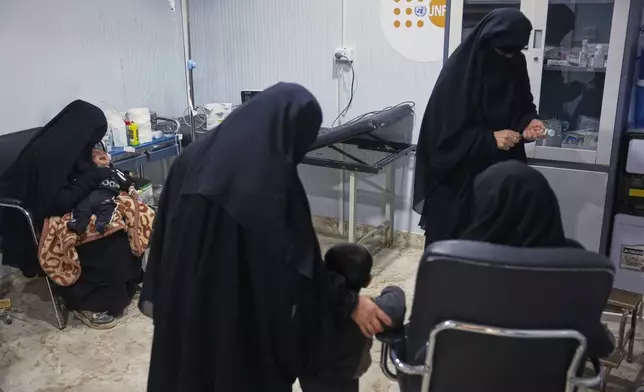
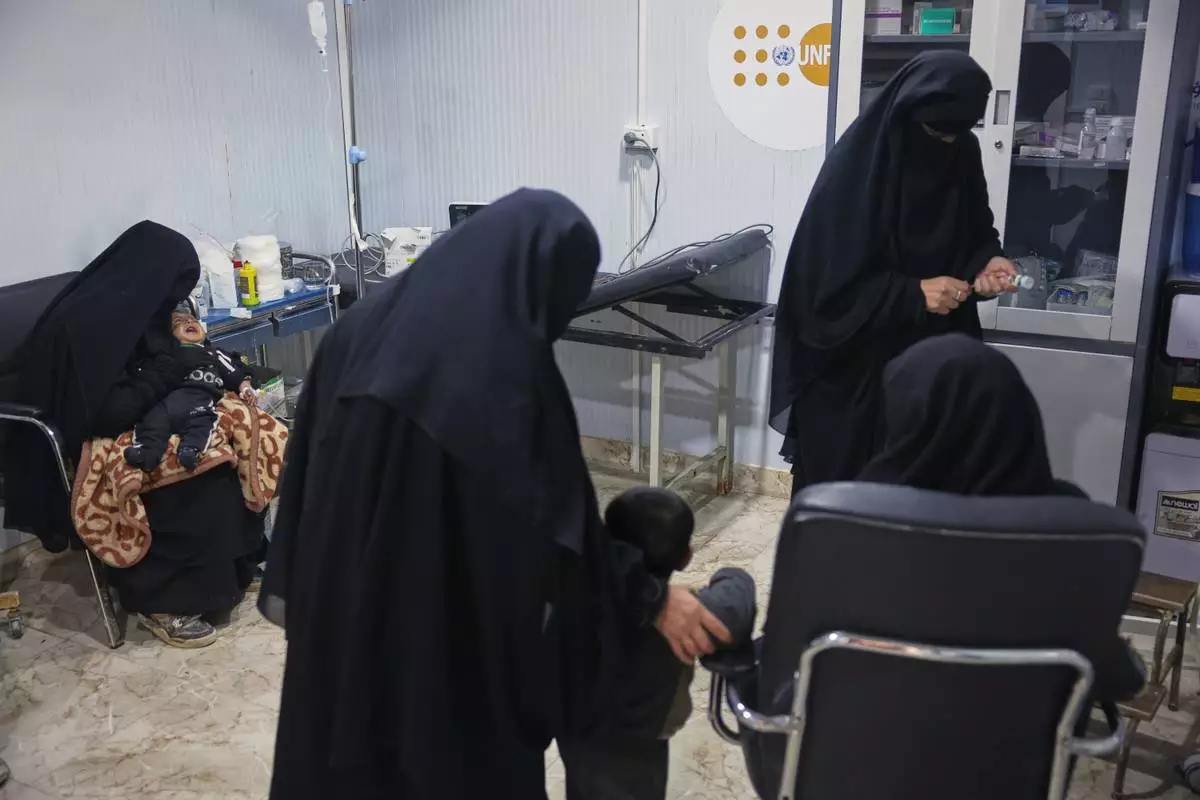
Women receive medication and treatment for their children at a medical center in the al-Hol camp, one of the detention facilities holding thousands of Islamic State group members and their families, now under the control of the Syrian government following the withdrawal of the Syrian Democratic Forces (SDF), in al-Hassakeh province, northeastern Syria, Wednesday, Feb. 4, 2026. (AP Photo/Ghaith Alsayed)
Women receive medication and treatment for their children at a medical center in the al-Hol camp, one of the detention facilities holding thousands of Islamic State group members and their families, now under the control of the Syrian government following the withdrawal of the Syrian Democratic Forces (SDF), in al-Hassakeh province, northeastern Syria, Wednesday, Feb. 4, 2026. (AP Photo/Ghaith Alsayed)
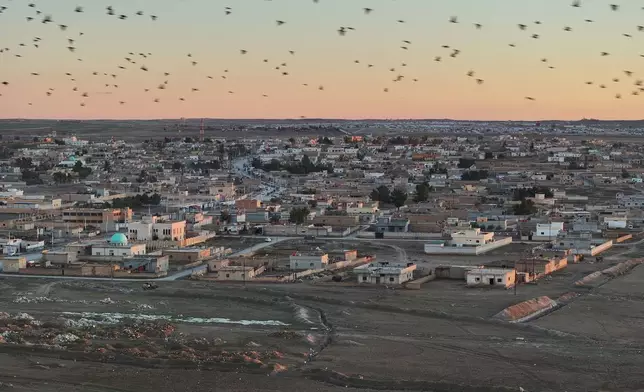
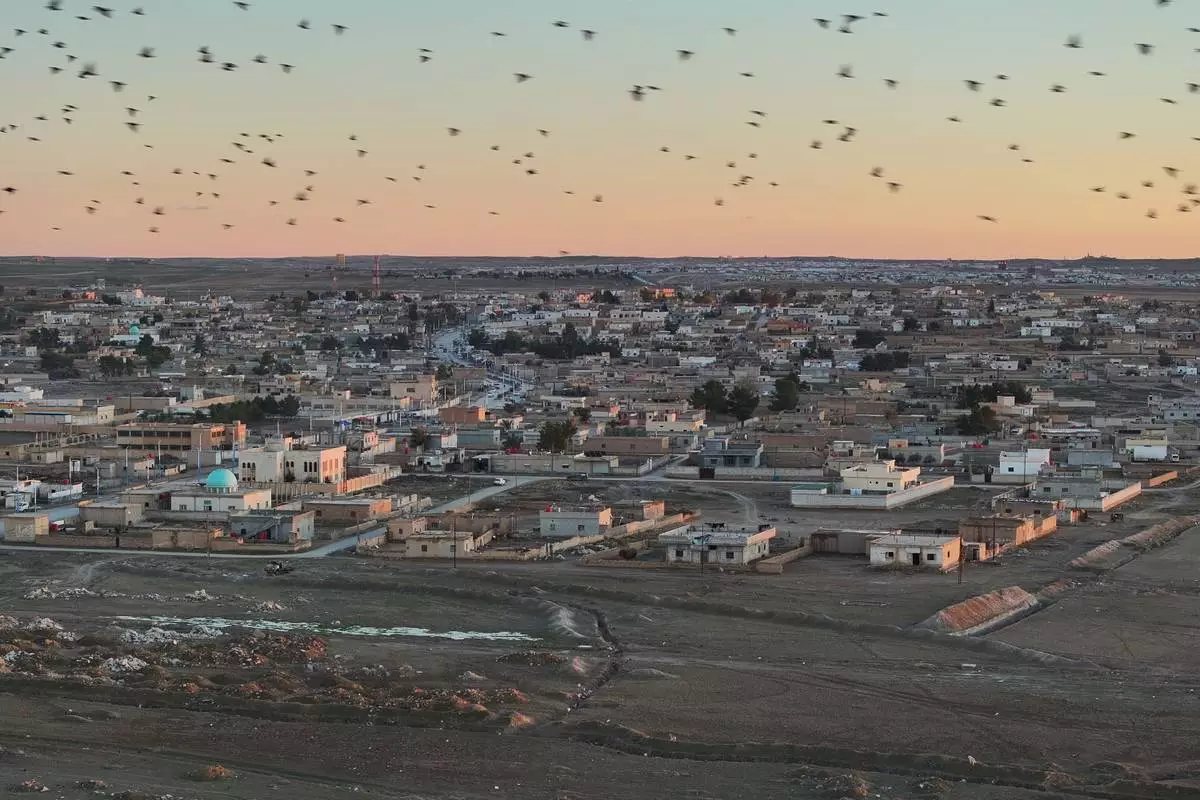
An aerial view shows the town of al-Hol and, in the background, the camp, which holds thousands of Islamic State group members and their families and is now under the control of the Syrian government following the withdrawal of the Syrian Democratic Forces (SDF), in al-Hassakeh province, northeastern Syria, Wednesday, Feb. 4, 2026. (AP Photo/Ghaith Alsayed)
An aerial view shows the town of al-Hol and, in the background, the camp, which holds thousands of Islamic State group members and their families and is now under the control of the Syrian government following the withdrawal of the Syrian Democratic Forces (SDF), in al-Hassakeh province, northeastern Syria, Wednesday, Feb. 4, 2026. (AP Photo/Ghaith Alsayed)
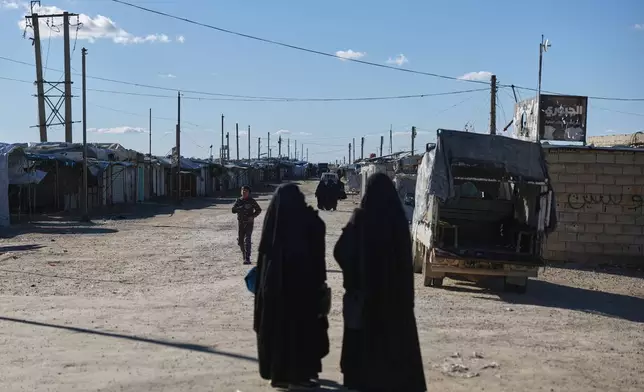
Residents walk along the al-Hol camp, one of the detention facilities holding thousands of Islamic State group members and their families, now under the control of the Syrian government following the withdrawal of the Syrian Democratic Forces (SDF), in al-Hassakeh province, northeastern Syria, Wednesday, Feb. 4, 2026. (AP Photo/Ghaith Alsayed)
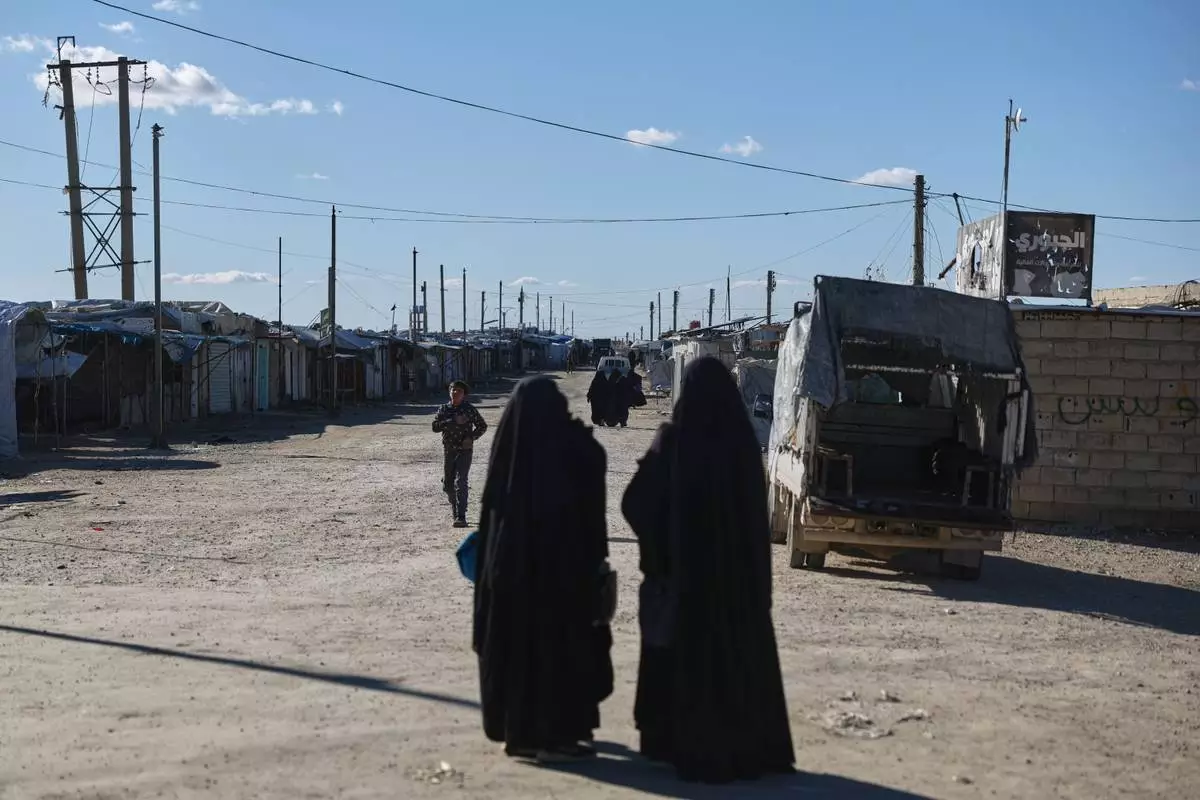
Residents walk along the al-Hol camp, one of the detention facilities holding thousands of Islamic State group members and their families, now under the control of the Syrian government following the withdrawal of the Syrian Democratic Forces (SDF), in al-Hassakeh province, northeastern Syria, Wednesday, Feb. 4, 2026. (AP Photo/Ghaith Alsayed)
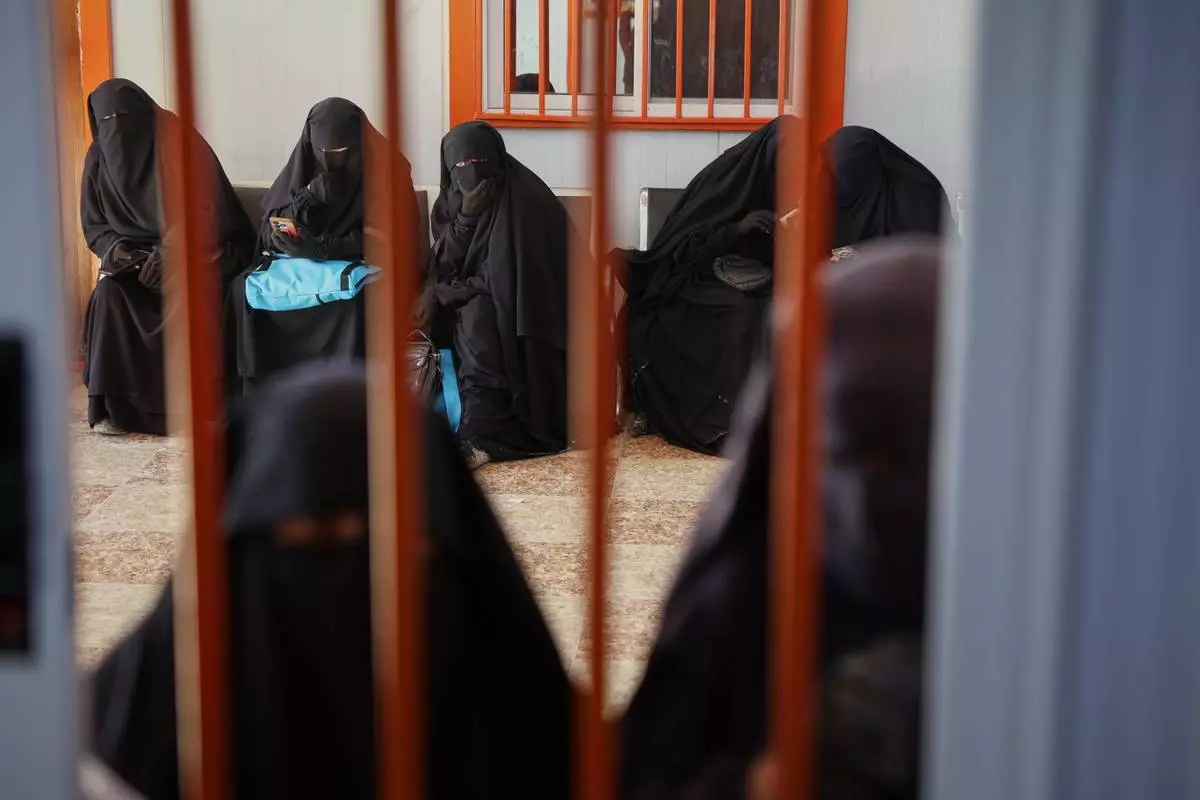
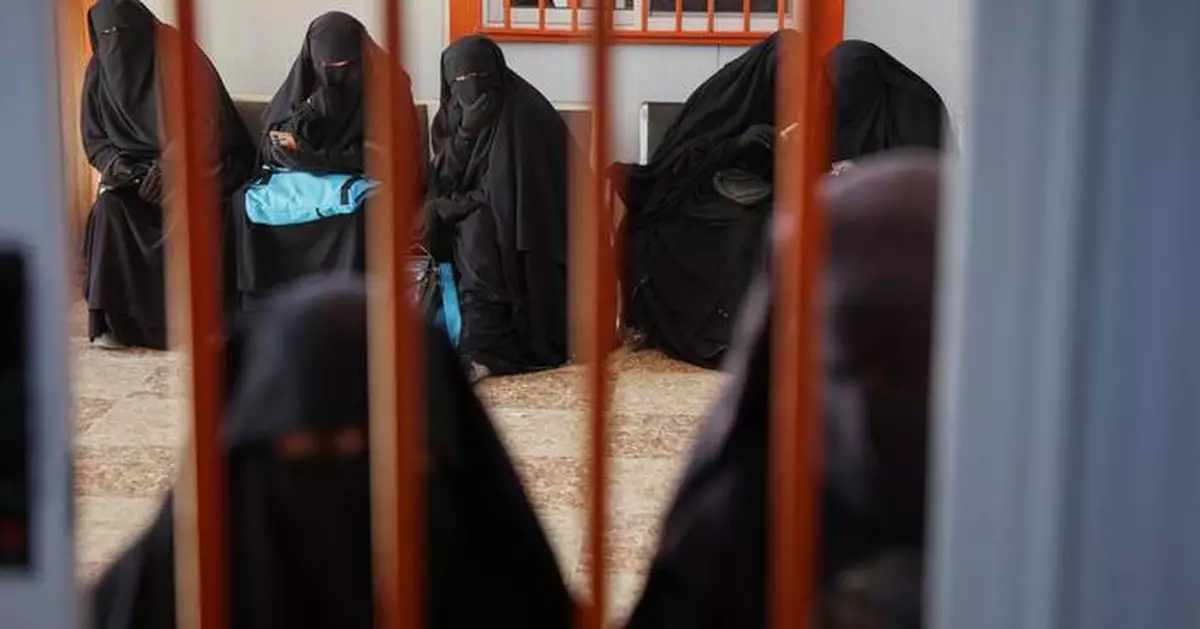
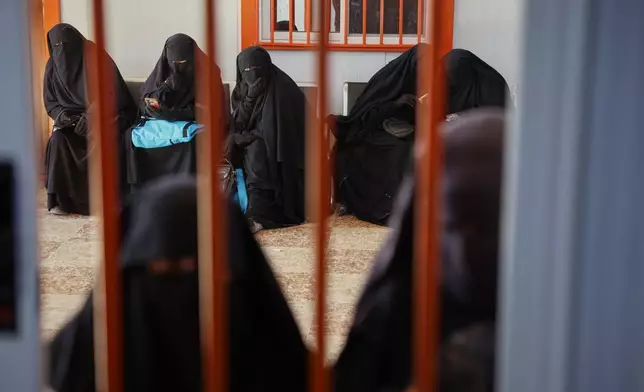
Women wait at a medical center in the al-Hol camp, one of the detention facilities holding thousands of Islamic State group members and their families, now under the control of the Syrian government following the withdrawal of the Syrian Democratic Forces (SDF), in al-Hassakeh province, northeastern Syria, Wednesday, Feb. 4, 2026. (AP Photo/Ghaith Alsayed)


Women wait at a medical center in the al-Hol camp, one of the detention facilities holding thousands of Islamic State group members and their families, now under the control of the Syrian government following the withdrawal of the Syrian Democratic Forces (SDF), in al-Hassakeh province, northeastern Syria, Wednesday, Feb. 4, 2026. (AP Photo/Ghaith Alsayed)

Celine Schmitt, a spokesperson for the U.N. refugees agency told The Associated Press that the interruption of services occurred for two days during the fighting around the camp.

She said a UNHCR team visited the recaptured came to establish “very quickly the delivery of basic services, humanitarian services,” including access to health centers. Schmitt said that as of Jan. 23, they were able to deliver bread and water inside the camp.

Schmitt, speaking in Damascus, said the situation at al-Hol camp has been calm and some humanitarian actors have also been distributing food parcels. She said that government has named a new administrator for the camp.

At its peak after the defeat of IS in Syria in 2019, around 73,000 people were living at al-Hol. Since then the number has declined with some countries repatriating their citizens. The camp’s residents are mostly children and women, including many wives or widows of IS members.

The camp's residents are not technically prisoners and most have not been accused of crimes, but they have been held in de facto detention at the heavily guarded facility.

The current population is about 24,000, including 14,500 Syrians and nearly 3,000 Iraqis. About 6,500 from other nationalities are held in a highly secured section of the camp, many of whom are IS supporters who came from around the world to join the extremist group.

The U.S. last month began transfering some of the 9,000 IS members from jails in northeast Syria to Iraq. Baghdad said it will prosecute the transfered detainees. But so far, no solution has been announced for al-Hol camp and the similar Roj camp.

Amal al-Hussein of the Syria Alyamama Foundation, a humanitarian group, told the AP that all the clinics in the camp's medical facility are working 24 hours a day, adding that up to 150 children and 100 women are treated daily.

She added that over the past 10 days there have been five natural births in the camp while cesarean cases were referred to hospitals in the eastern province of Deir el-Zour or al-Hol town.

She said that there are shortages of baby formula, diapers and adult diapers in the camp.

Safiya Suleiman, who is originally from the Syrian eastern town of Mayadeen and has been living in the camp with her six children for eight years, said there are some food shortages and the worst thing is that her children did not get proper education.

“We want clothes for the children, as well as canned food, vegetables and fruits,” she said, speaking inside her tent surrounded by three of her young daughters. “Since one month we haven’t had anything yet,” she said, referring to vegetables and fruits, which are too expensive for most of the camp’s residents.

Mariam al-Issa, from the northern Syrian town of Safira, said she wants to leave the camp along with her children so that thy can have proper education and eat good food.

“Because of the financial conditions we cannot live well,” she said. “The food basket includes lentils but the children don’t like to eat it any more.”

“The children crave everything,” al-Issa said, adding that food at the camp should be improved from mostly bread and water. “It has been a month since we didn’t have a decent meal,” she said.

Thousands of Syrians and Iraqis have returned to their homes in recent years, but many only return to find destroyed homes and no jobs as most Syrians remain living in poverty as a result of the conflict that started in March 2011.

Schmitt said investment is needed to help people who return home to feel safe. “They need to get support in order to have a house, to be able to rebuild a house in order to have an income,” she said.

“Investments to respond and to overcome the huge material challenges people face when they return home,” she added.

Shaheen reported from Damascus.

Women receive medication and treatment for their children at a medical center in the al-Hol camp, one of the detention facilities holding thousands of Islamic State group members and their families, now under the control of the Syrian government following the withdrawal of the Syrian Democratic Forces (SDF), in al-Hassakeh province, northeastern Syria, Wednesday, Feb. 4, 2026. (AP Photo/Ghaith Alsayed)

Women receive medication and treatment for their children at a medical center in the al-Hol camp, one of the detention facilities holding thousands of Islamic State group members and their families, now under the control of the Syrian government following the withdrawal of the Syrian Democratic Forces (SDF), in al-Hassakeh province, northeastern Syria, Wednesday, Feb. 4, 2026. (AP Photo/Ghaith Alsayed)
An aerial view shows the town of al-Hol and, in the background, the camp, which holds thousands of Islamic State group members and their families and is now under the control of the Syrian government following the withdrawal of the Syrian Democratic Forces (SDF), in al-Hassakeh province, northeastern Syria, Wednesday, Feb. 4, 2026. (AP Photo/Ghaith Alsayed)

An aerial view shows the town of al-Hol and, in the background, the camp, which holds thousands of Islamic State group members and their families and is now under the control of the Syrian government following the withdrawal of the Syrian Democratic Forces (SDF), in al-Hassakeh province, northeastern Syria, Wednesday, Feb. 4, 2026. (AP Photo/Ghaith Alsayed)

Residents walk along the al-Hol camp, one of the detention facilities holding thousands of Islamic State group members and their families, now under the control of the Syrian government following the withdrawal of the Syrian Democratic Forces (SDF), in al-Hassakeh province, northeastern Syria, Wednesday, Feb. 4, 2026. (AP Photo/Ghaith Alsayed)
Residents walk along the al-Hol camp, one of the detention facilities holding thousands of Islamic State group members and their families, now under the control of the Syrian government following the withdrawal of the Syrian Democratic Forces (SDF), in al-Hassakeh province, northeastern Syria, Wednesday, Feb. 4, 2026. (AP Photo/Ghaith Alsayed)

Women wait at a medical center in the al-Hol camp, one of the detention facilities holding thousands of Islamic State group members and their families, now under the control of the Syrian government following the withdrawal of the Syrian Democratic Forces (SDF), in al-Hassakeh province, northeastern Syria, Wednesday, Feb. 4, 2026. (AP Photo/Ghaith Alsayed)

Women wait at a medical center in the al-Hol camp, one of the detention facilities holding thousands of Islamic State group members and their families, now under the control of the Syrian government following the withdrawal of the Syrian Democratic Forces (SDF), in al-Hassakeh province, northeastern Syria, Wednesday, Feb. 4, 2026. (AP Photo/Ghaith Alsayed)

ABUJA, Nigeria (AP) — Gunmen believed to be Islamic extremists have killed scores of people in a western Nigerian state that is becoming a new hot spot of violence that affects large parts of Africa's most populous country.

Local officials said at least 162 people died in the Tuesday attack and said the victims in the Muslim-majority villages of Woro and Nuku in Kwara state were targeted for refusing extremist ideology. The gunmen razed homes and looted shops.

The attack is the latest in a surge in violence in Kwara, as well as other conflict hot spots, despite recent support from the U.S. military.

Separately on Thursday, the governor of Kaduna state announced that all 183 people abducted from churches last month are free. He did not give details of how this was achieved.

Nigeria is facing a protracted fight with dozens of local armed groups increasingly battling for turf, including Islamist sects like the homegrown Boko Haram and its breakaway faction Islamic State West Africa Province. There is also the Islamic State group-linked Lakurawa, as well as other “bandit” groups that specialize in kidnapping for ransom and in illegal mining.

Recently, the crisis has worsened to include other militants from the neighboring Sahel region, including the Jama’at Nusrat al-Islam wal-Muslimin, which claimed its first attack on Nigerial soil last year.

Anaysts say Nigeria’s recent military campaigns against the armed groups in the north, added to the growing competition within the groups, have contributed to the groups moving to new areas like Kwara through vast forests that make it difficult to hunt them.

“We may likely see the situation where these groups may come together to confront their common enemy, which is the state,” said Malik Samuel, a security researcher at Good Governance Africa.

The United States is supporting Nigeria in its military campaigns against the armed groups, despite some disagreements.

This week, the head of U.S. Africa Command said a small team of U.S. military officers are in Nigeria, focused on intelligence support.

Nigeria has been in the diplomatic crosshairs of the U.S. in recent months following threats by U.S. President Donald Trump to attack the country, alleging it is not doing enough to protect its Christian citizens.

While Christians have been among those targeted, analysts say the majority of victims of armed groups are Muslims in Nigeria’s north, where most attacks occur.

But those tensions have since eased and the two countries have begun to cooperate. In December, U.S. forces launched airstrikes on IS-affiliated militants in Nigeria.

Last month, Nigeria’s government also said the U.S. has pledged to deliver military equipment purchased by the country but not yet delivered in recent years over concerns about possible human rights abuses by Nigeria’s security forces.

Kwara State Gov. AbdulRahman AbdulRazaq said Tuesday’s attack was likely carried out in response to recent counterterrorism operations in the region. Some of these operations have been launched based on intelligence from local communities.

Mohammed Omar Bio, a federal lawmaker from the district, blamed the attack on Lakurawa, whose members were targeted by U.S. strikes in December, forcing some of them to flee to areas like Kwara.

Experts say that Kwara, which has seen a recent spike in deadly attacks and kidnappings, is fast becoming a new frontier for armed groups seeking to expand.

Banchereau reported from Dakar, Senegal, and Adetayo from Lagos, Nigeria.

Kaduna State Governor, Uba Sani, right, holds a child, freed with other worshipers, abducted by gunmen in Kurmin Wali, upon their arrival at the state government house in Kaduna, Nigeria, Thursday, Feb. 5, 2026. (AP Photo/Abel Omotosho)

Kaduna State Governor, Uba Sani, right, holds a child, freed with other worshipers, abducted by gunmen in Kurmin Wali, upon their arrival at the state government house in Kaduna, Nigeria, Thursday, Feb. 5, 2026. (AP Photo/Abel Omotosho)

Freed church worshipers who were abducted by gunmen in Kurmin Wali, are seen upon their arrival at the state government house in Kaduna, Nigeria, Thursday, Feb. 5, 2026. (AP Photo/Abel Omotosho)

Freed church worshipers who were abducted by gunmen in Kurmin Wali, are seen upon their arrival at the state government house in Kaduna, Nigeria, Thursday, Feb. 5, 2026. (AP Photo/Abel Omotosho)

Freed church worshipers who were abducted by gunmen in Kurmin Wali, applaud upon their arrival at the state government house in Kaduna, Nigeria, Thursday, Feb. 5, 2026. (AP Photo/Abel Omotosho)

Freed church worshipers who were abducted by gunmen in Kurmin Wali, applaud upon their arrival at the state government house in Kaduna, Nigeria, Thursday, Feb. 5, 2026. (AP Photo/Abel Omotosho)

Recommended Articles