PLANO, Texas--(BUSINESS WIRE)--Feb 5, 2026--
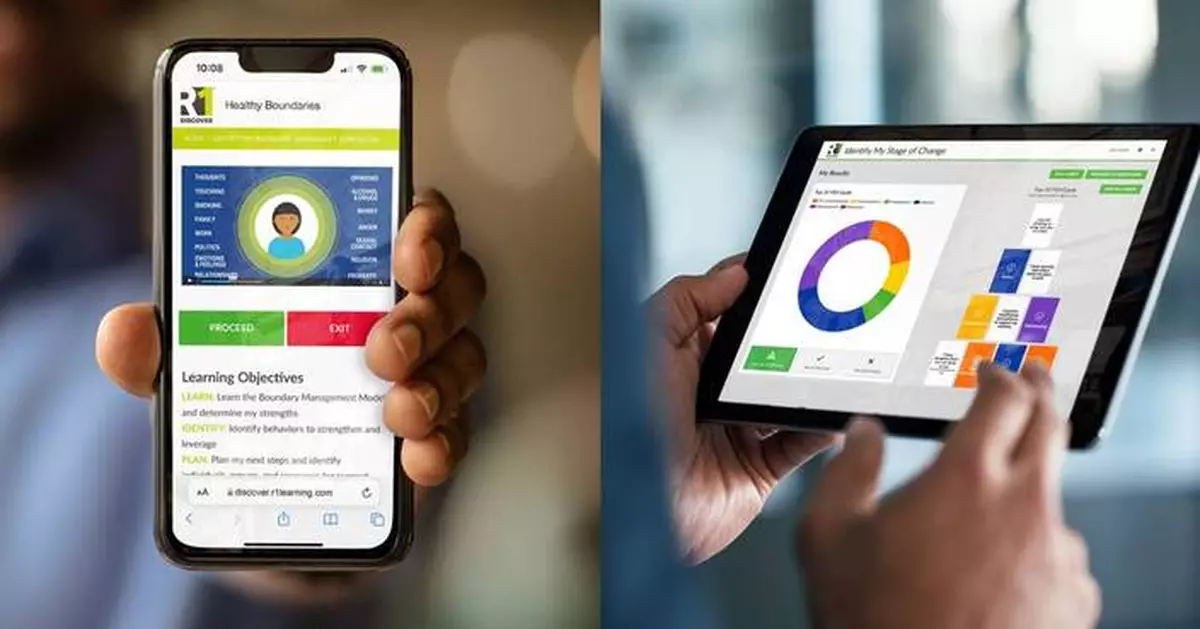
As correctional agencies face increasing operational pressures, Securus Technologies today announced the rollout of its partnership with R1 Learning, an evidence‑based behavioral health program now available directly on Securus tablets. R1 delivers structured cognitive‑behavioral lessons, tools, and activities designed to help individuals build coping skills, strengthen decision‑making, and support long‑term rehabilitation.
This press release features multimedia. View the full release here: https://www.businesswire.com/news/home/20260205940506/en/
Unlike other digital education or enrichment apps on the tablet, R1 provides a full, research‑driven curriculum historically delivered only in facilitated group settings. By bringing this structured programming into a secure digital format, agencies gain a way to scale rehabilitative content without the space, staffing, and scheduling demands required for traditional in‑person classes.
For corrections leaders, this represents a meaningful operational shift. Agencies across the country are being asked to deliver more programming with fewer available personnel. Integrating R1 into the Securus tablet ecosystem enables consistent, measurable delivery of high‑quality behavioral health content, even when staffing levels fluctuate.
For incarcerated individuals, the partnership means dependable access to tools that promote accountability, emotional regulation, and constructive use of time, resources that research shows can positively influence safety, stability, and reentry outcomes.
“Correctional leaders are increasingly seeking solutions that simplify operations and improve outcomes,” said Sherif Shafi, Senior Director of Growth & Innovation, Securus Technologies. “By embedding R1 Learning directly into the Securus tablet ecosystem, we’re helping facilities expand access to high‑quality programming in a way that supports both operational needs and the wellbeing of individuals in custody.”
Early Deployments Show Immediate, High Engagement
Building on a successful pilot, the R1 program is set to expand across additional agencies. Since its initial launch at Sacramento County Adult Correctional Health, the application has demonstrated strong, sustained usage in every facility where it has been deployed.
Sacramento County’s 30‑day pilot results included:
“The introduction of the R1 Learning app on incarcerated individuals’ tablets has been a very positive addition to the services we offer in the Sacramento County Jail,” said Tianna Hammock, Health Services Administrator for Sacramento County Department of Health Services, Adult Correctional Health. “The feedback we’ve received has been overwhelmingly positive, with many individuals expressing appreciation for having this constructive activity available to them while in custody.”
A Foundation for Modern Corrections
This partnership advances Securus’ broader effort to build the most reliable and adaptable technology ecosystem in corrections, one that strengthens facility operations while equipping individuals with resources that support rehabilitation and successful community return.
By reducing idle time, expanding access to structured behavioral health tools, and offering a consistent delivery model across diverse facilities, Securus and R1 Learning are helping agencies create more stable environments and improve long‑term outcomes.
“R1 was built to meet individuals where they are,” said Tom Karl, Founder of R1 Learning. “By leveraging the reach and security of the Securus platform, we can ensure evidence‑based tools are accessible to those who need them most, in a way that is both scalable and secure.”
About Securus Technologies
Securus Technologies, an Aventiv company and the industry leader, equips over 1,800 corrections agencies with 80-plus high-grade technology solutions to enhance public safety and optimize facility operations. Their offerings include secure communication, advanced monitoring, and the only corrections-grade Wi-Fi enabled tablets featuring tamper alarms, GPS, fingerprint authentication, secure LTE, and a private Google Play Store. Securus’ products and services modernize administration, automate workflows, and centralize communication for staff, while creating vital e- and video connections for incarcerated individuals with family, friends, and resources like education and workforce development, ultimately strengthening community safety and economic stability. For more information, please visit https://www.aventiv.com/securus-technologies or join us on social media on LinkedIn, YouTube, and Facebook.
About R1Learning
R1Learning is an education and engagement technology company focused on delivering evidence-based, interactive curriculum for corrections, criminal justice, and community-based programs. Its R1 Discover® platform supports mental health and wellness, substance use prevention and treatment, life skills development, and workforce readiness through secure, data-driven digital tools.
Securus Technologies Expands Access to Evidence‑Based Programming Through New R1 Learning Partnership
HAVANA (AP) — Katia Arias buzzed with hope on Friday morning as she gathered at the gates of a prison on the outskirts of Havana, waiting with other families for their loved ones to be freed in one of the biggest prison releases by the Cuban government in years.
When her 20-year-old son Emilio Alejandro Leyva walked out of the doors of the detention facility with dozens of other prisoners, bags and a small release document in hand, she wrapped her arms around her son, who was detained for a robbery, for the first time in years.
“It has been so difficult, but today God has given me so much joy,” said Arias, 43, breaking down in tears. “Today, I feel so happy. This is how all mothers who will have their children released today should feel.”
The outpouring of joy from families comes the day after Cuba's government said it was going to release 2,010 prisoners in what it said was “humanitarian gestures” ahead of Holy Week; it wasn't immediately clear how many were released on Friday.
The release comes as the Cuban government navigates extreme pressure and a crippling oil blockade by the Trump administration, which has openly expressed the desire for regime change and the release of those arrested for protesting.
It was unclear whether any of the prisoners released Friday are among the 1,214 people activist groups say are imprisoned for political reasons in Cuba. The government denies holding political prisoners.
On Friday, detainees in the La Lima prison on the rural outskirts of Havana said they were woken up at 6 a.m. and heard their names called out. Hours later they were walking into the arms of loved ones awaiting them in front of blue prison gates.
The majority of prisoners interviewed Friday by The Associated Press were not serving time for political charges, though it's uncertain how many of those released were protesters — often charged with public disorder, contempt or terrorism. Many of the more than one thousand people the activist organization Prisoners Defended has registered as detained for political reasons were protesters from the 2021 mass demonstrations on the island, which were met with widespread arrests by the government.
Sporadic protests have broken out in recent months as the island sinks into a deeper crisis. In one March incident, protesters burned the headquarters of the communist party in central Cuba, leading to five arrests.
The lack of information over releases on Friday fueled frustration among human rights and opposition groups, who said the releases were a good sign, but fell short of real change.
“The government presents it as a humanitarian gesture toward prisoners, not as the release of political prisoners,” said Manuel Cuesta Morúa, leader of the Council for Democratic Transition in Cuba, the island’s main opposition platform. “By doing so, it mixes things up to avoid giving the impression that it recognizes political imprisonment in Cuba.”
The group has demanded a government amnesty law and says that people who were previously freed are often placed under house arrest or live under conditions where they can't speak freely.
During a previous release of 51 people in March, organizations monitoring prisons in Cuba noted that 22 had political motives in their cases.
The nongovernmental organization Justicia 11J wrote in a statement Friday that no partial release can be considered progress “as long as the criminalization of the exercise of fundamental rights persists.”
“Although every release represents immediate relief, especially for families, in a context marked by the severity of conditions in the country’s prisons … we warn that this gesture does not constitute a change in the repressive policy of the Cuban state,” the organization said.
The releases come as U.S.-Cuban tensions are running high. The Trump administration has suffocated the island by imposing an oil blockade, pushing the already stricken island to the brink, crippling hospitals and increasing the number of islandwide blackouts.
Cubans were offered a brief moment of relief this week when U.S. President Donald Trump said the government allowed a Russian ship carrying a nine to 10 day supply of fuel to the island. It wasn't clear if the Cuban or Russian governments made any concessions to allow the shipment to go through. A second Russian tanker is on the way.
Cuba periodically frees prisoners at key moments.
In January 2025, Cuba’s government released 553 prisoners as part of talks with the Vatican, a day after the Biden administration announced its intent to lift the U.S. designation of the island nation as a state sponsor of terrorism.
Cuba's government said Friday's release marked the fifth since 2011, and that it has freed more than 11,000 people.
Despite ongoing uncertainty, scenes of hope emerged outside the La Lima prison on Friday as families wrapped their arms around each other and a father planted a kiss on the head of his child swaddled in pink.
Damián Fariñas, 20, who has served the majority of his 2-year prison sentence for a robbery, was greeted by three beaming friends waiting for him on the street.
“This is freedom, a pardon, owing nothing to anyone. I’m heading out into the world,” he said.
Associated Press journalists Ramón Espinosa and Ariel Fernández contributed from Havana. Megan Janetsky contributed from Mexico City.
Follow AP’s coverage of Latin America and the Caribbean at https://apnews.com/hub/latin-america
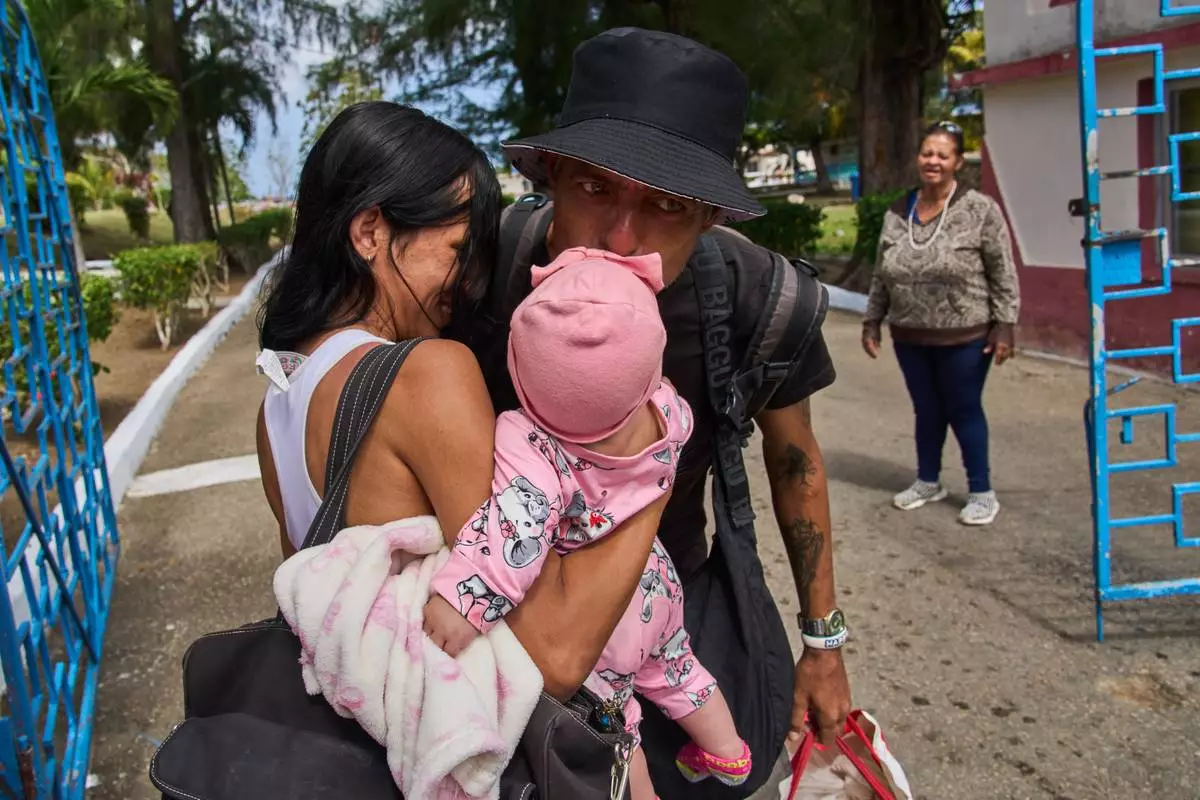
A pardoned prisoner kisses his daughter after leaving La Lima penitentiary in Guanabo, Cuba, Friday, April 3, 2026. (AP Photo/Ramon Espinosa)
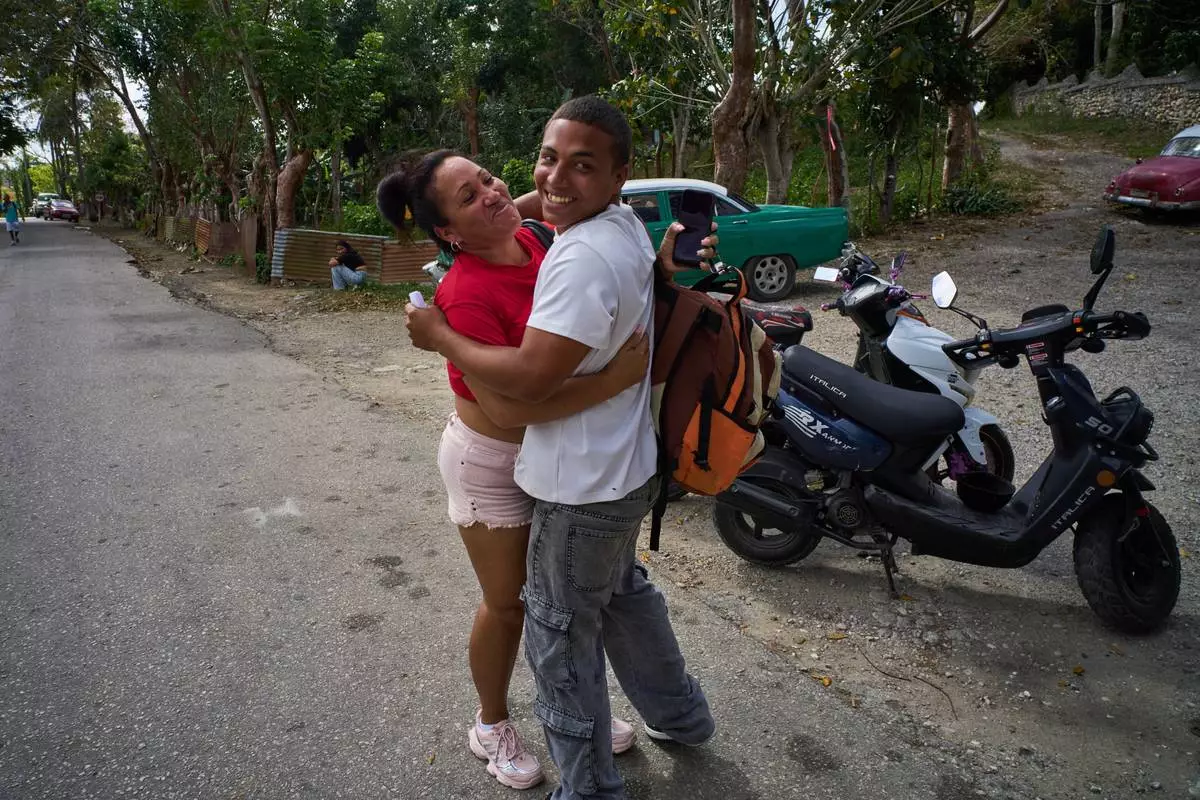
Emilio Alejandro Leyva, a pardoned prisoner, right, hugs his mother Katia Arias Mendoza after his release from La Lima penitentiary in Guanabo, Cuba, Friday, April 3, 2026. (AP Photo/Ramon Espinosa)
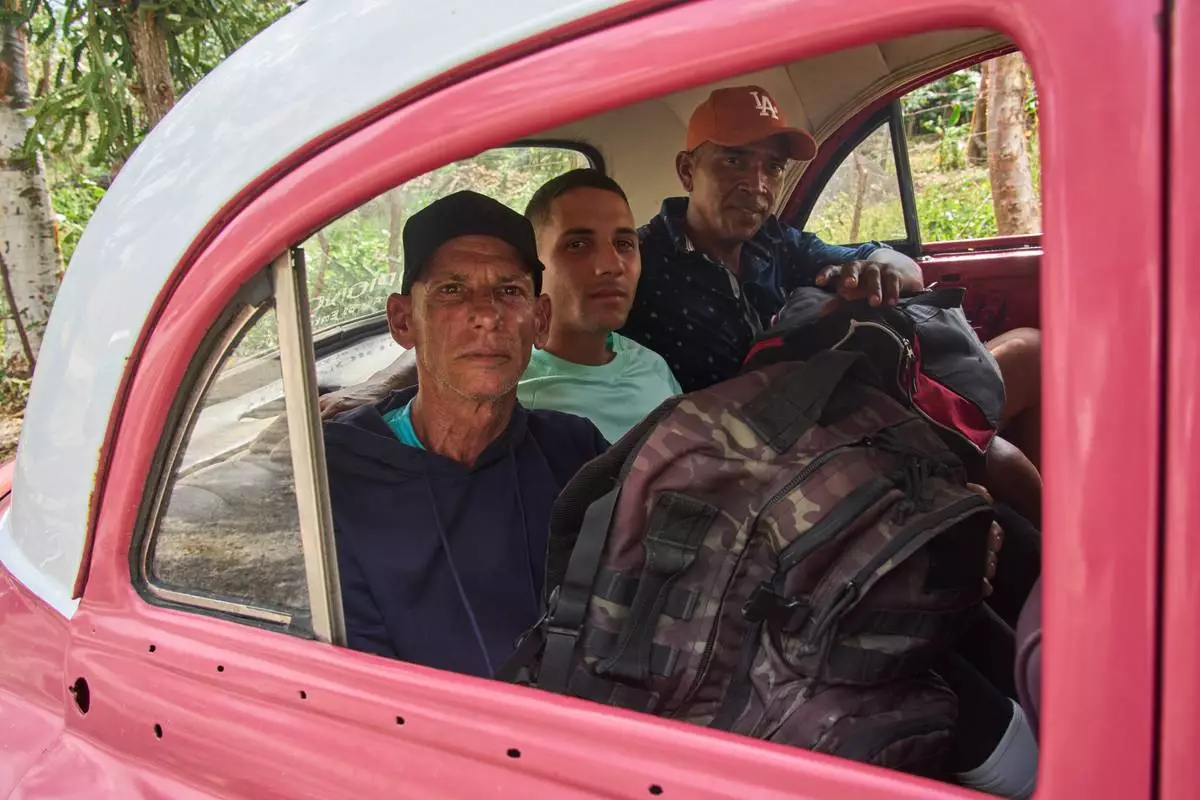
Pardoned prisoners sit in a taxi to return home after leaving La Lima penitentiary in Guanabo, Cuba, Friday, April 3, 2026. (AP Photo/Ramon Espinosa)
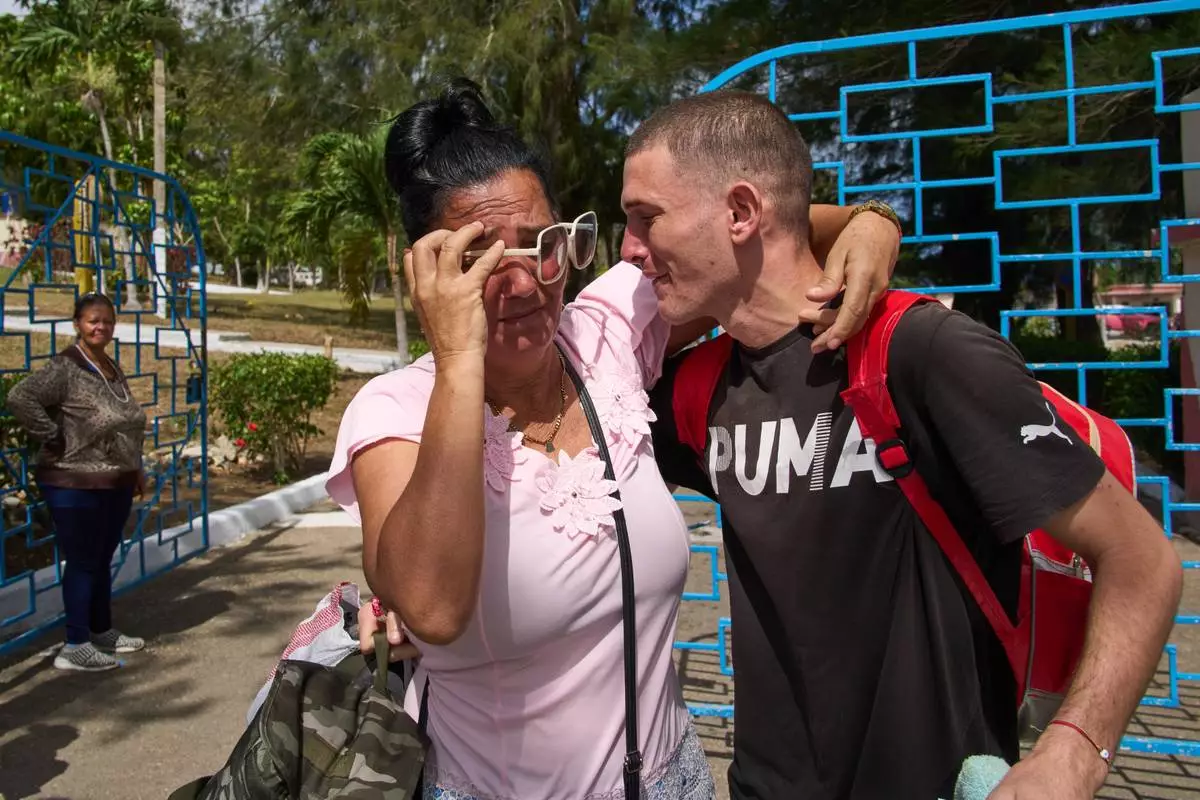
A pardoned prisoner hugs a family member after being released from La Lima penitentiary in Guanabo, Cuba, Friday, April 3, 2026. (AP Photo/Ramon Espinosa)
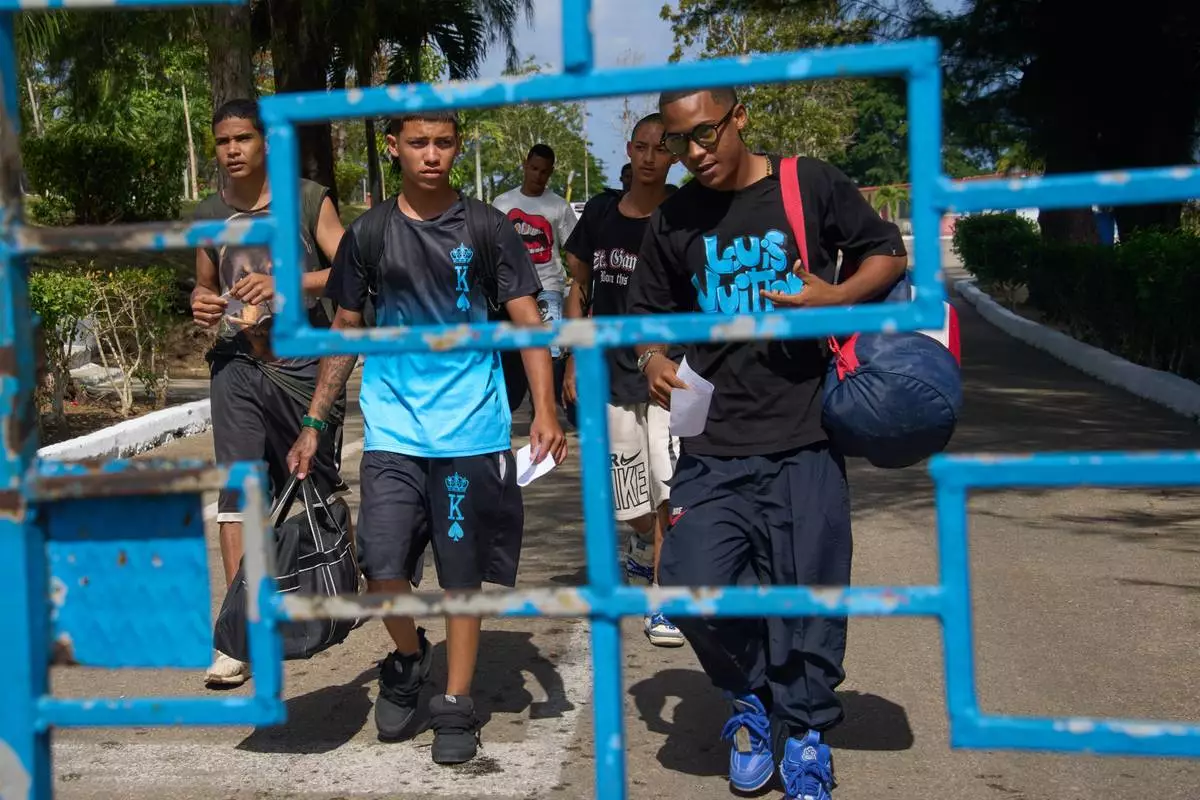
Damian Farinas, right, walks out of La Lima penitentiary alongside other pardoned prisoners after their release in Guanabo, Cuba, Friday, April 3, 2026. (AP Photo/Ramon Espinosa)