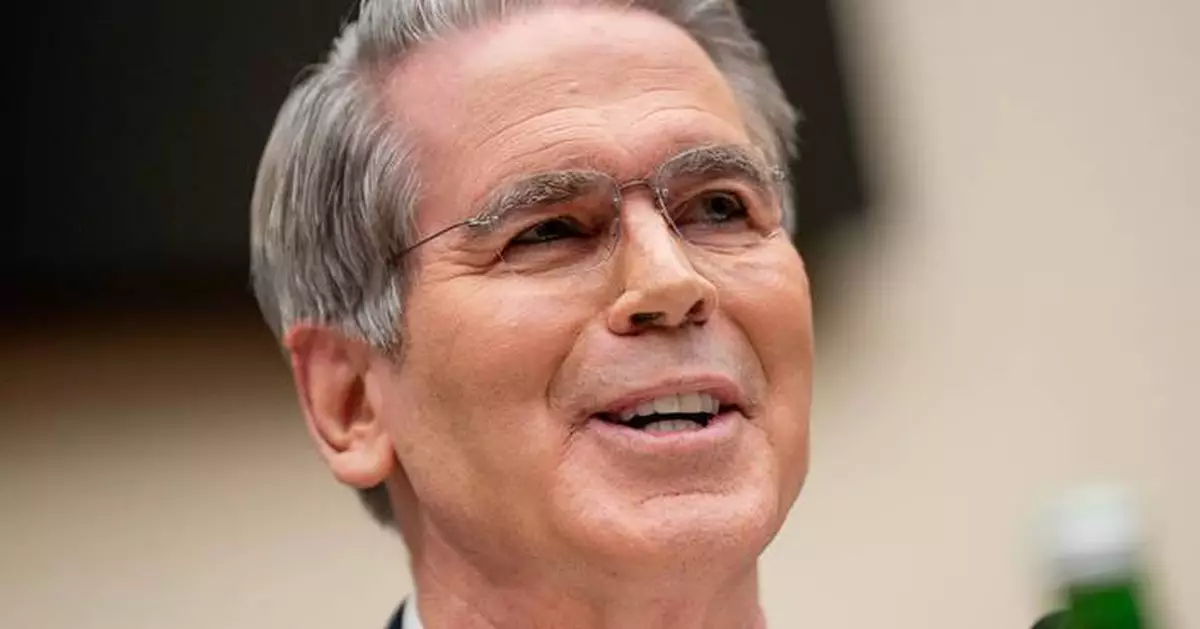
WASHINGTON (AP) — Treasury Secretary Scott Bessent says it would be “up to the president” to decide whether or not to sue Kevin Warsh, Donald Trump's nominee to lead the Federal Reserve, if he fails to lower interest rates.
During remarks at a private black-tie dinner of the elite Alfalfa Club on Saturday night, Trump said he might sue his newly selected Fed chair nominee if he didn’t lower interest rates. Asked about it later that night by reporters, Trump said the remarks were made in jest. “It’s a roast,” Trump said. “It was all comedy.”
But Sen. Elizabeth Warren, D-Mass., the ranking member of the Senate Banking Committee, pressed Bessent on Trump's remarks during a committee hearing on Wednesday, which come after the unprecedented attacks and legal investigation his administration has aimed at the current Fed chair, Jerome Powell.
Trump nominated Powell in 2017, but turned against him when he raised interest rates the following year.
Trump has repeatedly criticized Powell since returning to the White House last year and last month, Powell revealed that the Department of Justice had subpoenaed the Fed as part of an investigation into Powell's Senate testimony last June about the Fed's $2.5 billion building renovation.
The investigation has raised concerns among some Senate Republicans about the Trump administration's willingness to threaten the Fed's longtime independence from day-to-day politics. Sen. Thom Tillis, a North Carolina Republican who is retiring at the end of this year, has said he won't vote to approve Warsh until the investigation into Powell is resolved. Without Tillis' support, Warsh's nomination could get held up in the committee.
At the hearing, Warren asked Bessent to commit that Warsh would not be sued or investigated by the Justice Department if he doesn’t cut interest rates.
“That is up to the president,” Bessent responded. The two began to argue over each other, as Bessent said the president was joking.
“That was supposed to be the softball!” Warren said in astonishment.
Later, when asked about Bessent's remarks on Trump suing Warsh, Tillis said: “even stipulating that that could happen and that it’s not a bad idea is troubling to me.”
During the hearing, Tillis submitted a list of members of the committee who indicated they didn’t see criminal intent on the part of Powell.
“I was actually a witness at the alleged scene of the crime,” Tillis said during the hearing, and “we didn’t see a crime.”
On Wednesday, Sen. Tim Scott, R-S.C., who leads the Senate Banking Committee, also broke ranks with the Trump administration and told Fox Business, “Ineptness or being incompetent is not a criminal act.”
It was the second consecutive day of hearings for Bessent about the annual report by the Financial Stability Oversight Council.
Bessent’s first hearing with the House Financial Services Committee devolved into insults as Bessent clashed with Democratic lawmakers over fiscal policy, the business dealings of the Trump family and other issues.
Associated Press reporter Joey Cappelletti contributed to this report.
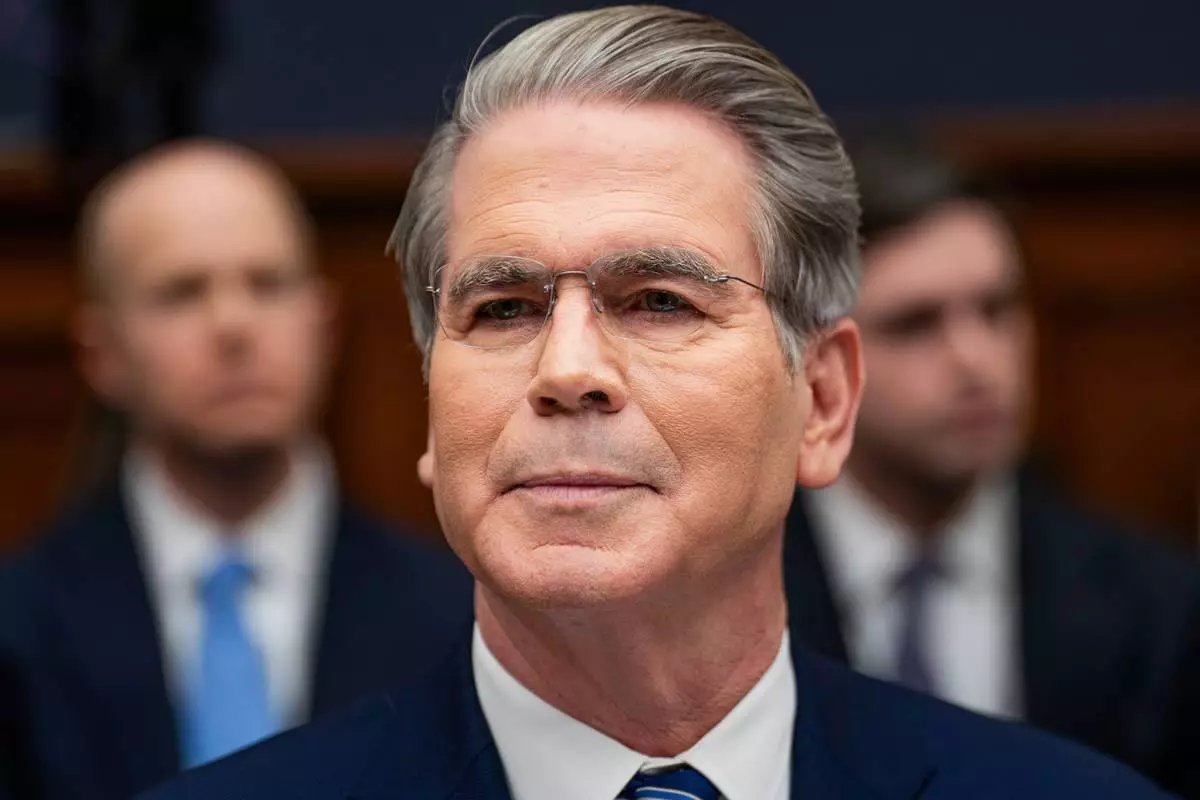
Secretary of the Treasury Scott Bessent listens to questions from members of the House Financial Services Committee during a hearing on Capitol Hill in Washington, Wednesday, Feb. 4, 2026. (AP Photo/Nathan Howard)
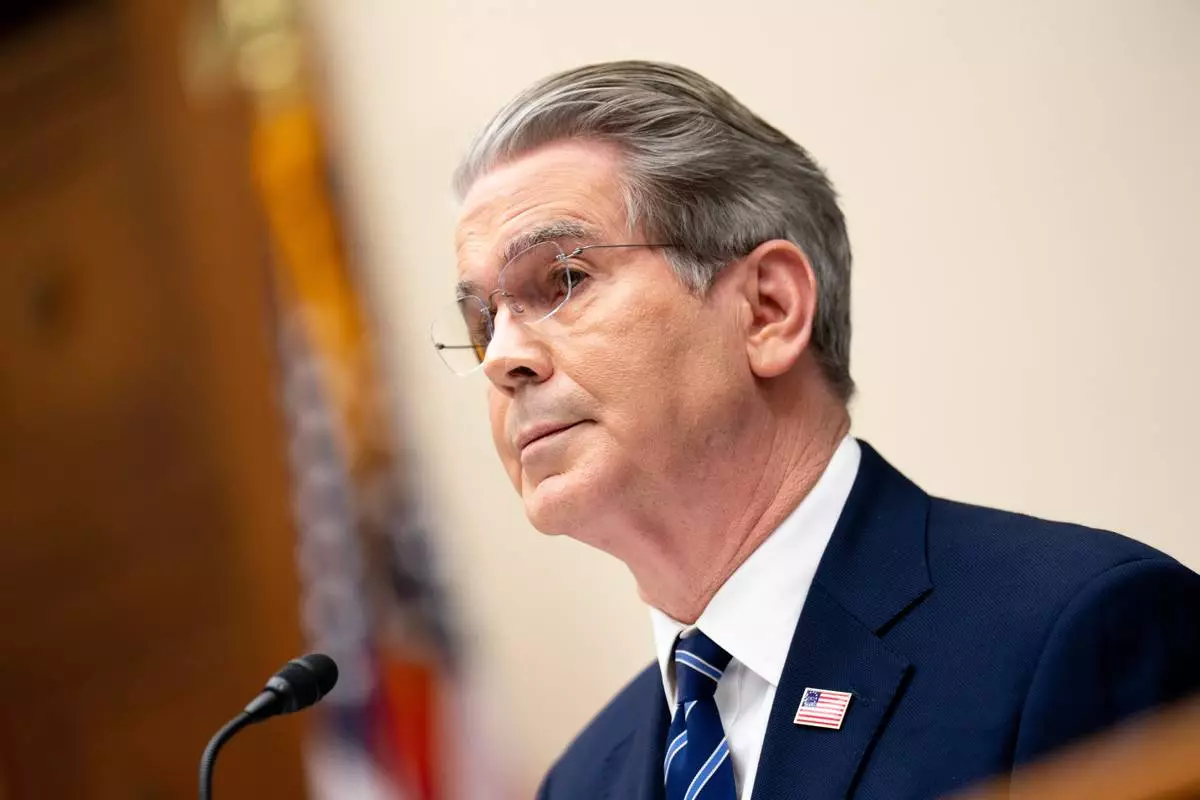
Secretary of the Treasury Scott Bessent listens to questions from members of the House Financial Services Committee during a hearing on Capitol Hill in Washington, Wednesday, Feb. 4, 2026. (AP Photo/Nathan Howard)
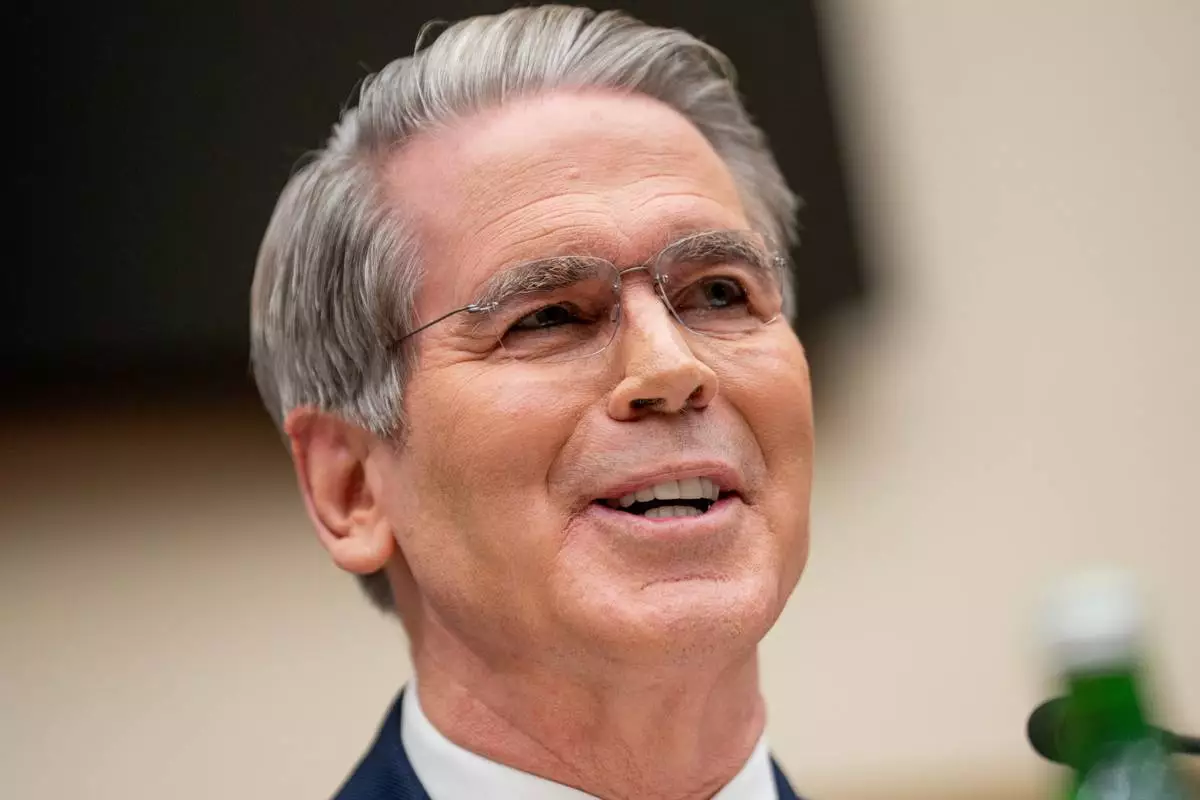
Secretary of the Treasury Scott Bessent speaks during a House Financial Services Committee hearing on Capitol Hill in Washington, Wednesday, Feb. 4, 2026. (AP Photo/Nathan Howard)
NEW YORK (AP) — Sharp drops for big technology companies are yanking the U.S. stock market lower on Thursday, while prices for bitcoin, silver and gold weaken. Yields are also sinking in the bond market following discouraging news on the U.S. job market.
The S&P 500 fell 0.9% and is heading toward its sixth loss in the seven days since it set an all-time high. The Dow Jones Industrial Average was down 449 points, or 0.9%, as of 2:06 p.m. Eastern time, and the Nasdaq composite was 1% lower.
Alphabet was one of the heaviest weights on the market and dropped 1.7%, even though the parent company of Google, YouTube and other businesses reported a stronger profit for the latest quarter than analysts expected. Investors focused instead on how much Alphabet is spending on artificial-intelligence technology and questioned whether it will all prove worth it.
Alphabet said its spending on equipment and other investments could double this year to roughly $180 billion. That blew past analysts’ expectations of less than $119 billion, according to FactSet.
Microsoft fell 3.4% and Amazon fell 4%. They also weighed heavily on the broader market.
In the bond market, Treasury yields sank after a report said the number of U.S. workers applying for unemployment benefits jumped last week by more than economists expected. That could be a signal that the pace of layoffs is accelerating.
Some economists suggested last week’s rise could be statistical noise, and the total number remains relatively low compared with history. But a separate report said that layoffs announced by U.S.-based employers surged last month. The 108,435 was the highest number for a month since October, according to global outplacement and executive coaching firm Challenger, Gray & Christmas.
For a January, it’s the worst since 2009.
A third report from the U.S. government said that employers were advertising the lowest number of job openings in December in more than five years.
Weakness in the job market could push the Federal Reserve to cut interest rates to support the economy, even if it also risks worsening inflation. Treasury yields fell across the board in response.
The yield on the 10-year Treasury sank to 4.21% from 4.29% late Wednesday. That's a notable move for the bond market.
The moves were even sharper in commodities markets.
Silver’s price dropped 9.1% in its latest wild swing since its record-breaking momentum suddenly halted last week.
Gold’s price fell 1.2% to settle at $4,889.50 per ounce. It’s been careening back and forth since it roughly doubled in price over 12 months. It neared $5,600 last week and then fell below $4,500 on Monday.
Both gold and silver had been screaming higher as investors piled into places they thought would be safer amid worries about political turmoil, a U.S. stock market that critics called expensive and huge debt loads for governments worldwide. But nothing can keep rising at such extreme rates forever, and critics had been calling for a pullback.
Bitcoin, which is pitched as “digital gold,” also sank. It dropped below $67,000, down from its record above $124,000 set in October.
The tumbling prices dragged down stocks of companies enmeshed in the crypto industry. Coinbase Global, the crypto trading platform, dropped 10.5%. Strategy, which has made a business of buying and holding bitcoin, tumbled 14.3%.
Outside of crypto, Qualcomm fell 7.6% even though the chip company topped analysts’ expectations for profit and revenue in the latest quarter. Its forecast for profit in the current quarter fell short of analysts’ expectations as an industrywide shortage of memory pushes some handset makers to cut back on orders.
Estee Lauder also topped Wall Street targets, and it raised its financial forecasts for the full fiscal year. But it also said it expects tariff-related headwinds to wipe out about $100 million worth of profits. The New York cosmetic company’s shares sank 21.2%.
On the winning side of Wall Street were some companies that stand to benefit from big spending by Alphabet and other companies continuing the AI frenzy. Chip company Broadcom rose 2.8% and was the strongest force limiting the S&P 500’s losses.
McKesson jumped 17% for the biggest gain in the S&P 500 after reporting stronger profit and revenue for the latest quarter than analysts expected. The health care company also raised its forecasted range for profit this fiscal year.
In stock markets abroad, indexes fell across much of Europe and Asia.
London’s FTSE 100 fell 0.9% after the Bank of England held interest rates there steady. France’s CAC 40 fell 0.3%, and Germany’s DAX lost 0.5% after the European Central Bank likewise stood pat on interest rates.
South Korea’s Kospi tumbled 3.9% for one of the world’s biggest moves and dropped from its all-time high. Samsung Electronics dropped 5.8%, just two days after it had surged 11.4%.
AP Business Writers Matt Ott and Elaine Kurtenbach contributed.
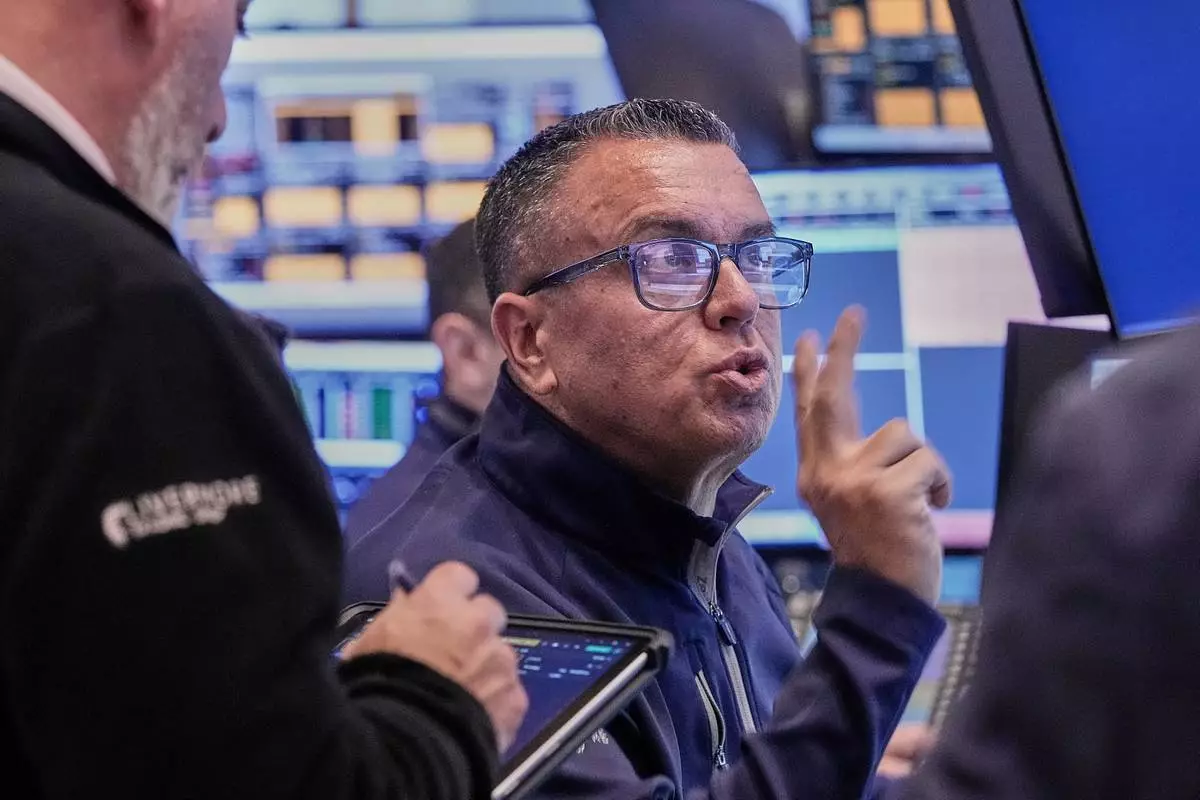
Trader Robert FInnerty Jr. works on the floor of the New York Stock Exchange, Thursday, Feb. 5, 2026. (AP Photo/Richard Drew)
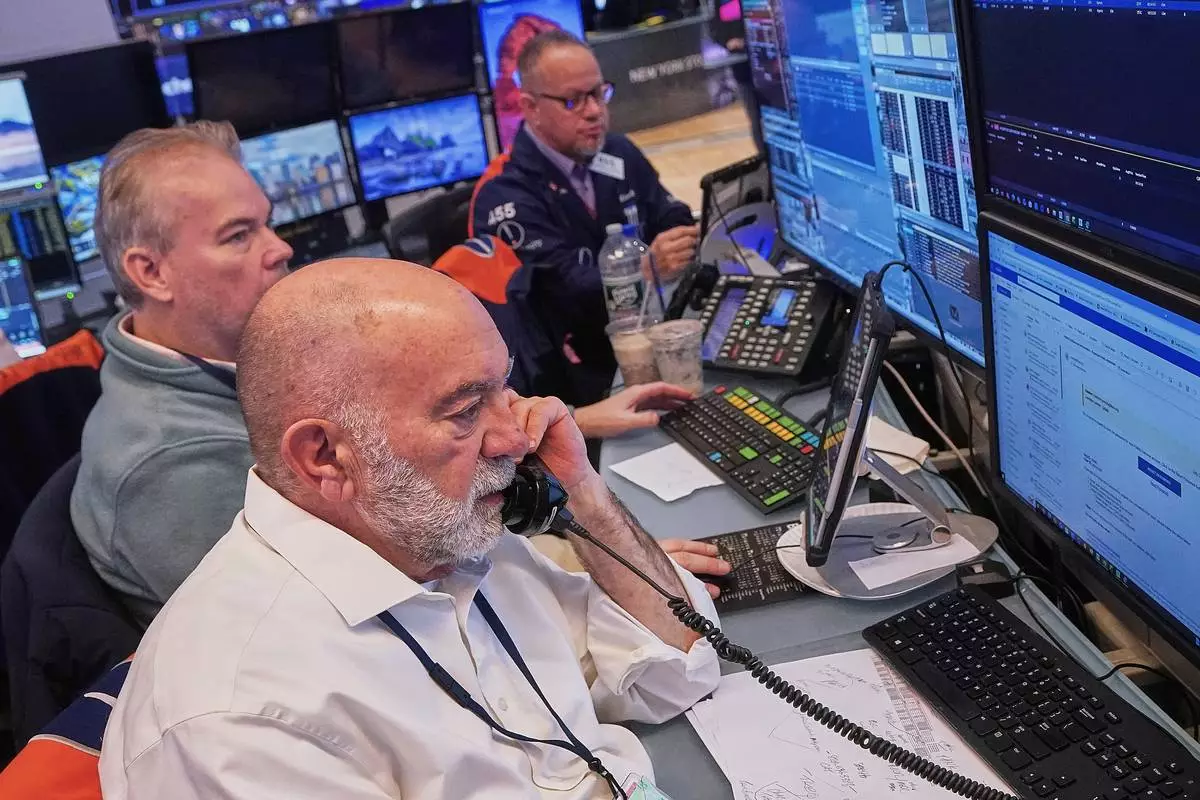
Trader Joseph Stevens, foreground, works with colleagues on the floor of the New York Stock Exchange, Tuesday, Feb. 3, 2026. (AP Photo/Richard Drew)
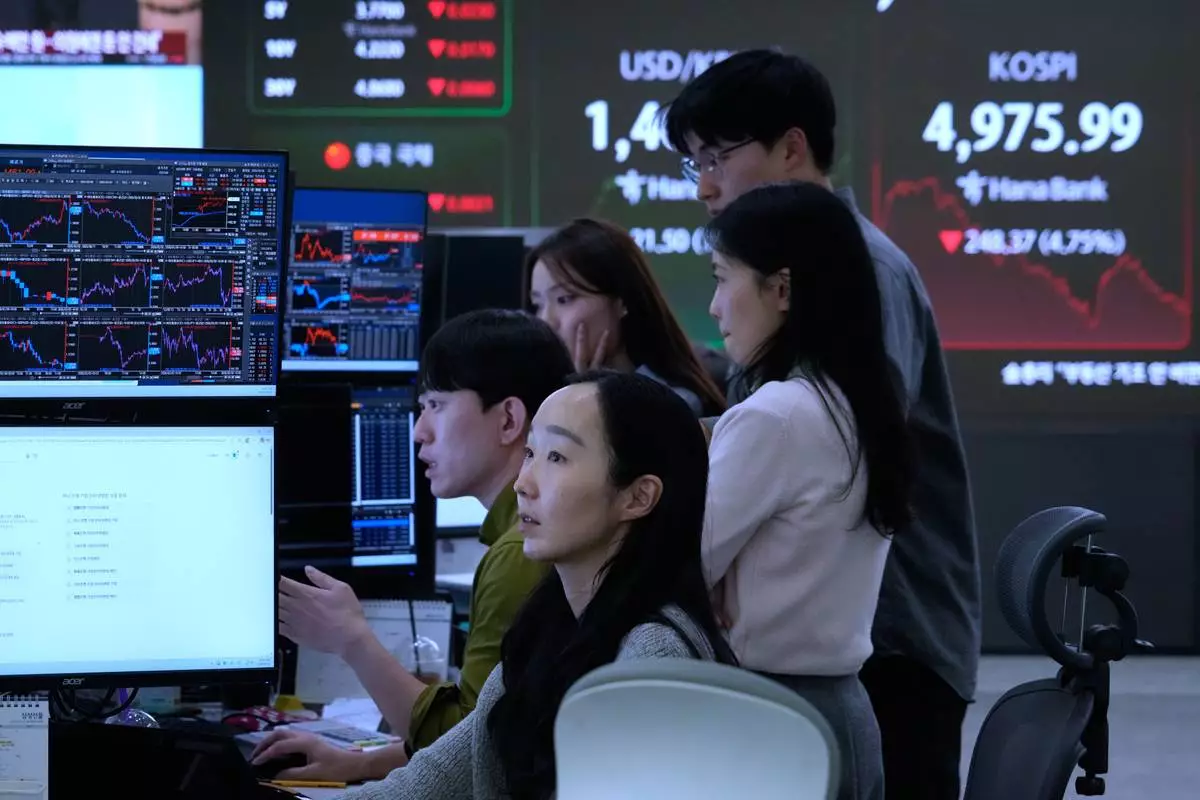
Currency traders watch monitors near a screen showing the Korea Composite Stock Price Index (KOSPI), top right, at the foreign exchange dealing room of the Hana Bank headquarters in Seoul, South Korea, Monday, Feb. 2, 2026. (AP Photo/Ahn Young-joon)
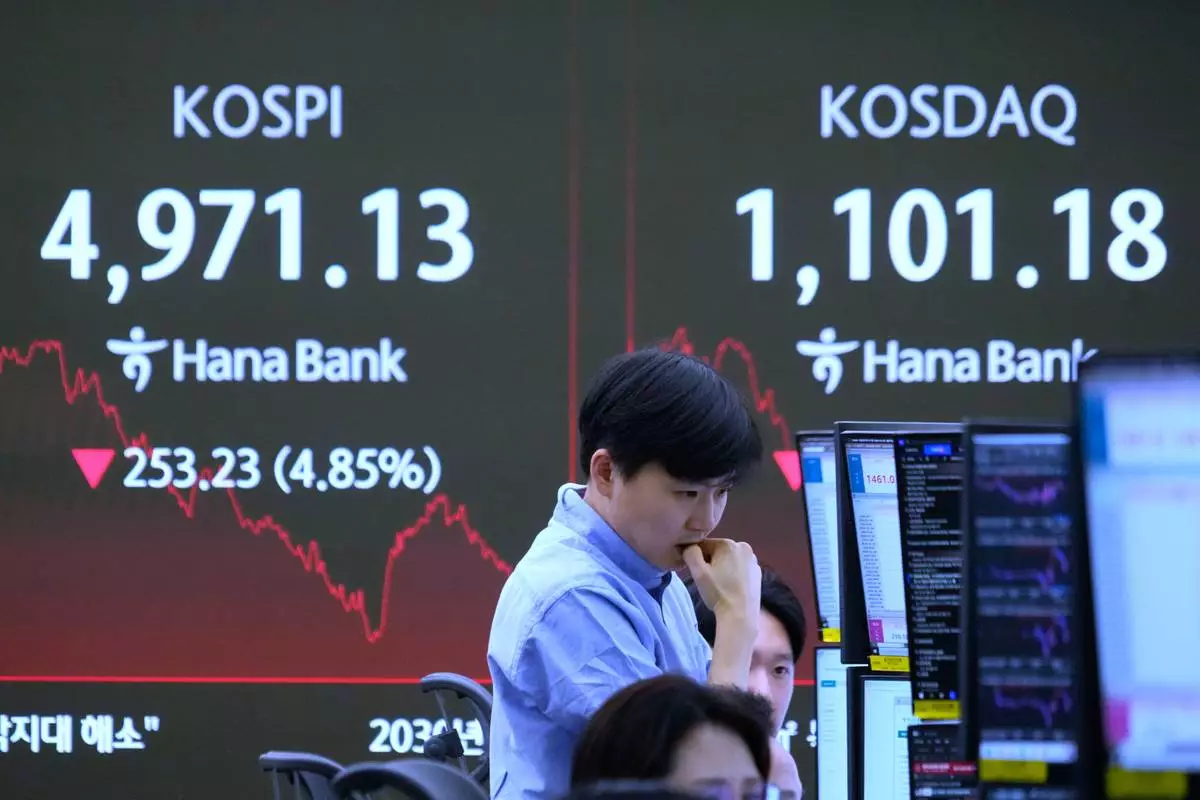
A currency traders watches monitors near a screen showing the Korea Composite Stock Price Index (KOSPI), left, at the foreign exchange dealing room of the Hana Bank headquarters in Seoul, South Korea, Monday, Feb. 2, 2026. (AP Photo/Ahn Young-joon)
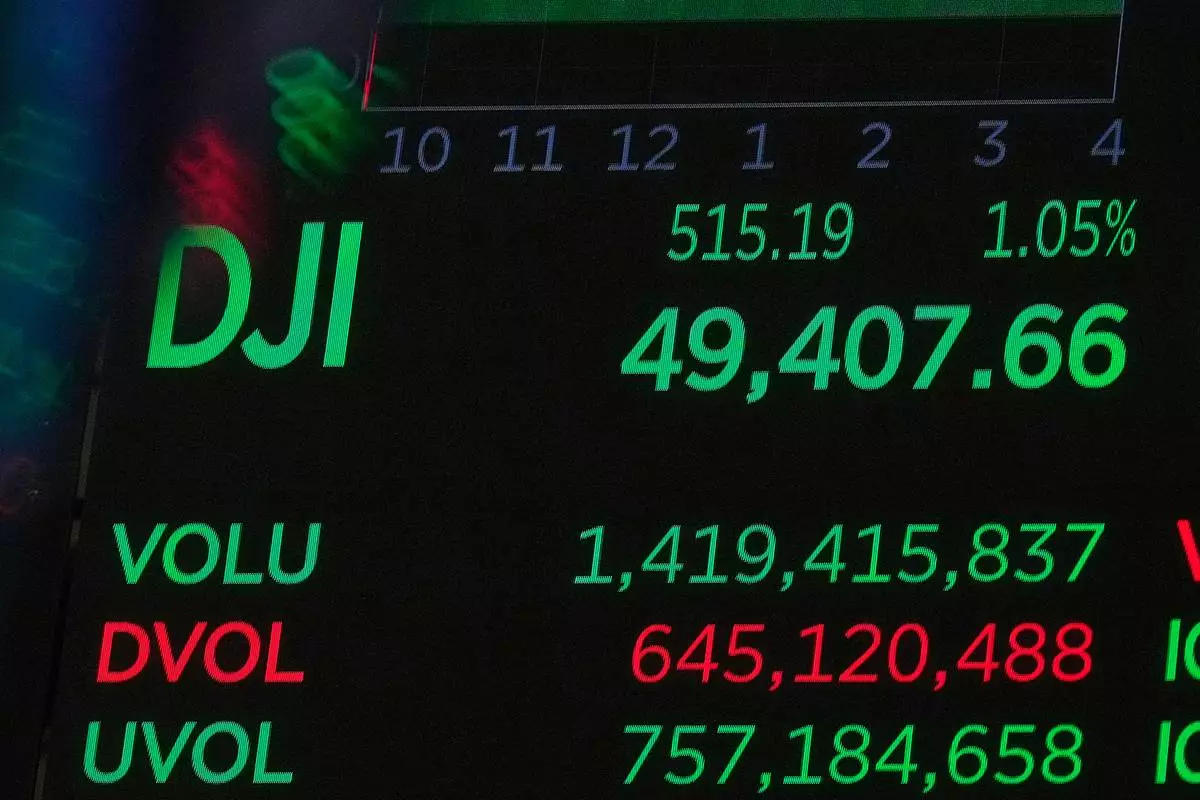
A board above the trading floor of the New York Stock Exchange displays the closing number for the Dow Jones industrial average, Monday, Feb. 2, 2026. (AP Photo/Richard Drew)
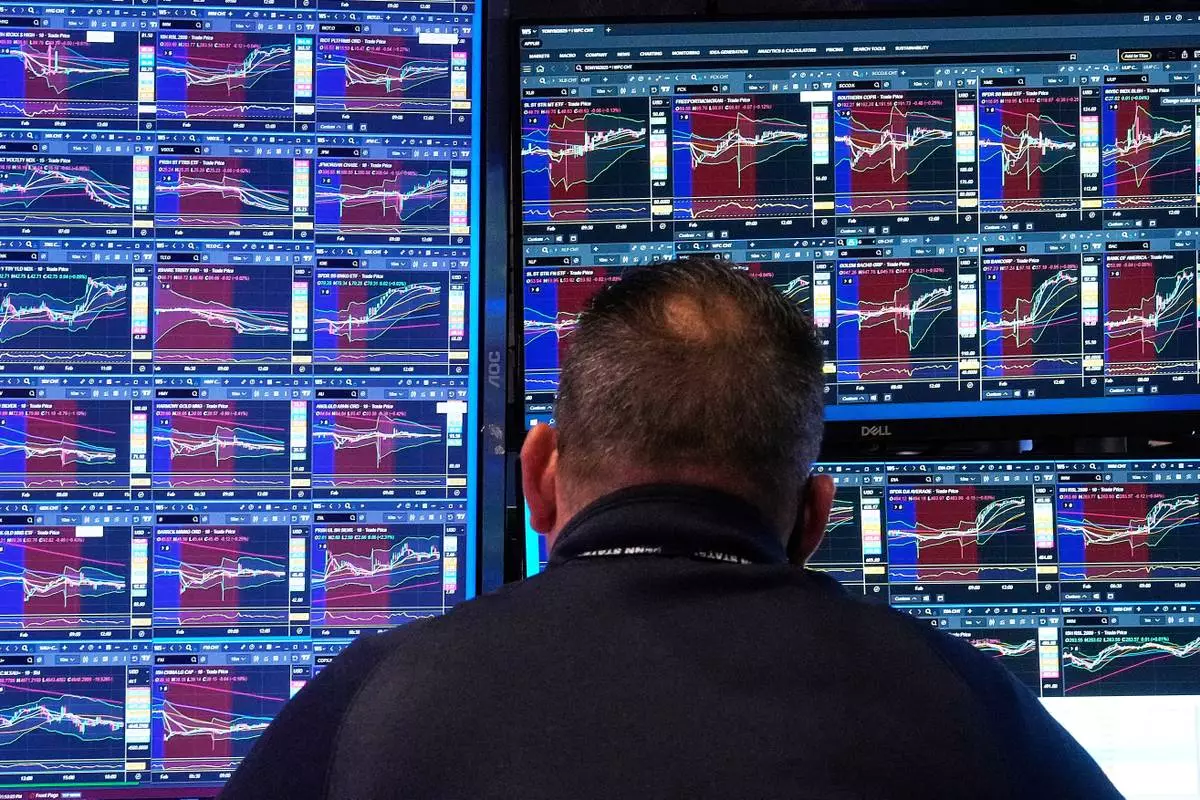
Specialist Anthony Matesic works at his post on the floor of the New York Stock Exchange, Monday, Feb. 2, 2026. (AP Photo/Richard Drew)