Skip to Content Facebook Feature Image

A half-century of US-Russian arms control ends with the expiration of the New START nuclear pact

News

A half-century of US-Russian arms control ends with the expiration of the New START nuclear pact
News

News

A half-century of US-Russian arms control ends with the expiration of the New START nuclear pact

2026-02-05 23:10 Last Updated At:23:20

MOSCOW (AP) — The Kremlin said Thursday it regretted the expiration of the last remaining nuclear arms pact between Russia and the United States that left no caps on the two largest atomic arsenals for the first time in more than a half-century.

Arms control experts say the termination of the New START Treaty could set the stage for an unconstrained nuclear arms race.

More Images
FILE - This photo released by the U.S. Air Force shows a B-52H Stratofortress approaching a KC-10 Extender for refueling over the Middle East, Sept. 4, 2022. (U.S. Air Force/Staff Sgt. Shannon Bowman, via AP, File)
FILE - This photo released by the U.S. Air Force shows a B-52H Stratofortress approaching a KC-10 Extender for refueling over the Middle East, Sept. 4, 2022. (U.S. Air Force/Staff Sgt. Shannon Bowman, via AP, File)

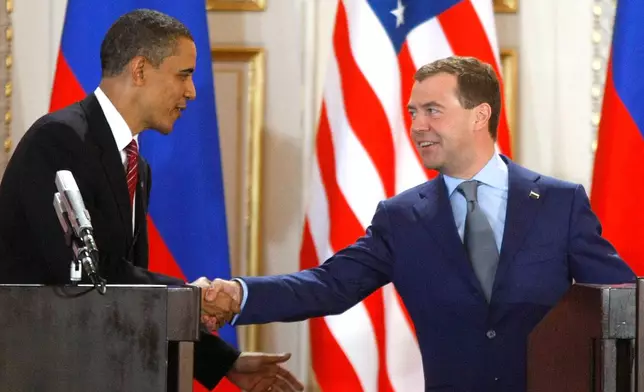
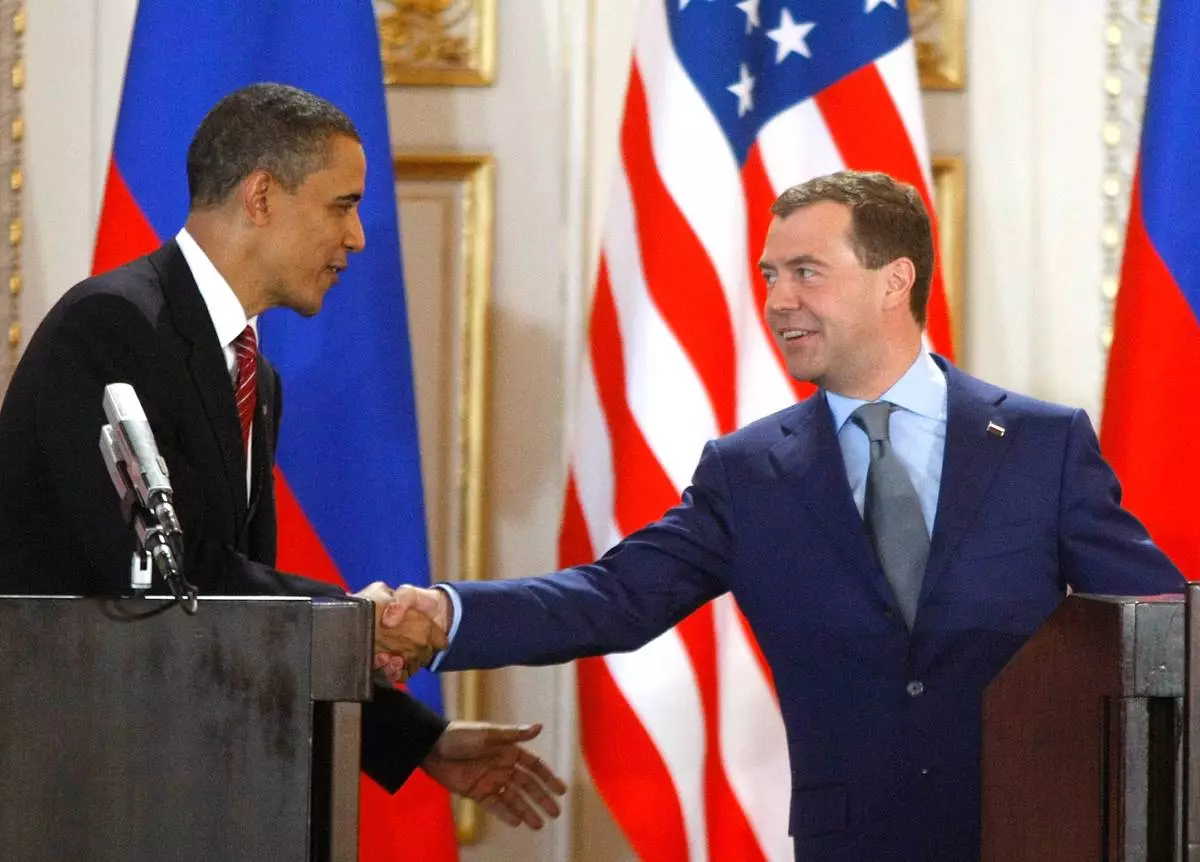
FILE - U.S. President Barack Obama, left, and his Russian counterpart Dmitry Medvedev, right, shake hands at a news conference at the Prague Castle in Prague, Czech Republic,, April 8, 2010, after signing the New START treaty reducing long-range nuclear weapons. (AP Photo/Mikhail Metzel, File)
FILE - U.S. President Barack Obama, left, and his Russian counterpart Dmitry Medvedev, right, shake hands at a news conference at the Prague Castle in Prague, Czech Republic,, April 8, 2010, after signing the New START treaty reducing long-range nuclear weapons. (AP Photo/Mikhail Metzel, File)

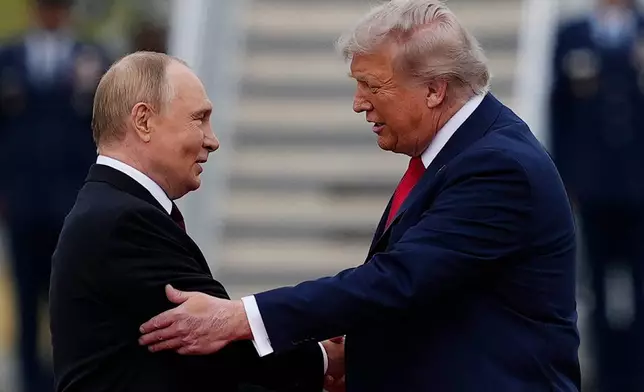
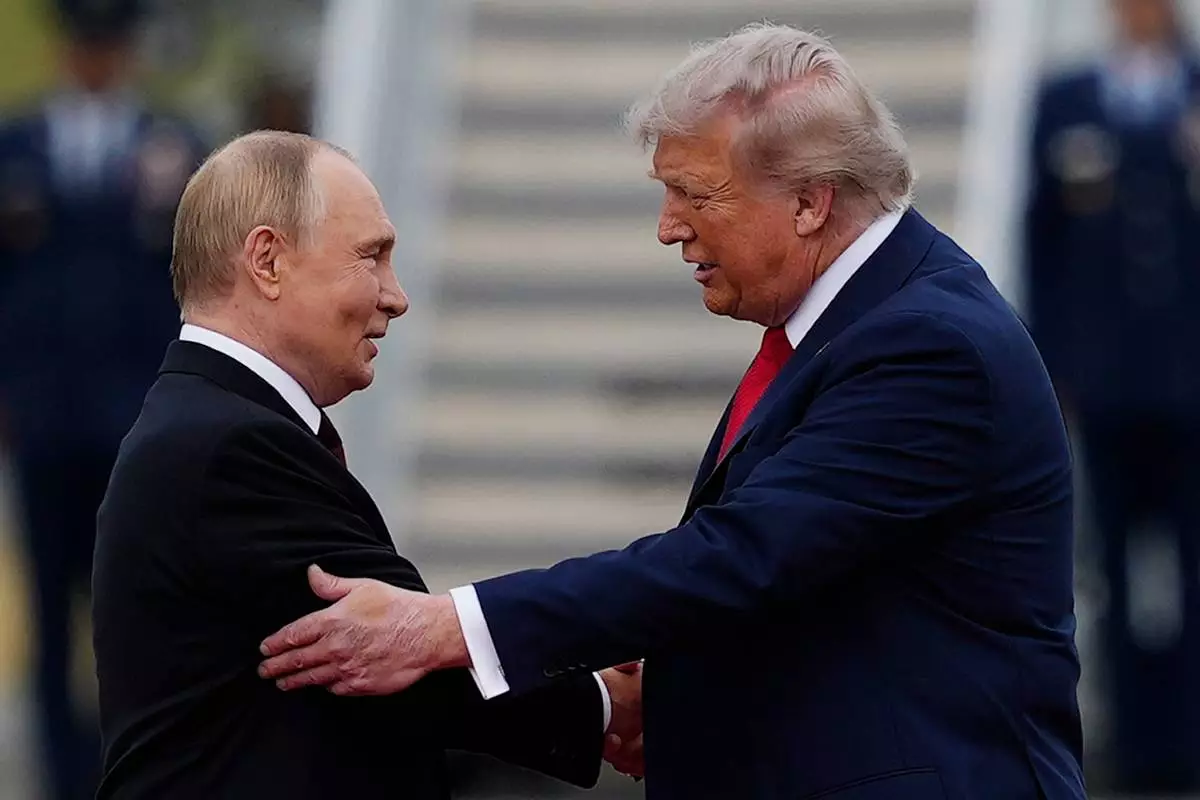
FILE - U.S. President Donald Trump greets Russian President Vladimir Putin, Aug. 15, 2025, at Joint Base Elmendorf-Richardson, Alaska. (AP Photo/Julia Demaree Nikhinson, File)
FILE - U.S. President Donald Trump greets Russian President Vladimir Putin, Aug. 15, 2025, at Joint Base Elmendorf-Richardson, Alaska. (AP Photo/Julia Demaree Nikhinson, File)

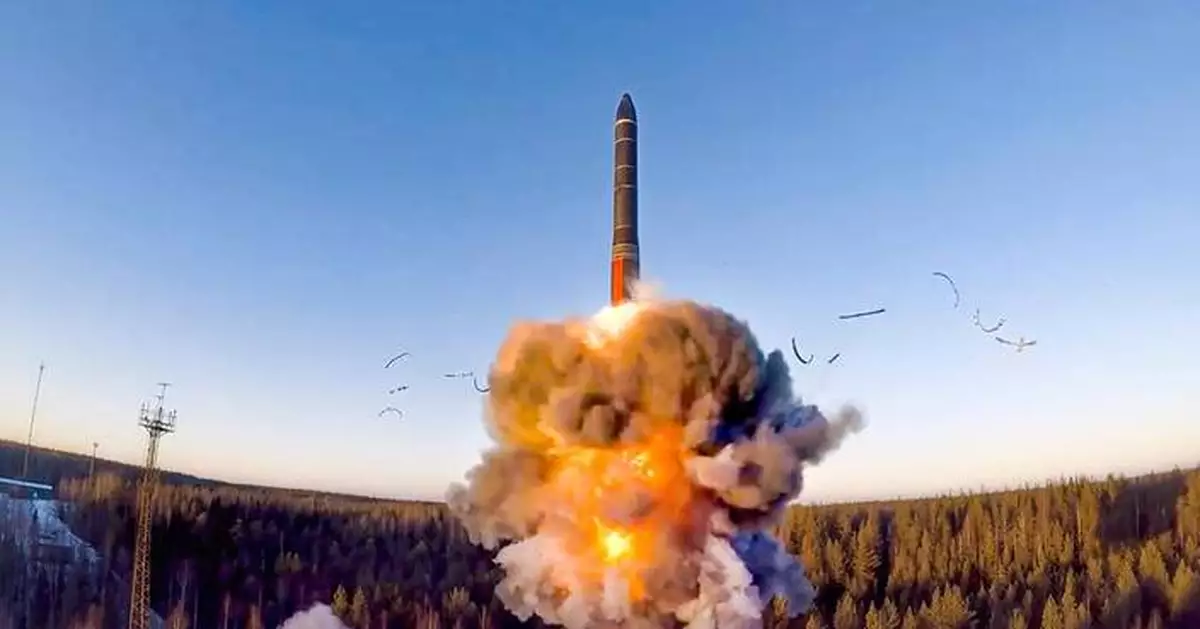
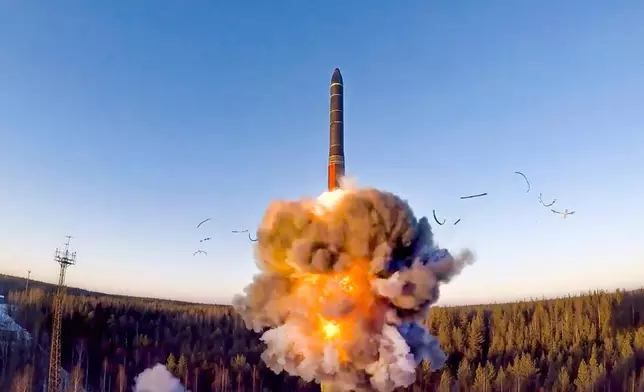
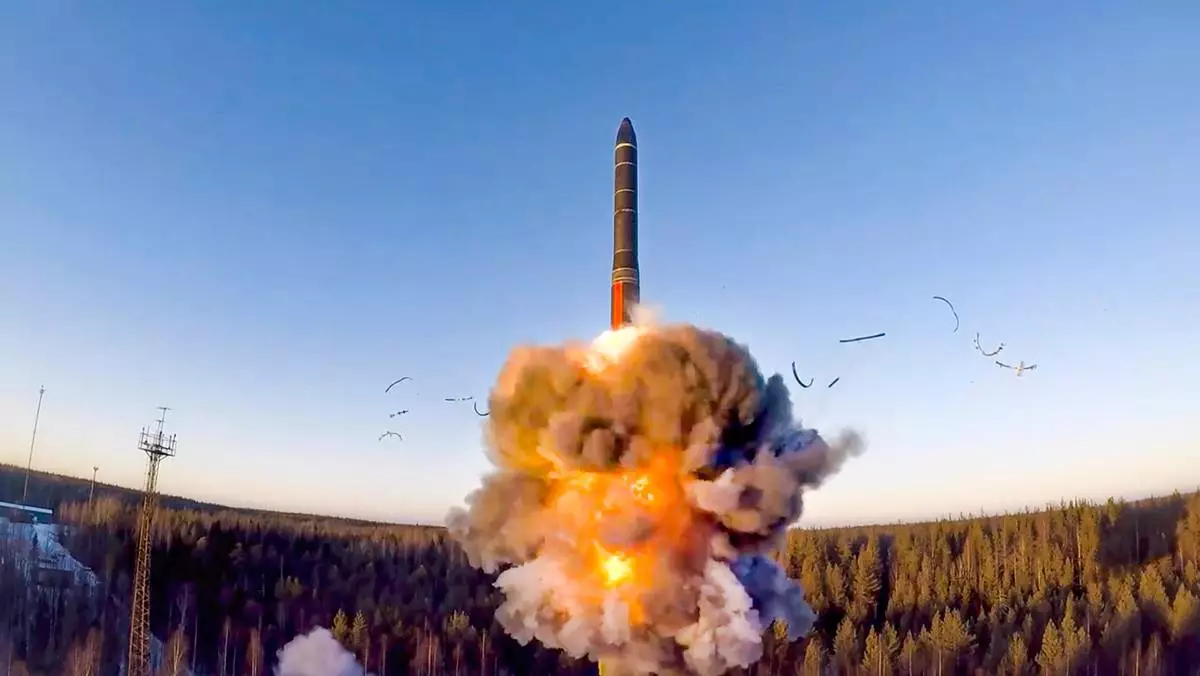
FILE - This photo taken from a video distributed on Dec. 9, 2020 by the Russian Defense Ministry Press Service, shows a rocket launch as part of a ground-based intercontinental ballistic missile test at the Plesetsk facility in northwestern Russia. (Russian Defense Ministry Press Service via AP, File)

FILE - This photo taken from a video distributed on Dec. 9, 2020 by the Russian Defense Ministry Press Service, shows a rocket launch as part of a ground-based intercontinental ballistic missile test at the Plesetsk facility in northwestern Russia. (Russian Defense Ministry Press Service via AP, File)

Russian President Vladimir Putin last year declared his readiness to stick to the treaty’s limits for another year if Washington followed suit, but U.S. President Donald Trump has been noncommittal about extending it. He has indicated that he wants China to be a part of a new pact — something Beijing has rebuffed.

U.S. Secretary of State Marco Rubio said Wednesday that Trump has made clear “in order to have true arms control in the 21st century, it’s impossible to do something that doesn’t include China because of their vast and rapidly growing stockpile.”

Putin discussed the pact’s expiration with Chinese leader Xi Jinping on Wednesday, noting the U.S. failure to respond to his proposal to extend its limits and saying that Russia “will act in a balanced and responsible manner based on thorough analysis of the security situation,” Kremlin adviser Yuri Ushakov said.

Kremlin spokesman Dmitry Peskov said Moscow views the treaty's expiration Thursday “negatively” and regrets it. He said Russia will maintain its “responsible, thorough approach to stability when it comes to nuclear weapons,” adding that "of course, it will be guided primarily by its national interests.”

Peskov emphasized that “if we receive constructive responses, we will certainly conduct a dialogue.”

With the end of the treaty, Moscow “remains ready to take decisive military-technical measures to counter potential additional threats to the national security,” the Russian Foreign Ministry said.

“At the same time, our country remains open to seeking political-diplomatic ways to comprehensively stabilize the strategic situation on the basis of equal and mutually beneficial dialogue solutions, if the appropriate conditions for such cooperation are shaped,” it said in a statement issued late Wednesday.

Even as New START expires, the U.S. and Russia agreed Thursday to reestablish high-level, military-to-military dialogue following a meeting between senior officials from both sides in Abu Dhabi, the U.S. military command in Europe said. The link was suspended in 2021 as relations between Moscow and Washington grew increasingly strained before Russia sent troops into Ukraine in February 2022.

New START, signed in 2010 by then-President Barack Obama and his Russian counterpart, Dmitry Medvedev, restricted each side to no more than 1,550 nuclear warheads on no more than 700 missiles and bombers — deployed and ready for use. It was originally supposed to expire in 2021 but was extended for five more years.

The pact envisioned sweeping on-site inspections to verify compliance, although they stopped in 2020 because of the COVID-19 pandemic and never resumed.

In February 2023, Putin suspended Moscow’s participation, saying Russia couldn’t allow U.S. inspections of its nuclear sites at a time when Washington and its NATO allies have openly declared Moscow’s defeat in Ukraine as their goal. At the same time, the Kremlin emphasized it wasn’t withdrawing from the pact altogether, pledging to respect its caps on nuclear weapons.

In offering in September to abide by New START’s limits for a year to buy time for both sides to negotiate a successor agreement, Putin said the treaty's expiration would be destabilizing and could fuel nuclear proliferation.

New START was the last remaining pact in a long series of agreements between Moscow and Washington to limit their nuclear arsenals, starting with the SALT I in 1972.

Trump has indicated he would like to keep limits on nuclear weapons but wants to involve China in a potential new treaty.

“I actually feel strongly that if we’re going to do it, I think China should be a member of the extension,” Trump told The New York Times last month. “China should be a part of the agreement.”

In his first term, Trump tried and failed to push for a three-way nuclear pact involving China. Beijing has balked at any restrictions on its smaller but growing nuclear arsenal, while urging the U.S. to resume nuclear talks with Russia.

“China’s nuclear forces are not at all on the same scale as those of the U.S. and Russia, and thus China will not participate in nuclear disarmament negotiations at the current stage,” Foreign Ministry spokesperson Lin Jian said Thursday.

He said China regrets the expiration of New START, calls on the U.S. to resume nuclear dialogue with Russia soon, and respond positively to Moscow’s suggestion that the two sides continue observing the core limits of the treaty for now.

Peskov reaffirmed Thursday that Moscow respects Beijing's position. He and other Russian officials have repeatedly argued that any attempt to negotiate a broader nuclear pact instead of a U.S.-Russian deal should also involve nuclear arsenals of NATO members France and the U.K.

Arms control advocates bemoaned the end of New START and warned of the imminent threat of a new arms race.

“If the Trump administration continues to stiff-arm nuclear arms control diplomacy with Russia and decides to increase the number of nuclear weapons in the U.S. deployed strategic arsenal, it will only lead Russia to follow suit and encourage China to accelerate its ongoing strategic buildup in an attempt to maintain a strategic nuclear retaliatory strike capability vis-a-vis the United States,” said Daryl Kimball, executive director of the Arms Control Association in Washington. “Such a scenario could lead to a years-long, dangerous three-way nuclear arms buildup.”

__

This version of the story corrects the last paragraph to say China's Foreign Ministry spokesperson Lin Jian said Beijing calls on the U.S. to respond positively to Moscow’s proposal to keep adhering to the treaty, not that China views it positively.

Associated Press writer Ken Moritsugu in Beijing contributed.

—-

The Associated Press receives support for nuclear security coverage from the Carnegie Corporation of New York and Outrider Foundation. The AP is solely responsible for all content.

Additional AP coverage: https://apnews.com/projects/the-new-nuclear-landscape/

FILE - This photo released by the U.S. Air Force shows a B-52H Stratofortress approaching a KC-10 Extender for refueling over the Middle East, Sept. 4, 2022. (U.S. Air Force/Staff Sgt. Shannon Bowman, via AP, File)
FILE - This photo released by the U.S. Air Force shows a B-52H Stratofortress approaching a KC-10 Extender for refueling over the Middle East, Sept. 4, 2022. (U.S. Air Force/Staff Sgt. Shannon Bowman, via AP, File)

FILE - U.S. President Barack Obama, left, and his Russian counterpart Dmitry Medvedev, right, shake hands at a news conference at the Prague Castle in Prague, Czech Republic,, April 8, 2010, after signing the New START treaty reducing long-range nuclear weapons. (AP Photo/Mikhail Metzel, File)
FILE - U.S. President Barack Obama, left, and his Russian counterpart Dmitry Medvedev, right, shake hands at a news conference at the Prague Castle in Prague, Czech Republic,, April 8, 2010, after signing the New START treaty reducing long-range nuclear weapons. (AP Photo/Mikhail Metzel, File)

FILE - U.S. President Donald Trump greets Russian President Vladimir Putin, Aug. 15, 2025, at Joint Base Elmendorf-Richardson, Alaska. (AP Photo/Julia Demaree Nikhinson, File)
FILE - U.S. President Donald Trump greets Russian President Vladimir Putin, Aug. 15, 2025, at Joint Base Elmendorf-Richardson, Alaska. (AP Photo/Julia Demaree Nikhinson, File)

FILE - This photo taken from a video distributed on Dec. 9, 2020 by the Russian Defense Ministry Press Service, shows a rocket launch as part of a ground-based intercontinental ballistic missile test at the Plesetsk facility in northwestern Russia. (Russian Defense Ministry Press Service via AP, File)


FILE - This photo taken from a video distributed on Dec. 9, 2020 by the Russian Defense Ministry Press Service, shows a rocket launch as part of a ground-based intercontinental ballistic missile test at the Plesetsk facility in northwestern Russia. (Russian Defense Ministry Press Service via AP, File)

NEW YORK (AP) — A sharp drop for Google's parent company is dragging the U.S. stock market lower on Thursday, while prices for bitcoin, silver and gold weaken. Yields are also sinking in the bond market following discouraging news on the U.S. job market.

The S&P 500 fell 1.1% and is heading toward its sixth loss in the seven days since it set an all-time high. The Dow Jones Industrial Average was down 425 points, or 0.9%, as of 10:10 a.m. Eastern time, and the Nasdaq composite was 1.5% lower.

Alphabet weighed on the market and sank 4.5%, even though the parent company of Google, YouTube and other businesses reported a stronger profit for the latest quarter than analysts expected. Investors focused instead on how much Alphabet is spending on artificial-intelligence technology and questioned whether it will all prove worth it.

Alphabet said its spending on equipment and other investments could double this year to roughly $180 billion. That blew past analysts’ expectations of less than $119 billion, according to FactSet.

In the bond market, Treasury yields sank after a report said the number of U.S. workers applying for unemployment benefits jumped last week by more than economists expected. That could be a signal that the pace of layoffs is accelerating.

Some economists suggested last week’s rise could be statistical noise, and the total number remains relatively low compared with history. But a separate report said that layoffs announced by U.S.-based employers surged last month. The 108,435 was the highest number for a month since October, according to global outplacement and executive coaching firm Challenger, Gray & Christmas. For a January, it’s the worst since 2009.

A third report from the U.S. government said that employers were advertising fewer job openings in December than both the month before and year before.

Weakness in the job market could push the Federal Reserve to cut interest rates to support the economy, even if it also risks worsening inflation. Treasury yields fell across the board in response.

The yield on the 10-year Treasury sank to 4.23% from 4.29% late Wednesday.

The moves were even sharper in commodities markets.

Silver’s price dropped 9.8% in its latest wild swing since its record-breaking momentum suddenly halted last week.

Gold’s price fell 1.5% to $4,874.20 per ounce. It’s been careening back and forth since it roughly doubled in price over 12 months. It neared $5,600 last week and then fell below $4,500 on Monday.

Both gold and silver had been screaming higher as investors piled into places they thought would be safer amid worries about political turmoil, a U.S. stock market that critics called expensive and huge debt loads for governments worldwide. But nothing can keep rising at such extreme rates forever, and critics had been calling for a pullback.

Bitcoin, which is pitched as “digital gold,” also sank. It dropped below $69,000, down from its record above $124,000 set in October.

On Wall Street, Qualcomm fell 8.9% even though the chip company topped analysts’ expectations for profit and revenue in the latest quarter. Its forecast for profit in the current quarter fell short of analysts’ expectations as an industrywide shortage of memory pushes some handset makers to cut back on orders.

Outside of tech, Estee Lauder also topped Wall Street targets. It raised its financial forecasts for the full fiscal year, but it also said it expects tariff-related headwinds to wipe out about $100 million worth of profits. The New York cosmetic company’s shares sank 19.9%.

On the winning side of Wall Street were some companies that stand to benefit from big spending by Alphabet and other companies continuing the AI frenzy. Chip company Broadcom rose 2.2% and was the strongest force limiting the S&P 500’s losses.

McKesson jumped 16.3% for the biggest gain in the S&P 500 after reporting stronger profit and revenue for the latest quarter than analysts expected. The health care company also raised its forecasted range for profit this fiscal year.

In stock markets abroad, indexes fell across much of Europe and Asia.

London’s FTSE 100 fell 0.5% after the Bank of England held interest rates there steady. France’s CAC 40 fell 0.5%, and Germany’s DAX lost 0.7% after the European Central Bank likewise stood pat on interest rates.

South Korea’s Kospi tumbled 3.9% for one of the world’s biggest moves and dropped from its all-time high. Samsung Electronics dropped 6%, just two days after it had surged 11.4%.

AP Business Writers Matt Ott and Elaine Kurtenbach contributed.

Trader Joseph Stevens, foreground, works with colleagues on the floor of the New York Stock Exchange, Tuesday, Feb. 3, 2026. (AP Photo/Richard Drew)

Trader Joseph Stevens, foreground, works with colleagues on the floor of the New York Stock Exchange, Tuesday, Feb. 3, 2026. (AP Photo/Richard Drew)

Currency traders watch monitors near a screen showing the Korea Composite Stock Price Index (KOSPI), top right, at the foreign exchange dealing room of the Hana Bank headquarters in Seoul, South Korea, Monday, Feb. 2, 2026. (AP Photo/Ahn Young-joon)

Currency traders watch monitors near a screen showing the Korea Composite Stock Price Index (KOSPI), top right, at the foreign exchange dealing room of the Hana Bank headquarters in Seoul, South Korea, Monday, Feb. 2, 2026. (AP Photo/Ahn Young-joon)

A currency traders watches monitors near a screen showing the Korea Composite Stock Price Index (KOSPI), left, at the foreign exchange dealing room of the Hana Bank headquarters in Seoul, South Korea, Monday, Feb. 2, 2026. (AP Photo/Ahn Young-joon)

A currency traders watches monitors near a screen showing the Korea Composite Stock Price Index (KOSPI), left, at the foreign exchange dealing room of the Hana Bank headquarters in Seoul, South Korea, Monday, Feb. 2, 2026. (AP Photo/Ahn Young-joon)

A board above the trading floor of the New York Stock Exchange displays the closing number for the Dow Jones industrial average, Monday, Feb. 2, 2026. (AP Photo/Richard Drew)

A board above the trading floor of the New York Stock Exchange displays the closing number for the Dow Jones industrial average, Monday, Feb. 2, 2026. (AP Photo/Richard Drew)

Specialist Anthony Matesic works at his post on the floor of the New York Stock Exchange, Monday, Feb. 2, 2026. (AP Photo/Richard Drew)

Specialist Anthony Matesic works at his post on the floor of the New York Stock Exchange, Monday, Feb. 2, 2026. (AP Photo/Richard Drew)

Recommended Articles