
Skip to Content Facebook Feature Image

US Figure Skating squad chasing more Olympic gold as competition begins at the Milan Cortina Games

Sport

US Figure Skating squad chasing more Olympic gold as competition begins at the Milan Cortina Games
Sport

Sport

US Figure Skating squad chasing more Olympic gold as competition begins at the Milan Cortina Games

2026-02-05 22:50 Last Updated At:23:00

MILAN (AP) — The powerful U.S. figure skating squad will have its first opportunity to shine at the Winter Olympics on Friday when the team competition begins at the Milano Ice Skating Arena just hours before the opening ceremony.

The Americans are the defending champions in the event. After they were denied a medal ceremony four years ago in Beijing because of a lengthy investigation into Russian doping, which kept them from receiving their gold medals until the 2024 Summer Games in Paris, so it would be especially meaningful to win another team title at the Milan Cortina Games.

“Looking back, I don't think it was bittersweet, necessarily,” said Madison Chock, who along with partner Evan Bates will perform their rhythm dance Friday. “We're still Olympic champions. We got our medals. But it was different.”

One thing that isn't different: the strength of the U.S. team.

Chock and Bates are the three-time defending world champions, and they've been nearly unbeatable since finishing fourth in the individual ice competition in Beijing. The U.S. also will send out world champion Alysa Liu for the women's short program on the first day of the team event, while Ellie Kam and Danny O'Shea will perform their pairs short program.

The free dance and men's short program is Saturday, when two-time defending world champion Ilia Malinin could perform for the first time in the Olympics. The team medals will be awarded after the men's, women's and pairs free skates on Sunday.

“It's the first time we've ever in three disciplines had three world champions going into the Olympics,” said Brian Boitano, the 1988 Olympic champion. “We've had strong teams in the past, but this is one of the strongest teams ever.”

It helps the U.S. cause that the historically strong Russians, who beat the Americans in Beijing only to be relegated to third when Kamila Valieva was suspended for doping, remain barred from the Winter Games following the invasion of Ukraine; Adeliina Petrosian and Petr Gumennik will be competing as neutral athletes.

Still, that doesn't mean the Americans can simply waltz their way to the gold medal.

Japan, the reigning silver medalist, is back with world pairs champions Riku Mura and Ryuichi Kihara anchoring a team with few weaknesses. Olympic bronze medalist Kaori Sakamoto will handle the women's short program Friday, leaving the ice dance team of Utana Yoshida and Masaya Morita to try to keep the Japanese within striking distance of the Americans.

Georgia, Italy and Canada are the other podium contenders in the team event.

The Canadians were controversially denied the bronze medal in Beijing amid the Russian doping saga, instead keeping their fourth-place result. And while that could fuel the team this weekend, the Canadians already suffered a blow when Deanna Stellato-Dudek got hurt in training, ruling her out of the team competition with her pairs teammate, Maxime Deschamps.

“We want the gold,” Canadian ice dancer Piper Gilles said, “but a lot of it is out of our hands. What we can control is our skating and how we feel about it, and what moment we want to create. That’s when we skate our best.”

Ten nations take part in the team event, each sending out one entry per discipline for the short program. The scores are calculated based on their placements, with each discipline winner earning 10 points all the way down to one point for 10th place.

The top five move on to the free skate, where teams are allowed to substitute up to two disciplines, making roster selection a strategic process. They keep adding points to the team total, and the team with the most points after the free skate wins.

“It's not just strategy for the team but the strategy for the month,” said Justin Dillon, chief high performance officer for U.S. Figure Skating. “Some of the events back right up into the team event. We want them to focus and have the ultimate impact.”

The biggest time crunch is for ice dancers, who have their rhythm dance Monday, meaning they could be performing three times in four days. They also have their team free skate Sunday ahead of their individual short programs Tuesday.

That is where the depth of the Americans come in handy. They can swap in fresh skaters on Sunday if needed.

“The team event is extremely important to us,” Bates said. “Having the opportunity to compete as a team is so special, and this team in particular is so deep, so talented and has great opportunity for a gold medal.”

AP Winter Olympics: https://apnews.com/hub/milan-cortina-2026-winter-olympics
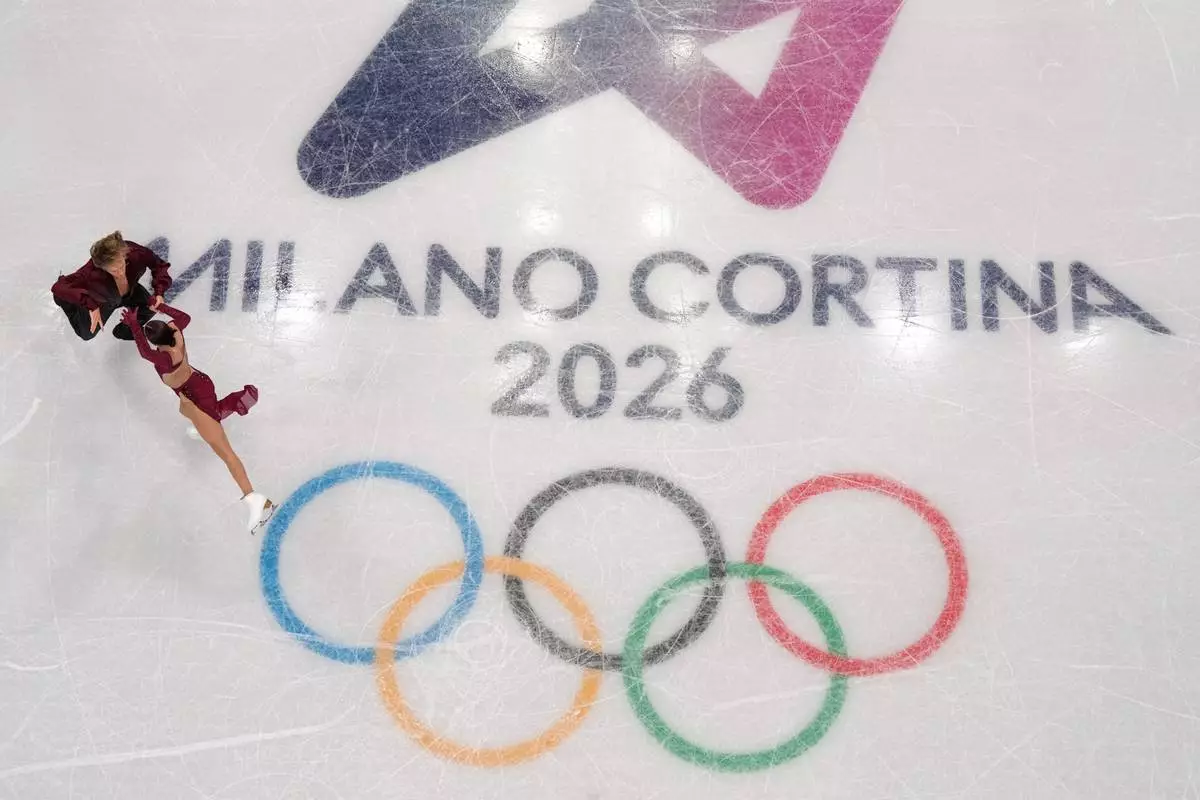
Georgia's Diana Davis and Gleb Smolkin during a figure skating training session at the 2026 Winter Olympics, in Milan, Italy, Thursday, Feb. 5, 2026. (AP Photo/Bernat Armangue)

Georgia's Diana Davis and Gleb Smolkin during a figure skating training session at the 2026 Winter Olympics, in Milan, Italy, Thursday, Feb. 5, 2026. (AP Photo/Bernat Armangue)

Riku Miura and Ryuichi Kihara, of Japan, perform during a figure skating training session at the 2026 Winter Olympics, in Milan, Italy, Wednesday, Feb. 4, 2026. (AP Photo/Francisco Seco)
Riku Miura and Ryuichi Kihara, of Japan, perform during a figure skating training session at the 2026 Winter Olympics, in Milan, Italy, Wednesday, Feb. 4, 2026. (AP Photo/Francisco Seco)

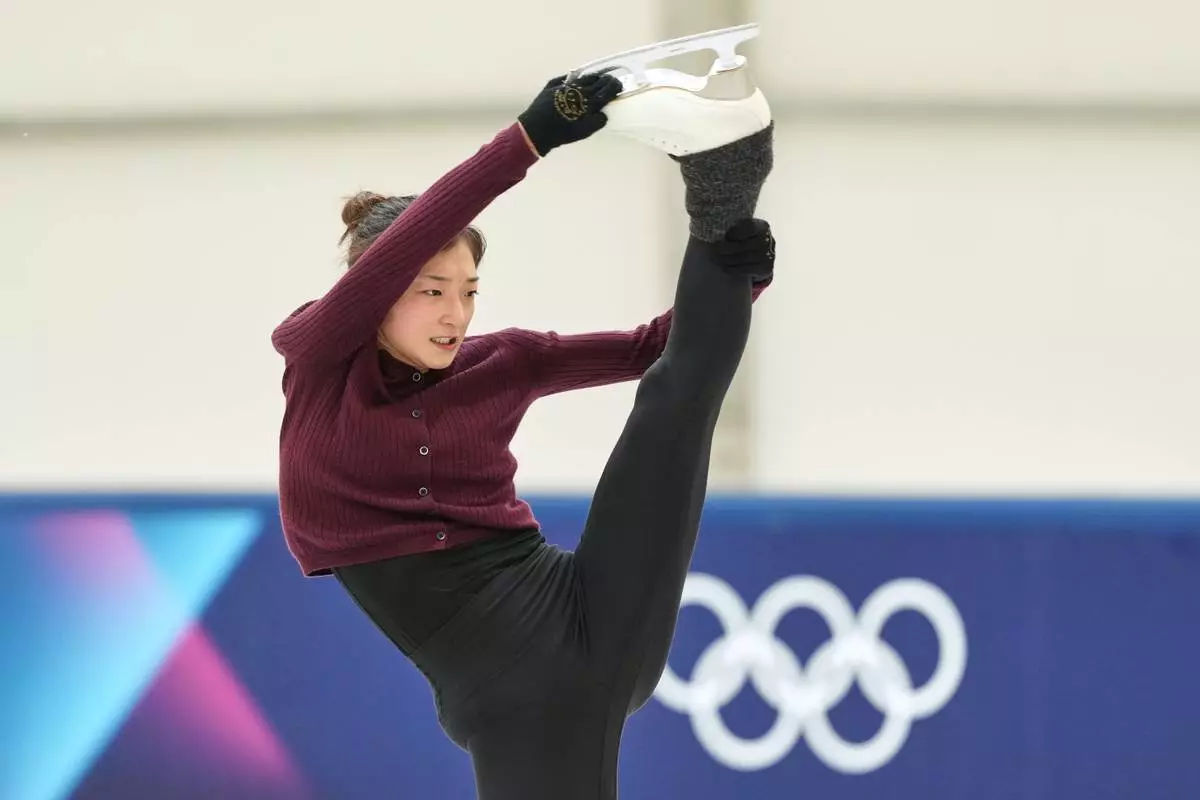
Kaori Sakamoto, of Japan, performs during a figure skating training session at the 2026 Winter Olympics, in Milan, Italy, Thursday, Feb. 5, 2026. (AP Photo/Francisco Seco)


Kaori Sakamoto, of Japan, performs during a figure skating training session at the 2026 Winter Olympics, in Milan, Italy, Thursday, Feb. 5, 2026. (AP Photo/Francisco Seco)

NEW YORK (AP) — Dropping technology stocks are dragging the U.S. market lower again on Thursday, while prices for bitcoin, silver and gold fall sharply. Yields are also sinking in the bond market following discouraging news on the U.S. job market.

The S&P 500 fell 0.8% and is heading toward its sixth loss in the seven days since it set an all-time high. The Dow Jones Industrial Average was down 326 points, or 0.7%, as of 9:35 a.m. Eastern time, and the Nasdaq composite was 0.8% lower.

Alphabet helped drag the market lower by sinking 5.4%, even though the parent company of Google reported a stronger profit for the latest quarter than analysts expected. Investors focused instead on how much Alphabet is spending on artificial-intelligence technology and questioned whether it will all prove worth it.

Alphabet said its spending on equipment and other investments could double this year to roughly $180 billion. That blew past analysts’ expectations of less than $119 billion, according to FactSet.

In the bond market, Treasury yields sank after a report said the number of U.S. workers applying for unemployment benefits jumped last week by more than economists expected. That could be a signal that the pace of layoffs is accelerating.

Some economists suggested last week’s rise could be statistical noise, and the total number remains relatively low compared with history. But a separate report released in the morning said that layoffs announced by U.S.-based employers surged last month. The 108,435 was the highest number for a month since October, according to global outplacement and executive coaching firm Challenger, Gray & Christmas. For a January, it’s the worst since 2009.

Weakness in the job market could push the Federal Reserve to cut interest rates to support the economy, even if it also risks worsening inflation. Treasury yields fell across the board in response.

The yield on the 10-year Treasury sank to 4.23% from 4.29% late Wednesday.

The moves were even sharper in commodities markets.

Silver’s price tumbled 12.1% in its latest wild swing since its record-breaking momentum suddenly halted last week.

Gold’s price fell 1.9% to $4,855.00 per ounce. It’s been careening back and forth since it roughly doubled in price over 12 months. It neared $5,600 last week and then fell below $4,500 on Monday.

Both gold and silver had been screaming higher as investors piled into places they thought would be safer amid worries about political turmoil, a U.S. stock market that critics called expensive and huge debt loads for governments worldwide. But nothing can keep rising at such extreme rates forever, and critics had been calling for a pullback.

Bitcoin, which is pitched as the “digital gold,” also sank. It briefly dropped below $70,000, down from its record above $124,000 set in October.

On Wall Street, Qualcomm fell 9.1% even though the chip company topped analysts’ expectations for profit and revenue in the latest quarter. Its forecast for profit in the current quarter fell short of analysts’ expectations as an industrywide shortage of memory pushes some handset makers to cut back on orders.

Outside of tech, Estee Lauder also topped Wall Street targets but said it expects tariff-related headwinds to wipe out about $100 million worth of profits in its fiscal year. The New York cosmetic company’s shares sank 16.9%.

In stock markets abroad, indexes fell across much of Europe and Asia.

London’s FTSE 100 fell 0.9% after the Bank of England held interest rates there steady. France’s CAC 40 fell 0.6%, and Germany’s DAX lost 1.1% after the European Central Bank likewise stood pat on interest rates.

South Korea’s Kospi tumbled 3.9% for one of the world’s biggest moves and dropped from its all-time high. Samsung Electronics dropped 6%, just two days after it had surged 11.4%.

AP Business Writers Matt Ott and Elaine Kurtenbach contributed.

Trader Joseph Stevens, foreground, works with colleagues on the floor of the New York Stock Exchange, Tuesday, Feb. 3, 2026. (AP Photo/Richard Drew)

Trader Joseph Stevens, foreground, works with colleagues on the floor of the New York Stock Exchange, Tuesday, Feb. 3, 2026. (AP Photo/Richard Drew)

Currency traders watch monitors near a screen showing the Korea Composite Stock Price Index (KOSPI), top right, at the foreign exchange dealing room of the Hana Bank headquarters in Seoul, South Korea, Monday, Feb. 2, 2026. (AP Photo/Ahn Young-joon)

Currency traders watch monitors near a screen showing the Korea Composite Stock Price Index (KOSPI), top right, at the foreign exchange dealing room of the Hana Bank headquarters in Seoul, South Korea, Monday, Feb. 2, 2026. (AP Photo/Ahn Young-joon)

A currency traders watches monitors near a screen showing the Korea Composite Stock Price Index (KOSPI), left, at the foreign exchange dealing room of the Hana Bank headquarters in Seoul, South Korea, Monday, Feb. 2, 2026. (AP Photo/Ahn Young-joon)

A currency traders watches monitors near a screen showing the Korea Composite Stock Price Index (KOSPI), left, at the foreign exchange dealing room of the Hana Bank headquarters in Seoul, South Korea, Monday, Feb. 2, 2026. (AP Photo/Ahn Young-joon)

A board above the trading floor of the New York Stock Exchange displays the closing number for the Dow Jones industrial average, Monday, Feb. 2, 2026. (AP Photo/Richard Drew)

A board above the trading floor of the New York Stock Exchange displays the closing number for the Dow Jones industrial average, Monday, Feb. 2, 2026. (AP Photo/Richard Drew)

Specialist Anthony Matesic works at his post on the floor of the New York Stock Exchange, Monday, Feb. 2, 2026. (AP Photo/Richard Drew)

Specialist Anthony Matesic works at his post on the floor of the New York Stock Exchange, Monday, Feb. 2, 2026. (AP Photo/Richard Drew)

Recommended Articles