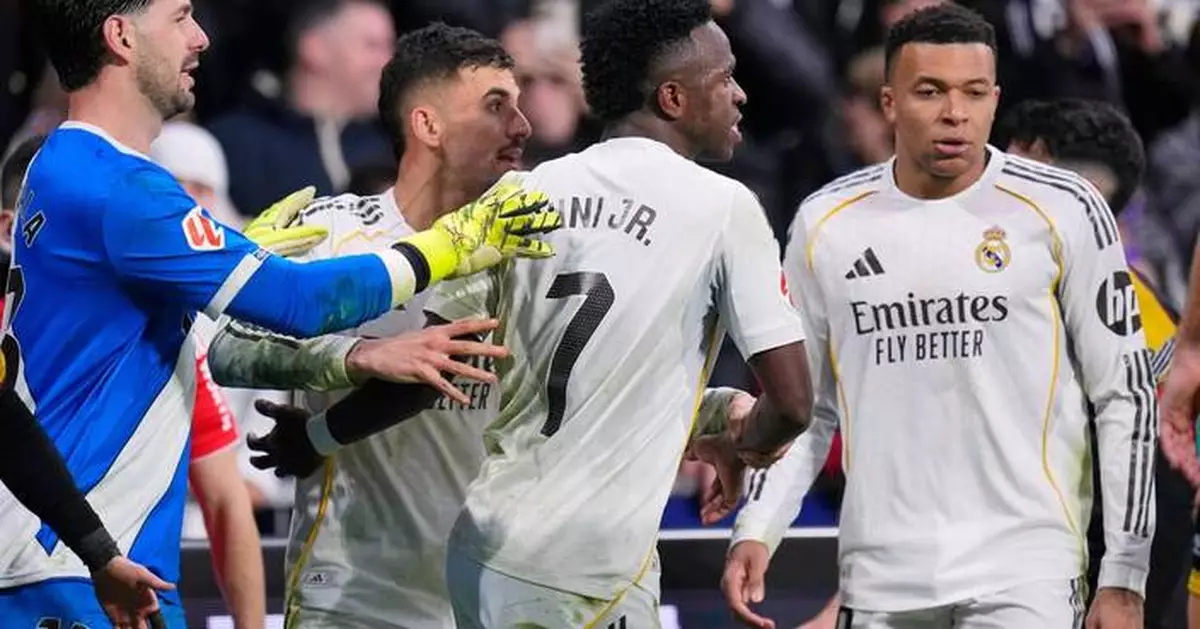
MADRID (AP) — Real Madrid will be without Vinícius Júnior and Jude Bellingham for its La Liga match at Valencia on Sunday.
Vinícius will miss the game because of an accumulation of yellow cards. He picked up his fifth yellow last Sunday in the 2-1 home win against Rayo Vallecano, a result that moved Madrid back within a point of leader Barcelona.
Click to Gallery
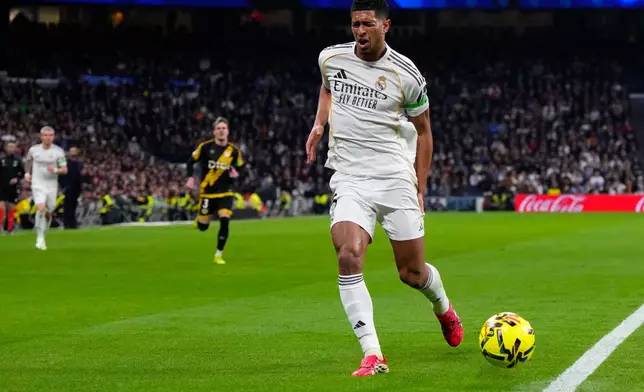
Real Madrid's Jude Bellingham reacts in pain during the Spanish La Liga soccer match between Real Madrid and Rayo Vallecano in Madrid, Spain, Sunday, Feb. 1, 2026. (AP Photo/Manu Fernandez)
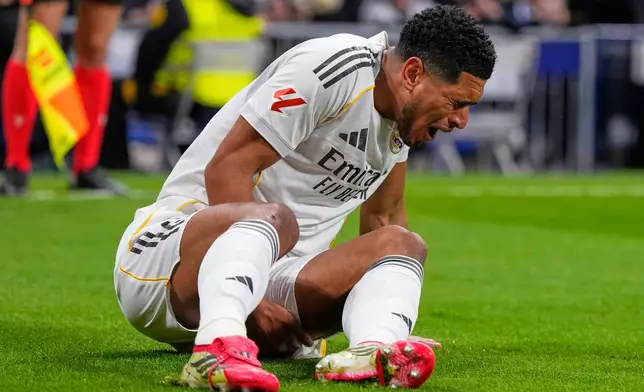
Real Madrid's Jude Bellingham lies on the pitch injured during the Spanish La Liga soccer match between Real Madrid and Rayo Vallecano in Madrid, Spain, Sunday, Feb. 1, 2026. (AP Photo/Manu Fernandez)
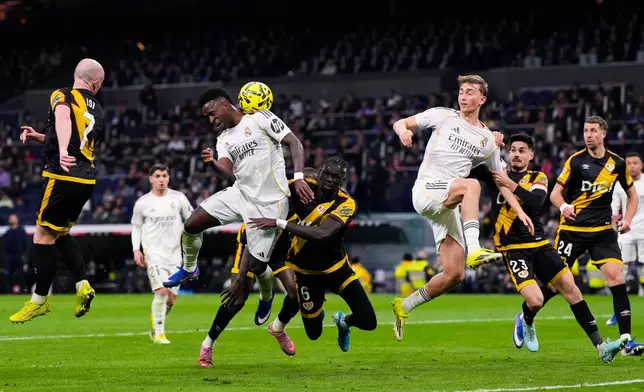
Real Madrid's Vinicius Junior, center left, heads for the ball during the Spanish La Liga soccer match between Real Madrid and Rayo Vallecano in Madrid, Spain, Sunday, Feb. 1, 2026. (AP Photo/Manu Fernandez)
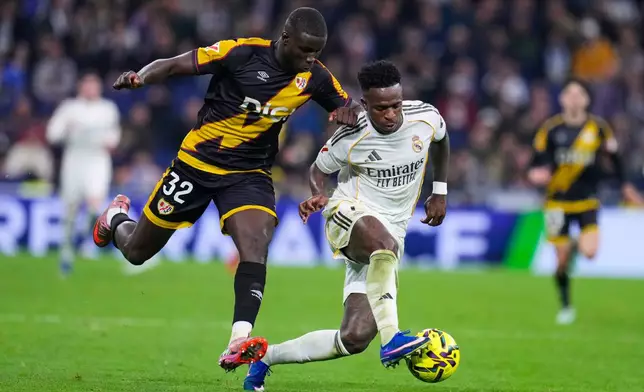
Real Madrid's Vinicius Junior, right, vies for the ball with Rayo's Nobel Mendy during the Spanish La Liga soccer match between Real Madrid and Rayo Vallecano in Madrid, Spain, Sunday, Feb. 1, 2026. (AP Photo/Manu Fernandez)
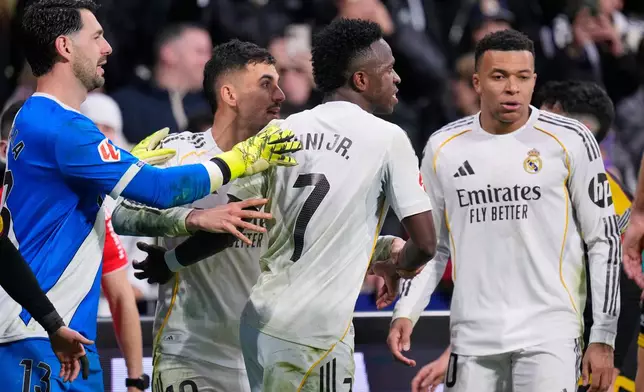
Real Madrid's Vinicius Junior, center, reacts during the Spanish La Liga soccer match between Real Madrid and Rayo Vallecano in Madrid, Spain, Sunday, Feb. 1, 2026. (AP Photo/Manu Fernandez)
Vinícius' superb goal helped Madrid earn the victory against Rayo but again he was booed by some Madrid fans at the Bernabeu. He was also criticized later after Spanish media said he was spotted in Paris ahead of his time off from playing.
The Brazil forward was expected to face a tough crowd in Valencia, where three years ago he was subjected to racist taunts that sparked anti-racism campaigns across Spain. Valencia at the time helped identify the fans who taunted Vinícius, but the club was not happy with the generalization made about all of its fans being racist. Valencia fans have jeered Vinícius every time he's returned to Mestalla Stadium.
Bellingham recently also was criticized by Madrid fans but will not play on Sunday because of a left hamstring injury against Rayo. The team did not give a timetable on his recovery but he is expected to be sidelined for a few weeks.
Madrid has won six consecutive league games, with its last setback in December, 2-0 at home against Celta Vigo.
Valencia, sitting in 16th place, is coming off a tough 2-1 home loss to Athletic Bilbao in the quarterfinals of the Copa del Rey, where it conceded six minutes into stoppage time and failed to advance.
Leader Barcelona will try to earn its 17th victory in 18 matches across all tournaments when it hosts 14th-placed Mallorca on Saturday.
Barcelona, whose only setback in that streak was 2-1 at Real Sociedad in January, won at Albacete 2-1 midweek to reach the Copa del Rey semifinals.
On Sunday, third-placed Atletico Madrid hosts fifth-placed Real Betis, the same opponent it will face as a visitor in the quarterfinals of the Copa del Rey on Thursday.
Atletico boosted its squad in the winter transfer window by signing Nigeria forward Ademola Lookman from Atalanta and Mexico midfielder Obed Vargas from the Seattle Sounders in Major League Soccer.
On Monday, fourth-placed Villarreal hosts sixth-placed Espanyol.
Atletico will likely showcase newcomers Lookman and Vargas, while Barcelona will continue to rely on Lamine Yamal, who has scored four times in his last four matches with Barcelona, and five times in his last six games with the club.
Madrid's Kylian Mbappé will likely play at Mestalla and will look to add to an impressive scoring streak that includes eight goals in his last five matches.
Without Vinícius and Bellingham, Madrid coach Álvaro Arbeloa may see a few players return from long injury layoffs, including defenders Trent Alexander-Arnold, Antonio Rüdiger and Ferland Mendy.
Barcelona will remain without Gavi and Pedri because of injuries, and Raphinha remains doubtful after already missing the Copa del Rey match on Tuesday.
Barcelona president Joan Laporta said this week the club will hold elections in March and he will be a candidate again. He said he and his board members will resign on Monday so they can stand for re-election. Laporta is set to face opposition.
AP soccer: https://apnews.com/hub/soccer
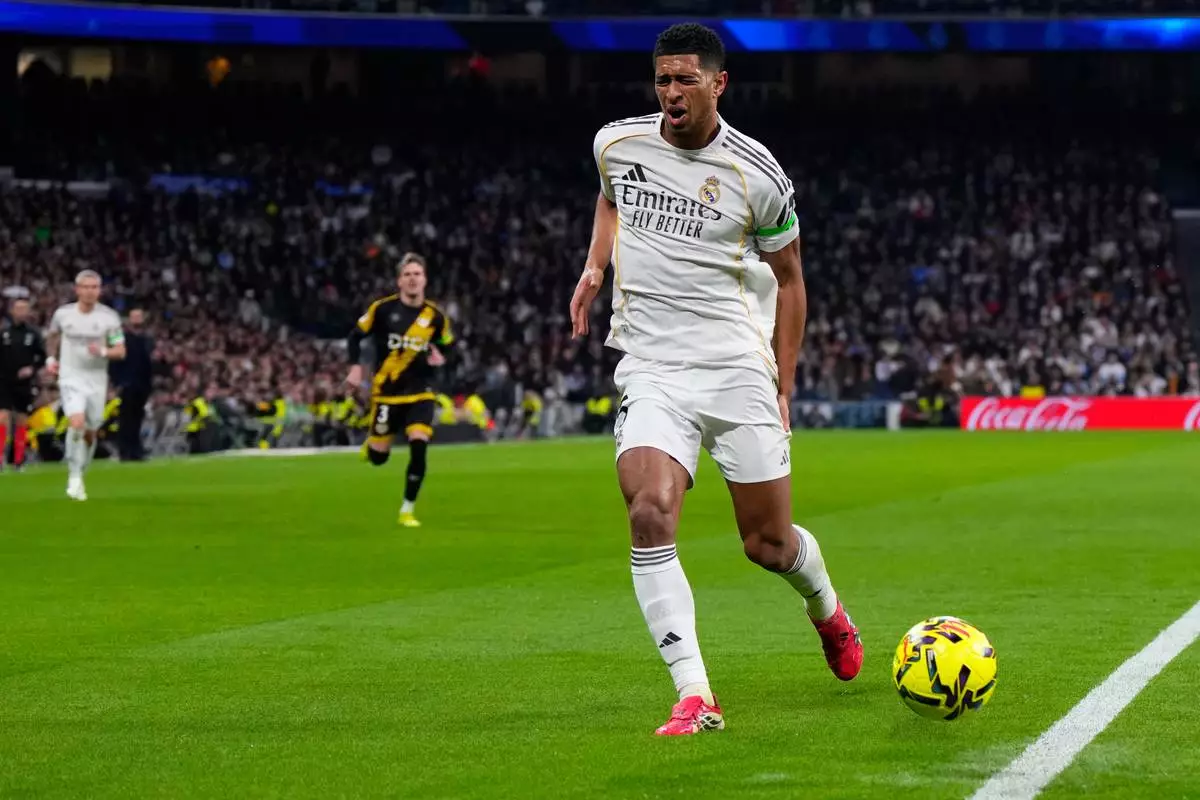
Real Madrid's Jude Bellingham reacts in pain during the Spanish La Liga soccer match between Real Madrid and Rayo Vallecano in Madrid, Spain, Sunday, Feb. 1, 2026. (AP Photo/Manu Fernandez)
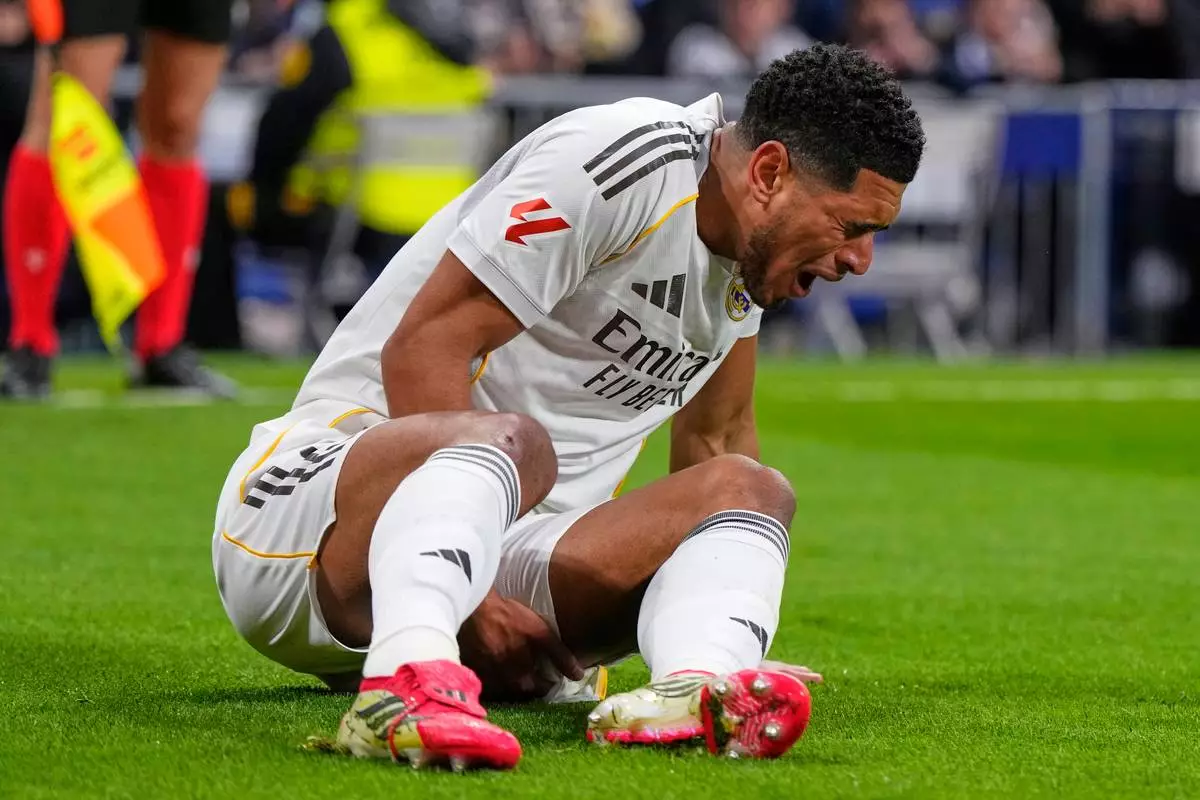
Real Madrid's Jude Bellingham lies on the pitch injured during the Spanish La Liga soccer match between Real Madrid and Rayo Vallecano in Madrid, Spain, Sunday, Feb. 1, 2026. (AP Photo/Manu Fernandez)
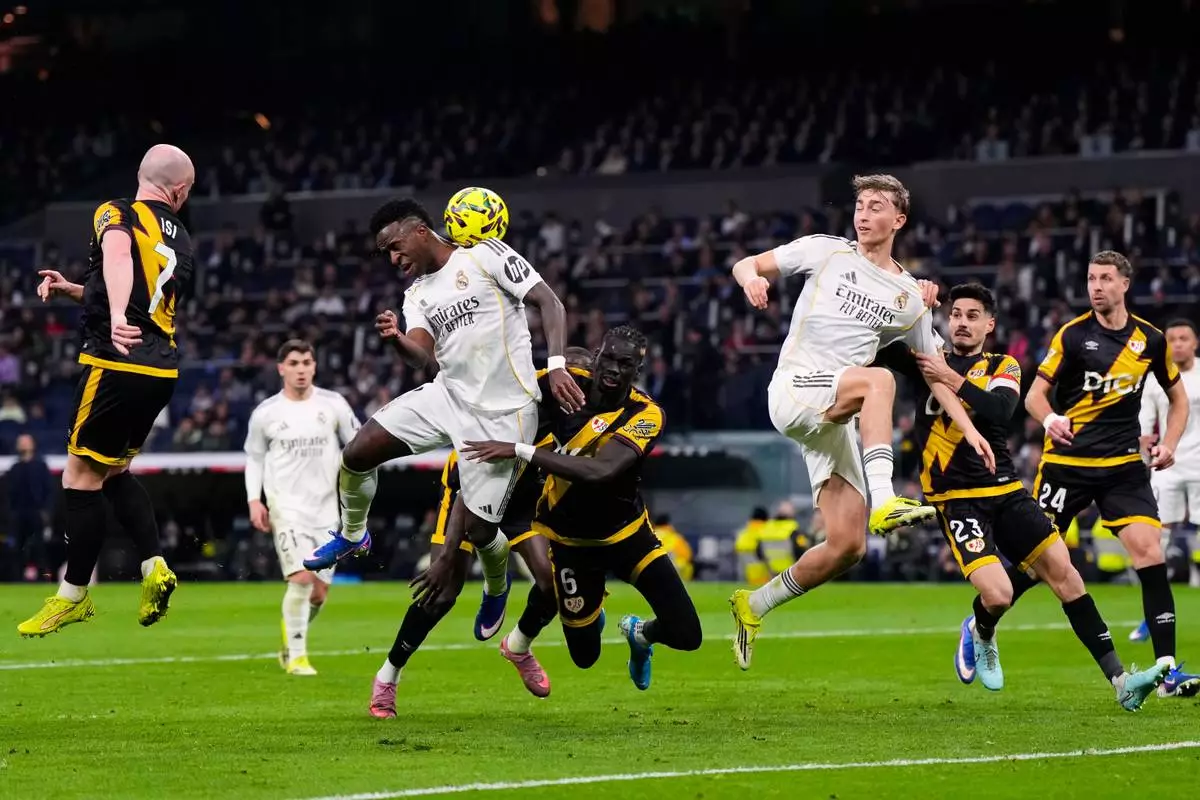
Real Madrid's Vinicius Junior, center left, heads for the ball during the Spanish La Liga soccer match between Real Madrid and Rayo Vallecano in Madrid, Spain, Sunday, Feb. 1, 2026. (AP Photo/Manu Fernandez)
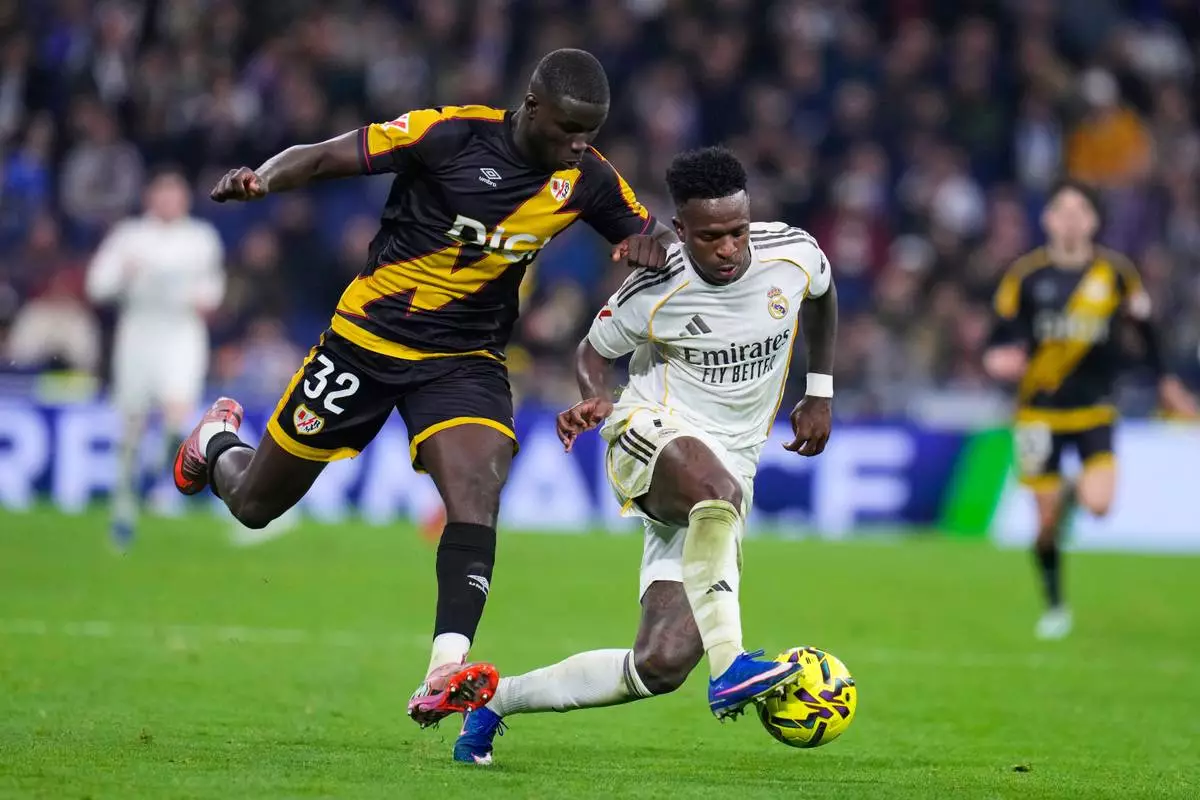
Real Madrid's Vinicius Junior, right, vies for the ball with Rayo's Nobel Mendy during the Spanish La Liga soccer match between Real Madrid and Rayo Vallecano in Madrid, Spain, Sunday, Feb. 1, 2026. (AP Photo/Manu Fernandez)
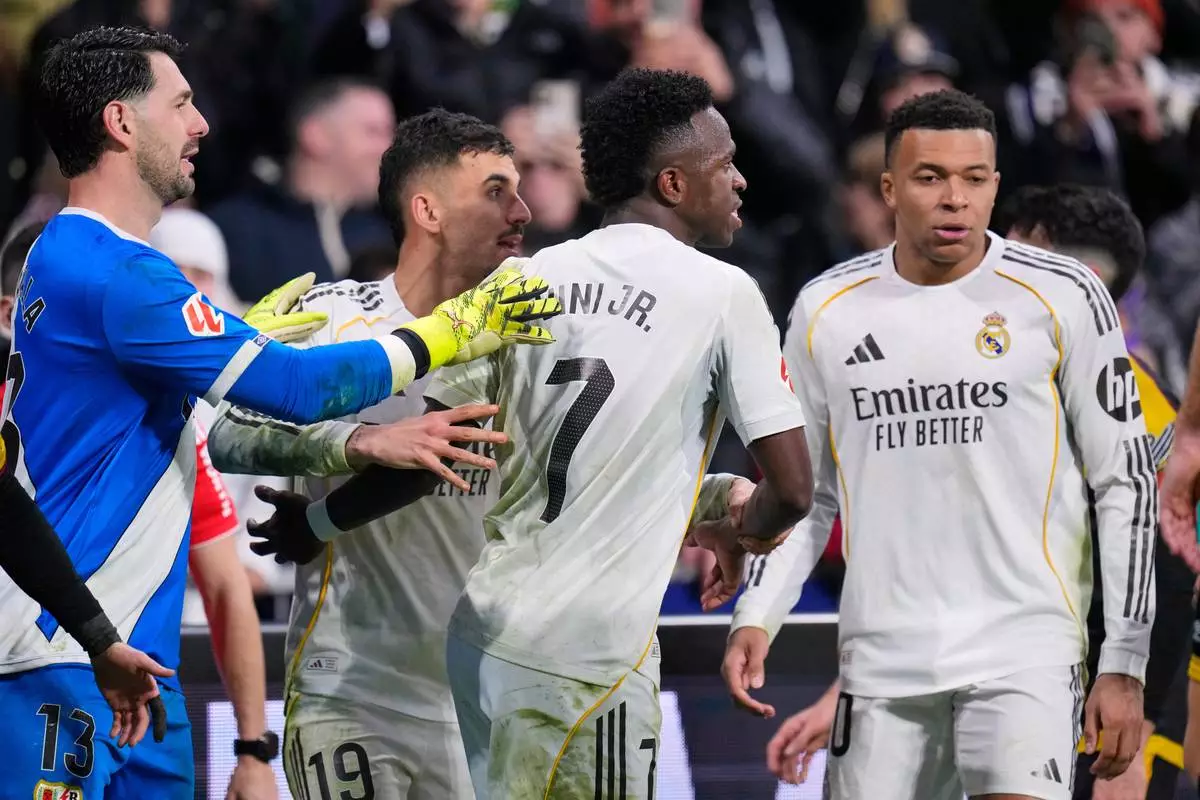
Real Madrid's Vinicius Junior, center, reacts during the Spanish La Liga soccer match between Real Madrid and Rayo Vallecano in Madrid, Spain, Sunday, Feb. 1, 2026. (AP Photo/Manu Fernandez)
The two artificial intelligence startups behind rival chatbots ChatGPT and Claude are bracing for an existential showdown this year as both need to prove they can grow a business that will make more money than they're losing.
The fiercest competition between the two AI developers, along with bigger companies like Google, is a race to win over corporate leaders looking to adopt AI tools to boost workplace productivity. The rivalry is also spilling into other realms, including the Super Bowl.
Anthropic is airing a pair of TV commercials during Sunday's game that ridicule OpenAI for the digital advertising it's beginning to place on free and cheaper versions of ChatGPT. While Anthropic has centered its revenue model on selling Claude to other businesses, OpenAI has opened the doors to ads as a way of making money from the hundreds of millions of consumers who get ChatGPT for free.
Anthropic’s commercials humorously mock the dangers of manipulative chatbots — represented as real people speaking in a stilted and unnaturally effusive tone — that form a relationship with a user before trying to hawk a product. The commercials end with a written message — “Ads are coming to AI. But not to Claude.” — followed by the opening beat and lyrics of the Dr. Dre song “What’s the Difference.”
In a sign they struck a nerve, OpenAI CEO Sam Altman said in a social media post that he laughed at the “funny” ads but blasted them as dishonest and threw shade at his competitor's smaller customer base.
“Anthropic serves an expensive product to rich people,” Altman wrote on X. He also boasted that more Texans “use ChatGPT for free” than all the people in the United States who use Claude.
The rivalry has existed ever since a group of OpenAI leaders quit the AI research laboratory and formed Anthropic in 2021, promising a clearer focus on the safety of the better-than-human technology called artificial general intelligence that both San Francisco firms wanted to build. That was before OpenAI first released ChatGPT in late 2022, revealing the huge commercial potential of large language models that could help write emails, homework or computer code.
The competition ramped up this week as both companies launched product updates. OpenAI on Thursday launched a new platform called Frontier, designed to be a one-stop shop for businesses adopting a variety of AI tools that can work in tandem, particularly AI agents that work autonomously as “AI co-workers” on someone's behalf.
“We can be the partner of choice for AI transformation for enterprise. The sky is the limit in terms of revenue we can generate from a platform like that,” Fidji Simo, OpenAI’s CEO of applications, told reporters this week.
Anthropic earlier in the week said it was adding new functionality to its Cowork assistant to help automate legal research and drafting work.
“Both OpenAI and Anthropic are really trying to position themselves as a platform company,” said Gartner analyst Arun Chandrasekaran. “The models are important, but the models aren’t a means to an end.”
The two startups aren't just competing with each other. They also face competition from Google, which is both a leading developer of a powerful AI model, Gemini, and has its own cloud computing infrastructure backed by revenue from its legacy digital advertising business. They also have complicated relationships with Amazon, which is Anthropic's primary cloud provider, and Microsoft, which holds a 27% stake in OpenAI.
The first choice for businesses looking to adopt AI agents is typically cloud computing “hyperscalers” like Microsoft, Google and Amazon, which offer a package of services, while AI model providers like Anthropic and OpenAI “tend to come in second place,” said Nancy Gohring, a senior research director at IDC.
But there's an opening because none of the players are giving businesses what they want, which are stronger security and compliance assurances to enable the more widespread use of AI agents that can access corporate systems and data.
“Adopting AI and agents is inherently somewhat risky,” Gohring said.
There's also the AI division of Elon Musk’s newly merged SpaceX and its chatbot, Grok, which is not yet a viable contender for business customers. Musk has long set his sights on challenging the market dominance of OpenAI, which he co-founded and is now suing in a court case set for trial in April.
SpaceX, OpenAI and Anthropic are among the world's most valuable privately held firms and Wall Street investors expect any, or all of them, could become publicly traded within the next year or so. But unlike SpaceX, which has its rocket business to fall back on, or established tech giants — like Amazon, Google and Microsoft — both Anthropic and OpenAI must find a way to make enough from selling AI products to pay for the huge costs in computer chips and data centers to run their energy-hungry AI systems.
It’s not that Anthropic and OpenAI aren’t making money or growing their product lines. The private firms don’t publicly disclose sales but both have signaled they are making billions of dollars in revenue on their existing products, including paid chatbot subscriptions for individual users.
But it costs a lot more money to fund the computing infrastructure needed to build these powerful AI models and respond to the millions of prompts they get each day. OpenAI, in particular, has said it owes more than $1 trillion in financial obligations to backers — including Oracle, Microsoft and Nvidia — that are essentially fronting the compute costs on the expectation of future payoffs.
For some, the wait will likely be worth it.
“Profitability matters, but not as a near‑term decision factor for investors who remain focused on scale, differentiation and infrastructure leverage,” said Forrester analyst Charlie Dai. “Both companies continue to post heavy losses, yet investors still back them because the frontier‑model race demands extraordinary capital intensity.”
Denise Dresser, OpenAI's newly hired chief revenue officer, told reporters this week that the company's priority is “building the best enterprise platform for all industries, all segments.”
“I don’t think we’re thinking about it from a revenue standpoint, but truly from a customer outcome standpoint,” she said, in part reflecting the “sense of urgency” she's heard from CEOs who want a smoother way of applying AI.
“There’s a recognition that AI is becoming a core operating advantage,” Dresser said. “They don’t want to be on the wrong side of that shift.”
FILE - Dario Amodei, CEO and co-founder of Anthropic, attends the annual meeting of the World Economic Forum in Davos, Switzerland, Jan. 23, 2025. (AP Photo/Markus Schreiber, File)
FILE - Sam Altman, co-founder and CEO of OpenAI, testifies before a Senate committee hearing on Capitol Hill in Washington on May 8, 2025. (AP Photo/Jose Luis Magana, File)