VISEGRAD, Bosnia-Herzegovina (AP) — Dejan Furtula sighed with despair while looking at construction machines working around the clock to remove tons of trash clogging the Drina River near his hometown of Visegrad, in eastern Bosnia.
The environmental activist is frustrated because the problem is not new. Every winter, garbage carried by swollen rivers in the region accumulates downstream, eventually piling up by barriers installed by a hydro power plant in Visegrad.
Click to Gallery
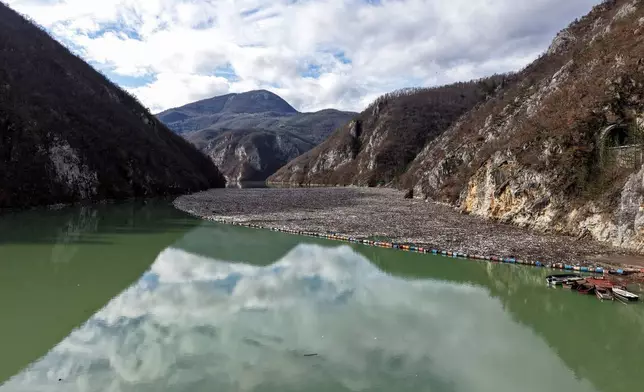
An aerial view shows tons of waste clogging the Drina river in Visegrad, Bosnia, Thursday, Feb. 5, 2026. (AP Photo/Armin Durgut)
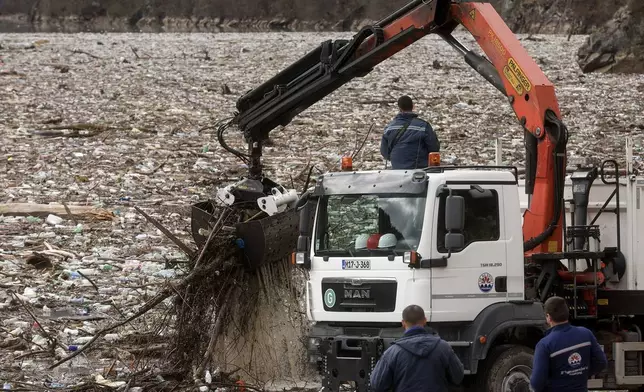
Workers use a crane to remove waste clogging the Drina river in Visegrad, Bosnia, Thursday, Feb. 5, 2026. (AP Photo/Armin Durgut)
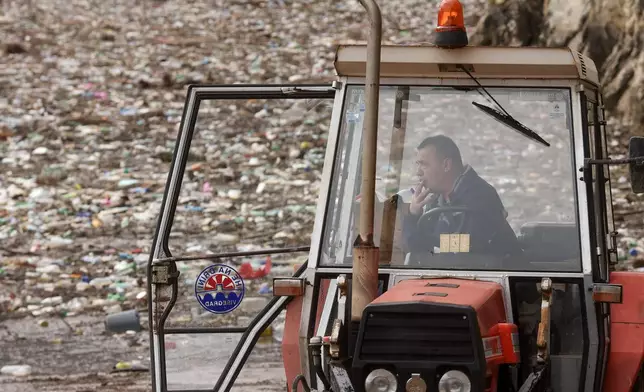
A worker takes a break, backdropped by tons of waste floating as it clogs the Drina river in Visegrad, Bosnia, Thursday, Feb. 5, 2026. (AP Photo/Armin Durgut)
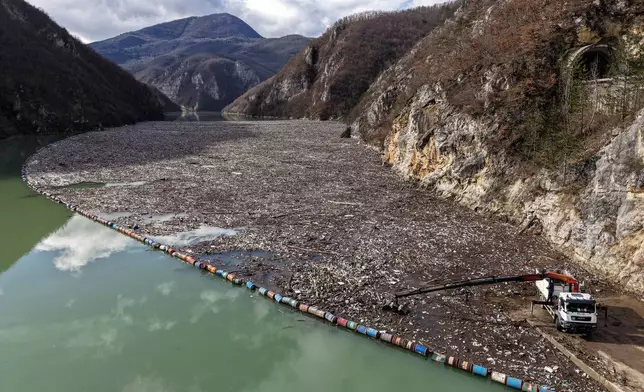
An aerial view shows tons of waste filling the Drina river in Visegrad, Bosnia, Thursday, Feb. 5, 2026. (AP Photo/Armin Durgut)
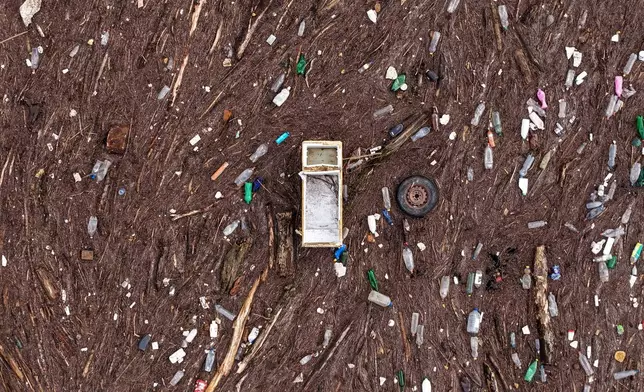
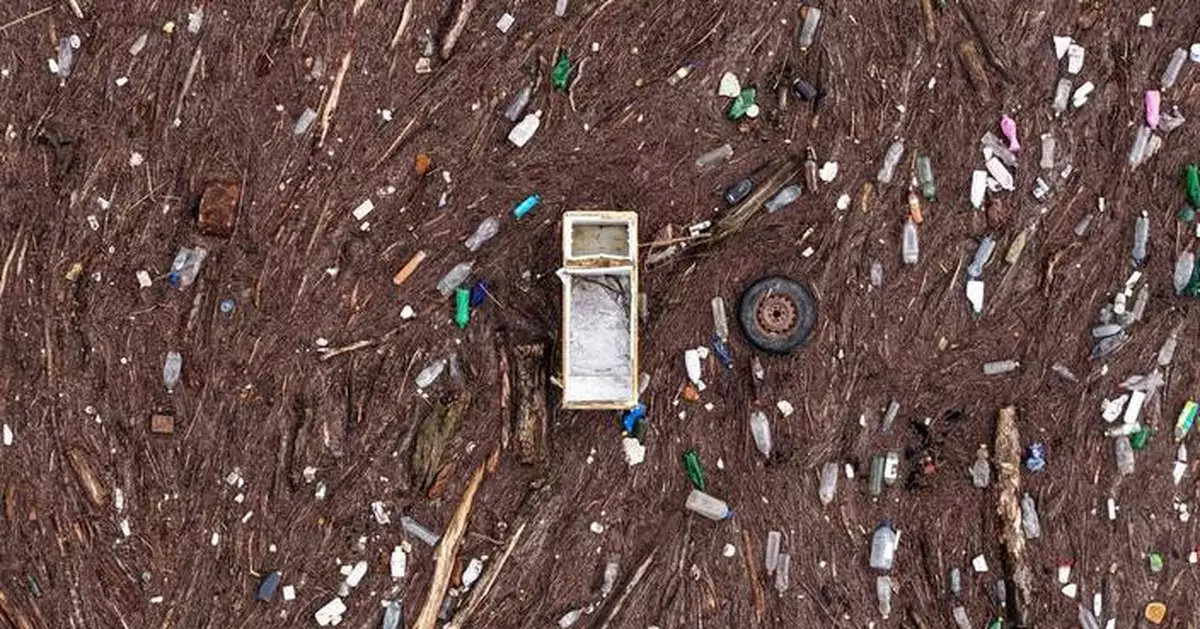
An aerial view shows a fridge and a car tire amongst other waste clogging the Drina river in Visegrad, Bosnia, Thursday, Feb. 5, 2026. (AP Photo/Armin Durgut)
“This is a clear example of the lack of political will and inactivity of all relevant institutions,” Furtula, who runs the Eko Centar environmental group, said. “They meet year after year and make promises, but as we can see these scenes repeat themselves."
The sight recalls scenes from environmental disaster movies — an otherwise emerald green surface of river thickly covered with plastic bottles, pieces of wood or furniture, rusty barrels, home appliances or even dead animals. Furtula said medical waste is also there.
“This is an ecological disaster,” he said. “The Drina is rich with fish and you can imagine the toxins that are being released here, there is virtually everything, it is a big catastrophe.”
The waste comes from illegal dump sites upstream in Bosnia but also in neighboring Serbia and Montenegro. Several smaller tributaries across the region float into the Drina, all carrying their portion of the garbage.
In summer, the rivers are popular with rafters and and nature lovers. The garbage problem culminates during winter months when swollen rivers sweep away illegal dump sites along their banks.
Officials from the three countries have pledged to work together to solve the issue. One such meeting of the environment ministers of Bosnia, Serbia and Montenegro was held at the site back in 2019 but no solution appears to be in sight years later.
The situation illustrates how decades after the devastating 1990s wars in the former Yugoslavia, the region lags behind the rest of Europe both economically and with regard to environmental protection.
In addition to river pollution, many countries in the Western Balkans have other environmental woes. One of the most pressing is the extremely high level of air pollution affecting a number of cities in the region.
Bosnia, Serbia and Montenegro all have been aiming to join the European Union. Tackling environmental protection is a key condition for the membership in the 27-nation bloc.
Furtula said there are various possibilities to deal with the garbage problem, including mapping the illegal dump sites and installing cameras and barriers in several municipalities, rather than allowing all the trash to come to Visegrad.
When pulled out, the garbage ends up at the local landfill, burning slowly and releasing toxic particles in the air, in what Furtula described as a “vicious circle” polluting his town.
“It is coming from three countries — Montenegro, Serbia and Bosnia,” he said. “But no one would admit it's theirs.”
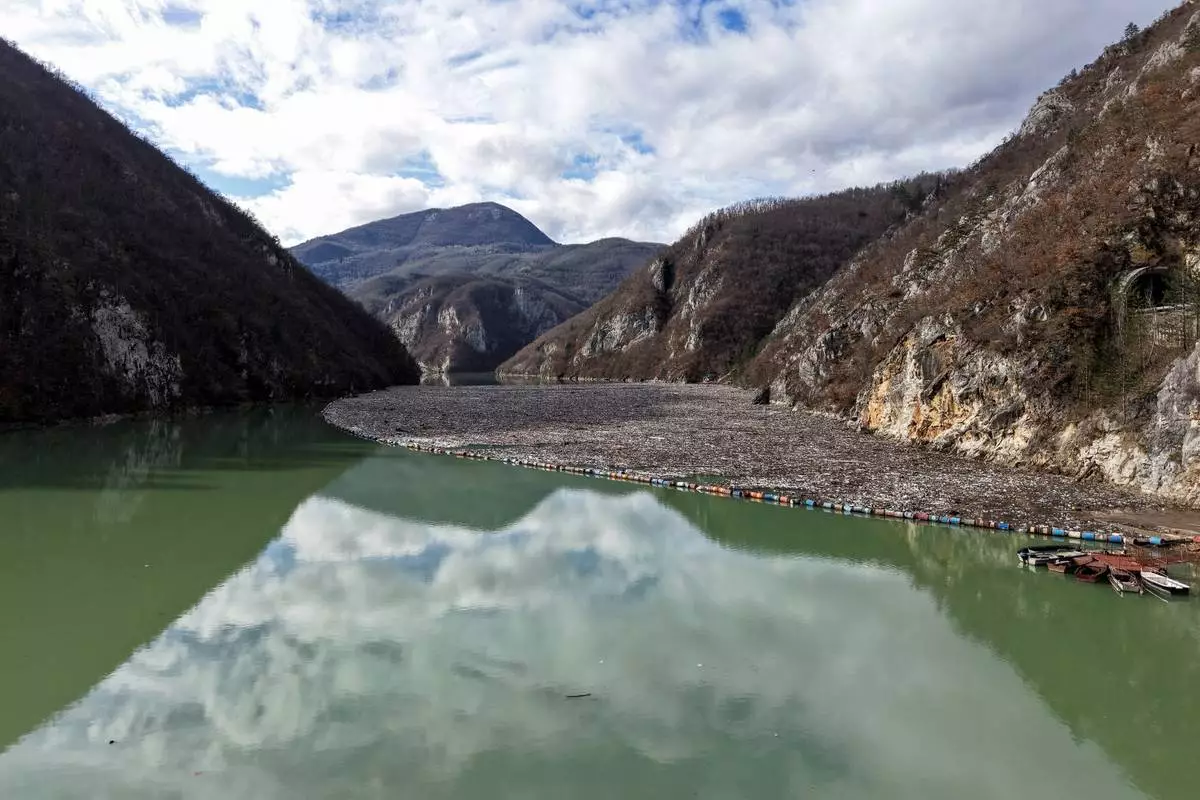
An aerial view shows tons of waste clogging the Drina river in Visegrad, Bosnia, Thursday, Feb. 5, 2026. (AP Photo/Armin Durgut)
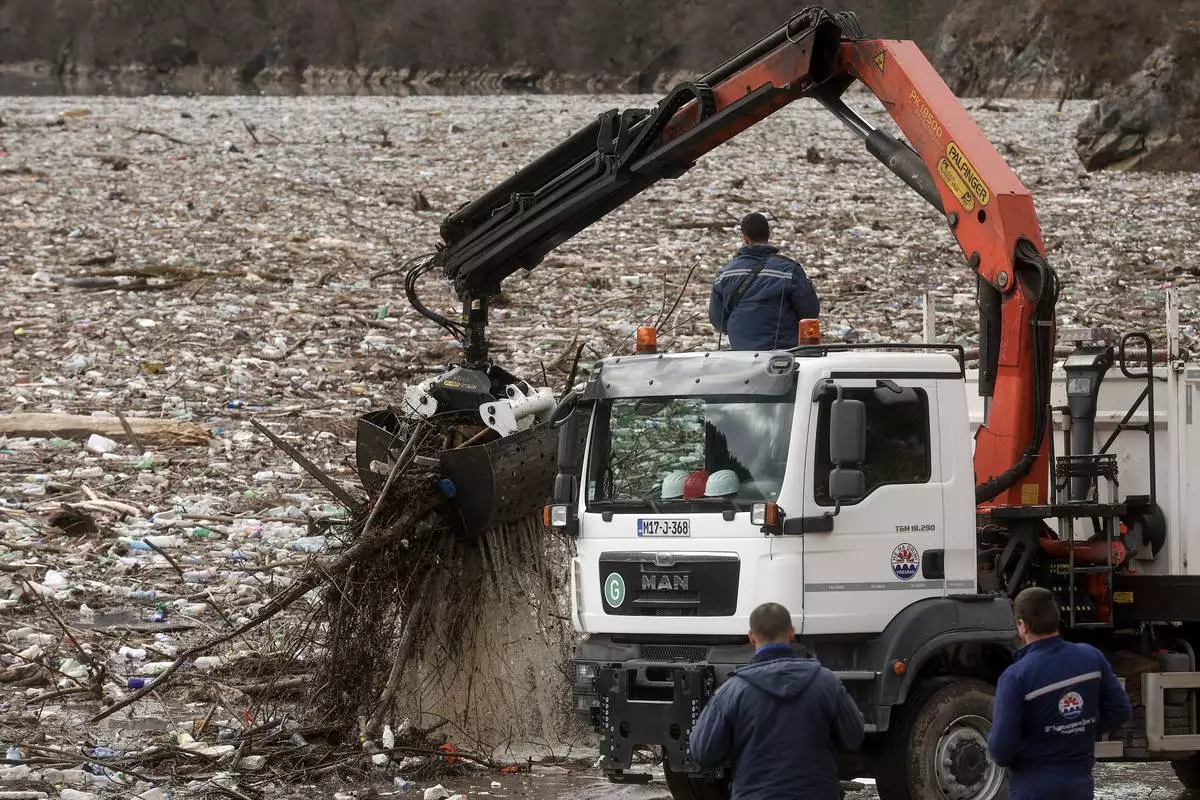
Workers use a crane to remove waste clogging the Drina river in Visegrad, Bosnia, Thursday, Feb. 5, 2026. (AP Photo/Armin Durgut)
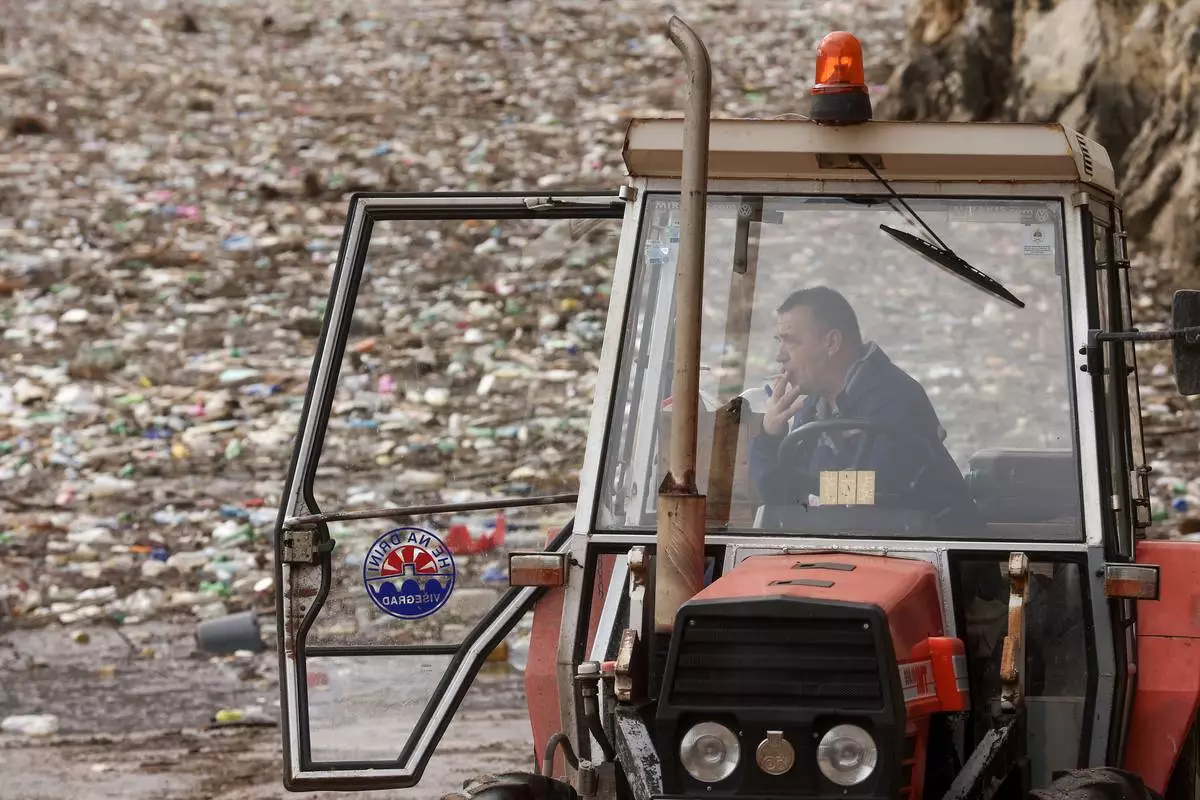
A worker takes a break, backdropped by tons of waste floating as it clogs the Drina river in Visegrad, Bosnia, Thursday, Feb. 5, 2026. (AP Photo/Armin Durgut)
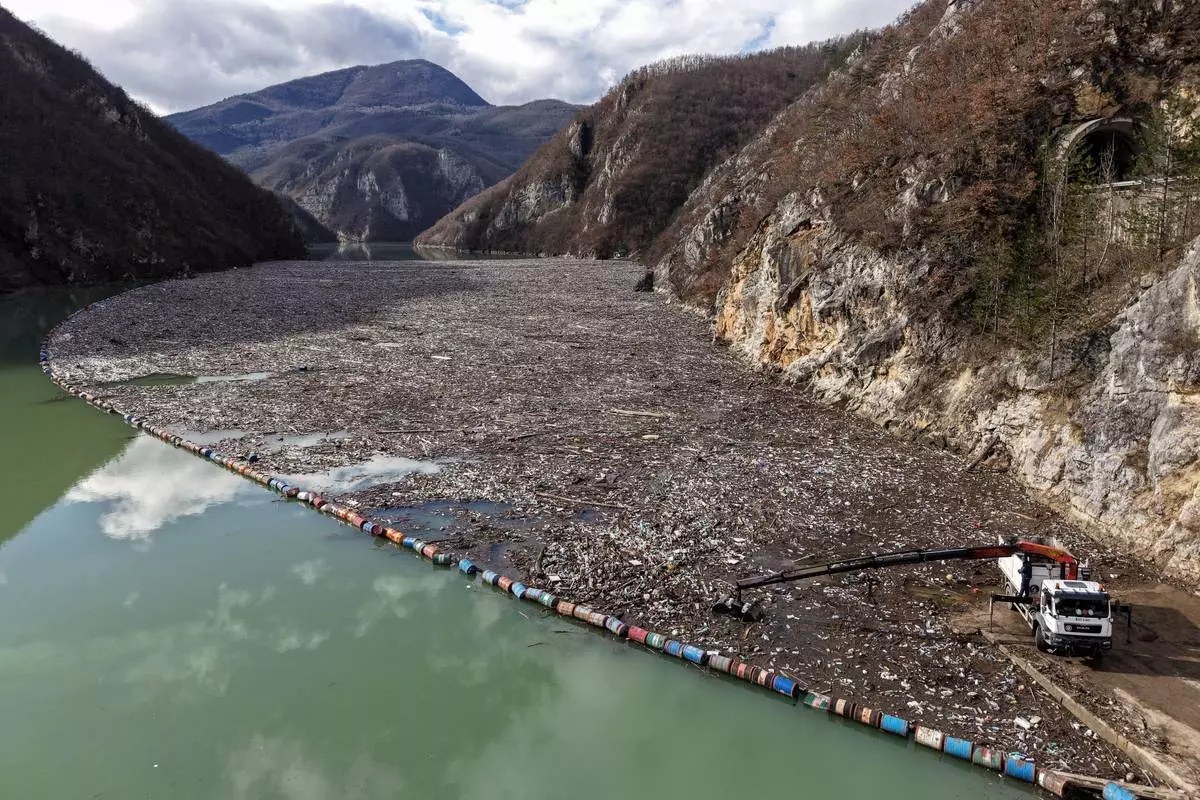
An aerial view shows tons of waste filling the Drina river in Visegrad, Bosnia, Thursday, Feb. 5, 2026. (AP Photo/Armin Durgut)
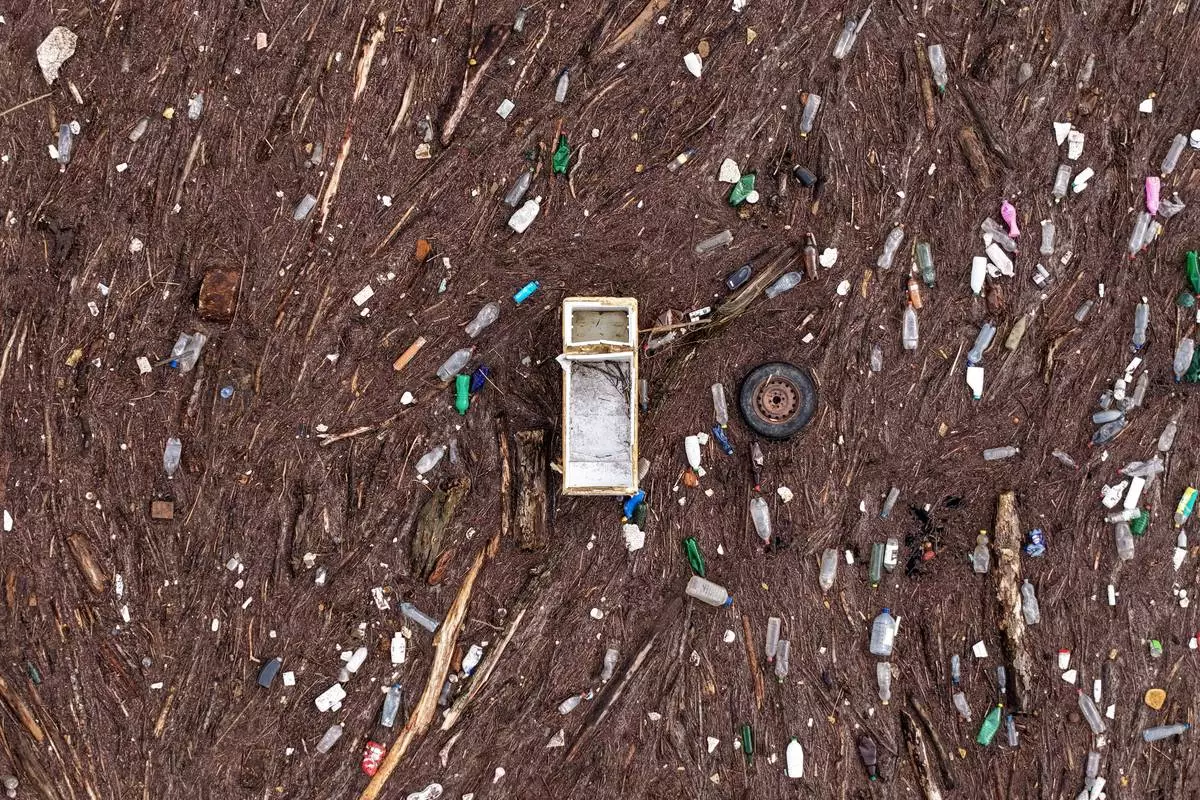
An aerial view shows a fridge and a car tire amongst other waste clogging the Drina river in Visegrad, Bosnia, Thursday, Feb. 5, 2026. (AP Photo/Armin Durgut)
Democrats are threatening to block funding for the Homeland Security Department when it expires in two weeks unless there are “dramatic changes” and “real accountability” for U.S. Immigration and Customs Enforcement and other law enforcement agencies who are carrying out President Donald Trump’s campaign of federal immigration enforcement in Minnesota and across the country.
It’s unclear if the president or enough congressional Republicans will agree to any of the Democrats’ larger demands that the officers unmask and identify themselves, obtain judicial warrants in certain cases and work with local authorities, among other asks. Republicans have already pushed back.
House GOP lawmakers are demanding that some of their own priorities be added to the Homeland Security spending bill, including legislation that would require proof of citizenship before Americans register to vote and restrictions on sanctuary cities. There’s no clear definition of sanctuary jurisdictions, but the term is generally applied to state and local governments that limit cooperation with federal immigration authorities.
Here's the latest:
Recalling a past trip to Iraq during his first term, Trump mused that he doesn’t like to sleep during long flights.
“I don’t sleep on planes. I don’t like sleeping on planes,” he told the audience at the National Prayer Breakfast.
“You know,” the president added “I like looking out the window watching for missiles and enemies, actually.”
Trump also frequently spends long flights overseas talking to advisers, posting things on his social media site and frequently heading to the press cabin to answer reporters’ questions.
He was talking about Republican U.S. Rep. Thomas Massie of Kentucky, who sometimes votes against the party.
Early in his remarks Thursday, Trump turned to the topic of legislation and said Republicans will typically rally together after some finagling — all of them, he said, except for Massie.
“No matter what we do, this moron, no matter what it is,” Trump griped.
“We’ll get a 100% vote except for this guy named Thomas Massie. There’s something wrong with him.”
Massie, a libertarian-leaning representative, has drawn the president’s ire for saying he lacked the authority to attack Iran’s nuclear sites without congressional approval, voting against Trump’s massive tax and spending cuts bill and fighting for the release of the Jeffrey Epstein files.
Addressing the National Prayer Breakfast, the president said his past suggestions that he might night make it to heaven were actually in jest.
He blamed the media for writing his exact past words about the afterlife, suggesting his sense of irony didn’t come through in the reporting.
It’s a tactic Trump often uses when comments cause a stir he wasn’t expecting, trying to soften them without hinting that he might have misspoken.
“I was just having fun,” Trump said of his past comments.
He added of heaven: “I really think I probably should make it. I mean, I’m not a perfect candidate, but I did a hell of a lot of good for perfect people.”
The Kremlin said Thursday it regretted the expiration of the last remaining nuclear arms pact between Russia and the United States that left no caps on the two largest atomic arsenals for the first time in more than a half-century.
Arms control experts say the termination of the New START Treaty could set the stage for an unconstrained nuclear arms race.
Russian President Vladimir Putin last year declared his readiness to stick to the treaty’s limits for another year if Washington followed suit, but President Trump has been noncommittal about extending it. He’s indicated he wants China to be a part of a new pact — something Beijing has rebuffed.
U.S. Secretary of State Marco Rubio said Wednesday that Trump has made clear “in order to have true arms control in the 21st century, it’s impossible to do something that doesn’t include China because of their vast and rapidly growing stockpile.”
▶ Read more
Vice President JD Vance arrived in Milan with his family Thursday, telling U.S. athletes competing in the Milan Cortina Winter Games that the competition “is one of the few things that unites the entire country.”
It’s the first stop for Vance on a trip combining diplomacy and sports. He’s leading President Donald Trump’s delegation to the 2026 Winter Olympics and later stopping in Armenia and Azerbaijan in a show of support for a peace agreement brokered by the White House last year.
Vance, who plans to watch the U.S. women’s hockey team take on Czechia in a preliminary game Thursday, told athletes the trip is a highlight of his time in office. “The whole country — Democrat, Republican, independent — we’re all rooting for you and we’re cheering for you,” Vance said.
The weeklong trip may be one of only a few international trips Vance makes this year. Trump and his Cabinet members are taking a tighter focus on domestic issues — and domestic travel — heading into the November midterm elections, White House Chief of Staff Susie Wiles said last month.
▶ Read more
The U.S. and Russia have agreed to reestablish high-level military-to-military dialogue following a meeting between senior Russian and American military officials in Abu Dhabi, the United States European Command said in a statement.
The agreement was reached following meetings in Abu Dhabi between Gen. Alexus Grynkewich, Commander of U.S. European Command -- also NATO Supreme Allied Commander Europe -- and senior Russian and Ukrainian military officials, the statement said.
Grynkewich was in the capital of the United Arab Emirates for talks between American, Russian and Ukrainian officials on ending the war in Ukraine. The channel “will provide a consistent military-to-military contact as the parties continue to work towards a lasting peace,” the statement said
High-level military communication was suspended in 2021, just before Russia’s full-scale invasion of Ukraine.
▶ Read more
President Donald Trump speaks in the Oval Office of the White House, Tuesday, Feb. 3, 2026, in Washington, before signing a spending bill that will end a partial shutdown of the federal government. (AP Photo/Alex Brandon)
President Donald Trump speaks to reporters after signing a spending bill that ends a partial shutdown of the federal government in the Oval Office of the White House, Tuesday, Feb. 3, 2026, in Washington. (AP Photo/Alex Brandon)