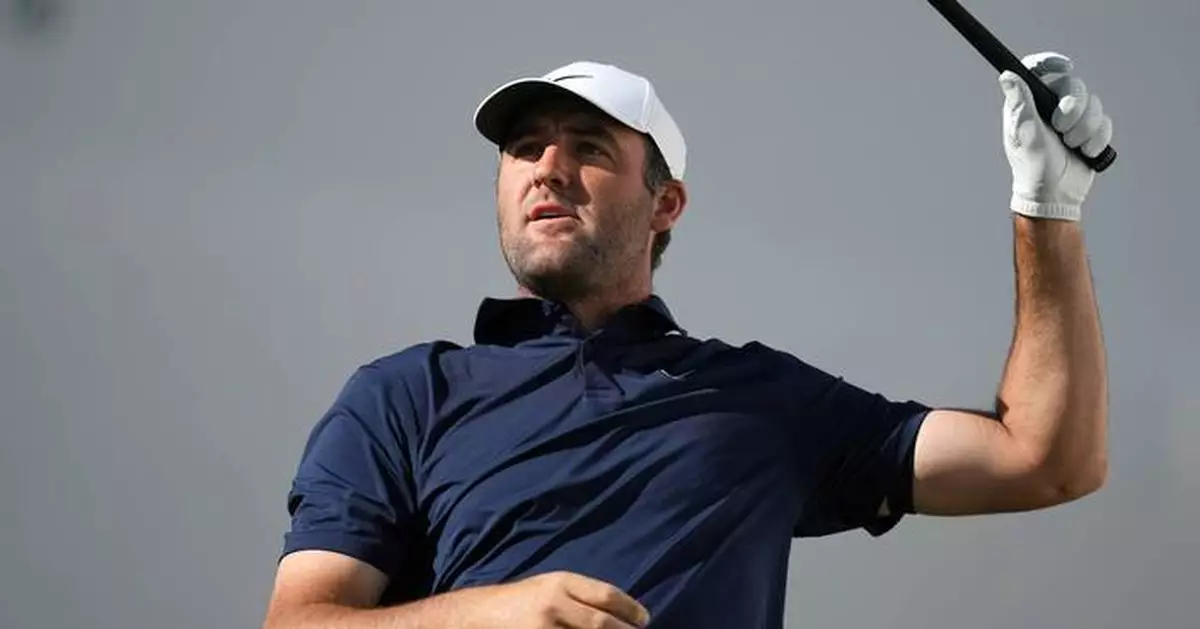
SCOTTSDALE, Ariz. (AP) — Scottie Scheffler stubbed a chip shot on the par-4 18th and showed a rare bit of anger, repeatedly tapping the shaft of his wedge against his legs as the ball rolled back to his feet.
When he did it again on No. 8, the world's No. 1 player threw his hand up in disbelief before muttering to himself as he walked off with another bogey.
Scheffler got off to a shaky start in his bid to win a third straight PGA Tour start, shooting a 2-over 73 in the first round of the Phoenix Open on Thursday.
The frustrating round left Scheffler 10 shots off Chris Gotterup's early lead and put him in danger of missing a cut for the first time in more than three years.
Scheffler closed out his 2025 season with a win in Napa, California, and opened this season by winning the The American Express in Palm Desert, California, for his 20th PGA Tour victory. He had 33 straight rounds under par.
Scheffler arrived at the Phoenix Open as the favorite to win for the third time at TPC Scottdale's Stadium course, with his consecutive wins from 2022-23.
His bid didn't go as planned, even in ideal scoring conditions.
Scheffler got off to a great start, hitting it inside three feet for a birdie on the par-4 10th. He immediately bogeyed the next hole when he couldn't get up and down, then sandwiched two birdies around a bogey at the long par-4 14th.
Scheffler added another birdie on 17 before things started to unravel.
The double chip on No. 18 led to a bogey, a three-putt on No. 1 added another and a double bogey came on No. 2 when chopped it around the 449-yard hole.
Scheffler pushed his drive into the right fairway bunker on the par-4, could only advance the ball 54 yards into the left rough and gouged his third shot short of the green. He was unable to get up and down, leading to a double bogey that pushed him to 2 over.
A birdie on No. 3 and the flubbed-chip bogey at No. 8 closed out a 3-over 38 on his second nine, putting Scheffler in need of a low round on Friday to avoid missing his first cut since the 2022 FedEx St. Jude Championship.
Scheffler headed to the range right after his round, hoping to find something that would help him continue the PGA Tour's longest-active streak of cuts made at 65.
AP golf: https://apnews.com/hub/golf

Scottie Scheffler walks to the 10th tee during the first round of the Phoenix Open golf tournament at the TPC Scottsdale Stadium Course Thursday, Feb. 5, 2026, in Scottsdale, Ariz. (AP Photo/Ross D. Franklin)
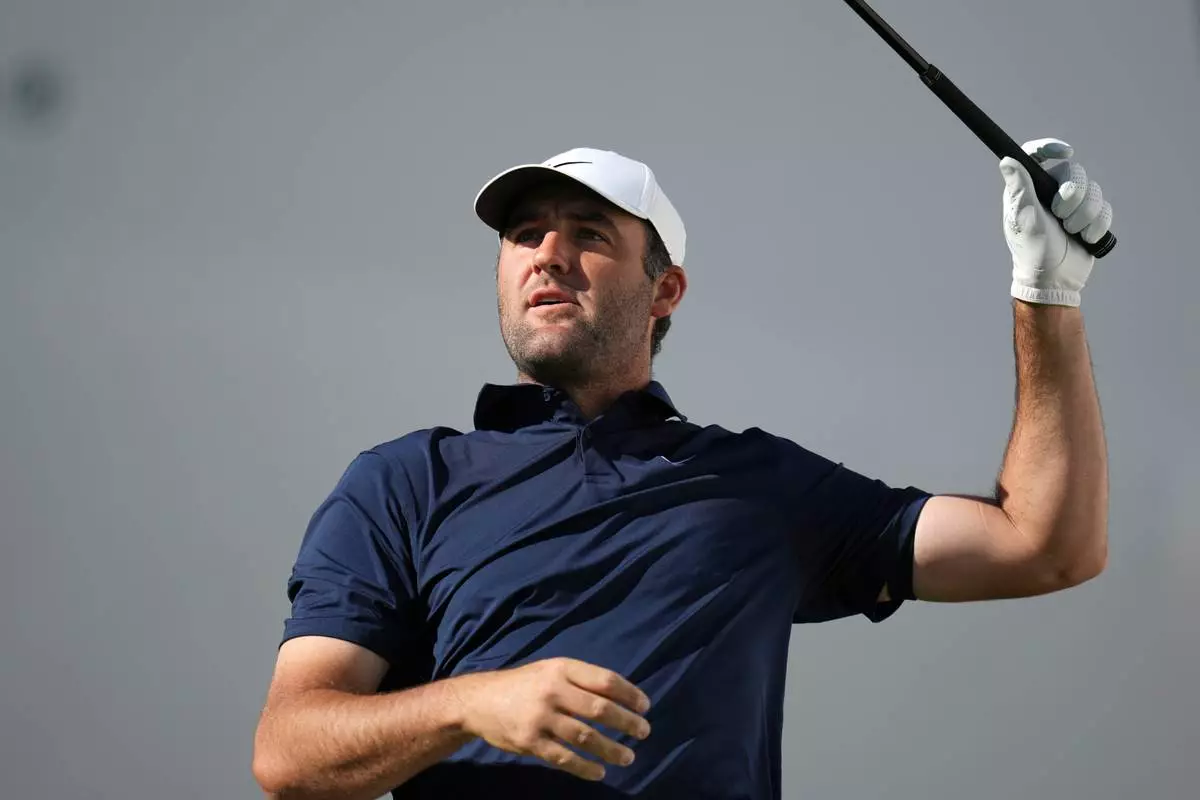
Scottie Scheffler watches his tee shot at the 17th hole during the first round of the Phoenix Open golf tournament at the TPC Scottsdale Stadium Course Thursday, Feb. 5, 2026, in Scottsdale, Ariz. (AP Photo/Ross D. Franklin)
NEW YORK (AP) — Sharp drops hit Wall Street on Thursday as technology stocks fell and bitcoin plunged again to roughly half its record price set last fall. Several discouraging reports on the U.S. job market also knocked down yields in the bond market.
The S&P 500 fell 1.2% for its sixth loss in the seven days since it set an all-time high. The Dow Jones Industrial Average dropped 592 points, or 1.2%, and the Nasdaq composite sank 1.6%.
Qualcomm fell 8.5% for one of the market’s bigger losses even though the chip company topped analysts’ expectations for profit and revenue in the latest quarter. Its forecast for profit in the current quarter fell short of analysts’ expectations as an industrywide shortage of memory pushes some handset makers to cut back on orders.
In the bond market, Treasury yields sank after a report said the number of U.S. workers applying for unemployment benefits jumped last week by more than economists expected. That could be a signal that the pace of layoffs is accelerating.
Some economists suggested last week’s rise could be statistical noise, and the total number remains relatively low compared with history. But a separate report said that layoffs announced by U.S.-based employers surged last month. The 108,435 was the highest number for a month since October, according to global outplacement and executive coaching firm Challenger, Gray & Christmas.
For a January, it’s the worst since 2009 during the Great Recession.
A third report from the U.S. government said that employers were advertising the lowest number of job openings in December in more than five years.
Weakness in the job market could push the Federal Reserve to cut interest rates to support the economy, even if it also risks worsening inflation. Treasury yields fell across the board in response.
The yield on the 10-year Treasury sank to 4.19% from 4.29% late Wednesday. That’s a notable move for the bond market.
The moves were even sharper in commodities markets.
Silver’s price dropped 9.1% in its latest wild swing since its record-breaking momentum suddenly halted last week.
Gold’s price fell 1.2% to settle at $4,889.50 per ounce. It’s been careening back and forth since roughly doubling in price over 12 months. It neared $5,600 last week and then fell below $4,500 on Monday.
Both gold and silver had been screaming higher as investors piled into places they thought would be safer amid worries about political turmoil, a U.S. stock market that critics called expensive and huge debt loads for governments worldwide. But nothing can keep rising at such extreme rates forever, and critics had been calling for a pullback.
Bitcoin, which is pitched as “digital gold,” also sank. Like gold, bitcoin produces no profits or dividends, and its price depends on what investors will pay for it. It briefly fell more than 12% below $64,000, down from its record above $124,000 set in October.
The tumbling prices dragged down stocks of companies enmeshed in the crypto industry. Coinbase Global, the crypto trading platform, fell 13.3%. Strategy, which has made a business of buying and holding bitcoin, tumbled 17.1%.
Outside of crypto, Alphabet dragged on the market and slipped 0.5%, after paring an earlier loss of 8%, even though the parent company of Google, YouTube and other businesses reported a stronger profit for the latest quarter than analysts expected. Investors focused instead on how much Alphabet is spending on artificial-intelligence technology and questioned whether it will all prove worth it.
Alphabet said its spending on equipment and other investments could double this year to roughly $180 billion. That blew past analysts’ expectations of less than $119 billion, according to FactSet.
Estee Lauder also topped Wall Street targets, and it raised some of its financial forecasts for the full fiscal year. But analysts said investors may have been expecting even more, as the company shepherds through its turnaround efforts and the punishing effects of tariffs. The New York cosmetic company’s shares fell 19.2%.
On the winning side of Wall Street were companies that stand to benefit from big spending by Alphabet and others continuing the AI frenzy. Chip company Broadcom added 0.8%
McKesson jumped 16.5% after reporting stronger profit and revenue for the latest quarter than analysts expected. The health care company also raised its forecasted range for profit this fiscal year.
All told, the S&P 500 fell 84.32 points to 6,798.40. The Dow Jones Industrial Average dropped 592.58 to 48,908.72, and the Nasdaq composite sank 363.99 to 22,540.59.
In stock markets abroad, indexes fell across much of Europe and Asia.
London’s FTSE 100 dropped 0.9% after the Bank of England held interest rates there steady. France’s CAC 40 fell 0.3%, and Germany’s DAX lost 0.5% after the European Central Bank likewise stood pat on interest rates.
South Korea’s Kospi tumbled 3.9% for one of the world’s biggest moves and dropped from its all-time high. Samsung Electronics fell 5.8%, just two days after it had surged 11.4%.
AP Business Writers Matt Ott and Elaine Kurtenbach contributed.
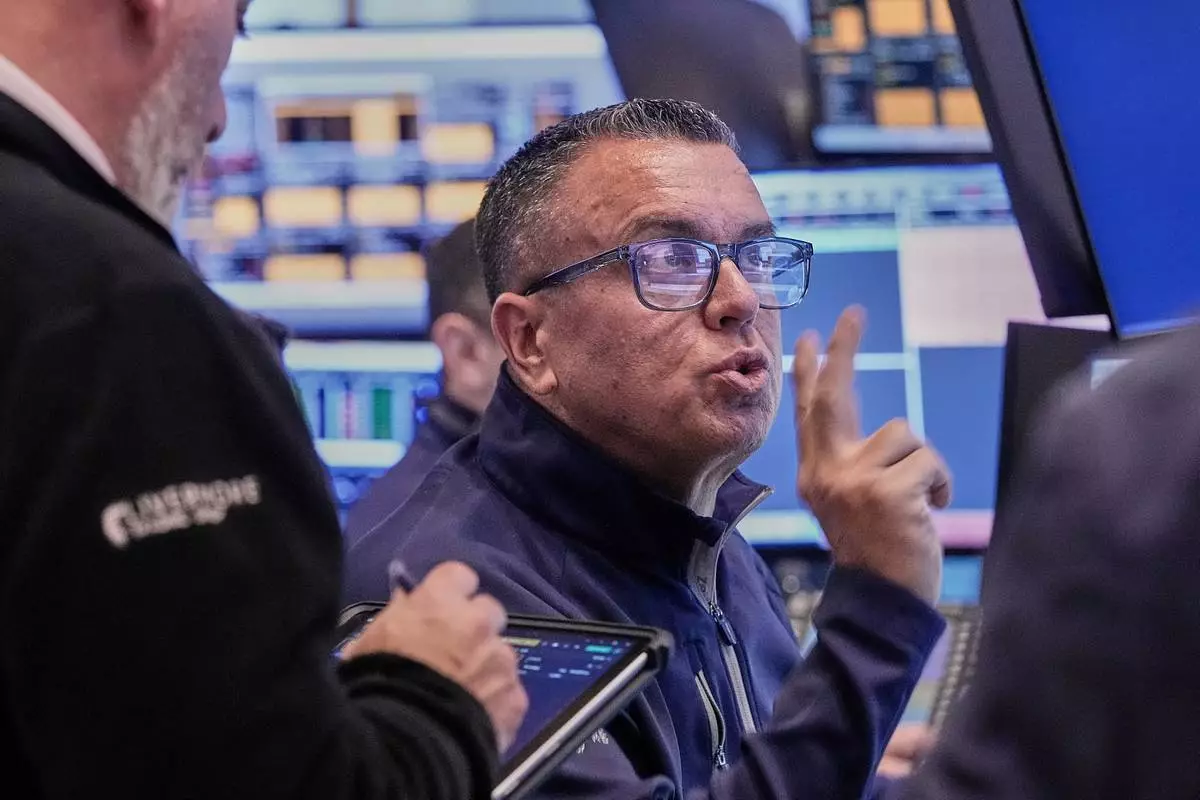
Trader Robert FInnerty Jr. works on the floor of the New York Stock Exchange, Thursday, Feb. 5, 2026. (AP Photo/Richard Drew)
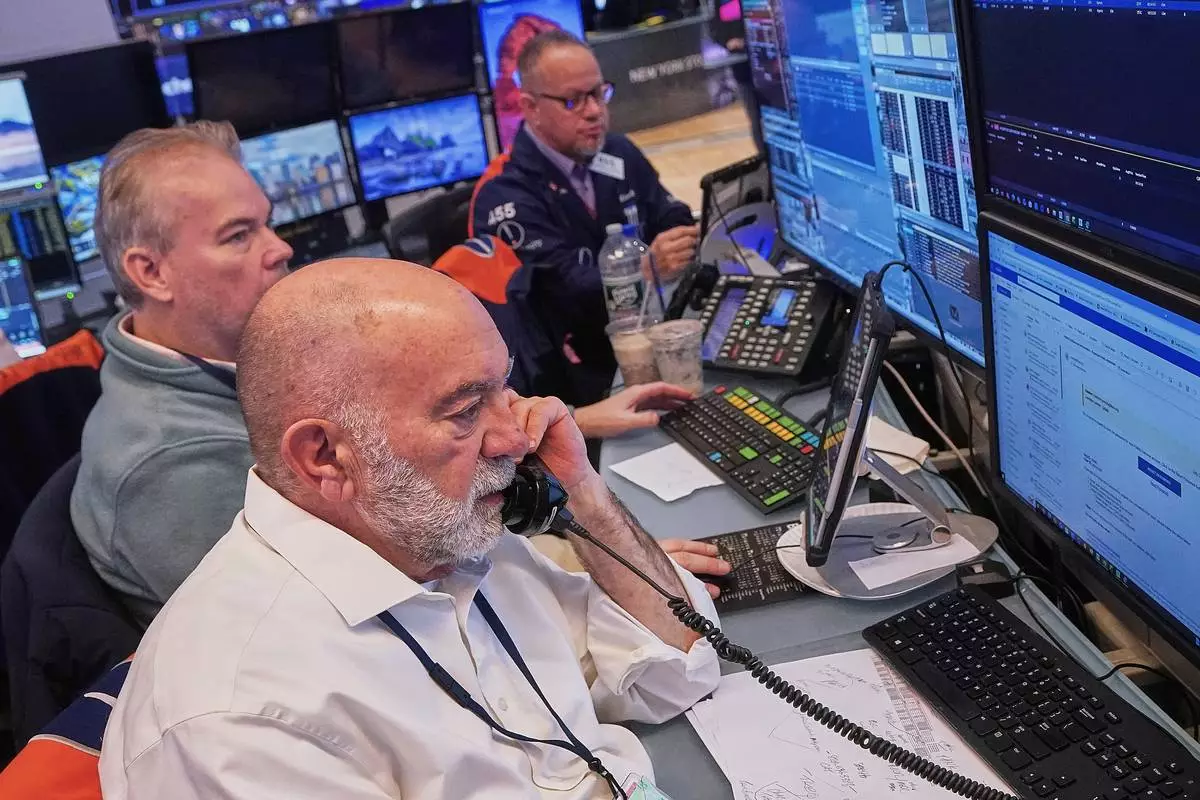
Trader Joseph Stevens, foreground, works with colleagues on the floor of the New York Stock Exchange, Tuesday, Feb. 3, 2026. (AP Photo/Richard Drew)
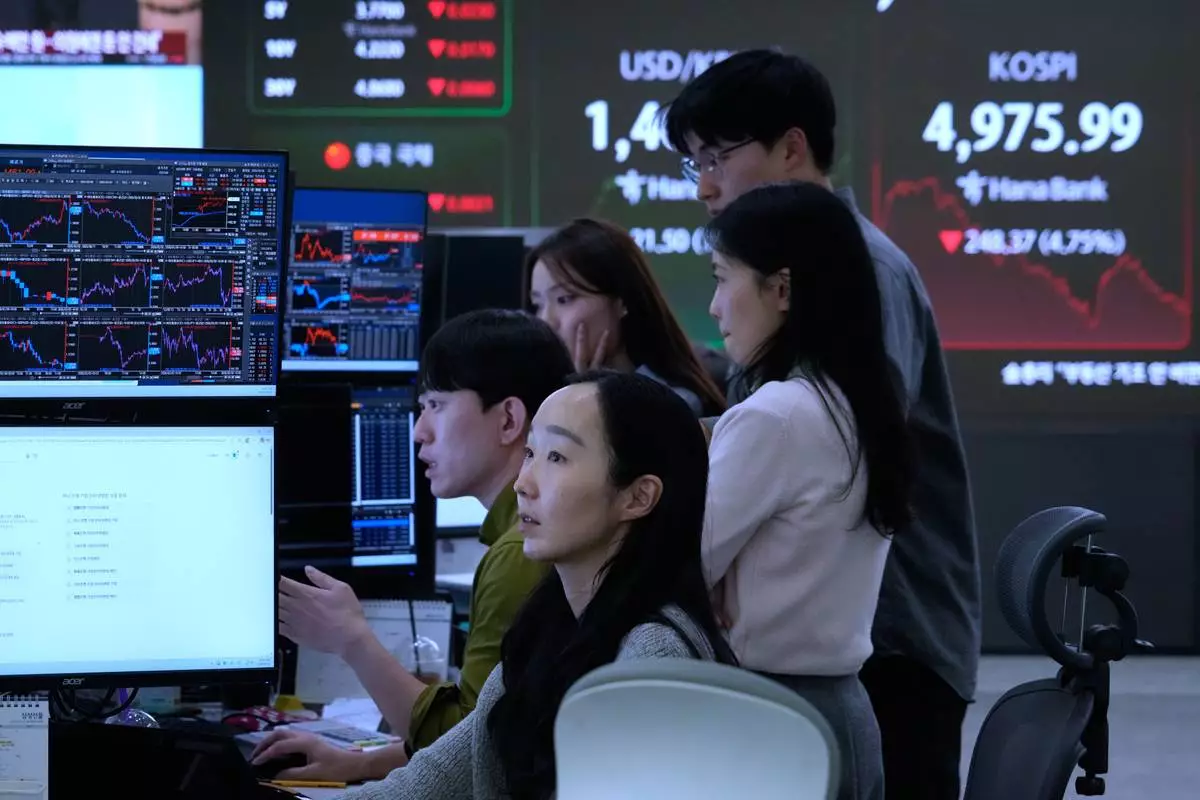
Currency traders watch monitors near a screen showing the Korea Composite Stock Price Index (KOSPI), top right, at the foreign exchange dealing room of the Hana Bank headquarters in Seoul, South Korea, Monday, Feb. 2, 2026. (AP Photo/Ahn Young-joon)
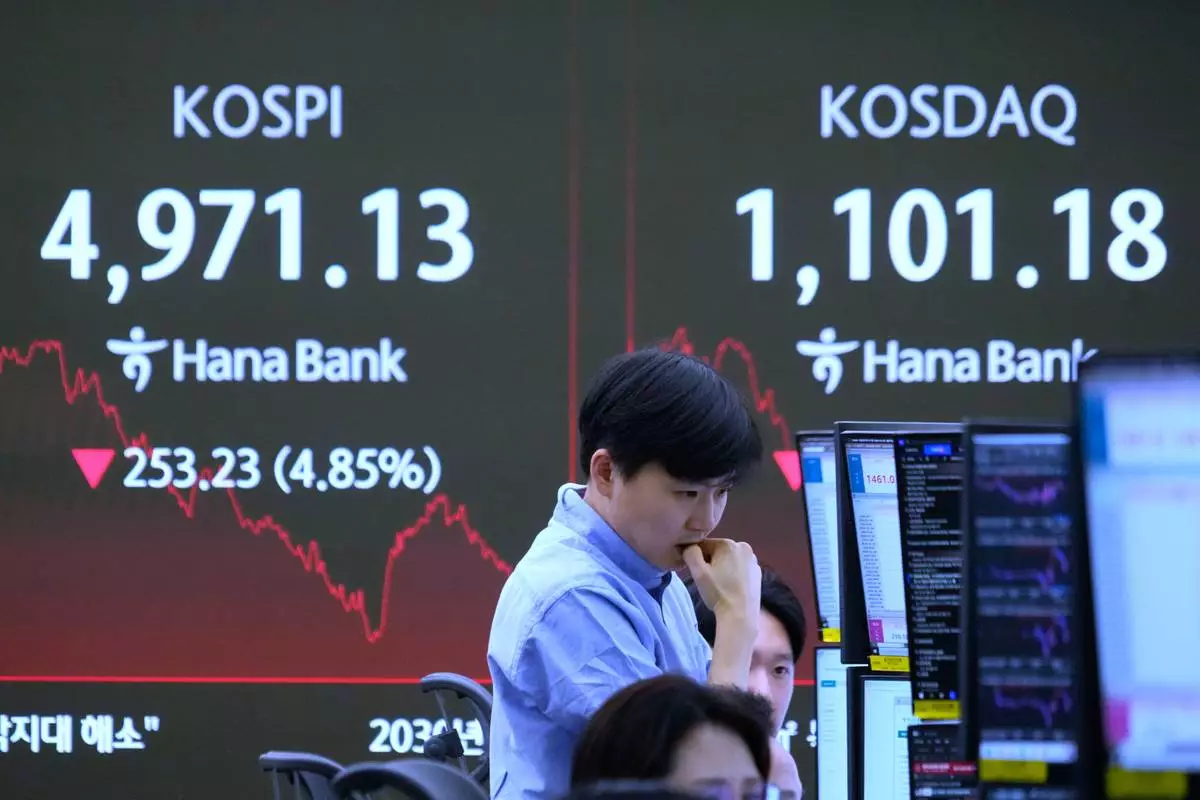
A currency traders watches monitors near a screen showing the Korea Composite Stock Price Index (KOSPI), left, at the foreign exchange dealing room of the Hana Bank headquarters in Seoul, South Korea, Monday, Feb. 2, 2026. (AP Photo/Ahn Young-joon)
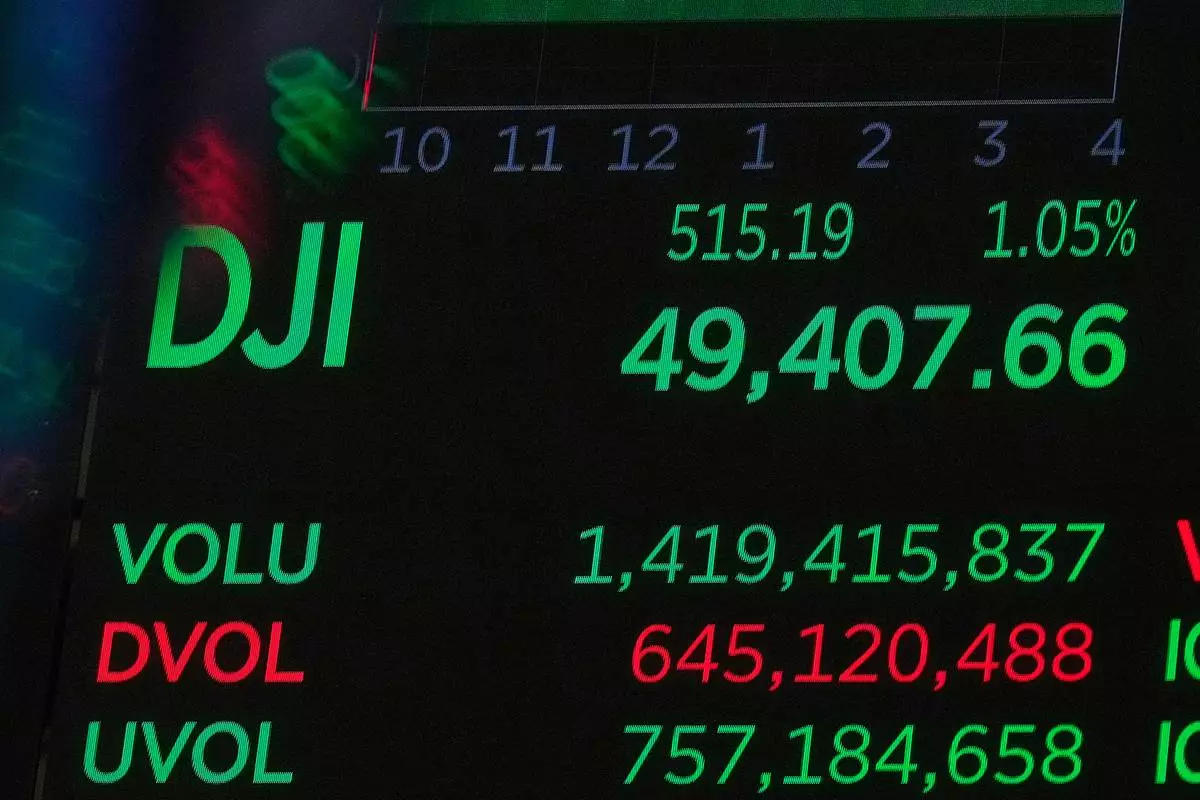
A board above the trading floor of the New York Stock Exchange displays the closing number for the Dow Jones industrial average, Monday, Feb. 2, 2026. (AP Photo/Richard Drew)
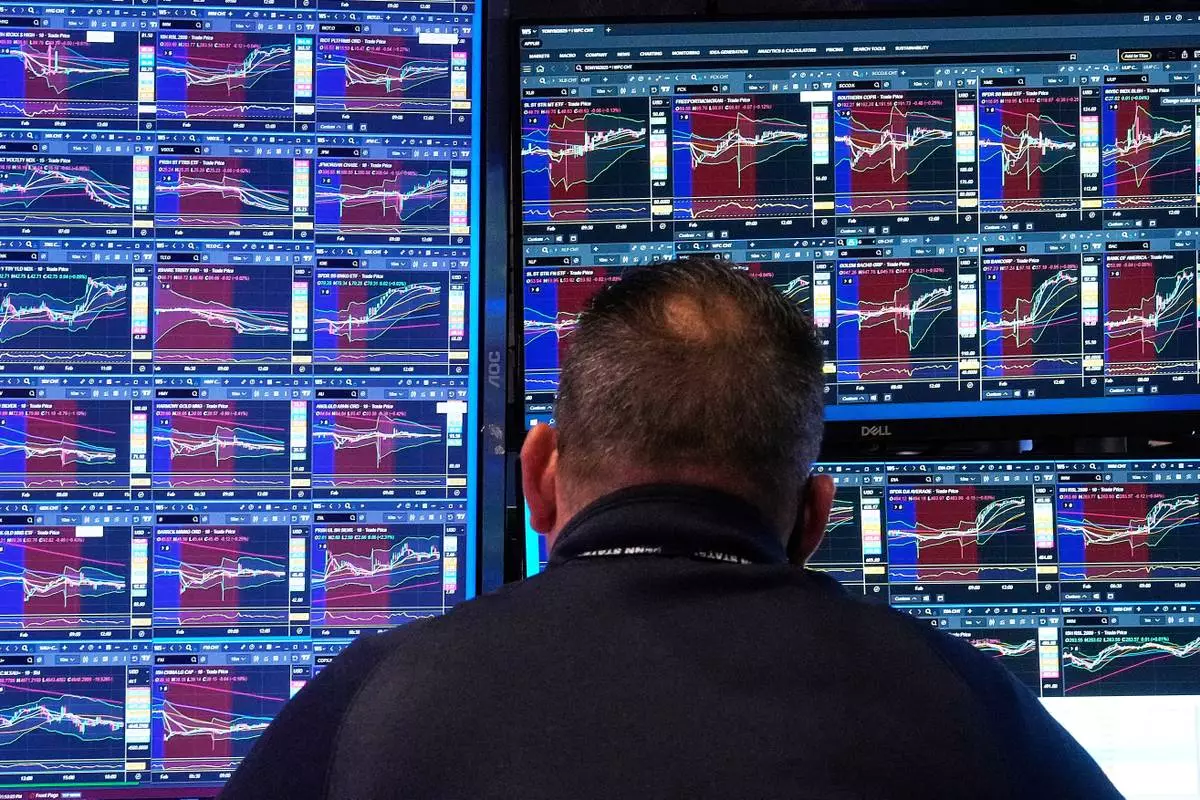
Specialist Anthony Matesic works at his post on the floor of the New York Stock Exchange, Monday, Feb. 2, 2026. (AP Photo/Richard Drew)