SAN JUAN, Puerto Rico (AP) — The U.S. government on Thursday announced an additional $6 million in aid for Cuba as the island’s crisis deepens and tensions escalate between the two countries, with Cuba's president accusing the U.S. of an “energy blockade."
The aid is largely meant for those living in Cuba’s eastern region, which Hurricane Melissa slammed into late last year. The supplies include rice, beans, pasta, cans of tuna and solar lamps that will be delivered by the Catholic Church and Caritas, said U.S. Department of State Senior Official Jeremy Lewin.
He warned that officials with the U.S. embassy in Cuba will be out in the field “making sure that the regime does not take the assistance, divert it, try to politicize it.”
The U.S. previously sent $3 million in disaster relief to Cuban people affected by Melissa.
Lewin rejected that a halt in oil shipments from Venezuela — after the U.S. attacked the South American country and arrested its then leader — is responsible for the humanitarian situation in Cuba.
He said that for years, the island has “hoarded all of the resources for the few senile old men that run the country, for their henchmen, for the security apparatus” as he accused Cuba of “meddling abroad,” including “colonizing Venezuela.”
“So that’s what they’re spending their time and attention on,” said Lewin, who noted that his mother was born in Havana.
“Why can’t they get food? It’s not because we’re not letting illicit Venezuelan oil continue to make Raúl Castro rich,” he added, referring to the former Cuban president. “It’s because the government can’t put food on the shelves. They have billions of dollars, but they don’t use it to buy food for ordinary Cubans.”
Lewin spoke hours after Cuban President Miguel Díaz-Canel held a rare, invite-only press conference in which he fielded questions from a select group of reporters. The Associated Press was not invited.
Díaz-Canel said that there was a “psychological war” against Cuba as he described a recent threat by U.S. President Donald Trump to impose tariffs on any country that sells or provides oil to Cuba as “an energy blockade.”
He said such actions affect transportation, hospitals, schools, tourism and the production of food. In addition to severe blackouts, Cuban officials note that U.S. sanctions, which increased under Trump's second term, cost the country more than $7.5 billion between March 2024 and February 2025.
“I know we are going to live through difficult times. But we will overcome them together, with creative resilience,” Díaz-Canel said in a two-hour speech in which he answered questions from a handful of reporters.
He noted that Cuba has not received oil shipments since the U.S. began its “naval blockade” on Venezuela in December.
“Therefore, we have problems with fuel availability to guarantee not only electric generation, but also basic activities,” he said.
Díaz-Canel promised that in a week, he would share details regarding the island’s current situation and how the government will confront it.
“There’s a lot of fear,” he said. “I know people say, ‘Sacrifice, again?’ Well, if we don’t sacrifice, and if we don’t resist, what are we going to do? Are we going to give up?”
Lewin said that if the Cuban government comes to its senses and is willing to allow the U.S. to provide more support, that there might be more announcements.
“They should be focused on providing for their people, not making these blustery statements,” Lewin said. “He can talk a big game, but again, any government, its first responsibility is always to provide for its people.”
In his speech, Díaz-Canel said his government is open to dialogue with the United States under certain conditions, including respect for Cuba’s sovereignty and “without addressing sensitive issues that could be perceived as interference in our internal affairs.”
“Cubans do not hate the American people,” Díaz-Canel said. “We are not a threat to the United States.”
Follow AP’s Latin America coverage at https://apnews.com/hub/latin-america
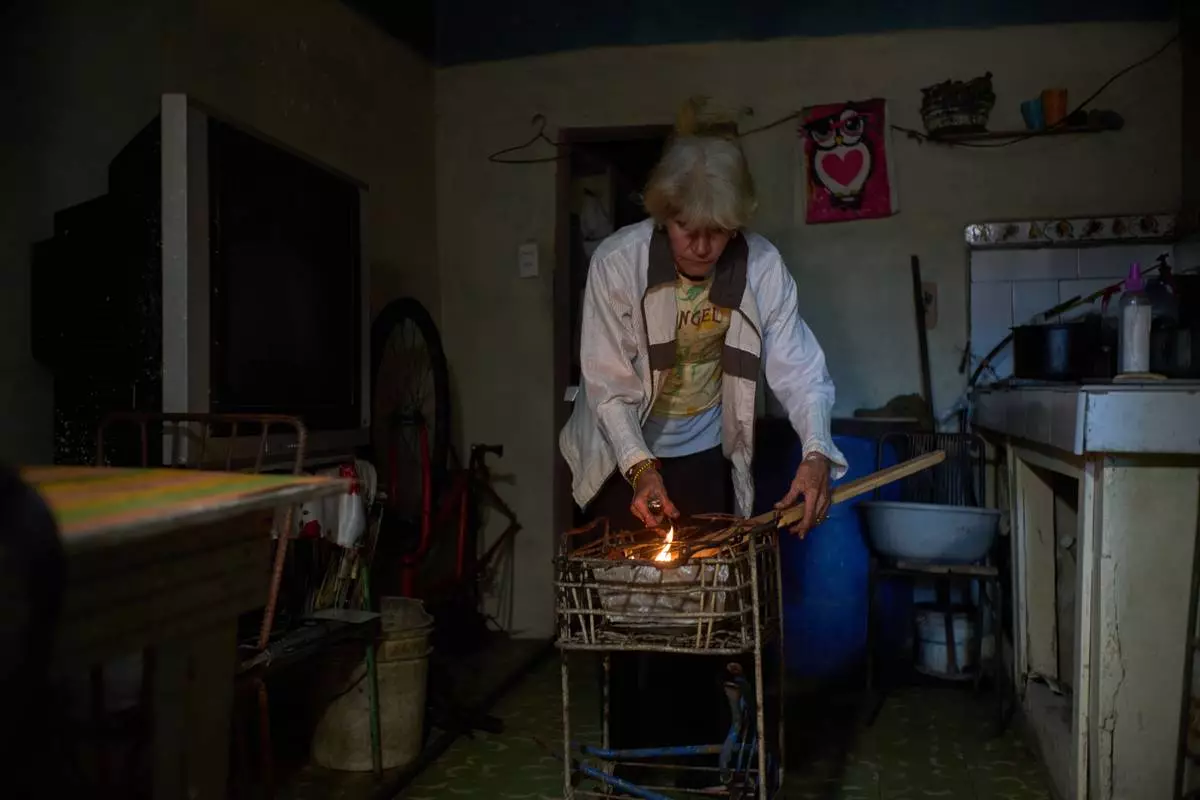
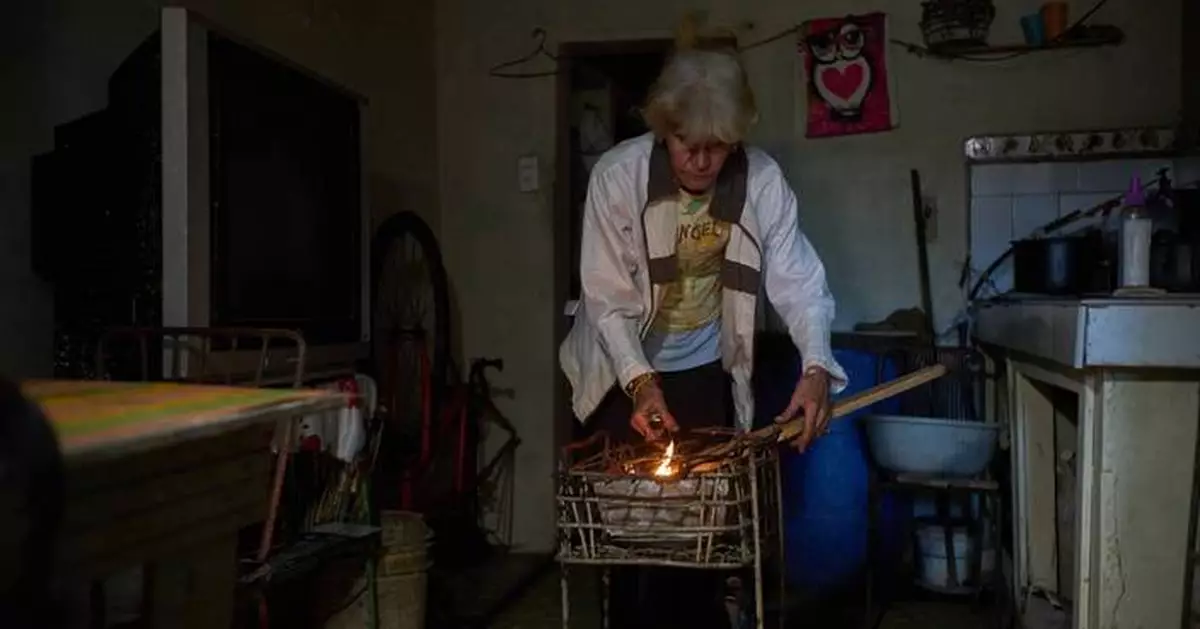
Minorkys Hoyos Ruiz lights coals to cook dinner during a scheduled blackout to ration energy in Santa Cruz del Norte, home to one of Cuba’s largest thermoelectric plants, late afternoon Tuesday, Feb. 3, 2026. (AP Photo/Ramon Espinosa)
MINNEAPOLIS (AP) — A Minneapolis man was arrested Thursday on charges of cyberstalking and threatening to kill or assault Immigration and Customs Enforcement officers involved in the crackdown in Minnesota.
Federal prosecutors said in a statement that Kyle Wagner, 37, of Minneapolis, was charged by complaint, and that a decision to seek an indictment, which is necessary to take the case to trial, would be made soon.
Court records in Detroit, Michigan, where the case was filed, did not list an attorney who could speak on Wagner's behalf. The complaint was filed on Tuesday and unsealed Thursday.
Attorney General Pamela Bondi alleged in a statement that Wagner doxed and threatened law enforcement officers, claimed an affiliation with antifa and “encouraged bloodshed in the streets.”
And at the White House on Thursday, press secretary Karoline Leavitt held up Weber’s photo at the daily briefing and said such conduct by “left-wing agitators” won’t go unpunished.
“And if people are illegally obstructing our federal law enforcement operations, if they are targeting, doxing, harassing and vilifying ICE agents, they are going to be held accountable like this individual here who, again, is a self-proclaimed member of antifa. He is a domestic terrorist, and he will be held accountable in the United States,” Leavitt told reporters.
President Donald Trump announced in September that he would designate antifa a “major terrorist organization.” Antifa, short for “anti-fascists,” is an umbrella term for far-left-leaning militant groups and is not a singular entity. It consists of groups that resist fascists and neo-Nazis, especially at demonstrations.
When Trump administration border czar Tom Homan announced Wednesday that about 700 federal officers deployed to Minnesota would be withdrawn immediately, he said a larger pullout would occur only after there’s more cooperation and protesters stop interfering with federal personnel.
According to prosecutors, Wagner repeatedly posted on Facebook and Instagram encouraging his followers to “forcibly confront, assault, impede, oppose, and resist federal officers” whom he referred to as the “gestapo” and “murderers.”
The complaint alleges Wagner posted a video last month that directly threatened ICE officers with an obscenity-laden rant. “I’ve already bled for this city, I’ve already fought for this city, this is nothing new, we’re ready this time," he said, concluding that he was “coming for” ICE.
The complaint further alleges that Wagner advocated for physical confrontation in another post, stating: “Anywhere we have an opportunity to get our hands on them, we need to put our hands on them.”
It also details how Wagner used his Instagram account to dox a person identified only as a “pro-ICE individual” by publishing a phone number, birth month and year, and address in the Detroit suburb of Oak Park, Michigan. The complaint says Wagner later admitted that he doxed the victim’s parents’ house.
Federal prosecutors didn't immediately respond to a request for comment on why the case was filed in Michigan instead of Minnesota. The alleged doxing was the only Michigan connection listed in the complaint.
The U.S. Attorney’s office in Minnesota has been hit by the resignations of several prosecutors in recent weeks amid frustrations with the surge and its handling of the shooting deaths of two people by government officers. One lawyer, who told a judge that her job “sucks,” was removed from her post.
Trump’s chief federal prosecutor for Minnesota, Dan Rosen, told a federal appeals court in a recent filing that his office is facing a “flood of new litigation” and is struggling to keep up just with immigration cases, while his division that handles civil cases is down 50%.
Rosen wrote that his office has canceled other civil enforcement work “and is operating in a reactive mode.” He also said his attorneys are “appearing daily for hearings on contempt motions. The Court is setting deadlines within hours, including weekends and holidays. Paralegals are continuously working overtime. Lawyers are continuously working overtime.”
Associated Press reporters Eric Tucker and Nathan Ellgren in Washington contributed.
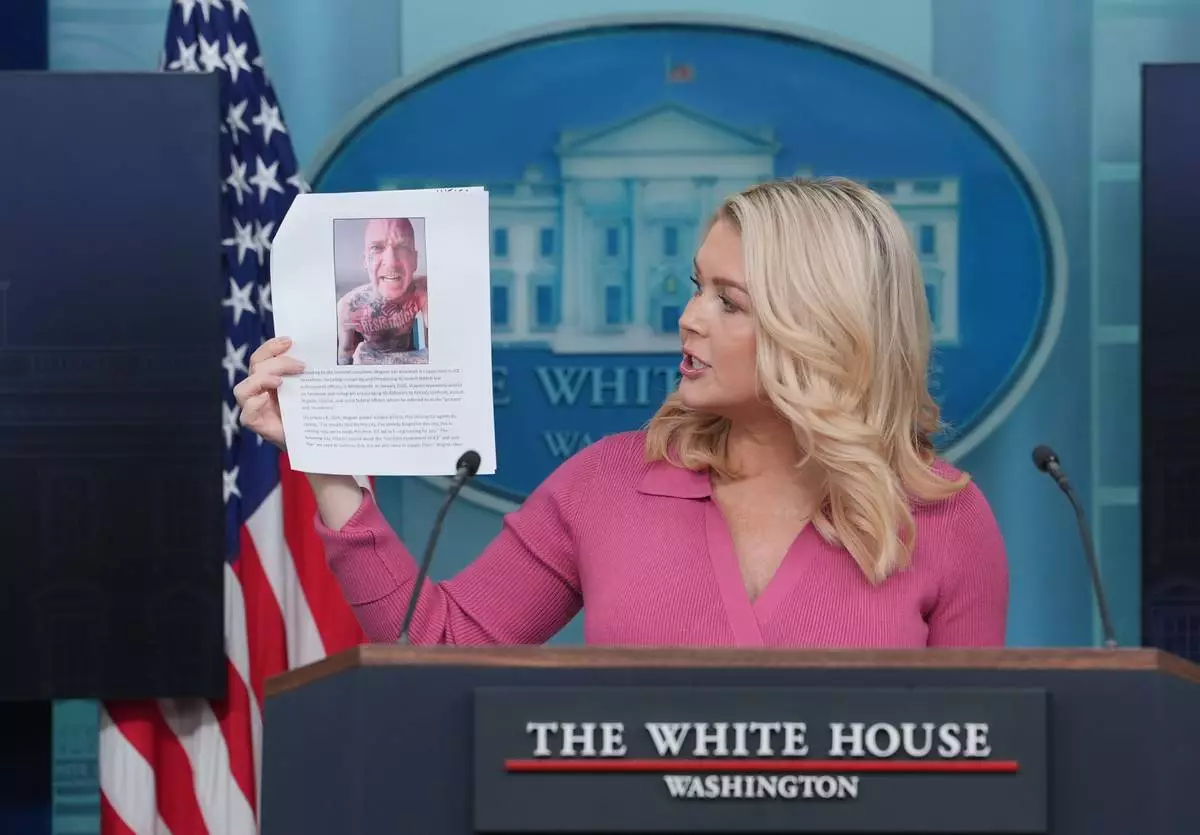
White House press secretary Karoline Leavitt holds a photo of Kyle Wagner, as she speaks during a briefing at the White House, Thursday, Feb. 5, 2026, in Washington. (AP Photo/Evan Vucci)
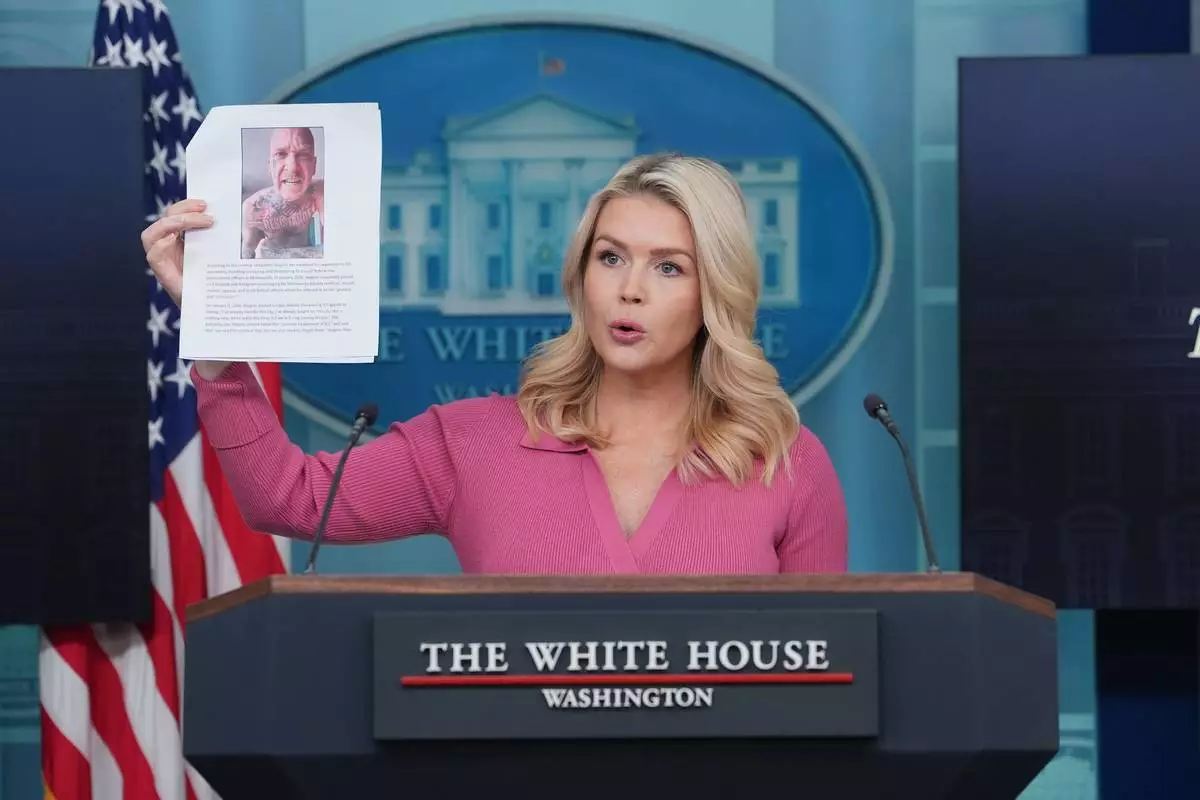
White House press secretary Karoline Leavitt holds a photo of Kyle Wagner, as she speaks during a briefing at the White House, Thursday, Feb. 5, 2026, in Washington. (AP Photo/Evan Vucci)
FILE - An FBI seal is displayed on a podium before a news conference at the field office in Portland, Ore., Thursday, Jan. 16, 2025. (AP Photo/Jenny Kane, File)