When Savannah Guthrie made a heart-wrenching plea to the kidnapper of her 84-year-old mother to send “proof of life,” she addressed the possibility of people creating deepfakes.
"We live in a world where voices and images are easily manipulated,” she said.
Before artificial intelligence tools proliferated — making it possible to realistically impersonate someone, in photos, sound and video — “proof of life” could simply mean sending a grainy image of a person who's been abducted.
That's no longer true.
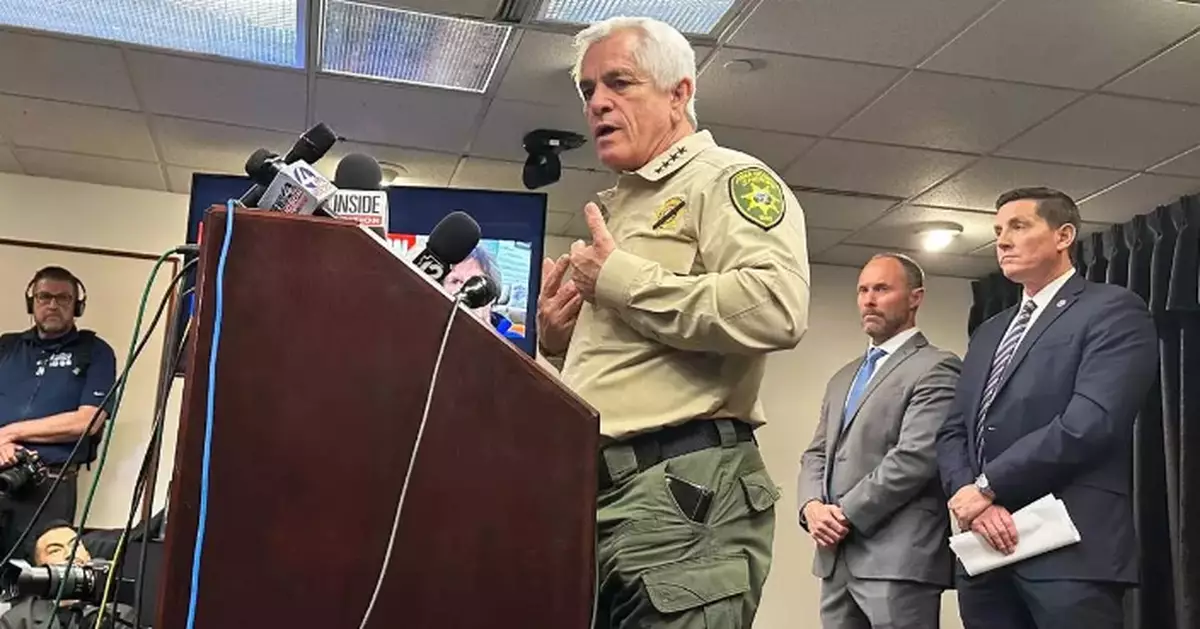
“With AI these days you can make videos that appear to be very real. So we can’t just take a video and trust that that’s proof of life because of advancements in AI," Heith Janke, the FBI chief in Phoenix, said at a news conference Thursday.
Hoaxes — whether high or low-tech — have long challenged law enforcement, especially when it comes to high-profile cases such as Nancy Guthrie’s disappearance last weekend from her home in the Tucson area.
As technology has advanced, criminals have grown savvy and used it to their benefit, confusing police and the public and masking their identities. The FBI in December warned that people posing as kidnappers can provide what appears to be a real photo or video of a loved one, along with demands for money.
Police have not said that they have received any deepfake images of Guthrie. At least three news organizations have reported receiving purported ransom notes that they have given to investigators, who said they are taking them seriously.
Investigators said they believe she’s “still out there,” but they have not identified any suspects.
Separately, a California man was charged Thursday with sending text messages to the Guthrie family seeking bitcoin after following the case on television. There's no indication that he's suspected of having a role in the disappearance, according to a court filing.
She appeared in an emotional video on Instagram Wednesday, sitting in between her sister and brother. Her voice cracked as she spoke directly to the kidnapper, saying the family is “ready to talk” and "ready to listen" but also wanted to know that their mother is alive.
Images of Nancy Guthrie, publicly shared by family, could be used to create deepfakes, said former FBI agent Katherine Schweit.
She said ransom demands over history have evolved from phone calls and handwritten notes to email, texts and other digital tools. A century ago, ransom notes were analog. For example, when the toddler son of famous aviator Charles Lindbergh was kidnapped, a piece of paper demanding $50,000 was found on a windowsill.
“Investigative techniques accumulate over time,” Schweit said. "There’s never less to do as years go by; there’s more to do. Digital and forensic work is a perfect example. It just adds to the other shoe-leather work we would have done in years past. ... Nothing can be dismissed. Everything has to be run to ground.”
Schweit said directly addressing a kidnapper, like Savannah Guthrie did in her video, is a tactical move.
“The goal is to have the family or law enforcement speak directly to the victim and the perpetrator, and ask the perpetrator: What do you need? How can we solve this? Let’s move this forward," she said.
Janke suggested to reporters that the FBI may have had some influence on Guthrie's decision to release a video message.
“We have an expertise when it comes to kidnappings, and when families want advice, consultation, expertise, we will provide that,” he said. "But the ultimate decisions — on what they say and how they put that out — rests with the family itself.”
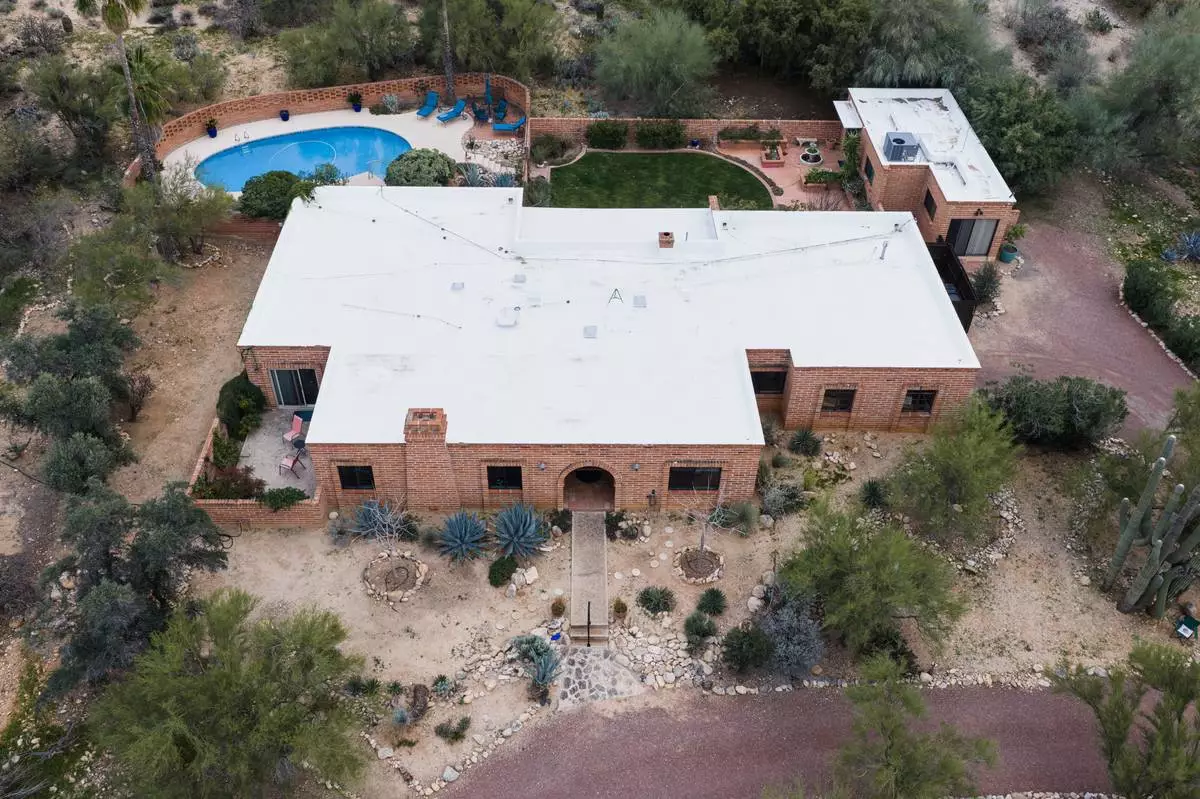
The home of Nancy Guthrie, the missing mother of “Today” show host Savannah Guthrie, is seen from above, Thursday, Feb. 5, 2026, in Tucson, Ariz. (AP Photo/Caitlin O'Hara)
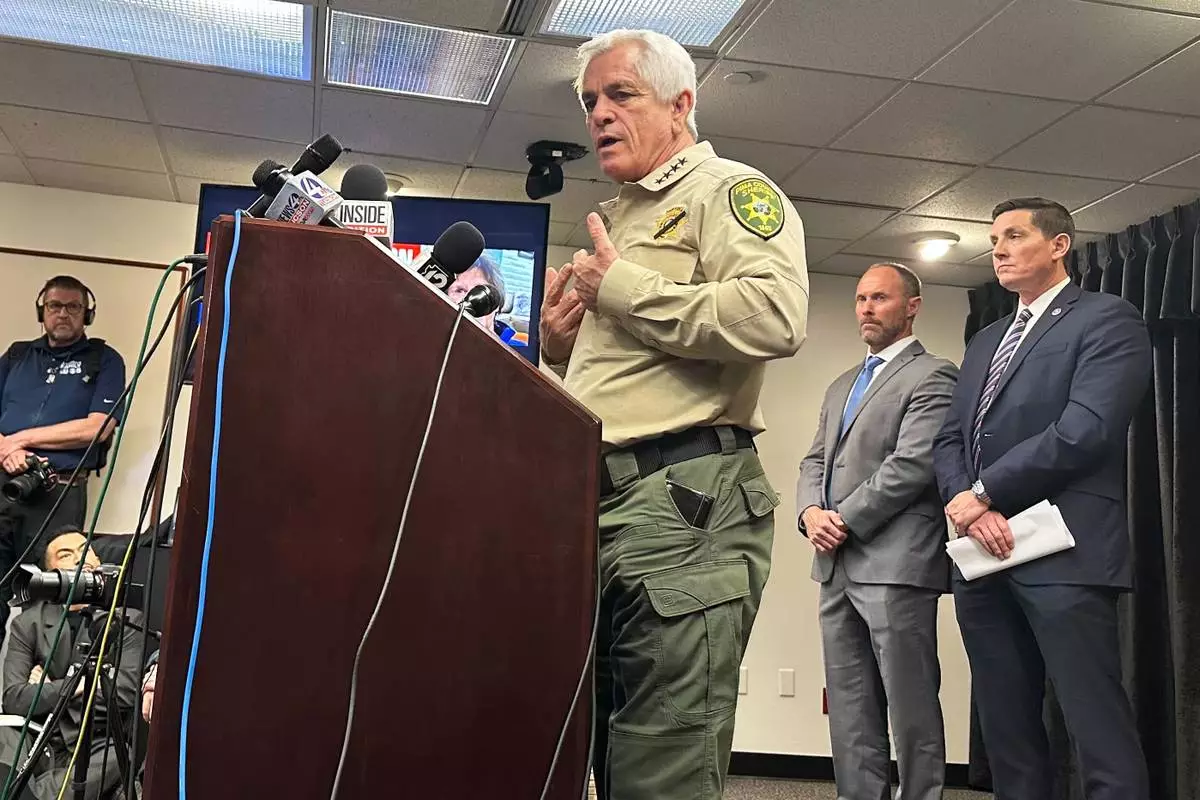
Pima County Sheriff Chris Nanos updates media on the disappearance of Nancy Guthrie, the 84-year-old mother of "Today" host Savannah Guthrie, in Tucson, Ariz., on Thursday, Feb. 5, 2026. (AP Photo/Sejal Govindarao)
NEW YORK (AP) — The Iran war is making life more difficult for small business owners across the country, who are grappling with shipping complications, higher costs and consumers tightening their grip on their wallets.
A shoe designer is struggling to import its shoes from Vietnam; a pistachio grower has millions of dollars worth of pistachio exports sitting in the water; a home landscaper in Kansas City is stockpiling fertilizer as prices skyrocket; and a Chicago electronics store owner is facing pain at the pump.
Small business owners say the severe supply chain disruptions during the pandemic were worse — but they fear that if the war stretches on for months, it might start to come close.
“The costs are rising, the routes are changing, and capacity is tightening. It’s all happening at the same time, and that’s a perfect storm for small businesses," said Brandon Fried, executive director of the Airforwarders Association, a trade group for U.S companies that move cargo through the supply chain on all modes of transport.
The U.S. is the largest exporter of pistachios, followed by Iran, according to the U.S. Department of Agriculture.
At Nichols Farms, in Hanford, California, a fourth-generation owned pistachio grower and processor, chief operating officer Jared Lorraine said exports make up about 50% of business. They ship to Europe, China and increasingly, the Middle East.
The effective closure of the Strait of Hormuz has made it impossible to deliver pistachios to several clients. When the war started, he estimates about $5 million worth of pistachios left stranded in the water, unable to be delivered to customers in Saudi Arabia, Iran and the United Arab Emirates.
“While much of the public attention has been focused on oil, which is significant, really, the destruction of the food system is I think equally as serious,” he said, adding 70% to 80% of food in the Middle East is imported.
When the U.S. bombed Iran on Feb. 28, Nichols Farms had about $5 million pistachios on ships that got stranded, Lorraine said. They managed to reroute some of the pistachios: one batch was offloaded in Jeddah, in Saudi Arabia, to be trucked to the UAE. Another two loads were able to make it into a port in Oman after being reloaded into a smaller container in India that could make it into that port. But $3.5 million still sits on the water.
"A lot of it has just been in limbo," Lorraine said. "It’s literally been sitting idle for the last three weeks and we’re just saying, OK, what do we do?”
Matthew Tran is the founder of Birchbury, a footwear brand based in Los Angeles that makes minimalist — also known as “barefoot” -- shoes. The company makes the shoes in Vietnam and ships to customers across the U.S., U.K., Australia and Canada.
Typically, Tran pays about $3,500 per container shipped out of Vietnam. But that's doubled since the war started to about $7,000 as shippers deal with rerouting and higher insurance costs. The lead time for shipping has increased by three to four weeks, too.
“It’s kind of like a traffic jam,” he said about the shipping time. “So even though it doesn’t seem like it would directly affect me because I’m going from Vietnam to America, it does affect me when there’s more congestion.”
He said supply chain disruption was worse during COVID, when everything came to a standstill. But he's worried about how long the war will last.
"They always say the wars are going to be short, but they’re never short," he said. He worries about customers having less money for discretionary spending since gas prices have surged.
“Customers don’t understand, but also their gas prices just went up, too, right?,” he said. “People just don’t want to spend money at the end of the day because they’re like, ‘Oh man, gas is up a lot.’ Buying another new pair of shoes is secondary to being able to go places with your car.”
Across the country, Jake Wilson owns Top Class Lawn Care in Kansas City, Missouri, taking care of nearly 400 lawns across the city. The closure of the Strait of Hormuz has upended the fertilizer business, since the Middle East supplies close to 30% of global exports of major fertilizers, according to the International Fertilizer Association.
Wilson started his business in 2011 and he's built strong relationships with his suppliers. A day or two after the Iran war started, two suppliers emailed him and told him to expect a spike in prices soon and suggested he make orders ahead of price increases.
Rising prices are a concern since about 70% of his customers lock in a price for a year of lawn care and prepay at the beginning of the year.
The last thing he wants to do, he said, is go back to customers in the middle of the year and say the price of fertilizer increased so he has to ask for more money.
“It’s kind of on me to try to get out ahead of it, the best I can, so I could still try to be profitable while keeping prices where I quoted at the beginning of the year,” he said.
He usually buys fertilizer four times a year, two or three months ahead of the time when he plans to use it, but he's currently trying to secure fertilizer all the way through the fall season and into the end of the year, effectively doubling his normal order.
“I don’t want to wait till summer and go to my supplier and they either say, well, we don’t have any product available or what we do have is now 60%, 70% more expensive than what it was quoted in early spring, or first of the year,” he said.
Higher gas prices have an electronics store executive considering ending free shipping.
Abt Electronics in Chicago uses on average 25,000 gallons of diesel fuel and 30,000 gallons of gas fuel each month to run more than 650 delivery vans and trucks, according to Jon Abt, co-president of the retailer.
So with gas prices surging, Abt said he’s concerned. Free shipping and free delivery with a minimum order of $35 is a perk that he wants to keep.
“It’s an eye-opening expense, ” Abt said. “It will affect the cost of making deliveries. This will also hit the shipping companies we use for out-of-state deliveries,”
Abt said he hasn’t received the fuel bill for March yet, but for now, he will absorb the cost and see how the market plays out and what competitors do.
He added, “We like delivering things for free, and I think customers expect it."
AP Business Writer Anne D'Innocenzio in New York contributed to this report
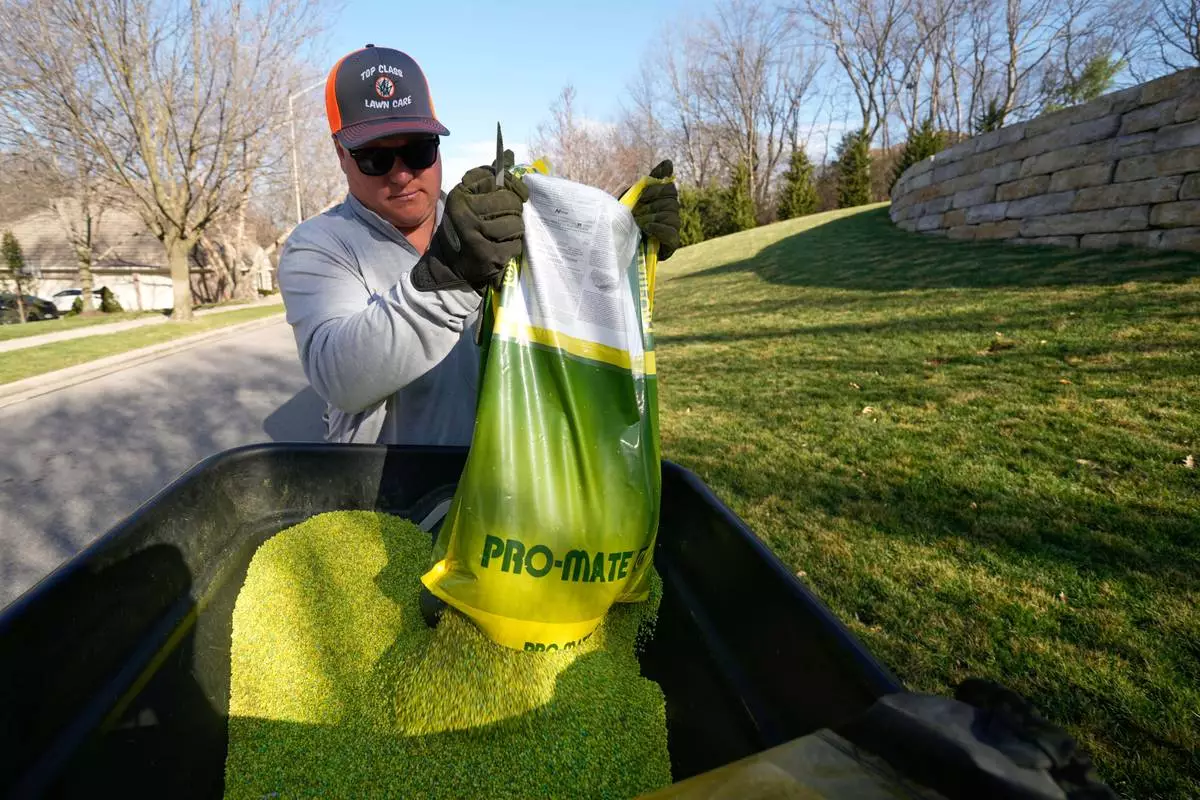
Top Class Lawn Care owner Jake Wilson dumps fertilizer into a hopper before applying it to a lawn Thursday, March 26, 2026, in Kansas City, Mo. (AP Photo/Charlie Riedel)
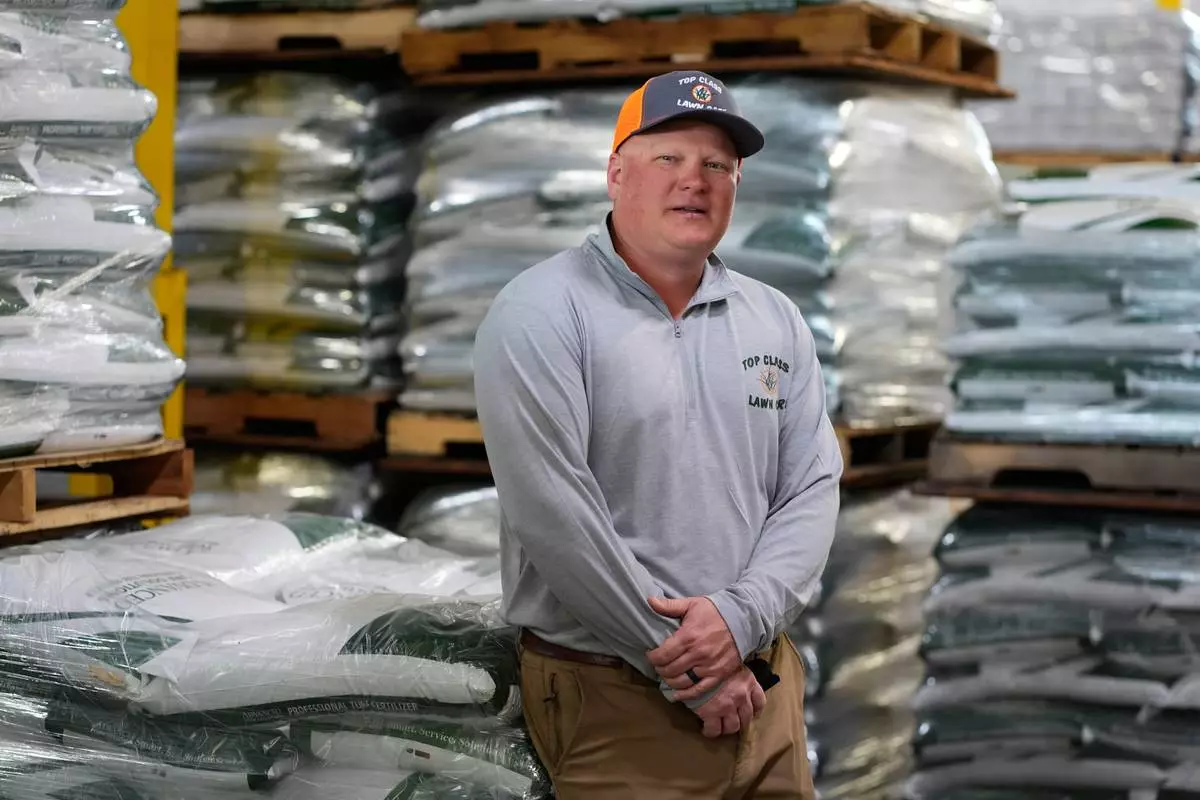
Top Class Lawn Care owner Jake Wilson stands by fertilizer he stockpiled at his supplier's warehouse in anticipation of Iran war related price hikes Thursday, March 26, 2026, in Riverside, Mo. (AP Photo/Charlie Riedel)
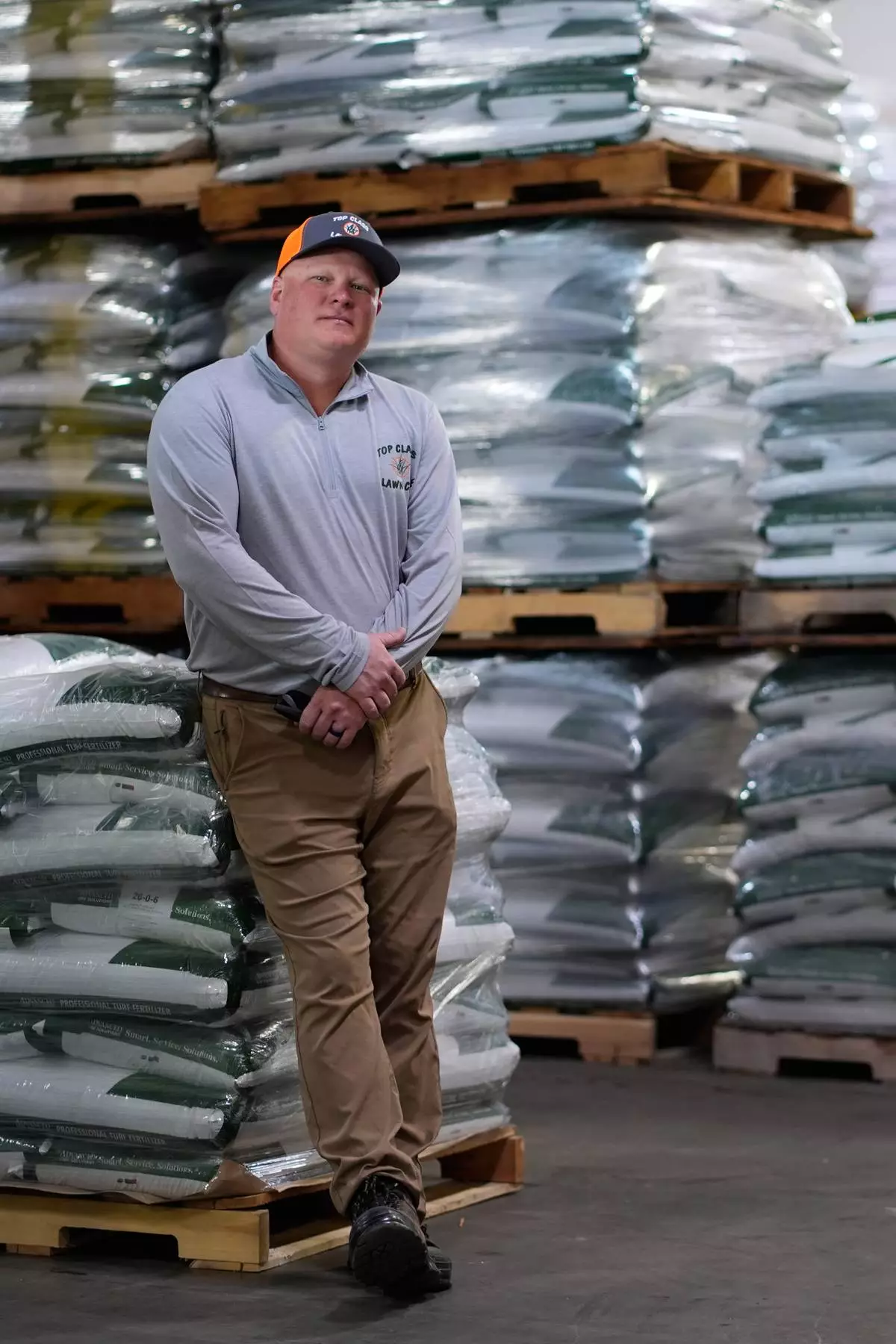
Top Class Lawn Care owner Jake Wilson stands by fertilizer he stockpiled at his supplier's warehouse in anticipation of Iran war related price hikes Thursday, March 26, 2026, in Riverside, Mo. (AP Photo/Charlie Riedel)
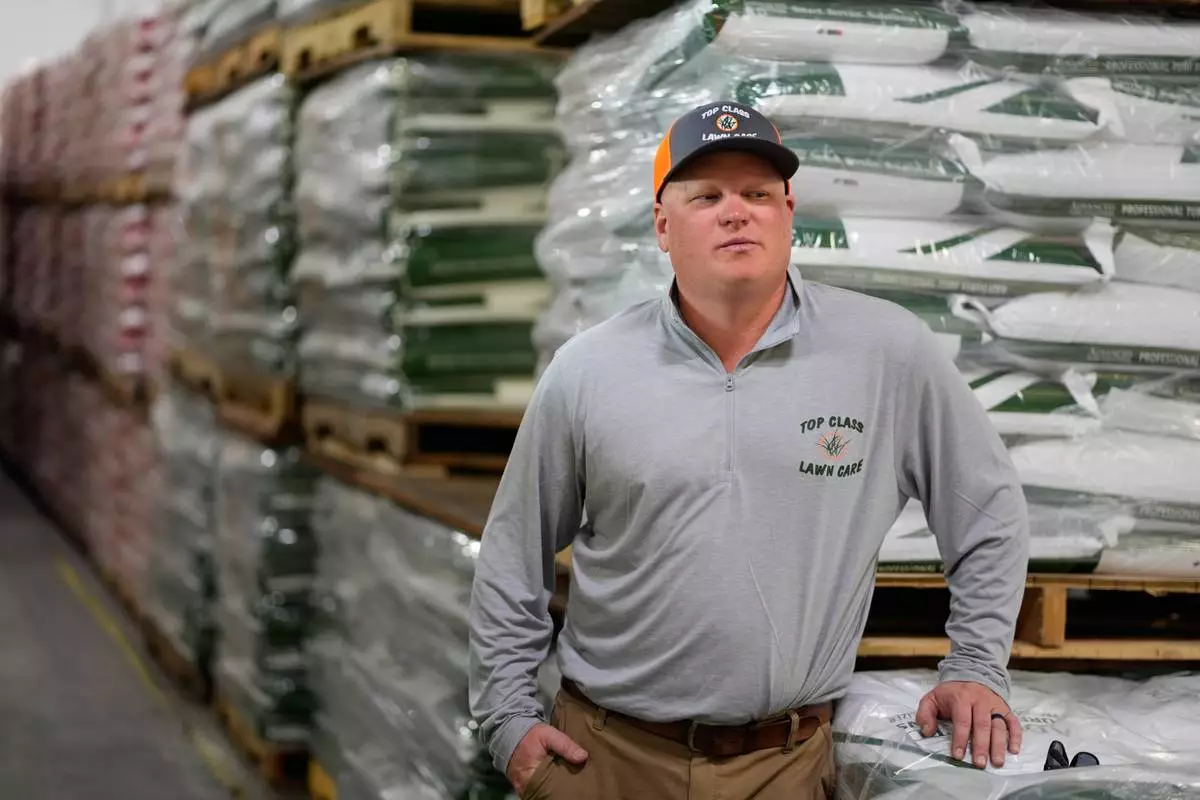
Top Class Lawn Care owner Jake Wilson stands by fertilizer he stockpiled at his supplier's warehouse in anticipation of Iran war related price hikes Thursday, March 26, 2026, in Riverside, Mo. (AP Photo/Charlie Riedel)

Top Class Lawn Care owner Jake Wilson fertilizes a lawn Thursday, March 26, 2026, in Kansas City, Mo. (AP Photo/Charlie Riedel)