PORTLAND, Ore. (AP) — Lawyers for conservation groups, Native American tribes, and the states of Oregon and Washington returned to court Friday to seek changes to dam operations on the Snake and Columbia Rivers, following the collapse of a landmark agreement with the federal government to help recover critically imperiled salmon runs.
Last year President Donald Trump torpedoed the 2023 deal, in which the Biden administration had promised to spend $1 billion over a decade to help restore salmon while also boosting tribal clean energy projects. The White House called it “radical environmentalism” that could have resulted in the breaching of four controversial dams on the Snake River.
Referring to the decades-long litigation, U.S. District Judge Michael Simon in Portland said it was “deja vu all over again” as he opened the hearing in a packed courtroom.
The plaintiffs argue that the way the government operates the dams violates the Endangered Species Act, and judges have repeatedly ordered changes to help the fish over the years. They're asking the court to order changes at eight large hydropower dams, including lowering reservoir water levels, which can help fish travel through them faster, and increasing spill, which can help juvenile fish pass over dams instead of through turbines.
“We are looking at fish that are on the cusp of extinction,” Amanda Goodin, an attorney with Earthjustice, a nonprofit law firm representing conservation, clean energy and fishing groups in the litigation, said during the hearing. “This is not a situation that can wait.”
In opposing arguments, an attorney for the federal government said “there's not a linear relationship that more spill equals more benefit” for salmon.
In court filings, the federal government called the request a “sweeping scheme to wrest control” of the dams that would compromise the ability to operate them safely and efficiently. Any such court order could also raise rates for utility customers, the government said.
The lengthy legal battle was revived after Trump pulled the U.S. out of the Resilient Columbia Basin Agreement last June. The pact with Washington, Oregon and four Native American tribes had allowed for a pause in the litigation.
The plaintiffs, which include the state of Oregon and a coalition of conservation and fishing groups such as the National Wildlife Federation, filed the motion for a preliminary injunction, with Washington state, the Nez Perce Tribe and Yakama Nation supporting it as “friends of the court.” The parties have described salmon as central to Northwest tribal life.
The Columbia River Basin, spanning an area roughly the size of Texas, was once the world’s greatest salmon-producing river system, with at least 16 stocks of salmon and steelhead. Today, four are extinct and seven are endangered or threatened. Another iconic but endangered Northwest species, a population of killer whales, also depend on the salmon.
The construction of the first dams on the Columbia River, including the Grand Coulee and Bonneville in the 1930s, provided jobs during the Great Depression as well as hydropower and navigation. They made the town of Lewiston, Idaho, the most inland seaport on the West Coast, and many farmers continue to rely on barges to ship their crops.
Opponents of the proposed dam changes include the Inland Ports and Navigation Group, which said in a statement last year that increasing spill “can disproportionately hurt navigation, resulting in disruptions in the flow of commerce that has a highly destructive impact on our communities and economy.”
However, the dams are also a main culprit behind the decline of salmon, which regional tribes consider part of their cultural and spiritual identity.
Speaking before the hearing, Jeremy Takala of the Yakama Nation Tribal Council said “extinction is not an option.”
“This is very personal to me. It's very intimate,” he said, describing how his grandfather took him to go fishing. “Every season of lower survival means closed subsistence fisheries, loss of ceremonies and fewer elders able to pass on fishing traditions to the next generation.”
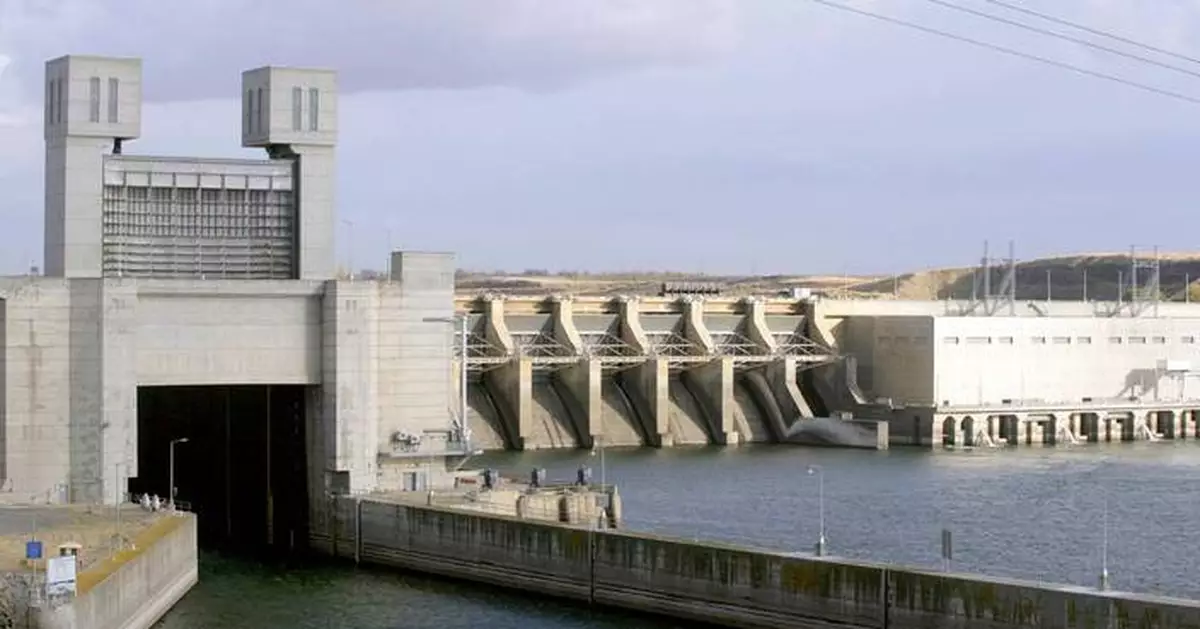
The dams for which changes are being sought are the Ice Harbor, Lower Monumental, Little Goose and Lower Granite on the Snake River, and the Bonneville, The Dalles, John Day and McNary on the Columbia.
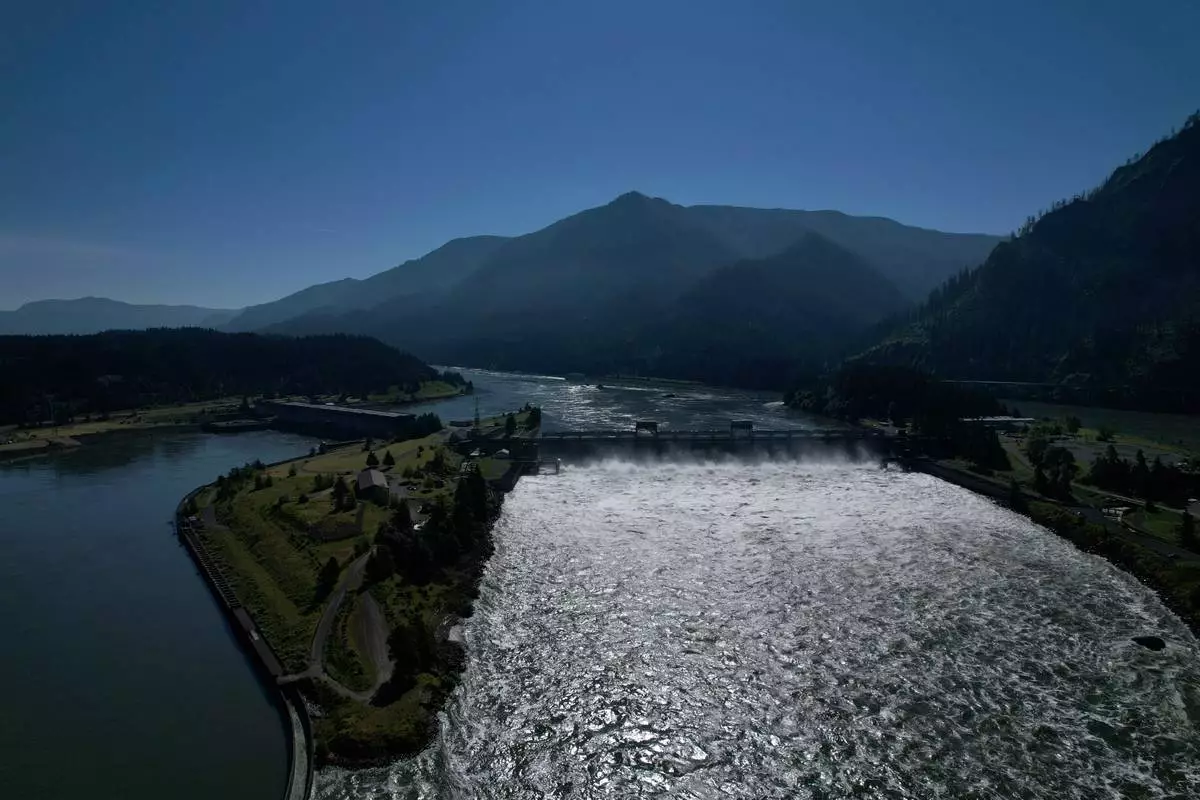
FILE - Water spills over the Bonneville Dam on the Columbia River, which runs along the Washington and Oregon state line, June 21, 2022. (AP Photo/Jessie Wardarski, File)
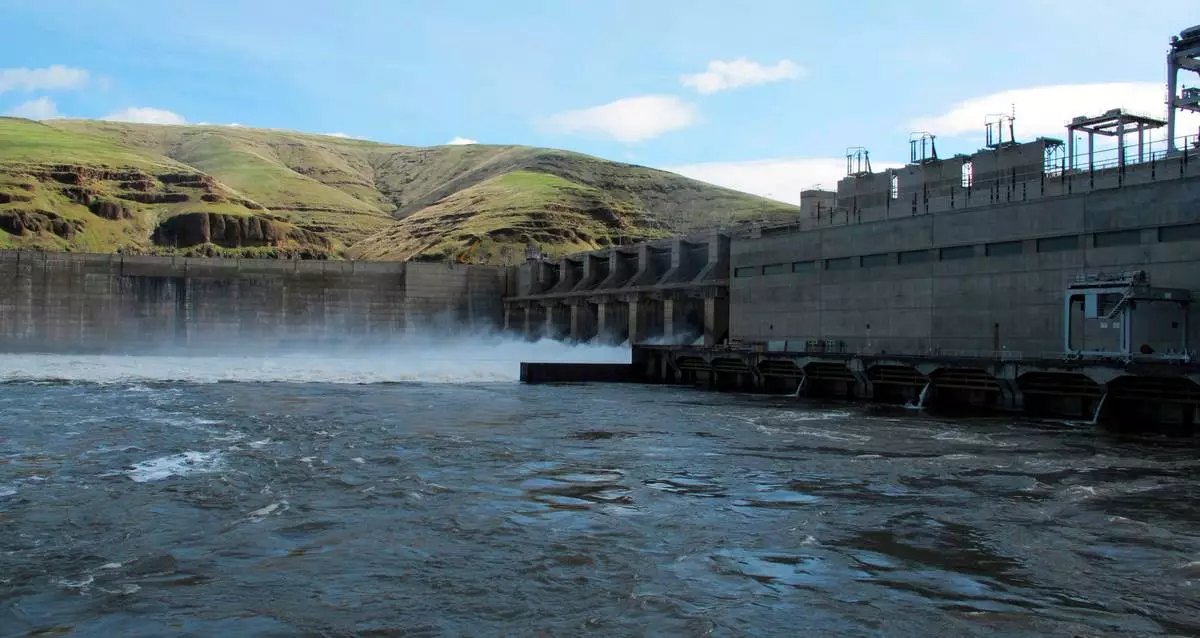
FILE - Water moves through a spillway of the Lower Granite Dam on the Snake River near Almota, Wash., April 11, 2018. (AP Photo/Nicholas K. Geranios, File)
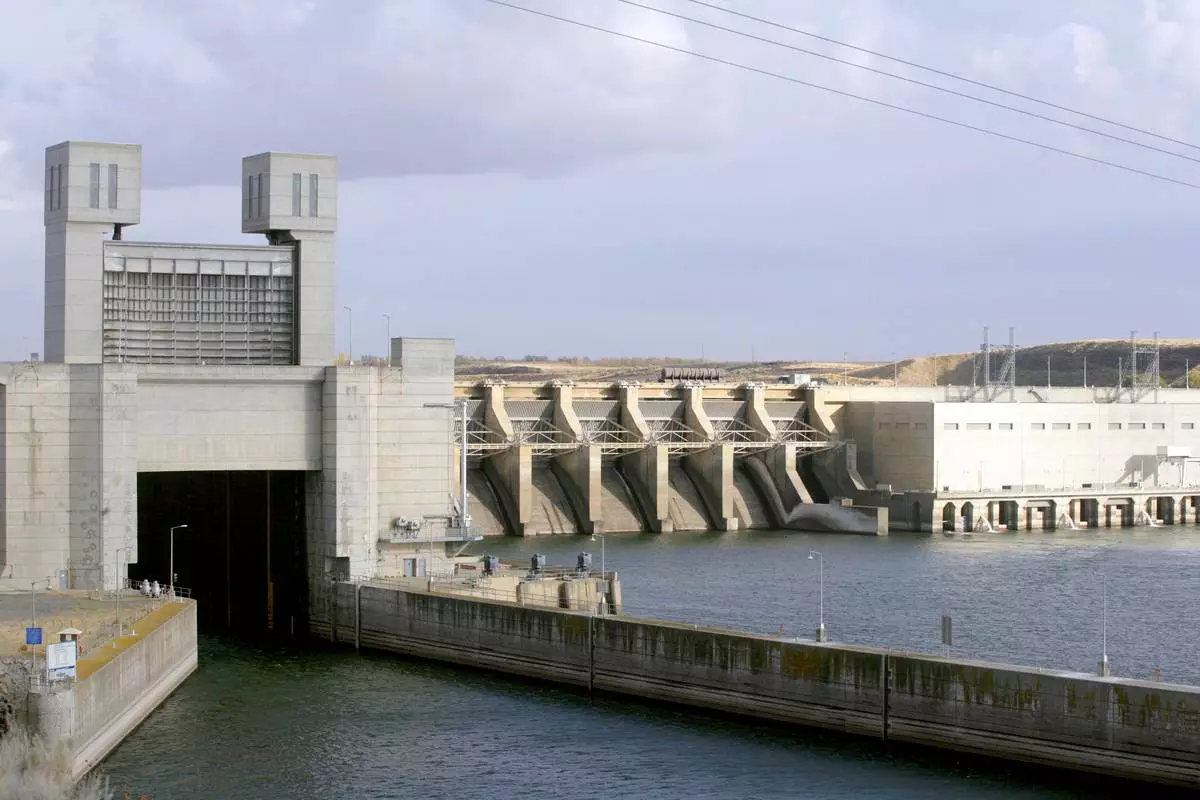
FILE - This photo shows the Ice Harbor dam on the Snake River in Pasco, Wash, Oct. 24, 2006. (AP Photo/Jackie Johnston, File)
BEIRUT (AP) — U.S. President Donald Trump said Monday that Israel and Hezbollah have agreed to dial back fighting after he held talks with Israeli Prime Minister Benjamin Netanyahu and communicated with the Lebanon-militant group through mediators.
Trump announced the development in a social media post following a call with Netanyahu, whose forces recently made their deepest incursion into Lebanon in more than a quarter-century. Trump there would be no Israeli troops "going to Beirut, and any Troops that are on their way, have already been turned back.”
The president said Hezbollah had "agreed that all shooting will stop — That Israel will not attack them, and they will not attack Israel.”
Moments after his message, Israel detected missile launches from Lebanon and warned Israelis in part of northern Israel to take cover in protected spaces.
Trump's comments emerged after Israel’s government ordered strikes on the southern suburbs of Beirut and as Hezbollah fired rockets at northern Israel, including the outskirts of the coastal city of Haifa.
A joint statement by Netanyahu and Israeli Defense Minister Israel Katz said the orders to attack targets in Beirut’s southern suburbs followed what they called repeated violations of the ceasefire by Hezbollah and “attacks against our cities and citizens.”
The Israeli military's Arabic spokesman later posted on X that residents should leave the suburbs, adding that if Hezbollah continues attacking Israeli communities, Israel will launch attacks on the area known in Arabic as Dahiyeh, where Hezbollah enjoys wide support.
Hezbollah agreed to halt attacks on Israel when the ceasefire was signed in mid-April, but the militant group resumed the assaults after Israeli strikes in Lebanon that Israel characterized as self-defense. The fighting also presents a major obstacle in the emerging deal to extend the ceasefire in the Iran war. Tehran wants any agreement to include Lebanon.
After Monday's warning, large numbers of people were seen fleeing Dahiyeh, jamming roads leading out of the suburb.
Mohammed Farhat, 23, fled with his brother and parents from Beirut’s southern suburb of Haret Hreik and was heading with his mother on a motorcycle to stay with relatives in another neighborhood.
“We are worried. I am used to it but left for my parents,” the university student said.
Israeli airstrikes overnight on southern Lebanon left six people dead, including a Syrian citizen in a village near the city of Nabatiyeh, the state-run National News Agency said. Israel struck other towns and villages near the major city, close to the strategic Beaufort Castle and other towns the Israeli military captured in recent days.
An airstrike Monday afternoon in the port city of Tyre caused heavy damage to the Jabal Amel Hospital, the Health Ministry said. A video released by the ministry showed shaken women and children inside the hospital, where windows were blown out.
The Israeli military, meanwhile, said its air force had intercepted two projectiles launched from Lebanon toward Israeli territory, as well as a suspicious aerial target in the area where Israeli soldiers operate in southern Lebanon. No injuries were reported, the military said.
Hezbollah said it carried out rocket and missile attacks on northern Israel on Sunday. It said early Monday it attacked Israeli troops in Zawtar al-Sharqieh, just north of the Litani River, and struck what they said was Israeli military infrastructure in Tiberius, a few dozen miles south of the border.
The latest attacks came despite a nominal ceasefire that has been in place since April 17 and just before Lebanon and Israel hold their next round of direct talks in Washington starting Tuesday. Hezbollah has rejected direct talks, counting on pressure from Iran, which has demanded an end to the war in Lebanon in its talks with Washington.
The talks between officials from Israel and Lebanon, which began in April in Washington, were the first in more than three decades between the countries, which have no formal diplomatic relations.
Lebanese officials have been scrambling in diplomatic calls, including with Washington, in a desperate bid to push back Israel’s military escalation after Netanyahu’s announcement, a Lebanese diplomatic official said. Beirut is still committed to holding talks to end the conflict despite the boiling tensions, said the official, who spoke to The Associated Press on condition of anonymity in line with regulations.
Iranian Foreign Minister Abbas Araghchi asserted Monday that any ceasefire agreement between Washington and Tehran is a “ceasefire on all fronts, including Lebanon."
“Its violation on one front is a violation of the ceasefire on all fronts," Iran's top diplomat said in a post on X.
Beirut, the Lebanese capital, has been mostly spared from airstrikes since the ceasefire went into effect, apart from two targeted attacks on the city's southern suburbs in May.
The German development minister, Reem Alabali Radovan, had planned to visit Beirut on Monday to meet with Lebanese President Joseph Aoun and other officials, but she called off the visit while traveling to the city, citing the possibility of Israeli strikes in the suburbs.
Saudi Arabia condemned Israel’s attacks on Lebanon, saying it “categorically rejects” Israel’s movement into the small Mediterranean nation. The Saudi Foreign Ministry called on the international community to prevent Israel from going deeper into Lebanon.
A U.S. official said late Sunday that Secretary of State Marco Rubio had spoken to Aoun and Netanyahu to propose a fresh path to continue ongoing negotiations, as Trump weighs a tentative ceasefire extension with Iran.
Under the proposal, Hezbollah would halt all attacks on Israel, and Israel would refrain from escalating military operations in Beirut, according to the official who spoke on condition of anonymity to discuss private diplomatic conversations.
The official said Aoun was open to the idea but that Lebanese parliament chief Nabih Berri had responded by demanding that Israel first stop all military action.
The official said the Trump administration does not expect Israel to give up retaliating for Hezbollah strikes on its territory.
Berri, a key Hezbollah ally, said in a statement Sunday that he can guarantee the militant group’s “full, comprehensive and immediate commitment to a ceasefire.” Berri added: “But who will force Israel to stop its aggression?”
Aoun on Monday said in comments released by his office that Lebanon faces "a fierce and condemned Israeli aggression.” Aoun added that his government continues work to end “the suffering of the Lebanese in general and the southerners in particular.”
Later, the president issued a statement reiterating Beirut's commitment to negotiations, saying it is “safer” than war."
“It will not solve the problem within moments, but it is a process that needs time," he said. “And we have no other choice.”
Elsewhere, the United Nations Security Council scheduled an emergency meeting on Lebanon for Monday afternoon.
The latest round of fighting between Israel and Hezbollah has killed 3,433 people in Lebanon and displaced more than 1 million people.
Israel’s military said a soldier was killed in southern Lebanon overnight in a drone attack by Hezbollah. Hezbollah’s use of hard-to-detect fiber-optic drones has been deadly for the Israeli military, which is struggling to respond.
According to Netanyahu’s office, at least 26 Israeli soldiers and a defense contractor have been killed in or near southern Lebanon. Two civilians have also been killed in northern Israel.
Melzer reported from Tel Aviv, Israel. Associated Press writers Matthew Lee in Washington and Geir Moulson in Berlin contributed to this report.

A person walks past the site struck by a rocket fired from Lebanon on Saturday in Kiryat Shmona, northern Israel, Sunday, May 31, 2026. (AP Photo/Ariel Schalit)
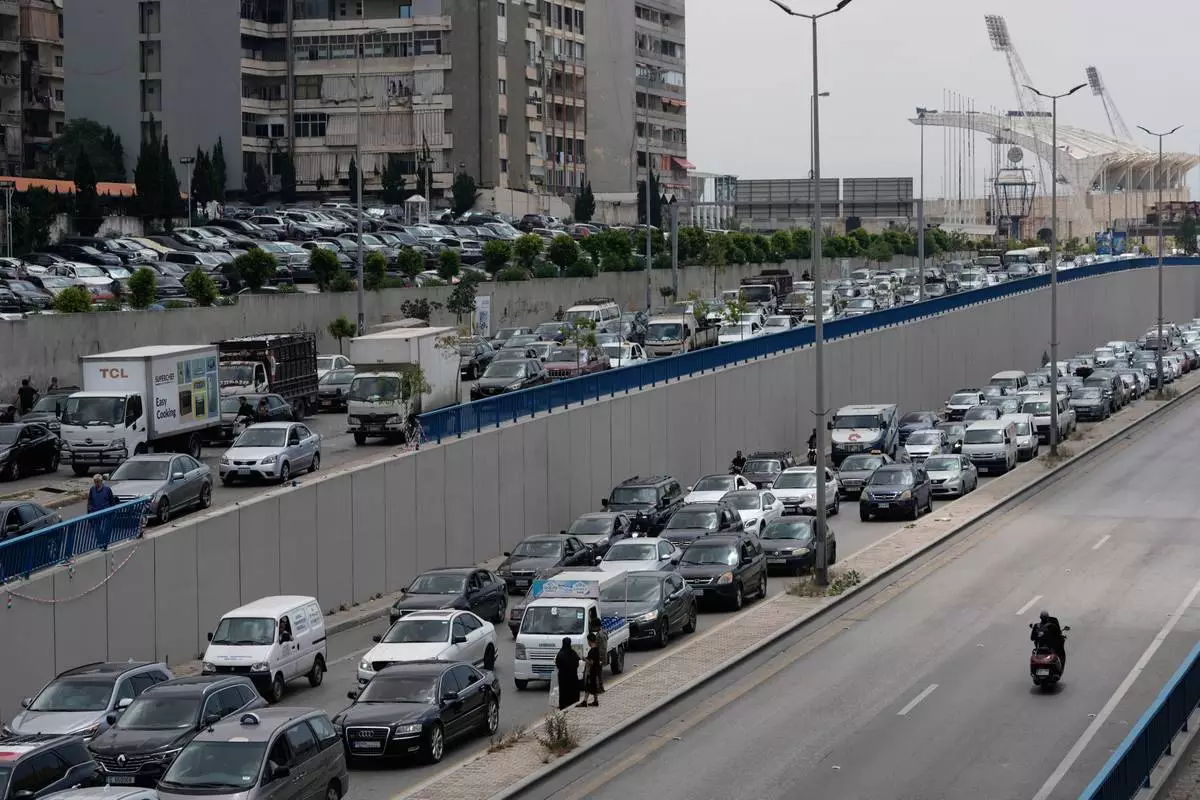
Cars sit in traffic on a highway as residents flee following an Israeli threat to strike Dahiyeh, Beirut's southern suburbs, Lebanon, Monday, June 1, 2026. (AP Photo/Bilal Hussein)

Cars sit in traffic on a highway as residents flee following an Israeli threat to strike Dahiyeh, Beirut's southern suburbs, Lebanon, Monday, June 1, 2026. (AP Photo/Bilal Hussein)

Cars sit in traffic on a highway as residents flee following an Israeli threat to strike Dahiyeh, Beirut's southern suburbs, Lebanon, Monday, June 1, 2026. (AP Photo/Bilal Hussein)
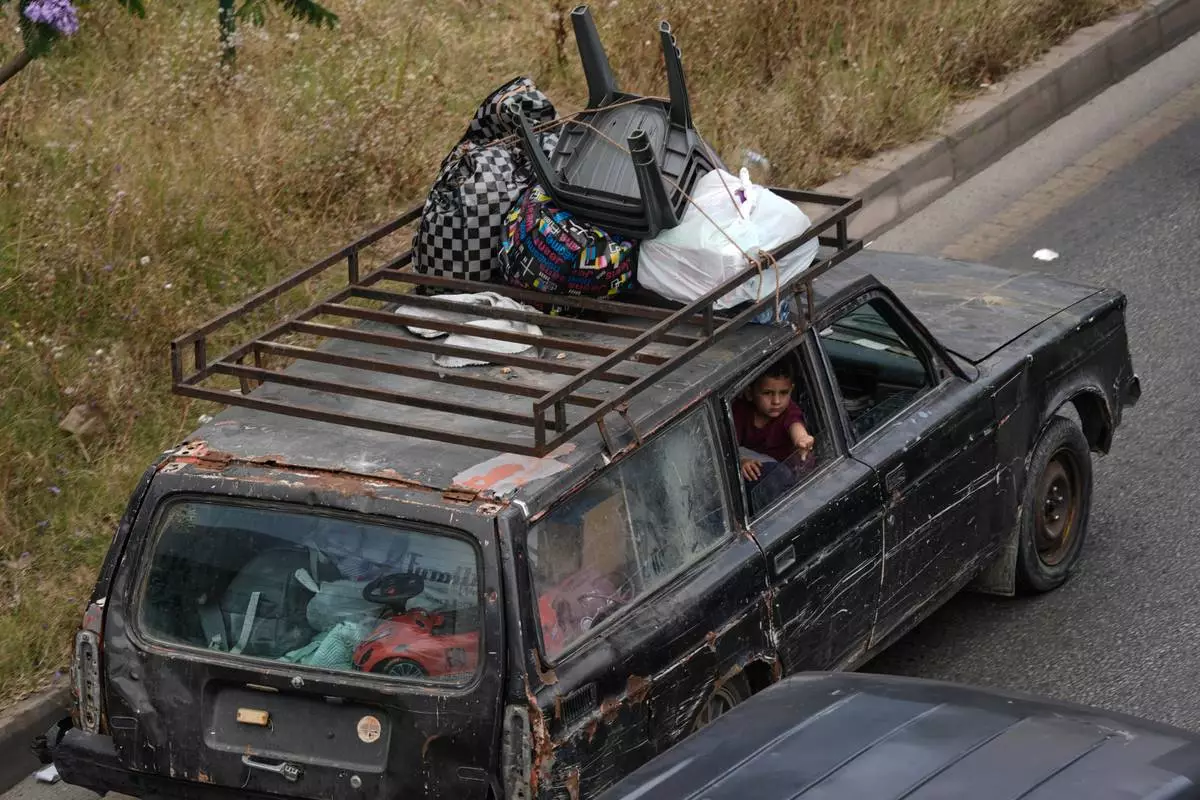
A family flees following an Israeli threat to strike Dahiyeh, Beirut's southern suburbs, Lebanon, Monday, June 1, 2026. (AP Photo/Bilal Hussein)
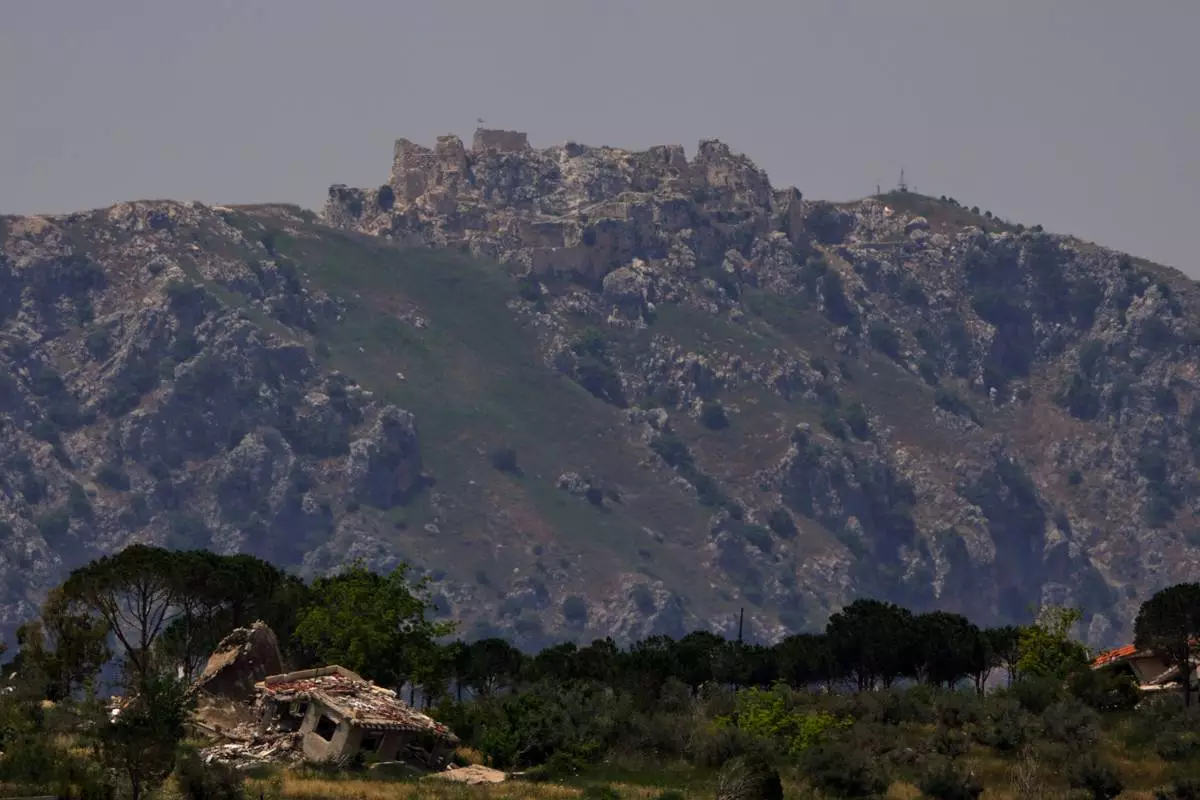
A view of he Beaufort Castle in southern Lebanon as seen from northern Israel, Sunday, May 31, 2026. (AP Photo/Ariel Schalit)