MARLBOROUGH, Mass.--(BUSINESS WIRE)--Jun 1, 2026--
At ASMS, SCIEX, a Danaher company and leader in life science analytical technologies, launched the novus V55 system - a next-generation triple quadrupole mass spectrometer designed for the realities of high-pressure, results-driven labs. The system provides exceptional sensitivity and accelerated output, in a smaller footprint and with improved energy efficiency when compared to the SCIEX 5500+ system. This quantitative solution expands testing capabilities across pesticide and food analysis, pharmaceutical impurities, bioanalysis, PFAS testing and additional applications.
This press release features multimedia. View the full release here: https://www.businesswire.com/news/home/20260601916060/en/
The novus V55 system is built for business and real-world impact. Key features include:
“Analytical labs are being asked to deliver more insight with less time, space, and energy. With the novus V55 system, we have applied decades of innovation to ensure robustness and sensitivity, while enhancing performance and execution. This new generational instrument will help enable our customers to drive their business forward,” says Chris Lock, Vice President Global Research and Development at SCIEX.
This 5 th generation system builds on a proven legacy in nominal mass. In 1981, SCIEX launched the TAGA 6000, the first commercial triple quadrupole. Since then, the triple quadrupoles have evolved with the API III, then the API 4000, and then to the SCIEX Triple Quad series starting with SCIEX Triple Quad 5500 system. SCIEX also developed QTRAP technology which combined triple quad and linear ion trap technology for the first time.
Learn more about the novus V55 system at https://sciex.com/products/mass-spectrometers/triple-quad-systems/novus-v55-system.
ABOUT SCIEX
SCIEX, a Danaher company and leader in life science analytical technologies, empowers our customers to solve the most impactful analytical challenges in quantitation and characterization. With groundbreaking innovation and outstanding reliability and support, SCIEX has been at the forefront of the field for over 50 years.
Since the launch of the first-ever commercially successful triple quadrupole in 1981, we continue to develop technologies and solutions that influence life-changing research and outcomes. That’s why thousands of life science experts around the world choose SCIEX to get the answers they can trust.
Advances in human wellness depend on the power of precise science.
For more information, visit sciex.com.
Connect with us on LinkedIn, Facebook, and Instagram.
ABOUT DANAHER
Danaher is a leading global life sciences and diagnostics innovator, committed to accelerating the power of science and technology to improve human health. Through our connected ecosystem of industry-leading businesses, we work side by side with customers to solve their most complex scientific and clinical challenges—helping move innovations from discovery to delivery faster for patients who depend on them. Powered by the Danaher Business System, our advanced science and technology and proven ability to innovate help enable faster, more accurate diagnoses and reduce the time, cost, and risk required to discover, develop, and deliver life-changing therapies. Through continuous improvement and operational excellence, our approximately 60,000 associates worldwide are focused on delivering lasting impact and improving quality of life around the world, while building a healthier, more sustainable tomorrow. Explore more at www.danaher.com.
The SCIEX clinical diagnostic portfolio is for in vitro Diagnostic Use. Rx Only. Product(s) not available in all countries. For information on availability, please contact your local sales representative or refer to www.sciex.com/diagnostics. All other products are For Research Use Only. Not for use in Diagnostic Procedures.
Trademarks and/or registered trademarks mentioned herein, including associated logos, are the property of AB Sciex Pte. Ltd. or their respective owners in the United States and/or certain other countries (see www.sciex.com/trademarks ).
© 2026 DH Tech. Dev. Pte. Ltd. MKT-38491-A.

The novus V55 system from SCIEX.
BEIRUT (AP) — U.S. President Donald Trump said Monday that Israel and Hezbollah have agreed to dial back fighting after he held talks with Israeli Prime Minister Benjamin Netanyahu and communicated with the Lebanon-militant group through mediators.
Trump announced the development in a social media post following a call with Netanyahu, whose forces recently made their deepest incursion into Lebanon in more than a quarter-century. Trump there would be no Israeli troops "going to Beirut, and any Troops that are on their way, have already been turned back.”
The president said Hezbollah had "agreed that all shooting will stop — That Israel will not attack them, and they will not attack Israel.”
Moments after his message, Israel detected missile launches from Lebanon and warned Israelis in part of northern Israel to take cover in protected spaces.
Trump's comments emerged after Israel’s government ordered strikes on the southern suburbs of Beirut and as Hezbollah fired rockets at northern Israel, including the outskirts of the coastal city of Haifa.
A joint statement by Netanyahu and Israeli Defense Minister Israel Katz said the orders to attack targets in Beirut’s southern suburbs followed what they called repeated violations of the ceasefire by Hezbollah and “attacks against our cities and citizens.”
The Israeli military's Arabic spokesman later posted on X that residents should leave the suburbs, adding that if Hezbollah continues attacking Israeli communities, Israel will launch attacks on the area known in Arabic as Dahiyeh, where Hezbollah enjoys wide support.
Hezbollah agreed to halt attacks on Israel when the ceasefire was signed in mid-April, but the militant group resumed the assaults after Israeli strikes in Lebanon that Israel characterized as self-defense. The fighting also presents a major obstacle in the emerging deal to extend the ceasefire in the Iran war. Tehran wants any agreement to include Lebanon.
After Monday's warning, large numbers of people were seen fleeing Dahiyeh, jamming roads leading out of the suburb.
Mohammed Farhat, 23, fled with his brother and parents from Beirut’s southern suburb of Haret Hreik and was heading with his mother on a motorcycle to stay with relatives in another neighborhood.
“We are worried. I am used to it but left for my parents,” the university student said.
Israeli airstrikes overnight on southern Lebanon left six people dead, including a Syrian citizen in a village near the city of Nabatiyeh, the state-run National News Agency said. Israel struck other towns and villages near the major city, close to the strategic Beaufort Castle and other towns the Israeli military captured in recent days.
An airstrike Monday afternoon in the port city of Tyre caused heavy damage to the Jabal Amel Hospital, the Health Ministry said. A video released by the ministry showed shaken women and children inside the hospital, where windows were blown out.
The Israeli military, meanwhile, said its air force had intercepted two projectiles launched from Lebanon toward Israeli territory, as well as a suspicious aerial target in the area where Israeli soldiers operate in southern Lebanon. No injuries were reported, the military said.
Hezbollah said it carried out rocket and missile attacks on northern Israel on Sunday. It said early Monday it attacked Israeli troops in Zawtar al-Sharqieh, just north of the Litani River, and struck what they said was Israeli military infrastructure in Tiberius, a few dozen miles south of the border.
The latest attacks came despite a nominal ceasefire that has been in place since April 17 and just before Lebanon and Israel hold their next round of direct talks in Washington starting Tuesday. Hezbollah has rejected direct talks, counting on pressure from Iran, which has demanded an end to the war in Lebanon in its talks with Washington.
The talks between officials from Israel and Lebanon, which began in April in Washington, were the first in more than three decades between the countries, which have no formal diplomatic relations.
Lebanese officials have been scrambling in diplomatic calls, including with Washington, in a desperate bid to push back Israel’s military escalation after Netanyahu’s announcement, a Lebanese diplomatic official said. Beirut is still committed to holding talks to end the conflict despite the boiling tensions, said the official, who spoke to The Associated Press on condition of anonymity in line with regulations.
Iranian Foreign Minister Abbas Araghchi asserted Monday that any ceasefire agreement between Washington and Tehran is a “ceasefire on all fronts, including Lebanon."
“Its violation on one front is a violation of the ceasefire on all fronts," Iran's top diplomat said in a post on X.
Beirut, the Lebanese capital, has been mostly spared from airstrikes since the ceasefire went into effect, apart from two targeted attacks on the city's southern suburbs in May.
The German development minister, Reem Alabali Radovan, had planned to visit Beirut on Monday to meet with Lebanese President Joseph Aoun and other officials, but she called off the visit while traveling to the city, citing the possibility of Israeli strikes in the suburbs.
Saudi Arabia condemned Israel’s attacks on Lebanon, saying it “categorically rejects” Israel’s movement into the small Mediterranean nation. The Saudi Foreign Ministry called on the international community to prevent Israel from going deeper into Lebanon.
A U.S. official said late Sunday that Secretary of State Marco Rubio had spoken to Aoun and Netanyahu to propose a fresh path to continue ongoing negotiations, as Trump weighs a tentative ceasefire extension with Iran.
Under the proposal, Hezbollah would halt all attacks on Israel, and Israel would refrain from escalating military operations in Beirut, according to the official who spoke on condition of anonymity to discuss private diplomatic conversations.
The official said Aoun was open to the idea but that Lebanese parliament chief Nabih Berri had responded by demanding that Israel first stop all military action.
The official said the Trump administration does not expect Israel to give up retaliating for Hezbollah strikes on its territory.
Berri, a key Hezbollah ally, said in a statement Sunday that he can guarantee the militant group’s “full, comprehensive and immediate commitment to a ceasefire.” Berri added: “But who will force Israel to stop its aggression?”
Aoun on Monday said in comments released by his office that Lebanon faces "a fierce and condemned Israeli aggression.” Aoun added that his government continues work to end “the suffering of the Lebanese in general and the southerners in particular.”
Later, the president issued a statement reiterating Beirut's commitment to negotiations, saying it is “safer” than war."
“It will not solve the problem within moments, but it is a process that needs time," he said. “And we have no other choice.”
Elsewhere, the United Nations Security Council scheduled an emergency meeting on Lebanon for Monday afternoon.
The latest round of fighting between Israel and Hezbollah has killed 3,433 people in Lebanon and displaced more than 1 million people.
Israel’s military said a soldier was killed in southern Lebanon overnight in a drone attack by Hezbollah. Hezbollah’s use of hard-to-detect fiber-optic drones has been deadly for the Israeli military, which is struggling to respond.
According to Netanyahu’s office, at least 26 Israeli soldiers and a defense contractor have been killed in or near southern Lebanon. Two civilians have also been killed in northern Israel.
Melzer reported from Tel Aviv, Israel. Associated Press writers Matthew Lee in Washington and Geir Moulson in Berlin contributed to this report.
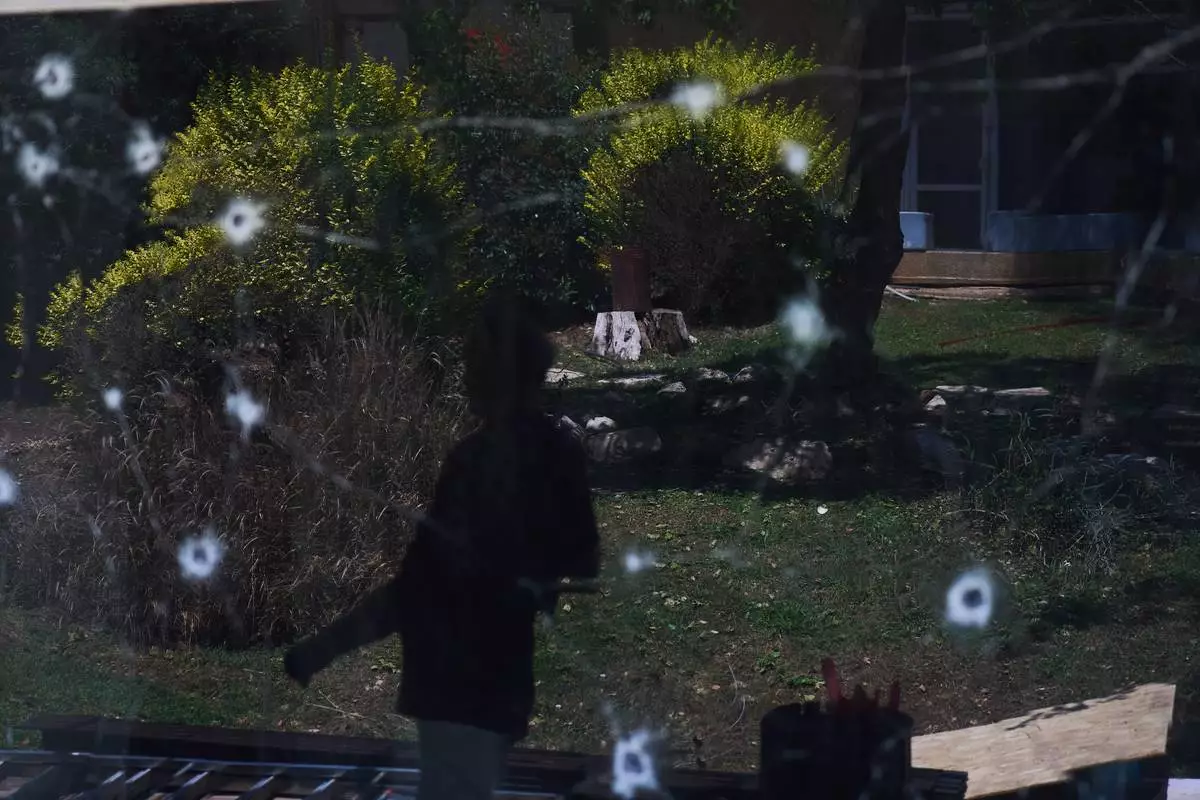
A person walks past the site struck by a rocket fired from Lebanon on Saturday in Kiryat Shmona, northern Israel, Sunday, May 31, 2026. (AP Photo/Ariel Schalit)
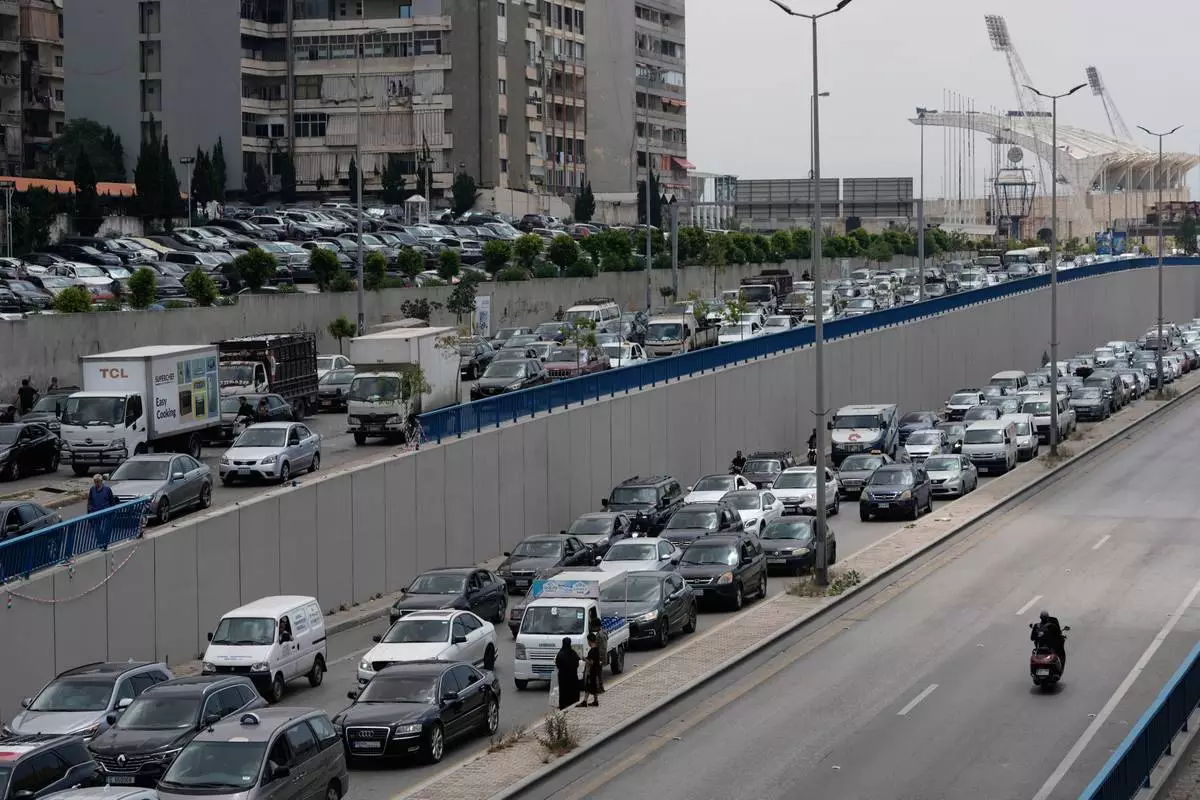
Cars sit in traffic on a highway as residents flee following an Israeli threat to strike Dahiyeh, Beirut's southern suburbs, Lebanon, Monday, June 1, 2026. (AP Photo/Bilal Hussein)

Cars sit in traffic on a highway as residents flee following an Israeli threat to strike Dahiyeh, Beirut's southern suburbs, Lebanon, Monday, June 1, 2026. (AP Photo/Bilal Hussein)

Cars sit in traffic on a highway as residents flee following an Israeli threat to strike Dahiyeh, Beirut's southern suburbs, Lebanon, Monday, June 1, 2026. (AP Photo/Bilal Hussein)
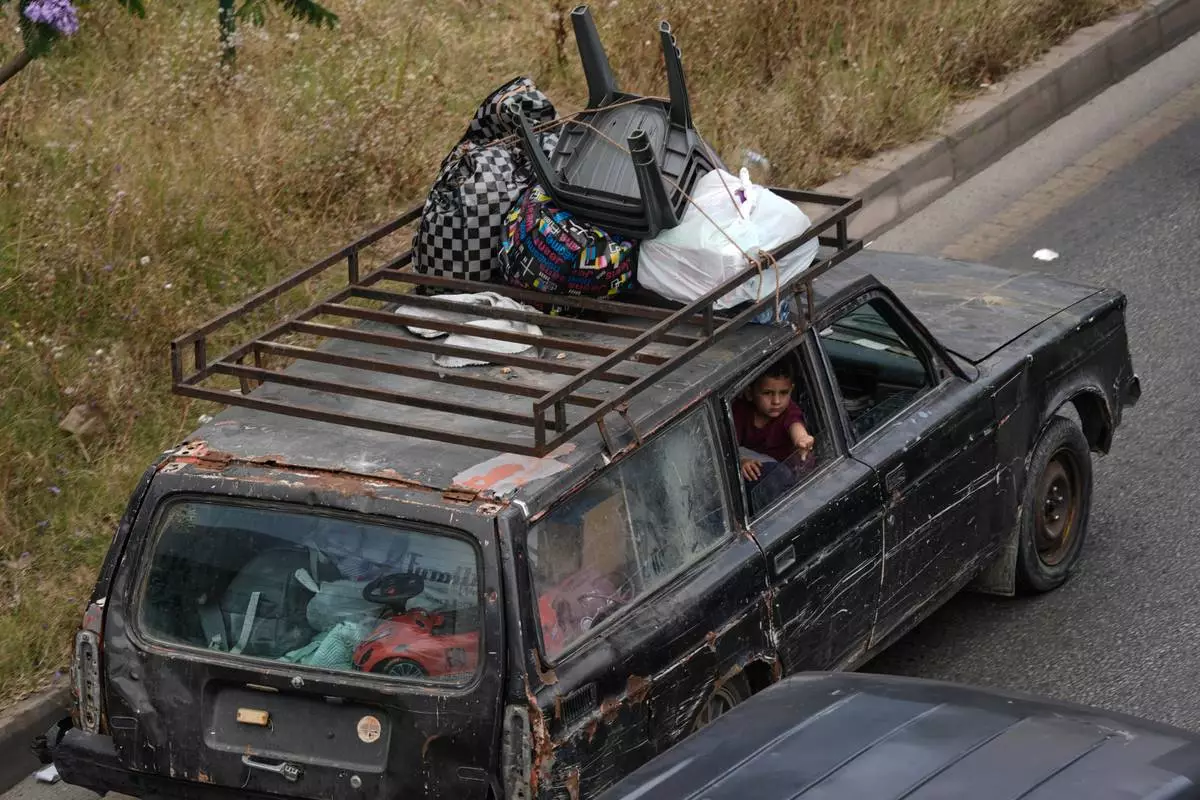
A family flees following an Israeli threat to strike Dahiyeh, Beirut's southern suburbs, Lebanon, Monday, June 1, 2026. (AP Photo/Bilal Hussein)
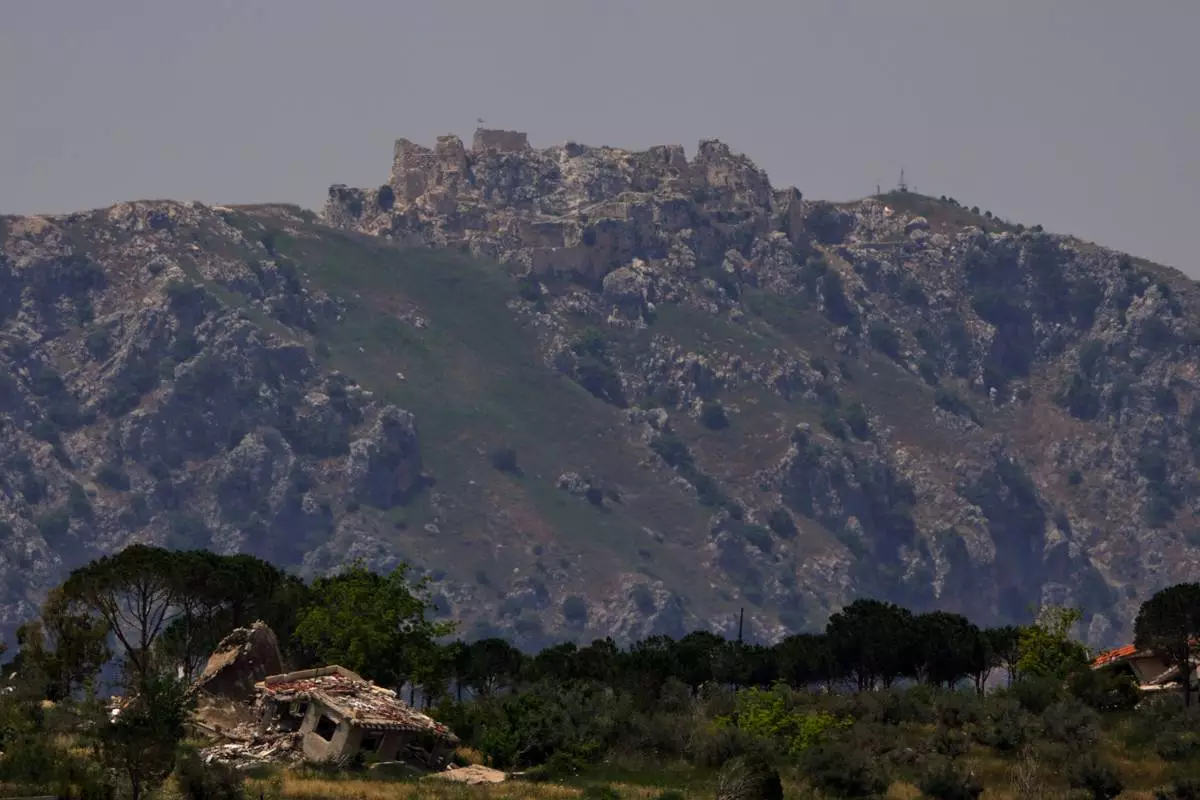
A view of he Beaufort Castle in southern Lebanon as seen from northern Israel, Sunday, May 31, 2026. (AP Photo/Ariel Schalit)