The Bank of England (BoE) has kept its benchmark interest rate unchanged at 3.75 percent, Britain's central bank said in a statement on Thursday.
At its meeting ending on Wednesday, the BoE's Monetary Policy Committee (MPC) voted by a majority of five to four to maintain the rate. Four members voted to reduce the rate by 0.25 percentage points.
In mid-December 2025, the bank announced a 25-basis-point cut to its benchmark interest rate, bringing it down to 3.75 percent, the lowest level since early 2023.
The move marked the sixth rate reduction since August 2024, when the bank began easing monetary policy from a 16-year-high rate of 5.25 percent.
The committee judged that the risk from greater inflation persistence had continued to become less pronounced, while some risks to inflation from weaker demand and a loosening labor market remained, the statement said.
Britain's consumer price index (CPI) rose by 3.4 percent year on year in December 2025, accelerating from 3.2 percent in November, earlier data from the Office for National Statistics (ONS) showed.
The country's economy expanded marginally in late 2025 amid a subdued underlying momentum, with real gross domestic product (GDP) edging up 0.1 percent in the September-November period. At the same time, its unemployment rate for people aged 16 and over remained at a high level of 5.1 percent, according to the ONS.
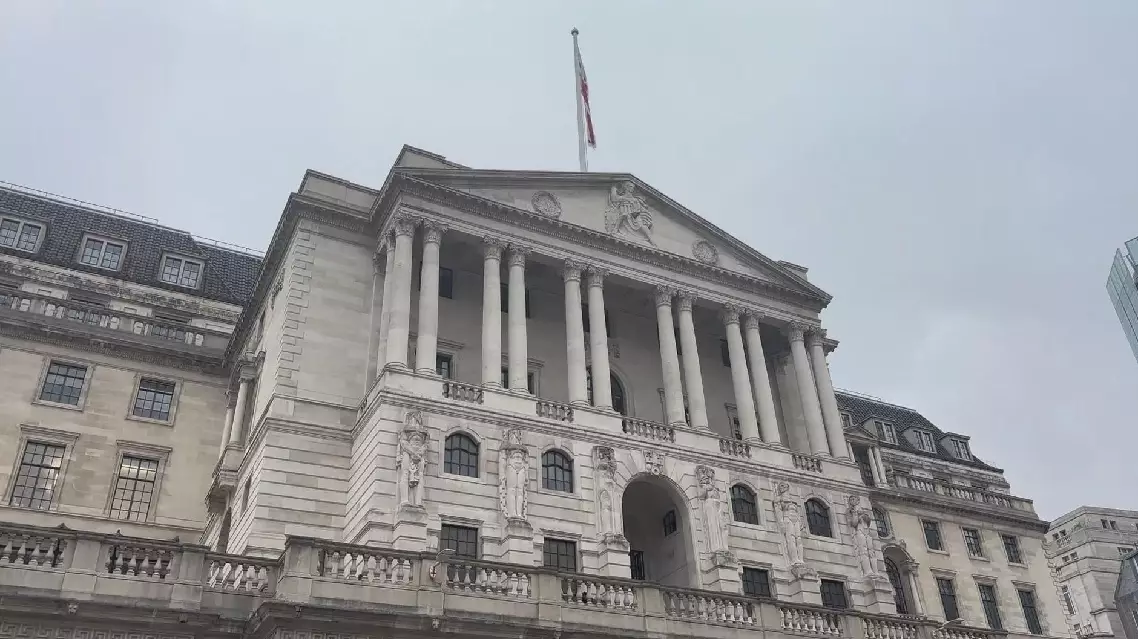
Bank of England maintains interest rate at 3.75 pct
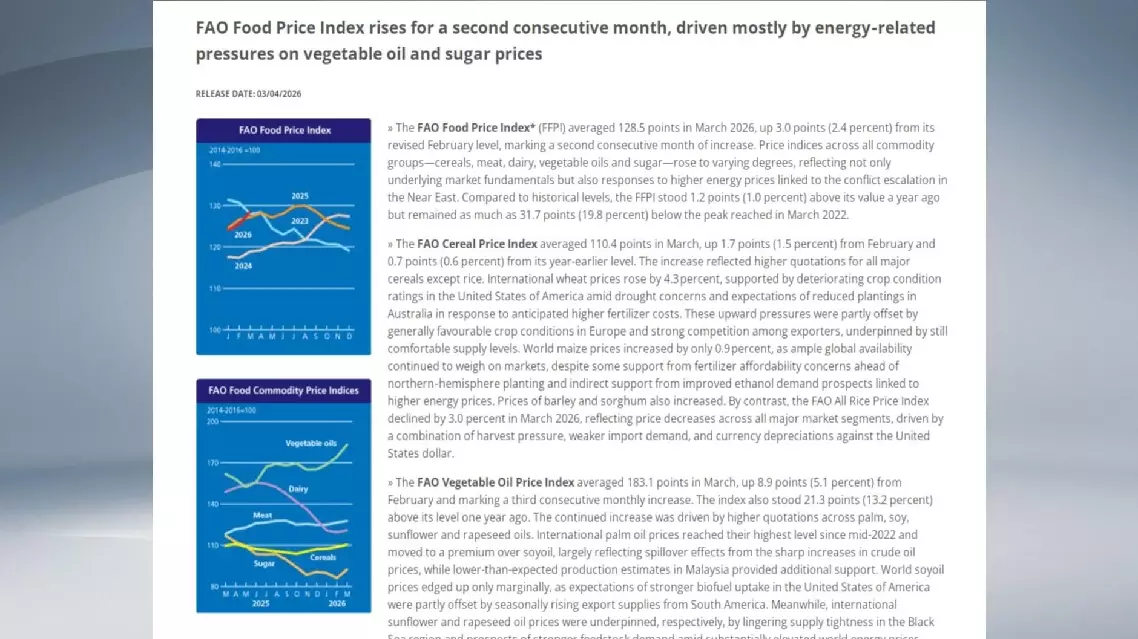
Global food commodity prices climbed for a second consecutive month in March, driven mainly by higher energy costs linked to escalating conflict in the Middle East, the Food and Agriculture Organization of the United Nations (FAO) said in report released on Friday.
The FAO Food Price Index, which tracks monthly changes in the international prices of a basket of globally traded food commodities, averaged 128.5 points in March, up 2.4 percent from February and 1.0 percent above its level a year ago.
According to the report, the FAO Vegetable Oil Index and Sugar Price Index showed the largest increases, up 5.1 percent and 7.2 percent, respectively.
The FAO Cereal Price Index increased by 1.5 percent from the previous month, driven primarily by higher world wheat prices, which rose 4.3 percent.
The FAO Meat Price Index rose by 1.0 percent from the previous month, and the FAO All-Rice Price Index declined by 3.0 percent in March, according to the report.
FAO stated that rising energy and fertilizer prices have been driving up agricultural input costs.
If the conflict stretches beyond 40 days, farmers will have to choose to farm the same with fewer inputs, plant less, or switch to less intensive fertilizer crops, according to FAO Chief Economist Maximo Torero.
These choices will hit future yields and shape food supply and commodity prices for the rest of this year and beyond, Torero said.
Global food prices rise for 2nd consecutive month in March amid Middle East conflict: FAO