As the 2026 Milan-Cortina Winter Olympics approaches, President Xi Jinping's vision continues to guide China's ascent in global winter sports, with 126 athletes set to compete and a nation united behind its snow and icy ambitions.
Xi always views sports as closely linked to national prosperity and rejuvenation.
"Everyone's dreams, including the dream of becoming a sports powerhouse, are closely connected to the Chinese Dream," said Xi, whose consistent support for sports development has driven the high-quality expansion of China's winter sports industry from the grassroots to the global stage.
From the successful Beijing 2022 Winter Olympics to the 2025 Harbin Asian Winter Games, China's "ice and snow fever" has infused new energy into international winter sports. The fulfillment of Xi Jinping's 2014 vision of "engaging 300 million people in winter sports" has transformed national participation and redefined China's sporting image.
Strategic initiatives such as "expanding winter sports from the north to the south, westward and eastward" have taken winter activities beyond traditional zones, reshaping urban life across China. Rapid construction of indoor skating and skiing arenas has enabled year-round participation, turning ice sports into a new national lifestyle trend and elevating China's global fitness footprint.
The Yanqing Olympic Zone in Beijing, home to the iconic Yanqing Alpine Skiing Center, a key venue during the 2022 Winter Olympic and Paralympic Games, continues to thrive post-Games, operating year-round to support both national team training and public skiing enthusiasts.
"We've hosted over 40 major national and international events since we opened. To date, we have received more than 1 million visits here," said Chen Hongyan, client services director at Yanqing Olympic Zone.
Thanks to the Winter Olympics, what was once an obscure mountainous area has become a celebrated ski destination. Xi personally inspected the Yanqing venue on January 18, 2021, checking on athlete preparations and venues construction.
"General Secretary Xi Jinping visited the Yanqing zone and reviewed preparations at the Alpine Skiing Center and Sliding Center. He also met with representatives of athletes, coaches, operating staff, and construction workers," said Chen.
In preparation for the Winter Games, Xi conducted multiple on-site inspections of competition zones and expressed a clear intention to use the occasion as a springboard to promote the widespread development of winter sports across the country.
Xi has been instrumental in promoting ice and snow sports as a national priority. In 2014, one year prior to China's successful bid for the Beijing 2022 Winter Olympics, Xi first put forward the idea of getting 300 million people involved in winter sports.
"Winters sports are not so popular inside Shanhai Pass (at the eastern end of the Great Wall in north China). If winter sports could be promoted inside Shanhai Pass, there will probably be about two to three hundred million Chinese participants," Xi said during a visit to the Chinese delegation at Russia's Sochi 2014 Winter Olympic Games.
Thomas Bach, then International Olympic Committee (IOC) president and currently the IOC's honorary president for life, spoke highly of Xi's visit to Sochi and his vision for the future of sports in China.
"He (Xi) is really promoting the Olympic Games and the Olympic athletes. And I admire very much the vision he has for the future of sports in the Chinese society and how much he does for the promotion of sports already for the children and in schools," said Bach.
According to a report released in January 2022, China has achieved its ambitious goal of engaging 300 million people in winter sports. The data, based on a national survey commissioned by the General Administration of Sport of China (GAS) and conducted by the National Bureau of Statistics (NBS), confirms the success of the initiative.
"Greater public involvement in winter sports also contributes to the Olympic Movement," said Xi in his 2022 New Year Address.
The campaign earned international praise and set a record as the largest winter sports promotion in human history. Olympic leaders have commended China's contribution to global sport.
Xi met with incumbent International Olympic Committee (IOC) President Kirsty Coventry and Bach on Nov 9 in Guangzhou city of south China's Guangdong Province, where they attended the opening ceremony of China's 15th National Games.
During a meeting with Coventry and Bach, Xi said China has always been firmly practicing, safeguarding, and promoting the Olympic spirit.
"I felt very honored to sit with him and to talk with him and to, again, hear the level of importance that he places on sport. I shared with him that there are not very many leaders that place that kind of importance on sport. I'm looking forward to the future with them (the Chinese) to strengthen that for the Olympic Movement and for sport," said Coventry.
With the next chapter of winter sports now unfolding in Milan-Cortina, China's winter sports story continues, not only as a medal contender but as a nation transforming public fitness, building sports infrastructure, and honoring the Olympic spirit.
"We must aim at building up people's physique, improving their physical health and raising their living standards, and fully leverage the important role of sports in advancing people's well-rounded development. We will raise awareness of sports and fitness among our people, the young people in particular. We will promote the country's overall strength and competitiveness in international competitive sports, and step up efforts to build China into a country strong on sports," Xi said at a gathering to honor those who made outstanding contributions to the Beijing 2022 Winter Olympic Games and the Beijing 2022 Paralympic Winter Games in April 2022.
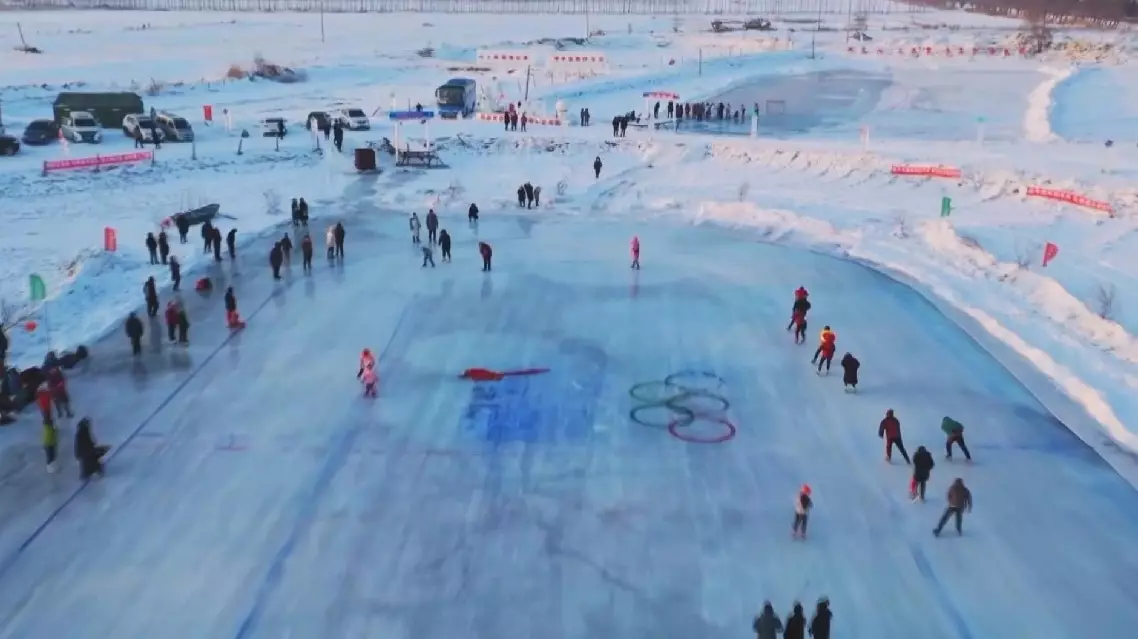
China rises in winter sports under Xi's leadership