WASHINGTON (AP) — White House border czar Tom Homan's announcement that enforcement in Minnesota was being unified under U.S. Immigration and Customs Enforcement followed months of internal grumbling and infighting among agencies about how to carry out President Donald Trump's mass deportation campaign.
Since it was created in 2003, ICE has conducted street arrests through "targeted enforcement.” Homan uses that phrase repeatedly to describe narrowly tailored operations with specific, individual targets, in contrast to the broad sweeps that had become more common under Border Patrol direction in Los Angeles, Chicago, Minnesota and elsewhere.
It is unclear how the agency friction may have influenced the leadership shift. But the change shines a light on how the two main agencies behind Trump's centerpiece deportation agenda have at times clashed over styles and tactics.
The switch comes at a time when support for ICE is sliding, with a growing number of Americans saying the agency has become too aggressive. In Congress, the Department of Homeland Security is increasingly under attack by Democrats who want to rein in immigration enforcement.
While declaring the Twin Cities operation a success, Homan on Wednesday acknowledged that it was imperfect and said consolidating operations under ICE's enforcement and removal operations unit was an effort toward “making sure we follow the rules.” Trump sent the former acting ICE director to Minnesota last week to de-escalate tensions after two U.S. citizens were fatally shot by federal immigration officers — one with ICE and the other with Customs and Border Protection.
“We made this operation more streamlined and we established a unified chain of command, so everybody knows what everybody's doing,” Homan said at a news conference in Minneapolis. “In targeted enforcement operations, we go out there. There needs to be a plan.”
The Border Patrol's growing role in interior enforcement had fueled tensions within ICE, according to current and former DHS officials. Gregory Bovino, a senior Border Patrol official who was reassigned from Minneapolis last week, embraced a “turn and burn” strategy of lightning-quick street sweeps and heavy shows of force that were designed to rack up arrests but often devolved into chaos.
“Every time you place Border Patrol into interior enforcement the wheels are going to come off,” Darius Reeves, who retired in May as head of ICE’s enforcement and removal operations in Baltimore, said in an interview last year as Bovino's influence grew.
ICE has also engaged in aggressive tactics that mark a break from the past, especially in Minnesota. An ICE officer fatally shot Renee Good in Minneapolis on Jan. 7. Trump administration officials said she tried to run over an officer with her vehicle, an account that state and local officials have rejected. ICE has asserted sweeping power to forcibly enter a person's home to make arrests without a judge's warrant, among other controversial tactics.
But ICE's traditional playbook involves extensive investigation and surveillance before an arrest, often acting quickly and quietly in predawn vehicle stops or outside a home. An ICE official once compared it to watching paint dry.
Bovino, in a November interview, said the two agencies had different but complementary missions and he compared the relationship to a large metropolitan police department. The Border Patrol was akin to beat cops on roving patrols. ICE was more like detectives, doing investigative work.
Asked about the friction, DHS spokeswoman Tricia McLaughlin said, “There is only page: The President’s page. Everyone’s on the same page.”
“This is one team, and we have one fight to secure the homeland. President Trump has a brilliant, tenacious team led by Secretary (Kristi) Noem to deliver on the American people’s mandate to remove criminal illegal aliens from this country.”
Michael Fisher, chief of the Border Patrol from 2010 to 2015, said last year that his former agency’s tactics were more in line with the Republican administration’s goal of deporting millions of people who entered the United States while Democrat Joe Biden was president.
“How do you deal with trying to arrest hundreds and hundreds of people in a shift?” Fisher said. “ICE agents typically aren’t geared, they don’t have the equipment, they don’t have the training to deal in those environments. The Border Patrol does.”
The Border Patrol's high-profile raids, including a helicopter landing on the roof of a Chicago apartment building that involved agents rappelling down, rankled ICE officials. A U.S. official who was not authorized to discuss the matter publicly and spoke on condition of anonymity said at the time that ICE often gets blamed for Border Patrol’s tactics.
Meanwhile, Scott Mechowski, who retired in 2018 as ICE’s deputy field office director for enforcement and removal operations in New York, said separately that the Border Patrol was essentially doing roving operations and blanketing an area to question anyone or everyone about their legal status. He considered that an unwelcome contrast to ICE’s traditionally more targeted approach, based on deep surveillance and investigation of suspects.
“We didn’t just park our cars and walk through Times Square going, ‘OK, everybody. Come over here. You’re next, you’re next.’ We never did that. To me, that’s not the way to do your business,” Mechowski said.
As the Border Patrol's influence grew last year, the administration reassigned at least half of the field office directors of ICE's enforcement and removals operations division. Many were replaced by current or retired officials from CBP, the Border Patrol's parent agency.
Homan's arrival in Minnesota and his emphasis on “targeted enforcement” mark a subtle but unmistakable shift, at least in tone. He said authorities would arrest people they encounter who are not targets and he reaffirmed Trump's commitment to mass deportation, but emphasized a narrower approach steeped in investigation.
“When we leave this building, we know who were looking for, where we're most likely to find them, what their immigration record is, what their criminal history is,” Homan said.
On the ground, the mood has not changed much in Minneapolis since Bovino's departure and Homan's consolidation of operations under ICE. Fewer CBP convoys are seen in the Twin Cities area, but with ICE still having a significant presence, tensions remain.
On Thursday, The Associated Press witnessed an ICE officer in an unmarked vehicle tail a car and then pull over its driver, only to appear to realize he was not their target. “You're good,” they told him, after scanning his face with their phones. They then drove off, leaving the driver baffled and furious.
__
Associated Press writer Mark Vancleave in Minneapolis contributed to this report.
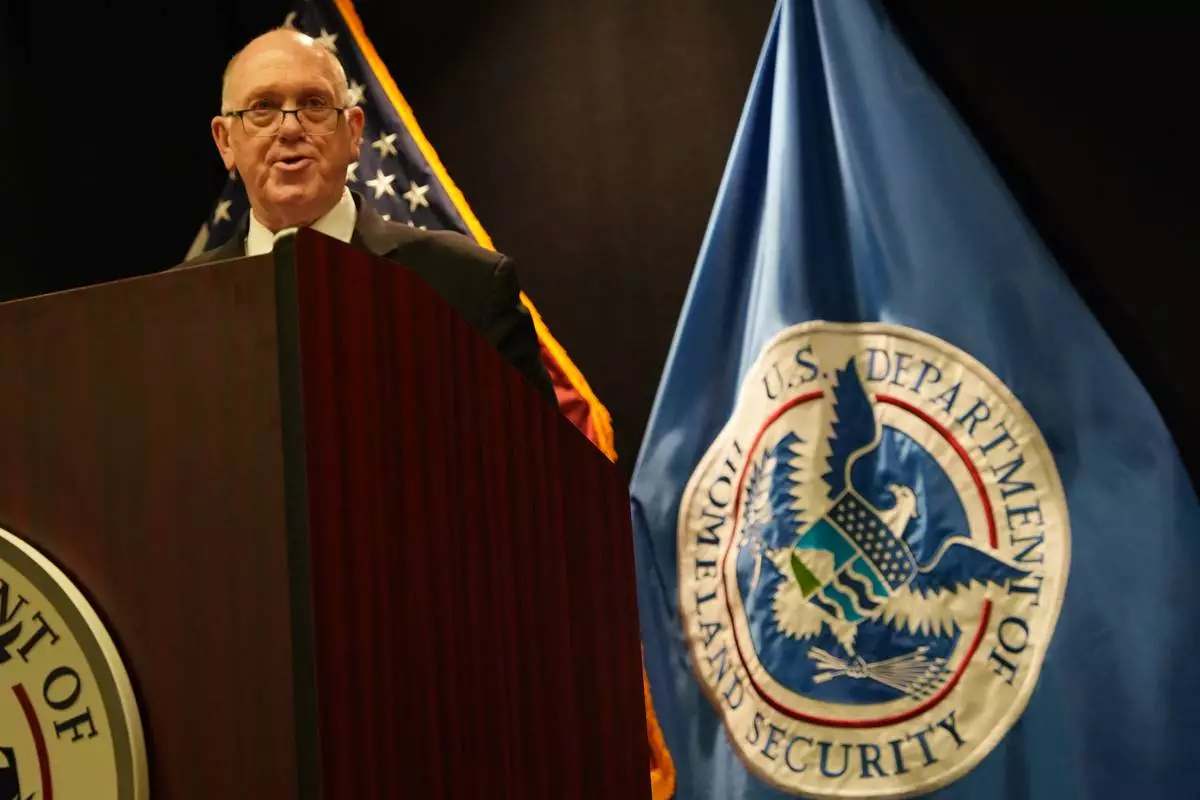
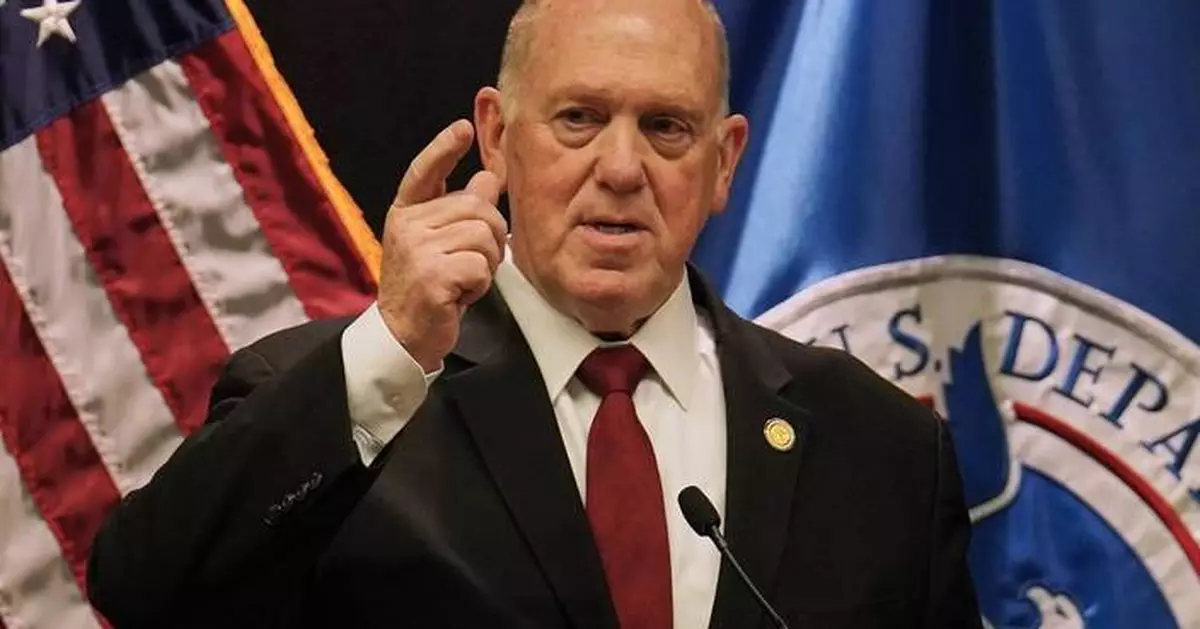
White House border czar Tom Homan holds a news conference at the Bishop Whipple Federal building on Wednesday, Feb. 4, 2026 in Minneapolis. (AP Photo/Ryan Murphy)
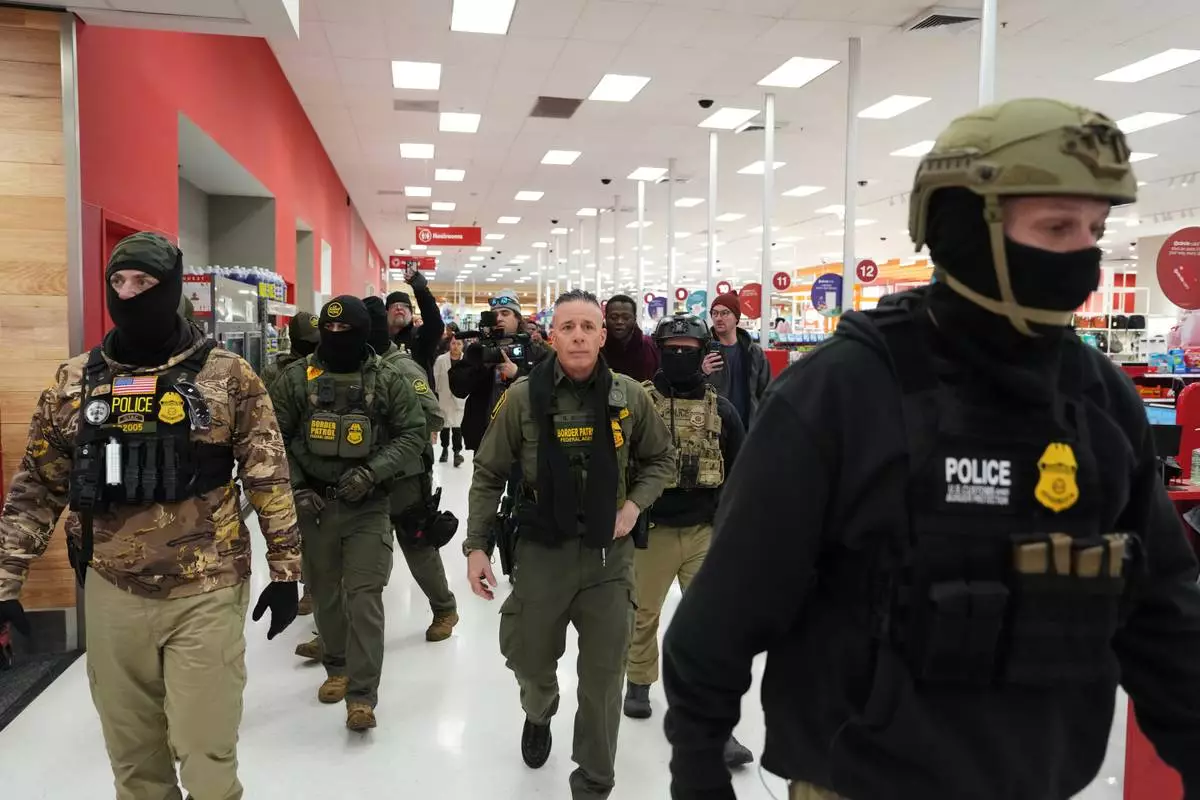
FILE - U.S. Border Patrol Cmdr. Gregory Bovino walks through a Target store Jan. 11, 2026, in St. Paul, Minn. (AP Photo/Adam Gray, File)
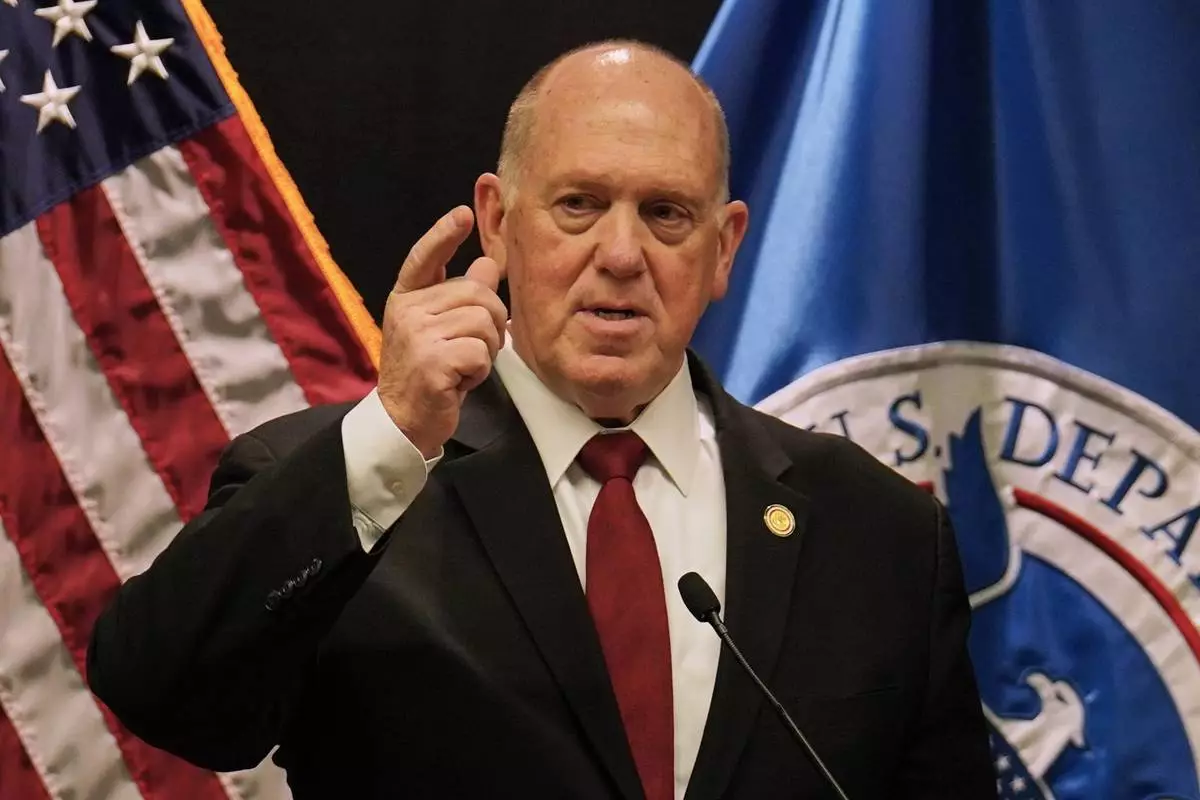
FILE - White House border czar Tom Homan holds a news conference at the Bishop Whipple Federal building on Wednesday, February. 4, 2026 in Minneapolis. (AP Photo/Ryan Murphy, File)