WASHINGTON (AP) — The Environmental Protection Agency on Friday reapproved the weed killer dicamba for use on genetically modified soybeans and cotton, a pesticide that has raised widespread concern over its tendency to drift and destroy nearby crops.
The agency said dicamba was critical for farmers who would otherwise have their crops threatened by fast growing weeds. To ensure the pesticide is used safely, the agency said it imposed strong protections and limits on its use.
Dicamba is a common weed killer that can be sprayed on top of genetically engineered crops. It kills the weeds but doesn't hurt the crops. It has been in use for decades, but it has become more widespread on farms in recent years.
Advocates sharply criticized the agency, saying they are moving forward after courts blocked similar efforts in 2020 and 2024. Allowing its use on these two common crops will drastically expand how much is applied and increase harm, advocates say.
Kelly Ryerson, an activist with the Make American Healthy Again movement that has forged a fragile political allegiance with the Trump administration, said she was disheartened by the decision.
“A top priority of mine was to have the use of Dicamba for over-the-top applications permanently discontinued because” of their harm, she said. “New restrictions on use are not sufficient, and will perpetuate the chemical treadmill where many farmers are trapped.”
The EPA said growers want the weed killer and they need to be supported — and that it isn't a MAHA versus EPA issue.
The agency said concerns about dicamba drifting to places where it was not intended are real and must be managed. It set limits on how much can be applied per acre, how much can be applied on hot days and established buffer zones to prevent harm to nearby crops. If followed, the chemical can be used without threatening humans or the environment, according to EPA.
The American Soybean Association applauded the decision, saying clear rules would help farmers prepare for the next growing season and control destructive weeds.
Environmental groups said dicamba drift has damaged immense acreage, devastating vegetable farms, trees and other critical plants.
“When push comes to shove, this administration is willing to bend over backward to appease the pesticide industry, regardless of the consequences to public health or the environment,” said Nathan Donley, environmental health science director at the nonprofit Center for Biological Diversity.
Environmentalists said the EPA's use restrictions are insufficient, allowing application for too much of the time and for too many days of the year. The buffer the agency uses to prevent harm to nearby plants has already proved ineffective, they said.
Researchers have been working to better understand its health risks. A 2020 study in the International Journal of Epidemiology found that dicamba exposure was linked to an increased risk for some cancers, including liver cancer and a type of leukemia affecting the blood and bone marrow.
Bayer, a manufacturer of dicamba, said the federal registration will allow them to now seek state approvals. They’ll launch training for applicators in the coming weeks.
The Associated Press receives support from the Walton Family Foundation for coverage of water and environmental policy. The AP is solely responsible for all content. For all of AP’s environmental coverage, visit https://apnews.com/hub/climate-and-environment
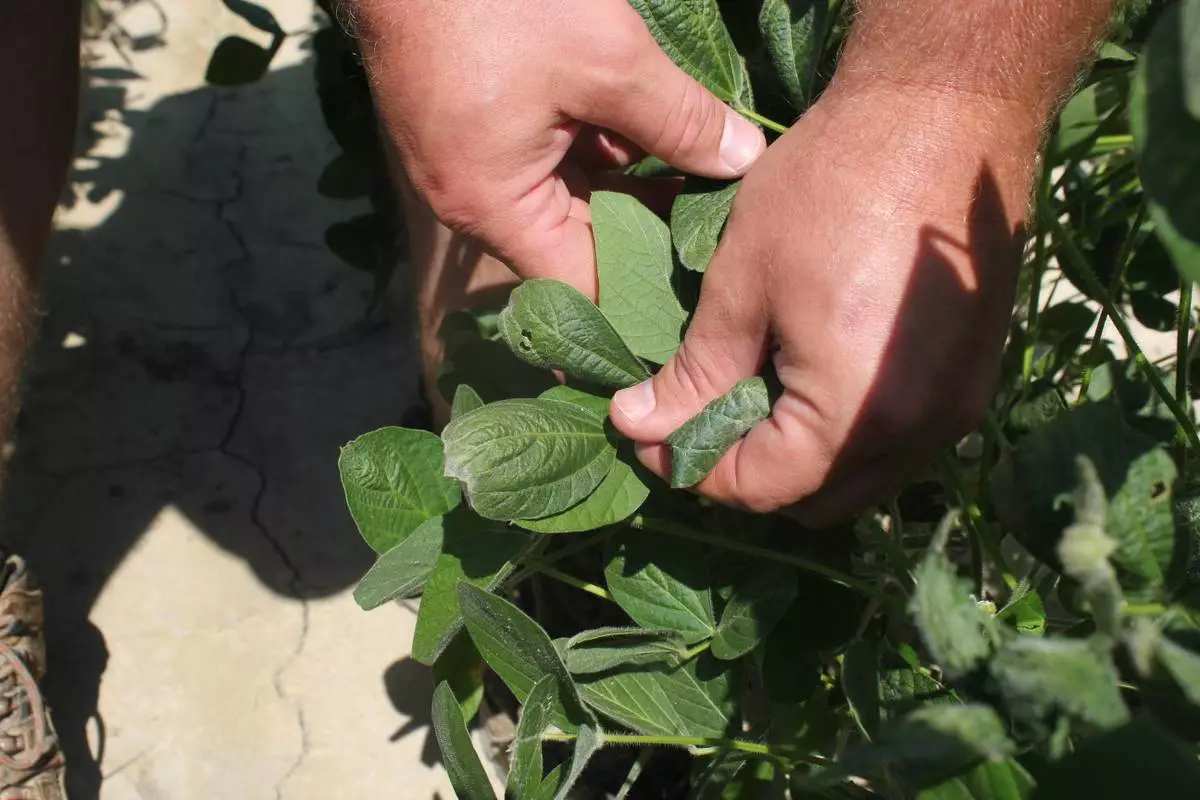
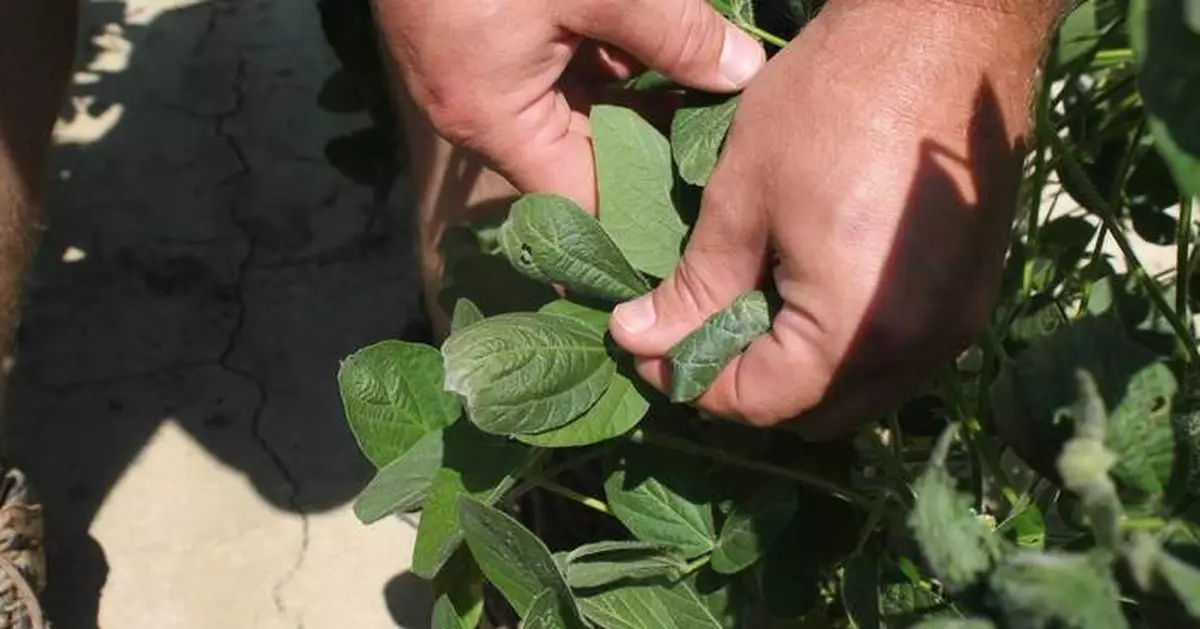
FILE - In this July 11, 2017, file photo, a farmer shows damage to soybean plants from dicamba in Marvell, Ark. (AP Photo/Andrew DeMillo, File)
NEW YORK (AP) — This is not the run up to the midterm elections that Republicans wanted.
A year and a half after winning the White House by promising to lower costs and end wars, Donald Trump is a wartime president overseeing surging energy costs and an escalating overseas conflict that many in his own party do not like.
He offered little clarity to a nation eager for answers this week during a prime-time address from the White House, his first since the U.S. and Israel attacked Iran more than a month ago, simultaneously suggesting that the war was ending and expanding.
“Thanks to the progress we’ve made, I can say tonight that we are on track to complete all of America’s military objectives shortly, very shortly,” Trump said. “We’re going to hit them extremely hard over the next two to three weeks.”
Trump's comments come roughly six months before voters across the nation begin to cast ballots in elections that will decide control of Congress and key governorships for Trump’s final two years in office. For now, Republicans, who control all branches of government in Washington, are bracing for a painful political backlash.
“You’re looking at an ugly November,” warned veteran Republican pollster Neil Newhouse. “At a point in time when we need every break possible to hold the House and Senate, our edge is being chipped away.”
It’s hard to overstate how dramatically the political landscape has shifted.
At this time last year, many Republican leaders believed there was a path to preserve their narrow House majority and easily hold the Senate. Now they privately concede that the House is all but lost and Democrats have a realistic shot at taking the Senate.
Republicans are also struggling to coalesce around a clear midterm message on Iran.
The Republican National Committee has largely avoided the war in talking points issued to surrogates over the last month. The leaders of the party's campaign committees responsible for the House and Senate declined interview requests. Many vulnerable Republican candidates sidestep the issue, unwilling to defend or challenge Trump publicly.
The president remains deeply popular with Republican voters, and he has vocal supporters like Sen. Lindsey Graham of South Carolina.
“That was the best speech I could’ve hoped for,” he wrote on social media after Trump's address on Wednesday evening. Graham said Trump “gave the American people a clear and coherent pathway forward.”
Trump made little effort to sell the conflict to Americans before the initial attack. Five weeks later, at least 13 U.S. service members have been killed and hundreds more injured. Thousands more troops have converged on the region, and the Pentagon requested $200 billion in new funding.
The Strait of Hormuz, a key passage for a fifth of the world’s oil, remains closed. The average price for a gallon of gasoline in the U.S. was $4.08 on Thursday, according to AAA, almost a full dollar higher than on President Joe Biden's last day in office.
On Wednesday, Trump insisted that gas prices would fall quickly once the war concluded but offered no solution for reopening the Strait of Hormuz. Instead, he invited skeptical U.S. allies to do it themselves.
He insisted that the war would be worth it.
“This is a true investment in your grandchildren and your grandchildren’s future,” Trump said. “When it’s all over, the United States will be safer, stronger, more prosperous and greater than it has ever been before.”
Former Rep. Marjorie Taylor Greene, a Georgia Republican who was once among Trump's most vocal allies in Congress, lashed out against his Iran policy.
“I wanted so much for President Trump to put America First. That’s what I believed he would do. All I heard from his speech tonight was WAR WAR WAR,” she wrote on social media. “Nothing to lower the cost of living for Americans.”
About 6 in 10 U.S. adults say the U.S. military action in Iran has “gone too far,” according to AP-NORC polling from March. Roughly a third approve of how he’s handling Iran overall.
The possibility of sending U.S. forces into Iran also appears politically unpalatable.
About 6 in 10 adults are “strongly” or “somewhat” opposed to deploying U.S. troops on the ground to fight Iran. That includes about half of Republicans. Only about 1 in 10 favor deploying troops.
At the same time, Trump’s approval ratings have remained consistently weak. About 4 in 10 Americans approve of how he’s handling the presidency, roughly in line with how it’s been throughout his second term.
Republican strategist Ari Fleischer, a senior aide in former President George W. Bush’s administration, acknowledged that Trump has not received the polling bump in this war that Bush got after invading Iraq.
Bush, of course, worked to build public backing for the Iraq War before going in. Immediately after the 2003 invasion, Bush's popularity soared, as did the stock market.
Public sentiment and the economy soured only after the conflict stretched on. It ultimately spanned more than eight years, spawning a generation of anti-war Republicans — and sowing the seeds of Trump's “America First” foreign policy.
“My hope is that the Trump experience is the exact opposite of the Bush experience,” Fleischer said.
He said Trump must win the war decisively and quickly to avoid a further backlash, saying there could be a “very significant political upside if things end well, oil comes down and markets rally.”
Fleischer added that Trump's actions will matter much more than his words.
“Ultimately, he is not going to get judged on his persuasion or his explanations or his assertions, he’s going to get judged on results,” he said.
Associated Press writer Linley Sanders in Washington contributed to this report.
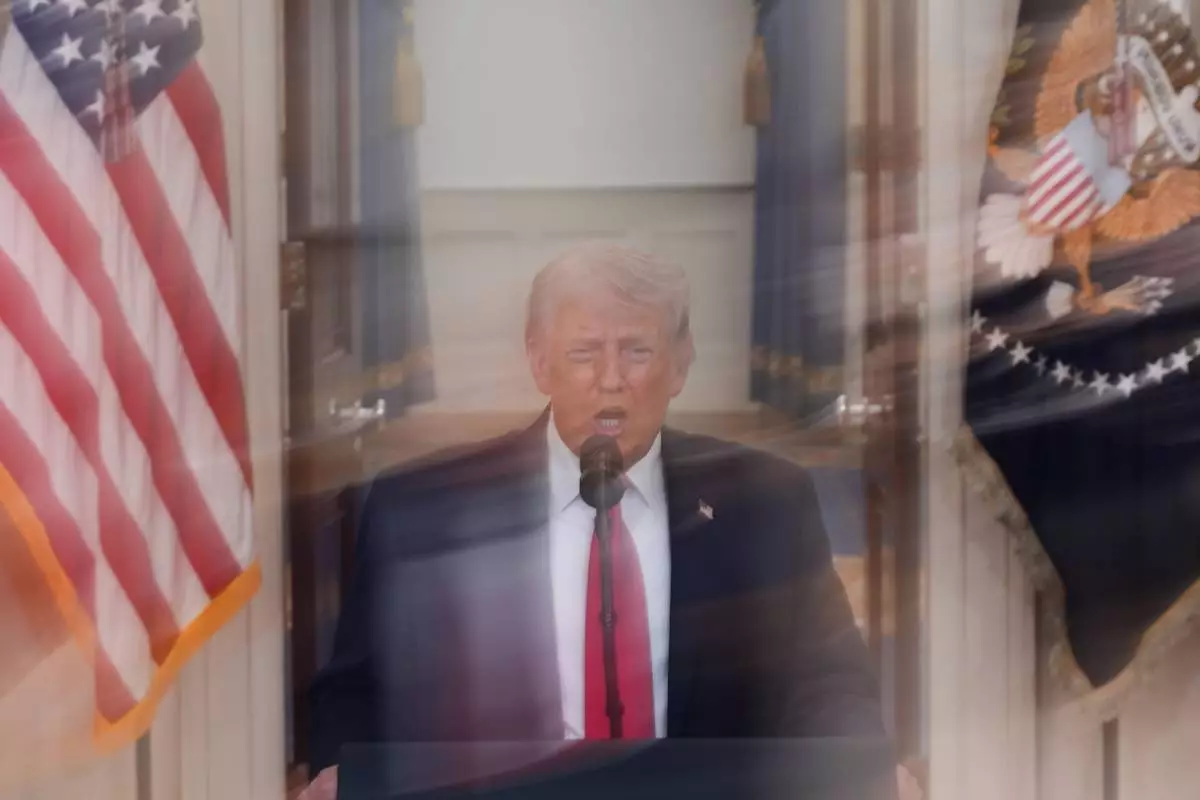
In this image made with a long exposure, President Donald Trump speaks about the Iran war from the Cross Hall of the White House on Wednesday, April 1, 2026, in Washington. (AP Photo/Alex Brandon, Pool)