The indirect talks between Iran and the United States in Oman's Muscat were "a good start", with both sides agreeing to continue negotiations in the future, Iran's Fars News Agency reported Friday, citing Iranian Foreign Minister Seyed Abbas Araghchi.
The talks, the first since the U.S. airstrikes on Iranian nuclear facilities in June 2025, took place in "a positive atmosphere", Araghchi told reporters. He said the two sides held intensive and lengthy talks, with viewpoints conveyed and concerns expressed by the Iranian side, while the other side's views were also heard.
"There is almost a consensus, and it was agreed that they should continue," Araghchi said.
The foreign minister said the talks focused solely on nuclear issues, and that Tehran did not plan to discuss "any other topics" with Washington. However, the U.S. side stressed a broader set of discussions including ballistic missiles, proxies across the region and domestic unrest ahead of the talks.
Also on Friday, U.S. President Donald Trump told reporters that the talks on Iran had been "very good" and will continue early next week.
Following the talks, Al Busaidi, the Omani foreign minister, posted a statement on social media platform X, calling the talks "very serious" and "useful".
The discussions helped clarify each side's position and identify potential areas for progress, he said, adding that the parties will reconvene in due course, and the results will be considered carefully in both Tehran and Washington.
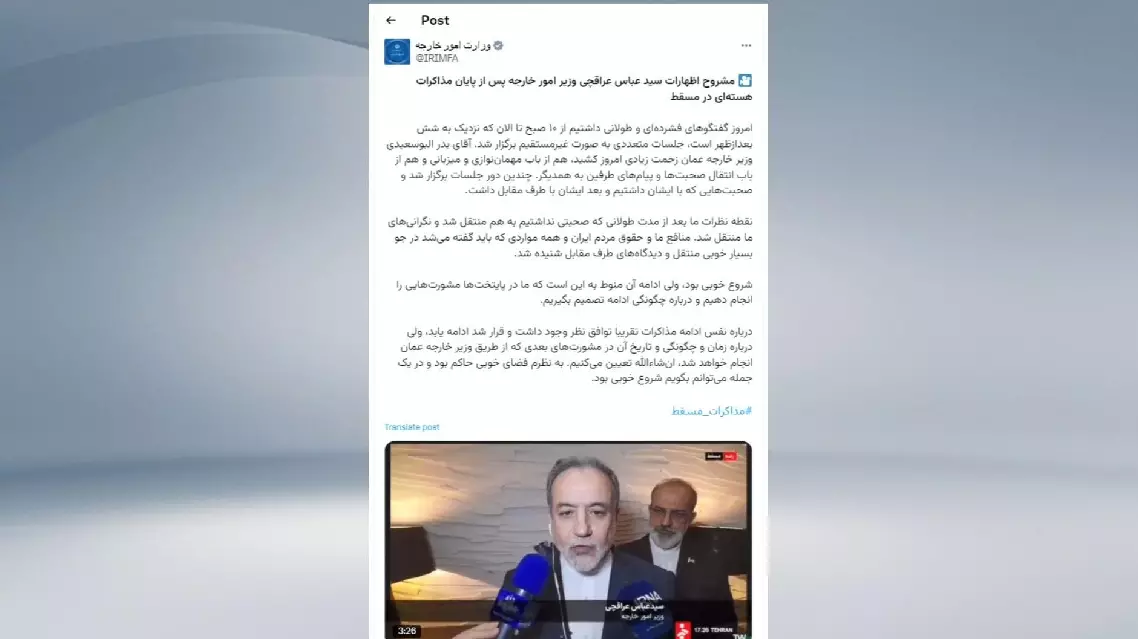
Iran, US agree to continue negotiations: Iranian FM
A group of Japanese citizens held a rally in front of the Prime Minister's Office in Tokyo on Friday, voicing strong opposition to Prime Minister Sanae Takaichi's erroneous remarks on Taiwan and her military expansion plans.
Protesters held up signs and chanted slogans at the rally, condemning Takaichi's wrongful remarks.
"Takaichi's remarks clearly deviate from the previous administration's position. Her claim that a 'Taiwan contingency' could constitute a 'survival-threatening situation' for Japan is an extremely dangerous provocation for war. We absolutely cannot tolerate such statements," said a protester.
"Regarding Takaichi's so-called 'Taiwan contingency' remarks, I believe it was a serious transgression. In an instant, it destroyed the long-accumulated exchanges between our peoples. We have always adhered to the one-China principle, and our people absolutely cannot tolerate such statements," said Masashi Tani, secretary general of the Japan Congress against A-and H-Bombs.
Protesters said that Takaichi's actions since taking office, including revising three national security documents, relaxing restrictions on arms exports, and planning to increase the defense budget, have not only failed to enhance Japan's security but have instead heightened regional tensions.
"This is an administration that could push Japan toward war. I remain highly vigilant about a series of extremely dangerous plans, such as further increasing the defense budget and revising three national security documents. In my view, such a person is utterly unfit to serve as prime minister and should step down as soon as possible," said a protester.
Protesters also argued that Takaichi's rush to dissolve the House of Representatives was based on her own political calculation rather than a response to the real difficulties faced by the public.
"As for Takaichi's forceful dissolution of the House of Representatives, I cannot help but doubt whether she truly understands the real hardships faced by the public. In politics, the primary consideration should be the lives of the people, especially those struggling in cold waves and heavy snow," Tani said.
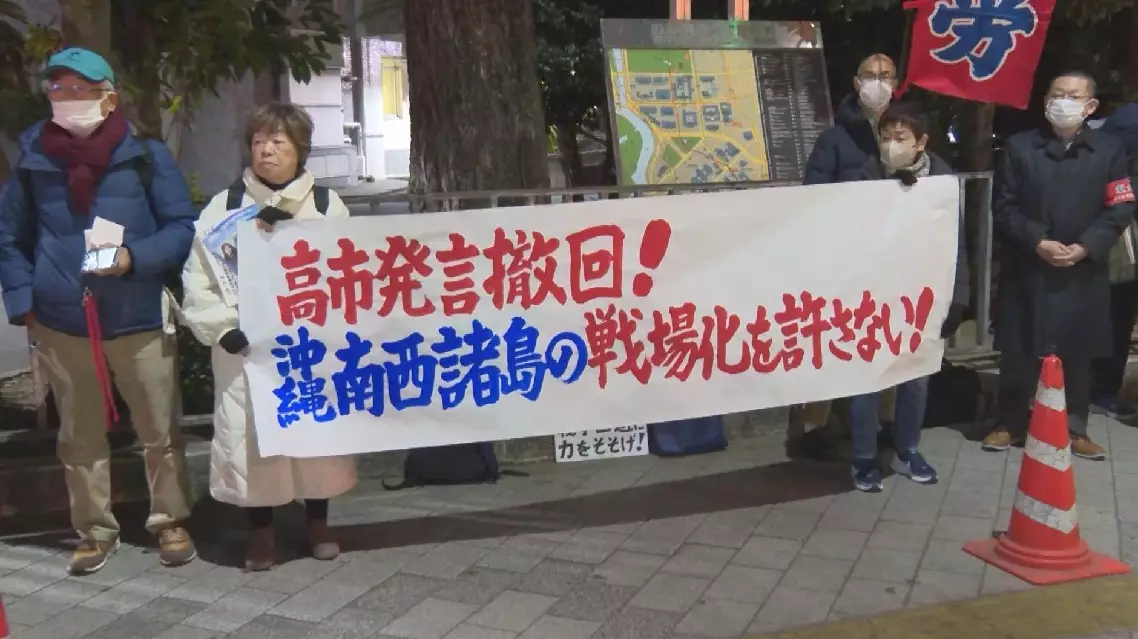
Japanese citizens rally against Takaichi's Taiwan remarks, military buildup