Skip to Content Facebook Feature Image

India and US release a framework for an interim trade agreement to reduce Trump tariffs

News

India and US release a framework for an interim trade agreement to reduce Trump tariffs
News

News

India and US release a framework for an interim trade agreement to reduce Trump tariffs

2026-02-07 16:04 Last Updated At:17:56

NEW DELHI (AP) — India and the United States released a framework for an interim trade agreement to lower tariffs on Indian goods, which Indian opposition accused of favoring Washington.

The joint statement, released Friday, came after U.S. President Donald Trump announced his plan last week to reduce import tariffs on the South Asian country, six months after imposing steep taxes to press New Delhi to cut its reliance on cheap Russian crude.

Under the deal, tariffs on goods from India would be lowered to 18%, from 25%, after Indian Prime Minister Narendra Modi agreed to stop buying Russian oil, Trump had said.

The two countries called the agreement “reciprocal and mutually beneficial” and expressed commitment to work toward a broader trade deal that “will include additional market access commitments and support more resilient supply chains.” The framework said that more negotiations will be needed to formalize the agreement.

India would also “eliminate or reduce tariffs” on all U.S. industrial goods and a wide range of food and agricultural products, Friday's statement said.

The U.S. president had said that India would start to reduce its import taxes on U.S. goods to zero and buy $500 billion worth of American products over five years, part of the Trump administration’s bid to seek greater market access and zero tariffs on almost all American exports.

Trump also signed an executive order on Friday to revoke a separate 25% tariff on Indian goods he imposed last year.

Indian Prime Minister Narendra Modi thanked Trump “for his personal commitment to robust ties.”

“This framework reflects the growing depth, trust and dynamism of our partnership,” Modi said on social media, adding it will “further deepen investment and technology partnerships between us.”

India’s opposition political parties have largely criticized the deal, saying it heavily favors the U.S. and negatively impacts sensitive sectors such as agriculture. In the past, New Delhi had opposed tariffs on sectors such as agriculture and dairy, which employ the bulk of the country’s population.

Meanwhile, Piyush Goyal, Indian Trade Minister, said the deal protects “sensitive agricultural and dairy products” including maize, wheat, rice, ethanol, tobacco, and some vegetables.

“This (agreement) will open a $30 trillion market for Indian exporters,” Goyal said in a social media post, referring to the U.S. annual GDP. He said the increase in exports was likely to create hundreds of thousands of new job opportunities.

Goyal also said tariffs will go down to zero on a wide range of Indian goods exported to the U.S., including generic pharmaceuticals, gems and diamonds, and aircraft parts, further enhancing the country's export competitiveness.

India and the European Union recently reached a free trade agreement that could affect as many as 2 billion people after nearly two decades of negotiations. That deal would enable free trade on almost all goods between the EU’s 27 members and India, covering everything from textiles to medicines, and bringing down high import taxes for European wine and cars.

India also signed a comprehensive economic partnership agreement with Oman in December and concluded talks for a free trade deal with New Zealand.
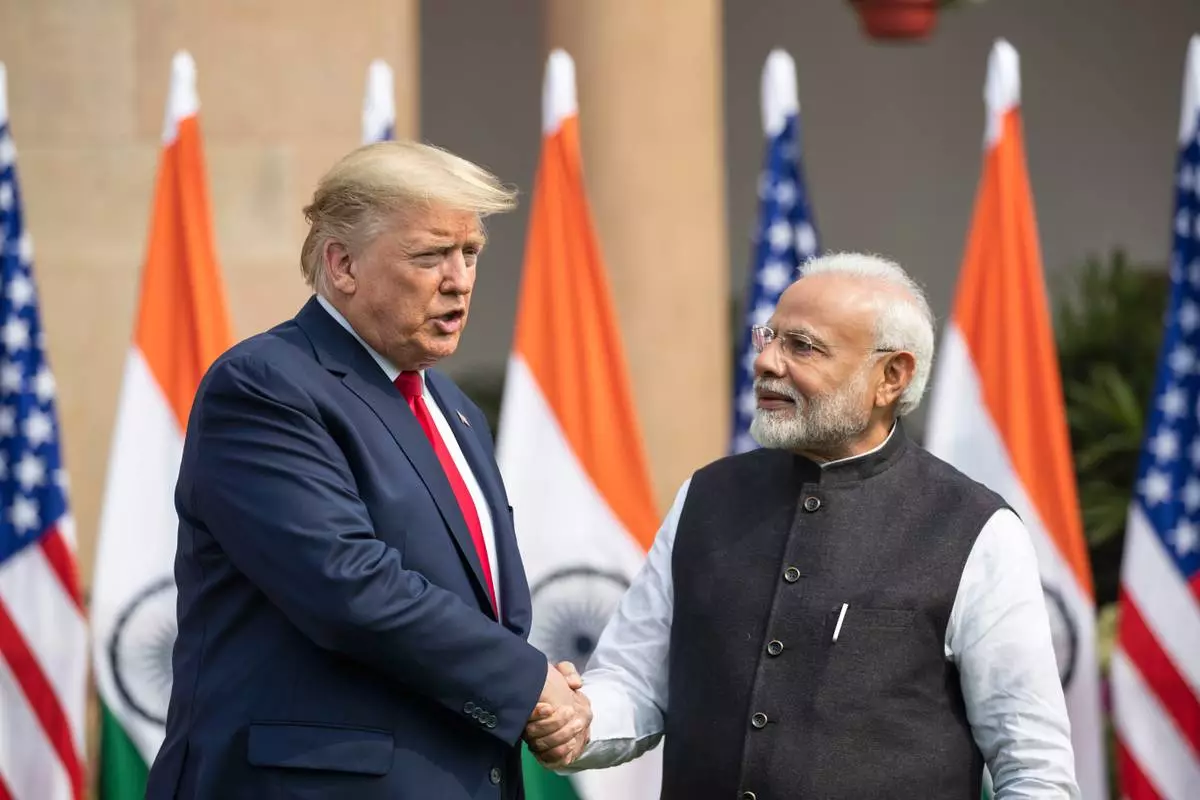
FILE-U.S. President Donald Trump and Indian Prime Minister Narendra Modi shake hands before their meeting at Hyderabad House, Feb. 25, 2020, in New Delhi, India. (AP Photo/Alex Brandon, file)
FILE-U.S. President Donald Trump and Indian Prime Minister Narendra Modi shake hands before their meeting at Hyderabad House, Feb. 25, 2020, in New Delhi, India. (AP Photo/Alex Brandon, file)

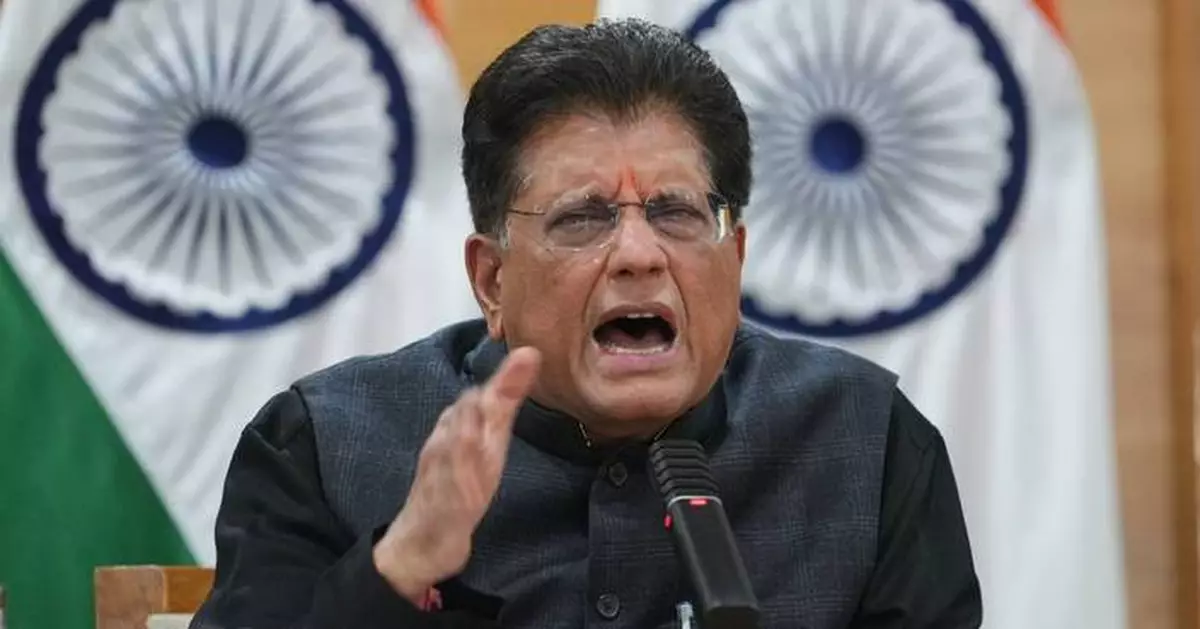
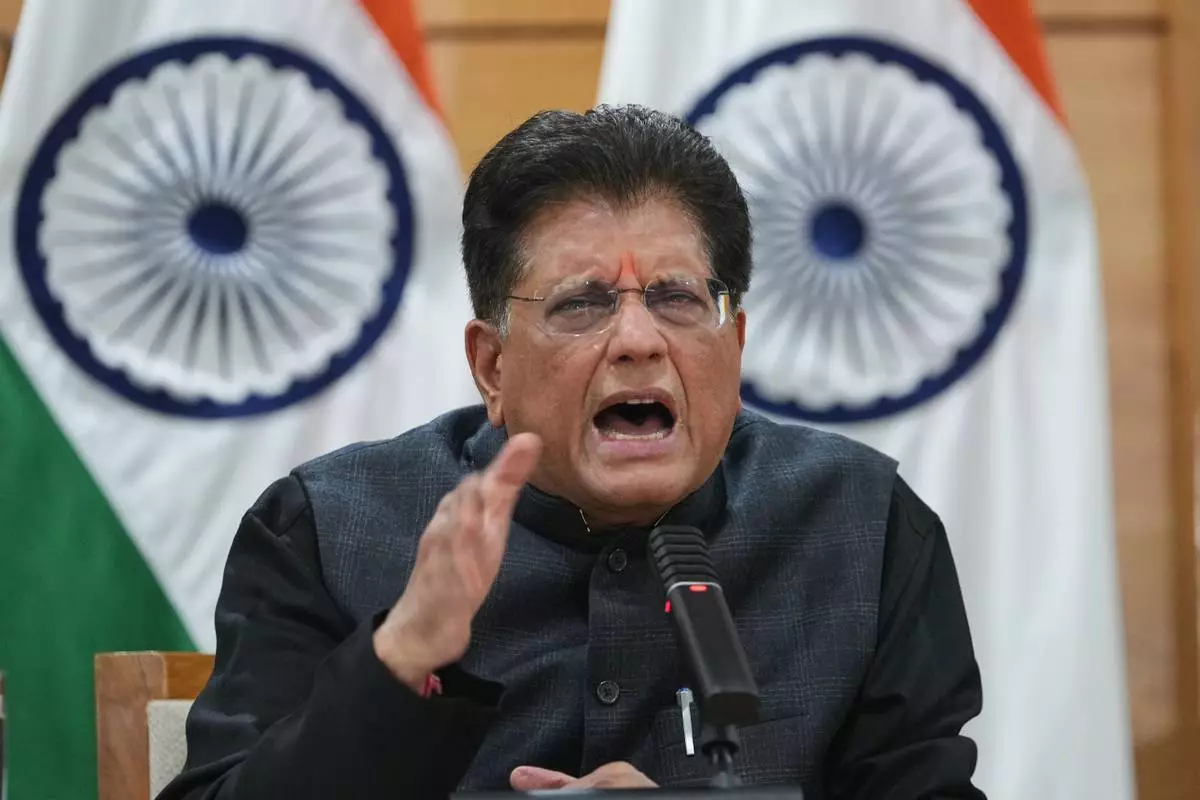
Indian Minister of Commerce and Industry Piyush Goyal makes a press statement on the completion of India-US tariff in New Delhi, India, Tuesday, Feb. 3, 2026. (AP Photo/Manish Swarup)
Indian Minister of Commerce and Industry Piyush Goyal makes a press statement on the completion of India-US tariff in New Delhi, India, Tuesday, Feb. 3, 2026. (AP Photo/Manish Swarup)
ROME (AP) — Pope Leo XIV on Saturday named a veteran Vatican diplomat as his new ambassador to the United States to manage one of the Holy See’s most important bilateral relationships at a crucial time, with ties strained over the Trump administration’s war in Iran and immigration crackdown.

Italian Archbishop Gabriele Caccia, 68, is currently the Holy See’s ambassador to the United Nations in New York. He replaces French-born Cardinal Christophe Pierre, who at age 80 is retiring as apostolic nuncio in Washington.

Caccia served as the Holy See’s ambassador to Lebanon and the Philippines before being posted to the U.N. in 2019. Ordained a priest in Milan in 1983, Caccia later served as “assessor” in the Vatican secretariat of state, a key administrative post in the Holy See's most important office.

He inherits a complicated and consequential dossier on both the U.S. church and state fronts at a time of global turmoil.

Pierre’s tenure as ambassador was notable for clear signs of friction between the leadership of the U.S. Conference of Catholic Bishops, which tends to skew conservative, and the more progressive priorities of Pope Francis’ pontificate.

The relationship with the U.S. and its church is crucial for the Holy See, not least because U.S. Catholics are the most generous donors to the Holy See’s coffers.

Leo, history’s first U.S.-born pope, is well aware of the dynamic, having served as Francis’ point man on bishop nominations for two years before his 2025 election. Leo has emphasized a message of pacification and unity in the church.

The first Trump administration clashed with Francis especially on migration, and that tension has continued in Leo’s pontificate and the second Trump term. Leo has repeatedly insisted that the Trump administration respect the human dignity of migrants, while acknowledging its right to its borders.

More recently, Leo has expressed “profound concern” about the U.S.-Israeli war in Iran and urged both sides to “stop the spiral of violence before it becomes an irreparable abyss.”

In comments last Sunday, Leo called for the resumption of diplomacy. Weapons, he said, only sow “destruction, pain and death.”

In a major foreign policy speech earlier this year, Leo also made clear he opposed the U.S. aggressive use of military power, in an apparent reference to Washington's incursion in Venezuela and threats to take Greenland. He denounced how nations were using force to assert their dominion worldwide and “completely undermine” peace and the post-World War II international legal order.

Caccia said in a statement Saturday he was humbled by Leo's appointment and faith in naming him ambassador to his native country.

“I receive this mission with both joy and a sense of trepidation,” according to a statement reported by Vatican News. He said his was a mission “at the service of communion and peace,” recalling that this year marks the 250th anniversary of the U.S. independence.

The current president of the U.S. conference, Archbishop Paul S. Coakley, welcomed Caccia’s appointment and offered the U.S. hierarchy’s “warmest welcome and our prayerful support.”

The Holy See has a tradition of diplomatic neutrality, though Leo has spoken out strongly against the humanitarian toll of Israel’s military action in Gaza and Russia’s invasion of Ukraine.

Associated Press religion coverage receives support through the AP’s collaboration with The Conversation US, with funding from Lilly Endowment Inc. The AP is solely responsible for this content.

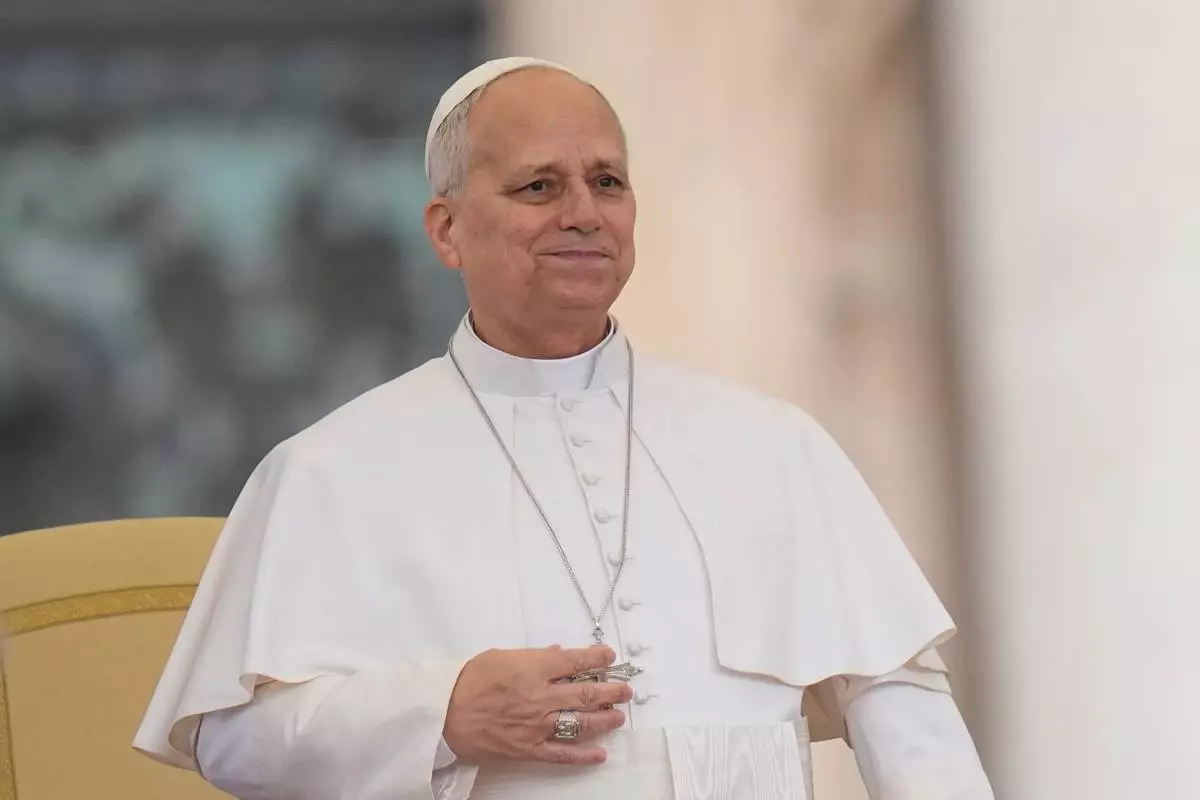
Pope Leo XIV holds his weekly general audience in St. Peter's Square, at the Vatican, Wednesday, March 4, 2026. (AP Photo/Alessandra Tarantino)

Pope Leo XIV holds his weekly general audience in St. Peter's Square, at the Vatican, Wednesday, March 4, 2026. (AP Photo/Alessandra Tarantino)

Recommended Articles