DORAL, Fla. (AP) — President Donald Trump said Saturday that the United States and Latin American countries are banding together to combat violent cartels as his administration looks to demonstrate it remains committed to sharpening U.S. foreign policy focus on the Western Hemisphere even while dealing with five-alarm crises around the globe.
Trump encouraged regional leaders gathered at his Miami-area golf club to take military action against drug trafficking cartels and transnational gangs that he says pose an “unacceptable threat” to the hemisphere's national security.
Click to Gallery
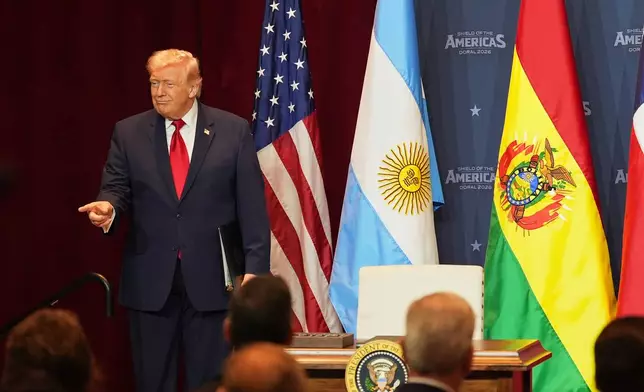
President Donald Trump arrives at the Shield of the Americas Summit, Saturday, March 7, 2026, at Trump National Doral Miami in Doral, Fla. (AP Photo/Rebecca Blackwell)
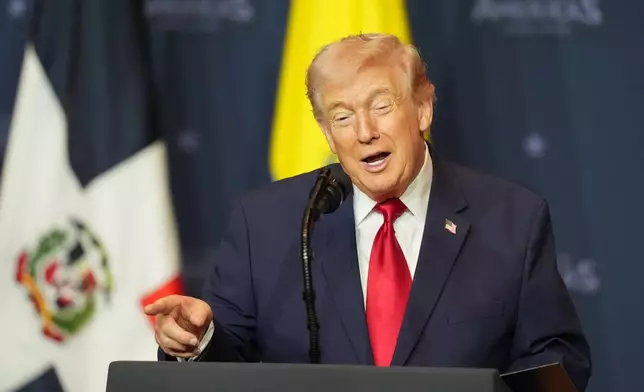
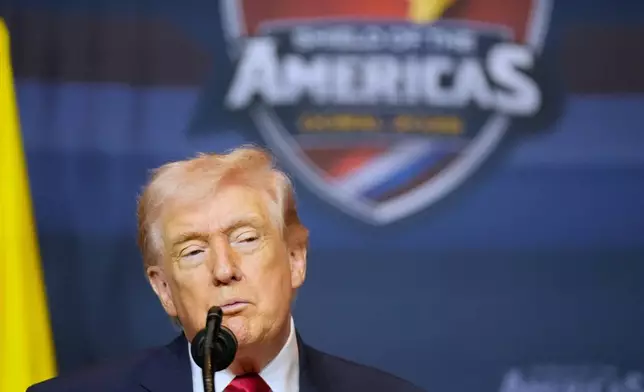
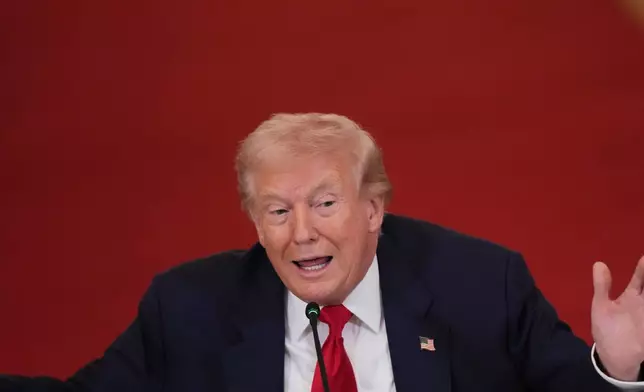
President Donald Trump speaks at the Shield of the Americas Summit, Saturday, March 7, 2026, at Trump National Doral Miami in Doral, Fla. (AP Photo/Rebecca Blackwell)
President Donald Trump speaks at the Shield of the Americas Summit, Saturday, March 7, 2026, at Trump National Doral Miami in Doral, Fla. (AP Photo/Rebecca Blackwell)
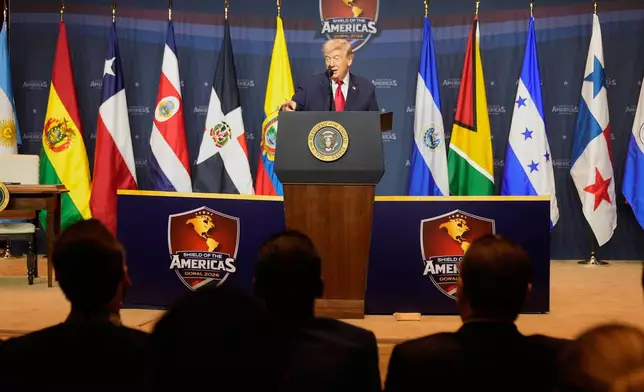
President Donald Trump speaks at the Shield of the Americas Summit, Saturday, March 7, 2026, at Trump National Doral Miami in Doral, Fla. (AP Photo/Mark Schiefelbein)
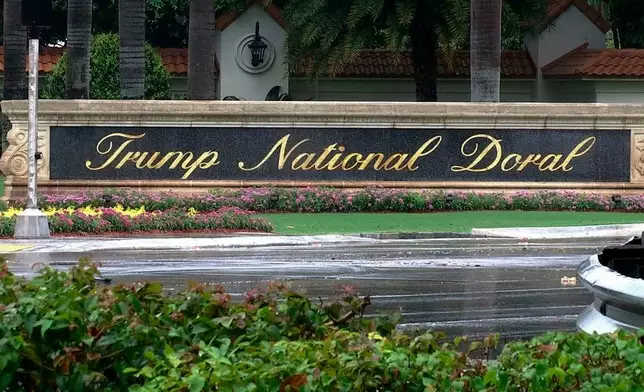
FILE - This image from video shows the Trump National Doral in Doral, Fla., June 2, 2017. (AP Photo/Alex Sanz, File)
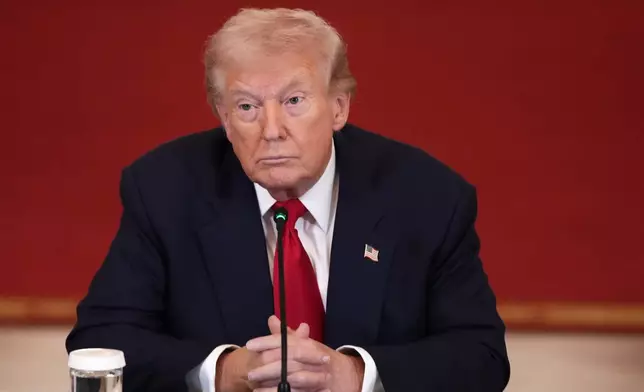
President Donald Trump listens during a roundtable discussion on college sports in the East Room of the White House, Friday, March 6, 2026, in Washington. (AP Photo/Julia Demaree Nikhinson)
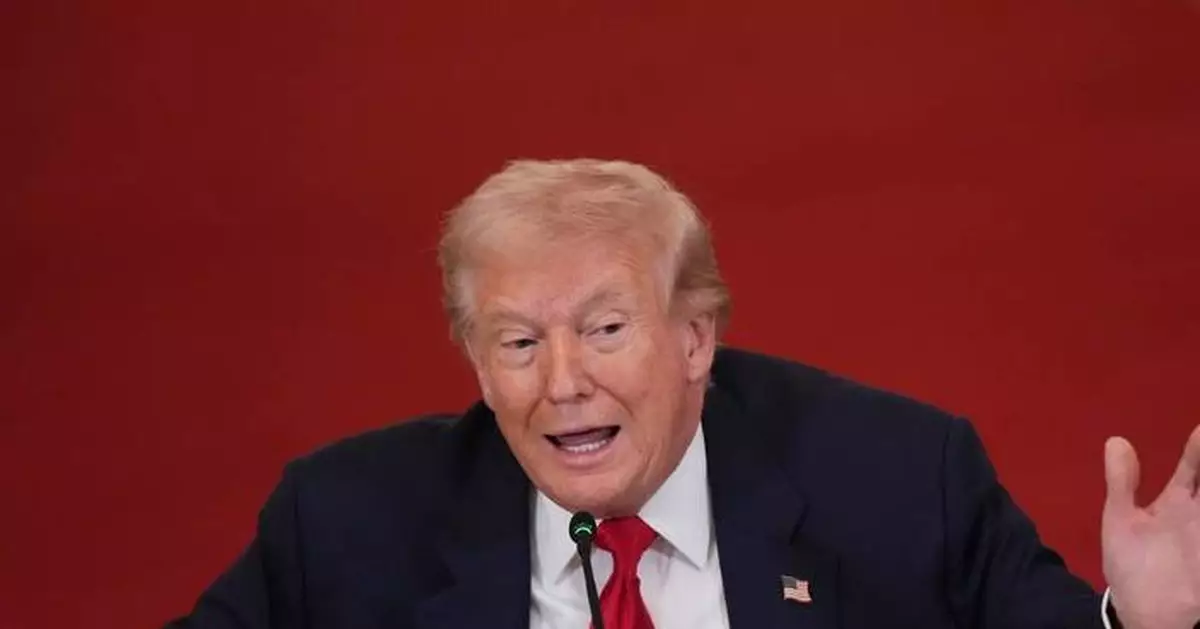
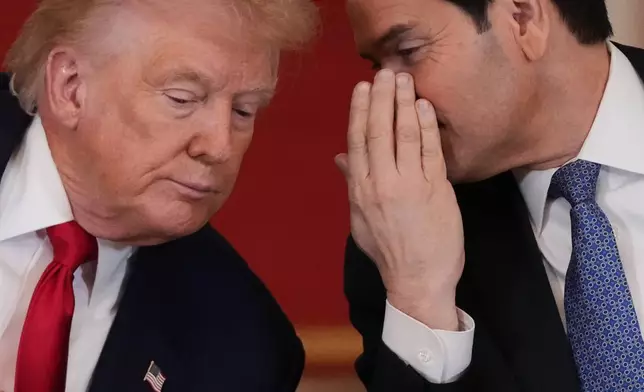
President Donald Trump speaks with Secretary of State Marco Rubio during a roundtable discussion on college sports in the East Room of the White House, Friday, March 6, 2026, in Washington. (AP Photo/Julia Demaree Nikhinson)
President Donald Trump speaks during a roundtable discussion on college sports in the East Room of the White House, Friday, March 6, 2026, in Washington. (AP Photo/Julia Demaree Nikhinson)
“The only way to defeat these enemies is by unleashing the power of our militaries," Trump said. “We have to use our military. You have to use your military.” Citing the U.S.-led coalition that confronted the Islamic State group in the Middle East, the Republican president said that ”we must now do the same thing to eradicate the cartels at home.”
The gathering, which the White House called the “Shield of the Americas” summit, came just two months after Trump ordered an audacious U.S. military operation to capture Venezuela's then-president, Nicolás Maduro, and whisk him and his wife to the United States to face drug conspiracy charges.
Looming even larger is Trump's decision to join with Israel to launch a war on Iran one week ago, a conflict that has left hundreds dead, convulsed global markets and unsettled the broader Middle East.
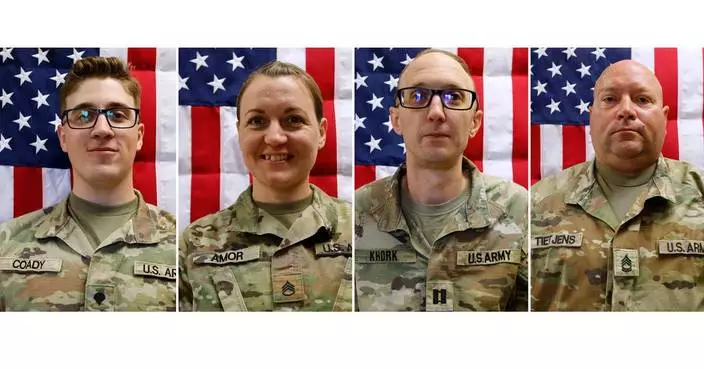
Trump's time with the Latin American leaders was limited: After, he was setting out for Dover Air Force Base, Delaware, to be on hand for the dignified transfer of the six U.S. troops killed in a drone strike on a command center in Kuwait, one day after the U.S. and Israel launched their military campaign against Iran.
But with the summit, Trump aimed to turn attention to the Western Hemisphere, at least for a moment. He has pledged to reassert U.S. dominance in the region and push back on what he sees as years of Chinese economic encroachment in America's backyard.
Trump also said the U.S. will turn its attention to Cuba after the war with Iran and suggested his administration would cut a deal with Havana, underscoring Washington's increasingly aggressive stance against the island's communist leadership. "Great change will soon be coming to Cuba,” he said, adding that “they’re very much at the end of the line.”
The leaders of Argentina, Bolivia, Chile, Costa Rica, the Dominican Republic, Ecuador, El Salvador, Guyana, Honduras, Panama, Paraguay, and Trinidad and Tobago joined the Republican president at Trump National Doral Miami, a golf resort where he is also set to host the Group of 20 summit later this year.
The idea for a summit of like-minded conservatives from across the hemisphere emerged from the ashes of what was to be the 10th edition of the Summit of the Americas, which was scrapped during the U.S. military buildup off the coast of Venezuela last year.
Host Dominican Republic, pressured by the White House, had barred Cuba, Nicaragua and Venezuela from attending the regional gathering. But after leftist leaders in Colombia and Mexico threatened to pull out in protest — and with no commitment from Trump to attend — the Dominican Republic's president, Luis Abinader, decided at the last minute to postpone the event, citing “deep differences” in the region.
The Shield of the Americas moniker was meant to speak to Trump’s vision for a “America First” foreign policy toward the region that leverages U.S. military and intelligence assets unseen across the area since the end of the Cold War.
Notably missing at the event were the region’s two dominant powers — Brazil and Mexico — as well as Colombia, long the linchpin of U.S. anti-narcotics strategy in the region.
Richard Feinberg, who helped plan the first Summit of Americas in 1994 while working at the National Security Council in the Clinton White House, said the contrast could not be starker.
“The first Summit of the Americas, with 34 nations and a carefully negotiated comprehensive agenda for regional competitiveness, projected inclusion, consensus and optimism,” said Feinberg, now professor emeritus at the University of California, San Diego. “The hastily convened Shield of the Americas mini-summit conjures a crouched defensiveness, with only a dozen or so attendees huddled around a single dominant figure.”
Since returning to the White House, Trump has made countering Chinese influence in the hemisphere a top priority. His national security strategy promotes the “Trump Corollary” to the 19th century Monroe Doctrine, which had sought to ban European incursions in the Americas, by targeting Chinese infrastructure projects, military cooperation and investment in the region’s resource industries.
The first demonstration of the more muscular approach was Trump’s strong-arming of Panama to withdraw from China’s Belt and Road Initiative and review long-term port contracts held by a Hong Kong-based company amid U.S. threats to retake the Panama Canal.
More recently, the U.S. capture of Maduro and Trump’s pledge to “run” Venezuela threatens to disrupt oil shipments to China — the biggest buyer of Venezuelan crude before the raid — and bring into Washington’s orbit one of Beijing’s closest allies in the region. Trump is scheduled to travel to Beijing later this month to meet with Chinese President Xi Jinping.
But even leaders closely aligned with Trump have been reluctant to sever ties with China, said Evan Ellis, an expert on Chinese engagement in the region at the Center for Strategic and International Studies.
For many countries, China’s trade-focused diplomacy fills a critical financial void in a region with major development challenges ranging from poverty reduction to infrastructure bottlenecks. In contrast, Trump has been slashing foreign assistance to the region while rewarding countries lined up behind his crackdown on immigration — a policy widely unpopular across the hemisphere.
“The U.S. is offering the region tariffs, deportations and militarization whereas China is offering trade and investment,” said Kevin Gallagher, director of Boston University's Global Development Policy Center, who has written extensively about China’s economic diplomacy in the Americas. “Leaders in the region would do well to remain neutral and hedge, such that they can leverage increased U.S.-China rivalry to their own benefit.”
Before the summit, Trump named Kristi Noem, whom he just removed as his homeland secretary, as his special envoy for the Shield of the Americas.
Noem said Trump will announce “a big agreement” at the summit centered on “how we’re going to go after cartels and drug trafficking in the entire Western Hemisphere.”
Associated Press writer Alanna Durkin Richer in Washington contributed to this report.
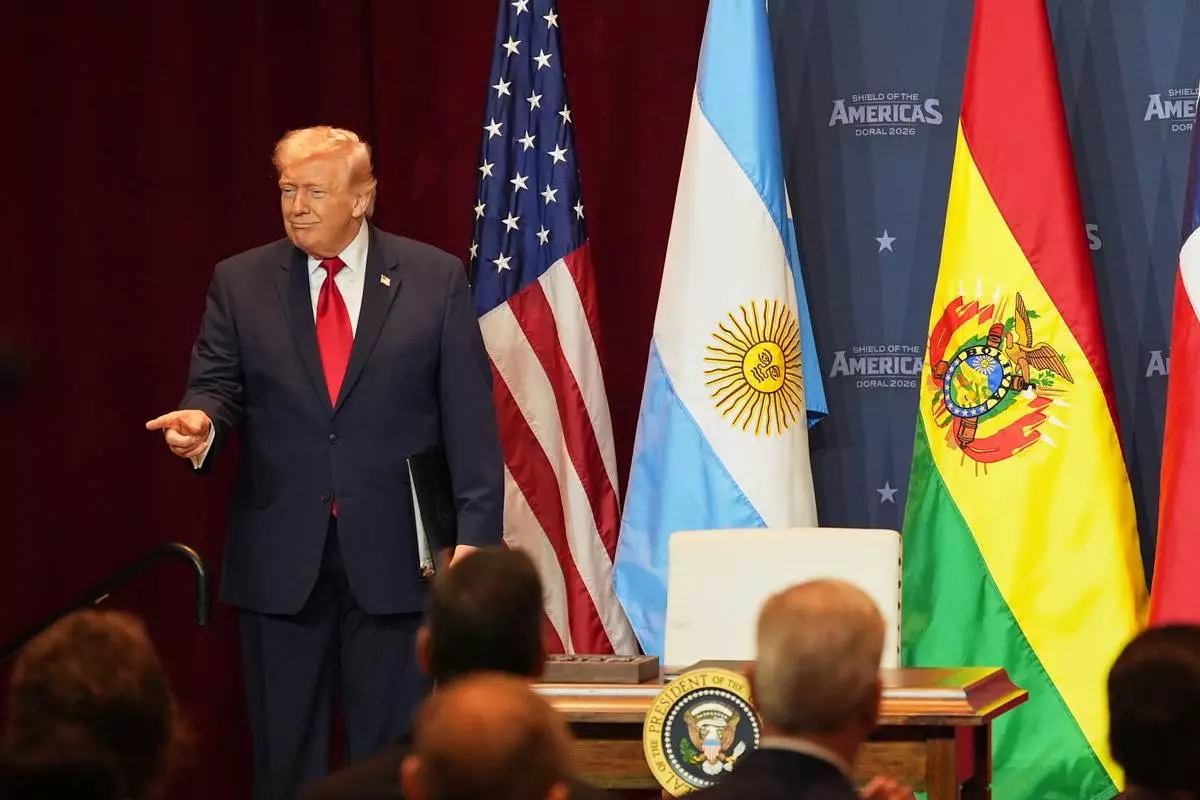
President Donald Trump arrives at the Shield of the Americas Summit, Saturday, March 7, 2026, at Trump National Doral Miami in Doral, Fla. (AP Photo/Rebecca Blackwell)
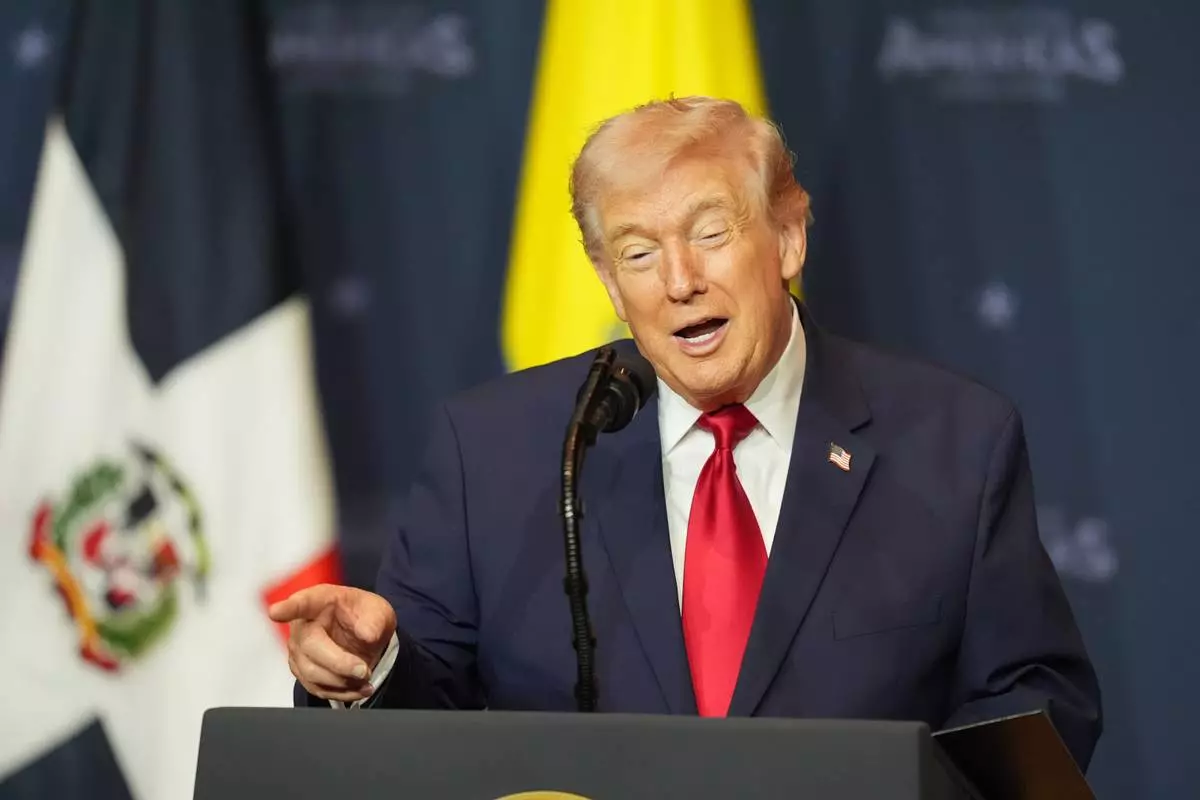
President Donald Trump speaks at the Shield of the Americas Summit, Saturday, March 7, 2026, at Trump National Doral Miami in Doral, Fla. (AP Photo/Rebecca Blackwell)
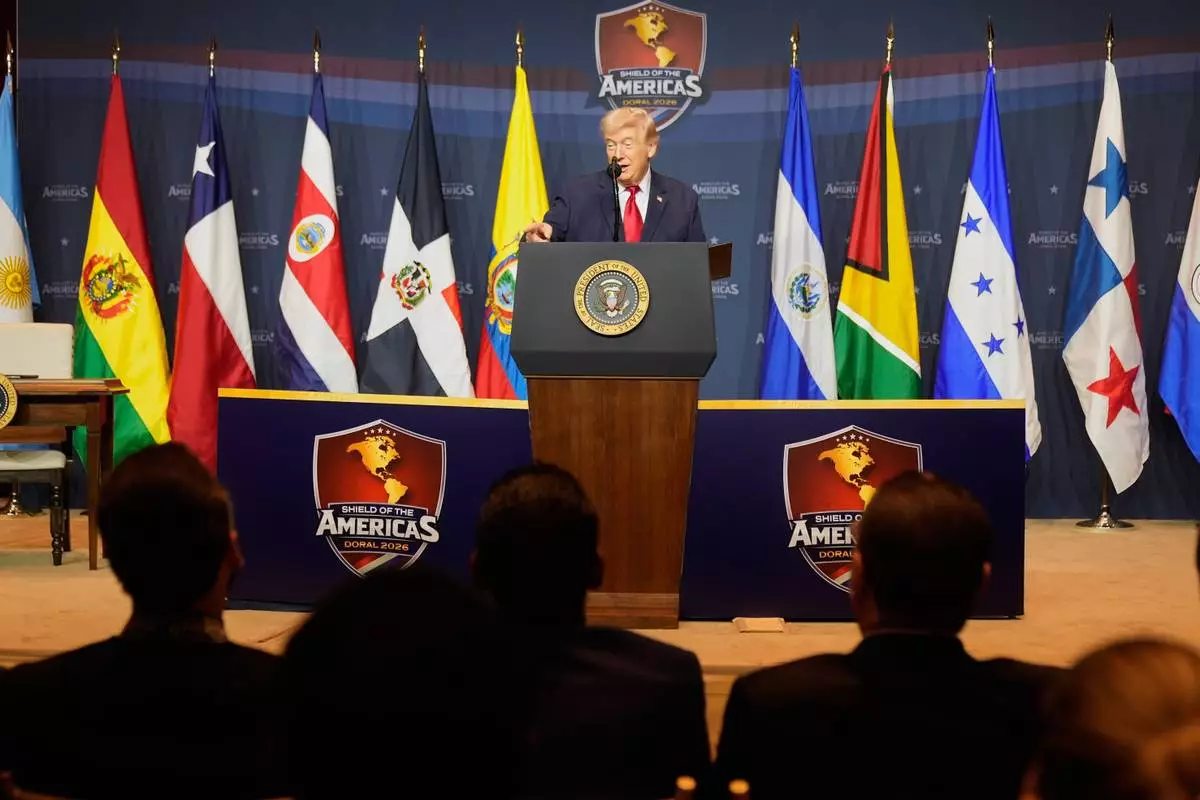
President Donald Trump speaks at the Shield of the Americas Summit, Saturday, March 7, 2026, at Trump National Doral Miami in Doral, Fla. (AP Photo/Rebecca Blackwell)
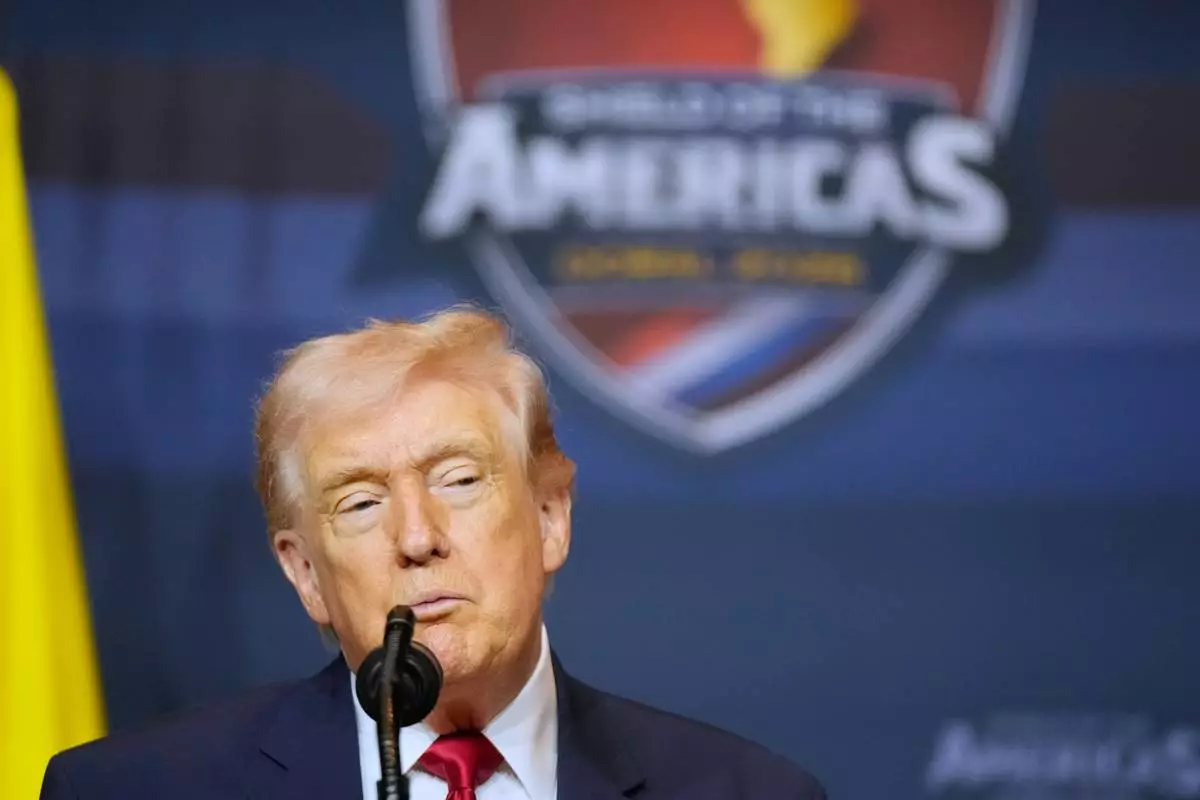
President Donald Trump speaks at the Shield of the Americas Summit, Saturday, March 7, 2026, at Trump National Doral Miami in Doral, Fla. (AP Photo/Mark Schiefelbein)
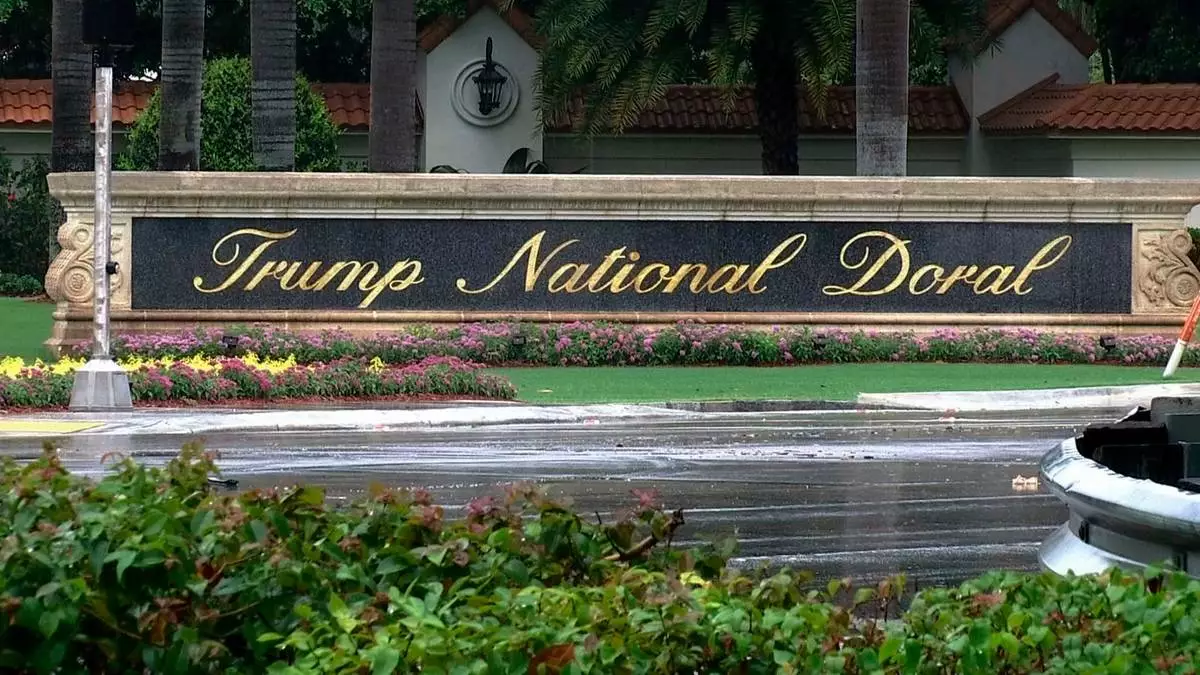
FILE - This image from video shows the Trump National Doral in Doral, Fla., June 2, 2017. (AP Photo/Alex Sanz, File)
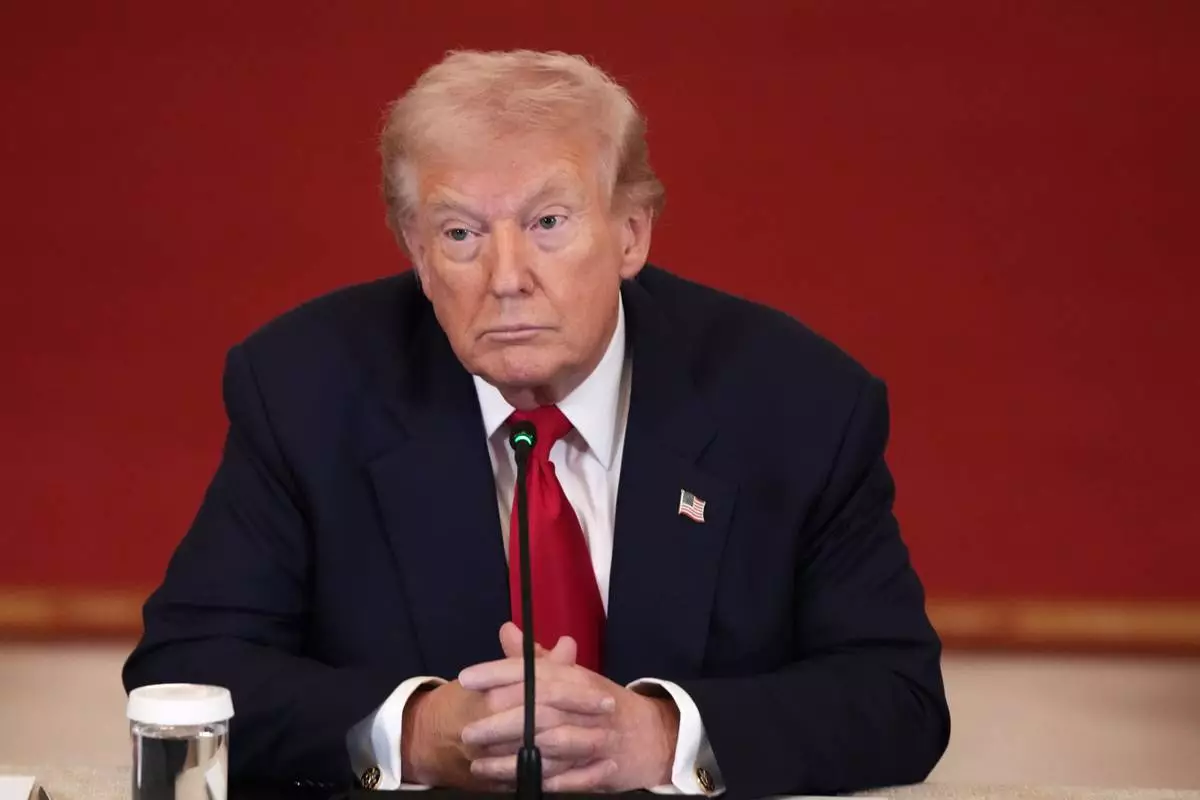
President Donald Trump listens during a roundtable discussion on college sports in the East Room of the White House, Friday, March 6, 2026, in Washington. (AP Photo/Julia Demaree Nikhinson)
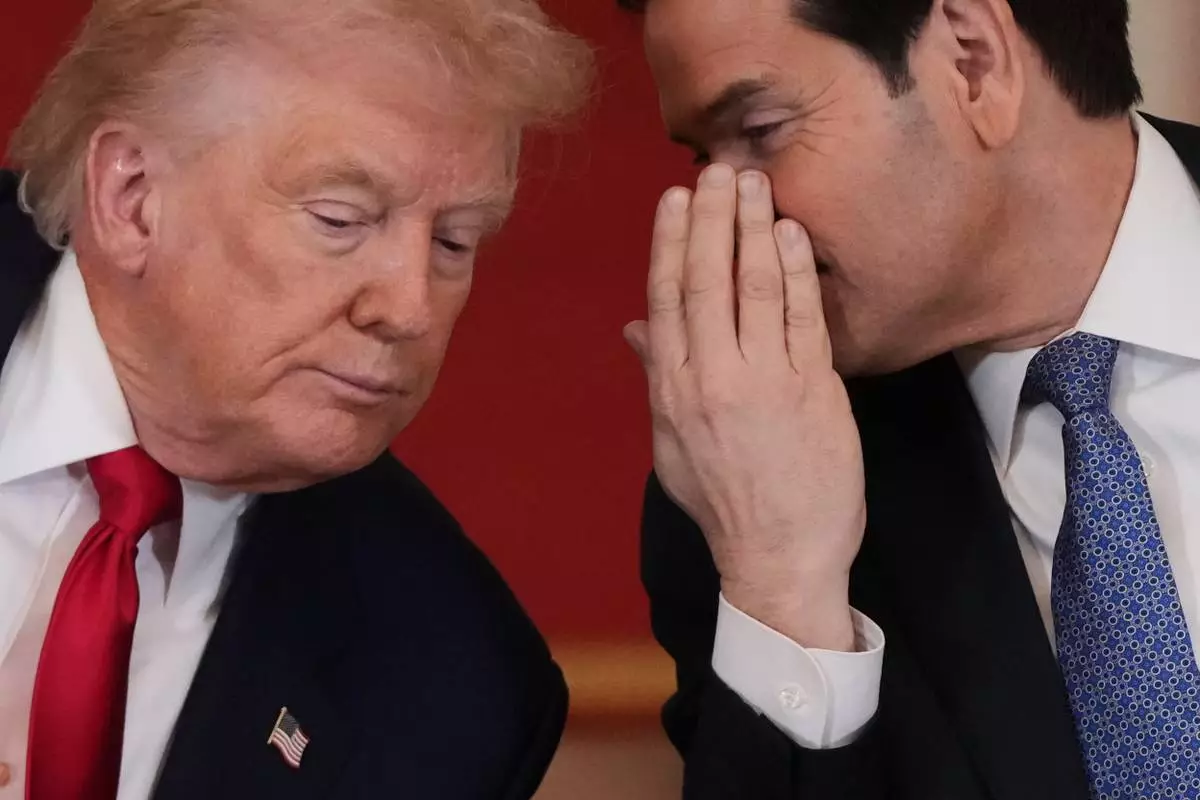
President Donald Trump speaks with Secretary of State Marco Rubio during a roundtable discussion on college sports in the East Room of the White House, Friday, March 6, 2026, in Washington. (AP Photo/Julia Demaree Nikhinson)
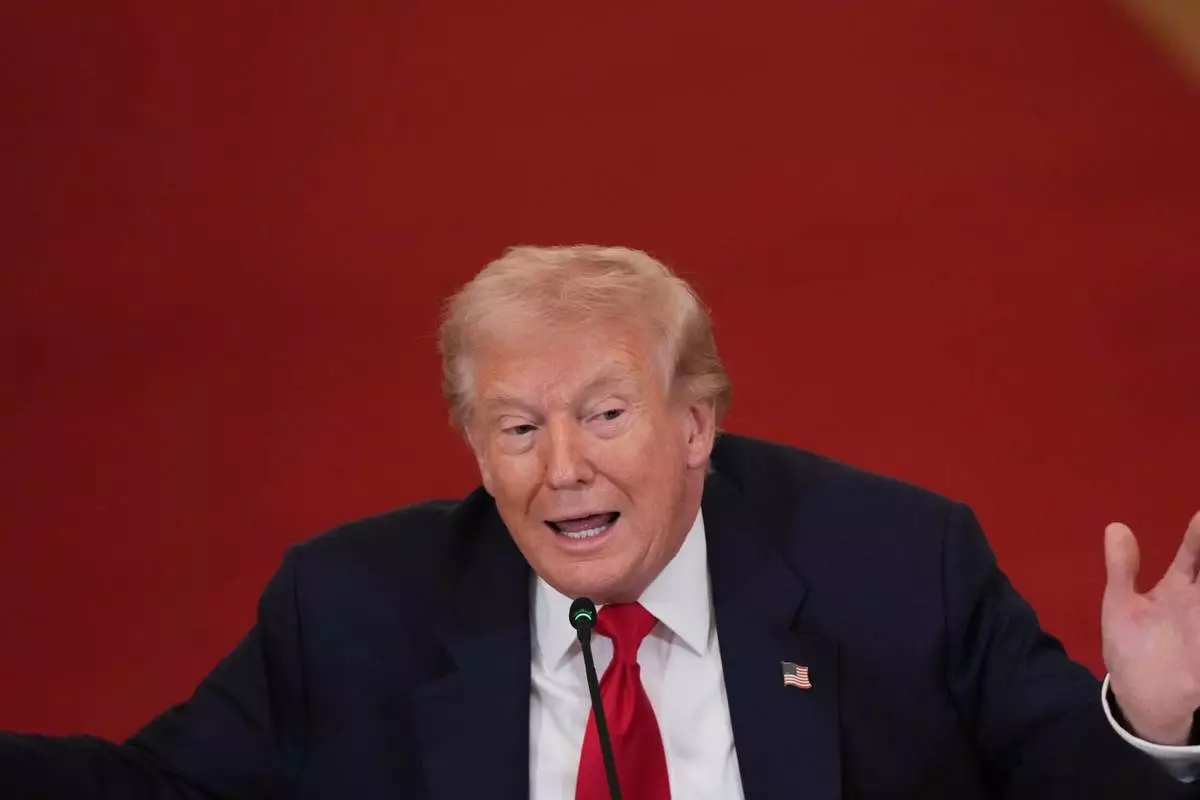
President Donald Trump speaks during a roundtable discussion on college sports in the East Room of the White House, Friday, March 6, 2026, in Washington. (AP Photo/Julia Demaree Nikhinson)
U.S. President Donald Trump warned in a Truth Social post that more Iranian officials will be targets, saying, “Today Iran will be hit very hard!,” while noting an apology by Iranian President Masoud Pezeshkian earlier in the day to neighboring nations over Tehran’s attacks.
Gulf countries say they have intercepted more ballistic missiles and drones launched from Iran.
Saudi Arabia said it stopped four drones attacking the country’s massive Shaybah oil field, the second attack within hours. Flights in and out of Dubai International Airport were interrupted after passengers were ushered down into train tunnels as several blasts were heard and the alert sounded.
Meanwhile, Israeli warplanes hammered Beirut and Tehran. Death toll continued to rise Saturday with at least 1,230 people killed in Iran, more than 200 in Lebanon and around a dozen in Israel, according to officials. Six U.S. troops were reported killed.
U.S. President Donald Trump’s administration approved a new $151 million arms sale to Israel after Trump said he would not negotiate with Iran without its “unconditional surrender.”
Here is the latest:
The State Department says more than 28,000 Americans have returned to the United States from the Middle East since the start of the Iran war seven days ago.
The vast majority of those have made their way home without government assistance on commercial flights, although the department said Saturday it had organized more than a dozen charter flights that had evacuated several thousand Americans.
It said it had offered direct assistance - in the form of safety and security information as well as providing charter options - to more than 16,000 U.S. citizens who have reached out for help.
The family of an Israeli soldier who has been missing for more than 40 years urged Israel’s leaders not to endanger the lives of Israeli soldiers in their search to bring home his body.
The Israeli military said on Saturday that troops had searched in Lebanon overnight for the body of Ron Arad, a pilot shot down over Lebanon in 1986.
The clashes killed more than 41 people in Lebanon, the Health Ministry said.
“Our desire to know what happened to Ron stops the moment it endangers Israeli soldiers,” his wife Tami, wrote on Facebook, noting that the family has said this multiple times through the years. “For 40 years we have lived with the fact that Ron is missing, and we want to know what happened to Ron, but not at any price. The sanctity of life is above any closing of the circle of certainty for us.”
The military does not believe Arad is alive.
__
Corrects that Tami is the missing soldier’s wife, not daughter
President Donald Trump is gathering with Latin American leaders on Saturday at his Miami-area golf club as his administration looks to demonstrate that it is still committed to sharpening U.S. foreign policy focus on the Western Hemisphere even as it deals with five-alarm crises around the globe.
The gathering, which the White House is calling the “Shield of the Americas” summit, comes just two months after Trump ordered an audacious U.S. military operation to capture Venezuela’s then-president, Nicolás Maduro, and whisk him and his wife to the United States to face drug conspiracy charges.
Looming even larger is Trump’s decision to join with Israel to launch a war on Iran one week ago, a conflict that has left hundreds dead, convulsed global markets and unsettled the broader Middle East.
Recep Tayyip Erdogan said there were “still things that can be done” to promote dialogue between the U.S. and Iran, according to his office’s account of a phone call with Prime Minister Keir Starmer.
Kuwait intercepted a drone attacking the Gulf country on Saturday.
The National Guard, which assists the country’s military in intercepting Iranian missiles and drones, made the announcement in a social media post.
No casualties were reported.
The area witnessed intense clashes and airstrikes overnight after an Israeli force landed there and clashed with local gunmen.
The Lebanese army said the dead included three Lebanese troops.
The Israeli force was looking for information about Israeli navigator Ron Arad who went missing after his fighter jet crashed in Lebanon 40 years ago.
The Israeli military said it did not find Arad’s remains.
The United Arab Emirates said Iran launched 16 ballistic missiles and 121 drones at the country on Saturday, with only two drones striking the nation.
Jordan has been attacked with 119 missiles and drones since the U.S. and Israel launched a war against Iran a week ago, authorities said Saturday.
Fourteen people have been injured in the attacks.
Military spokesman Brig. Gen. Mustafa Hiyari told a news conference Saturday the attacks were aimed at “purely Jordanian targets.” He said no attacks against Iran originated from Jordan.
Police spokesperson Lt. Col. Amer Sartawi said most of the casualties suffered minor injuries from falling shrapnel.
Three Lebanese troops were killed in an Israeli military operation to gather information on a pilot who has been missing in Lebanon for almost 40 years, Lebanon’s military said Saturday.
The military said Israeli helicopters landed in the eastern town of Nabi Shit, triggering fighting when residents clashed with Israeli troops.
It was not immediately clear whether the troops were among 16 dead reported earlier by the Health Ministry.
The Israeli army said it found no evidence related to Israeli pilot Ron Arad, who was captured alive after his fighter jet crashed over south Lebanon in 1986. He was believed to have been held in Nabi Chit until 1988, when he went missing.
Trump made the comments on his Truth Social website, noting an apology by Iranian President Masoud Pezeshkian earlier in the day to neighboring nations over Tehran’s attacks.
“Under serious consideration for complete destruction and certain death, because of Iran’s bad behavior, are areas and groups of people that were not considered for targeting up until this moment in time,” Trump wrote, without elaborating.
The Israeli military says its special forces conducted an operation deep inside Lebanon in an attempt to gather information about an Israeli navigator who has been missing for nearly 40 years.
The Israeli army’s Arabic spokesman posted on X that no evidence was found related to Israeli pilot Ron Arad, who was captured alive after his fighter jet crashed over south Lebanon in 1986.
According to Lebanon’s state media, Israeli forces landed in the eastern Lebanese town of Nabi Chit late Friday and were intercepted by members of the militant Hezbollah group, triggering a gunfight that lasted until the early hours of Saturday.
Ron Arad was believed to have been held in Nabi Chit until 1988, when he went missing.
A prominent cleric in Iran, Ayatollah Nasser Makarem Shirazi, urged the country’s Assembly of Experts to act quickly and name a new supreme leader, likely in response to the ongoing political confusion.
Buildings associated with the 88-cleric panel have been hit by airstrikes in the war, likely slowing any meeting of the group.
“The timely realization of this important matter will lead to national authority and the best possible organization of affairs,” Shirazi said in a statement.
Qatar Airways says it will operate six flights into Doha on Sunday through a “safe corridor,” as the country’s airspace remains closed.
The state-owned airline said the flights will come from five European cities as well as Bangkok.
The latest wave of Israeli airstrikes included targets in Lebanon’s eastern Bekaa Valley, the Israeli military said.
The Lebanese Health Ministry said earlier that overnight airstrikes in that area killed at least 16 people and wounded 35.
The Iranian-backed militant group Hezbollah said its fighters clashed with an Israeli force that landed there late Friday. Israel hasn’t commented on the fighting in the Bekaa Valley.
The military also said its Saturday strikes hit rocket launchers, weapons storage facilities and two command centers of Hezbollah’s Radwan Force in southern Lebanon.
Bahrain’s military intercepted two missiles and a drone on Saturday, the Defense Ministry said.
That brought to 86 missiles and 148 drones that have been intercepted over Bahrain since the U.S. and Israel launched war against Iran last weekend.
India’s foreign minister said Saturday that an Iranian naval vessel has docked in India, after a U.S. submarine sank an Iranian warship and another vessel sought assistance from Sri Lanka.
Subrahmanyam Jaishankar said the IRIS Lavan is docked in southern Kochi city, after India granted permission when the vessel reported “having problems” on March 1. “I think it was the humane thing to do,” Jaishankar said.
A U.S. submarine sank the Iranian warship IRIS Dena off the coast of Sri Lanka on Wednesday. Another vessel, the IRIS Bushehr, requested assistance from Sri Lanka and more than 200 sailors were brought ashore. Both ships had previously taken part in naval exercises hosted by India, but Jaishankar said they got “caught on the wrong side of events” once the war began.
Dubai and its long-haul carrier Emirates said Saturday the airline would resume operations after temporarily halting them following an Iranian attack on the city-state.
The news brought cheers in Dubai International Airport, where passengers had been sheltering after hearing a large boom overhead.
Authorities have not explained if there was an interception or damage at the airport, which is the world’s busiest for international travel.
An Israeli airstrike flattened a residential building in southern Lebanon, killing at least six people early Saturday, the country’s state-run news agency reported.
The dead from the strike in Jibchit town included four from the same family, the National News Agency said.
The Lebanese Health Ministry earlier reported at least 16 killed and 35 wounded in overnight Israeli airstrikes in the mountain town of Nabi Chit.
Sirens sounded in Bahrain ahead of a potential attack for the fifth time Saturday, the interior ministry said, urging people to head to the nearest safe location.
The Lebanese Health Ministry said Saturday that Israeli airstrikes killed at least 16 people and wounded 35 others in overnight Israeli airstrikes in the mountain town of Nabi Chit.
The Iranian-backed militant group Hezbollah said its fighters clashed with an Israeli force that landed late Friday in the mountains of eastern Lebanon.
Israel has yet to comment on the fighting there.
The Dubai Media Office issued a statement on behalf of the city-state, saying: “For the safety of passengers, airport staff, and airline crew, operations at Dubai International (DXB) have been temporarily suspended.”
It did not give a reason for the suspension, which came after passengers there heard a loud boom while sheltering.
Masoud Pezeshkian said the country’s three-man leadership council had been in touch with the armed forces over the attacks.
“I should apologize to the neighboring countries that were attacked by Iran, on my own behalf,” the president said. “From now on, they should not attack neighboring countries or fire missiles at them, unless we are attacked by those countries. I think we should solve this through diplomacy.”
He also suggested miscommunication in the ranks caused it. However, his statement aired after repeated attacks Saturday morning on Bahrain, Saudi Arabia and the United Arab Emirates.
Iran’s paramilitary Revolutionary Guard, which has been at the forefront of the war, answers only to the country’s supreme leader. However, an Israeli airstrike killed Supreme Leader Ayatollah Ali Khamenei, 86, at the start of the war on Feb. 28.
Pezeshkian, in his comments, specifically blamed the killing of Khamenei and other top leaders for what sounded like a loss of command and control in the armed forces for days.
It remained unclear just what command Pezeshkian and the leadership council could exert over the armed forces.
Iranian state television, after airing his speech, immediately went back to praising the country’s ongoing attacks across the region.
Passengers at Dubai International Airport, the world’s busiest for international travel, heard a boom while sheltering in train tunnels at the massive facility.
Emirates has been trying to get its sprawling travel network up and running after several days of halting flights due to the war.
Iran’s president said Saturday that a demand by the United States for an unconditional surrender is a “dream that they should take to their grave.”
President Masoud Pezeshkian made the statement in a prerecorded address aired by state television.
Pakistan cited a surge in global oil prices due to the war in the Middle East.
Petroleum Minister Ali Pervaiz Malik and Foreign Minister Ishaq Dar announced the 55-rupee-per-liter (about $0.20) increase overnight, saying the government had little choice but to pass on the impact of rising international prices.
Pakistan relies heavily on imported oil, mainly from Saudi Arabia and other Gulf countries.
The Israeli military said the Imam Hussein University in Tehran was used for the training of Revolutionary Guard officers and contained “multiple military assets” used by the Revolutionary Guard.
It said over 80 fighter jets participated in the latest wave of strikes on Saturday, which also targeted an underground compound used for storing ballistic missiles and housing command centers from where the army said “senior officials of the Iranian regime” were operating.
Targets also included launch sites in central and western Iran, the army said.
Explosions echoed across Iran’s capital, Tehran, Saturday morning as new airstrikes hit the city.
The strikes appeared to target downtown Tehran and government buildings there.
Passengers waiting for flights at Dubai International Airport, the world’s busiest for international travel, found themselves ushered down into train tunnels at the sprawling airfield after missile alert sounded.
Mobile phone alerts sounded Saturday morning in Dubai over “potential missile threats.” Emirati authorities urged the public to seek immediate shelter.
Emirati air defenses had activated over the missile threat, the government added.
Trump berated a reporter for raising the matter when the president opened the floor to questions from the media at the end of a White House meeting about how paying student-athletes has recalibrated college sports.
“I have a lot of respect for you, you’ve always been very nice to me,” Trump said to Peter Doocy, the Fox News reporter. “What a stupid question that is to be asking at this time. We’re talking about something else.”
People headed to bomb shelters across Israel early Saturday after hearing loud booms as Iranian missiles attacked more targets.
There were no immediate reports of casualties by Israel’s emergency services.
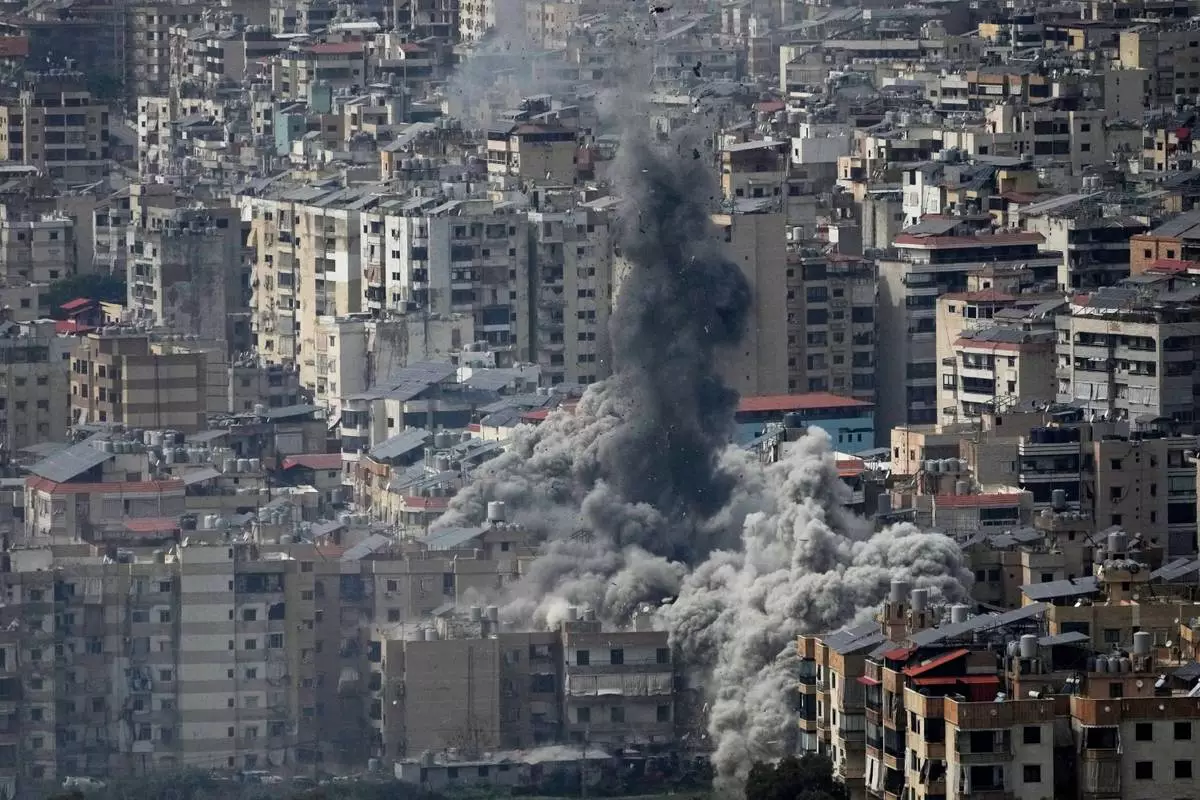
Smoke rises following an Israeli airstrike in Dahiyeh, Beirut's southern suburbs, Friday, March 6, 2026. (AP Photo/Hussein Malla)
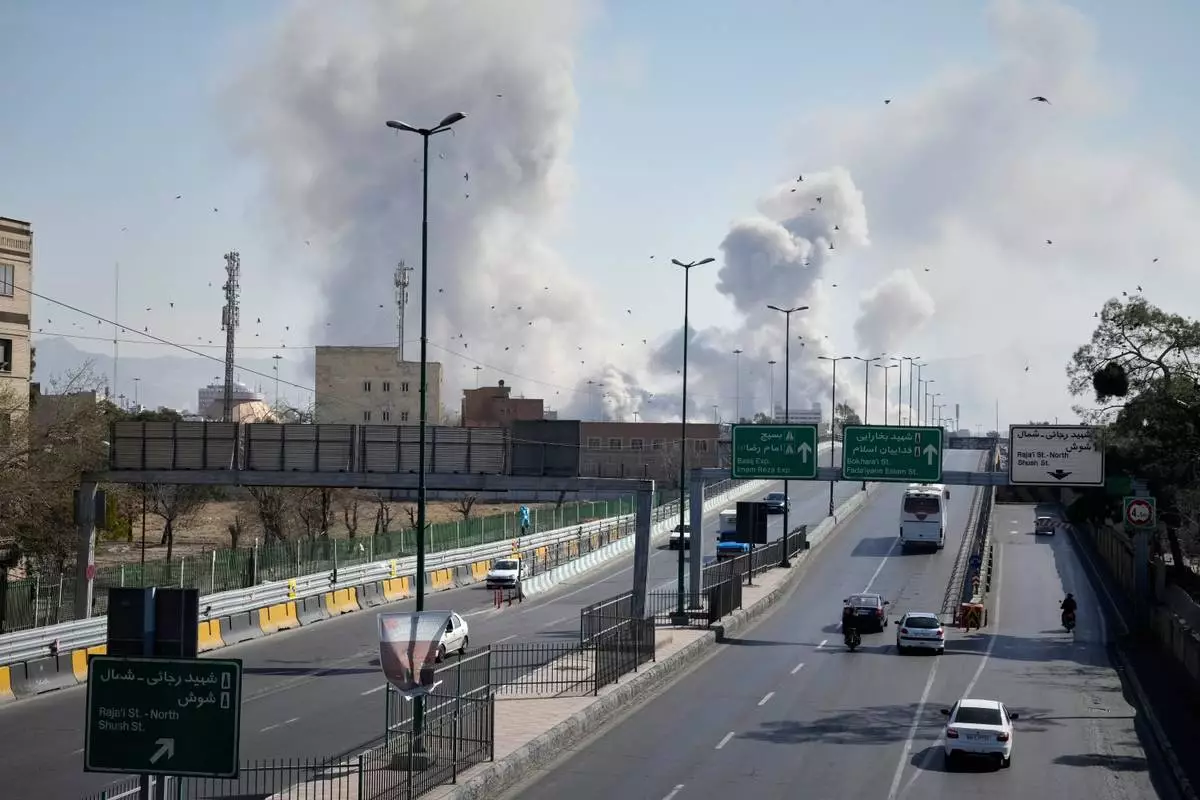
Plumes of smoke rise as strikes hit the city during the U.S.–Israeli military campaign in Tehran, Iran, Thursday, March 5, 2026. (AP Photo/Vahid Salemi)
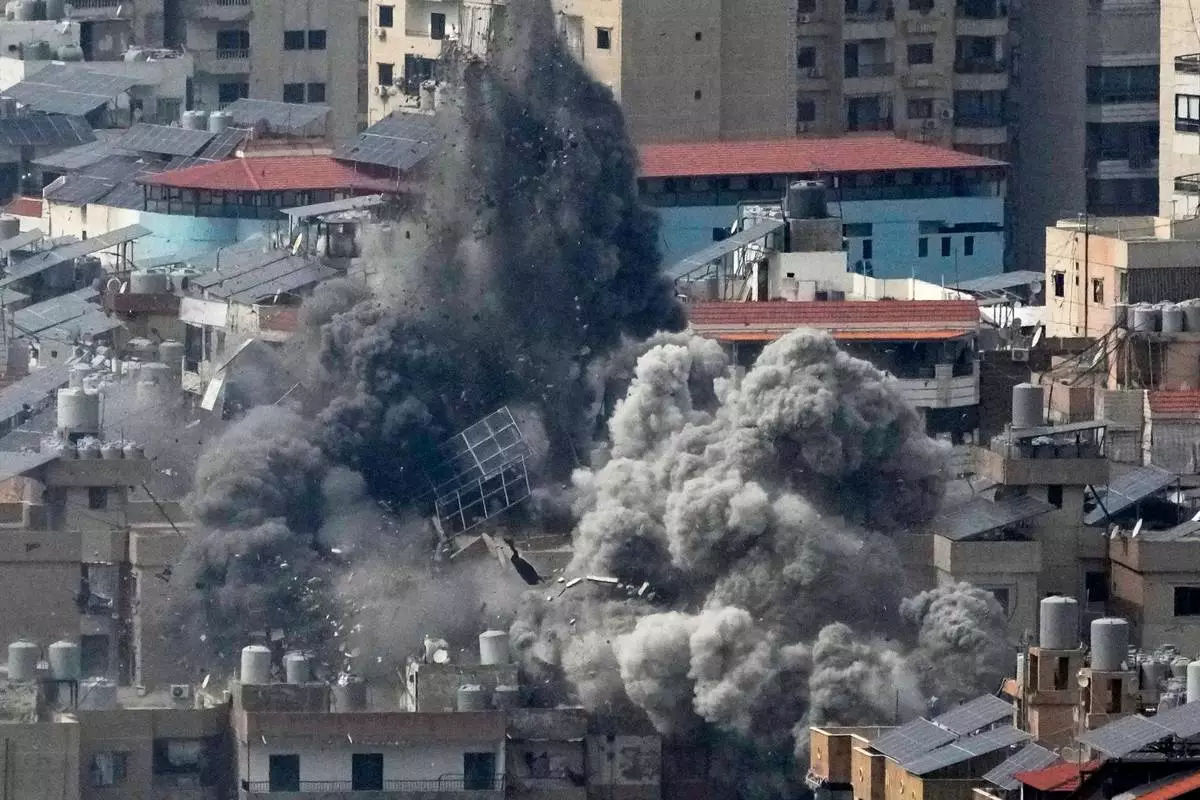
Smoke rises following an Israeli airstrike in Dahiyeh, Beirut's southern suburbs, in Beirut, Lebanon, Friday, March 6, 2026. (AP Photo/Hussein Malla)