WASHINGTON (AP) — President Donald Trump has taken the unusual step of tapping military leaders for high-level diplomacy, sending the top U.S. commander in the Middle East to talks over Iran’s nuclear program and positioning the Army secretary as a key negotiator on ending the Russia-Ukraine war.
Adm. Brad Cooper, head of U.S. Central Command, for the first time joined indirect U.S.-Iran talks Friday in Oman, appearing in his dress uniform as a reminder of the American buildup of military might in the region. As Army Secretary Dan Driscoll reprised his role at Russia-Ukraine talks this week, he worked to keep the conversation going with Ukrainian officials in the downtime between sessions, according to a person familiar with the negotiations who spoke on condition of anonymity to discuss the sensitive talks.
Click to Gallery
In this photo released by the Oman's Foreign Ministry, Steve Witkoff, White House special envoy, centre, shakes hands with Oman's Foreign Minister Sayyid Badr Albusaidi as Jared Kushner, left, looks on during their meeting prior to Iran and the U.S. negotiations, in Muscat, Oman, Friday, Feb. 6, 2026. (Oman Foreign Ministry via AP)
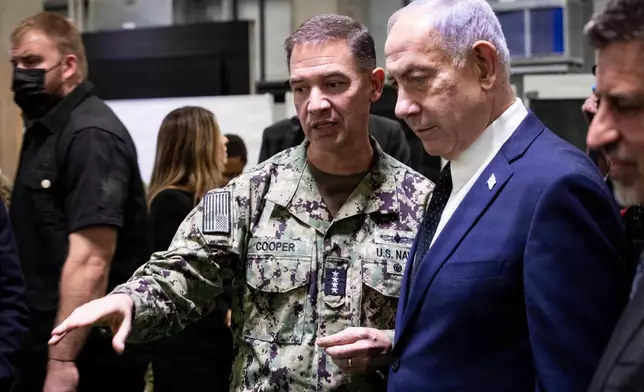
Adm. Brad Cooper, commander of U.S. Central Command, and members of the Israeli Defense Forces host Israeli Prime Minister Benjamin Nentanyahu inside the Civil-Military Coordination Center (CMCC) Oct. 29, 2025, in Israel. (Staff Sgt. Michael Ito/U.S. Army via AP))
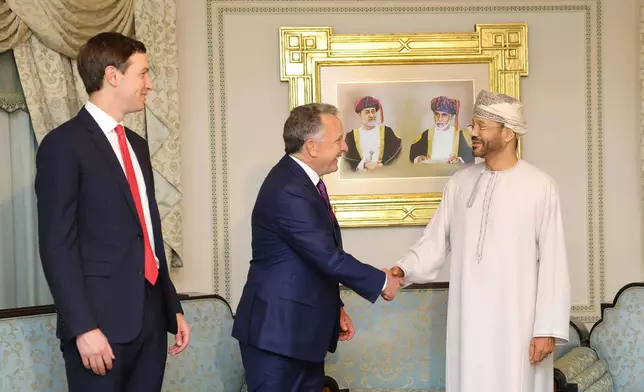
In this photo released by the Oman's Foreign Ministry, Steve Witkoff, White House special envoy, centre, shakes hands with Oman's Foreign Minister Sayyid Badr Albusaidi as Jared Kushner, left, looks on during their meeting prior to Iran and the U.S. negotiations, in Muscat, Oman, Friday, Feb. 6, 2026. (Oman Foreign Ministry via AP)
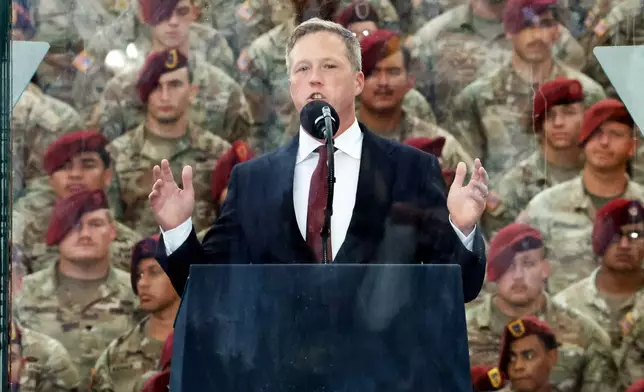
FILE - U.S. Army Secretary Dan Driscoll speaks at the America 250 celebration at Fort Bragg in Fayetteville, N.C., June 10, 2025. (AP Photo/Karl DeBlaker, File)
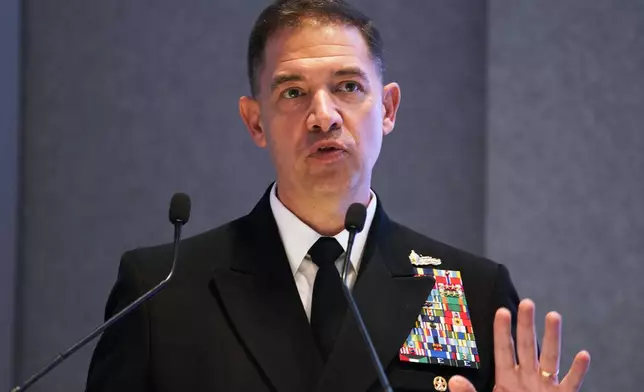
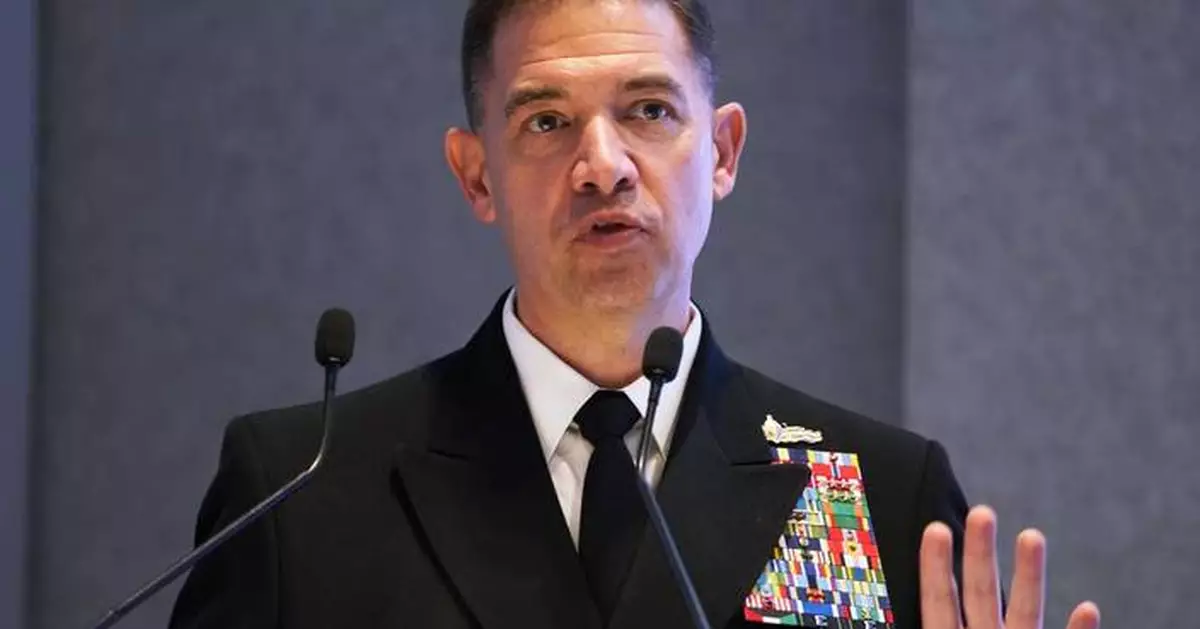
FILE - U.S. Navy Vice Adm. Brad Cooper, speaks at an event at the International Defense Exhibition and Conference in Abu Dhabi, United Arab Emirates, Feb. 21, 2023. (AP Photo/Jon Gambrell, File)
With special envoy Steve Witkoff and Trump's son-in-law Jared Kushner balancing both sets of thorny negotiations, the choice to bring in military leaders — whether for their expertise, connections or to signal potential tougher options — reflects how the Republican administration has upended traditional U.S. foreign policy and diplomacy.
Elisa Ewers, who served in national security positions in the George W. Bush and Obama administrations, said placing active-duty military leaders like Cooper in diplomatic roles shows how the Trump administration has devalued skilled diplomats and the tools of diplomacy in favor of an overreliance on the military to try to solve foreign policy challenges.
“It often takes an enormous amount of time, investment and hard work to get to the point where you can say diplomacy has succeeded,” said Ewers, now a Middle East scholar at the Center for a New American Security, quoting the idiom that "not every nail needs a hammer."
But Eliot Cohen, who served as counselor of the State Department in the George W. Bush administration, noted how American generals were involved in arms control talks with the Soviet Union during the Cold War.
Cohen said Trump's move to send in Driscoll, the Army’s top civilian leader, was more unusual. But he said, “Presidents do this kind of thing.”
“There’s a long tradition of American presidents using unusual people as emissaries if they trust them and think they can deliver the message,” Cohen said.
The talks in Oman aimed to cool escalating tensions between Iran and the U.S. that have the region on edge. Trump said the talks were “very good” and more were planned for early next week. But he warned that if Iran did not make a deal over its nuclear program, “the consequences are very steep.”
Trump has repeatedly threatened to use force to compel Iran to reach an agreement, and he sent the aircraft carrier USS Abraham Lincoln and other warships to the region during Tehran’s bloody crackdown on nationwide protests.
Michael O’Hanlon, a defense and foreign policy analyst at the Brookings Institution, said Cooper's presence was meant to “signal resolve and to intimidate.”
“Including the CENTCOM commander is quite unusual and seems intended to send a message more than to add to the heft of the negotiating team for the talks themselves,” O'Hanlon wrote in an email.
“But the relationship is already so tense and bad that I doubt it’ll make much difference, unless the Iranians have had a fundamental rethinking on their nuclear program,” O'Hanlon added.
Michael Singh, who was senior director for the Middle East at the White House National Security Council in the George W. Bush administration, said he saw Cooper's presence as more to do with his expertise.
Witkoff and Kushner are not experts on Iran but generalists engaged in diplomatic talks worldwide, while Cooper has knowledge of the region and access to military experts who can evaluate any proposed concessions to Iran's nuclear program, Singh said.
Cooper spoke at length about Iran’s nuclear and military capabilities during his nomination hearing in June, shortly after the U.S. launched strikes on the Islamic Republic's key nuclear sites.
“These are very technical issues we’re dealing with,” said Singh, managing director at the Washington Institute for Near East Policy. “They’re not issues you can deal with instinctively. Adm. Cooper will have access to that expertise in a way that Witkoff and Kushner either don't or might not choose to access.”
Cooper brings both knowledge and the implicit threat of force, “which is part of the negotiation,” said Cohen, the former Bush official who is now a scholar at the Center for Strategic and International Studies.
The White House has not responded to a request for comment about why Trump sent Cooper to participate in the talks.
In November, Driscoll was suddenly tapped for negotiations to try to end Russia's nearly 4-year war in Ukraine.
Talks back then had stalled, and Driscoll used an already planned trip to Ukraine as an opportunity to meet with President Volodymyr Zelenskyy and other top government, military and defense industry officials.
Since then, Driscoll has been part of several other negotiation sessions, including in Abu Dhabi this week.
The person familiar with the negotiations said Driscoll’s role has coalesced around acting as a kind of liaison between the Ukrainians and Trump officials like Witkoff and Kushner.
The person said the relationship with the Ukrainians was the result of Driscoll's ability to keep the dialogue going between negotiation sessions as well as his military perspective as a leader and former Army officer.
Driscoll served as an armor officer for more than three years and earned the rank of first lieutenant. He deployed to Iraq from October 2009 to July 2010.
In Abu Dhabi, he was joined by U.S. Gen. Alexus Grynkewich, commander in Europe of both U.S. and NATO forces, who helped negotiate the reestablishment of high-level military-to-military dialogue between the United States and Russia for the first time in four years.
It “will provide a consistent military-to-military contact as the parties continue to work towards a lasting peace,” a U.S. military statement said.
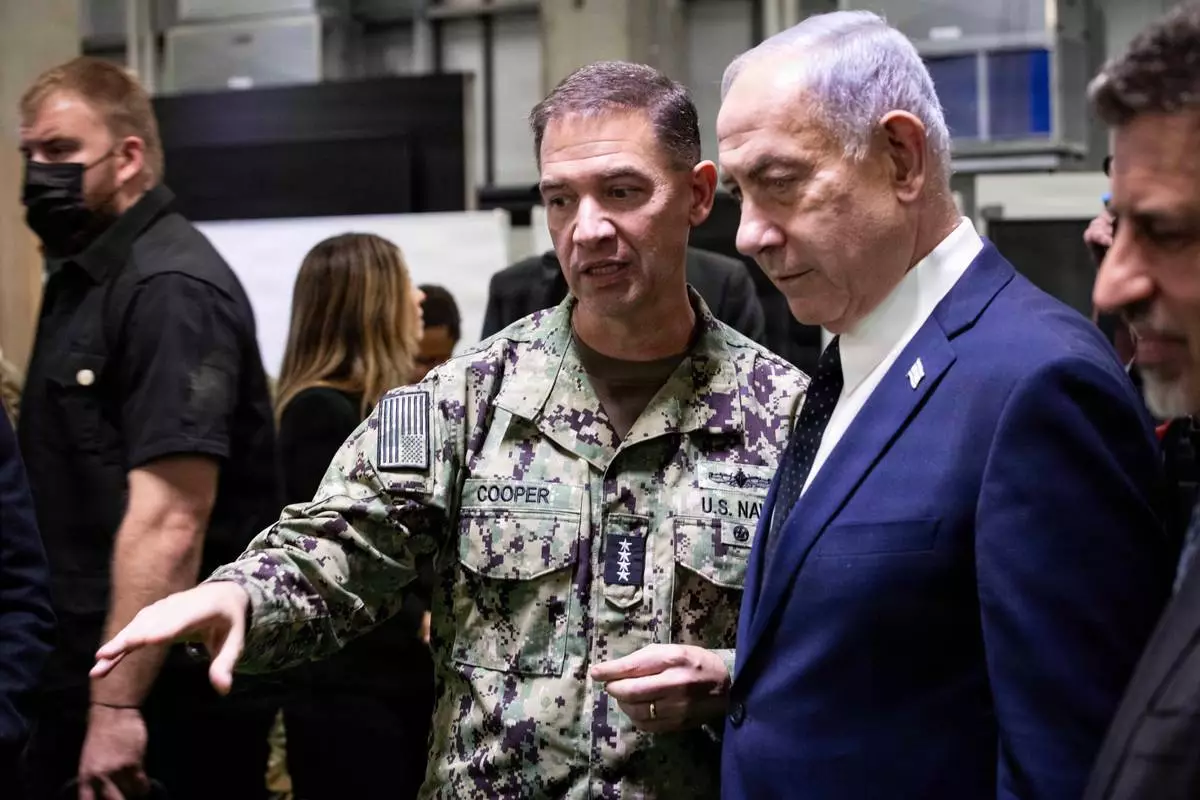
Adm. Brad Cooper, commander of U.S. Central Command, and members of the Israeli Defense Forces host Israeli Prime Minister Benjamin Nentanyahu inside the Civil-Military Coordination Center (CMCC) Oct. 29, 2025, in Israel. (Staff Sgt. Michael Ito/U.S. Army via AP))
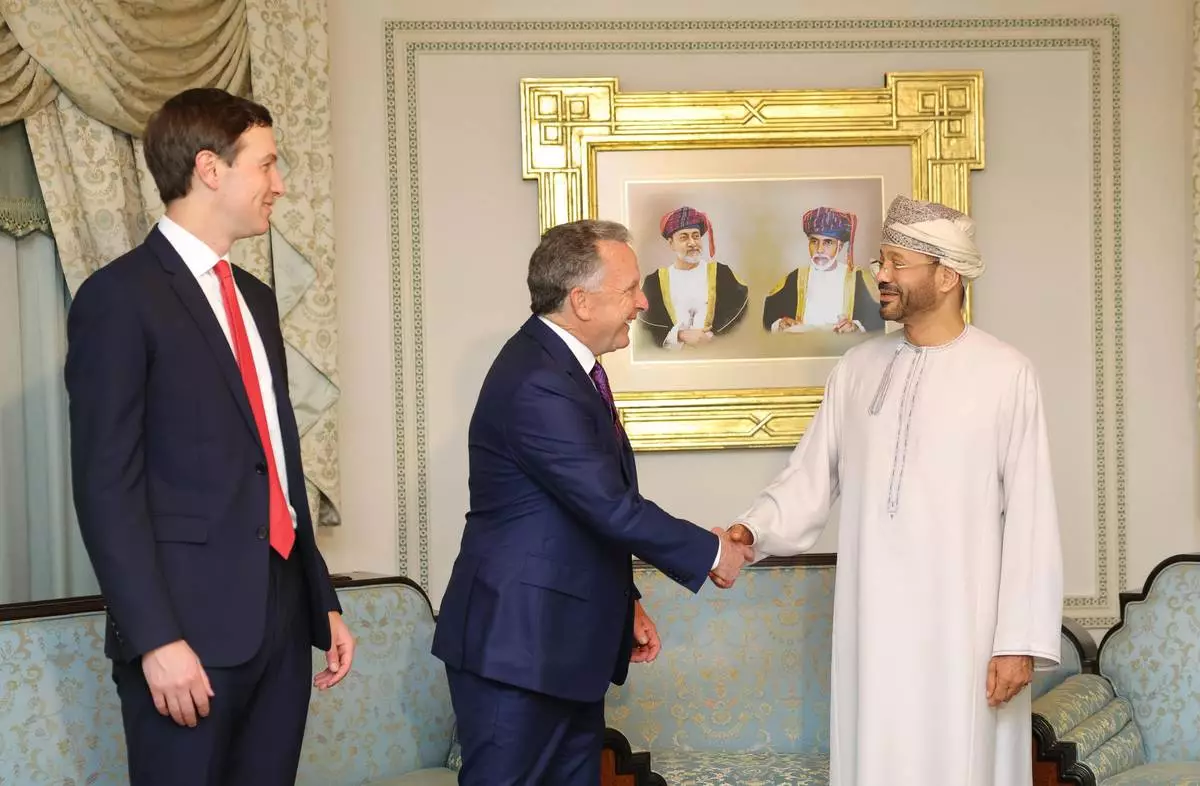
In this photo released by the Oman's Foreign Ministry, Steve Witkoff, White House special envoy, centre, shakes hands with Oman's Foreign Minister Sayyid Badr Albusaidi as Jared Kushner, left, looks on during their meeting prior to Iran and the U.S. negotiations, in Muscat, Oman, Friday, Feb. 6, 2026. (Oman Foreign Ministry via AP)
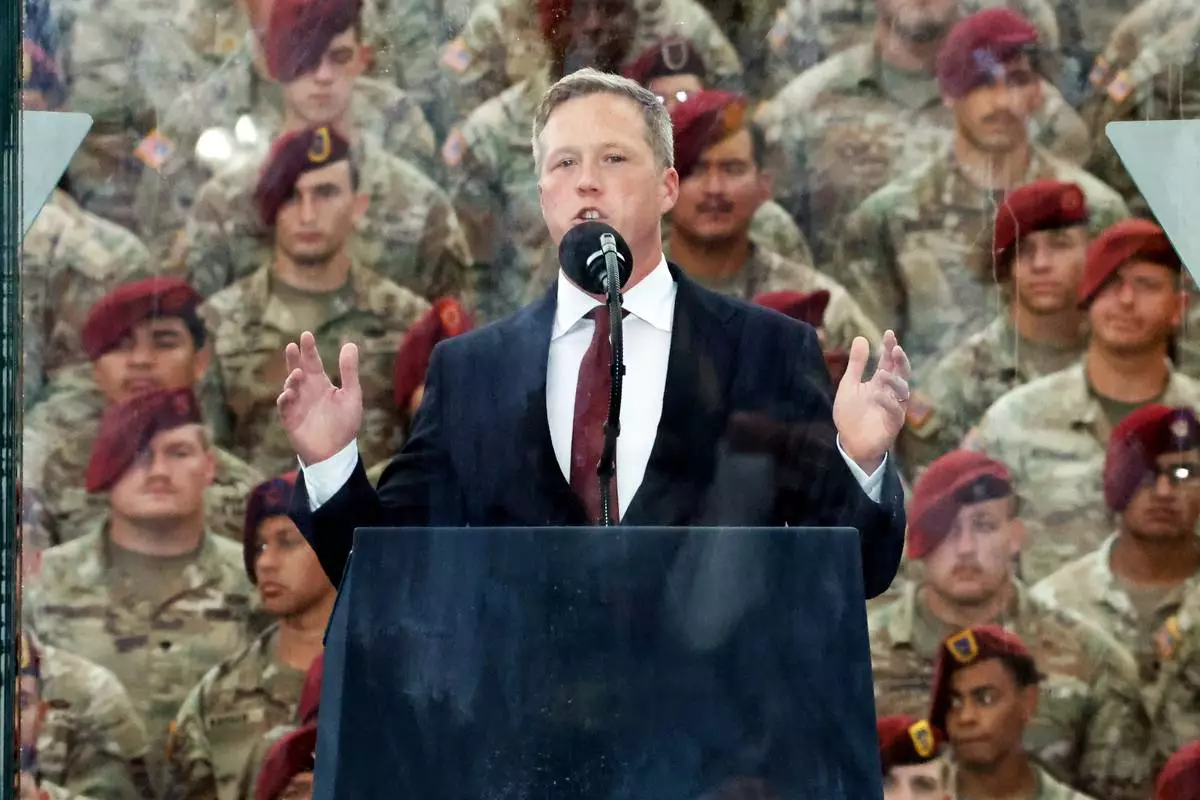
FILE - U.S. Army Secretary Dan Driscoll speaks at the America 250 celebration at Fort Bragg in Fayetteville, N.C., June 10, 2025. (AP Photo/Karl DeBlaker, File)
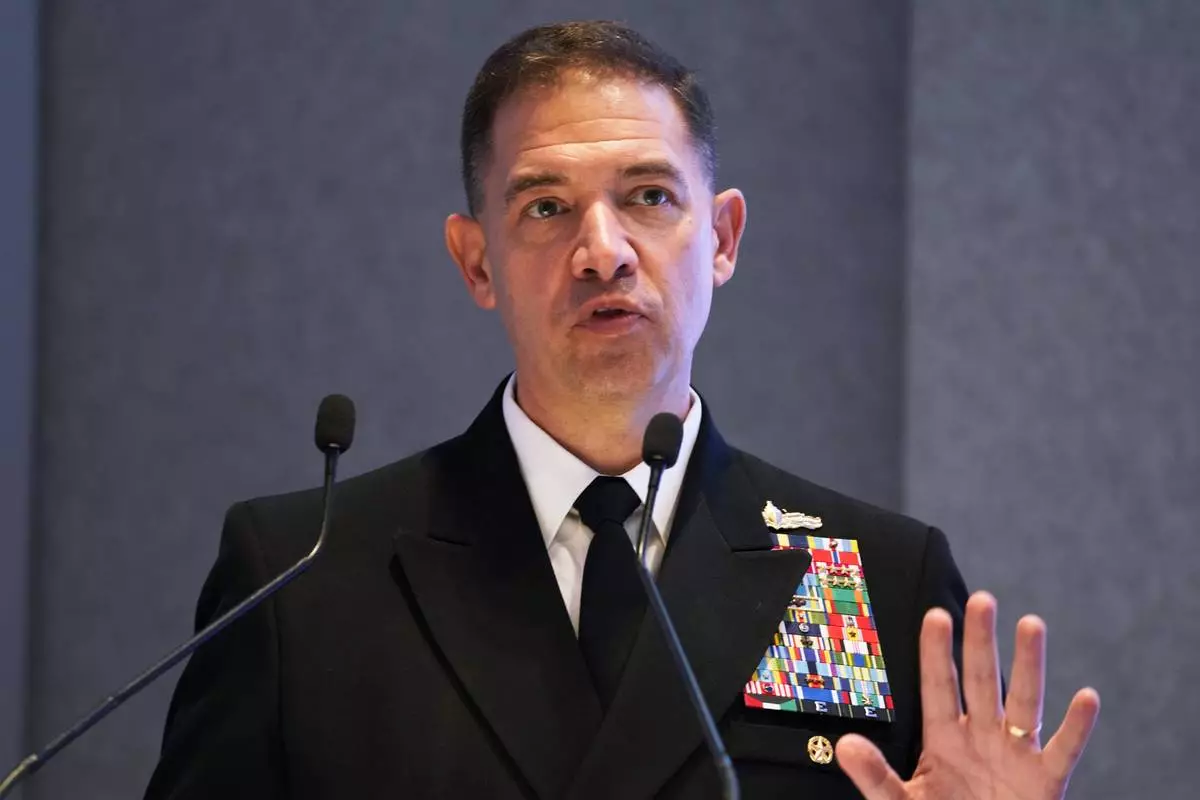
FILE - U.S. Navy Vice Adm. Brad Cooper, speaks at an event at the International Defense Exhibition and Conference in Abu Dhabi, United Arab Emirates, Feb. 21, 2023. (AP Photo/Jon Gambrell, File)
Labor rights activist Dolores Huerta revealed she was among women and girls who say they were sexually abused by César Chavez, the widely admired Latino icon who brought to light the struggles of farmhands while leading the United Farm Workers union.
The stunning allegations against Chavez, who died more than three decades ago, drew immediate calls to alter memorials honoring the man who in the 1960s helped secure better wages and working conditions for farmworkers and has been long revered by many Democratic leaders in the U.S.
In a statement released Wednesday, Huerta said she stayed silent for 60 years out of concern that her words would hurt the farmworker movement.
Huerta described two sexual encounters with Chavez, one where she was “manipulated and pressured” and another where she was “forced against my will.”
“I carried this secret for as long as I did because building the movement and securing farmworker rights was life’s work. The formation of a union was the only vehicle to accomplish and secure those rights and I wasn’t going to let César or anyone else get in the way,” she said.
Huerta, who is a labor rights legend in her own right, joined Chavez in 1962 to co-found the National Farm Workers Association, which became the United Farm Workers of America.
For many, they were akin to Martin Luther King. Jr. and Rosa Parks because of their work advocating for racial equality and civil rights.
The New York Times first reported Wednesday that it found Chavez groomed and sexually abused young girls who worked in the movement, including Huerta, who was in her 30s at the time.
Huerta later said both sexual encounters with Chavez led to pregnancies, which she kept secret, and that she arranged for the children to be raised by other families. “No one knew the full truth about how they were conceived until just a few weeks ago,” she said in her statement.
Huerta said she did not know that Chavez hurt other women and condemned his actions but emphasized that the farmworker movement is bigger than one person.
“César’s actions do not diminish the permanent improvements achieved for farmworkers with the help of thousands of people,” Huerta said in her statement. “We must continue to engage and support our community, which needs advocacy and activism now more than ever.”
Streets, schools and parks across the Southwest bear Chavez’s name. California became the first state to commemorate his birthday, and in 2014, then-President Barack Obama proclaimed March 31 as national César Chavez Day.
President Joe Biden had a bronze bust of Chavez installed in the Oval Office when he moved into the White House.
But on Wednesday, reaction to the allegations came swiftly from many in both parties.
Republican Texas Gov. Greg Abbott said the state will not observe the César Chavez Day holiday and that he will urge the state legislature to remove it altogether.
Days before the allegations were revealed publicly, several César Chavez celebrations in San Francisco, Texas and in his home state of Arizona were canceled at the request of the César Chavez Foundation. Organizers of canceled events did not immediately respond to the AP’s requests for comment.
California Gov. Gavin Newsom on Wednesday said he was still processing the news. The Democratic governor wouldn’t commit to making any changes to the state holiday.
The farmworker movement “was much bigger than one man,” Newsom said. “It’s about labor. It’s about social justice, economic justice, racial justice.”
A a spokesperson for Arizona Gov. Katie Hobbs said she has declined to recognize March 31 as César Chavez Day as she has in the two prior years. César Chavez Day isn’t a state holiday in Arizona.
Albuquerque Mayor Tim Keller ordered a review of how Chavez is recognized across the city.
“This new information demands we widen our lens,” Keller said, acknowledging that Chavez has meant a great deal to many families. “No one’s historic stature puts them beyond accountability.”
U.S. Sen. Ben Ray Luján, a New Mexico Democrat, said abuse of any kind, especially against children, is a betrayal of the values that Latino leaders have championed for generations.
“His name should be removed from landmarks, institutions and honors,” Luján said of Chavez. “We cannot celebrate someone who carried out such disturbing harm.”
Born in Yuma, Arizona, Chavez grew up in a Mexican American family that traveled around California picking lettuce, grapes, cotton and other seasonal crops. He died in California in 1993 at age 66.
Chavez is known nationally for his early organizing in the fields, a hunger strike, a grape boycott and eventual victory in getting growers to negotiate with farmworkers for better wages and working conditions.
Latino leaders and community groups are now weighing the impact of Chavez's actions on the labor rights movement while emphasizing that the farmworker movement was led by thousands who came together to fight for justice.
Voto Latino leaders said in a statement that no matter his legacy or historical framing Chavez’s actions are inexcusable. Similarly, LULAC released a statement condemning any form of sexual violence stating that “no individual, regardless of statue or legacy is above accountability.”
While the news of these allegations are devastating to the Latino community, Voto Latino said it does not erase the work done by others.
“The women who organized, marched, and sacrificed alongside farmworkers carried this movement on their backs,” Voto Latino said. “Dolores Huerta — a fighter, a giant of the labor movement, and someone who is among the survivors of this abuse — helped build everything this movement stands for.”
U.S. Congresswoman Teresa Leger Fernández, chair of the Democratic Women’s Caucus, issued a statement saying she was heartbroken and deeply disturbed by the stories of women who say they were abused.
Leger Fernández said the farmworker and civil rights movement was built by people who sacrificed for a better future.
“Honoring that legacy means facing painful truths and continuing the work for justice with honesty and humanity,” the New Mexico congresswoman said. “A movement rooted in justice must address all injustice.”
The United Farm Workers union quickly distanced itself from annual celebrations of its founder, calling the allegations troubling.
In a statement Tuesday, the union said allegations of “abuse of young women or minors” were concerning enough to urge people around the country to participate in immigration justice events or acts of service instead of the typical events in March to commemorate Chavez’s legacy.
Associated Press writers Susan Montoya Bryan in Albuquerque, New Mexico; Trân Nguyễn in Sacramento, Calif.; Dorany Pindea in Los Angeles; Felicia Fonseca and Jacques Billeaud in Arizona contributed to this report.
FILE - Dolores Huerta, the Mexican-American social activist who formed a farm workers union with Cesar Chavez, stands for the Pledge of Allegiance in Spanish while visiting the New Mexico Statehouse in Santa Fe. N.M., on Feb. 27, 2019. (AP Photo/Russell Contreras, File)
FILE - United Farm Workers leader Dolores Huerta, center, leads a rally in San Francisco's Mission District on Nov. 19, 1988, along with Howard Wallace, president of the San Francisco chapter of the UFW, left, and Maria Elena Chavez, 16, the daughter of Cesar Chavez, right, as part of a national boycott of what the UFW claims is the dangerous use of pesticides on table grapes. (AP Photo/Court Mast, File)
FILE - United Farm Workers President Cesar Chavez talks to striking Salinas Valley farmworkers during a large rally in Salinas, Calif., on March 7, 1979. (AP Photo/Paul Sakuma, File)
Civil rights leader Cesar Chavez leads a picket against Dole in front of the offices of Castle & Cooke, its parent company, at 50 California St. in San Francisco on Feb. 3, 1982. The United Farm Workers are sponsoring a consumer boycott on Dole products where 300 union members from Ventura, Calif., have been on strike since November. (Steve Ringman/San Francisco Chronicle via AP)
A statue of farmworker union leader César Chávez stands in a plaza named after him in Sacramento, Calif., Wednesday, March 18, 2026. (AP Photo/Tran Nguyen)
FILE - Dolores Huerta, the labor leader, civil rights activist and co-founder of the National Farm Workers Association, is seen at the California Democratic Party's 2025 State Convention at the Anaheim Convention Center in Anaheim, Calif., May 31, 2025. (AP Photo/Damian Dovarganes, File)
A plaque dedicated to the 30th anniversary of the passing of Cesar Chavez, honoring Chavez and Sister Dolores Huerta, is part of the Haymarket Memorial, seen Wednesday, March 18, 2026, in Chicago. (AP Photo/Erin Hooley)
Books about Cesar Chavez are seen on a library shelf at San Lorenzo High School Wednesday, March 18, 2026, in San Lorenzo, Calif. (AP Photo/Godofredo A. Vásquez)
A plaque dedicated to the 30th anniversary of the passing of Cesar Chavez, honoring Chavez and Sister Dolores Huerta, is part of the Haymarket Memorial, seen Wednesday, March 18, 2026, in Chicago. (AP Photo/Erin Hooley)
Governor Gavin Newsom speaks about the sexual assault allegations against Cesar Chavez during a press conference at San Lorenzo High School, Wednesday, March 18, 2026, in San Lorenzo, Calif. (AP Photo/Godofredo A. Vásquez)
FILE - Cesar Chavez, a farm worker, labor organizer and leader of the California grape strike, is seen in a California works office in 1965. (AP Photo, George Brich, File)