ROME (AP) — Italy stopped Scotland's last-gasp charge to hang on for a precious Six Nations win by 18-15 at a rain-soaked Stadio Olimpico on Saturday.
Scotland used its last scoring chance, two minutes after the fulltime hooter, to go through the phases and took 25 to reach Italy's 22. But on the 30th phase, Scotland's Max Williamson was held up in the tackle by Italy's Muhamed Hasa and Niccolo Cannone and it was game over.
Click to Gallery
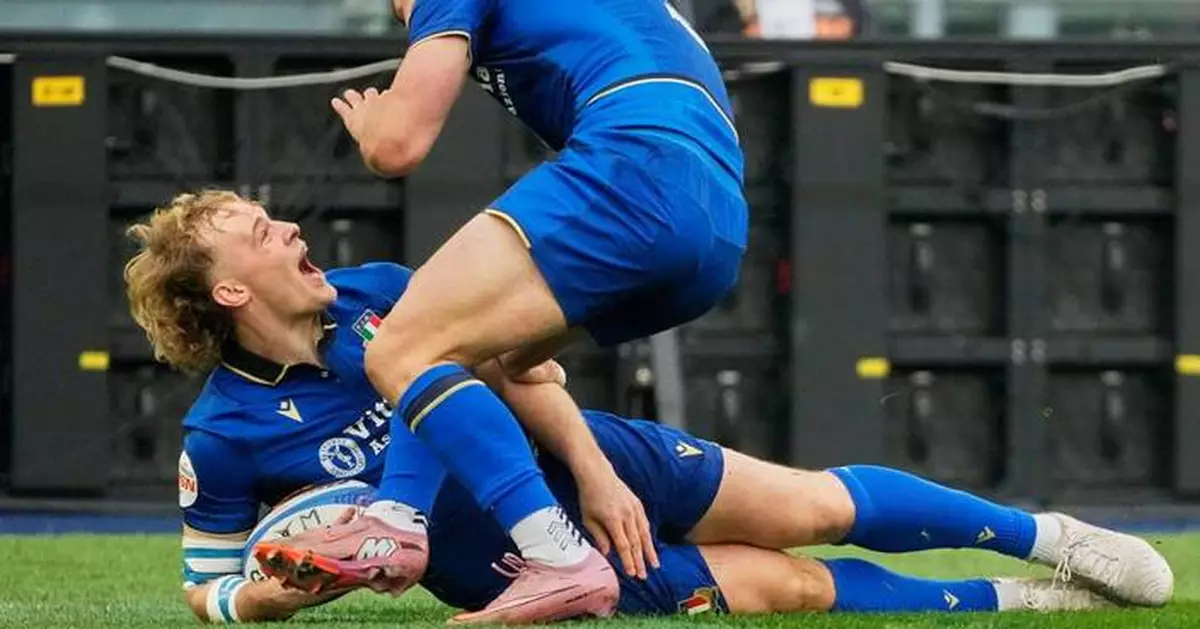
Italy's Louis Lynagh rejoices with teammate Leonardo Marin, right, after scoring a try during the Six Nations rugby match between Italy and Scotland at Rome's Olympic Stadium, Saturday, Feb. 7, 2026. (AP Photo/Gregorio Borgia)
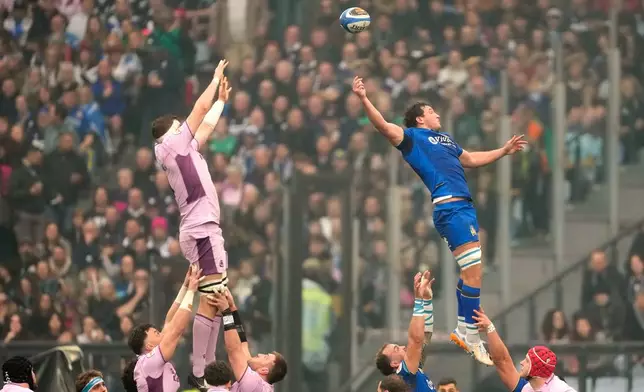
Italy's Michele Lamaro, right, and Scotland's Scott Cummings go airborn during the Six Nations rugby match between Italy and Scotland at Rome's Olympic Stadium, Saturday, Feb. 7, 2026. (AP Photo/Gregorio Borgia)
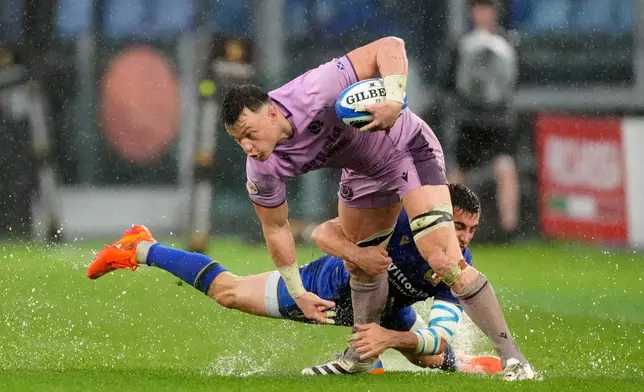
Scotland's Jack Dempsey, front, is tackled by Italy's Alessandro Fusco during the Six Nations rugby match between Italy and Scotland at Rome's Olympic Stadium, Saturday, Feb. 7, 2026. (AP Photo/Gregorio Borgia)
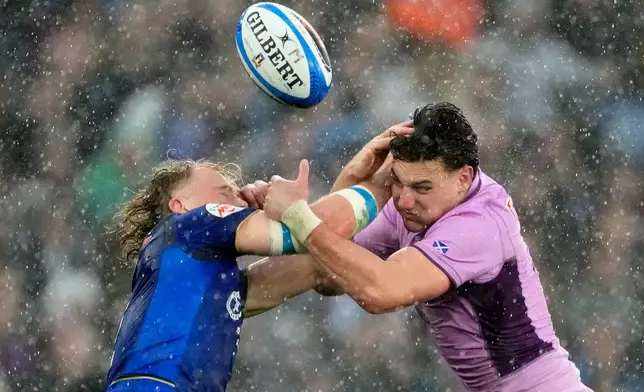
Italy's Louis Lynagh, left, and Scotland's Tom Jordan fight for the ball during the Six Nations rugby match between Italy and Scotland at Rome's Olympic Stadium, Saturday, Feb. 7, 2026. (AP Photo/Gregorio Borgia)
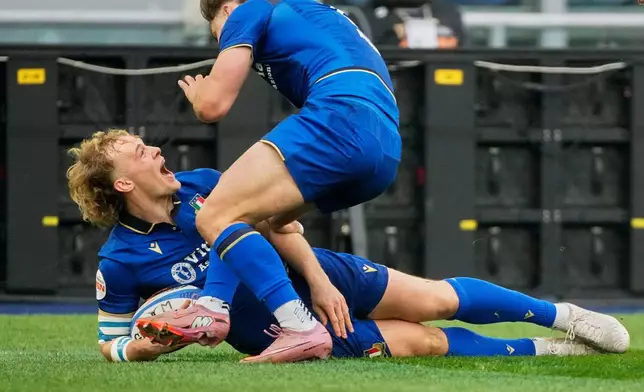
Italy's Louis Lynagh rejoices with teammate Leonardo Marin, right, after scoring a try during the Six Nations rugby match between Italy and Scotland at Rome's Olympic Stadium, Saturday, Feb. 7, 2026. (AP Photo/Gregorio Borgia)
“Absolutely incredible,” Italy captain Michele Lamaro said of his team's last defensive set. “Just shows how much we care for each other, how much we care for this jersey, this country. This is us. Now we've got a dream in our head."
Italy notched only a 17th win in Six Nations history and a ninth win against Scotland, which sets it on a path to avoid the wooden spoon for an unprecedented third straight year.
Italy's first opening win since 2013 was not a surprise and neither was Scotland's first opening defeat since 2020, another deflating result for a side that hasn't contended for the title in decades.
Scotland coach Gregor Townsend has been under fire for not improving the team. In his eight previous Six Nations as coach, Townsend has led Scotland to a best finish of third, twice. Asked if he expected to be in charge when England visit next weekend, he said, “Well, I want to be, that's my job so, yeah, that's what I’m focused on.”
The buildup focused on Scotland's last-quarter collapses but it was a slow first-quarter start which stung this time. Italy was 12-0 up in light rain before the game was hit by torrential downpours, turning the field into a splash zone. Scotland outscored Italy in the miserable conditions, even despite a yellow card, but gave the host too big a start.
For the first time since 2019, Scotland began a Six Nations match without at least one of back-three regulars Duhan van der Merwe, Darcy Graham and Blair Kinghorn, and it wasn't controversial. Townsend replaced them with form picks but Italy exposed the new back three's naivety in defense with two head-up tries inside 14 minutes.
First, Juan Ignacio Brex grubbered into wide open space for winger Louis Lynagh to scoop and slide in. Then Lynagh took a high ball from scrumhalf Alessandro Fusco and Fusco's miss-out pass gave Tommaso Menoncello an overlap to score untouched. Paolo Garbisi added the sideline conversion.
Scotland's lineout was also failing. The visitor had three lineouts in Italy's 22 in the first quarter. The first two were pinched and the third wasn't gathered properly. But Scotland did a tap and go and No. 8 Jack Dempsey crashed over.
Italy finished the rest of the half on top. Garbisi landed a penalty for 15-7 but badly missed two drop-goal attempts, and the scrum sent Scotland reeling backwards.
Scotland earned the first points of the second half from a Finn Russell penalty despite a fifth stolen lineout.
Poor discipline also undermined them. A relieving penalty on defense was overturned from Ewan Ashman's high tackle on Italy's Manuel Zuliani. Garbisi kicked the resulting penalty to restore an eight-point lead.
Ashman was replaced at hooker by George Turner who, moments later, nailed Zuliani's head in a ruck, received a yellow card and canceled a kickable penalty for Scotland.
Italy failed to score a point while it had a man advantage, and as soon as Scotland was restored to 15 men it scored.
Scotland waived off another kickable penalty for a corner lineout, and claimed it cleanly. Three backs joined the maul which wheeled to the blindside, and replacement scrumhalf George Horne darted inside the right corner flag. Russell couldn't convert from the touchline but the gap was cut to three with 12 minutes to go.
Italy had a kickable penalty in the 78th but elected for a corner lineout and knocked on. That gave Scotland one last shot in the rain. Italy soaked it up.
AP rugby: https://apnews.com/hub/rugby
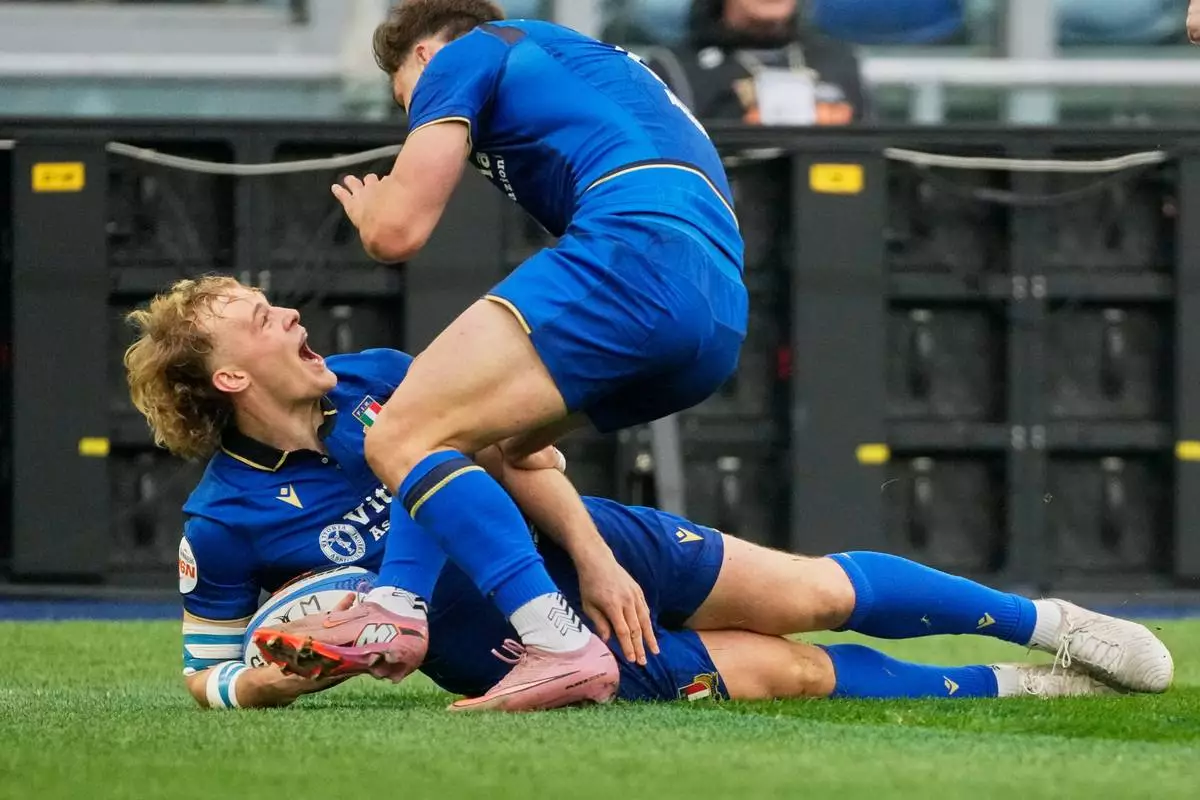
Italy's Louis Lynagh rejoices with teammate Leonardo Marin, right, after scoring a try during the Six Nations rugby match between Italy and Scotland at Rome's Olympic Stadium, Saturday, Feb. 7, 2026. (AP Photo/Gregorio Borgia)
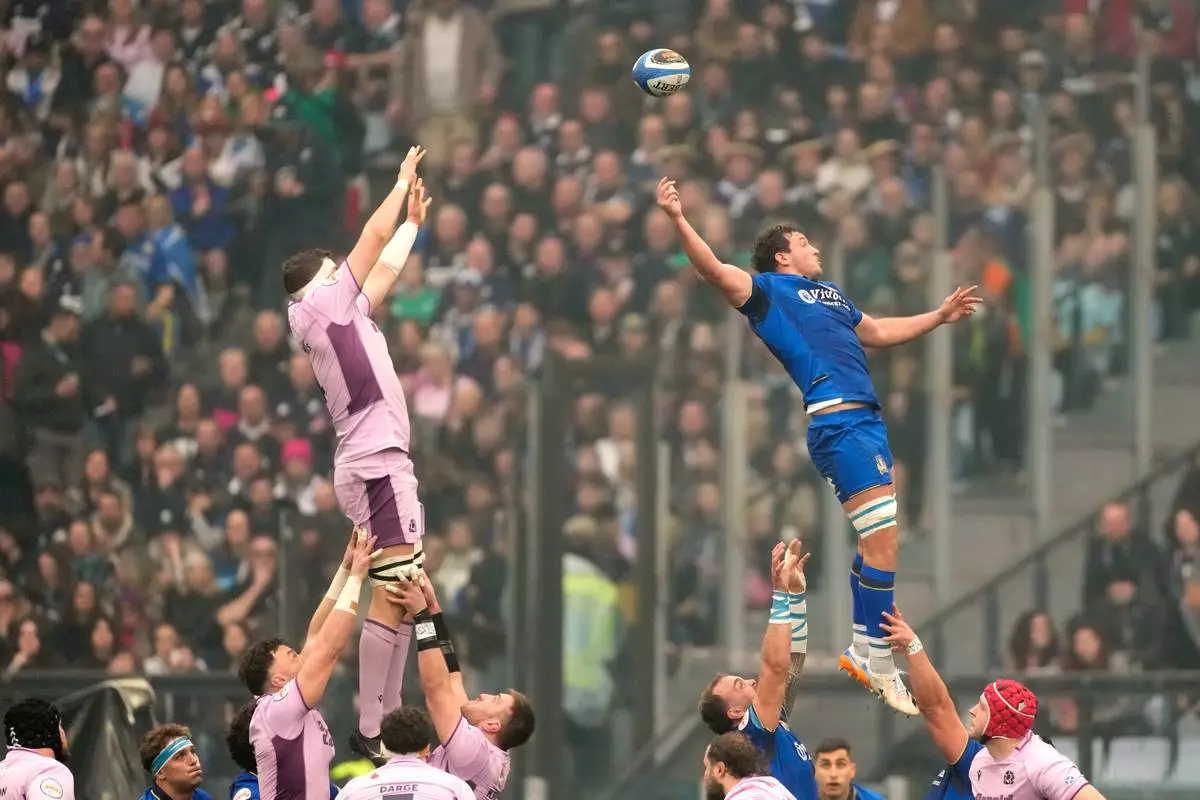
Italy's Michele Lamaro, right, and Scotland's Scott Cummings go airborn during the Six Nations rugby match between Italy and Scotland at Rome's Olympic Stadium, Saturday, Feb. 7, 2026. (AP Photo/Gregorio Borgia)
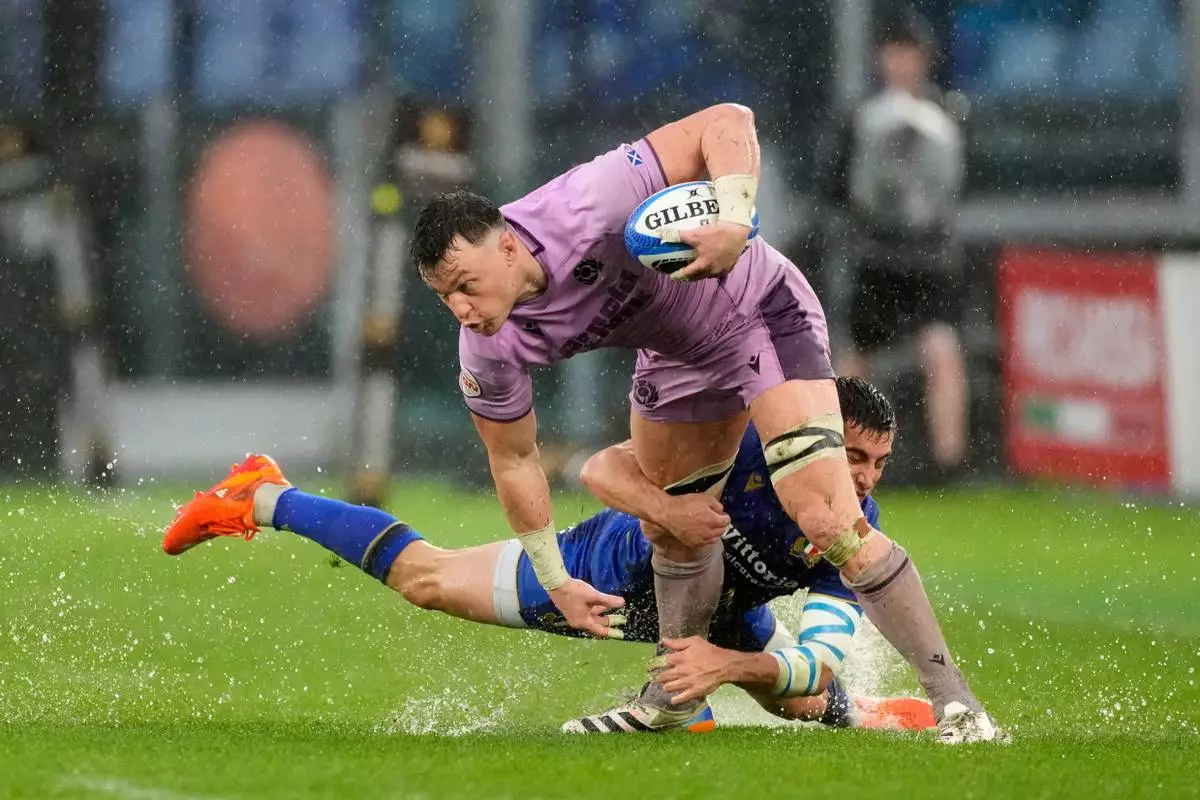
Scotland's Jack Dempsey, front, is tackled by Italy's Alessandro Fusco during the Six Nations rugby match between Italy and Scotland at Rome's Olympic Stadium, Saturday, Feb. 7, 2026. (AP Photo/Gregorio Borgia)
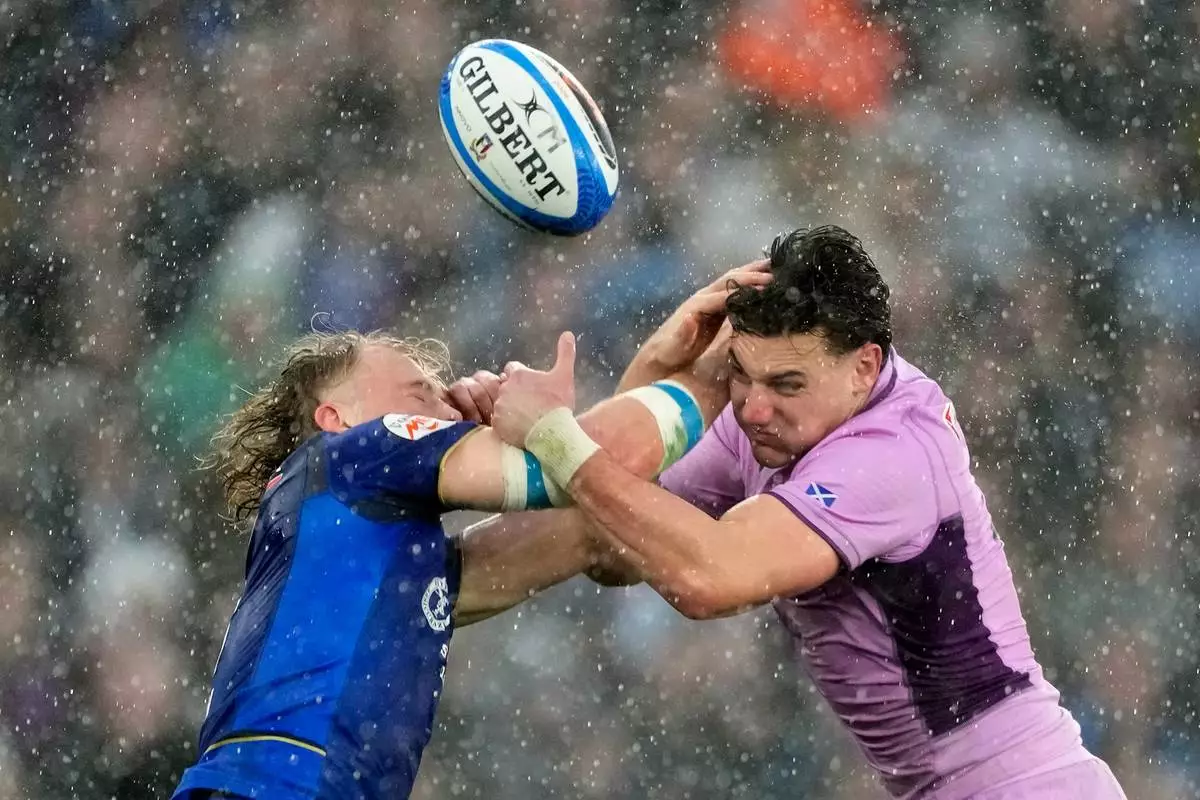
Italy's Louis Lynagh, left, and Scotland's Tom Jordan fight for the ball during the Six Nations rugby match between Italy and Scotland at Rome's Olympic Stadium, Saturday, Feb. 7, 2026. (AP Photo/Gregorio Borgia)
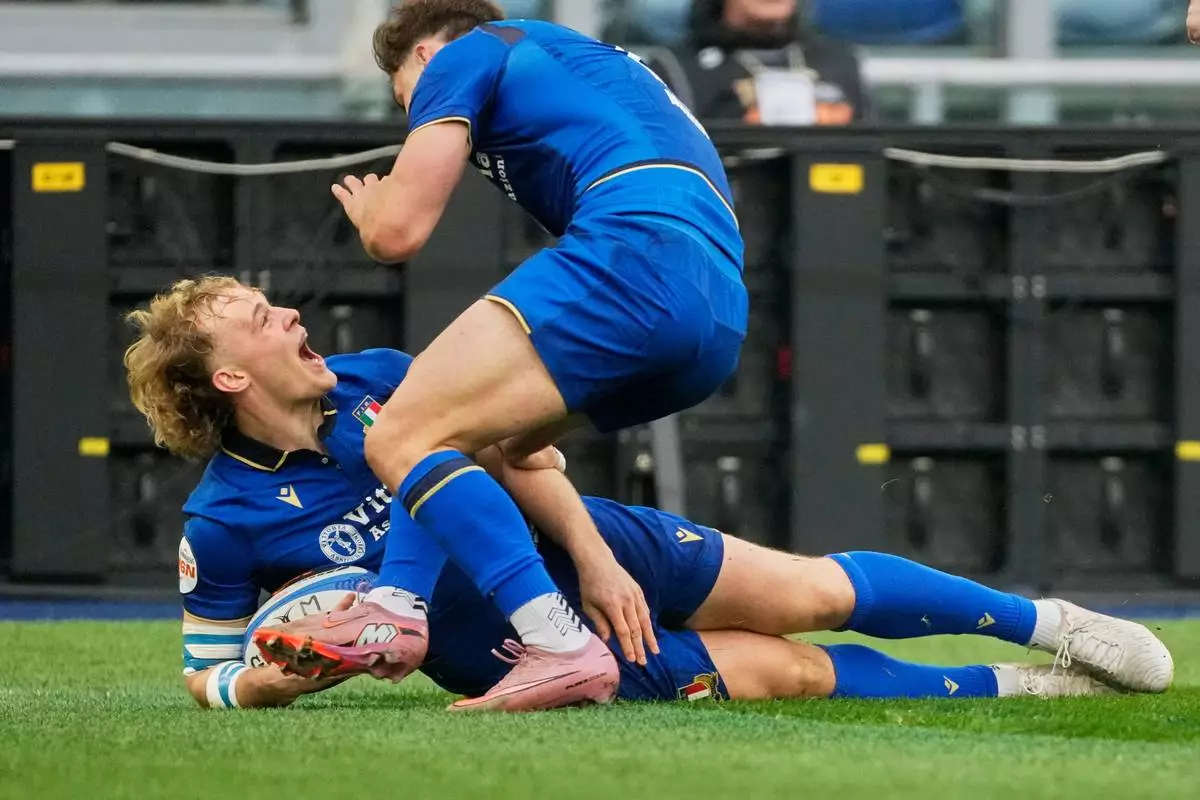
Italy's Louis Lynagh rejoices with teammate Leonardo Marin, right, after scoring a try during the Six Nations rugby match between Italy and Scotland at Rome's Olympic Stadium, Saturday, Feb. 7, 2026. (AP Photo/Gregorio Borgia)