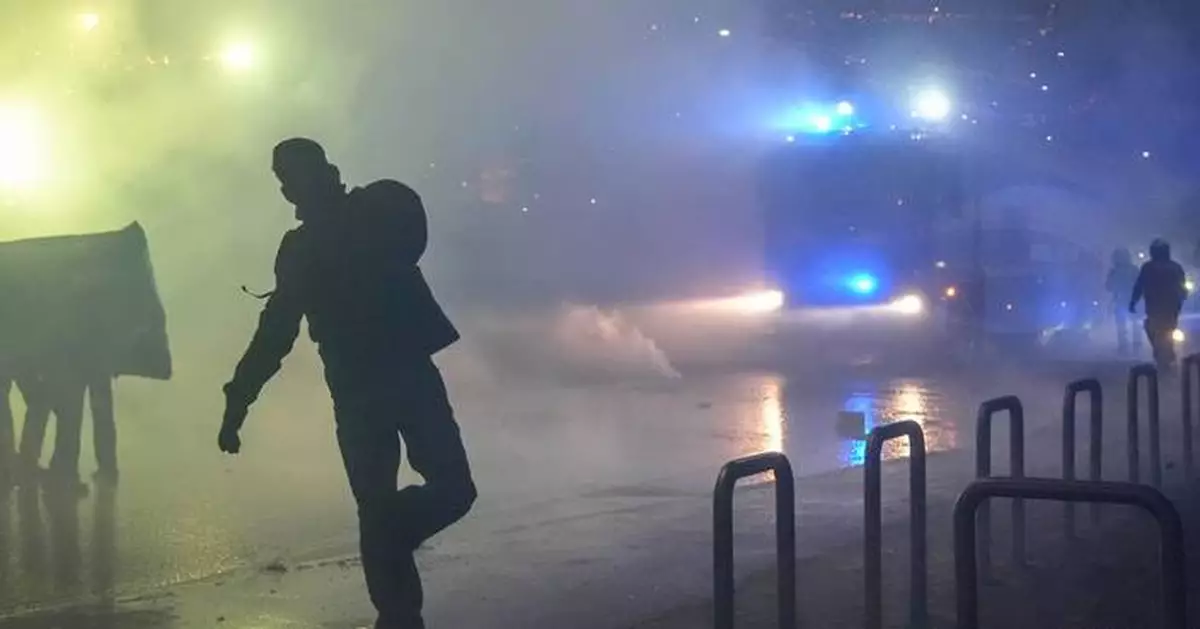
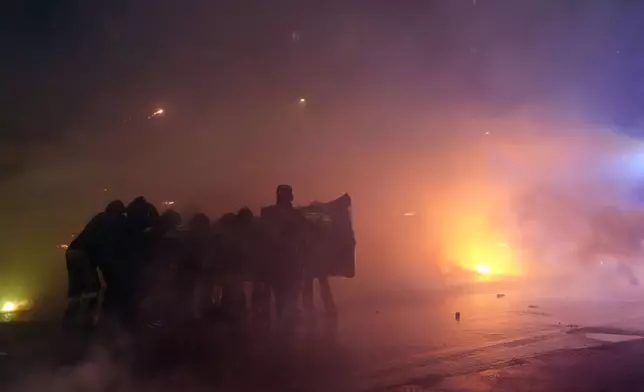
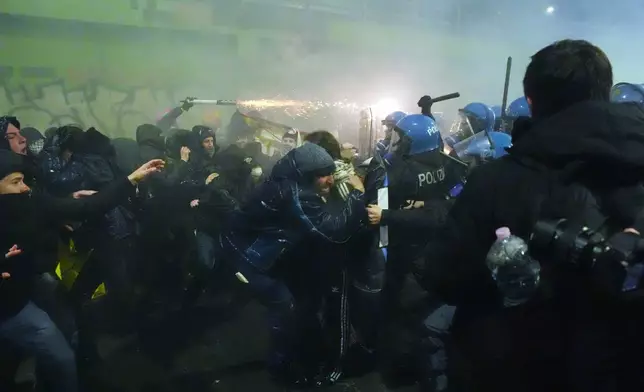
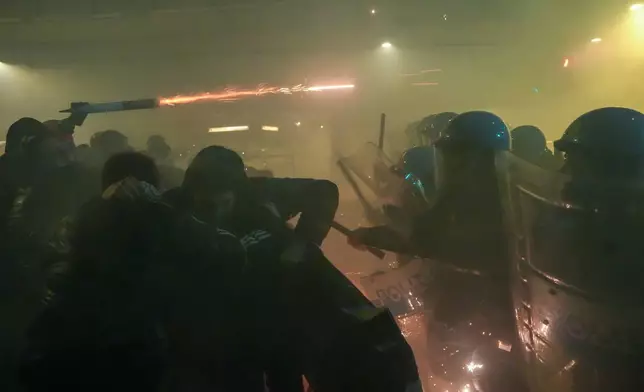
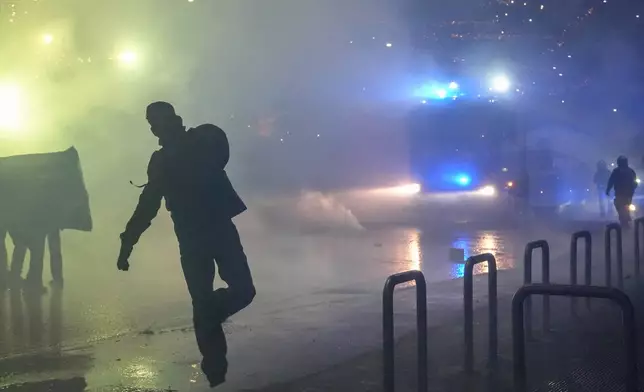
MILAN (AP) — Italian police fired tear gas and a water cannon at dozens of protesters who threw firecrackers and tried to access a highway near a Winter Olympics venue on Saturday.
The brief confrontation came at the end of a peaceful march by thousands against the environmental impact of the Games and the presence of U.S. agents in Italy.
Click to Gallery
Demonstrators face the police during a protest against the Milan-Cortina 2026 Olympics, in Milan, Italy, Saturday Feb. 7, 2026. (Claudio Furlan/LaPresse via AP)
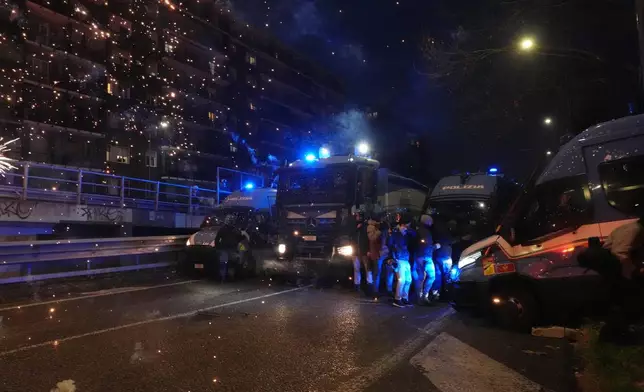
Police officers block the street in from of demonstrators marching against the Milan-Cortina 2026 Olympics, in Milan, Italy, Saturday Feb. 7, 2026. (Claudio Furlan/LaPresse via AP)
Demonstrators clash with police during a protest against the Milan-Cortina 2026 Olympics, in Milan, Italy, Saturday Feb. 7, 2026. (Claudio Furlan/LaPresse via AP)
Demonstrators clash with police during a protest against the Milan-Cortina 2026 Olympics, in Milan, Italy, Saturday Feb. 7, 2026. (Claudio Furlan/LaPresse via AP)
Demonstrators face riot police during a protest against the Milan-Cortina 2026 Olympics, in Milan, Italy, Saturday Feb. 7, 2026. (Claudio Furlan/LaPresse via AP)
Police held off the violent demonstrators, who appeared to be trying to reach the Santagiulia Olympic ice hockey rink, after the skirmish. By then, the larger peaceful protest, including families with small children and students, had dispersed.
Earlier, a group of masked protesters had set off smoke bombs and firecrackers on a bridge overlooking a construction site about 800 meters (a half-mile) from the Olympic Village that's housing around 1,500 athletes.
Police vans behind a temporary metal fence secured the road to the athletes’ village, but the protest veered away, continuing on a trajectory toward the Santagiulia venue. A heavy police presence guarded the entire route.
There was no indication that the protest and resulting road closure interfered with athletes’ transfers to their events, all on the outskirts of Milan.
The demonstration coincided with U.S. Vice President JD Vance’s visit to Milan as head of the American delegation that attended the opening ceremony on Friday.
He and his family visited Leonardo da Vinci's “The Last Supper” closer to the city center, far from the protest, which also was against the deployment of U.S. Immigration and Customs Enforcement agents to provide security to the U.S. delegation.
U.S. Homeland Security Investigations, an ICE unit that focuses on cross-border crimes, frequently sends its officers to overseas events like the Olympics to assist with security. The ICE arm at the forefront of the immigration crackdown in the U.S. is known as Enforcement and Removal Operations, and there is no indication its officers are being sent to Italy.
At the larger, peaceful demonstration, which police said numbered 10,000, people carried cardboard cutouts to represent trees felled to build the new bobsled run in Cortina. A group of dancers performed to beating drums. Music blasted from a truck leading the march, one a profanity-laced anti-ICE anthem.
“Let’s take back the cities and free the mountains,” read a banner by a group calling itself the Unsustainable Olympic Committee. Another group called the Association of Proletariat Excursionists organized the cutout trees.
“They bypassed the laws that usually are needed for major infrastructure project, citing urgency for the Games,” said protester Guido Maffioli, who expressed concern that the private entity organizing the Games would eventually pass on debt to Italian taxpayers.
Homemade signs read “Get out of the Games: Genocide States, Fascist Police and Polluting Sponsors,” the final one a reference to fossil fuel companies that are sponsors of the Games. One woman carried an artificial tree on her back decorated with the sign: “Infernal Olympics.”
The demonstration followed another last week when hundreds protested the deployment of ICE agents.
Like last week, demonstrators Saturday said they were opposed to ICE agents’ presence, despite official statements that a small number of agents from an investigative arm would be present in U.S. diplomatic territory, and not operational on the streets.
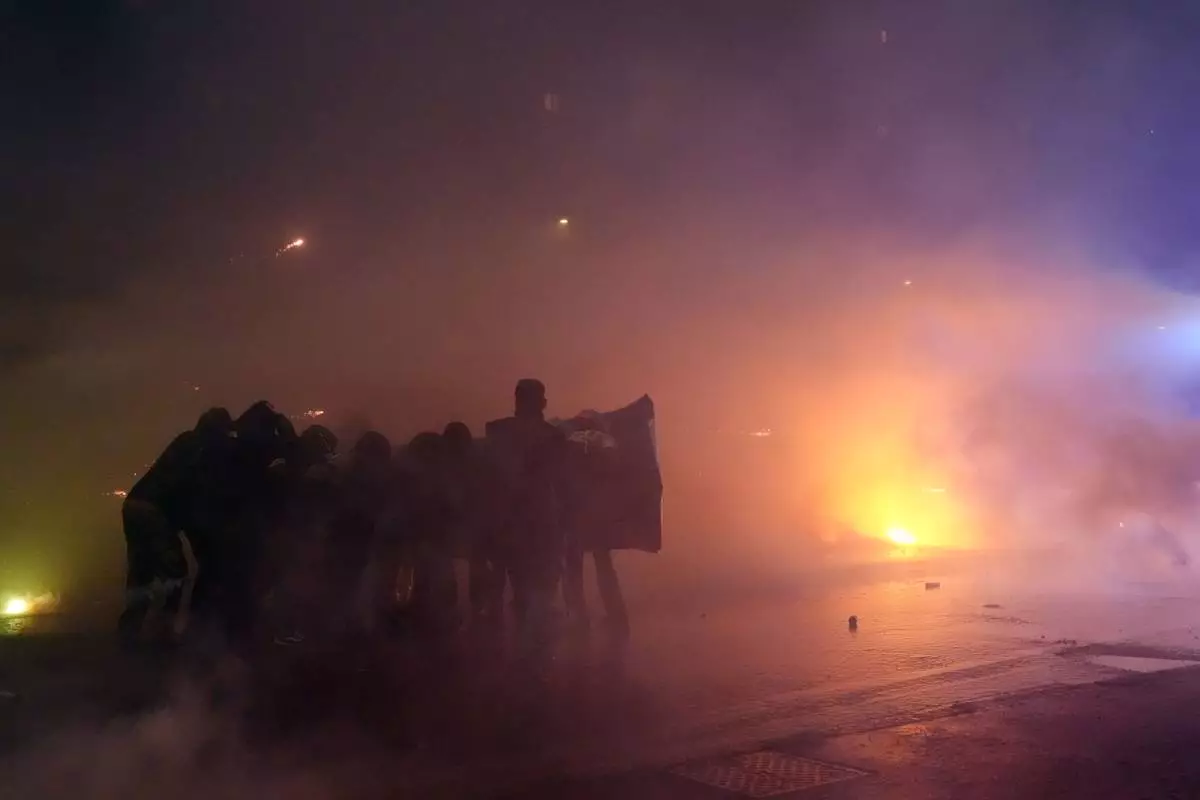
Demonstrators face the police during a protest against the Milan-Cortina 2026 Olympics, in Milan, Italy, Saturday Feb. 7, 2026. (Claudio Furlan/LaPresse via AP)
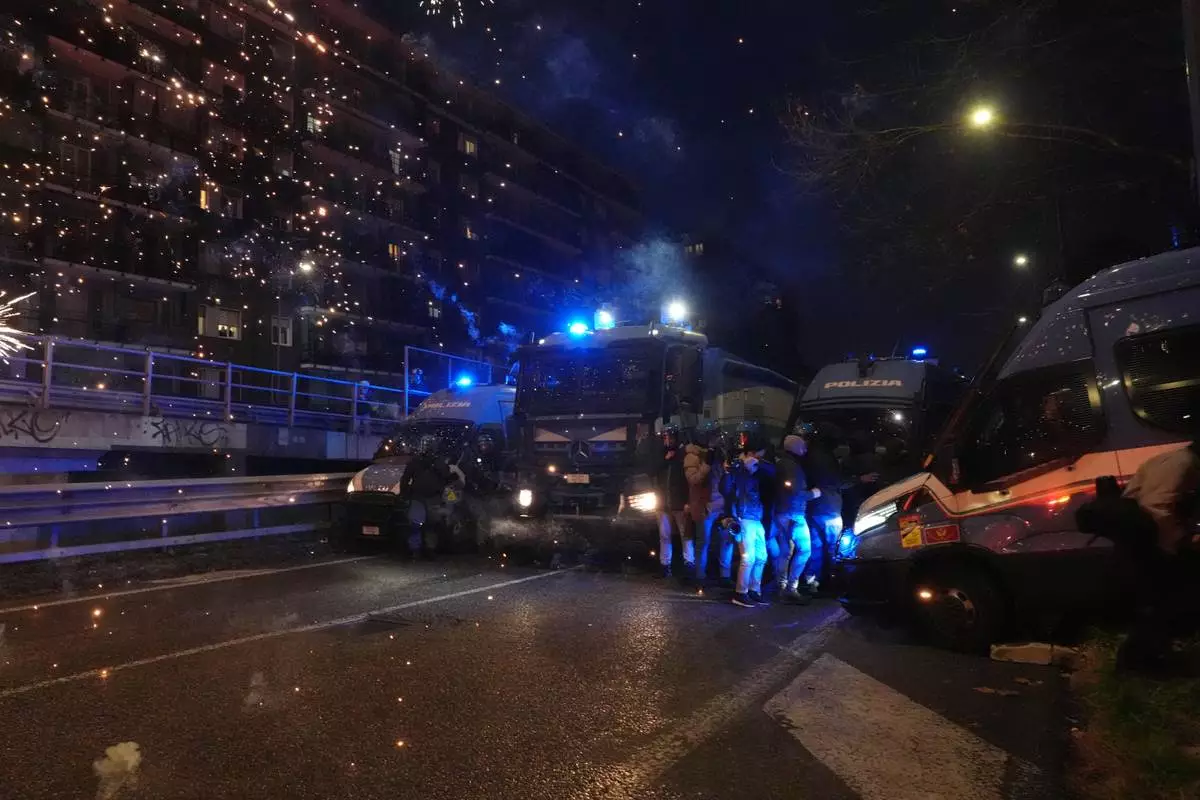
Police officers block the street in from of demonstrators marching against the Milan-Cortina 2026 Olympics, in Milan, Italy, Saturday Feb. 7, 2026. (Claudio Furlan/LaPresse via AP)
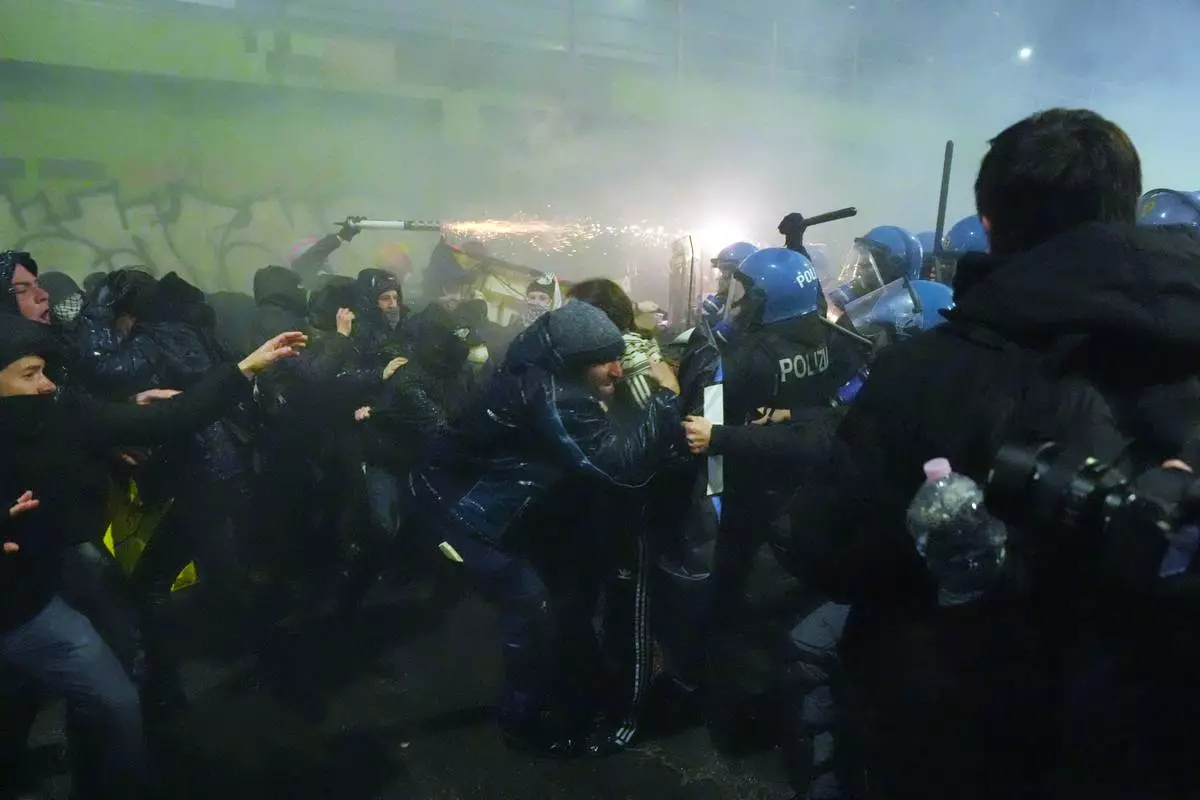
Demonstrators clash with police during a protest against the Milan-Cortina 2026 Olympics, in Milan, Italy, Saturday Feb. 7, 2026. (Claudio Furlan/LaPresse via AP)
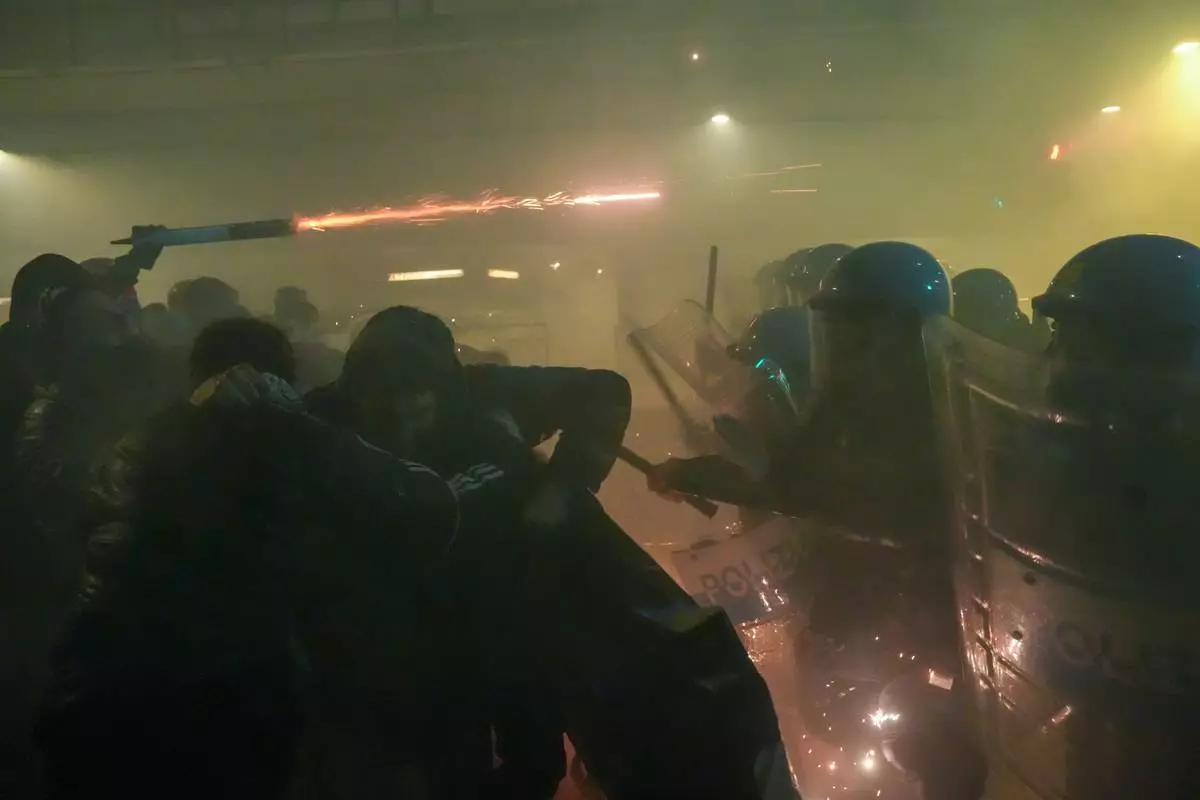
Demonstrators clash with police during a protest against the Milan-Cortina 2026 Olympics, in Milan, Italy, Saturday Feb. 7, 2026. (Claudio Furlan/LaPresse via AP)
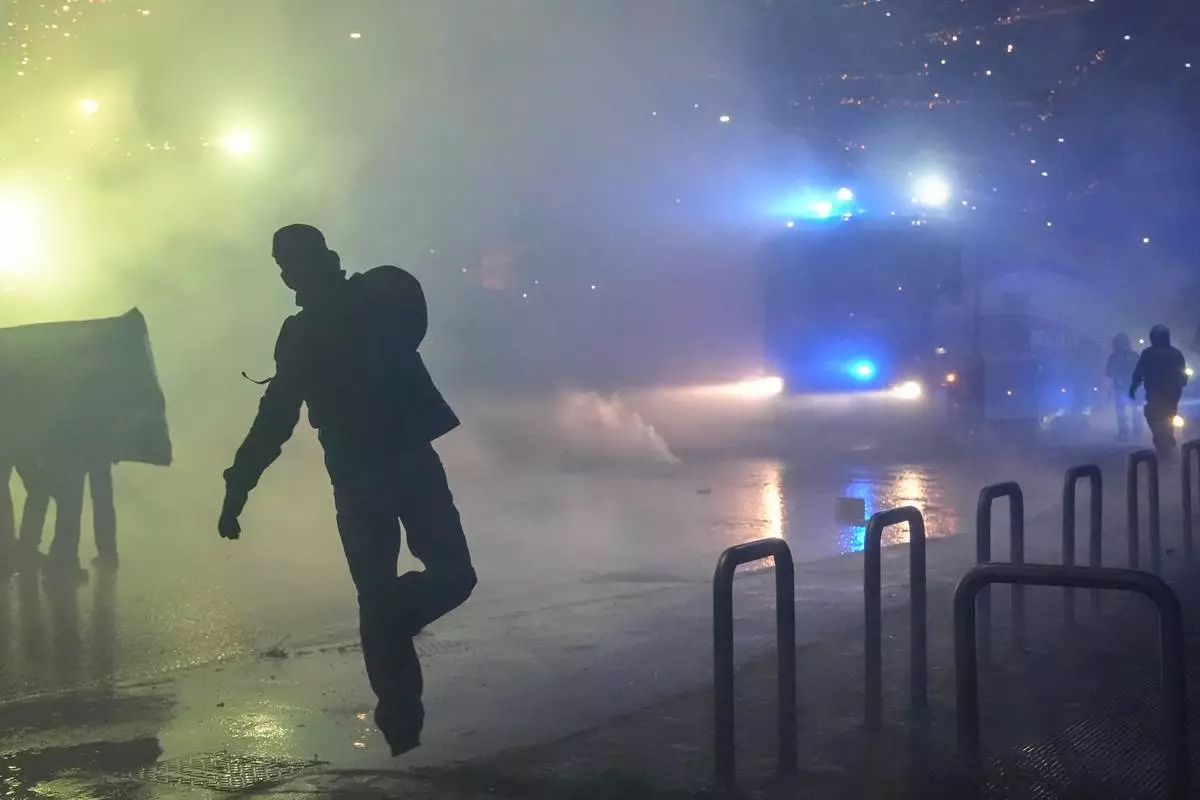
Demonstrators face riot police during a protest against the Milan-Cortina 2026 Olympics, in Milan, Italy, Saturday Feb. 7, 2026. (Claudio Furlan/LaPresse via AP)
TOKYO (AP) — Polls opened Sunday in parliamentary elections that Japan's popular Prime Minister Sanae Takaichi hopes will give her struggling party a big enough win to push through an ambitious conservative political agenda.
Takaichi is hugely popular, but the ruling Liberal Democratic Party, which has governed Japan for most of the last seven decades, has struggled from funding and religious scandals. She called Sunday’s snap elections only after three months in office, hoping to turn that around before her popularity fades.
She wants to make progress on a right-wing agenda that aims to boost Japan’s economy and military capabilities as tensions grow with China. She also wants to nurture ties with her crucial U.S. ally, and a sometimes unpredictable President Donald Trump.
The ultraconservative Takaichi, who took office as Japan’s first female leader in October, pledged to “work, work, work,” and her style, which is seen as both playful and tough, has resonated with younger fans.
The latest surveys indicated a landslide win in the lower house for the LDP. The opposition, despite the formation of a new centrist alliance and a rising far-right, is seen as too splintered to be a real challenger.
Takaichi is betting that her LDP party, together with its new partner, the Japan Innovation Party, will secure a majority in the 465-seat lower house, the more powerful of Japan’s two-chamber parliament.
Recent surveys by major Japanese newspapers show a possibility that Takaichi’s party could win a simple majority on its own while her coalition could win as many as 300 seats, a big jump from a thin majority it held since a 2024 election loss.
If the LDP fails to win a majority, “I will step down,” she said.
A big win by Takaichi’s coalition could mean a significant shift to the right in Japan’s security, immigration and other policies, with its right-wing partner JIP's leader Hirofumi Yoshimura saying his party will serve as an “accelerator.”
Japan has recently seen far-right populists gain ground, such as the anti-globalist and surging nationalist party Sanseito.
Takaichi has pledged to revise security and defense policies by December to bolster Japan’s offensive military capabilities, lifting a ban on weapons exports and moving further away from the country’s postwar pacifist principles.
She has been pushing for tougher policies on foreigners, anti-espionage and other measures that resonate with a far-right audience but ones that experts say could undermine civil rights.
Takaichi also wants to increase defense spending in response to Trump’s pressure on Japan to loosen its purse strings.
Though Takaichi said she is seeking the public's mandate for her “nation splitting policies,” she avoided contentious issues such as ways to fund soaring military spending, how to fix diplomatic tension with China and other controversial issues.
In her campaign speeches, Takaichi enthusiastically talked about the need for “proactive” government spending to fund “crisis management investment and growth,” such as measures to strengthen economic security, technology and other industries. Takaichi also seeks to push tougher measures on immigration and foreigners, including stricter requirements for foreign property owners and a cap on foreign residents.
The snap election after only three months in office “underscores a problematic trend in Japanese politics in which political survival takes priority over substantive policy outcomes,” said Masato Kamikubo, a Ritsumeikan University politics professor. “Whenever the government attempts necessary but unpopular reforms ... the next election looms.”
There are some uncertainties. The hastily called election that gave little time for people to prepare has already invited complaints.
Sunday’s vote also began under fresh snowfall across the country, including in Tokyo. Record snowfall in northern Japan over the past few weeks, which blocked roads and was blamed for dozens of deaths nationwide, could hinder voting or delay vote counting in hard-hit areas. How her popularity will translate into votes among younger voters, notorious for their low turnout, during bad weather is unpredictable.
Kazuki Ishihara, 54, said she voted for the LDP for stability and in hopes for something new under Takaichi. “I have some hope that she could do something” her predecessors could not.
A 50-year-old office worker Yoshinori Tamada said his interest is wages. “I think a lot when I look at my pay slip, and I cast my vote for a party that I believe I can trust in that regard.”
Associated Press video journalist Mayuko Ono in Tokyo contributed to this report.
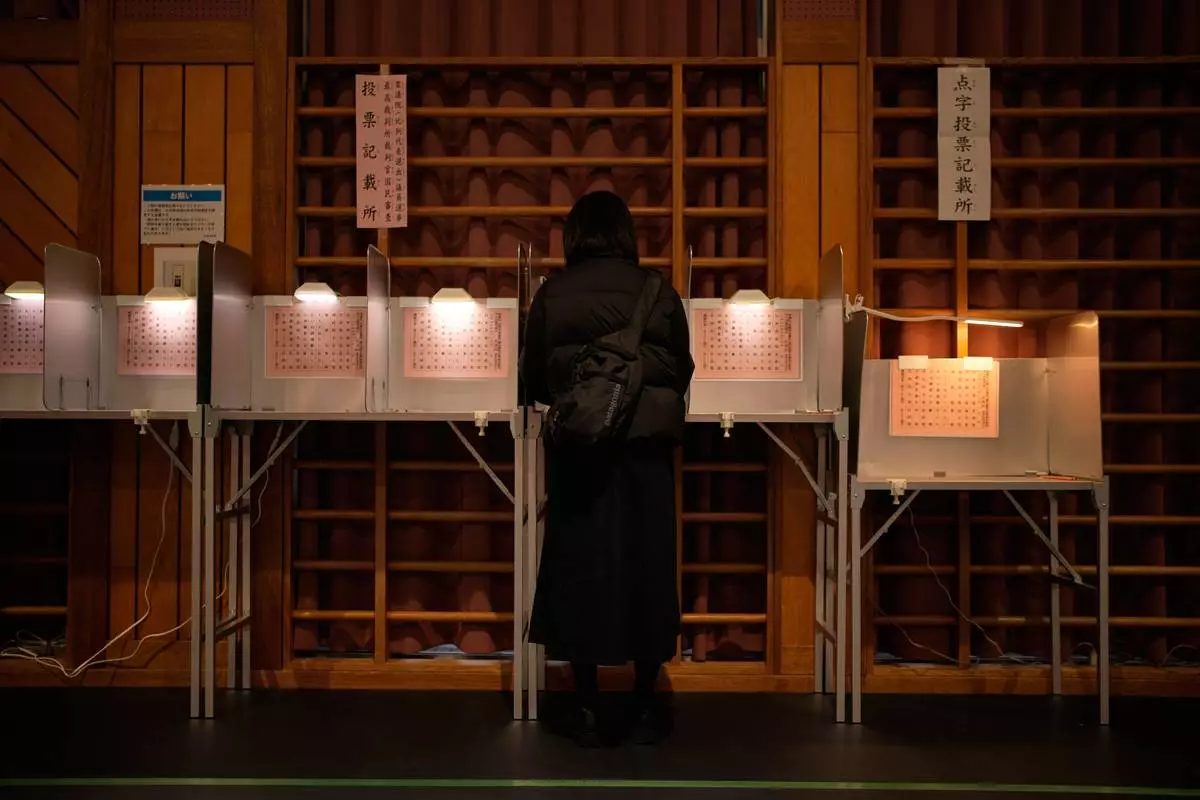
A voter fills in a ballot in the lower house election at a polling station Sunday, Feb. 8, 2026, in Tokyo. (AP Photo/Louise Delmotte)
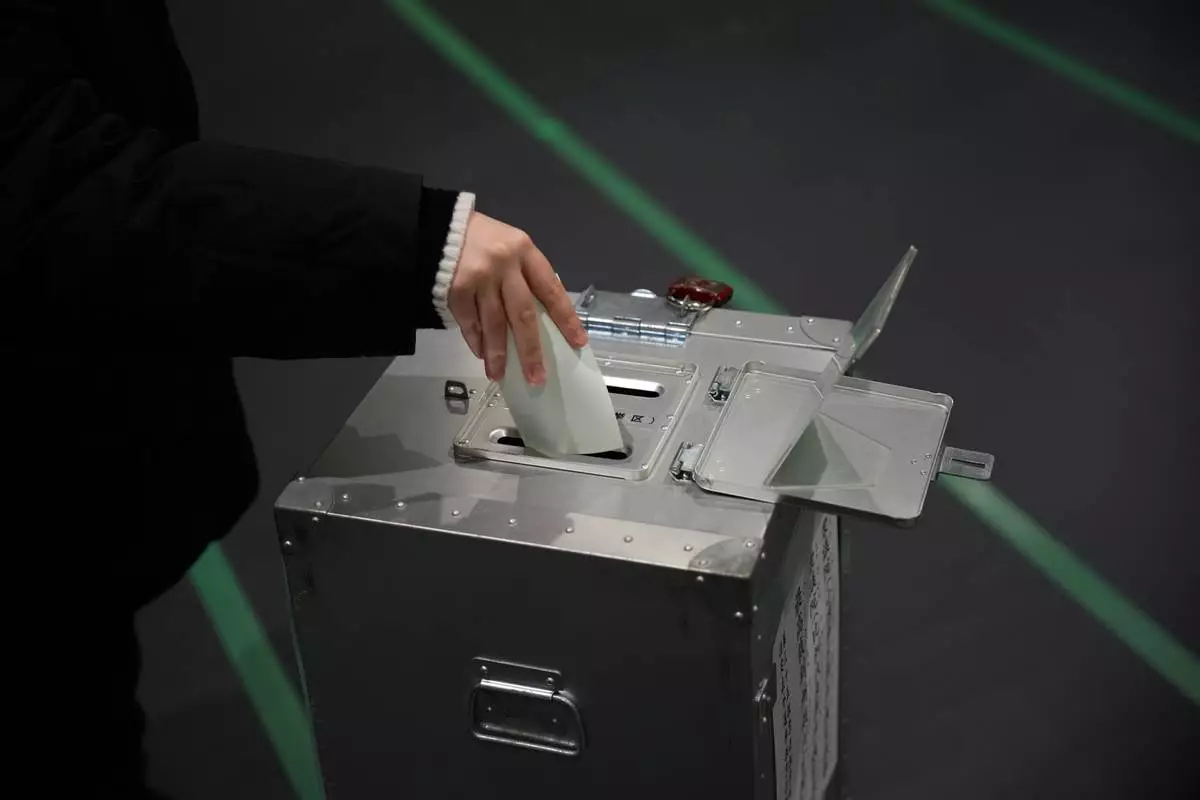
A voter fills in a ballot in the lower house election at a polling station Sunday, Feb. 8, 2026, in Tokyo. (AP Photo/Louise Delmotte)
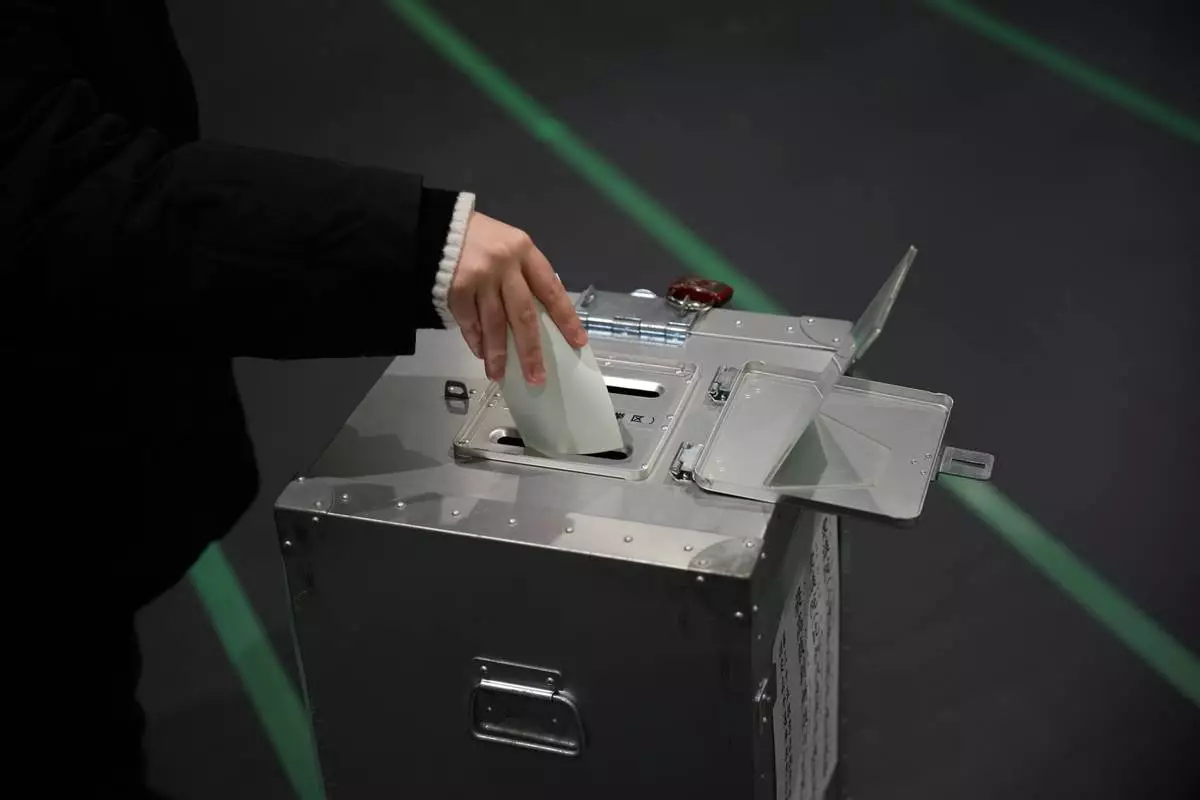
A voter fills in a ballot in the upper house election at a polling station Sunday, Feb. 8, 2026, in Tokyo. (AP Photo/Louise Delmotte)
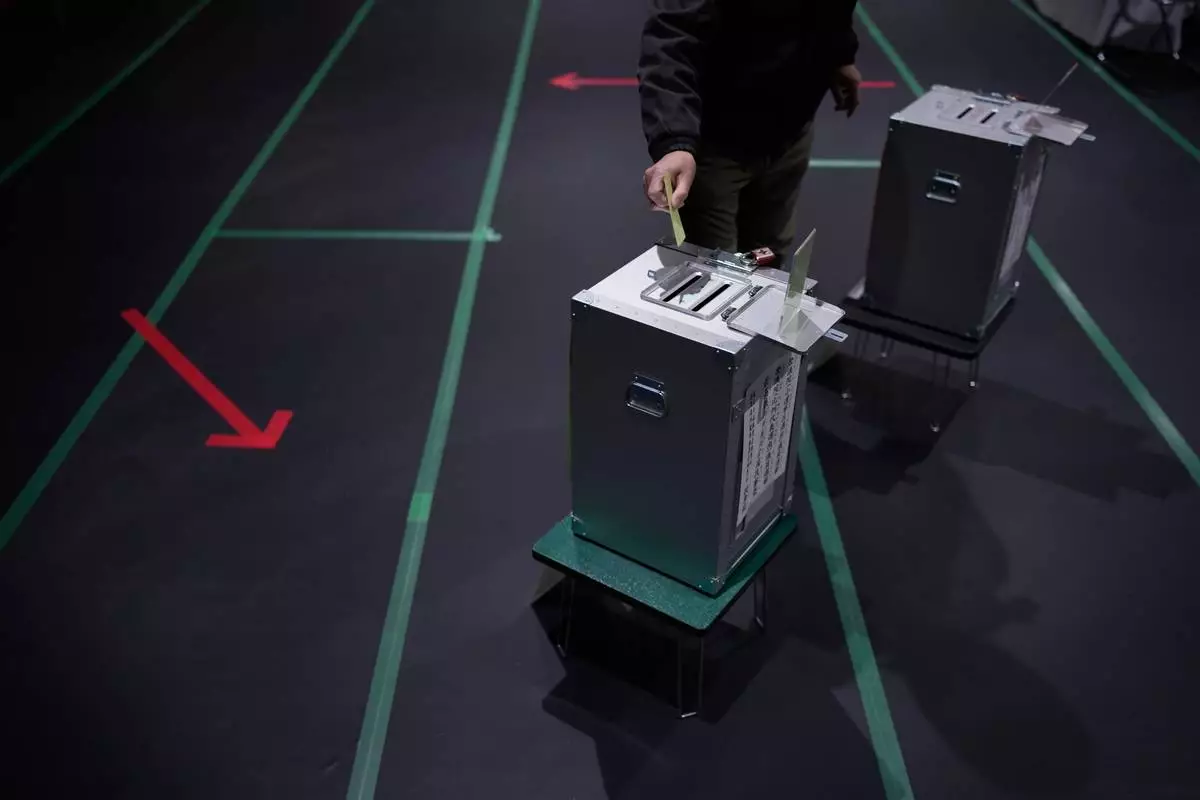
A voter casts a ballot in the upper house election at a polling station Sunday, Feb. 8, 2026, in Tokyo. (AP Photo/Louise Delmotte)
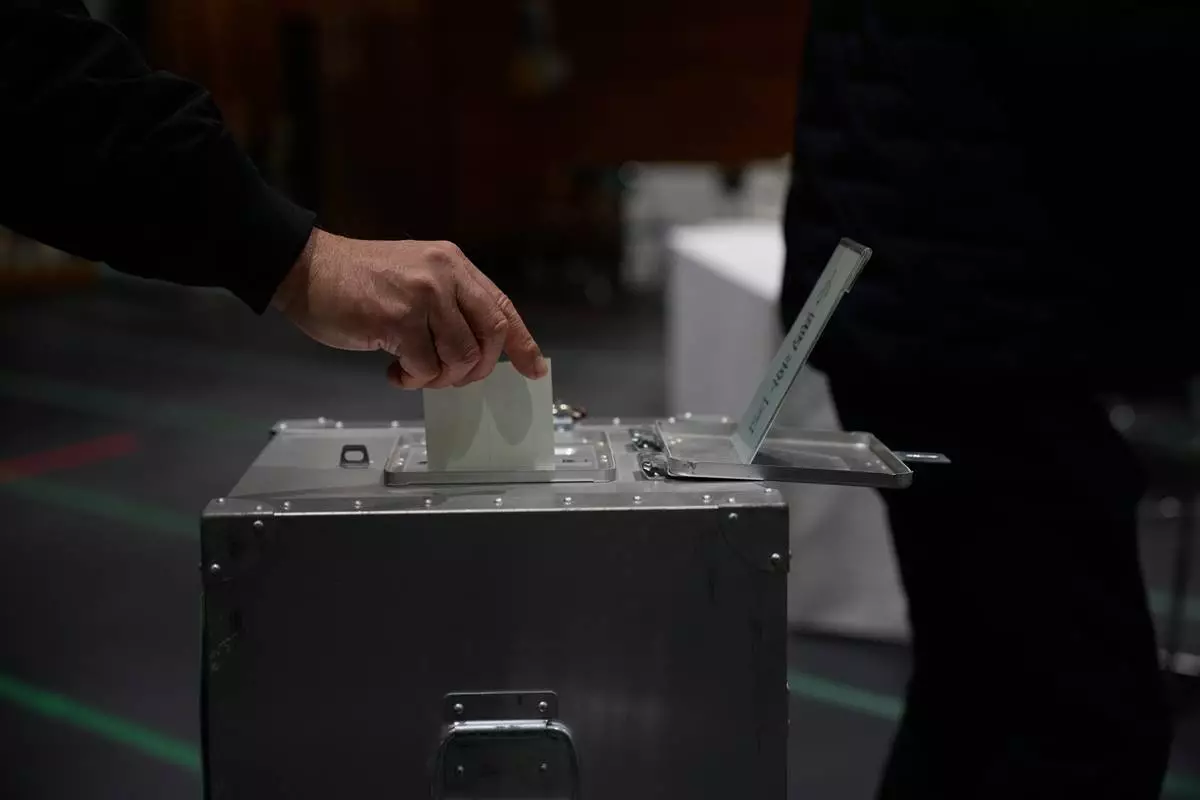
A voter casts a ballot in the upper house election at a polling station Sunday, Feb. 8, 2026, in Tokyo. (AP Photo/Louise Delmotte)