Skip to Content Facebook Feature Image

Gaza's Rafah border crossing has reopened but few people get through

News

Gaza's Rafah border crossing has reopened but few people get through
News

News

Gaza's Rafah border crossing has reopened but few people get through

2026-02-08 03:39 Last Updated At:03:41

KHAN YOUNIS, Gaza Strip (AP) — When the Rafah border crossing between Gaza and Egypt finally reopened this week, Palestinian officials heralded it as a “window of hope” after two years of war as a fragile ceasefire deal moves forward.

But that hope has been sidetracked by disagreements over who should be allowed through, hourslong delays and Palestinian travelers' reports of being handcuffed and interrogated by Israeli soldiers.

More Images
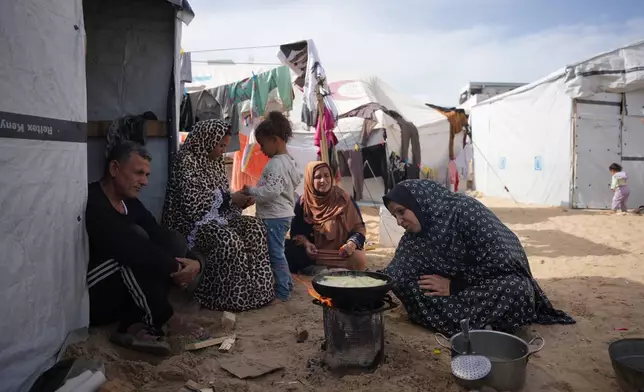
Siham Omran, 54, recently returned from Egypt after completing medical treatment, cooks food over a fire beside her tent in Khan Younis, in the southern Gaza Strip, Saturday, Feb. 7, 2026. (AP Photo/Abdel Kareem Hana)
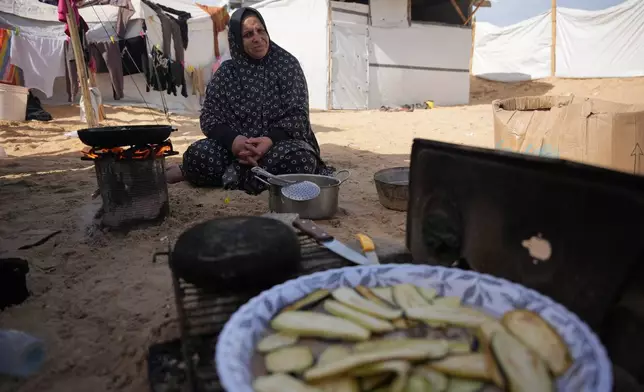
Siham Omran, 54, recently returned from Egypt after completing medical treatment, cooks food over a fire beside her tent in Khan Younis, in the southern Gaza Strip, Saturday, Feb. 7, 2026. (AP Photo/Abdel Kareem Hana)
Siham Omran, 54, recently returned from Egypt after completing medical treatment, cooks food over a fire beside her tent in Khan Younis, in the southern Gaza Strip, Saturday, Feb. 7, 2026. (AP Photo/Abdel Kareem Hana)

Siham Omran, 54, recently returned from Egypt after completing medical treatment, cooks food over a fire beside her tent in Khan Younis, in the southern Gaza Strip, Saturday, Feb. 7, 2026. (AP Photo/Abdel Kareem Hana)

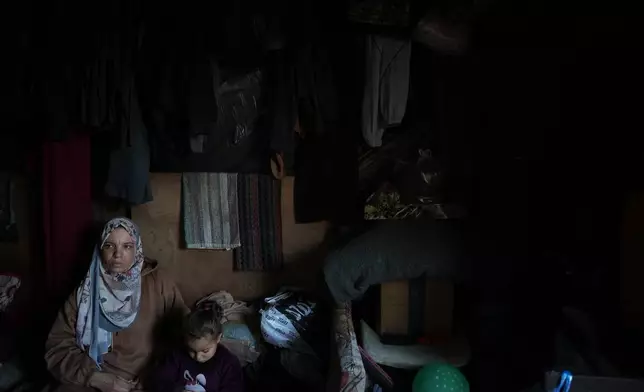
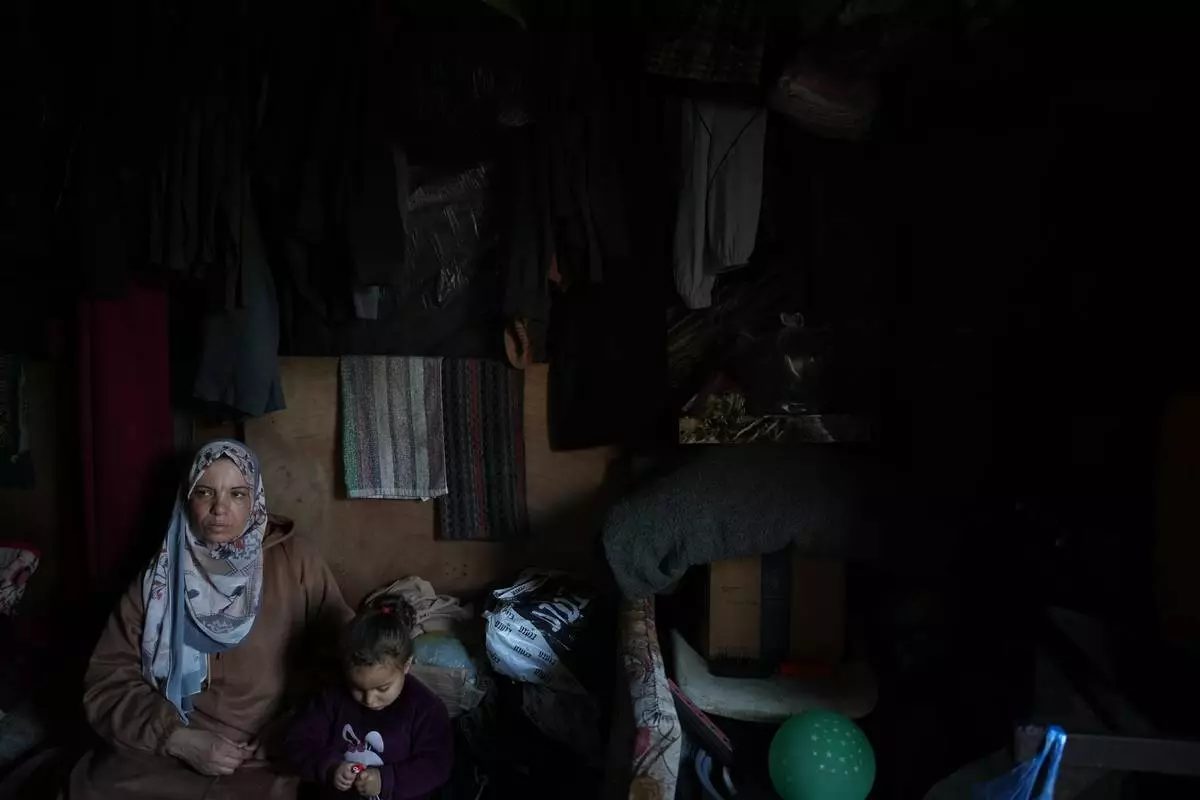
Rana al-Louh, 45, sits with her granddaughter, Sumaya Abu Suleiman, 3, inside the tent where they live, which had been erected in a schoolyard converted into a shelter in Nuseirat, in the central Gaza Strip, Saturday, Feb. 7, 2026. (AP Photo/Abdel Kareem Hana)
Rana al-Louh, 45, sits with her granddaughter, Sumaya Abu Suleiman, 3, inside the tent where they live, which had been erected in a schoolyard converted into a shelter in Nuseirat, in the central Gaza Strip, Saturday, Feb. 7, 2026. (AP Photo/Abdel Kareem Hana)

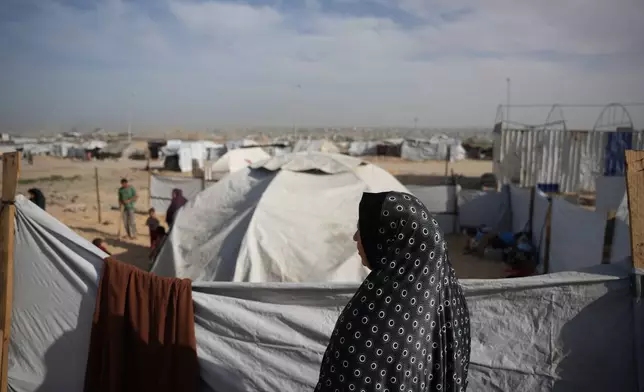
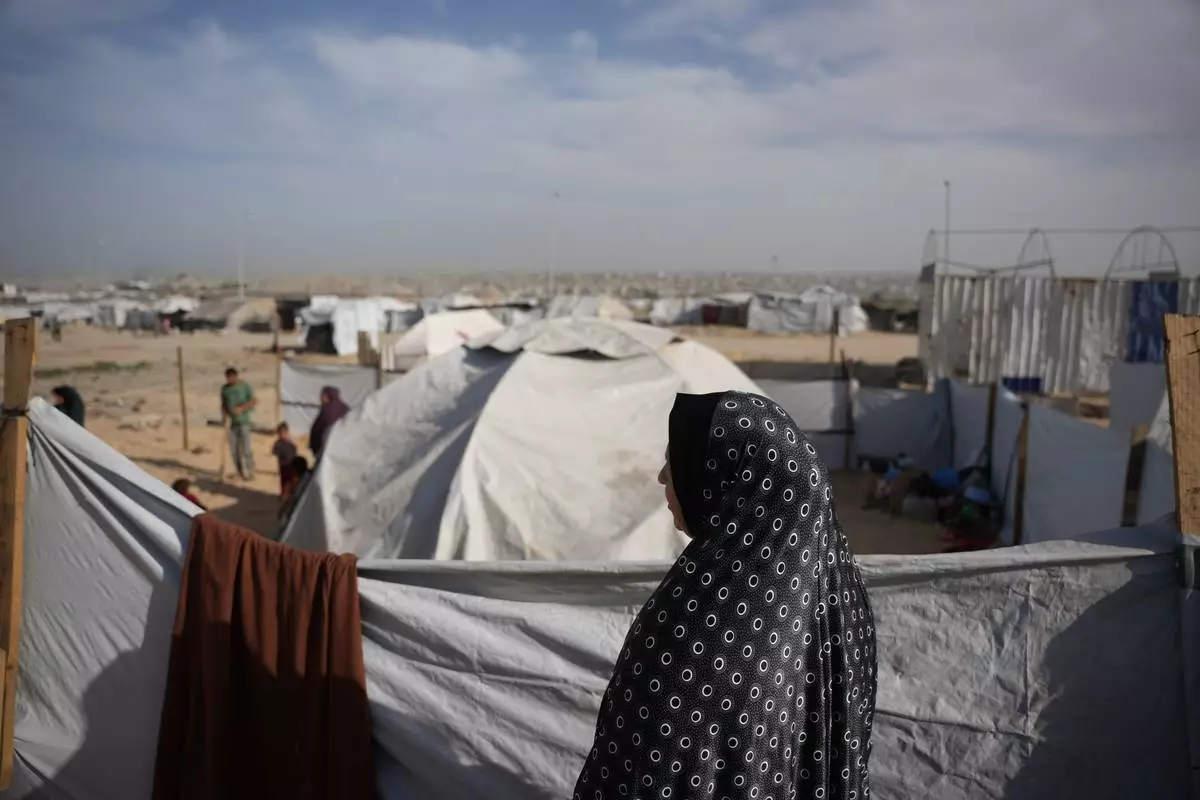
Siham Omran, 54, recently returned from Egypt after completing her medical treatment, looks at the tents of displaced people next to her that were set up in Khan Younis, southern Gaza Strip, Saturday, Feb. 7, 2026. (AP Photo/Abdel Kareem Hana)
Siham Omran, 54, recently returned from Egypt after completing her medical treatment, looks at the tents of displaced people next to her that were set up in Khan Younis, southern Gaza Strip, Saturday, Feb. 7, 2026. (AP Photo/Abdel Kareem Hana)

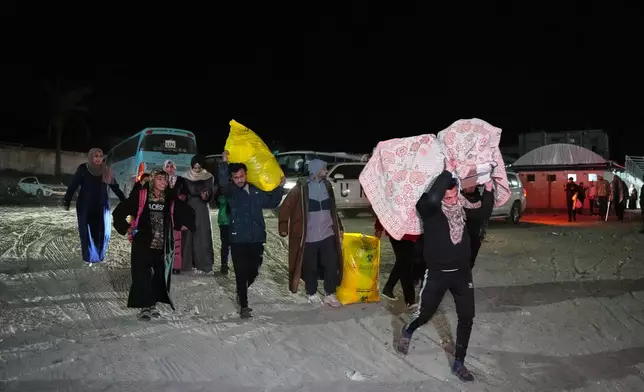
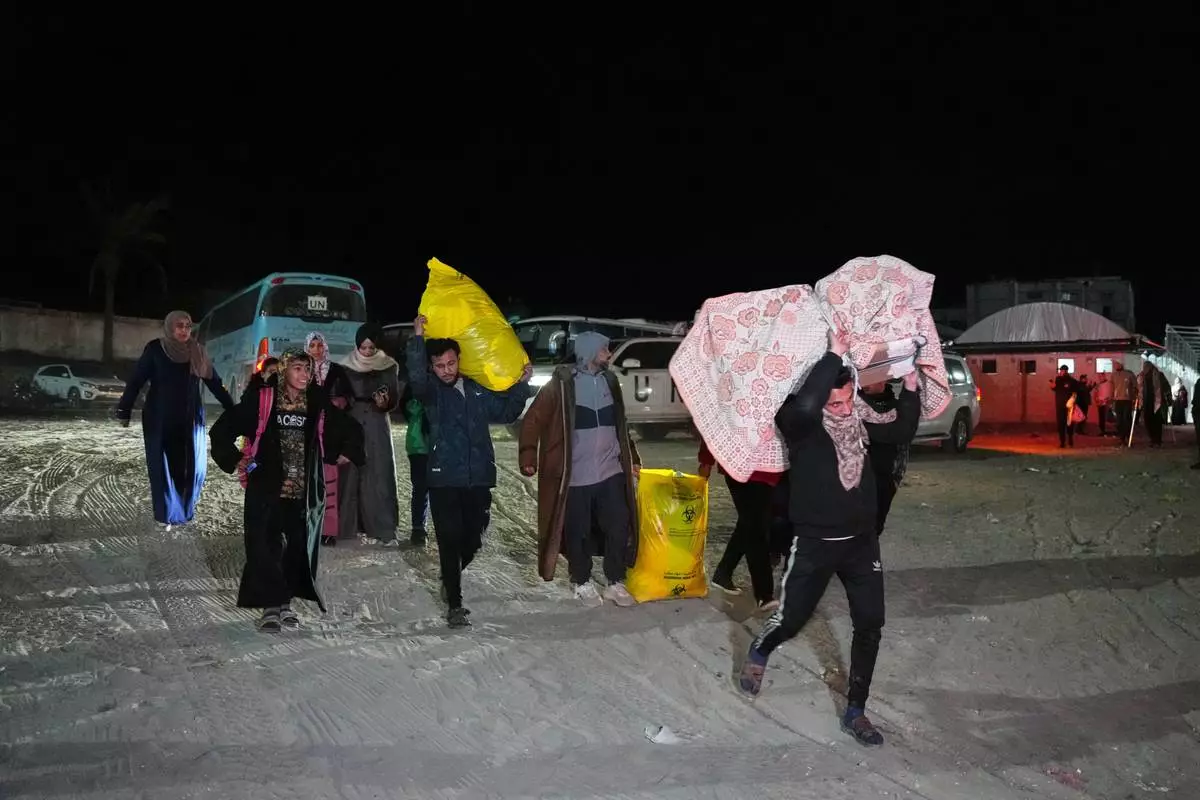
Palestinians carry the belongings of relatives arriving in Gaza from Egypt following the long-awaited reopening of the Rafah border crossing, in Khan Younis, southern Gaza Strip, early Thursday, Feb. 5, 2026. (AP Photo/Abdel Kareem Hana)
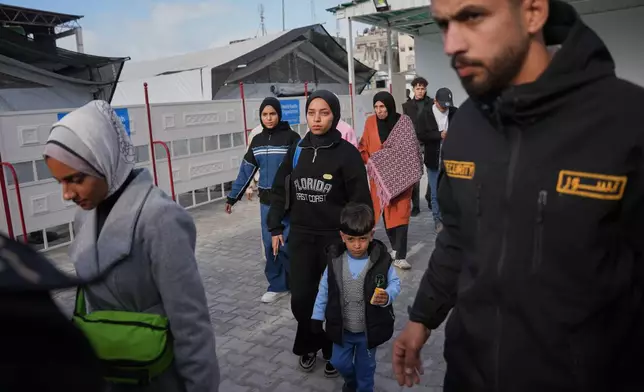
Palestinians carry the belongings of relatives arriving in Gaza from Egypt following the long-awaited reopening of the Rafah border crossing, in Khan Younis, southern Gaza Strip, early Thursday, Feb. 5, 2026. (AP Photo/Abdel Kareem Hana)

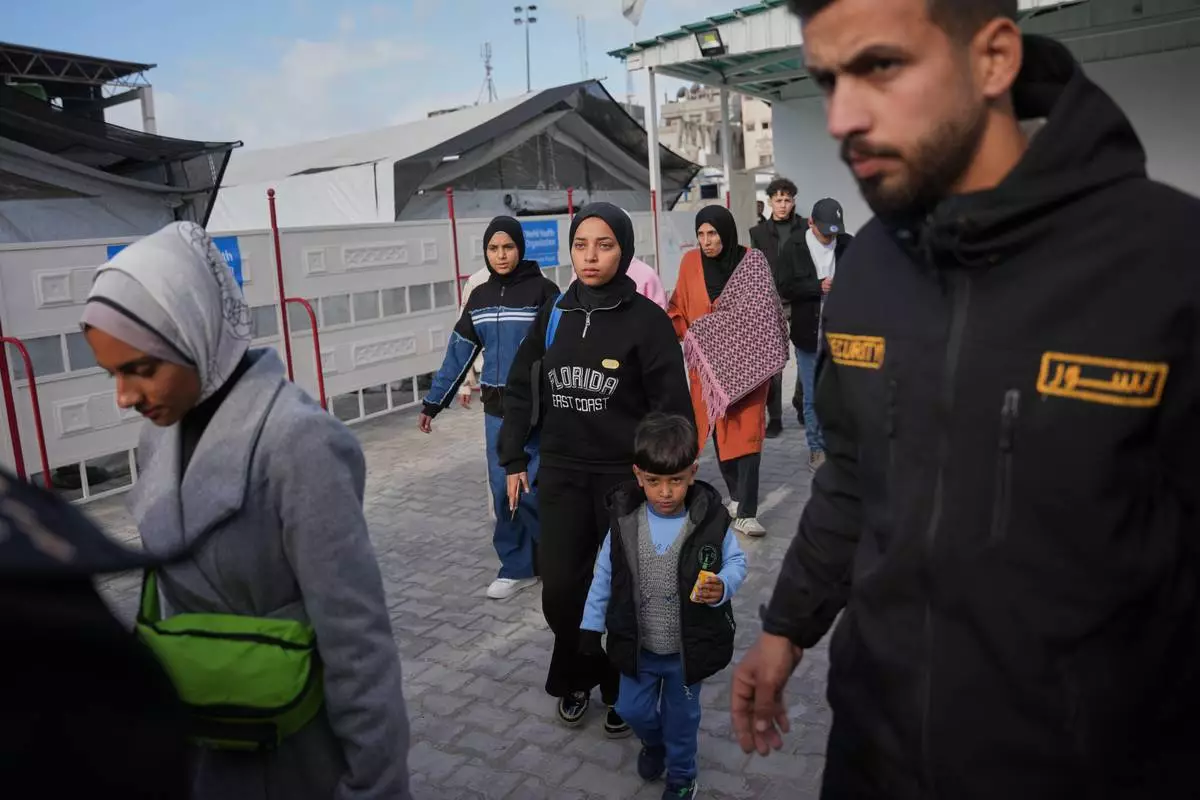
Palestinians patients and their relatives gather to board a bus in Khan Younis before they head to the Rafah crossing, leaving the Gaza Strip for medical treatment abroad, Wednesday, Feb. 4, 2026. (AP Photo/Abdel Kareem Hana)

Palestinians patients and their relatives gather to board a bus in Khan Younis before they head to the Rafah crossing, leaving the Gaza Strip for medical treatment abroad, Wednesday, Feb. 4, 2026. (AP Photo/Abdel Kareem Hana)

Far fewer people than expected have crossed in both directions. Restrictions negotiated by Israeli, Egyptian, Palestinian and international officials meant that only 50 people would be allowed to return to Gaza each day and 50 medical patients — along with two companions for each — would be allowed to leave.

But over the first four days of operations, just 36 Palestinians requiring medical care were allowed to leave for Egypt, plus 62 companions, according to United Nations data. Palestinian officials say nearly 20,000 people in Gaza are seeking to leave for medical care that they say is not available in the war-shattered territory.

Amid confusion around the reopening, the Rafah crossing was closed Friday and Saturday.

The Rafah crossing is a lifeline for Gaza, providing the only link to the outside world not controlled by Israel. Israel seized it in May 2024, though traffic through the crossing was heavily restricted even before that.

Several women who managed to return to Gaza after its reopening recounted to The Associated Press harsh treatment by Israeli authorities and an Israeli-backed Palestinian armed group, Abu Shabab. A European Union mission and Palestinian officials run the border crossing, and Israel has its screening facility some distance away.

Rana al-Louh, anxious to return two years after fleeing to Egypt with her wounded sister, said Israeli screeners asked multiple times why she wanted to go back to Gaza during questioning that lasted more than six hours. She said she was blindfolded and handcuffed, an allegation made by others.

“I told them I returned to Palestine because my husband and kids are there,” al-Louh said. Interrogators told her Gaza belonged to Israel and that “the war would return, that Hamas won’t give up its weapons. I told him I didn’t care, I wanted to return.”

Asked about such reports, Israel's military replied that "no incidents of inappropriate conduct, mistreatment, apprehensions or confiscation of property by the Israeli security establishment are known.”

The Shin Bet intelligence agency and COGAT, the Israeli military body that handles Palestinian civilian affairs and coordinates the crossings, did not respond to questions about the allegations.

The long questioning Wednesday delayed the return to Gaza of al-Louh and others until nearly 2 a.m. Thursday.

Later that day, U.N. human rights officials noted a “consistent pattern of ill-treatment, abuse and humiliation by Israeli military forces.”

“After two years of utter devastation, being able to return to their families and what remains of their homes in safety and dignity is the bare minimum,” Ajith Sunghay, the agency’s human rights chief for the occupied Palestinian territories, said in a statement.

Officials who negotiated the Rafah reopening were clear that the early days of operation would be a pilot. If successful, the number of people crossing could increase.

Challenges quickly emerged. On the first day, Monday, Israeli officials said 71 patients and companions were approved to leave Gaza, with 46 Palestinians approved to enter. Inside Gaza, however, organizers with the World Health Organization were able to arrange transportation for only 12 people that day, so other patients stayed behind, according to a person briefed on the operations who spoke on condition of anonymity because they were not authorized to speak to the media.

Israeli officials insisted that no Palestinians would be allowed to enter Gaza until all the departures were complete. Then they said that since only 12 people had left Gaza, only 12 could enter, leaving the rest to wait on the Egyptian side of the border overnight, according to the person briefed on the operations.

Crossings picked up on the second day, when 40 people were allowed to leave Gaza and 40 to enter. But delays mounted as many returning travelers had more luggage than set out in the agreement reached by negotiators and items that were forbidden, including cigarettes and water and other liquids like perfume. Each traveler is allowed to carry one mobile phone and a small amount of money if they submit a declaration 24 hours ahead of travel.

Each time a Palestinian was admitted to Egypt, Israeli authorities allowed one more into Gaza, drawing out the process.

The problems continued Wednesday and Thursday, with the numbers allowed to cross declining. The bus carrying Wednesday's returnees from the crossing did not reach its drop-off location in Gaza until 1:40 a.m. Thursday.

Still, some Palestinians said they were grateful to have made the journey.

As Siham Omran’s return to Gaza stretched into early Thursday, she steadied herself with thoughts of her children and husband, whom she had not seen for 20 months. She said she was exhausted, and stunned by Gaza’s devastation.

“This is a journey of suffering. Being away from home is difficult,” she said. “Thank God we have returned to our country, our homes, and our homeland.”

Now she shares a tent with 15 family members, using her blouse for a pillow.

Elhennawy reported from Cairo and Geller from New York. Associated Press writer Josef Federman in Jerusalem contributed to this report.

Find more of AP’s coverage at https://apnews.com/hub/israel-hamas-war
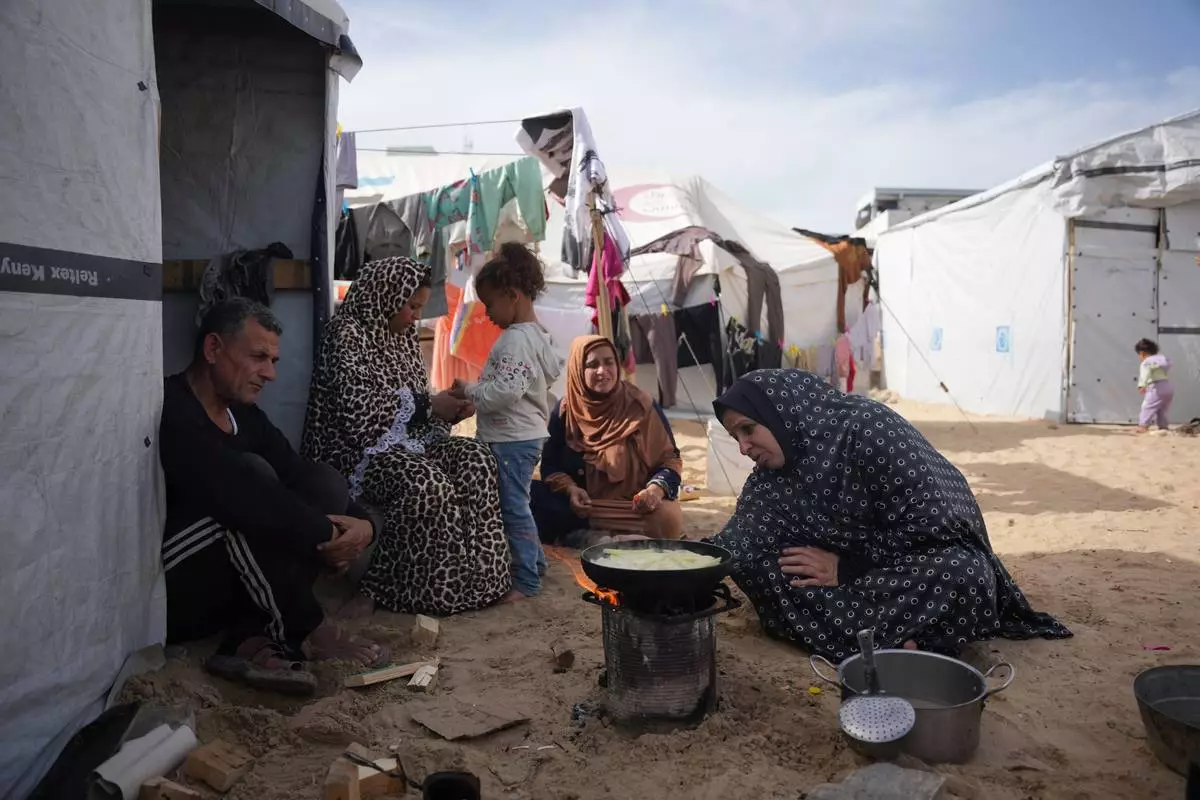
Siham Omran, 54, recently returned from Egypt after completing medical treatment, cooks food over a fire beside her tent in Khan Younis, in the southern Gaza Strip, Saturday, Feb. 7, 2026. (AP Photo/Abdel Kareem Hana)
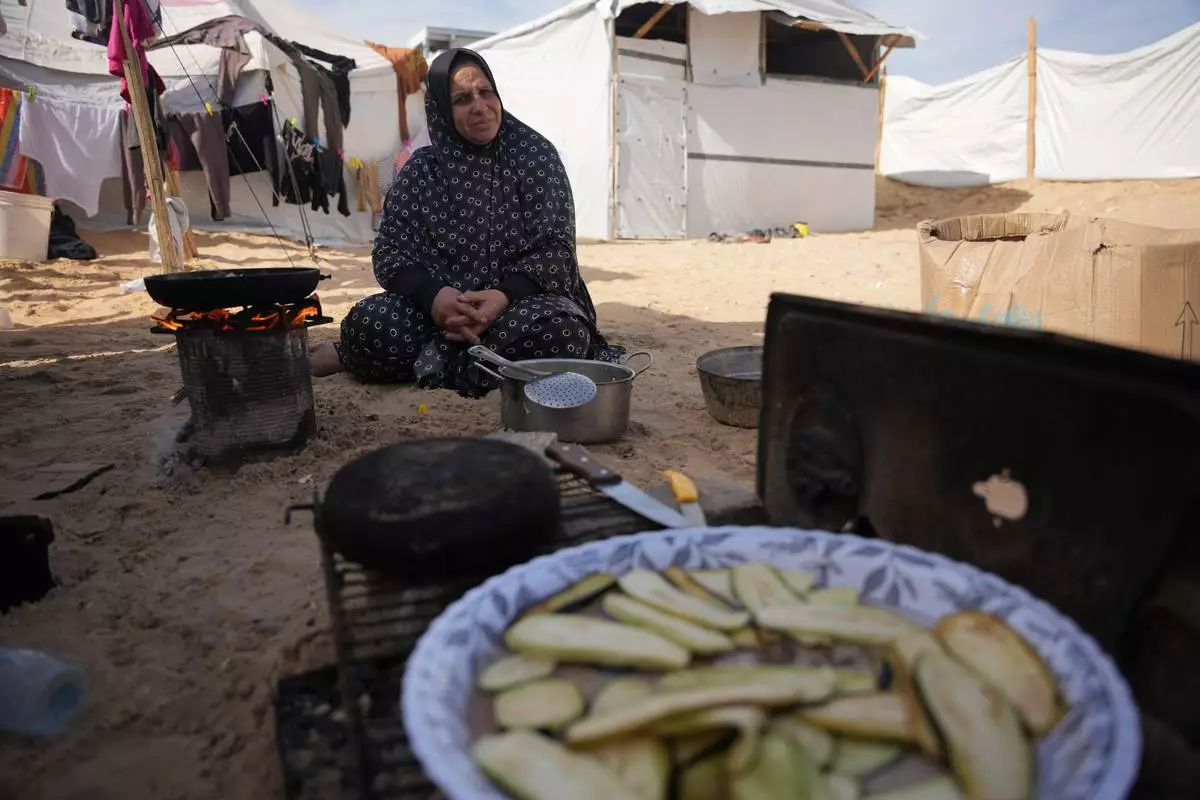
Siham Omran, 54, recently returned from Egypt after completing medical treatment, cooks food over a fire beside her tent in Khan Younis, in the southern Gaza Strip, Saturday, Feb. 7, 2026. (AP Photo/Abdel Kareem Hana)
Siham Omran, 54, recently returned from Egypt after completing medical treatment, cooks food over a fire beside her tent in Khan Younis, in the southern Gaza Strip, Saturday, Feb. 7, 2026. (AP Photo/Abdel Kareem Hana)

Siham Omran, 54, recently returned from Egypt after completing medical treatment, cooks food over a fire beside her tent in Khan Younis, in the southern Gaza Strip, Saturday, Feb. 7, 2026. (AP Photo/Abdel Kareem Hana)

Rana al-Louh, 45, sits with her granddaughter, Sumaya Abu Suleiman, 3, inside the tent where they live, which had been erected in a schoolyard converted into a shelter in Nuseirat, in the central Gaza Strip, Saturday, Feb. 7, 2026. (AP Photo/Abdel Kareem Hana)
Rana al-Louh, 45, sits with her granddaughter, Sumaya Abu Suleiman, 3, inside the tent where they live, which had been erected in a schoolyard converted into a shelter in Nuseirat, in the central Gaza Strip, Saturday, Feb. 7, 2026. (AP Photo/Abdel Kareem Hana)

Siham Omran, 54, recently returned from Egypt after completing her medical treatment, looks at the tents of displaced people next to her that were set up in Khan Younis, southern Gaza Strip, Saturday, Feb. 7, 2026. (AP Photo/Abdel Kareem Hana)
Siham Omran, 54, recently returned from Egypt after completing her medical treatment, looks at the tents of displaced people next to her that were set up in Khan Younis, southern Gaza Strip, Saturday, Feb. 7, 2026. (AP Photo/Abdel Kareem Hana)

Palestinians carry the belongings of relatives arriving in Gaza from Egypt following the long-awaited reopening of the Rafah border crossing, in Khan Younis, southern Gaza Strip, early Thursday, Feb. 5, 2026. (AP Photo/Abdel Kareem Hana)
Palestinians carry the belongings of relatives arriving in Gaza from Egypt following the long-awaited reopening of the Rafah border crossing, in Khan Younis, southern Gaza Strip, early Thursday, Feb. 5, 2026. (AP Photo/Abdel Kareem Hana)

Palestinians patients and their relatives gather to board a bus in Khan Younis before they head to the Rafah crossing, leaving the Gaza Strip for medical treatment abroad, Wednesday, Feb. 4, 2026. (AP Photo/Abdel Kareem Hana)


Palestinians patients and their relatives gather to board a bus in Khan Younis before they head to the Rafah crossing, leaving the Gaza Strip for medical treatment abroad, Wednesday, Feb. 4, 2026. (AP Photo/Abdel Kareem Hana)

TOKYO (AP) — Polls opened Sunday in parliamentary elections that Japan's popular Prime Minister Sanae Takaichi hopes will give her struggling party a big enough win to push through an ambitious conservative political agenda.

Takaichi is hugely popular, but the ruling Liberal Democratic Party, which has governed Japan for most of the last seven decades, has struggled from funding and religious scandals. She called Sunday’s snap elections only after three months in office, hoping to turn that around before her popularity fades.

She wants to make progress on a right-wing agenda that aims to boost Japan’s economy and military capabilities as tensions grow with China. She also wants to nurture ties with her crucial U.S. ally, and a sometimes unpredictable President Donald Trump.

The ultraconservative Takaichi, who took office as Japan’s first female leader in October, pledged to “work, work, work,” and her style, which is seen as both playful and tough, has resonated with younger fans.

The latest surveys indicated a landslide win in the lower house for the LDP. The opposition, despite the formation of a new centrist alliance and a rising far-right, is seen as too splintered to be a real challenger.

Takaichi is betting that her LDP party, together with its new partner, the Japan Innovation Party, will secure a majority in the 465-seat lower house, the more powerful of Japan’s two-chamber parliament.

Recent surveys by major Japanese newspapers show a possibility that Takaichi’s party could win a simple majority on its own while her coalition could win as many as 300 seats, a big jump from a thin majority it held since a 2024 election loss.

If the LDP fails to win a majority, “I will step down,” she said.

A big win by Takaichi’s coalition could mean a significant shift to the right in Japan’s security, immigration and other policies, with its right-wing partner JIP's leader Hirofumi Yoshimura saying his party will serve as an “accelerator.”

Japan has recently seen far-right populists gain ground, such as the anti-globalist and surging nationalist party Sanseito.

Takaichi has pledged to revise security and defense policies by December to bolster Japan’s offensive military capabilities, lifting a ban on weapons exports and moving further away from the country’s postwar pacifist principles.

She has been pushing for tougher policies on foreigners, anti-espionage and other measures that resonate with a far-right audience but ones that experts say could undermine civil rights.

Takaichi also wants to increase defense spending in response to Trump’s pressure on Japan to loosen its purse strings.

Though Takaichi said she is seeking the public's mandate for her “nation splitting policies,” she avoided contentious issues such as ways to fund soaring military spending, how to fix diplomatic tension with China and other controversial issues.

In her campaign speeches, Takaichi enthusiastically talked about the need for “proactive” government spending to fund “crisis management investment and growth,” such as measures to strengthen economic security, technology and other industries. Takaichi also seeks to push tougher measures on immigration and foreigners, including stricter requirements for foreign property owners and a cap on foreign residents.

The snap election after only three months in office “underscores a problematic trend in Japanese politics in which political survival takes priority over substantive policy outcomes,” said Masato Kamikubo, a Ritsumeikan University politics professor. “Whenever the government attempts necessary but unpopular reforms ... the next election looms.”

There are some uncertainties. The hastily called election that gave little time for people to prepare has already invited complaints.

Sunday’s vote also began under fresh snowfall across the country, including in Tokyo. Record snowfall in northern Japan over the past few weeks, which blocked roads and was blamed for dozens of deaths nationwide, could hinder voting or delay vote counting in hard-hit areas. How her popularity will translate into votes among younger voters, notorious for their low turnout, during bad weather is unpredictable.

Kazuki Ishihara, 54, said she voted for the LDP for stability and in hopes for something new under Takaichi. “I have some hope that she could do something” her predecessors could not.

A 50-year-old office worker Yoshinori Tamada said his interest is wages. “I think a lot when I look at my pay slip, and I cast my vote for a party that I believe I can trust in that regard.”

Associated Press video journalist Mayuko Ono in Tokyo contributed to this report.

A voter fills in a ballot in the lower house election at a polling station Sunday, Feb. 8, 2026, in Tokyo. (AP Photo/Louise Delmotte)

A voter fills in a ballot in the lower house election at a polling station Sunday, Feb. 8, 2026, in Tokyo. (AP Photo/Louise Delmotte)

A voter fills in a ballot in the lower house election at a polling station Sunday, Feb. 8, 2026, in Tokyo. (AP Photo/Louise Delmotte)

A voter fills in a ballot in the lower house election at a polling station Sunday, Feb. 8, 2026, in Tokyo. (AP Photo/Louise Delmotte)

A voter fills in a ballot in the upper house election at a polling station Sunday, Feb. 8, 2026, in Tokyo. (AP Photo/Louise Delmotte)

A voter fills in a ballot in the upper house election at a polling station Sunday, Feb. 8, 2026, in Tokyo. (AP Photo/Louise Delmotte)

A voter casts a ballot in the upper house election at a polling station Sunday, Feb. 8, 2026, in Tokyo. (AP Photo/Louise Delmotte)

A voter casts a ballot in the upper house election at a polling station Sunday, Feb. 8, 2026, in Tokyo. (AP Photo/Louise Delmotte)

A voter casts a ballot in the upper house election at a polling station Sunday, Feb. 8, 2026, in Tokyo. (AP Photo/Louise Delmotte)

A voter casts a ballot in the upper house election at a polling station Sunday, Feb. 8, 2026, in Tokyo. (AP Photo/Louise Delmotte)

Recommended Articles