Voters yearn for real change as Thailand's House of Representatives election began at 08:00 local time Sunday, a vote whose results could reshape the country's political landscape and determine whether Thailand will embark on drafting a new constitution.
About 50 million eligible voters went to polling stations across the Southeast Asian country to elect a total of 500 members of the House of Representatives.
In this election, all voters will receive three separate ballots. The green one is for the local candidate by constituency, while the pink one is for the party-list. Voters will also be given a third yellow ballot for a national referendum on whether to proceed with the drafting of a new constitution.
Under Thai law, out of the 500 seats available in Thailand's House of Representatives, 400 seats will be elected in constituencies across the country, with the remaining 100 allocated to political parties on a proportional basis.
Meanwhile, the outcome of the constitutional referendum will determine whether the parliament will initiate the constitutional amendment process.
"I want to see the real change in society, a government that listens to their people and [is] willing to solve the society's problems like education, health care or infrastructure in Thailand for better quality of life," said Sichanikan Settakulwong, a university student.
Economic concerns dominated voter sentiment across demographics.
"We would want a better economic strategy, for basically we think that our income is pretty low right now. And we would want to upgrade that (income) and probably the entire infrastructure of this country, because there are several issues that are still being unsolved, and I think that it should be more mentioned," said Chayaporn Panichtavorn, another university student.
Ordinary citizens have also expressed hopes for tangible improvements.
"I want the economy to be good, the country to live peacefully, and I want a good leader to develop this country," said Saengduean Piwpan, a motorcycle taxi driver.
"I want the government to provide greater security to the people, to take care of how people live. They need to see the real situation, to understand how the people are suffering," said Suda Suntaroj, a resident.
Advance voting was held last Sunday for citizens unable to cast ballots on election day, and vote counting will begin immediately after polls close at 17:00 local time.
Final official vote counts are required to be released no later than April 9. The new parliament must convene a session within 15 days to elect a speaker, after which the House of Representatives will vote to select the new prime minister.
Local public opinion generally views this election as a contest among three major political parties: the Bhumjaithai Party, the People's Party and the Pheu Thai Party. It is considered unlikely that any single party will secure enough seats to form a government on its own. Therefore, the new cabinet will likely be formed through a coalition.
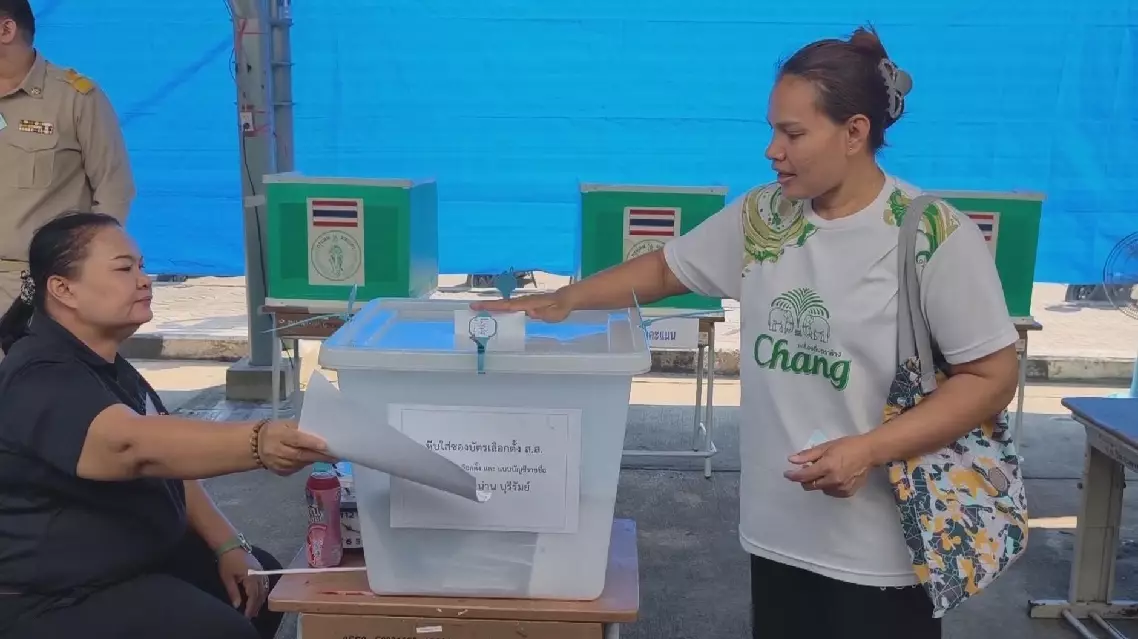
Thai voters yearn for real change as House of Representatives election kicks off