MANILA, Philippines, Feb. 9, 2026 /PRNewswire/ -- Globe Telecom, the Philippines' leading mobile operator, has become the first in Southeast Asia, and the second in Asia, to offer Starlink's groundbreaking Direct‑to‑Cell (DTC) satellite service. Joining a growing group of countries worldwide, Globe's partnership with Starlink marks a historic milestone in global connectivity.
Using satellite technology, Filipinos using standard LTE mobile phones will be able to access data, voice, and messaging services directly via satellite, requiring nothing more than a clear view of the sky. This breakthrough eliminates the need for specialized devices and extends mobile reach to areas where terrestrial coverage is limited or impossible to deploy, critical in an archipelagic nation of more than 7,600 islands.
Leveraging Starlink's constellation of over 650 low‑Earth orbit satellites, Globe is addressing one of the world's most pressing challenges, bridging connectivity gaps in geographically isolated and disadvantaged areas. The service will also play a vital role in disaster resilience, ensuring uninterrupted communication for citizens and first responders during extreme weather events and natural disasters.
"This partnership with Starlink marks a historic step in our mission to build a digitally inclusive nation," said Carl Cruz, President and CEO of Globe Telecom. "Today, connectivity is a lifeline, a modern‑day utility that fuels opportunity and economic progress. By extending mobile reach through satellite technology, we are ensuring that every Filipino, whether in bustling cities or remote barangays, has access to essential communication."
Starlink's Direct‑to‑Cell service, developed by SpaceX, acts as a "cell tower in space," seamlessly integrating with terrestrial networks and enabling global roaming‑like connectivity. Already connecting hundreds of millions of customers, Starlink has proven indispensable in emergencies, delivering millions of SMS messages and wireless emergency alerts when ground networks fail.
With Globe as its partner in the Philippines, Starlink's DTC service will empower households, businesses, and communities with reliable, consistent connectivity. This collaboration underscores Globe's vision of a more connected, resilient, and inclusive digital future, not just for the Philippines, but as part of a broader global movement to make universal connectivity a reality.
** The press release content is from PR Newswire. Bastille Post is not involved in its creation. **
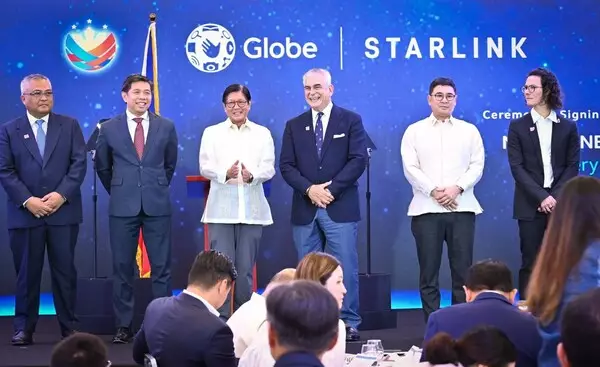
Globe Telecom Seals Agreement with Starlink to Launch First Southeast Asia Direct‑to‑Cell Satellite Service
|
SINGAPORE, May 19, 2026 /PRNewswire/ -- Visa, a world leader in digital payments today announced a Memorandum of Understanding (MoU) with Trip.com Group, marking a strategic collaboration to power richer travel experiences for Asia Pacific consumers. The MoU will harness Visa's global payments network and Trip.com Group's extensive ecosystem, enabling travellers to discover personalised recommendations, access offers for dream destinations and transact seamlessly on their journeys.
Trip.com Group will also become a global Anchor Partner for Visa Destinations, a global experience-led program that connects cardholders to curated travel experiences shaped by culture and local insights, allowing travellers to plan journeys around what matters most.
As Anchor Partner, Trip.com Group will integrate Visa Destinations into its ecosystem to create enhanced travel value propositions and provide personalised offers and benefits to a wide spectrum of consumer segments. Visa and Trip.com Group will also collaborate on joint marketing and promotional initiatives in selected markets, enabling more people to discover dream destinations and experiences around the world.
In addition, Visa and Trip.com Group will explore deeper collaborations catered to rapidly growing segments across Asia Pacific, including new ways for Trip.com Group users to access Visa's affluent offerings such as its global portfolio of sports, music, and lifestyle partnerships, while giving Visa Infinite cardholders access to exclusive Trip.com Group offers. Visa and Trip.com Group will also work closely to accelerate travel between Mainland China and the rest of the region.
The collaboration between Visa and Trip.com Group coincides with Asia Pacific's evolving travel landscape, defined by resilient travel appetites and an increasingly digital-first population. According to Visa's Global Travel Intentions (GTI) 2026 study:
- Almost three in four (72%) survey respondents plan to travel within Asia in the coming months, with one in four intending to travel to Japan
- Digital payments are second nature to Asia Pacific travellers, with 73% of respondents bringing along credit cards or mobile wallets for their trips.
- 92% of respondents went online to plan and research travel recommendations for recent trips, with 49% using AI tools to find travel destinations or ideas
Danielle Jin, Chief Marketing Officer, Asia Pacific at Visa, said: "Travel is a major engine shaping Asia Pacific's cultures and economies. At Visa, we believe everyone can be the traveller they want to be. Our collaboration with Trip.com Group is built for what travellers want today, combining trusted global payments with unmatched travel discovery through our platforms. We look forward to a successful collaboration with Trip.com Group, working closely to deliver more curated, rewarding, and seamless travel experiences that connect people to what they are most passionate about."
Bo Sun, Chief Marketing Officer at Trip.com Group, said: "At Trip.com Group, our mission is to inspire discovery and deliver seamless journeys — constantly innovating to create the perfect trip every time. Through this strategic collaboration with Visa, we are advancing this mission in the Asia Pacific and beyond by integrating trusted payments capabilities, curated travel experiences, and expanded premium offerings across our one-stop travel ecosystem. Together, we are creating more than just convenience for the world's travellers — we are delivering a high-value travel proposition that transforms every spark of inspiration into an unforgettable experience."
About Visa
Visa (NYSE: V) is a world leader in digital payments, facilitating transactions between consumers, merchants, financial institutions and government entities across more than 200 countries and territories. Our mission is to connect the world through the most innovative, convenient, reliable and secure payments network, enabling individuals, businesses and economies to thrive. We believe that economies that include everyone everywhere, uplift everyone everywhere and see access as foundational to the future of money movement. Learn more at Visa.com.
About Trip.com Group
Trip.com Group is a global travel service provider comprising of Trip.com, Ctrip, Skyscanner, and Qunar. Across its platforms, Trip.com Group helps travellers around the world make informed and cost-effective bookings for travel products and services and enables partners to connect their offerings with users through the aggregation of travel-related content and resources, and an advanced transaction platform consisting of apps, websites and 24/7 customer service centres. Founded in 1999 and listed on NASDAQ in 2003 and HKEX in 2021, Trip.com Group is on the mission "to pursue the perfect trip for a better world". Find out more about Trip.com Group here: group.trip.com.
Follow us on: X , Facebook , LinkedIn , and YouTube.
SINGAPORE, May 19, 2026 /PRNewswire/ -- Visa, a world leader in digital payments today announced a Memorandum of Understanding (MoU) with Trip.com Group, marking a strategic collaboration to power richer travel experiences for Asia Pacific consumers. The MoU will harness Visa's global payments network and Trip.com Group's extensive ecosystem, enabling travellers to discover personalised recommendations, access offers for dream destinations and transact seamlessly on their journeys.
Trip.com Group will also become a global Anchor Partner for Visa Destinations, a global experience-led program that connects cardholders to curated travel experiences shaped by culture and local insights, allowing travellers to plan journeys around what matters most.
As Anchor Partner, Trip.com Group will integrate Visa Destinations into its ecosystem to create enhanced travel value propositions and provide personalised offers and benefits to a wide spectrum of consumer segments. Visa and Trip.com Group will also collaborate on joint marketing and promotional initiatives in selected markets, enabling more people to discover dream destinations and experiences around the world.
In addition, Visa and Trip.com Group will explore deeper collaborations catered to rapidly growing segments across Asia Pacific, including new ways for Trip.com Group users to access Visa's affluent offerings such as its global portfolio of sports, music, and lifestyle partnerships, while giving Visa Infinite cardholders access to exclusive Trip.com Group offers. Visa and Trip.com Group will also work closely to accelerate travel between Mainland China and the rest of the region.
The collaboration between Visa and Trip.com Group coincides with Asia Pacific's evolving travel landscape, defined by resilient travel appetites and an increasingly digital-first population. According to Visa's Global Travel Intentions (GTI) 2026 study:
- Almost three in four (72%) survey respondents plan to travel within Asia in the coming months, with one in four intending to travel to Japan
- Digital payments are second nature to Asia Pacific travellers, with 73% of respondents bringing along credit cards or mobile wallets for their trips.
- 92% of respondents went online to plan and research travel recommendations for recent trips, with 49% using AI tools to find travel destinations or ideas
Danielle Jin, Chief Marketing Officer, Asia Pacific at Visa, said: "Travel is a major engine shaping Asia Pacific's cultures and economies. At Visa, we believe everyone can be the traveller they want to be. Our collaboration with Trip.com Group is built for what travellers want today, combining trusted global payments with unmatched travel discovery through our platforms. We look forward to a successful collaboration with Trip.com Group, working closely to deliver more curated, rewarding, and seamless travel experiences that connect people to what they are most passionate about."
Bo Sun, Chief Marketing Officer at Trip.com Group, said: "At Trip.com Group, our mission is to inspire discovery and deliver seamless journeys — constantly innovating to create the perfect trip every time. Through this strategic collaboration with Visa, we are advancing this mission in the Asia Pacific and beyond by integrating trusted payments capabilities, curated travel experiences, and expanded premium offerings across our one-stop travel ecosystem. Together, we are creating more than just convenience for the world's travellers — we are delivering a high-value travel proposition that transforms every spark of inspiration into an unforgettable experience."
About Visa
Visa (NYSE: V) is a world leader in digital payments, facilitating transactions between consumers, merchants, financial institutions and government entities across more than 200 countries and territories. Our mission is to connect the world through the most innovative, convenient, reliable and secure payments network, enabling individuals, businesses and economies to thrive. We believe that economies that include everyone everywhere, uplift everyone everywhere and see access as foundational to the future of money movement. Learn more at Visa.com.
About Trip.com Group
Trip.com Group is a global travel service provider comprising of Trip.com, Ctrip, Skyscanner, and Qunar. Across its platforms, Trip.com Group helps travellers around the world make informed and cost-effective bookings for travel products and services and enables partners to connect their offerings with users through the aggregation of travel-related content and resources, and an advanced transaction platform consisting of apps, websites and 24/7 customer service centres. Founded in 1999 and listed on NASDAQ in 2003 and HKEX in 2021, Trip.com Group is on the mission "to pursue the perfect trip for a better world". Find out more about Trip.com Group here: group.trip.com.
Follow us on: X , Facebook , LinkedIn , and YouTube.
** This press release is distributed by PR Newswire through automated distribution system, for which the client assumes full responsibility. **

Visa and Trip.com Group Ink Strategic Collaboration, Enabling Consumers to Chase Their Passions Through Travel