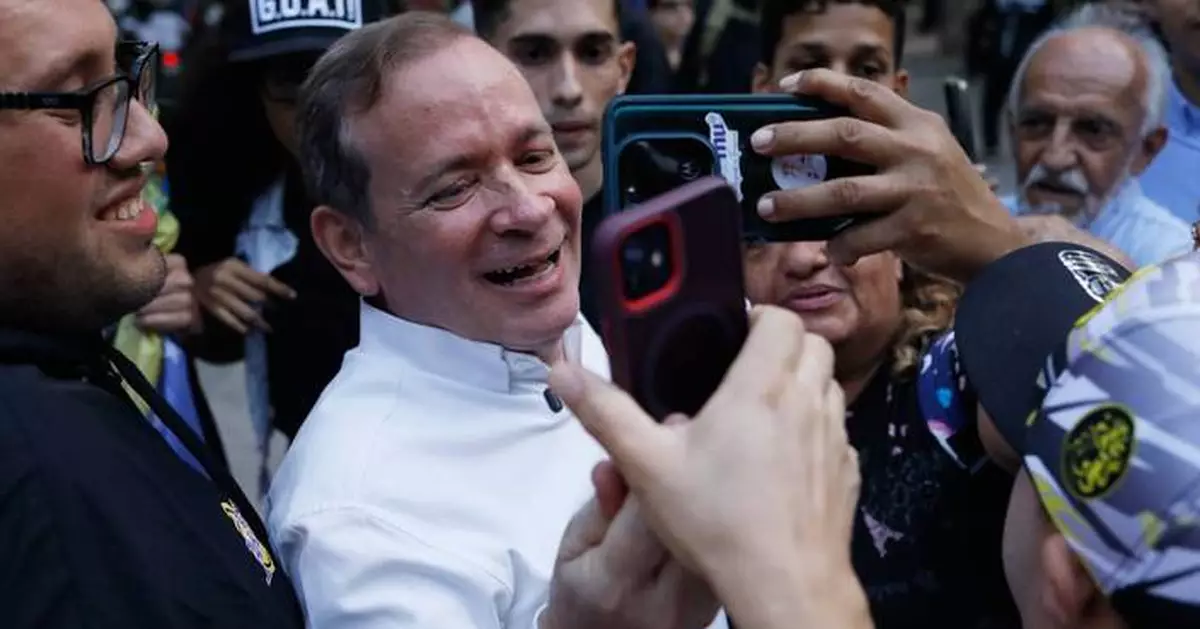
CARACAS, Venezuela (AP) — Venezuela's top prosecutor said on Monday that his office had requested the arrest of one of the closest allies of opposition leader María Corina Machado, less than 12 hours after his release from a detention facility as part of a government move to free those facing politically motivated accusations.
The attorney general’s statement did not say whether Juan Pablo Guanipa was rearrested, or give indication of his whereabouts. The government had released him along with several other prominent opposition members on Sunday following lengthy politically motivated detentions.
Click to Gallery
A supporter of the opposition waves a Venezuelan flag from a passing vehicle next to El Helicoide, the headquarters of the intelligence service and a detention center, after several political prisoners were released from custody in Caracas, Venezuela, Sunday, Feb. 8, 2026. (AP Photo/Ariana Cubillos)
From left, opposition members Dignora Hernández, María Oropeza and Catalina celebrate with supporters after their release from custody near El Helicoide, the Venezuelan intelligence headquarters and detention center, in Caracas, Venezuela, Sunday, Feb. 8, 2026. (AP Photo/Ariana Cubillos)
Opposition supporters greet political activist Jesus Armas after his release from prison in Caracas, Venezuela, Sunday, Feb. 8, 2026. (AP Photo/Cristian Hernandez)
Opposition leader Juan Pablo Guanipa rides on the back of a motorcycle after his release from prison in Caracas, Venezuela, Sunday, Feb. 8, 2026.(AP Photo/Cristian Hernandez)
Opposition leader Juan Pablo Guanipa rides on the back of a motorcycle after his release from prison in Caracas, Venezuela, Sunday, Feb. 8, 2026.(AP Photo/Cristian Hernandez)
Opposition leader Juan Pablo Guanipa, right, and political activist Jesus Armas ride on the back of motorbikes after their release from prison in Caracas, Venezuela, Sunday, Feb. 8, 2026. (AP Photo/Cristian Hernandez)
Opposition leaders María Oropeza and Juan Pablo Guanipa, left, ride motorbikes through Caracas, Venezuela, after their release from custody, Sunday, Feb. 8, 2026. (AP Photo/Ariana Cubillos)
Opposition leader Juan Pablo Guanipa records a video message to supporters after his release from prison in Caracas, Venezuela, Sunday, Feb. 8, 2026. (AP Photo/Cristian Hernandez)
Attorney General Tarek William Saab's office posted on social media that it had “requested the competent court to revoke the precautionary measure granted to Juan Pablo Guanipa, due to his non-compliance with the conditions imposed by the aforementioned court.”
It did not elaborate on what conditions Guanipa, a former governor for the opposition, violated during the hours he was free, but said authorities were seeking house arrest.
Guanipa's son, Ramón, told reporters Monday that a group of men in three vehicles intercepted his father and others traveling around 11:45 p.m. Sunday in a neighborhood in the capital, Caracas. They were armed with long guns and wore civilian clothes and bulletproof vests.
Ramón Guanipa said authorities have not yet notified him of his father's whereabouts and their decision to place him on house arrest. He said his father did not violate the two conditions of his release — monthly check-ins with a court and no travel outside Venezuela — and showed reporters the court document listing them.
The development marked the latest twist in the political turmoil in Venezuela in the wake of the U.S. military's seizure on Jan. 3 of then-President Nicolás Maduro and his wife, Cilia Flores, from a military base compound in Caracas in a stunning operation that landed them in New York to face federal drug trafficking charges.
The government of Venezuela's acting President Delcy Rodríguez began releasing prisoners days after she was sworn in and has faced mounting pressure to free hundreds of people whose detentions months or years ago have been linked to their political activities. The releases also followed a visit to Venezuela of representatives of the U.N. High Commissioner for Human Rights.
Venezuelan-based prisoners’ rights group Foro Penal confirmed the release of at least 30 people Sunday.
Some of those freed Sunday joined families waiting outside detention facilities for their loved ones. They chanted “We are not afraid! We are not afraid!” and marched a short distance.
“I am convinced that our country has completely changed,” Guanipa told reporters after his release. “I am convinced that it is now up to all of us to focus on building a free and democratic country.”
Guanipa had spent more than eight months in custody at a facility in Caracas.
“My father cannot be a criminal ... simply for making statements,” Ramón Guanipa said. "How much longer will speaking out be a crime in this country?”
Several members of Machado’s political organization were among the released Sunday, including attorney Perkins Rocha and local organizer María Oropeza, who had in 2024 livestreamed her arrest by military intelligence officers as they broke into her home with a crowbar. Rocha was released to house arrest.
“They are terrified that Venezuelan society will mobilize and express its voice civically,” Machado, referring to Rodríguez's government, told reporters Monday in Washington. “But let me tell you something, there’s no going back... What will Juan Pablo become now? What will Perkins become as a prisoner in his own home? A reference in this fight.”
Guanipa was detained in late May and accused by Interior Minister Diosdado Cabello of participating in an alleged “terrorist group” that was plotting to boycott that month’s legislative election. Guanipa’s brother Tomás rejected the accusation, and said the arrest was meant to crack down on dissent.
Rodríguez’s government announced Jan. 8 that it would free a significant number of those arrested — a central demand of the country’s opposition and human rights organizations with backing from the United States — but families and rights watchdogs have criticized authorities for the slow pace of the releases.
The ruling party-controlled National Assembly last week began debating an amnesty bill that could lead to the release of hundreds. The opposition and nongovernmental organizations have reacted with cautious optimism as well as with suggestions and demands for more information on the contents of the proposal.
National Assembly President Jorge Rodríguez, who is the acting president's brother, on Friday posted a video on Instagram showing him outside a detention center in Caracas and saying that “everyone” would be released no later than next week, once the amnesty bill is approved.
Delcy Rodríguez, the acting president, and Volker Türk, the U.N. High Commissioner for Human Rights, spoke by phone in late January. His spokesperson, Ravina Shamdasani, in a statement said he sent a team to the country and “offered our support to help Venezuela work on a road map for dialogue and reconciliation" in which human rights should be centered.
This story is part of an ongoing collaboration between The Associated Press and FRONTLINE (PBS) that includes an upcoming documentary.

A supporter of the opposition waves a Venezuelan flag from a passing vehicle next to El Helicoide, the headquarters of the intelligence service and a detention center, after several political prisoners were released from custody in Caracas, Venezuela, Sunday, Feb. 8, 2026. (AP Photo/Ariana Cubillos)

From left, opposition members Dignora Hernández, María Oropeza and Catalina celebrate with supporters after their release from custody near El Helicoide, the Venezuelan intelligence headquarters and detention center, in Caracas, Venezuela, Sunday, Feb. 8, 2026. (AP Photo/Ariana Cubillos)

Opposition supporters greet political activist Jesus Armas after his release from prison in Caracas, Venezuela, Sunday, Feb. 8, 2026. (AP Photo/Cristian Hernandez)

Opposition leader Juan Pablo Guanipa rides on the back of a motorcycle after his release from prison in Caracas, Venezuela, Sunday, Feb. 8, 2026.(AP Photo/Cristian Hernandez)
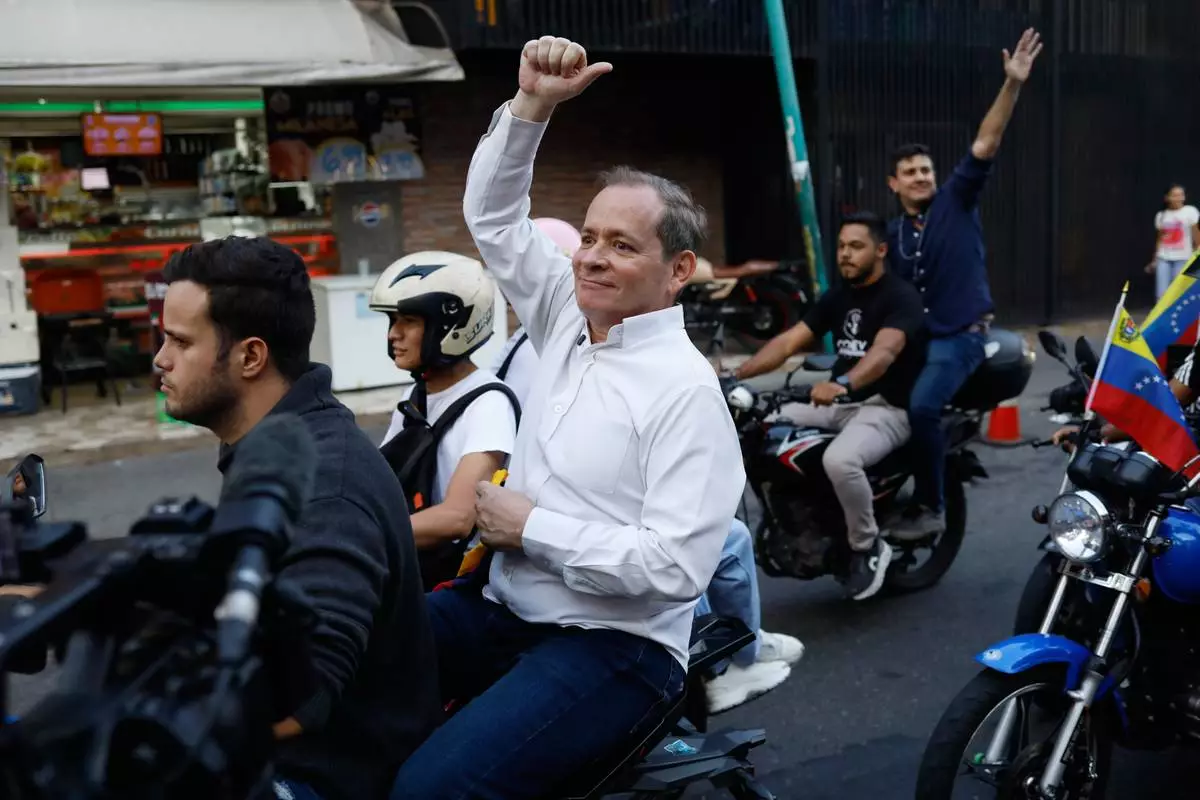
Opposition leader Juan Pablo Guanipa rides on the back of a motorcycle after his release from prison in Caracas, Venezuela, Sunday, Feb. 8, 2026.(AP Photo/Cristian Hernandez)

Opposition leader Juan Pablo Guanipa, right, and political activist Jesus Armas ride on the back of motorbikes after their release from prison in Caracas, Venezuela, Sunday, Feb. 8, 2026. (AP Photo/Cristian Hernandez)

Opposition leaders María Oropeza and Juan Pablo Guanipa, left, ride motorbikes through Caracas, Venezuela, after their release from custody, Sunday, Feb. 8, 2026. (AP Photo/Ariana Cubillos)
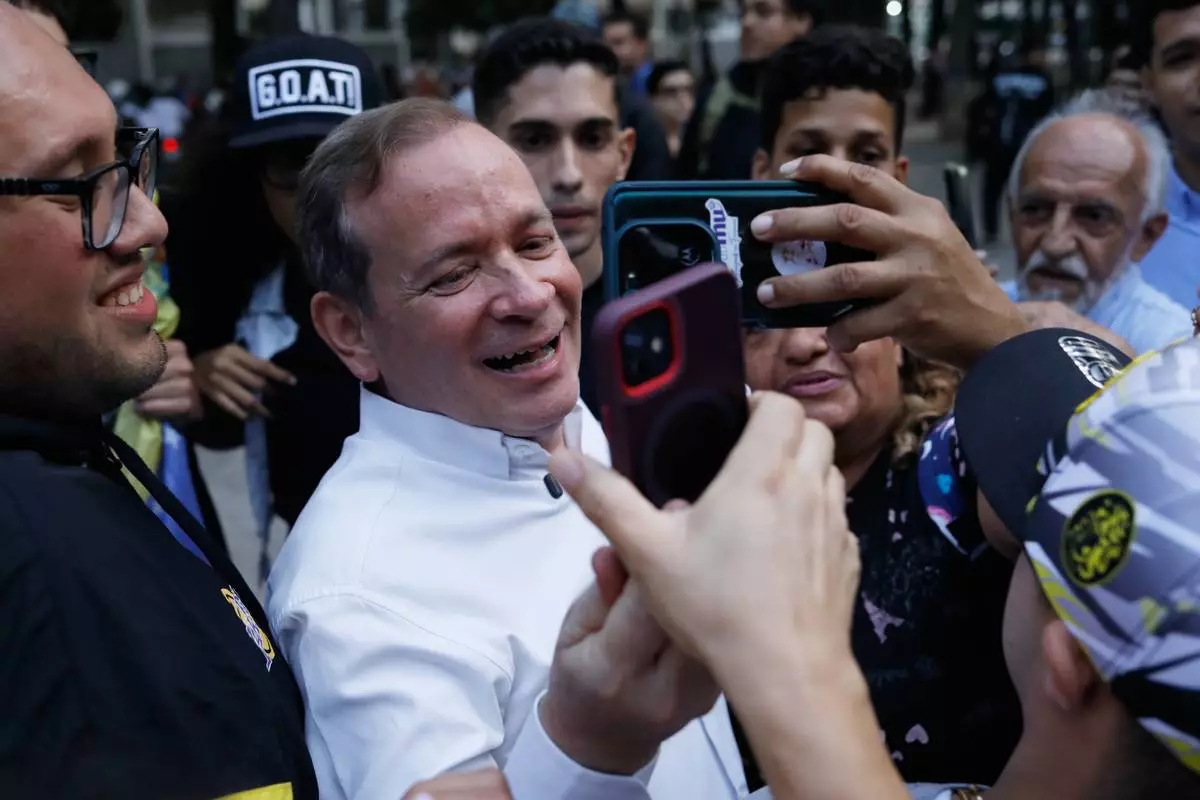
Opposition leader Juan Pablo Guanipa records a video message to supporters after his release from prison in Caracas, Venezuela, Sunday, Feb. 8, 2026. (AP Photo/Cristian Hernandez)
Pakistan’s army chief is set to meet with Iranian officials in Tehran on Thursday in a bid to ease tensions in the Middle East and arrange a second round of negotiations between the United States and Iran after almost seven weeks of war.
The meeting comes as President Donald Trump announced the leaders of Israel and Lebanon will speak later on Thursday about halting the fighting between them. It was not clear what leaders Trump was referring to.
The U.S. naval blockade of Iranian ports continued as U.S. Treasury Secretary Scott Bessent said the Trump administration would ramp up economic pain on Iran with new economic sanctions on countries doing business with it, calling the move the “financial equivalent” of a bombing campaign.
The White House said any further talks with Iran would likely take place in the Pakistani capital of Islamabad, though no decision had been made on whether to resume negotiations. Pakistan has emerged as a key mediator after it hosted direct talks between the U.S. and Iran in Islamabad.
In a development in the war's other front, Trump wrote late Wednesday on Truth Social that leaders from Israel and Lebanon would speak the next day in a renewed effort to broker a ceasefire after the countries’ first direct talks in decades ended the previous day in Washington without a deal.
Here is the latest:
President Trump’s top military advisor described Navy warships maintaining the blockade against Iran “like driving a sports car through a supermarket parking lot on a pay day weekend.”
Gen. Dan Kaine, the Chairman of the Joint Chiefs of Staff, went on to say these maneuvers are being performed “with thousands of kids in that parking lot” as they position themselves to get to ships that would attempt to run that blockade.
The defense secretary touted public support for the war during remarks at the Pentagon on Thursday, contrasting that with what he said was an overly critical press.
“They see the success. They see the reality. And they don’t demand perfection,” Hegseth said of the public, after criticizing the press.
“You only seek the negative,” Hegseth said of the press.
Hegseth is overstating public support for the conflict. A recent AP-NORC poll shows nearly 60% of Americans say U.S. military action in Iran has been excessive. Meanwhile, 45% are “extremely” or “very” concerned about being able to afford gas in the next few months.
Defense Secretary Pete Hegseth said the U.S. navy is employing “less than 10% of America’s naval power” to enforce the blockade against Iran during a briefing Thursday.
“The math is clear. We’re using 10% of the world’s most powerful navy, and you have 0% of your Navy,” Hegseth said.
The Navy currently has 16 warships, including 11 destroyers, three amphibious assault ships, an aircraft carrier, and a littoral combat ship in the Middle East out of a battle force of roughly 300 total warships.
At the Pentagon, U.S. Defense Secretary Pete Hegseth told reporters Iran is moving around its assets but is unable to replenish its military power almost seven weeks into the war.
The secretary pressed that idea repeatedly in the opening minutes of his morning briefing.
“You can move things around, but you can’t actually rebuild,” Hegseth said, speaking directly to Tehran’s leaders and telling them they no longer have a viable defense industry.
“As you expose yourself with your movement to our watchful eye, we are locked and loaded on your critical dual use infrastructure, on your remaining power generation and on your energy industry,” Hegseth said, telling Iran the war “is not a fair fight” given U.S. power.
The office of Lebanese President Joseph Aoun said he spoke to U.S. Secretary of State Marco Rubio ahead of anticipated direct talks with Israel.
Lebanon has insisted on a ceasefire to stop the fighting between Israel and the Hezbollah militant group before engaging in direct talks. Its top political leaders have vowed to commit to disarming the group.
The president’s office said that during Thursday’s call, Rubio “affirmed his continued efforts to reach a ceasefire as a prelude to establishing peace, security, and stability in Lebanon.”
Washington has not publicly stated its support of a ceasefire in Lebanon as a precondition, and the Israeli government has framed the prospective meeting as peace talks with a focus on disarming Hezbollah.
Aoun’s office made no mention of speaking to Israeli Prime Minister Benjamin Netanyahu.
Iranian website NourNews has reported that Mohammad Bagher Qalibaf, the powerful speaker of Iran’s parliament, stressed the importance of a ceasefire in Lebanon when he spoke with his Lebanese counterpart Nabih Berri by phone.
The report by the site, which has close contacts with Iranian security officials, said Qalibaf emphasized that Iranian authorities were closely monitoring developments in Lebanon and pushing for a permanent ceasefire in the Mideast war.
“A ceasefire in Lebanon is as important to us as a ceasefire in Iran,” he reportedly said.
Lebanon’s state-run National News Agency has reported that the Israeli military struck and entirely destroyed the Qasmiyeh Bridge over the Litani River in southern Lebanon.
The Israeli military said it did not strike the bridge but “struck adjacent to it.”
Shares around the world rose as investors grew optimistic of a ceasefire extension in the Iran war.
In Europe, Britain’s FTSE 100, France’s CAC 40 and Germany’s DAX were all up by around 0.5%.
In Asia, Tokyo’s Nikkei 225 closed 2.4% while Hong Kong’s Hang Seng rose 1.7% to 26,394.26. The Shanghai Composite index ended 0.7% higher.
Israeli warplanes have unleashed an intense barrage of strikes on the southern town of Nabatiyeh, sending giant plumes of black smoke billowing over the regional hub of southern Lebanon.
Lebanon’s state-run National News Agency said the attacks Thursday hit near the town’s industrial zone and outside a supermarket along Nabih Berri Avenue, a main thoroughfare lined with shops and residential buildings. The strikes, among the heaviest in the area since the start of the war, also hit several surrounding suburbs.
Israel has intensified its aerial bombardment of southern Lebanon in recent days as it seeks to extend security control into Lebanese territory in its war with Iran-backed Hezbollah. The Israeli military on Wednesday targeted three teams of medics from Nabatiyeh in successive strikes as they were working to administer aid to civilians and rescue each other, killing four medical workers and wounding six others.
The Foreign Press Association in Israel has asked the court to expedite a decision on allowing the international media to enter Gaza independently.
Israel has banned foreign journalists from entering Gaza independently since Hamas’ Oct. 7, 2023 attack. The FPA filed a petition seeking entry in September 2024, but the Israeli government has repeatedly delayed the proceedings.
“The never-ending delays have made a mockery of the legal process,” said the FPA’s chairwoman, Tania Kraemer. “It is time for the justices to put an end to this once and for all.”
The FPA represents dozens of international news outlets, including The Associated Press.
The army says it found more than 130 weapons, including automatic rifles and pistols in Bint Jbeil, the focus of a new offensive in southern Lebanon.
Israel accuses Hezbollah of operating in civilian buildings.
Iran’s state television says on its Telegram channel that Parliament Speaker Mohammad Bagher Qalibaf has met with Gen. Asim Munir, the head of Pakistan’s army.
The TV network didn’t immediately provide further details. Munir arrived in Iran on Wednesday.
An Israeli drone strike killed two brothers in northern Gaza’s area of Beit Lahiya on Thursday, according to health officials at Shifa hospital, where the casualties arrived.
The Israeli military did not immediately respond to a request for comment.
The two brothers were killed near their house close to the “Yellow Line”, which was drawn in the ceasefire agreement and divides the Israeli-held majority of Gaza from the rest of the territory.
Palestinians in Gaza have reported that the Israeli strikes have been intensifying over the past few days. Deadly Israeli strikes have become a near-daily threat in Gaza, where more than 750 Palestinians have been killed by Israel despite a ceasefire with Hamas since October, according to figures from the Hamas-run Gaza Health Ministry.
Intense clashes have been taking place in and around the strategic southern Lebanese town of Bint Jbeil for over a week, as Israel and Lebanon launched their first direct diplomatic talks in decades.
Israeli Prime Minister Benjamin Netanyahu said Wednesday that Israel’s fighting with Hezbollah was now concentrated in Bint Jbeil and that Israeli troops were “about to eliminate” it.
The military said that following a raid by a commando unit Wednesday on what it described as a Hezbollah “combat compound” in which numerous weapons were discovered, the soldiers “dismantled approximately 70 terror infrastructure sites in just one minute.”
It said soldiers killed “dozens” of Hezbollah operatives in the area in a separate operation.
When Israel occupied southern Lebanon until its withdrawal in 2000, it relied on Bint Jbeil and other highly-elevated locations for strategic vantage points, and the town has repeatedly been a priority position in later ground incursions.
Pakistan’s Prime Minister Shehbaz Sharif has arrived in Qatar as part of a regional visit aimed at discussions on the ongoing U.S.-Iran peace process and efforts to promote stability in the Middle East.
According to a statement from the prime minister’s office, Qatar’s Minister of State for Foreign Affairs Sultan bin Saad Al-Muraikhi received Sharif upon his arrival in Doha on Thursday. Sharif is scheduled to meet Emir Sheikh Tamim bin Hamad Al Thani.
He is accompanied by Foreign Minister Ishaq Dar, Information Minister Attaullah Tarar and his spokesperson Mosharraf Zaidi.
From Qatar, Sharif will travel to Turkey before returning home on Saturday.
The latest Israeli operations are focused around the coastal city of Tyre and the hilltop town of Nabatieh, where intense clashes are continuing, Lebanon’s state-run National News Agency says.
Israeli ground troops appeared to have moved overnight toward the village of Dibbine to the east.
A Lebanese official says they are unaware of high-level talks with Israel.
Asked about U.S. President Donald Trump’s post saying the leaders of Lebanon and Israel would be speaking Thursday, a Lebanese official told The Associated Press there is “no information” regarding high-level talks between the two countries.
The official spoke on condition of anonymity in line with regulations.
Israel’s Minister of Science and Technology Gila Gamliel said Prime Minister Benjamin Netanyahu will speak with Lebanese President Joseph Aoun on Thursday, the first time the leaders of the two countries have spoken directly in more than 30 years.
The Prime Minister’s Office and the Lebanese government did not immediately comment.
“Today the Prime Minister will speak for the first time with the president of Lebanon after so many years of a complete disconnection in the dialogue between the two countries,” Gamliel, a member of Israel’s security cabinet, told Army Radio Thursday morning.
Gamliel, who was at a cabinet meeting late Wednesday about negotiations with Lebanon, said the move “will hopefully ultimately lead to prosperity and flourishing” between the two countries.
Lebanon and Israel held their first direct diplomatic talks in decades on Tuesday in Washington following more than a month of war between Israel and the Iran-backed Hezbollah militant group.
Pakistan Prime Minister Shehbaz Sharif’s visit to countries including Saudi Arabia and Army Chief Field Marshal Asim Munir’s trip to Iran are part of “collective efforts” aimed at promoting regional peace and de-escalation, the Foreign Ministry said Thursday.
“Pakistan is being recognized for its constructive diplomatic engagement in supporting de-escalation, ceasefire efforts and a broader pursuit of stability between the United States and Iran,” ministry spokesman Tahir Andrabi said.
Pakistan has encouraged dialogue, facilitated message exchanges and helped create a peaceful space for meaningful negotiations such as the recent talks between the U.S. and Iran, Andrabi said.
Australian Prime Minister Anthony Albanese said his government has underwritten the first of two shipments of diesel fuel at prices inflated by the Iran war.
Viva Energy is shipping more than 570,000 barrels of diesel from Brunei and South Korea, Albanese said Thursday at a news conference in Kuala Lumpur with Malaysian Prime Minister Anwar Ibrahim.
He said it was “the first of many expected shipments” under his government’s new strategic reserve powers.
Under terms announced last week with Australia’s only refinery operators, Viva Energy and Ampol, the government will underwrite diesel and gasoline import contracts with prices that could prove commercially unviable.
Smaller fuel companies Park Fuels and IOR have since struck similar deals.
Australia has sufficient fuel contracted to last into May, but there are concerns about later shortages.
Trump wrote late Wednesday on Truth Social that leaders from Israel and Lebanon would speak the next day in a renewed effort to broker a ceasefire after the countries’ first direct talks in decades ended the previous day in Washington without a deal. It was not clear what leaders Trump was referring to. The Israeli prime minister’s office did not immediately respond for comment, which was posted before dawn in Israel and Lebanon.
Chinese Foreign Minister Wang Yi told his Iranian counterpart that reopening the Strait of Hormuz was a unanimous demand from the international community.
Wang Yi told Iran’s Foreign Minister Abbas Araghchi in a phone call that Iran’s sovereignty, security, and legitimate rights should be respected as a littoral state of the Strait of Hormuz, but freedom of navigation and safety through the strait should be ensured.
“Working to resume normal passage of the strait is a unanimous call from the international community,” Wang was quoted as saying in a government statement late Wednesday.
Wang noted that the current situation had reached a critical juncture between war and peace and also said that the window of peace was opening.
Paramedic groups say a fourth Lebanese rescue worker has died after three consecutive, targeted strikes by the Israeli military Wednesday that also wounded six others.
The back-to-back Israeli attacks on the southern village of Mayfadoun, near the bigger town of Nabatiyeh, hit the first group of medics responding to a distress call from wounded civilians, a second group trying to assist their wounded colleagues and a third group rushing to aid the first two teams that had been targeted.
The Israeli military did not respond to a request for comment on the strikes beyond saying it was “looking into” what happened. It has previously accused the Iran-backed Hezbollah militant group of using ambulances as cover for militant activities, without offering evidence.
▶ Read more
Officials say there were no suspicious circumstances behind the blaze that broke out late Wednesday at the Viva Energy Geelong refinery southwest of Melbourne, and no one was injured.
The facility is one of two refineries in Australia and provides 10% of the nation’s gasoline, diesel and jet fuel.
Australia has agreed to underwrite two companies buying fuel at prices inflated by the war. Prime Minister Anthony Albanese warned last week that supply disruptions would “have a long tail” even if the Iran ceasefire holds.
The government had agreed to terms with Australia’s largest suppliers Ampol and Viva Energy to underwrite contracts for gasoline and diesel bought on the spot market for prices above normal commercial rates, Albanese said.
Energy Minister Chris Bowen said Thursday it was too early to tell the extent of the fire’s impact on gasoline production.
“The refinery is still producing diesel and jet fuel at reduced levels as a safety precaution,” Bowen told the Australian Broadcasting Corp.
On gasoline, Bowen said, “It’s not a positive development. It will have an impact.”
Firefighters said the blaze had been contained to the gasoline plant.
According to the statement, Sharif assured the Kingdom of Pakistan’s “full solidarity and support” and praised what he described as Saudi Arabia’s restraint under the crown prince’s leadership.
Pakistan has a defense agreement with the Kingdom, which has faced retaliatory attacks from Iran in recent weeks, causing damage.
Prime Minister Shehbaz Sharif met Saudi Crown Prince Mohammed bin Salman during a visit to the Kingdom, briefing him on Pakistan’s efforts to ease U.S.-Iran tensions and assuring him of Islamabad’s “full support,” his office said before dawn Thursday.
Wednesday’s meeting lasted more than two hours, and Sharif was accompanied by Foreign Minister Ishaq Dar.
The statement said the crown prince praised what it described as the constructive role played by Sharif and Pakistan’s army chief, Field Marshal Asim Munir, in the peace process.
Sharif dispatched Munir to Tehran for talks with Iranian leaders.
Pakistan has long maintained close ties with Saudi Arabia while also keeping relations with Iran.
“We are subject to the decisions of the relevant officials, but personally I do not agree to extend the ceasefire,” said Mohsen Rezaei, formerly a commander in the Iranian Revolutionary Guard Corps who now advises Mojtaba Khamenei on military affairs, Iranian state media reported.
Rezaei also urged officials to be more cautious than they had been before in negotiations over economic matters with the U.S.
He said Iran was setting the preconditions in the next round of talks, not the U.S.
“Unlike the Americans who are afraid of continuous war, we are fully prepared and familiar with a long war,” he said, according to the report.
That’s according to Adm. Brad Cooper, head of U.S. Central Command, who says: “U.S. forces have completely halted economic trade going in and out of Iran by sea.”
The command said Wednesday that no vessels have made it past its forces during the blockade’s first 48 hours. The blockade began Monday.
Central Command noted that 10 vessels have complied with directions to turn around and return toward an Iranian port or Iran’s coastal area.
The blockade is being enforced “impartially against all vessels of all nations entering or leaving coastal areas or ports in Iran,” the Command said. Vessels avoiding Iranian ports are not affected.
The action could put serious pressure on the Iranian economy, while Tehran’s earlier cutoff of the waterway crucial to oil and gas supplies has sent energy prices higher.
▶ Read more
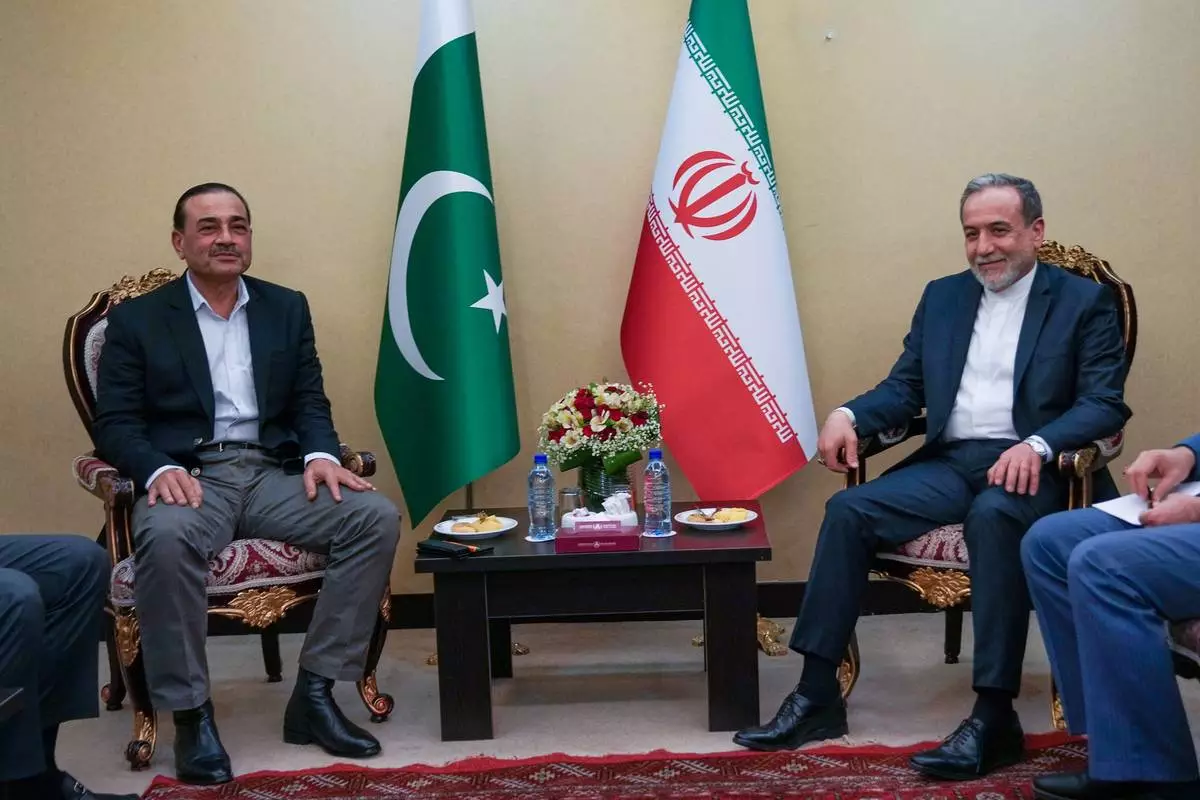
In this photo released by the Iranian Foreign Ministry, Iranian Foreign Minister Abbas Araghchi, right, meets with Pakistan's Army Chief Field Marshal Gen. Asim Munir in Tehran, Wednesday, April 15, 2026. (Iranian Foreign Ministry via AP)
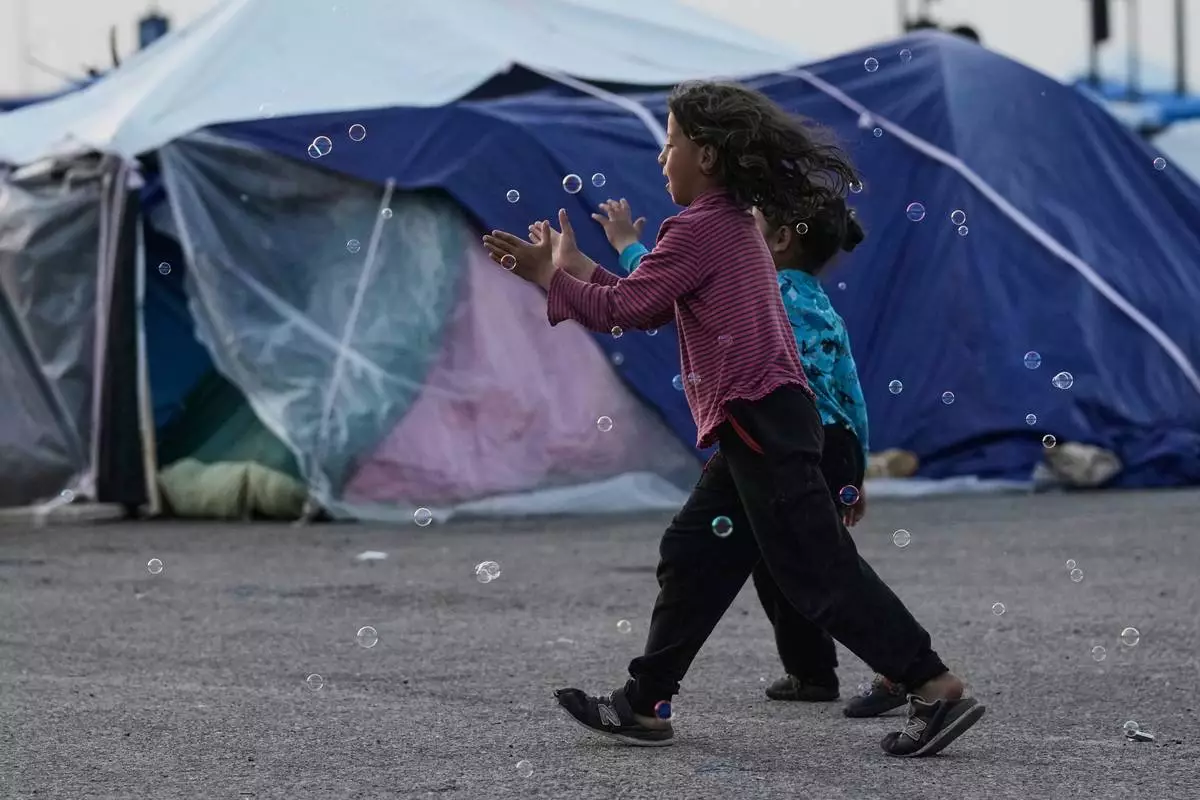
Girls chase bubbles next to their family's tents used as shelter after fleeing Israeli bombardment in Dahiyeh, Beirut's southern suburbs, in Beirut, on Wednesday, April 15, 2026. (AP Photo/Bilal Hussein)
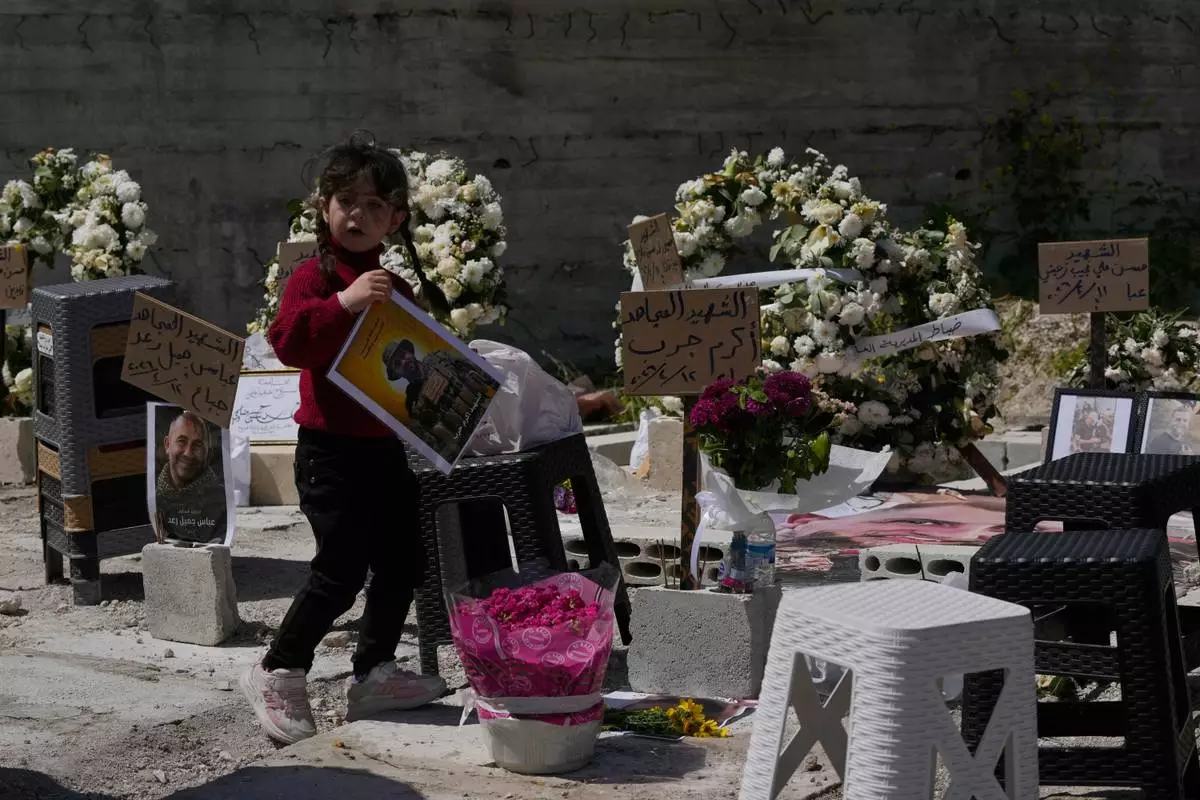
A young girl carries a portrait of a killed Hezbollah fighter at a mass grave where civilians and Hezbollah fighters killed in Israeli airstrikes are temporarily buried in the southern port city of Sidon, Lebanon, Tuesday, April 14, 2026. (AP Photo/Mohammed Zaatari)
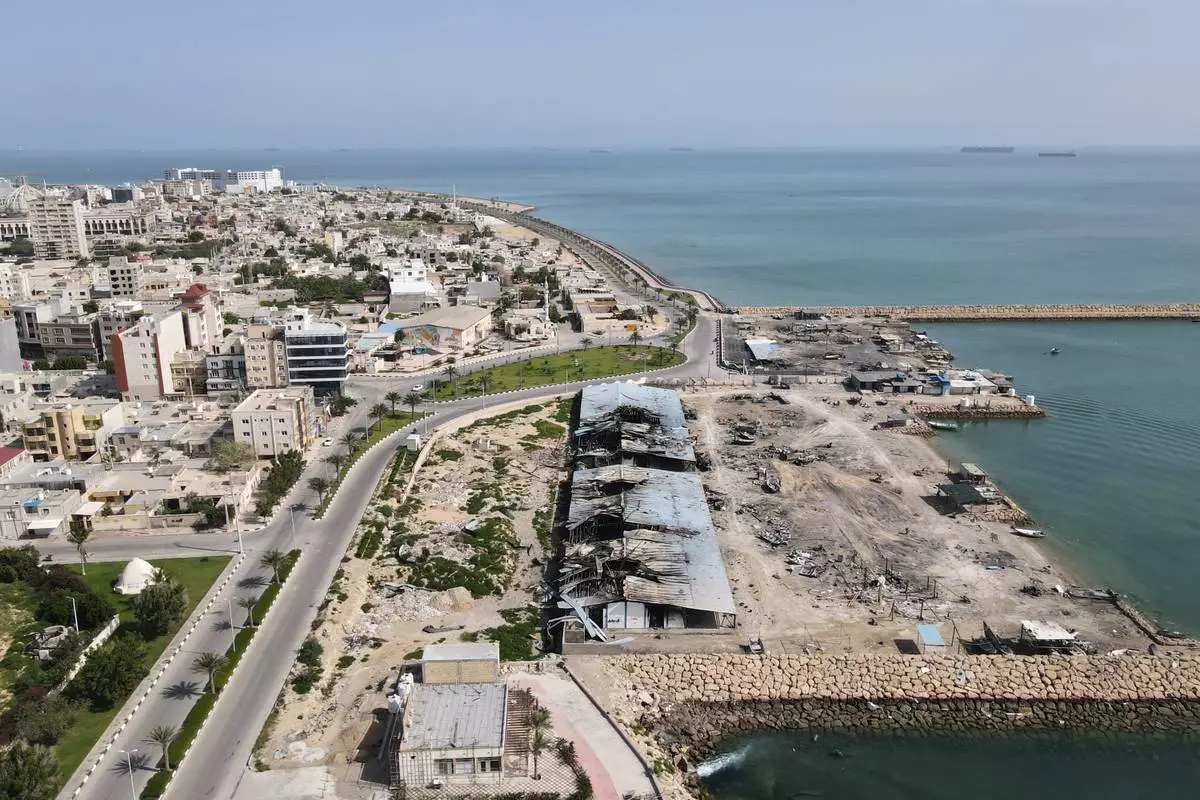
Backdropped by ships in the Strait of Hormuz, damage, according to local witnesses caused by several recent airstrikes during the U.S.-Israel military campaign, is seen on a fishing pier in the port of Qeshm island, Iran, Monday, April 13, 2026. (AP Photo/Asghar Besharati)
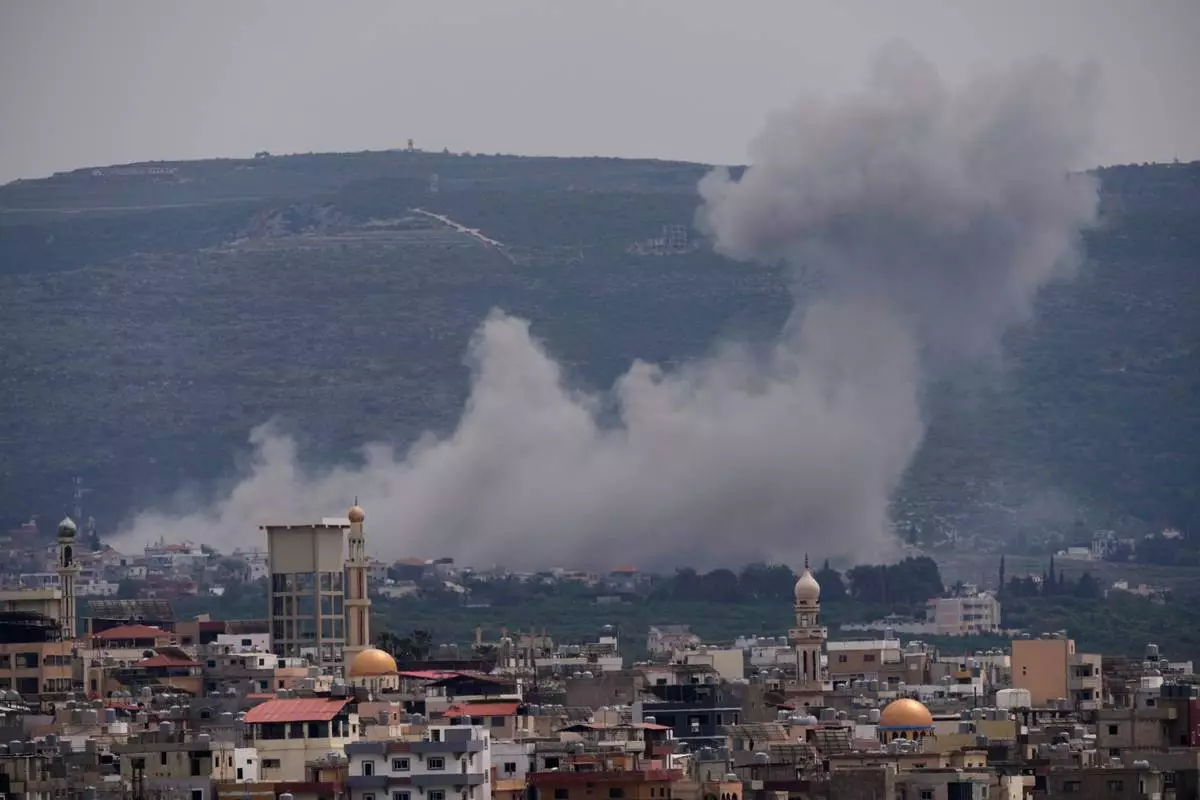
Smoke rises following an Israeli airstrike on the village of Qlaileh, as seen from the southern port city of Tyre, Lebanon, Wednesday, April 15, 2026. (AP Photo/Hussein Malla)