Skip to Content Facebook Feature Image

Crackdown on dissent after nationwide protests in Iran widens to ensnare reformist figures

News

Crackdown on dissent after nationwide protests in Iran widens to ensnare reformist figures
News

News

Crackdown on dissent after nationwide protests in Iran widens to ensnare reformist figures

2026-02-09 15:40 Last Updated At:16:22

DUBAI, United Arab Emirates (AP) — Iranian security forces have launched a campaign to arrest figures within the country's reformist movement, reports said Monday.

That widens a crackdown on dissent after authorities earlier put down nationwide protests in violence that killed thousands and saw tens of thousands more detained.

Detained Nobel Peace Prize laureate Narges Mohammadi has received another prison sentence of over seven years. It signals a widening effort to silence anyone opposed to the bloody suppression of unrest by Iran's theocracy as it faces new nuclear talks with the United States. President Donald Trump has repeatedly warned he could launch an attack on the country if no deal is reached.

Media reports quoted officials within the reformist movement, which seeks to change Iran's theocracy from inside, as saying at least four of their members had been arrested. They include Azar Mansouri, the head of the Reformist Front, which represents multiple reformist factions; and former diplomat Mohsen Aminzadeh, who served under reformist President Mohammad Khatami.

Also detained was Ebrahim Asgharzadeh, who led students who stormed the U.S. Embassy in Tehran in 1979, sparking the 444-day hostage crisis.

Their arrests likely stem from a reformist statement in January that called for Iran's 86-year-old Supreme Leader Ayatollah Ali Khamenei to resign from his position and have a transitional governing council oversee the country.

Iran's state-run IRNA news agency quoted a statement from prosecutors in Tehran, the country's capital, saying four people had been arrested and others summoned to meet authorities. It accused those allegedly involved of “organizing and leading ... activities aimed at disrupting the political and social situation in the country amid military threats from the United States and the Zionist regime.”

“Having bludgeoned the streets into silence with exemplary cruelty, the regime has shifted its attention inward, fixing its stare on its loyal opposition,” wrote Ali Vaez, an Iran expert at the International Crisis Group.

“The reformists, sensing the ground move beneath them, had begun to drift — and power, ever paranoid, is now determined to cauterize dissent before it learns to walk.”

However, it remains unclear just how much political support reformists have within Iran. The anger on the streets of Iran during the demonstrations, heard in people shouting “Death to Khamenei!” and in support of the country's exiled crown prince, appeared to lump reformists in with all other politicians now working in the Islamic Republic.

Iran and the U.S. held new nuclear talks last week in Oman. Foreign Minister Abbas Araghchi, speaking Sunday to diplomats at a summit in Tehran, signaled that Iran would stick to its position that it must be able to enrich uranium — a major point of contention with Trump, who bombed Iranian atomic sites in June during the 12-day Iran-Israel war.

Israeli Prime Minister Benjamin Netanyahu is to travel to Washington this week, with Iran expected to be the major subject of discussion, his office said.

The U.S. has moved the aircraft carrier USS Abraham Lincoln, ships and warplanes to the Middle East to pressure Iran into an agreement and have the firepower necessary to strike the Islamic Republic should Trump choose to do so.

Meanwhile, Iran issued a warning to pilots that it planned “rocket launches” Monday into Tuesday in an area over the country’s Semnan province, home to the Imam Khomeini Spaceport. Such launches have corresponded in the past with Iran marking the anniversary of its 1979 Islamic Revolution.
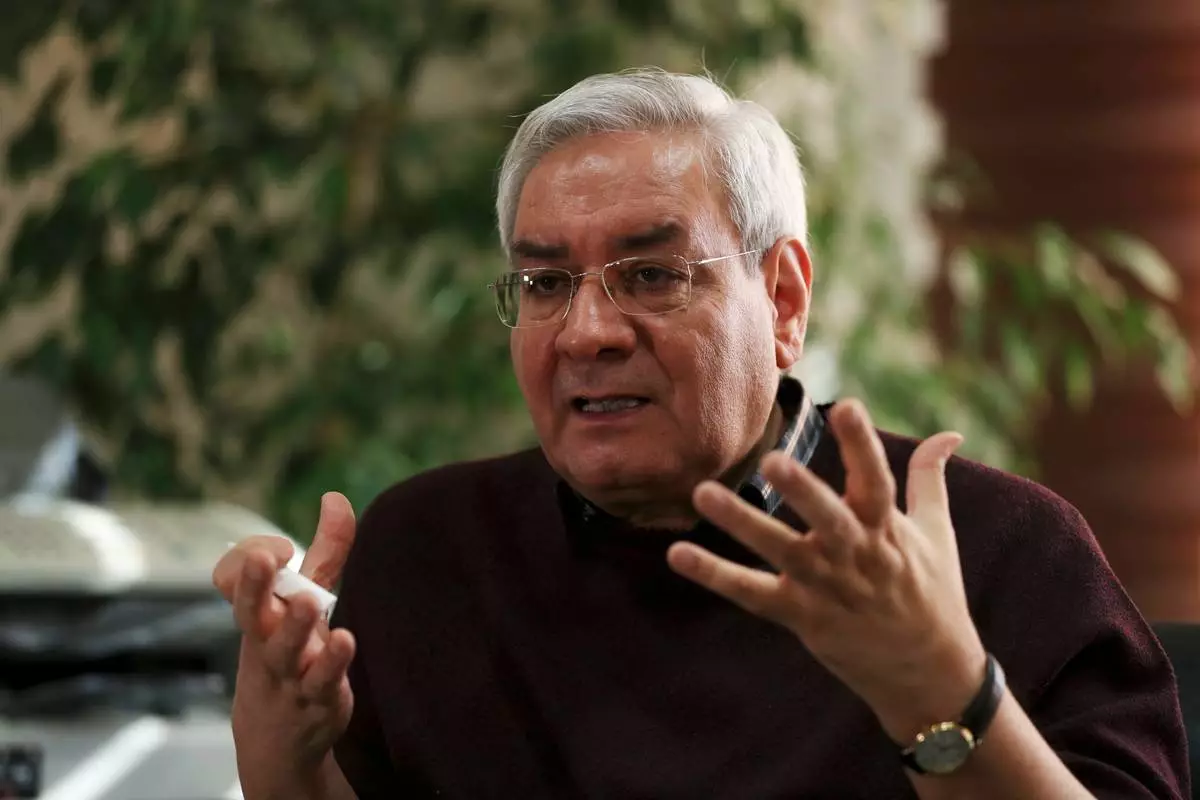
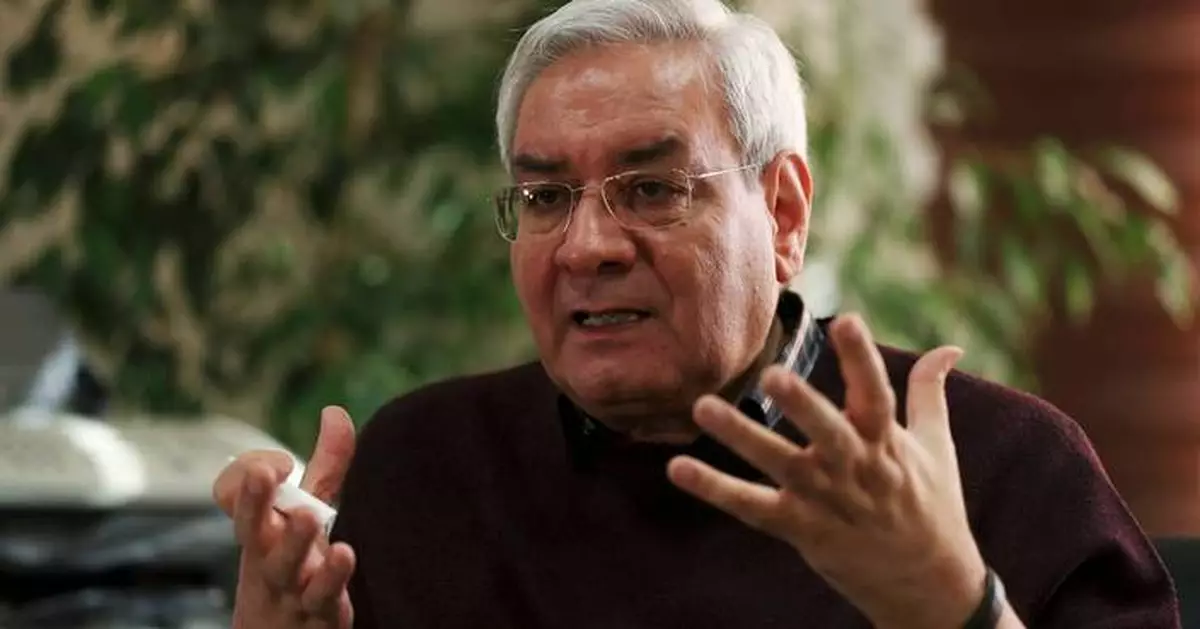
FILE - Ebrahim Asgharzadeh, one of the Iranian student leaders of the 1979 U.S. Embassy takeover, speaks in an interview with The Associated Press in Tehran, Iran, on Oct. 29, 2019. (AP Photo/Vahid Salemi, File)
FILE - Ebrahim Asgharzadeh, one of the Iranian student leaders of the 1979 U.S. Embassy takeover, speaks in an interview with The Associated Press in Tehran, Iran, on Oct. 29, 2019. (AP Photo/Vahid Salemi, File)

BEIRUT (AP) — In an operation in southern Lebanon early on Monday, Israelis forces seized a local official with a Sunni Islamist group and an ally of the Palestinian militant Hamas group and took him to Israel for questioning, the Israeli military and Lebanese state media reported.

Also on Monday, an Israeli drone struck a car in the southern Lebanese village of Yanouh, killing three people, including a child, Lebanon’s state-run National News Agency. There was no immediate comment from Israel on the strike.

According to the NNA agency, Atwi Atwi — a local official with the Sunni Islamist group al-Jamaa al-Islamiya, or the Islamic Group in English — was taken in the southern village of Hebbarieh, in the region of Hasbaya and close to the border with Israel.

A statement from the Israeli military said Israeli troops apprehended an Islamic Group official in a “targeted intelligence-based operation.” It did not release the official's name.

The Islamic Group condemned the seizure, saying it was part of Israel’s daily attacks and violations of Lebanon’s sovereignty. It called on the Lebanese state to work for the release of Atwi.

The Islamic Group is Lebanon's branch of the Muslim Brotherhood, a pan-Islamist political group, with an armed wing in Lebanon known as Fajr Forces.

After the outbreak of the Israel-Hamas war in October 2023, the Fajr Forces joined forces with the Lebanese Shiite militant Hezbollah group, launching rockets across the border into Israel that it said were in support of Hamas in Gaza.

The Brotherhood has been outlawed in much of the Middle East and labeled a terror group. Last month, the Trump administration designated the Lebanese, Jordanian and Egyptian branches of the Brotherhood as terrorist organizations.

Al-Jamaa al-Islamiya's leader, Mohammed Takkoush, said during the 14-month war between Hezbollah and Israel that his group and Hezbollah put aside their differences on conflicts in Syria and Yemen to join forces against Israel.

Hezbollah started attacking Israel on Oct. 8, 2023, a day after Hamas attacked southern Israel, triggering the latest Israel-Hamas war. Israel later launched a widespread bombardment of Lebanon that severely weakened Hezbollah, followed by a ground invasion.

The conflict ended with a U.S.-brokered ceasefire in 2024, and since then, Israel has carried out almost daily airstrikes and ground incursions into Lebanon. Israel says it's carrying out the operations to remove Hezbollah strongholds and threats against Israel.

The Israel-Hezbollah war killed more than 4,000 people in Lebanon, including hundreds of civilians, and caused an estimated $11 billion in damage and destruction, according to the World Bank. In Israel, 127 people died, including 80 soldiers.

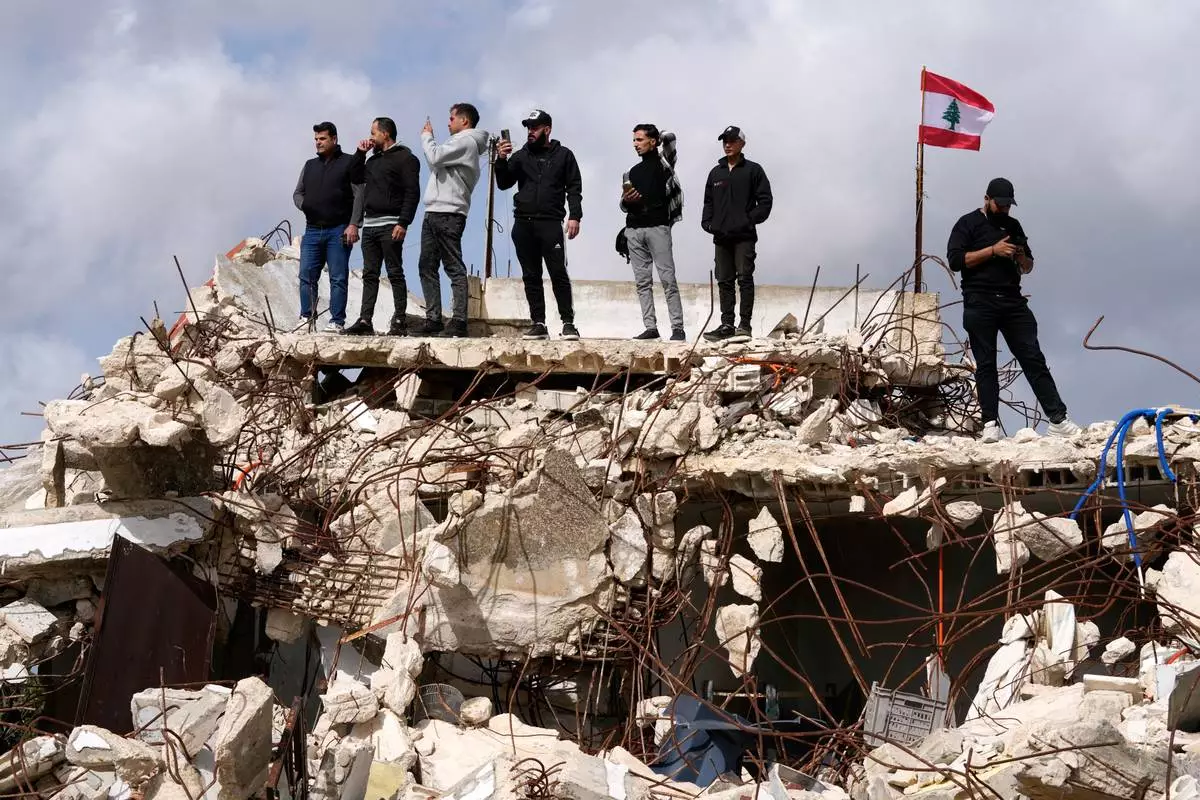
People gather as Lebanese Prime Minister Nawaf Salam tours areas in southern Lebanon along the border with Israel that the Lebanese army says it has been cleared of the armed presence of the militant Hezbollah group, in the village of Yarine, Saturday, Feb. 7, 2026. (AP Photo/Mohammed Zaatari)

People gather as Lebanese Prime Minister Nawaf Salam tours areas in southern Lebanon along the border with Israel that the Lebanese army says it has been cleared of the armed presence of the militant Hezbollah group, in the village of Yarine, Saturday, Feb. 7, 2026. (AP Photo/Mohammed Zaatari)

Recommended Articles