Skip to Content Facebook Feature Image

Matrixdock Expands XAUm to Solana, Enabling Institutional-Grade Tokenized Gold at Scale

Business

Matrixdock Expands XAUm to Solana, Enabling Institutional-Grade Tokenized Gold at Scale
Business

Business

Matrixdock Expands XAUm to Solana, Enabling Institutional-Grade Tokenized Gold at Scale

2026-02-09 20:00 Last Updated At:20:15

SINGAPORE, Feb. 9, 2026 /PRNewswire/ -- Matrixdock, Asia's leading Real-World Asset (RWA) tokenization platform under Matrixport Group, today announced the deployment of XAUm on Solana.

As Asia's largest tokenized gold project with physical redemption available across major Asian wealth centers, XAUm represents one troy ounce of 99.99% pure, LBMA-accredited physical gold per token, securely vaulted and independently audited.

The expansion brings institutional-grade tokenized gold to one of the industry's most scalable and high-performance blockchain networks, unlocking new use cases across trading, liquidity management, and decentralized finance. XAUm has been recognized by Falcon Finance's latest tokenized-gold industry report, which highlighted Matrixdock among the sector's leading platforms.

Solana significantly expands XAUm's accessibility due to its high throughput, low latency, and minimal transaction costs, making it well-suited for real-world asset deployment at scale. Its architecture supports near-instant settlement and high-frequency interactions, enabling gold to function not only as a store of value but also as a liquid on-chain reserve asset within DeFi applications.

Security remains foundational to XAUm's design. The Solana smart contracts supporting XAUm have undergone independent audits by Accretion and Sec3, reinforcing Matrixdock's commitment to institutional-grade risk management and on-chain security.

XAUm will launch natively within Solana's DeFi ecosystem, with initial liquidity on Raydium for decentralized trading and liquidity provisioning, and planned expansion into Solana-based lending markets. Pyth will serve as the primary price oracle. This architecture allows XAUm holders to use tokenized gold as collateral, access on-chain liquidity, and participate in DeFi strategies - while maintaining full physical backing and asset integrity.

This is not Matrixdock's first deployment on Solana. In late 2025, Matrixdock served as the tokenization technology provider for TER, the sovereign gold-backed token issued by Gelephu Mindfulness City (GMC) of the Kingdom of Bhutan, which is live on Solana. This deployment validates Matrixdock's technology and operational capabilities at a sovereign and national infrastructure level.

This dual role, supporting both institutional-grade products like XAUm and sovereign-level initiatives such as TER, underscores Matrixdock's position as a trusted infrastructure provider for real-world asset tokenization across the public and private sectors.

"With XAUm on Solana, we are extending gold beyond passive ownership into programmable financial infrastructure," said Eva Meng, Head of Matrixdock. "High-performance blockchains like Solana enable gold to move at internet speed while remaining fully backed by physical reserves - a critical step in modernizing how capital-efficient assets are issued, verified, and used."

"Solana was built to support real-world assets at scale," said Lu Yin, Head of APAC, Solana Foundation. "With the launch of XAUm, Matrixdock is bringing fully backed, institution-grade tokenized gold to Solana that can settle instantly, integrate seamlessly with DeFi, and meet the standards required by institutions."

Solana's growing institutional participation, deep liquidity venues, and active developer community align with Matrixdock's objective to position tokenized gold as a core reserve layer asset underpinning on-chain financial markets.

About Matrixdock

Matrixdock is a premier platform under Matrixport Group that offers access to high-quality Real World Assets (RWA) through advanced tokenization technology. As the first in Asia to introduce a tokenized short-term treasury bill product, STBT, Matrixdock earned the Ecosystem Excellence TADS Award in 2023 for Trading & Liquidity Solutions. In 2024, Matrixdock launched XAUm, a tokenized gold asset fully backed by 99.99% pure gold, providing investors with a trusted digital asset linked to LBMA-accredited gold. In 2025, Matrixdock provided tokenization support for the Kingdom of Bhutan and architected the sovereign-backed gold token, TER.

With a steadfast focus on building a trusted and secure RWA ecosystem, Matrixdock aims to provide diversified investment opportunities while setting new standards for trust and governance in the digital asset space.

** The press release content is from PR Newswire. Bastille Post is not involved in its creation. **
Matrixdock Expands XAUm to Solana, Enabling Institutional-Grade Tokenized Gold at Scale

Matrixdock Expands XAUm to Solana, Enabling Institutional-Grade Tokenized Gold at Scale

A multi-year collaboration to study what motivates smallholder farmers to adopt sustainable palm oil practices, and how such behaviours can spread across farming communities in Indonesia.

SINGAPORE, Feb. 9, 2026 /PRNewswire/ -- Musim Mas Group and scientists from Nanyang Technological University, Singapore (NTU Singapore) have embarked on a multi-year research collaboration to understand what motivates independent smallholder farmers to adopt sustainable palm oil practices — and how these behaviours can spread within farming communities.

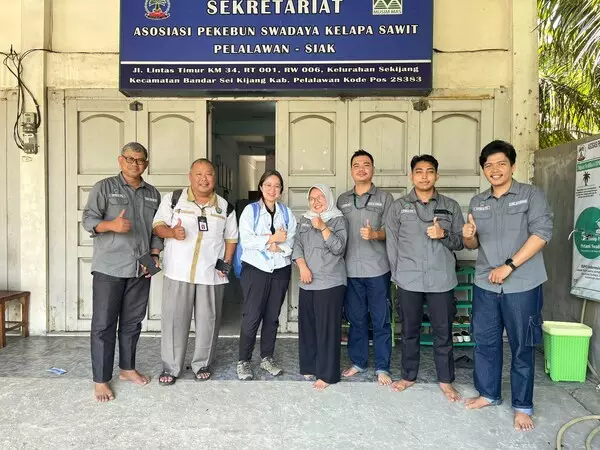
Led by Associate Professor Janice Ser Huay Lee from the Asian School of the Environment, NTU Singapore, the research will focus on independent smallholders in Riau Province, Indonesia, including those within and outside the Asosiasi Perkebun Swadaya Kelapa Sawit Pelalawan Siak (APSKS-PS), a Musim Mas–supported smallholder association. The study will explore the behavioural, social, and spatial factors that shape how sustainable practices are learned, shared, and adopted.

While the palm oil industry has made progress in promoting sustainability among smallholders, adoption rates remain uneven. Training programs alone often fail to translate into lasting behavioural change. Factors such as trust, peer networks, perceived benefits, and access to reliable information play crucial roles in influencing farmers' decisions. To scale sustainability effectively, the sector must understand how and why farmers choose to change their practices.

The NTU researchers will combine spatial analysis, social network mapping, and large-scale farmer surveys to study smallholder communities. The project aims to identify the factors that best predict the spread of sustainable behaviours, offering evidence-based insights to guide companies and policymakers in promoting sustainability among independent smallholders.

Musim Mas runs Indonesia's largest independent smallholder program, having trained over 40,000 farmers since 2015. The Group has made smallholder training a cornerstone of its sustainability efforts—even though independent smallholders do not directly supply to the company—recognizing that helping farmers plant and replant sustainably is key to the long-term health of the palm oil industry.

This collaboration supports Musim Mas's commitment to science-based sustainability and builds on partnerships with leading research institutions such as ETH Zurich, the University of Cambridge, and IPB University.

"For sustainability to take root, we need to understand what truly motivates farmers to change—and how those changes spread through communities," said Rob Nicholls, General Manager of Programs and Projects at Musim Mas. "This collaboration with NTU scientists will help us move from teaching sustainability to understanding it, so that our programs can be more effective, inclusive, and self-sustaining."

Musim Mas will facilitate field access and data collection for the study, which will be independently led by the NTU team.

The collaboration aligns with ASE's strengths in interdisciplinary environmental research, particularly its focus on the social dimensions of sustainability in Southeast Asia.

"Independent smallholders play a vital role in the palm oil landscape, yet their decision-making and social networks are often overlooked," said NTU Associate Professor Janice Ser Huay Lee, Asian School of the Environment. "Through this partnership, we hope to uncover how knowledge, trust, and influence shape the adoption of sustainable palm oil practices—insights that can help design more effective and equitable interventions across the region."

The project runs for about 2 years and 9 months from June 2025 and ends on March 2028, with field visits to the districts of Pelalawan and Siak, Riau. NTU works collaboratively with three other Indonesian universities, including North Sumatra University, IPB-University and The University of Riau. The findings will inform future smallholder program design and engagement strategies, with potential applications beyond palm oil to other smallholder-based agricultural sectors in Southeast Asia.

Contact: 
media@musimmas.com 

** The press release content is from PR Newswire. Bastille Post is not involved in its creation. **

Musim Mas and NTU Singapore Launch Multi-Year Study to Understand How Sustainability Spreads Among Smallholder Farmers

Musim Mas and NTU Singapore Launch Multi-Year Study to Understand How Sustainability Spreads Among Smallholder Farmers

Recommended Articles