MILAN (AP) — Ukraine's sports minister decried actions by the International Olympic Committee that his government says indicate the body may soon ease restrictions against Russian athletes, allowing them to once again represent their country in future Olympic Games.
At the Milan Cortina Olympics, 13 Russians are competing as “Individual Neutral Athletes”, meaning they cannot wear any Russian symbols and won’t hear the Russian national anthem if they win a gold medal. Athletes from Russian ally Belarus face the same limits.
Click to Gallery
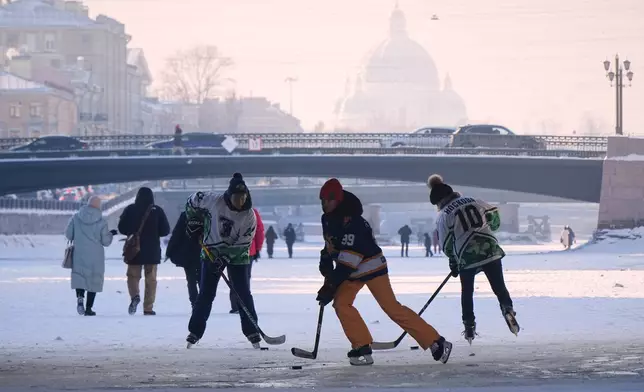
Members of a women's ice hockey team train on the frozen Fontanka River in St. Petersburg, Russia, Friday, Feb. 6, 2026. (AP Photo/Dmitri Lovetsky)
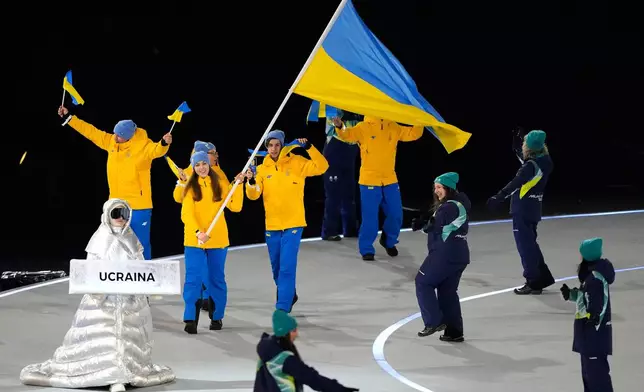
Yelyzaveta Sydorko, flag bearer of Ukraine, leads Ukrainian athletes during the Olympic opening ceremony at the 2026 Winter Olympics, in Milan, Italy, Friday, Feb. 6, 2026. (AP Photo/Lee Jin-man)
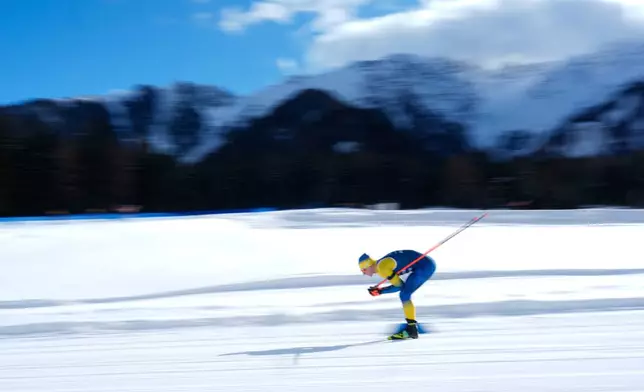
Dmytro Pidruchnyi, of Ukraine, skis during a biathlon training session at the 2026 Winter Olympics in Anterselva, Italy, Monday, Feb. 9, 2026. (AP Photo/Mosa'ab Elshamy)
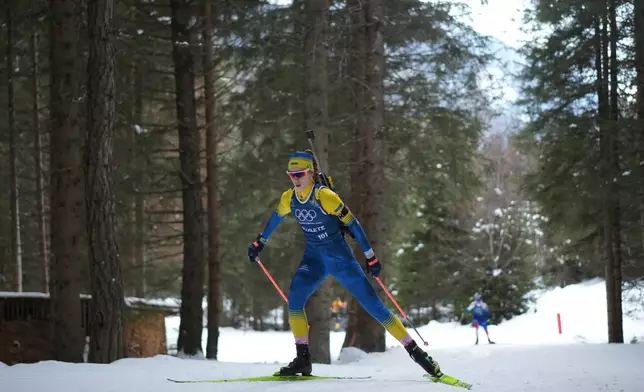
Khrystyna Dmytrenko, of Ukraine, skis during a biathlon training session at the 2026 Winter Olympics in Anterselva, Italy, Monday, Feb. 9, 2026. (AP Photo/Andrew Medichini)
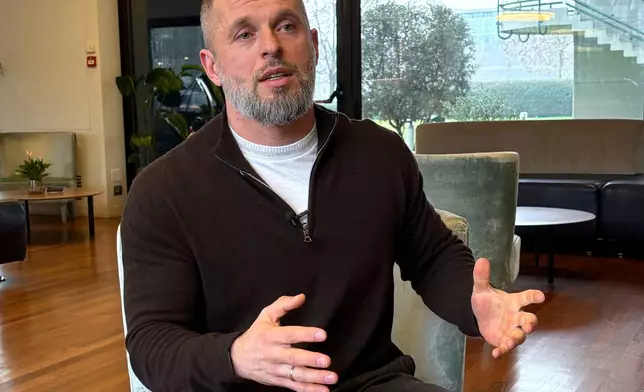
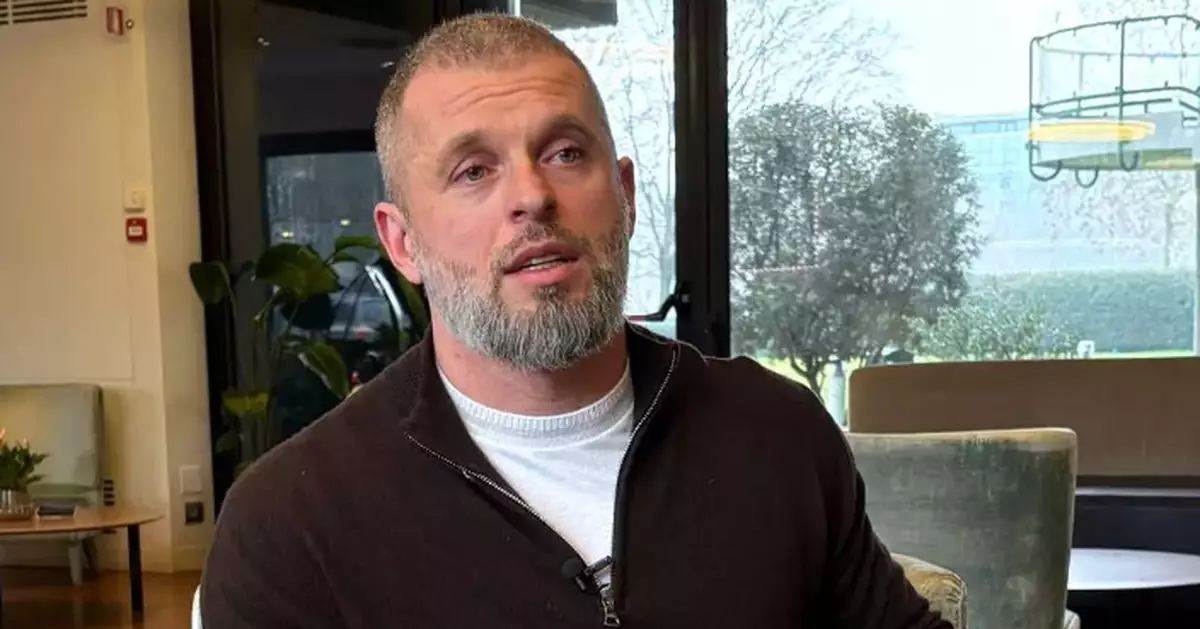
Ukrainian Sports Minister Matvii Bidnyi discusses the impact of the war in Ukraine on Olympic athletes, at the 2026 Winter Olympics, in Milan, Italy, Sunday, Feb. 8, 2026. (AP Photo/Stefanie Dazio)
Matvii Bidnyi, Ukraine's minister of youth and sports, told The Associated Press in an interview Sunday in Milan that any change would be “irresponsible” and appear to condone Russia's invasion as the war's fourth anniversary approaches.
“It looks like you want to legitimize this evil,” Bidnyi said, referring to supporters of bringing Russia back into the Games. “We must keep this pressure until this war ends.”
The IOC took a step toward relaxing policy on Russia in December when it advised sports bodies to allow Russian youth athletes to participate with their flag and anthem ahead of the IOC’s own Youth Olympics later this year. Russia has consistently pushed for a full lifting of restrictions.
In response, Russian fencers have been competing this year in junior events under the Russian flag. But the biggest change so far came Friday, when swimming body World Aquatics dropped its restrictions on Russian youth and junior athletes.
Asked Monday whether it is considering further steps to allow Russian participation ahead of the 2028 Summer Olympics in Los Angeles, the IOC referred the AP to a December statement following the Olympic Summit in Switzerland.
The summit's participants “reaffirmed that athletes have a fundamental right to access sport across the world, and to compete free from political interference or pressure from governmental organizations,” the statement said.
While new IOC President Kirsty Coventry has not specifically addressed Russian athletes at these Games, earlier this month she used her keynote speech ahead of the Milan Cortina Games to reiterate a renewed focus on sports, less so on engaging in politics. Coventry’s predecessor Thomas Bach oversaw the system allowing Russian athletes to compete as neutral individuals.
“We are a sports organization,” Coventry said Feb. 3, calling sports the IOC’s core priority. “We understand politics and we know we don’t operate in a vacuum. But our game is sport.”
Sports sanctions are an important negotiating tool for Ukraine, Bidnyi said, as Russia takes pride in its history of athletic prowess and has long used its success in sport for propaganda. Ukrainian President Volodymyr Zelenskyy on Friday said the U.S. has given Ukraine and Russia a June deadline to reach a peace deal.
As the frigid Ukrainian winter drags on, Russian airstrikes continue to hammer the power grid. Ukraine is struggling with blackouts that have kept millions in the dark and without heat amid freezing temperatures. When generators are deployed, Bidnyi said they're not used to power sports venues so athletes can practice.
"You must make a choice before keeping ice arenas or, for example, give electricity to the families in houses," he said.
Russian athletes haven’t competed under their country’s flag at a Winter Olympics since 2014, when Russia hosted a doping-tainted Games in Sochi.
Over years of legal battles, fallout from those drug cases meant Russians had to compete in Pyeongchang in 2018 as “Olympic Athletes from Russia” and in Beijing in 2022 under the team name of just “ROC” — so that it wouldn’t have the words Russia or Olympic — both times without the national anthem.
The World Anti-Doping Agency still lists Russia’s national testing body as “non-compliant” and says it can’t visit Russia for in-person checks on its performance.
Russia denied the state was complicit in doping.
Many sports barred Russian athletes from competing as part of the diplomatic fallout after Russian troops moved into Ukraine four days after the last Winter Olympics in 2022. Ahead of the 2024 Summer Olympics in Paris, the International Olympic Committee gradually opened up paths for athletes from Russia and its ally Belarus to qualify with neutral status.
Fifteen Russians competed as neutral athletes in Paris, winning their only medal in tennis. They were not allowed to parade as a delegation in either Games’ opening ceremony.
Coventry and the IOC have come under increasing pressure to put similar restrictions on athletes from Israel following the war in Gaza.
At present, Russian athletes are ineligible for neutral status from the IOC if under contract with Russian or Belarusian security agencies or the military, or if they have expressed support for Russia’s actions in Ukraine. Ukrainian officials have disputed whether some of those Russians competing in Olympic qualifiers truly meet the neutral restrictions.
Most winter sports bodies have allowed Russians to compete in such qualifiers in recent weeks, amid a series of legal defeats for policies banning Russian athletes.
War has taken a heavy toll on Ukrainian sport. Athletes were displaced or called up to fight. Soccer matches are often interrupted by air raid sirens so attendance is capped by bomb shelter capacity. Elite skaters, skiers and biathletes usually train abroad, with attacks and frequent blackouts shuttering local facilities.
Nevertheless, Ukraine has managed to bring 46 athletes to Milan Cortina. They range from Kyrylo Marsak, the country’s lone figure skater in Milan, to six cross-country skiers and 10 biathletes.
They aim to send an important message to Russia and the rest of the world, Bidnyi said.
“We have the opportunity to raise our flag to show that Ukraine is resilient, Ukraine is still in power,” he said. “We have a will to win and we continue to be one of the most successful sport teams in the world because success in sports always was a part of the Ukrainian national brand.”
James Ellingworth and Graham Dunbar in Milan contributed to this report.
AP Olympics: https://apnews.com/hub/milan-cortina-2026-winter-olympics
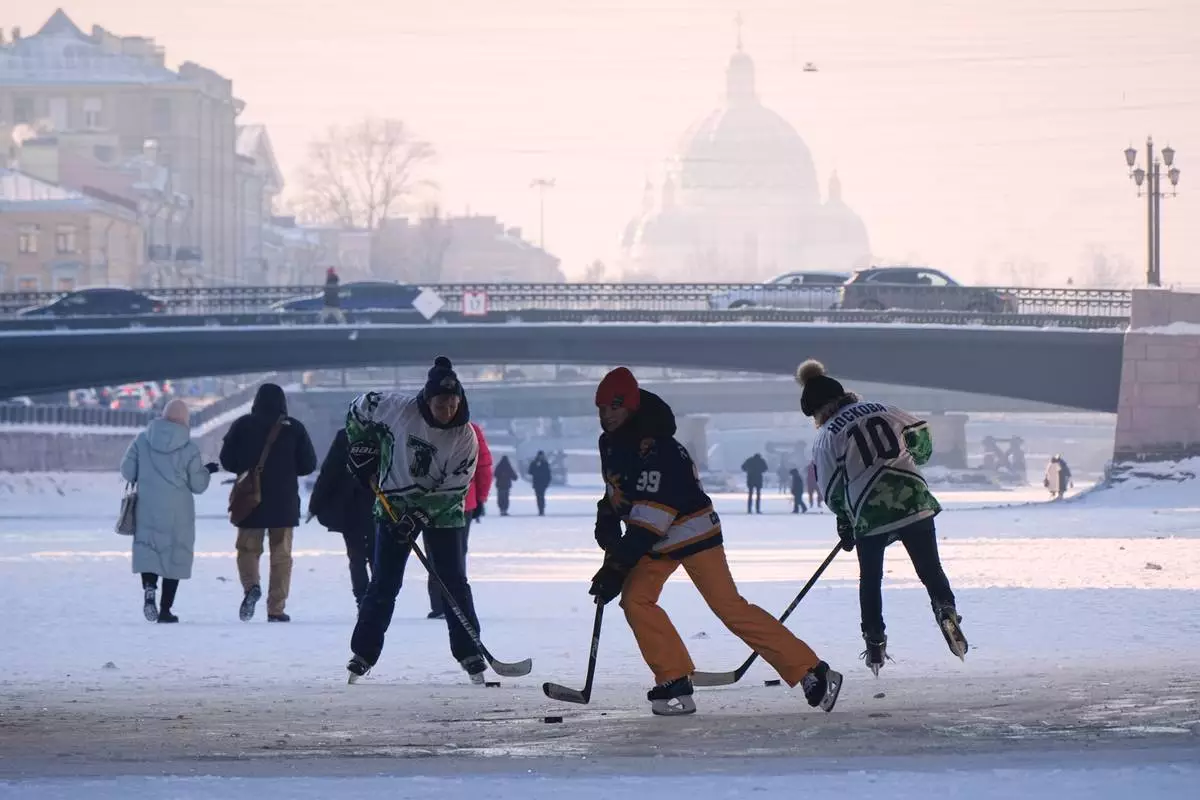
Members of a women's ice hockey team train on the frozen Fontanka River in St. Petersburg, Russia, Friday, Feb. 6, 2026. (AP Photo/Dmitri Lovetsky)
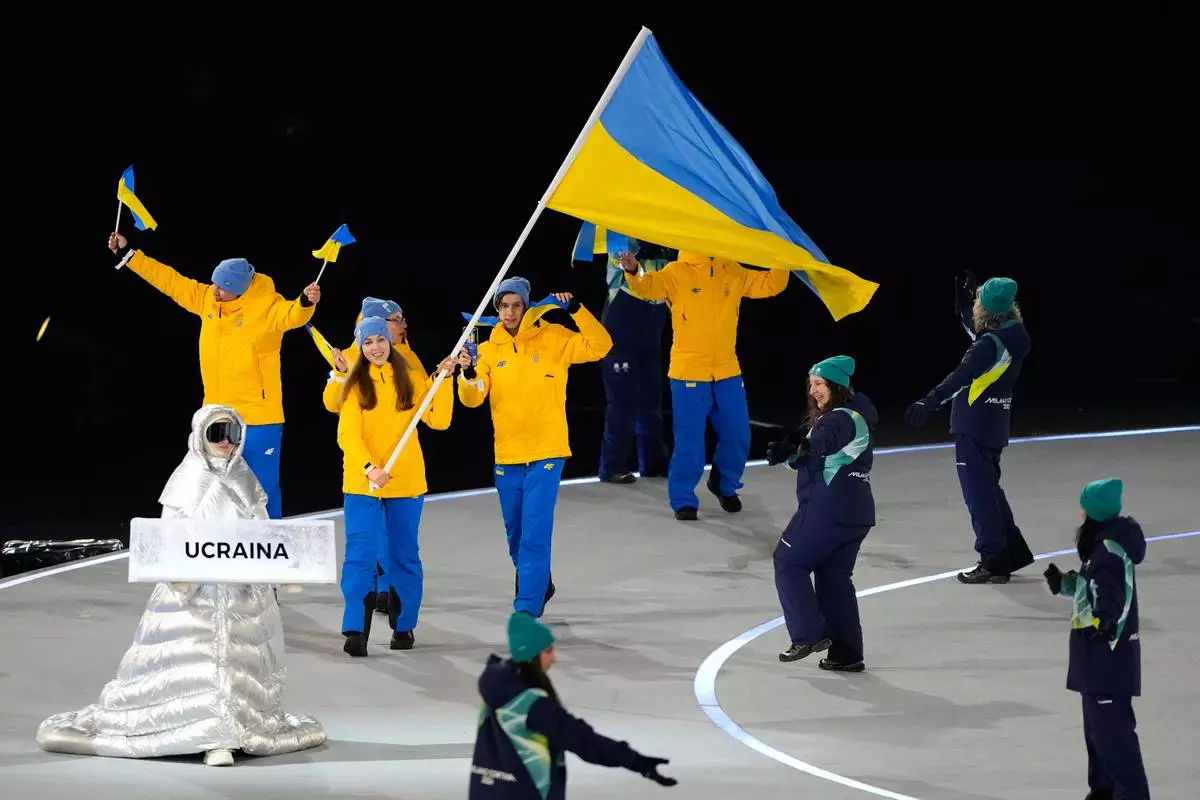
Yelyzaveta Sydorko, flag bearer of Ukraine, leads Ukrainian athletes during the Olympic opening ceremony at the 2026 Winter Olympics, in Milan, Italy, Friday, Feb. 6, 2026. (AP Photo/Lee Jin-man)
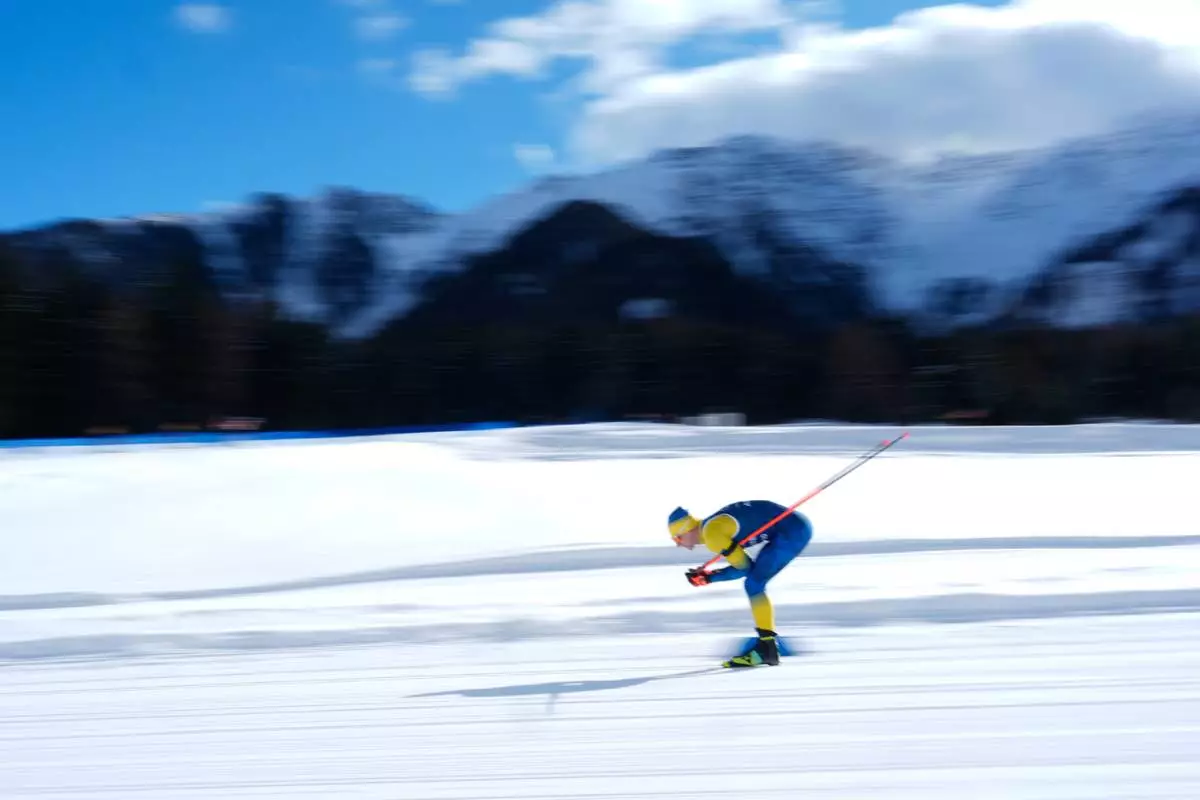
Dmytro Pidruchnyi, of Ukraine, skis during a biathlon training session at the 2026 Winter Olympics in Anterselva, Italy, Monday, Feb. 9, 2026. (AP Photo/Mosa'ab Elshamy)
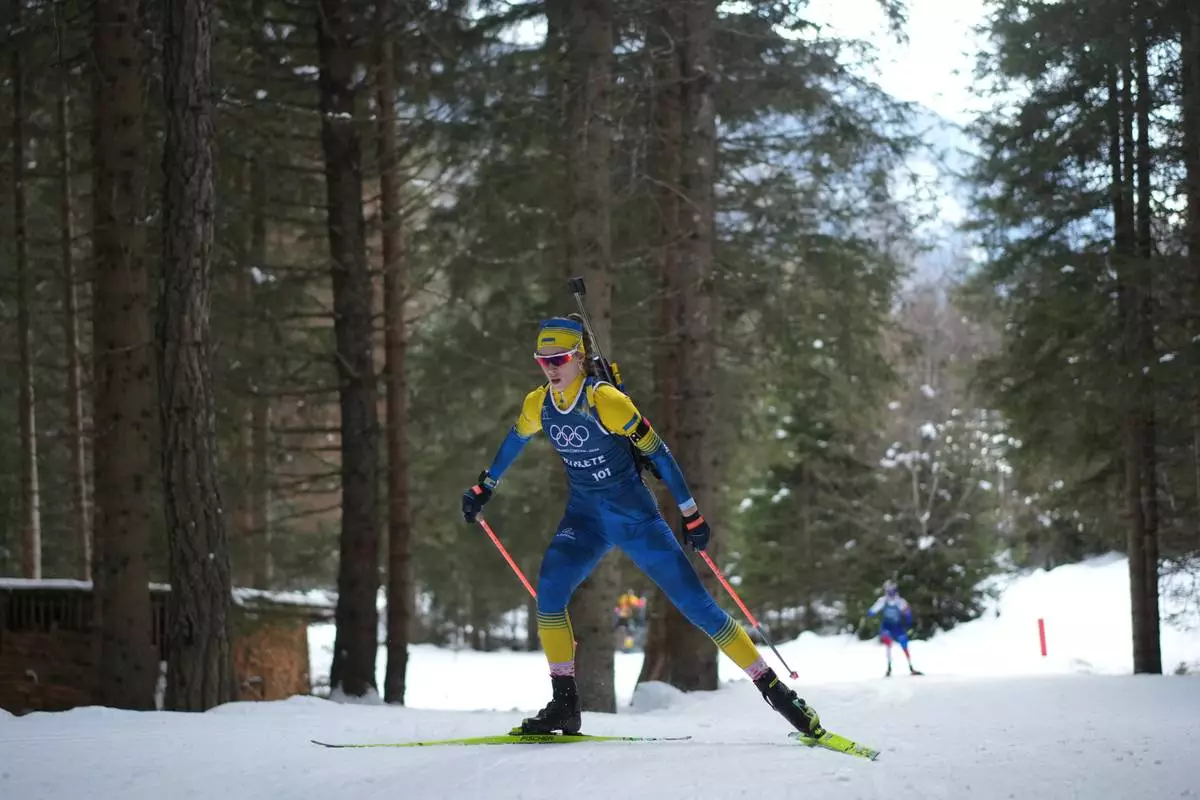
Khrystyna Dmytrenko, of Ukraine, skis during a biathlon training session at the 2026 Winter Olympics in Anterselva, Italy, Monday, Feb. 9, 2026. (AP Photo/Andrew Medichini)
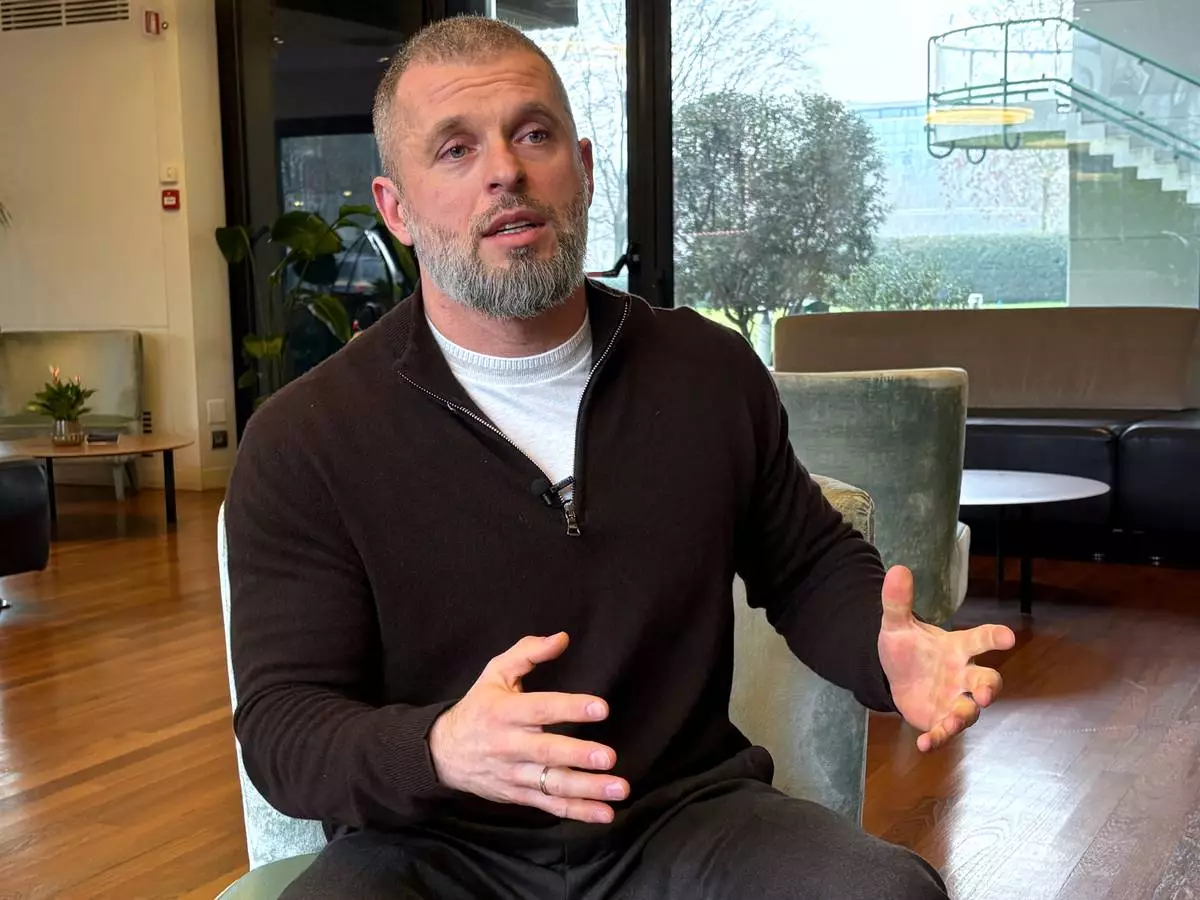
Ukrainian Sports Minister Matvii Bidnyi discusses the impact of the war in Ukraine on Olympic athletes, at the 2026 Winter Olympics, in Milan, Italy, Sunday, Feb. 8, 2026. (AP Photo/Stefanie Dazio)