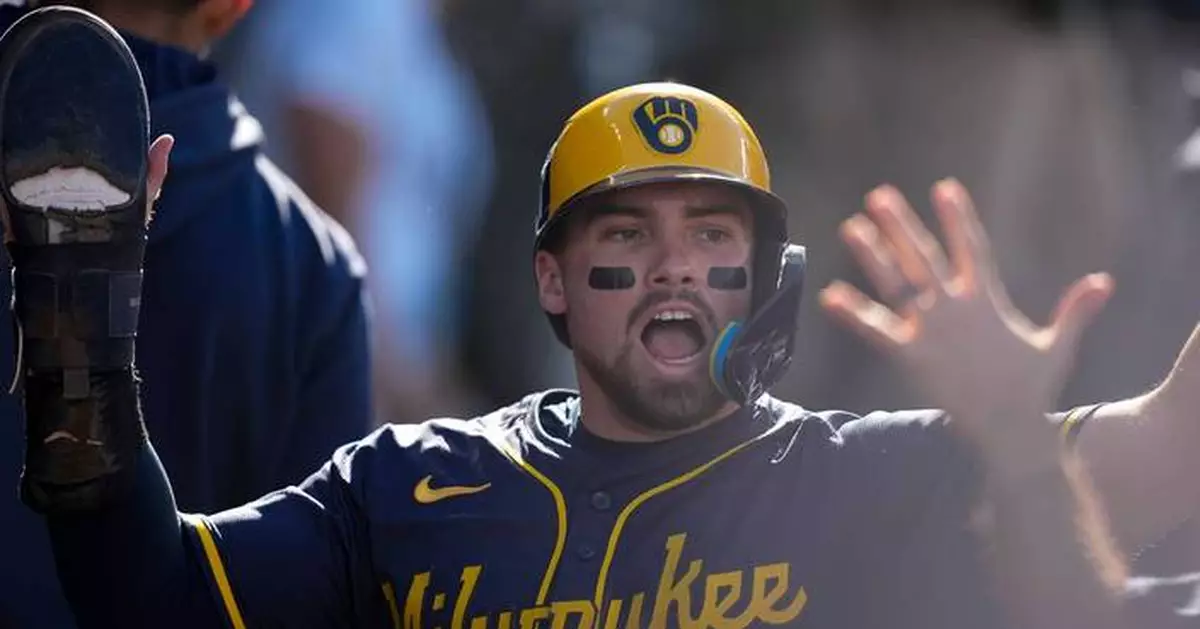
MILWAUKEE (AP) — Third baseman Caleb Durbin was traded to the Boston Red Sox in a six-player deal with the Milwaukee Brewers on Monday after finishing third in the NL Rookie of the Year balloting last year.
Milwaukee acquired left-handers Kyle Harrison and Shane Drohan and infielder David Hamilton from Boston for Durbin and infielders Andruw Monasterio and Anthony Seigler. The Red Sox also are receiving a competitive balance round B pick in July's amateur draft, about 67th overall.
Durbin, who turns 26 on Feb. 22, could fill Boston’s opening at third base created when Alex Bregman left as a free agent to sign a $175 million, five-year contract with the Chicago Cubs.
The Red Sox acquired Willson Contreras to play first base, and Durbin can play second or third. Chief baseball officer Craig Breslow said the team hadn’t decided where Durbin would play but said he expects him to be a regular starter.
“We’re just excited about getting a really good player into the organization, and we’ll figure out where he fits best,” Breslow said. “It just doesn’t feel like it makes sense to commit to anything right now.”
The 5-foot-7 Durbin batted .256 with a .334 on-base percentage, 11 homers and 18 steals in 136 games while helping the Brewers win a third straight NL Central title and reach the NL Championship Series last season.
Milwaukee acquired Durbin and left-hander Nestor Cortes from the New York Yankees for closer Devin Williams.
The Brewers had the third- and fourth-place finishers in the voting for the 2025 NL Rookie of the Year award that went to Atlanta Braves catcher Drake Baldwin, but neither player remains with the organization. Outfielder Isaac Collins, who finished fourth in the balloting, went to Kansas City along with pitcher Nick Mears in a December trade that brought left-handed pitcher Angel Zerpa to Milwaukee.
Durbin’s exit from Milwaukee leaves the Brewers with an apparent opening at third. Joey Ortiz was the Brewers’ starting third baseman in 2024 but shifted to shortstop last season. Hamilton, among the players coming over from Boston, played one game at third base last year but primarily has worked at second base and shortstop.
Jett Williams, one of the players Milwaukee acquired in a Jan. 22 trade that sent two-time All-Star pitcher Freddy Peralta to the New York Mets, also will get some reps at third base this spring training. Williams has played second base, shortstop and the outfield in the Mets organization.
Sal Frelick worked out at third base in spring training in 2024 but won a Gold Glove in right field that year and has remained in the outfield ever since.
Brewers president of baseball operations Matt Arnold said the abundance of infield prospects in Milwaukee's talent-laden farm system made the team feel good enough about their long-term future to make this deal.
“You also start looking at the future here with Jesus Made, Cooper Pratt and Luke Adams, Luis Peña and Andrew Fischer, there are just a lot of these types of guys coming we feel like in our system who could absolutely handle the left side of the diamond that have really high upsides,” Arnold said. “We feel like we have the ingredients now to weather the loss of somebody like Caleb Durbin, who obviously meant a lot to our franchise. But we feel really good about the infield depth both now and in the future as well.”
Monasterio, a 28-year-old with experience at every infield position, hit .270 with a .319 on-base percentage, four homers and 16 RBIs in 68 games for Milwaukee last season. Seigler, 26, batted .194 with a .292 on-base percentage, no homers and five RBIs in 34 games.
Harrison, 24, was a combined 1-1 with a 4.56 ERA in eight appearances for the Red Sox and San Francisco last year. He came to Boston as part of the 2025 trade that sent Rafael Devers to San Francisco.
Drohan, 27, has never pitched in the majors. He went 5-2 with a 3.17 ERA and 77 strikeouts over 54 innings in 15 combined appearances with Triple-A Worcester and High-A Greenville last season.
“Harrison’s not that far removed from being one of the best pitching prospects in the sport,” Arnold said. “Drohan had an outstanding year last year in Triple-A. Both those guys are really exciting for us to add.”
Hamilton, 28, hit .198 with a .257 on-base percentage, six homers, 19 RBIs and 22 steals for Boston last year. That followed a 2024 season in which he batted .248 with a .303 on-base percentage, eight homers, 28 RBIs and 33 steals in 98 games.
Milwaukee selected Hamilton out of Texas in the eighth round of the 2019 draft, then traded him to the Red Sox in 2021.
“Hamilton’s a guy we know very well,” Arnold said. “He’s an elite baserunner. He's really fast. He's a really good defender. He's an exciting player.”
AP Sports Writer Jimmy Golen in Boston contributed to this report.
AP MLB: https://apnews.com/hub/mlb
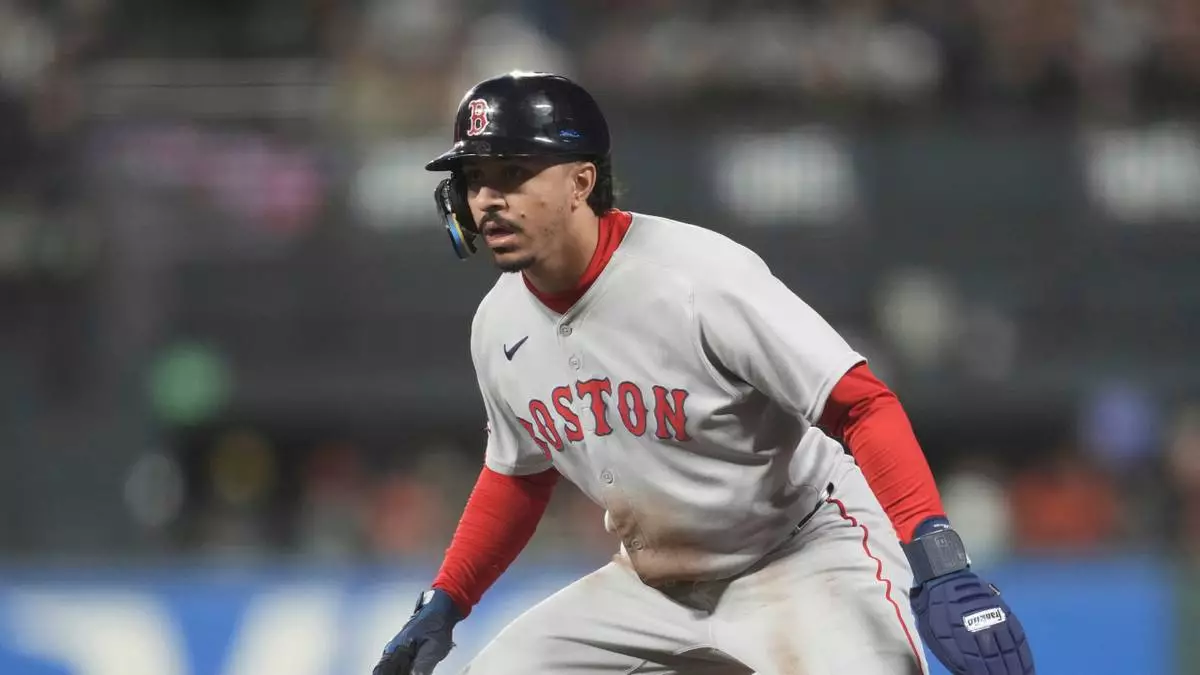
Boston Red Sox's David Hamilton during a baseball game against the San Francisco Giants in San Francisco, June 20, 2025. (AP Photo/Jeff Chiu)
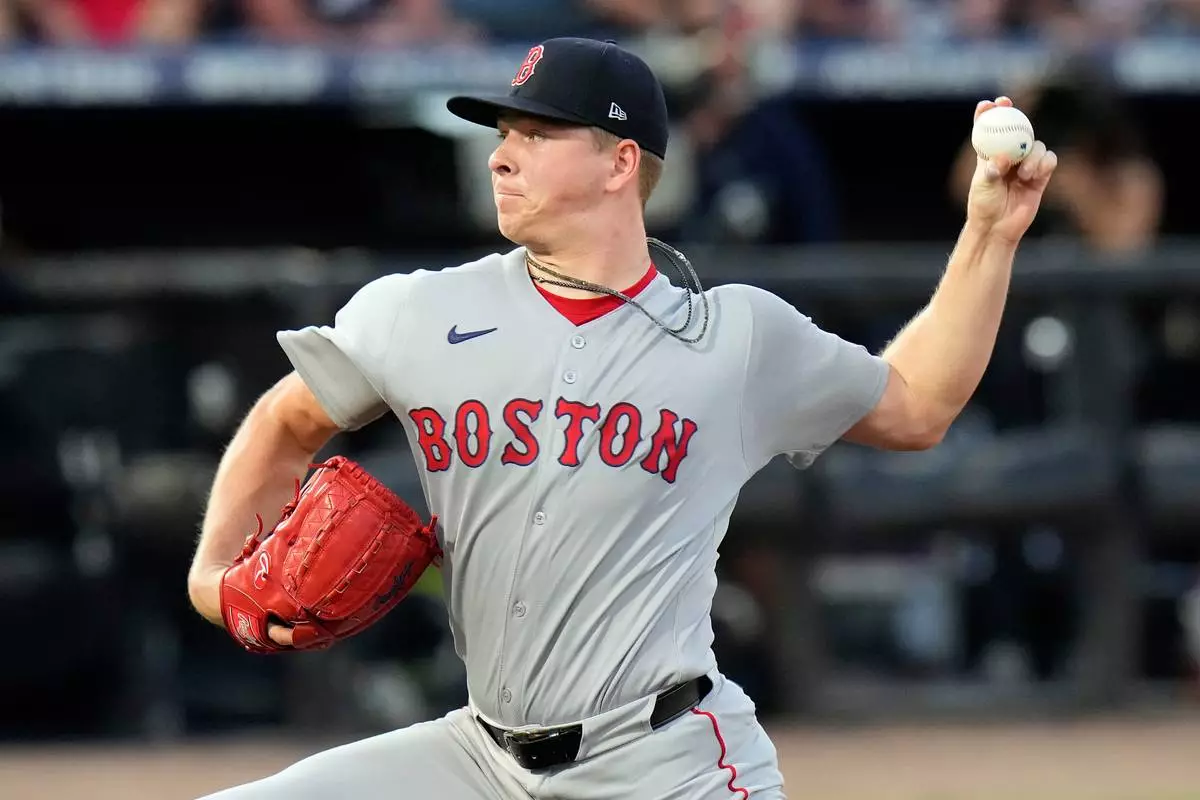
FILE - Boston Red Sox pitcher Kyle Harrison delivers to the Tampa Bay Rays during the first inning of a baseball game, Sept. 20, 2025, in Tampa, Fla. (AP Photo/Chris O'Meara, file)
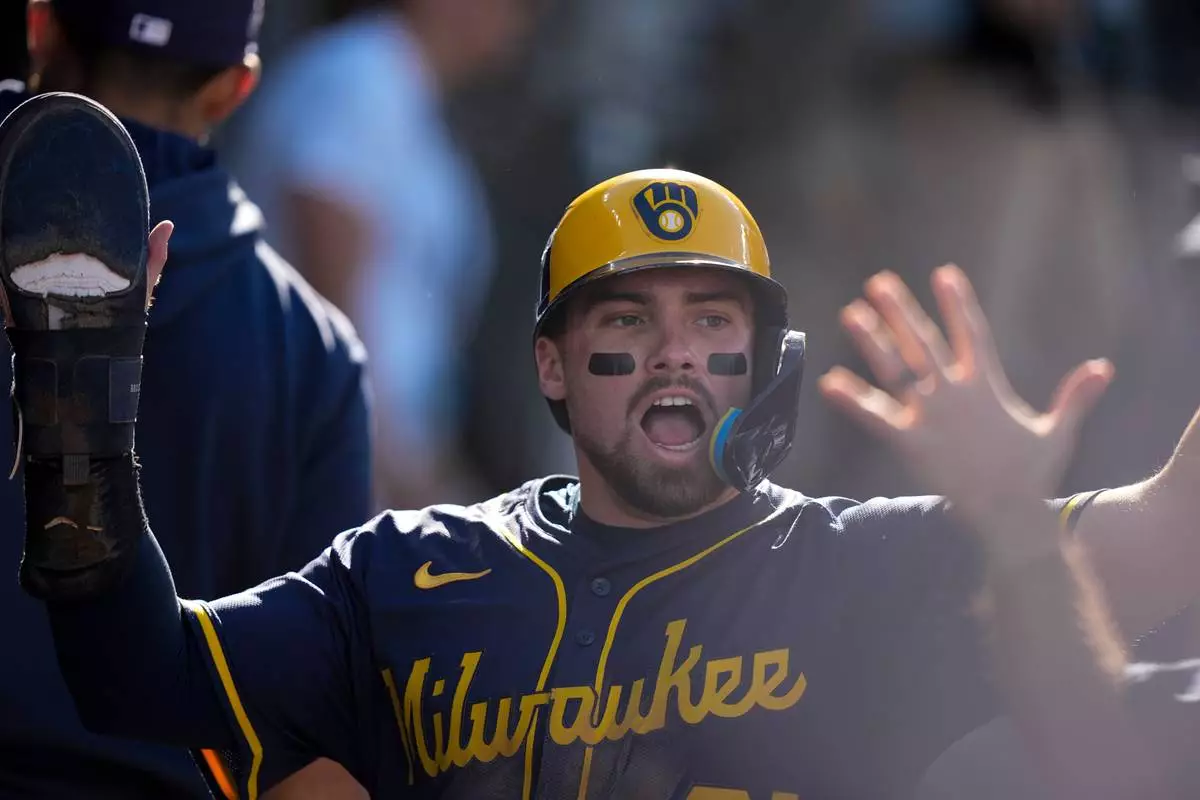
FILE - Milwaukee Brewers' Caleb Durbin celebrates after scoring against the Los Angeles Dodgers during the second inning in Game 3 of baseball's National League Championship Series, Oct. 16, 2025, in Los Angeles. (AP Photo/Brynn Anderson)
LUANDA, Angola (AP) — Pope Leo XIV called Sunday for Angolans to fight the “scourge of corruption” with a culture of justice as he opened a poignant day in his African odyssey that will take the American pope to an epicenter of the African slave trade.
Leo celebrated Mass before an estimated 100,000 people outside the capital and again sought to encourage Angolans. He denounced the exploitation of their mineral-rich land and people, who still bear the scars of a brutal, post-independence civil war.
“We wish to build a country where old divisions are overcome once and for all, where hatred and violence disappear, and where the scourge of corruption is healed by a new culture of justice and sharing,” Leo said in his homily in Kilamba, a Chinese-built development about 25 kilometers (15 miles) outside the capital.
Later Sunday, Leo will celebrate the Rosary prayer at the Sanctuary of Mama Muxima, an important Catholic shrine on the edge of the Kwanza River about 110 kilometers (70 miles) south of Luanda.
The Church of Our Lady of Muxima, built by Portuguese colonizers at the end of the 16th century as part of a fortress complex, became a hub in the slave trade. It was where enslaved Africans were gathered to be baptized by Portuguese priests before being forced to walk to the port of Luanda to be put on ships to the Americas.
While it's a popular Catholic shrine today, its history is emblematic of the Catholic Church’s role in the slave trade hundreds of years ago, the forced baptisms of enslaved people and what some scholars say is the Holy See’s continued refusal to fully acknowledge it and atone for it.
The visit is particularly significant because the Creole ancestors of the first U.S.-born pope include enslaved people and slave owners, according to genealogical research.
“For Black Catholics, Pope Leo’s visit to the Muxima shrine is an important moment of healing,” said Anthea Butler, senior fellow at the Koch Center, Oxford University.
She noted that many Black Catholics are Catholic because of slavery and the “Code Noir,” which she said required slaves purchased by Catholic owners to be baptized in the church.
“Others were already Catholic when they were trafficked from Angola to slave holding colonies,” said Butler, a Black Catholic scholar whose maternal family hails from Louisiana, where the pope’s ancestors also had their roots.
Angola’s Portuguese colonizers were emboldened by 15th-century directives from the Vatican that authorized them to enslave non-Christians.
In 1452, for example, Pope Nicholas V issued the papal bull Dum Diversas, which gave the Portuguese king and his successors the right “to invade, conquer, fight and subjugate” and take all possessions — including land — of “Saracens, and pagans, and other infidels, and enemies of the name of Christ” anywhere, said the Rev. Christopher J. Kellerman, a Jesuit priest and author of “All Oppression Shall Cease: A History of Slavery, Abolitionism, and the Catholic Church.”
The bull also gave the Portuguese permission “to reduce their persons to perpetual slavery.”
That bull and another issued three years later, Romanus Pontifex, formed the basis of the Doctrine of Discovery, the theory that legitimized the colonial-era seizure of land in Africa and the Americas, and justified slavery.
The Vatican in 2023 formally repudiated the Doctrine of Discovery, but it never formally rescinded, abrogated or rejected the bulls themselves. The Vatican insists that a later bull, Sublimis Deus in 1537, reaffirmed that Indigenous peoples shouldn’t be deprived of their liberty or the possession of their property, and were not to be enslaved.
Kellerman recalled that most of the 12.5 million Africans who were direct victims of the trans-Atlantic slave trade were sold into slavery by other Africans and were not captured by Europeans.
“That being said, at the time of the building of Muxima, the Portuguese were doing both — buying enslaved people and colonizing/slave raiding. So they were fully using their papal permissions during this time,” he said in emailed comments to The Associated Press.
He said the first pope to condemn slavery itself was Pope Leo XIII, the current pope’s namesake and inspiration, in two encyclicals in 1888 and 1890. But Kellerman said that pope and others since have continued to perpetuate the “false narrative” that the Holy See was always against slavery, when the historical record says otherwise.
While Leo's visit to Muxima was in honor of its role as a shrine, Kellerman said he hoped that the visit would also give Leo a chance to learn more about the history of the slave trade.
“The popes repeatedly authorized Portugal’s colonization efforts in Africa and Portuguese participation in the slave trade, but the Vatican has never fully admitted this,” he said. “It would be so powerful if at some point Pope Leo were to apologize for the popes’ role in the trade.”
During a 1985 visit to Cameroon, St. John Paul II asked forgiveness of Africans for the slave trade. In 1992 visit to Goree Island, Senegal, the largest slave-trading center in West Africa, he denounced the injustice of slavery and called it a “tragedy of a civilization that called itself Christian.”
According to genealogical research published by Henry Louis Gates Jr., 17 of Leo's American ancestors were Black, listed in census records as mulatto, black, Creole or a free person of color. His family tree includes slaveholders and enslaved people, Gates reported in an essay in the New York Times.
Gates, a Harvard University professor who hosts the popular PBS documentary series “Finding Your Roots,” presented his research to Leo during a July 5 audience at the Vatican. According to a report of their meeting in The Harvard Gazette, “The pope asked about ancestors, both Black and white, who were enslavers.”
Leo has not spoken publicly about his family heritage or the Gates research, and some Black Catholic scholars are hesitant to impose on him a narrative about his identity that he himself has not yet addressed publicly.
“It’s important that we tell our own stories,” said Tia Noelle Pratt, a sociologist of religion and professor at Villanova University, the pope’s alma mater.
“We haven’t heard anything from him about what he thinks about it, and so to impose anything on him, I think would be completely inappropriate,” said Pratt, author of “Faithful and Devoted: Racism and Identity in the African-American Catholic Experience.”
Cardinal Wilton Gregory, the retired archbishop of Washington and the first African American cardinal, said he was “delighted” to have facilitated the encounter.
“It’s one of the things that I think for many African Americans and people of color, they identify with great pride the pope has roots in our own heritage,” Gregory said. “And I think he’s happy about that too, because it’s another link to the people that he tries to serve and is called to serve.”
Associated Press religion coverage receives support through the AP’s collaboration with The Conversation US, with funding from Lilly Endowment Inc. The AP is solely responsible for this content.
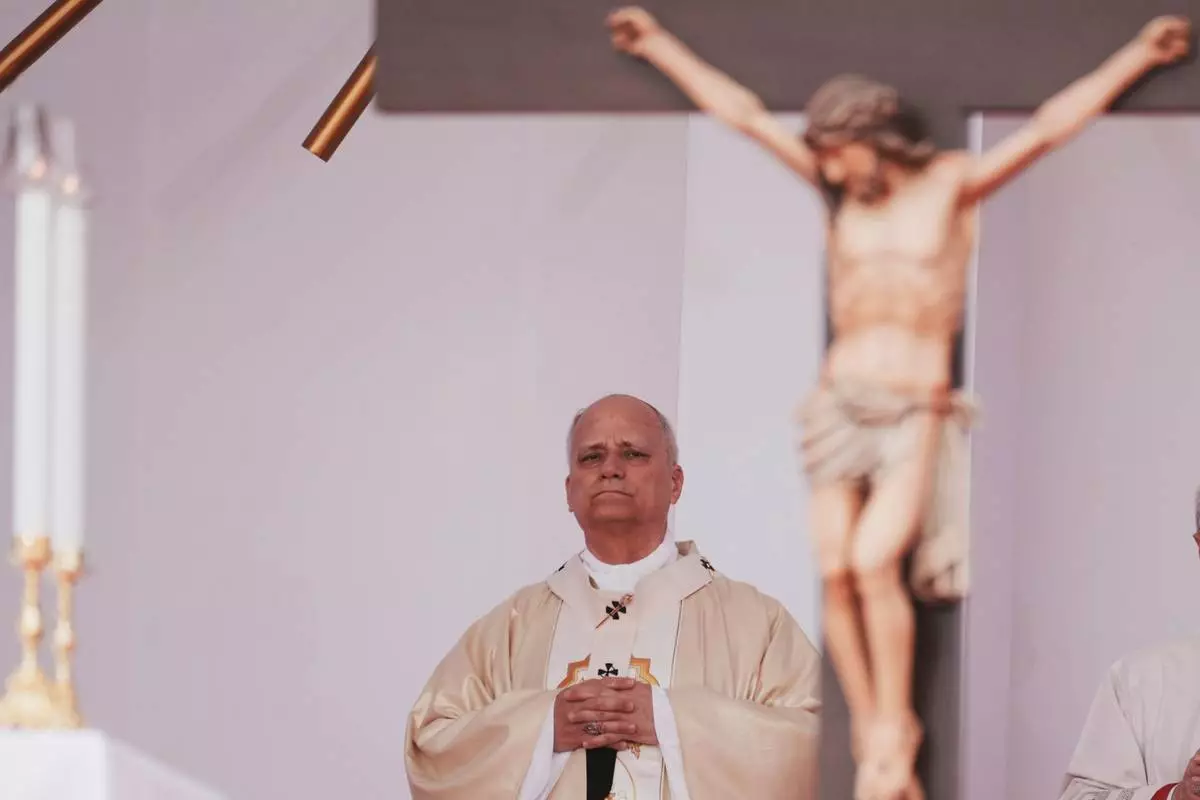
Pope Leo XIV presides over Sunday Mass, Sunday, April 19, 2026, in Kilamba, some 30 kilometers south of Luanda, Angola, on the seventh day of an 11-day apostolic journey to Africa. (AP Photo/Andrew Medichini)
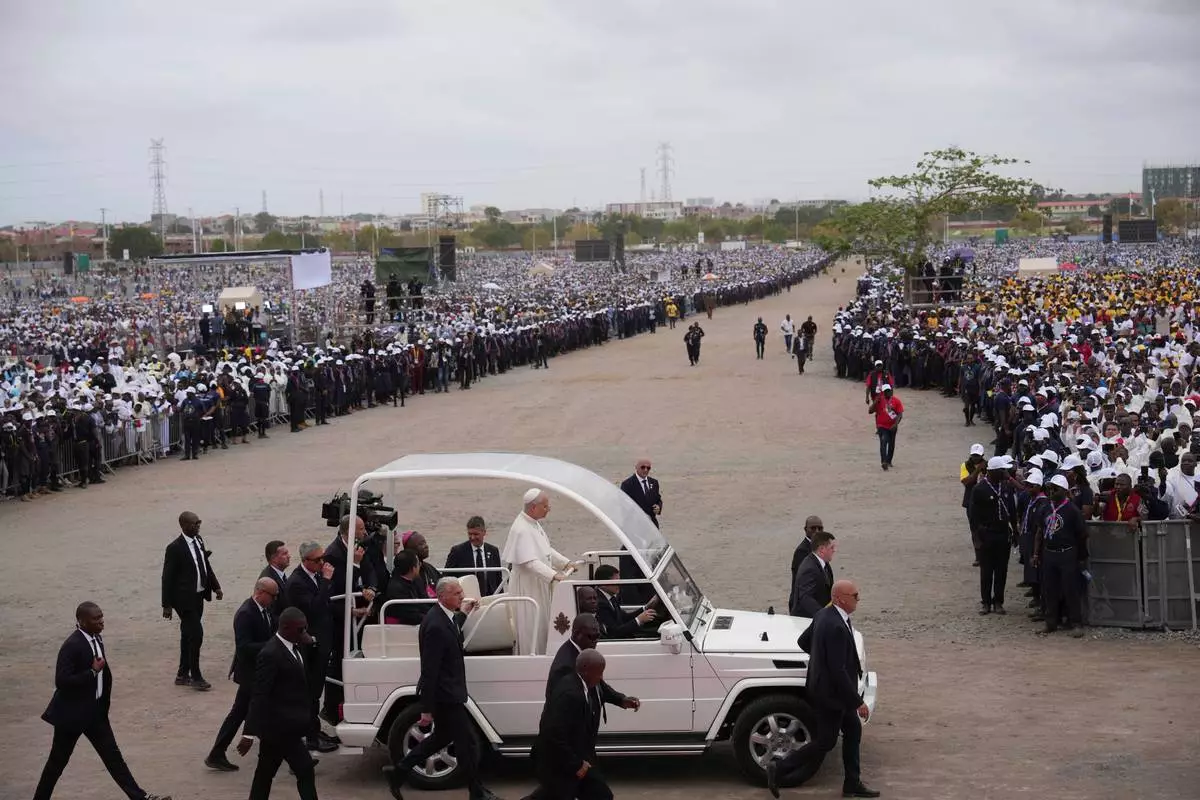
Pope Leo XIV arrives in Kilamba, some 30 kilometers south of Luanda, Angola, to preside over Sunday Mass, Sunday, April 19, 2026, on the seventh day of an 11-day apostolic journey to Africa. (AP Photo/Andrew Medichini)
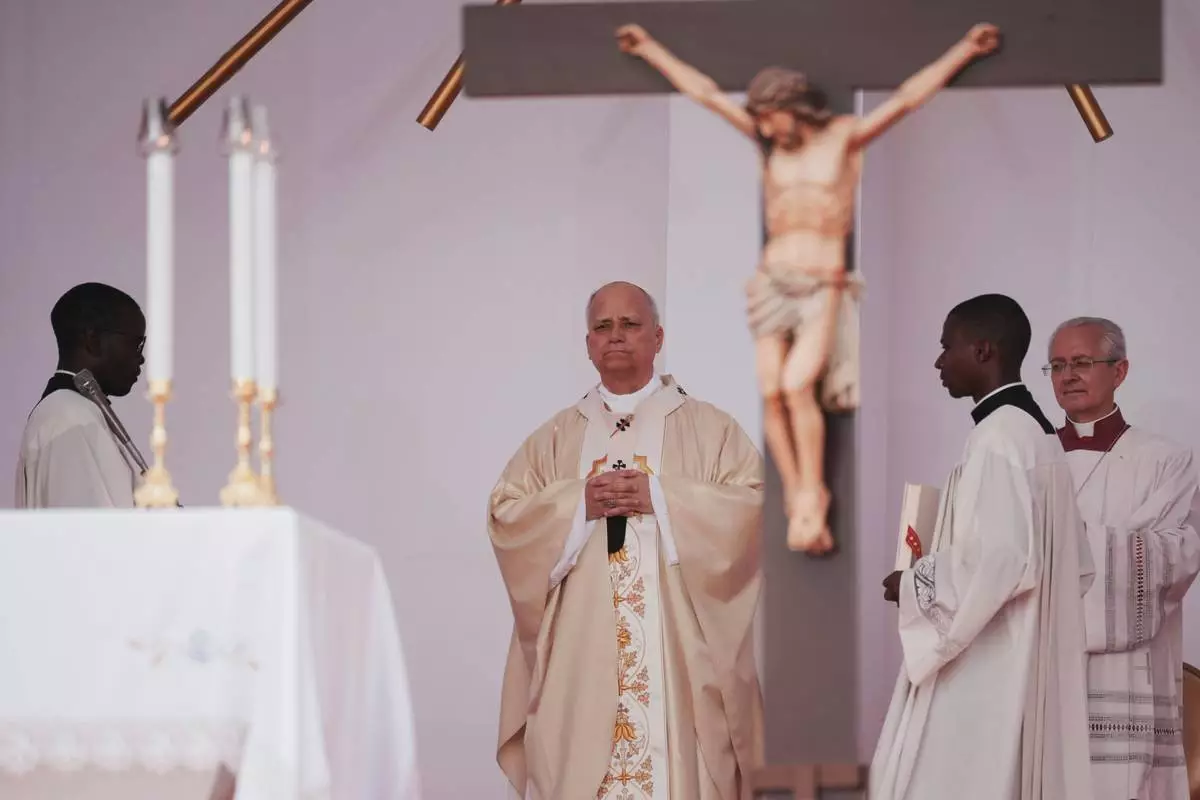
Pope Leo XIV presides over Sunday Mass, Sunday, April 19, 2026, in Kilamba, some 30 kilometers south of Luanda, Angola, on the seventh day of an 11-day apostolic journey to Africa. (AP Photo/Andrew Medichini)