U.S. stocks ended higher on Monday, with the Dow Jones Industrial Average achieving a fresh record close as investors positioned themselves for a pivotal week of delayed economic reporting and corporate financial updates.
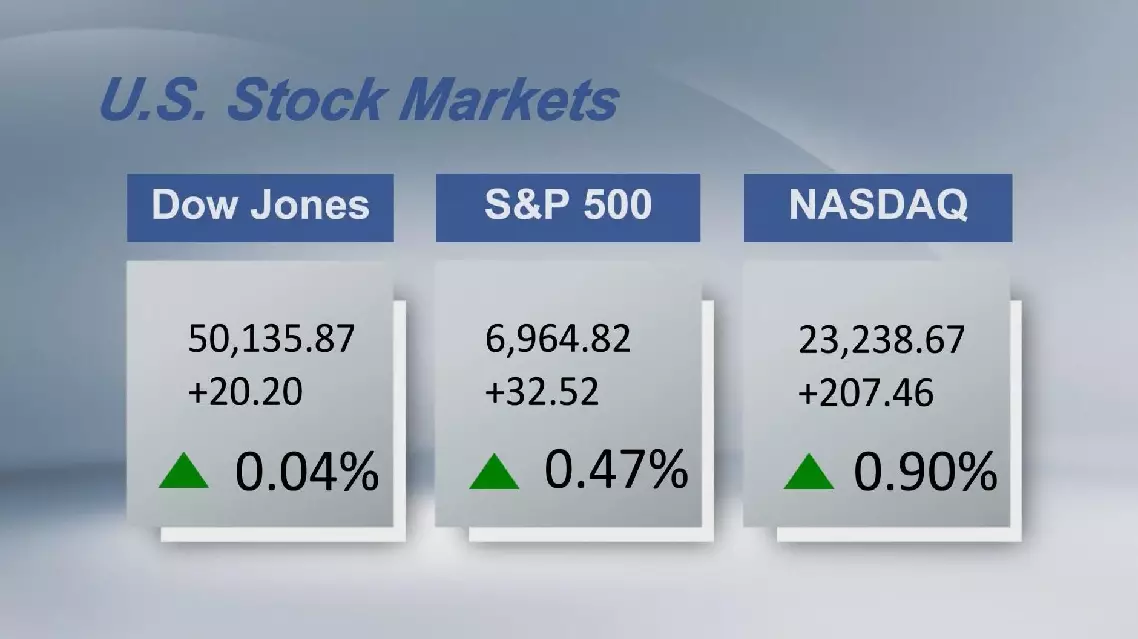
The Dow Jones Industrial Average edged up 0.04 percent to a new all-time high of 50,135.87. The S and P 500 added 0.47 percent, to 6,964.82, and the Nasdaq Composite Index increased by 0.9 percent, to 23,238.67.
Market performance among the 11 primary S and P 500 sectors was largely constructive, with seven finishing in positive territory. Technology and materials led the advance, climbing 1.59 percent and 1.44 percent, respectively. In contrast, the consumer staples and healthcare sectors lagged, each declining 0.86 percent.
The technology sector remained a focal point of debate regarding the impact of artificial intelligence on traditional software business models. The shares of Monday.com Limited plummeted over 20 percent after the software provider issued revenue and profit guidance that failed to meet analyst expectations.
However, other major technology names continued their recovery from previous volatility with Nvidia and AMD gaining 2.5 percent and 3.63 percent, respectively. Meanwhile, Oracle surged nearly 10 percent and Microsoft rose over 3 percent.
Economic anticipation is high as the U.S. Bureau of Labor Statistics prepares to release the delayed January non-farm payrolls report on Wednesday. Market participants are seeking clarity on whether the labor market is experiencing significant softening following last week's disappointing private-sector payroll update from ADP.
In corporate news, ON Semiconductor is slated to release its results after the market close on Monday. The earnings calendar remains heavy throughout the week, with high-profile reports expected from Coca-Cola, McDonald's, and Cisco, which will provide further insight into consumer spending and corporate investment trends.
U.S. stocks close higher ahead of employment, inflation data
China's Minister of Commerce Wang Wentao outlined the key priorities of the 32nd Asia-Pacific Economic Cooperation (APEC) Ministers Responsible for Trade Meeting, which opened on Friday in Suzhou, East China's Jiangsu province.
In an interview with CGTN ahead of the two-day meeting, Wang said free trade, digital cooperation and green economy are high on the agenda of the meeting.
"The key areas include advancing regional economic integration and the Free Trade Area of the Asia-Pacific, supporting the World Trade Organization (WTO) in strengthening digital cooperation and developing green economy. At present, the international situation is marked by intertwined turbulence and chaos, with intensified geopolitical instability. The rise of unilateralism and protectionism poses serious challenges to the international economic and trade order, disrupting global and Asia-Pacific development. Against this backdrop, all parties have higher expectations for this trade ministers' meeting, hoping that it can build consensus and deliver outcomes," Wang said.
This year marks China's third time hosting the APEC meetings and the 35th anniversary of its membership.
By 2025, China had become the largest trading partner of 13 APEC economies. Trade between China and APEC economies reached 3.7 trillion U.S. dollars, accounting for 57.8 percent of China's total foreign trade.
China has signed 24 free trade agreements or economic and trade arrangements with 31 countries and regions, including 15 APEC economies. In recent years, China has also completed upgrades of free trade agreements with APEC economies such as Singapore and Peru.
The minister said that China has always been a firm supporter and an important contributor to APEC.
"We have actively shared our vast market and development opportunities with all parties. China's door to the world will only open wider and wider. Facing the common challenges, China will continue to fulfill its responsibilities as a major country, further deepen reform, expand high-standard opening-up, and continue to provide new opportunities for the Asia-Pacific region and the world with its new achievements in Chinese modernization," the minister said.
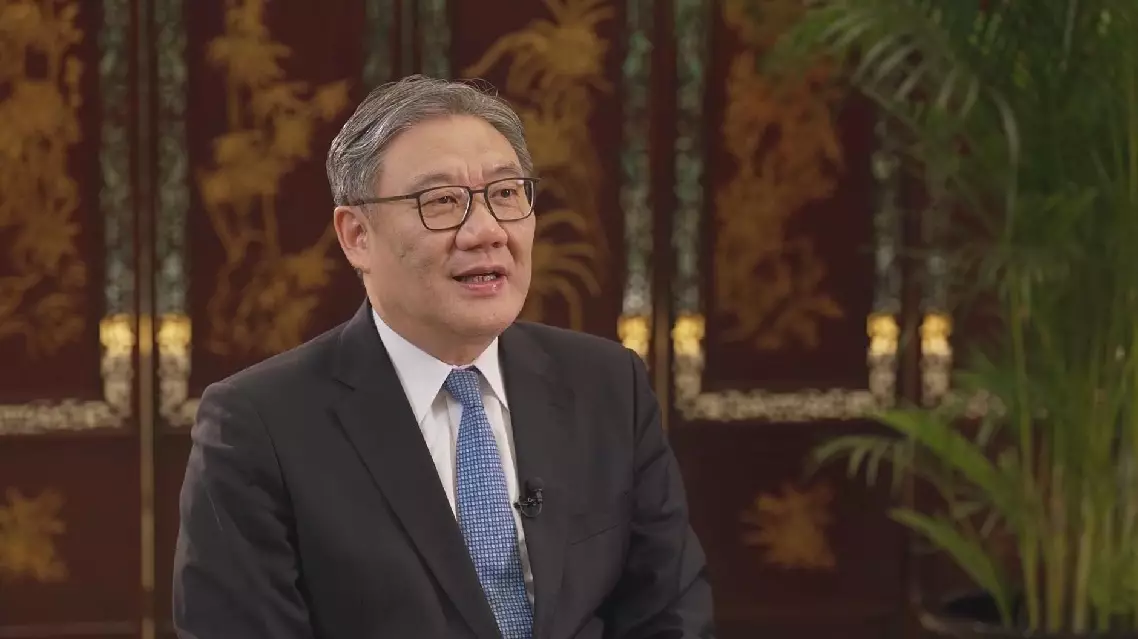
China's Commerce Minister outlines priorities for 32nd APEC trade ministers' meeting