Skip to Content Facebook Feature Image

Russia reports attacking Ukraine's military airport, Ukraine says shooting down Russian drones

China

China

China

Russia reports attacking Ukraine's military airport, Ukraine says shooting down Russian drones

2026-02-10 09:36 Last Updated At:11:37

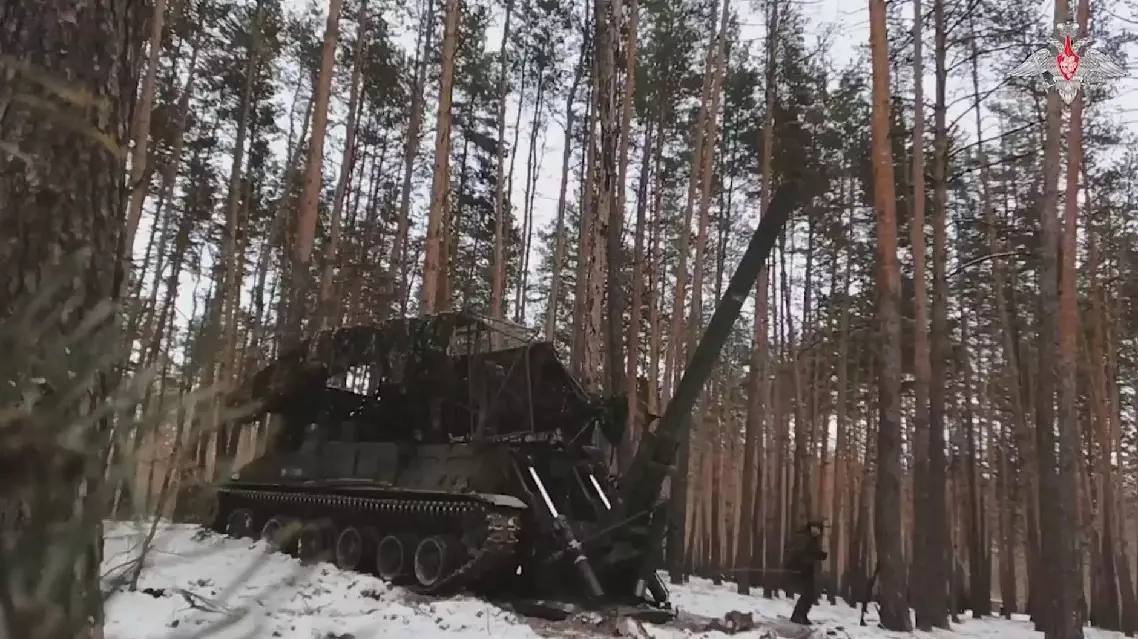
Russia claimed strikes on Ukrainian military targets, while Ukraine reported intercepting multiple Russian drones on Monday.

Russia's Defense Ministry on Monday said that over the past 24 hours, Russian troops had struck a Ukrainian military airfield's infrastructure, along with energy and transportation facilities, as well as temporary deployment points of the Ukrainian army and foreign mercenaries.

Russian air defense units intercepted three guided bombs and 72 fixed-wing drones launched by Ukrainian forces.

The General Staff of the Armed Forces of Ukraine said on the same day that as of Monday afternoon, 74 combat engagements had taken place along the front lines, with most of the fighting concentrated in the Pokrovsk direction.

In addition, Ukraine's Air Force reported having shot down or otherwise intercepted a total of 116 Russian drones between 17:30 on Sunday and 09:30 on Monday.

Russian Foreign Minister Sergey Lavrov stated on Monday that Russia will not permit the deployment of any weapons on Ukrainian territory which threaten its security interests. He emphasized, in an interview with Russian media, that Russia must ensure its security in a context where some European nations are threatening war against it.

Regarding diplomacy, Lavrov noted the importance of the United States' position on the Ukraine issue. He said that while Russia had accepted a U.S. proposal for discussions on the issue, the United States was not prepared to accept the relevant suggestions put forward by the Russian side.

Russia's Federal Security Service (FSB) stated on Monday that Ukraine and Poland were involved in the attempted assassination of Lieutenant General Vladimir Alekseyev. Alekseyev, a deputy chief of Russia's military intelligence agency, was shot several times inside a residential building in northwest Moscow on Friday.

This followed an earlier announcement by the Russian Investigative Committee's spokesperson Svetlana Petrenko that the two suspects detained for the attack - Lyubomir Korba and Viktor Vasin - had admitted their involvement.

Ukrainian Foreign Minister Andrii Sybiha on Friday stated that the Ukrainian government was not involved in the attack.
Russia reports attacking Ukraine's military airport, Ukraine says shooting down Russian drones


Russia reports attacking Ukraine's military airport, Ukraine says shooting down Russian drones
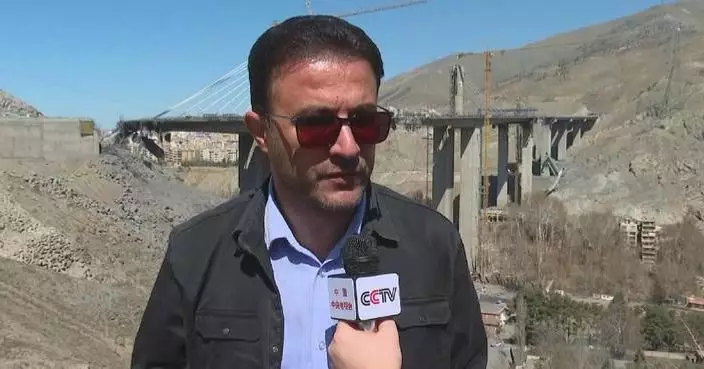
Iran on Monday publicly rejected a core U.S. demand to cease all uranium enrichment, while projecting a dual-track strategy of guarded diplomatic engagement and reinforced military preparedness.

The moves came as the indirect Iran-US talks in Oman's Muscat last week yielded no breakthrough and regional tensions continued to simmer.

On Monday, Mohammad Eslami, president of the Atomic Energy Organization of Iran, said that while Iran could consider diluting its 60-percent enriched uranium, it would only do so if all international sanctions were first lifted.

Eslami also dismissed past proposals to ship the material abroad for safekeeping.

Iranian President Masoud Pezeshkian and Foreign Minister Seyed Abbas Araghchi echoed this line on Monday, reaffirming Tehran's strategy of engaging in talks while refusing to concede on what Iran views as sovereign rights.

Pezeshkian and Araghchi have described the Muscat talks as a "good start" but warned that diplomacy must be based on "respect, not coercion."

In a televised speech on Monday, Iran's Supreme Leader Ali Khamenei urged Iranians to show unity and "disappoint the enemy" ahead of the 47th anniversary of the 1979 Islamic Revolution, amid rising tensions with the United States.

Meanwhile, Ali Larijani, secretary of Iran's Supreme National Security Council, is set to lead a delegation to visit mediator Oman on Tuesday.

Simultaneously, Iran has signaled a shift toward greater military opacity. Iran's state news agency IRNA said in a report on Sunday that the Defense Ministry has halted all public displays of new weaponry "for security reasons and to safeguard the principle of surprise," a move widely interpreted as preparing for potential conflict.

Positions from the United States and Israel have appeared equally firm. A report on Sunday by Israel's Channel 15 said the United States had privately messaged Iran, seeking Iran's "concessions" in the next round of talks, and expecting "serious and meaningful content."

On Monday, The Jerusalem Post, citing Israeli defense officials, reported that Israel has warned the U.S. it "will strike alone" if Iran crosses its "red lines" on ballistic missiles.

Israeli Prime Minister Benjamin Netanyahu's office said on Sunday that he will meet with U.S. President Donald Trump on Feb 11 in Washington, and will discuss the U.S.-Iran negotiations.

Netanyahu is expected to demand that the U.S. promote the transfer of Iran's enriched uranium out of the country and restrict Iran's ballistic missile capabilities.

Iran rejects zero enrichment, projects dual-track posture amid stalled talks with U.S.

Iran rejects zero enrichment, projects dual-track posture amid stalled talks with U.S.

Recommended Articles