A record snow drought with unprecedented heat is hitting most of the American West, depleting future water supplies, making it more vulnerable to wildfires and hurting winter tourism and recreation.
Scientists say snow cover and snow depth are both at the lowest levels they’ve seen in decades, while at least 67 Western weather stations have measured their warmest December through early February on record. Normal snow cover this time of year should be about 460,000 square miles — about the size of California, Utah, Idaho and Montana — but this year it's only California-sized, about 155,000 square miles, according to the National Snow and Ice Data Center.
Click to Gallery
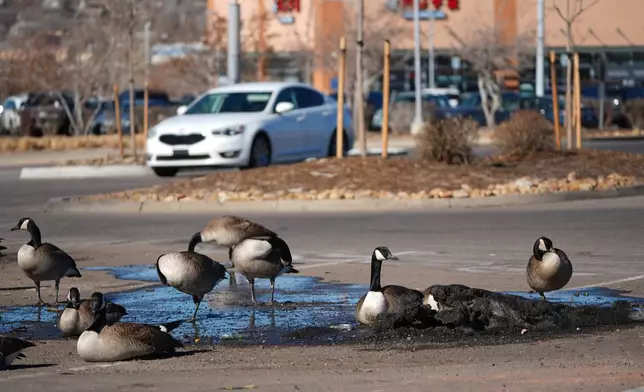
A flock of Canada geese sits in a small bank of dirt-covered snow melting in a parking lot, Friday, Feb. 6, 2026, in Sheridan, Colo. (AP Photo/David Zalubowski)
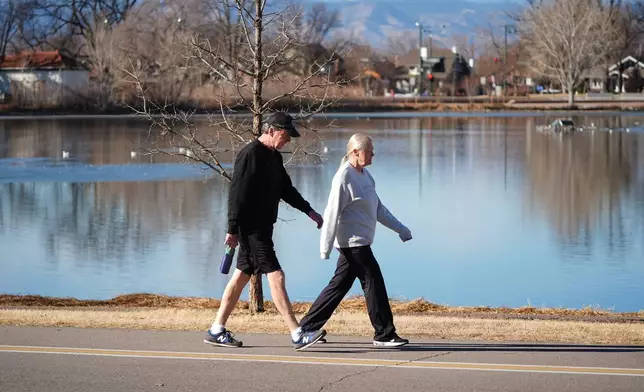
With a backdrop of snowless mountains, a couple walk around the lake in Washington Park, Friday, Feb. 6, 2026, in Denver. (AP Photo/David Zalubowski)
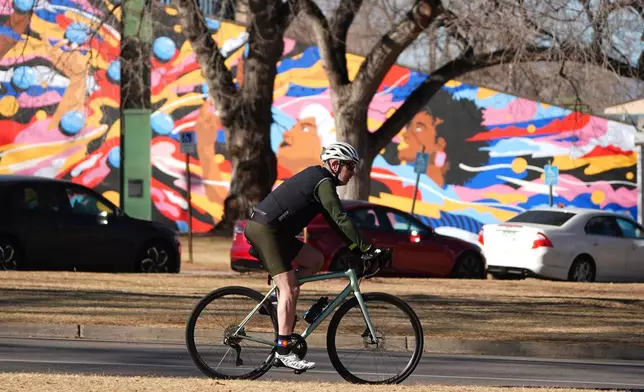
Taking advantage of daytime hgh temperatures in the 60s, a cyclist wheels through Washington Park, Friday, Feb. 6, 2026, in Denver. (AP Photo/David Zalubowski)
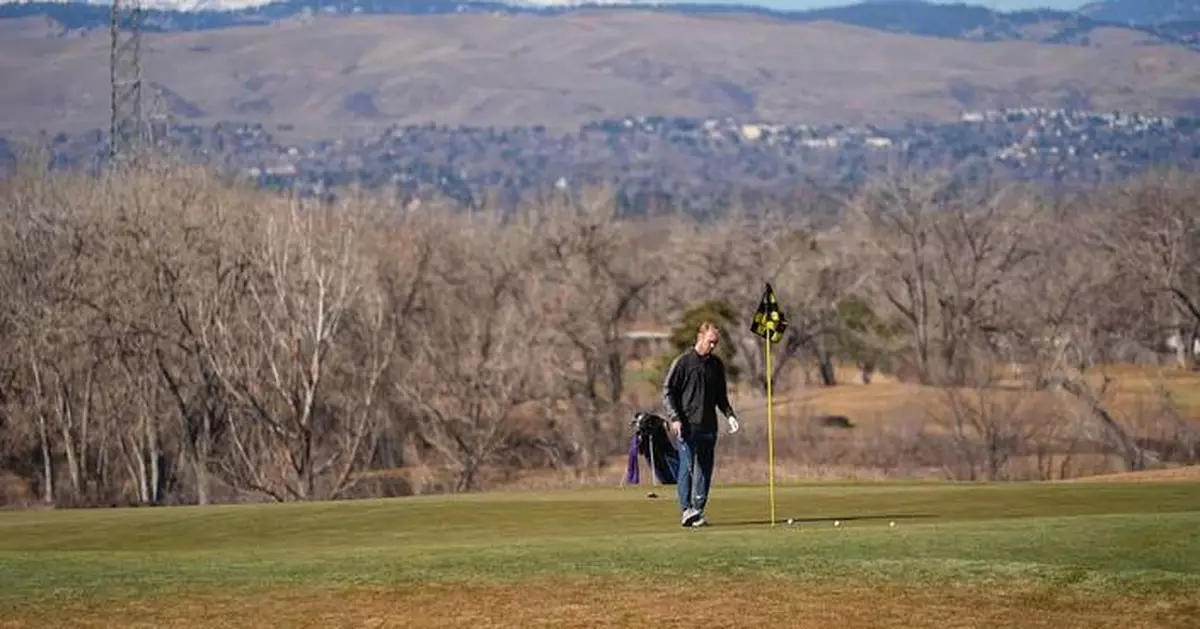
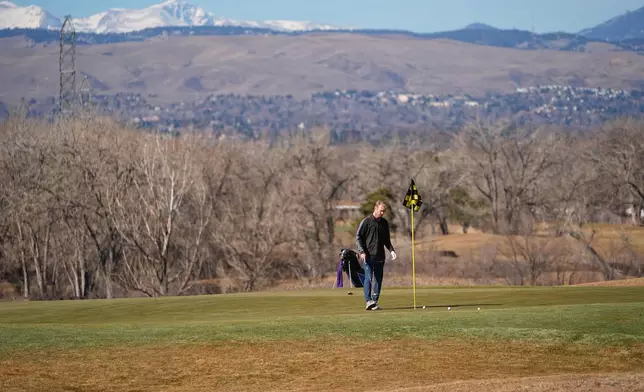
With little snow covering the mountain backdrop, a lone golfer putts out on a green on the Broken Tee Golf Course, Friday, Feb. 6, 2026, in Sheridan, Colo. (AP Photo/David Zalubowski)
“I have not seen a winter like this before,” said center director Mark Serreze, who has been in Colorado almost 40 years. “This pattern that we’re in is so darned persistent.”
The snowpack — measured by how much water is trapped inside — in Oregon is not only record low, but 30% lower than the previous record, said Jason Gerlich, regional drought early warning system coordinator for the National Oceanic and Atmospheric Administration.
Much of the U.S. east of the Rockies is snowbound and enduring more than two weeks of bone-chilling abnormal cold, but in West Jordan, Utah, a suburb of Salt Lake City, Trevor Stephens went to the store last week in gym shorts and a T-shirt.
“Right now there’s no snow on the ground,” he said in a video interview, looking out his window and lamenting the lack of snowboarding opportunities. “I’d definitely rather have icy roads and snow than whatever is going on out here right now.”
Ski resorts had already been struggling through a difficult season, but the lack of snow has been persistent enough that concerns are growing about wider effects.
Oregon, Colorado and Utah have reported their lowest statewide snowpack since the early 1980s, as far back as records go.
A dry January has meant most states have received half their average precipitation or even less. Along with sunny days and higher-than-average temperatures, that's meant little snow buildup in a month that historically gets a lot of snow accumulation across much of the Pacific Northwest and Northern Rockies. Because of heavy rains in December, California is in better shape than the other states, scientists said.
As of Monday, it had been 327 days since Salt Lake City International Airport got 1 inch (2.54 centimeters) of snow, making it the longest stretch since 1890-91, according to the National Weather Service.
The meager snow in Colorado and Utah has put the Upper Colorado River Basin at the heart of the snow drought, said Gerlich.
A robust mountain snowpack that slowly melts as winter warms to spring provides a steady flow of water into creeks and rivers. That helps ensure there’s enough water later in the year for agriculture, cities, hydropower electric systems and more.
But lack of snow or a too-fast melt means less water will replenish rivers like the Colorado later in the season.
“This is a pretty big problem for the Colorado basin,” said Daniel Swain of the University of California’s Water Resources Institute.
Experts said the snow drought could also kick-start an early wildfire season. Snow disappearing earlier than average leaves the ground exposed to warmer weather in the spring and summer, which dries soils and vegetation quicker, said Daniel McEvoy, researcher with the Western Regional Climate Center.
While it's been dry, the record-low snowpack is mostly due to how warm the West has been, which is connected to climate change from the burning of coal, oil and natural gas, several scientists said. Since Dec. 1, there have been more than 8,500 daily high temperature records broken or tied in the West, according to NOAA data.
Much of the precipitation that would normally fall as snow and stay in the mountains for months is instead falling as rain, which runs off quicker, Swain and other scientists said. It's a problem scientists have warned about with climate change.
Going snowless happens from time to time, but it's the warmth that has been so extreme, which is easier to tie to climate change, said Russ Schumacher, professor of atmospheric science at Colorado State University and Colorado State Climatologist.
“It was so warm, especially in December, that the snow was only falling at the highest parts of the mountains,” McEvoy said. “And then we moved into January and it got really dry almost everywhere for the last three to four weeks and stayed warm.”
Meteorologists expect wetter, cooler weather across the West this week with some snow, so this may be the peak of the snow drought. But it'll still be warmer than usual in many areas, and scientists aren't optimistic the snow will be enough.
“I don’t think there’s any way we’re going to go back up to, you know, average or anywhere close to that,” said Schumacher. “But at least we can chip away at those deficits a little bit if it does get more active.”
The Associated Press receives support from the Walton Family Foundation for coverage of water and environmental policy. The AP is solely responsible for all content. For all of AP’s environmental coverage, visit https://apnews.com/hub/climate-and-environment
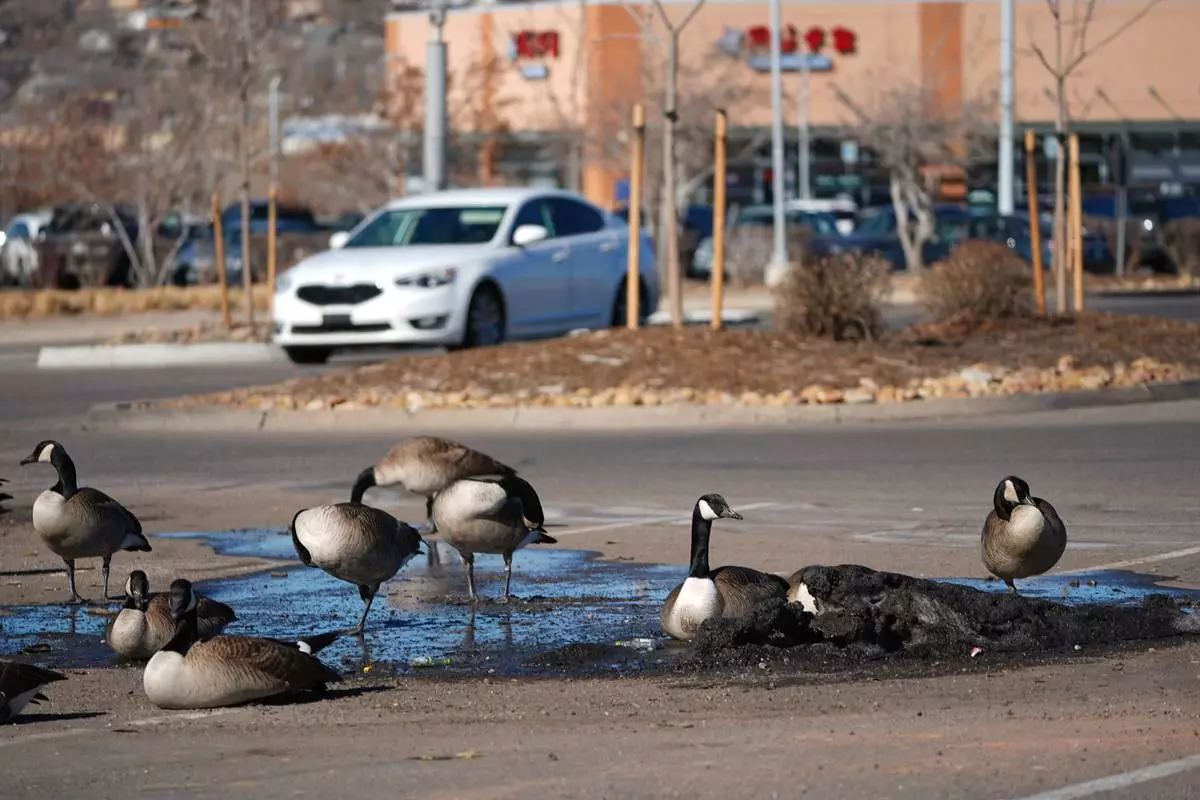
A flock of Canada geese sits in a small bank of dirt-covered snow melting in a parking lot, Friday, Feb. 6, 2026, in Sheridan, Colo. (AP Photo/David Zalubowski)
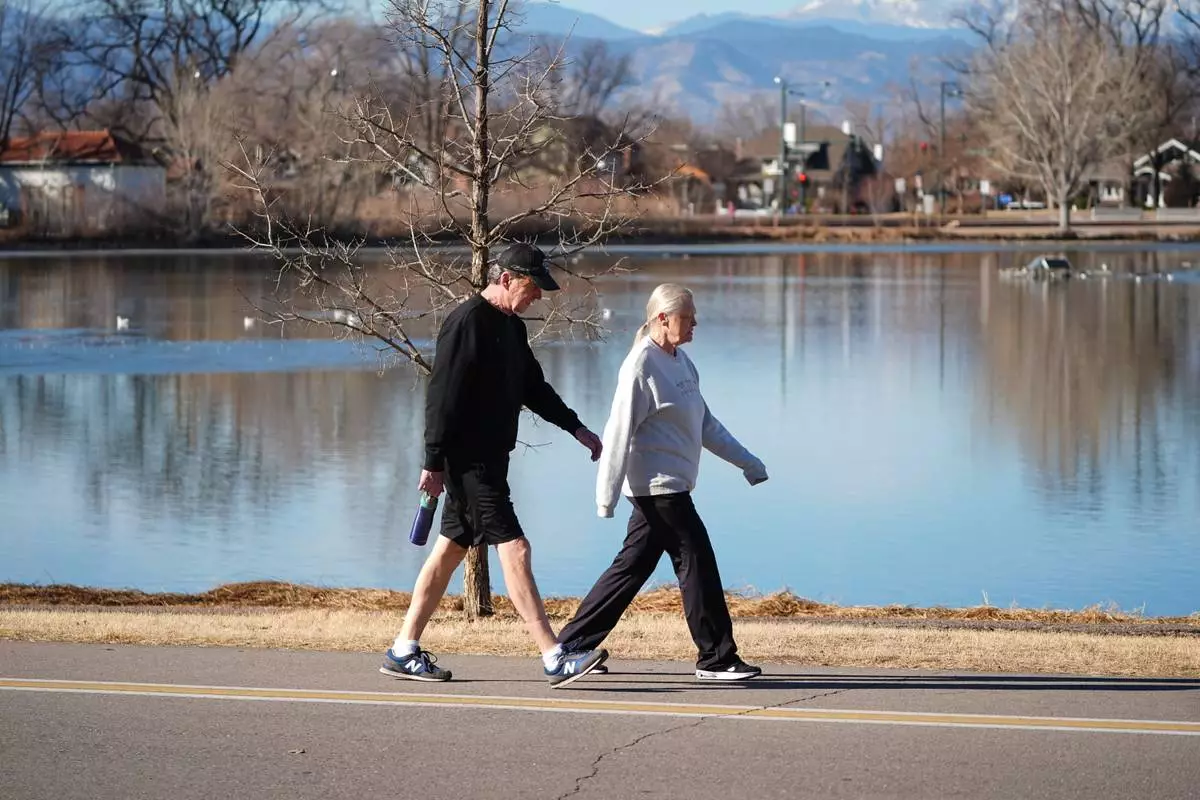
With a backdrop of snowless mountains, a couple walk around the lake in Washington Park, Friday, Feb. 6, 2026, in Denver. (AP Photo/David Zalubowski)
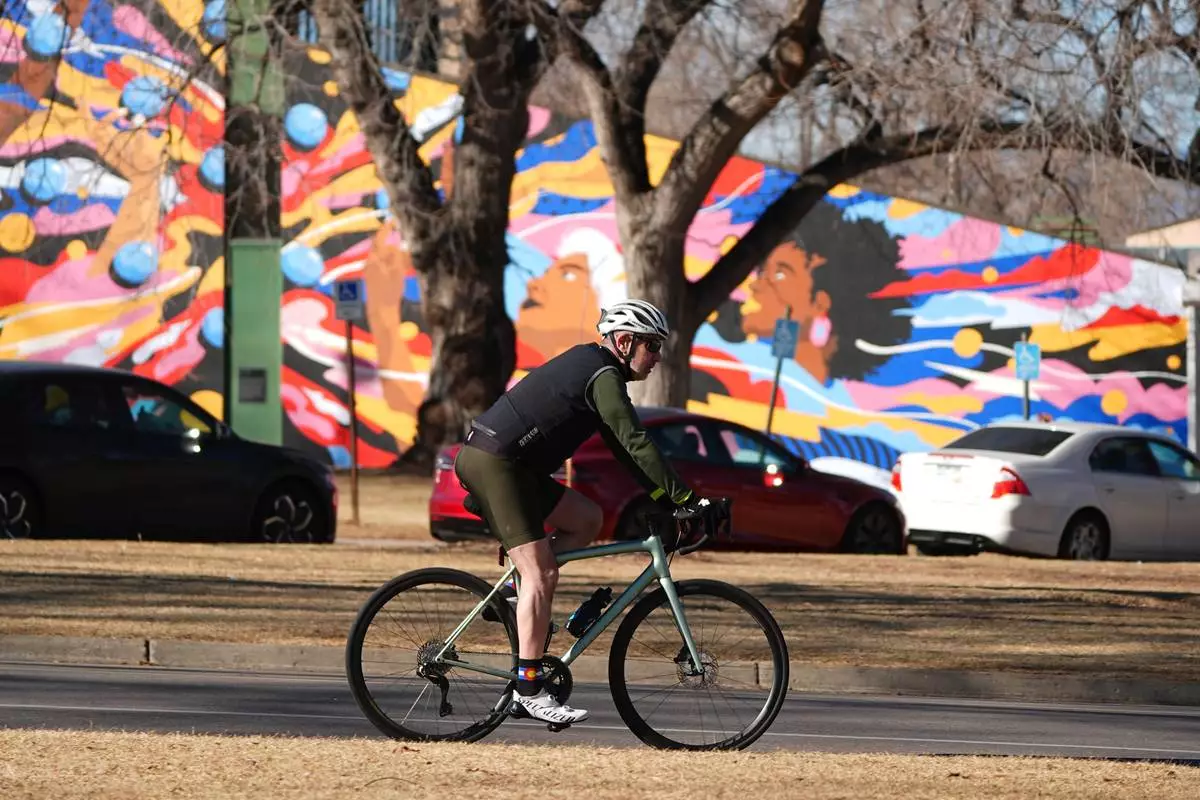
Taking advantage of daytime hgh temperatures in the 60s, a cyclist wheels through Washington Park, Friday, Feb. 6, 2026, in Denver. (AP Photo/David Zalubowski)
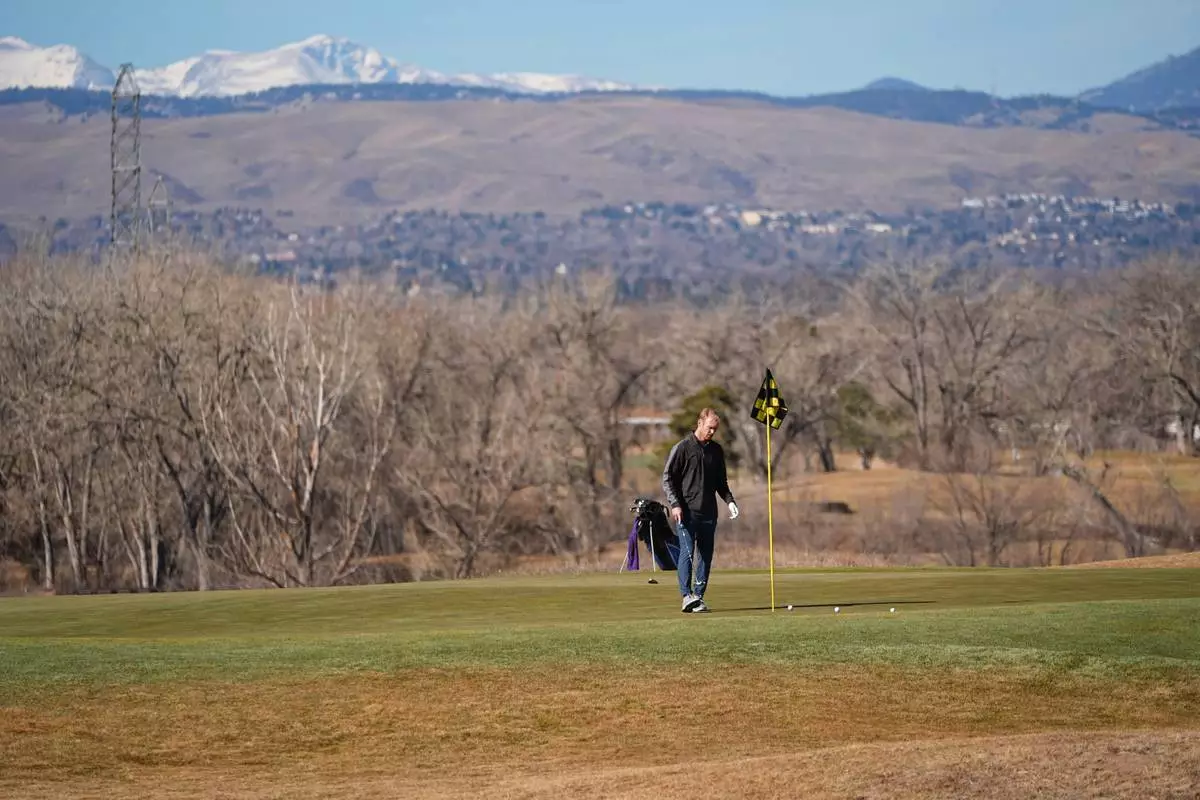
With little snow covering the mountain backdrop, a lone golfer putts out on a green on the Broken Tee Golf Course, Friday, Feb. 6, 2026, in Sheridan, Colo. (AP Photo/David Zalubowski)
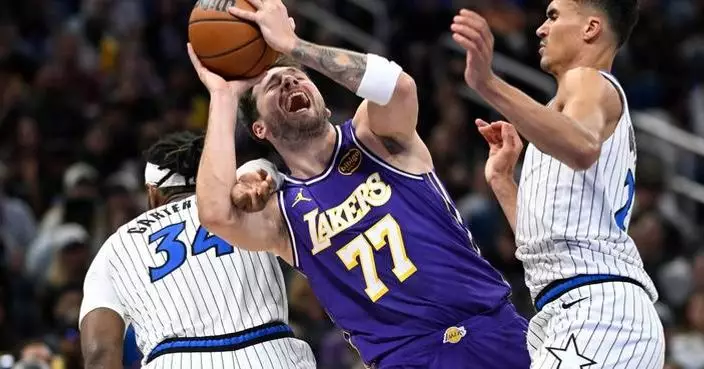
Luka Doncic is almost certainly going to win the NBA scoring title this season. And it's now very possible that he doesn't make the All-NBA team.
That's rare, but it might be this season's reality.
The roster of award-caliber players who won't be winning awards this season continues to grow, with Doncic — the Los Angeles Lakers standout guard and MVP candidate — now out with a Grade 2 left hamstring strain that will force him to miss the rest of the regular season. Minnesota guard Anthony Edwards is certain to miss the league's 65-game award eligibility threshold as well after he was held out Thursday because of illness.
Doncic has played 64 games, one shy of the threshold. It's worth noting that BetMGM Sportsbook, among others, took Doncic off the list of MVP betting options following his injury Thursday.
“At this juncture of the season, it’s the last thing you want to see,” Lakers star LeBron James told reporters in Oklahoma City after Thursday's game, long before an MRI was performed Friday to determine the extent of Doncic's injury. “Especially anybody on our team, but when you have an MVP candidate on your team, the last thing you want to see is somebody go down with a hamstring injury."
Edwards can now only reach a maximum of 64 games as well, so he won’t be on the ballot for most major NBA awards either.
It was collectively bargained — meaning the league and the players association agreed on the terms — and this is the third season of it being part of the NBA rules.
It applies to player eligibility for five awards — MVP, Defensive Player of the Year, Most Improved Player, the All-NBA Team and the All-Defensive Team. Players have to either play in 65 regular-season games (with some minutes-played minimums in there as well), or at least 62 games before suffering a “season-ending injury."
But even with Doncic's hamstring hurt badly enough that he'll miss the rest of the regular season, it wouldn't be classified as “season-ending” unless a doctor — jointly selected by the NBA and the National Basketball Players Association — says he wouldn't be able to play again through May 31.
There is a grievance process and even a way to challenge the rule citing extraordinary circumstances, but neither would be easily utilized.
Five of the league's six highest-paid players this season — Golden State's Stephen Curry and Jimmy Butler, Philadelphia's Joel Embiid, Milwaukee's Giannis Antetokounmpo and Boston's Jayson Tatum — aren't eligible for awards. Denver's Nikola Jokic is the exception on the highest-paid list, and he'd likely be ineligible if he misses more than one more game down the stretch.
There were 23 players on the list of those winning MVP, MIP, DPOY, All-NBA and All-Defense last season. Of those, at least 10 are out of the running for honors this season: Antetokounmpo, Curry, Edwards, James, Tatum, Detroit's Cade Cunningham, Indiana teammates Tyrese Haliburton and Ivica Zubac, Utah's Jaren Jackson Jr. and Oklahoma City's Jalen Williams. (Most of those 10 have been out of the awards mix because of injuries for some time; Tatum and Haliburton both tore Achilles in last season's playoffs and it was obvious then that they wouldn't hit 65-game marks this year.)
Another four award winners from a year ago — Jokic, Oklahoma City's Lu Dort, Golden State's Draymond Green and Cleveland's Evan Mobley — aren't at 65 games yet this season but, for now anyway, seem on pace to get there.
Never say never. The union wants changes to the policy, and it's certain to come up in their conversations with the league office. But many players — and even Andre Iguodala, now the head of the players' association — have said in recent years that the 65-game rule is a good thing.
The league doesn't seem inclined to make a change based solely on what would appear to be an extraordinary number of award candidates not hitting the threshold in one year.
“I think it is working,” NBA Commissioner Adam Silver said last month. “I think if you look at the numbers, the pre-implementation of this rule, numbers were going in the wrong direction. I may have this a little bit off: I think the three years before we adopted this rule, almost a third of the All-NBA players had not played 80% of the games. That was a huge issue for the league.”
As we said, it's rare, but it has happened. Twice, to be exact.
— 1968-69: Elvin Hayes won the scoring title as a rookie, then wasn't even All-NBA — and didn't win Rookie of the Year, either.
— 1975-76: Bob McAdoo won his third consecutive scoring title and was second in the MVP race — but didn't make All-NBA. Players voted for MVP in those days, and McAdoo was an extremely close second behind Kareem Abdul-Jabbar. Dave Cowens was third in the MVP vote but got the second-team All-NBA nod at center, with Abdul-Jabbar the first-team pick.
Doncic now seems likely to join that list. It's not mathematically certain yet that he wins the scoring title, but it would take something extraordinary for it not to happen.
He's averaging 33.5 points per game, with Gilgeous-Alexander at 31.6 per game. For Gilgeous-Alexander — last season's scoring champion — to overtake Doncic, he would need to go on an unbelievable run. An example: He'd need to score 292 points over the final five games to take over the top spot, and nobody other than Wilt Chamberlain has had a five-game run like that.
Of the previous 79 scoring champions, 64 were first-team All-NBA and 13 were second-team.
Jokic is going to win the league's rebounding and assist titles, while averaging a triple-double yet again. But he's also not assured yet of being on the award ballots.
The thresholds are different.
While the award mandate is 65 games in most cases, players are eligible for most statistical awards if they play in 58 games (or 70% of the season). There are different standards for some stat awards, such as field-goal percentage (minimum 300 made), free-throw percentage (minimum 125 made) and 3-point percentage (minimum 82 made).
A player can win a stat award while appearing in less than 58 games.
For example, last season, San Antonio's Victor Wembanyama played only 46 games but still won the blocked shot title. Even if he played in the minimum 58 games and recorded no blocks in the 12 games needed to reach that number he still would have been ahead of the runner-up, Utah's Walker Kessler.
AP NBA: https://www.apnews.com/hub/NBA
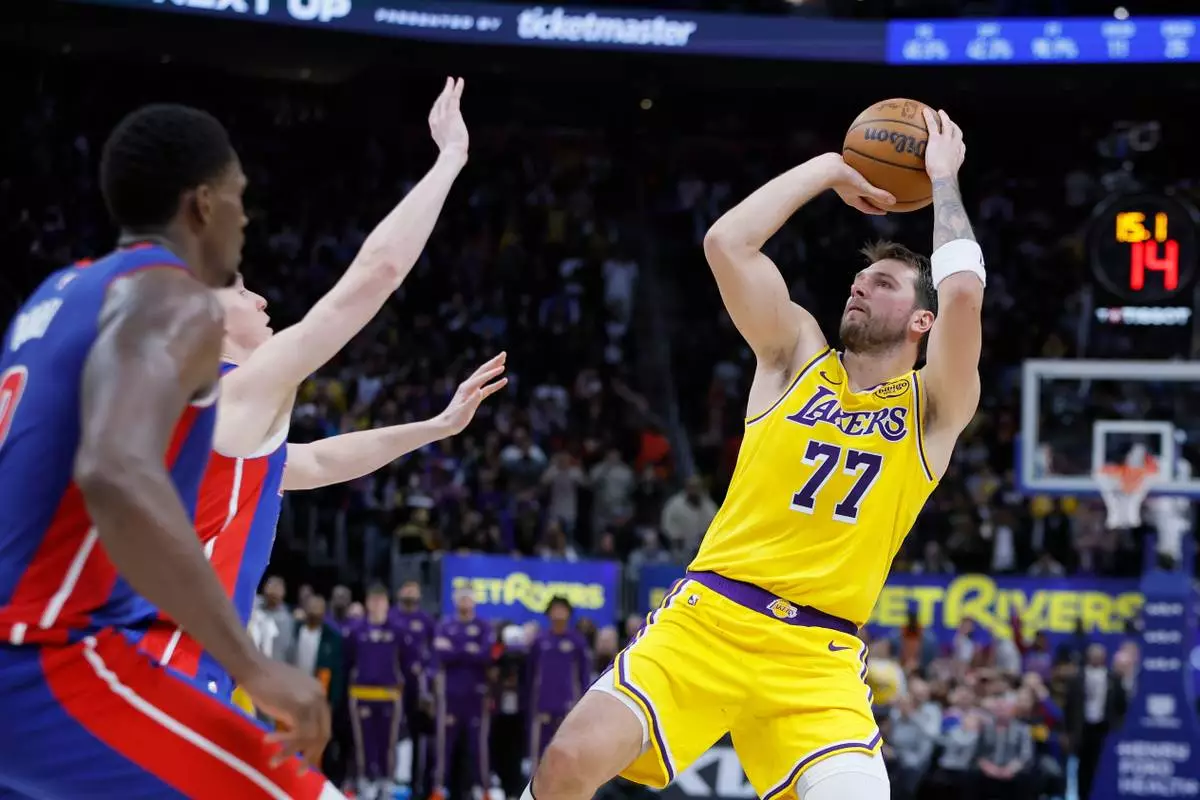
Los Angeles Lakers guard Luka Doncic (77) looks to make a shot-attempt in the fourth quarter of a loss to the Detroit Pistons in an NBA basketball game Monday, March 23, 2026, in Detroit. (AP Photo/Duane Burleson)
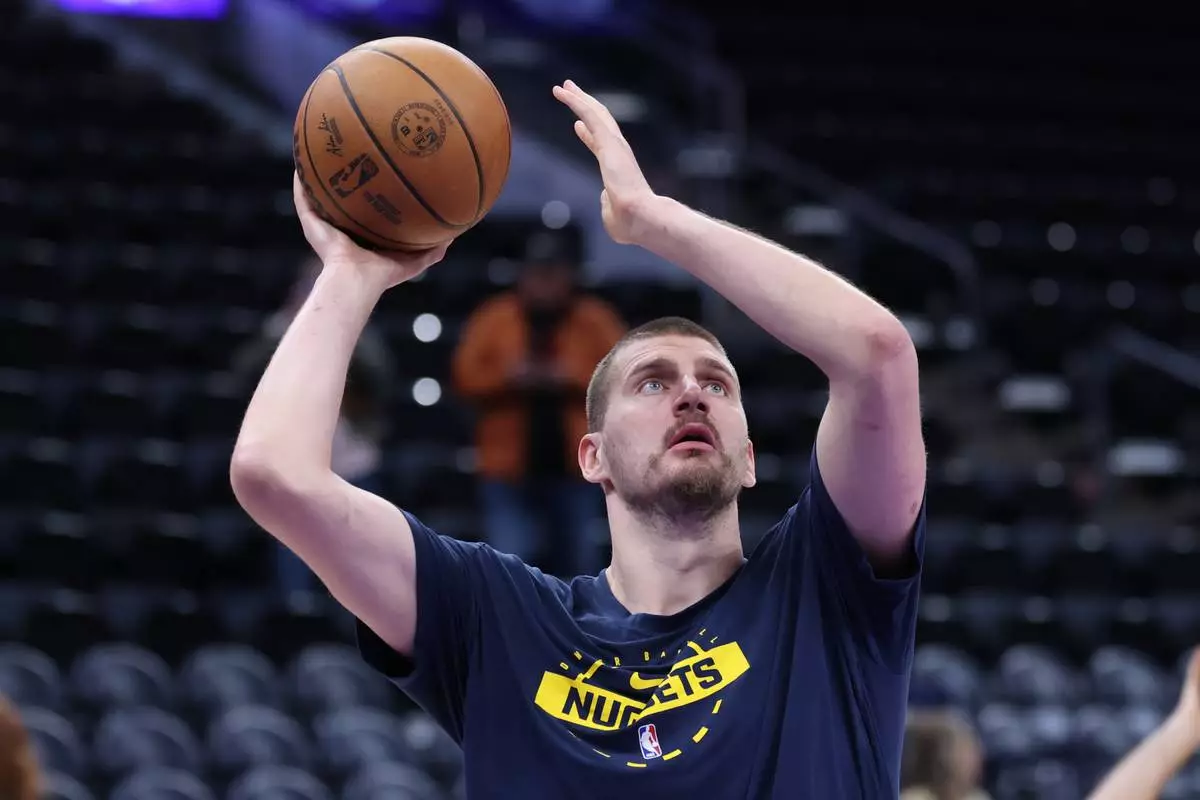
Denver Nuggets center Nikola Jokic warms up before an NBA basketball game against the Utah Jazz, Wednesday, April 1, 2026, in Salt Lake City. (AP Photo/Rob Gray)
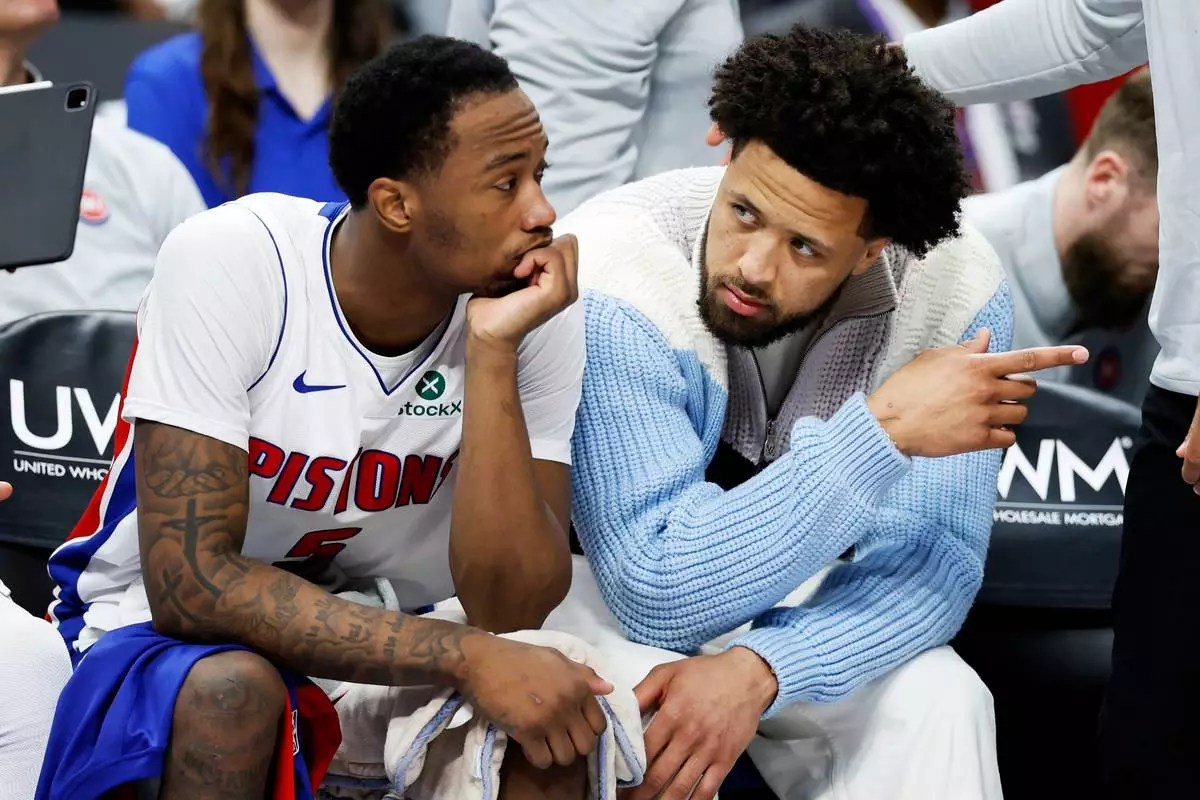
Detroit Pistons forward Ronald Holland II (5) talks with guard Cade Cunningham (2), who did not play due to an injury, during the second half of an NBA basketball game against the Toronto Raptors Tuesday, March 31, 2026, in Detroit. (AP Photo/Duane Burleson)
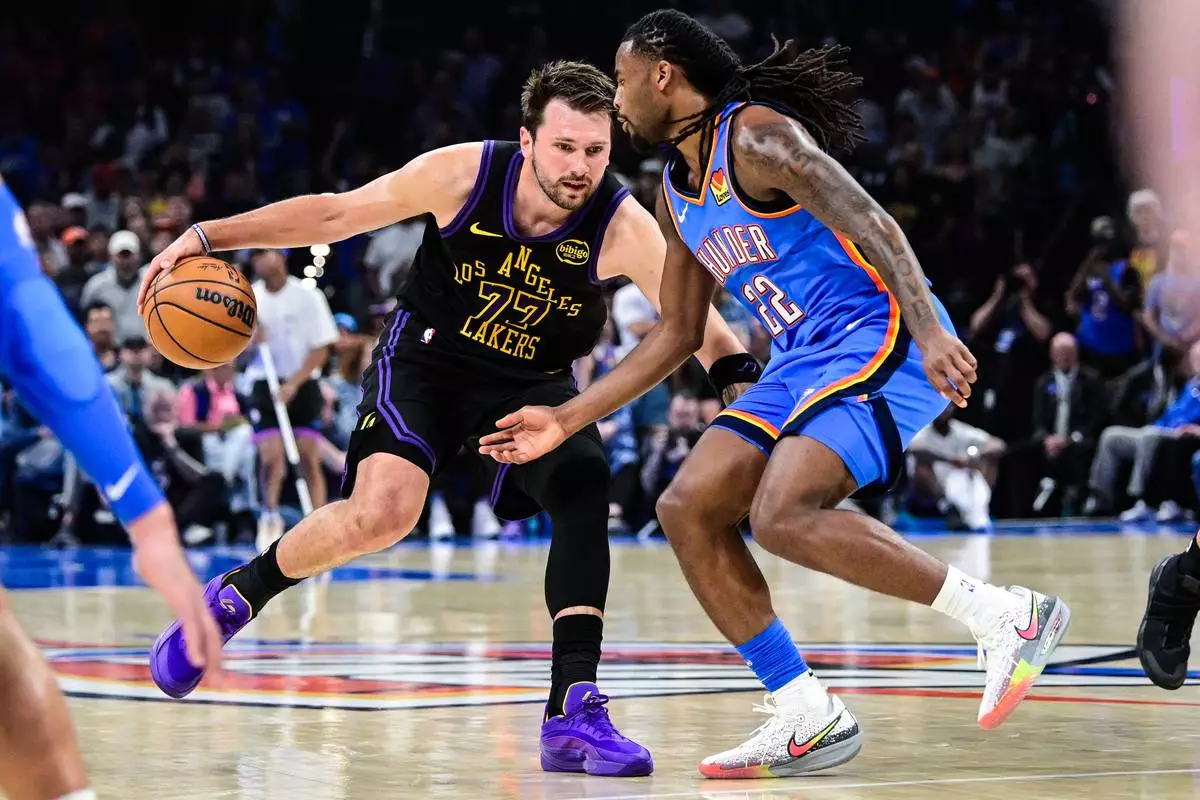
Los Angeles Lakers forward/guard Luka Dončić (77) drives against Oklahoma City Thunder guard Cason Wallace (22) during the first half of an NBA basketball game Thursday, April. 2, 2026, in Oklahoma City. (AP Photo/Gerald Leong)