LOS ANGELES (AP) — Luka Doncic will miss the rest of the Los Angeles Lakers' regular season with a Grade 2 strain of his left hamstring, the team announced Friday.
Doncic is the NBA's top scorer and the driving force behind the Lakers' surge into the third spot in the Western Conference standings, but he injured his leg during Los Angeles' blowout loss in Oklahoma City on Thursday. An MRI exam revealed the severity of the strain.
The Pacific Division champion Lakers (50-27) have just five games left before the postseason, starting Sunday at Dallas.
Grade 2 hamstring strains sometimes require several weeks of recovery, but Doncic also has prior experience with hamstring issues. He missed four games right before the All-Star break with another left hamstring strain, but returned to the lineup after the break.
Doncic is putting up spectacular numbers in his first full season with the Lakers, who acquired the Slovenian superstar from the Mavericks last season. He is averaging 33.5 points, 8.3 assists and 7.7 rebounds per game for Los Angeles, and he was named the NBA's Western Conference player of the month for March after racking up 13 consecutive 30-point performances, including seven 40-point games, a 51-point barrage against Chicago and a 60-point masterclass in Miami.
Doncic scored a whopping 600 points in March, becoming only the 10th player in NBA history to hit that mark in one month. While LeBron James and Austin Reaves have also played well down the stretch, the Lakers thoroughly depend on Doncic, who either scored or assisted on 58% of the their total points in March.
Doncic is all but certain to win his second NBA scoring title — but he has played in only 64 games this season, which means he will finish one game shy of the 65-game threshold to be eligible for the NBA's biggest postseason awards.
He was a lock to be an All-NBA selection, and he had even been making a late run at consideration for the MVP award with his outstanding play down the stretch.
Along with his two absences caused by hamstring injuries and a handful of additional absences for minor medical maintenance early in the season, Doncic missed two games last December while flying to Slovenia for the birth of his second child. He also missed one game last week under suspension for accumulating 16 technical fouls.
Since he sits just shy of the 65-game threshold, Doncic theoretically could challenge the rule by citing the extraordinary circumstances of his daughter's birth in Europe through the grievance process created for these collectively bargained rules. It's wholly unclear whether that appeal would have any chance of success.
If Doncic wins the scoring title but doesn't make the All-NBA teams, he would be only the third scoring champ in league history to fail to do so. Elvin Hayes wasn't selected when he won the crown as a rookie in 1969, and Bob McAdoo wasn't chosen for the teams in 1976.
Lakers coach JJ Redick said Doncic was injured in the first half against the Thunder, but was cleared to return to the game while his team was getting plastered by the defending NBA champion Thunder. Doncic lasted only about four minutes before he spun, stopped and went down on the court in pain, leading to his departure.
The loss was only the Lakers' third in 19 games since Feb. 26, but Doncic's absence casts a cloud of uncertainty over the rest of their year. Los Angeles only leads fourth-place Denver (49-28) by one game, while sixth-place Minnesota (46-30) is 3 1/2 games back with a game in hand.
The Lakers’ regular-season finale is next Sunday, April 12, at home against Utah. Their first-round playoff series is expected to start the following weekend.
AP Basketball Writer Tim Reynolds contributed to this report.
AP NBA: https://apnews.com/NBA
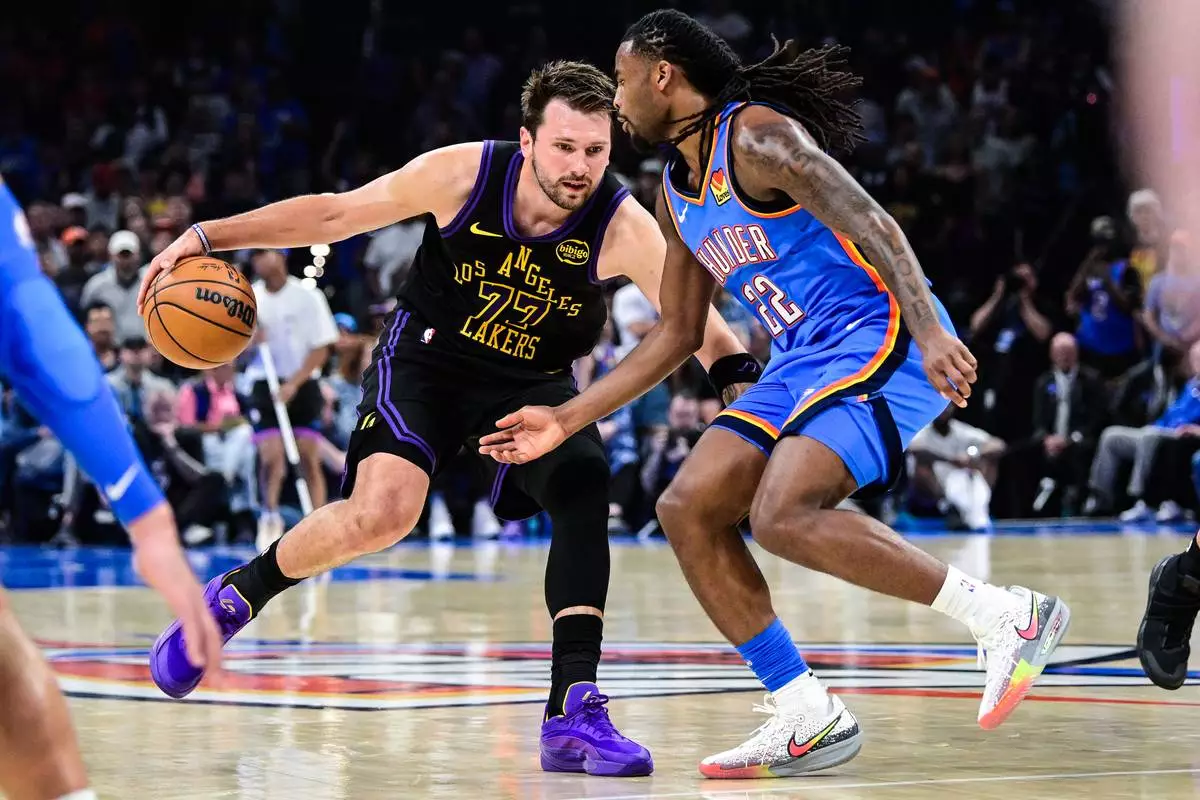
Los Angeles Lakers forward/guard Luka Dončić (77) drives against Oklahoma City Thunder guard Cason Wallace (22) during the first half of an NBA basketball game Thursday, April. 2, 2026, in Oklahoma City. (AP Photo/Gerald Leong)
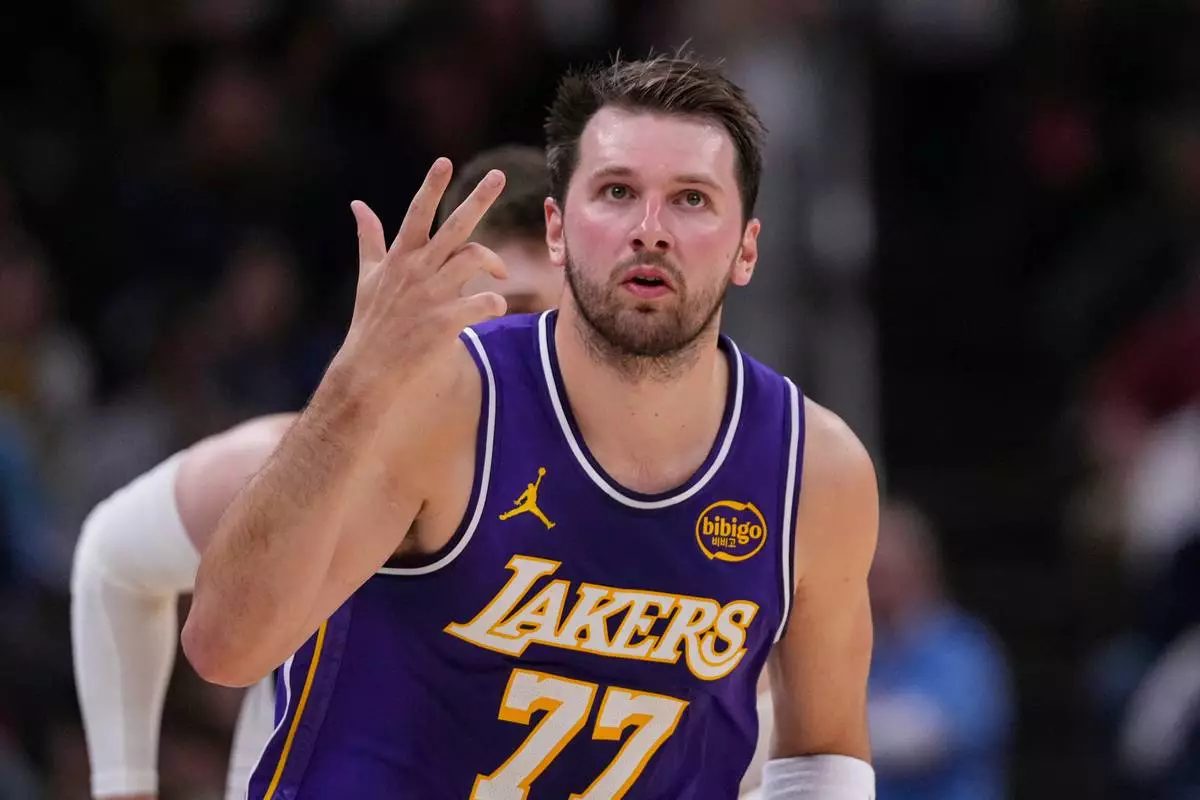
Los Angeles Lakers guard Luka Doncic (77) gestures after a three-point basket against the Indiana Pacers during the first half of an NBA basketball game in Indianapolis, Wednesday, March 25, 2026. (AP Photo/Michael Conroy)
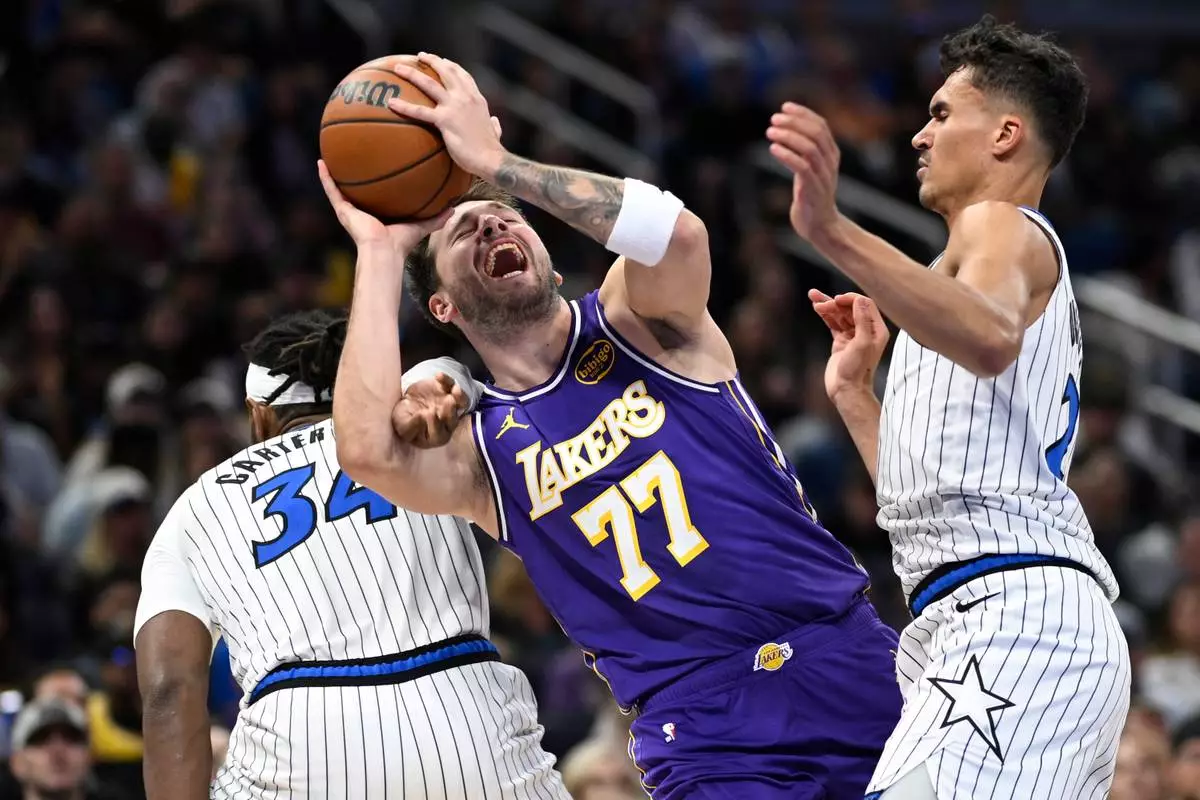
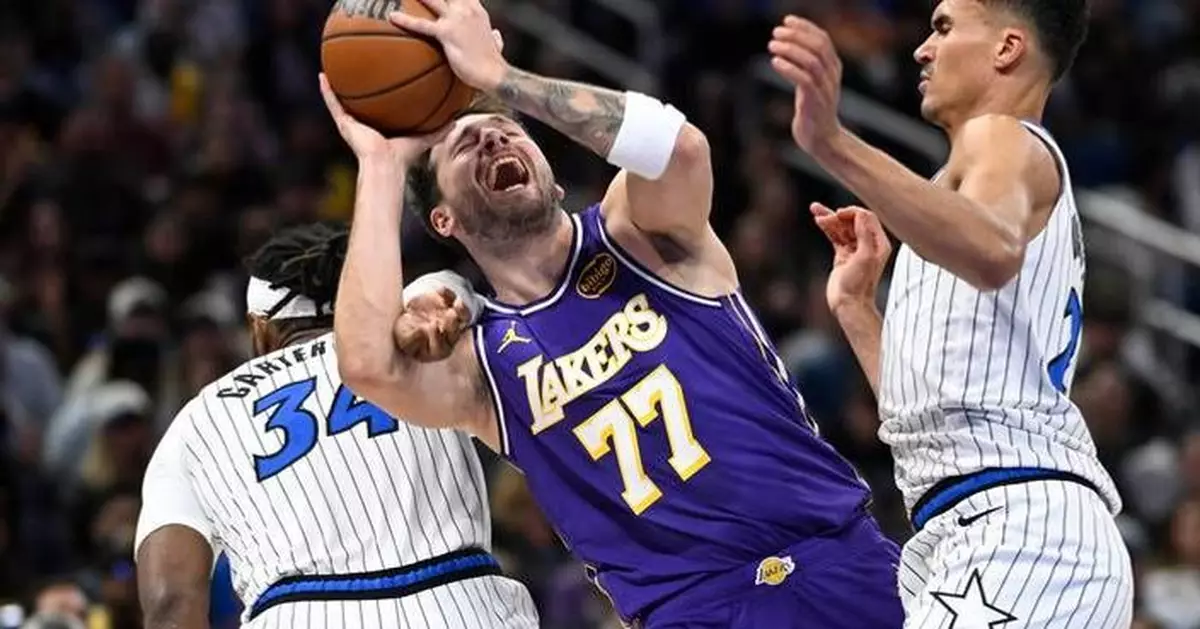
Los Angeles Lakers guard Luka Doncic (77) is fouled by Orlando Magic center Wendell Carter Jr. (34) as Magic forward Tristan da Silva, right, helps defend during the first half of an NBA basketball game, Saturday, March 21, 2026, in Orlando, Fla. (AP Photo/Phelan M. Ebenhack)
President Donald Trump tried to put some teeth into his latest attempt to save college sports.
The threat of cutting funding to cash-starved schools that don’t comply is real, even if the stricter rules that come out of the executive order he signed Friday could take a while to figure out.
In the order signed hours before the women’s Final Four tipped off one of the biggest weekends in college sports Trump went after eligibility rules, transfers and the spiraling costs associated with an industry that now pays its players millions of dollars per year.
He called on federal agencies to ensure schools are following the rules and threatened to choke off federal grants and funding, a similar approach his administration has taken to force universities around the country to alter policies involving diversity, equity and inclusion, transgender rights and even the kinds of classes they offer.
In some ways, forcing those changes might seem like child’s play once college sports figures this out. The NCAA, the newly created College Sports Commission, the four power conferences, dozens more smaller ones and hundreds of educational institutions all have a say here: It’s a big reason Congress, which Trump instructed to act quickly, has been stuck for more than a year on this.
Trump’s order was his second since one last July and it was a laundry list of proposed fixes, many of which lawmakers and college leaders have been pushing for since the approval of a $2.8 billion settlement changed the face of games that were once played by pure amateurs.
He called for “clear, consistent and fair eligibility limits, including a five-year participation window," and wants to limit athletes to one transfer with one more available once they get a four-year degree.
At a college sports roundtable last month, Trump said he anticipated any order he signed would trigger litigation. Athletes have largely won the freedom to transfer almost at will via the portal along with the ability to be paid by schools that are now doling out more than $20 million a year to their athletes.
As much as the changes he directs, Trump’s call for the Education Department, the Federal Trade Commission and the attorney general’s office to evaluate “whether violations of such rules render a university unfit for Federal grants and contracts” stands out as a way to force change.
Several universities across the country have made policy changes to comply with federal orders and avoid funding-related showdowns with the government. Yet big-named schools like Penn State and Florida State are facing huge debts.
“I haven’t read it, obviously, but I certainly appreciate his interest in the issue," NCAA President Charlie Baker said at the women's Final Four in Phoenix. "And from what I saw, some of the social media traffic, it’s pretty clear that he made clear that we need congressional action to sort of seal the deal on a number of these things, which is good, because we do.”
ACC Commissioner Jim Phillips praised the president's order, saying “there continues to be significant momentum to preserve the athletic and academic opportunities for the next generation of student-athletes and we appreciate the ongoing efforts.”
Attorney Mit Winter, who follows college sports law, said the order is likely to set up a situation where the NCAA and schools have to decide whether to follow a federal court order or an executive order.
“Federal court orders prohibit the NCAA from making athletes sit out a season if they transfer more than once and prohibit the NCAA from enforcing rules that limit collectives from being involved in recruiting,” he said. "The EO appears to direct the NCAA to create rules that would likely violate both of these court orders. Will the NCAA create rules that do that? And if they do, will schools follow them?
"Either way, we’re likely going to see litigation challenging the EO by athletes and third parties.”
Winter added that the order also appears to urge schools to pay new revenue share amounts.
“Most schools are paying 90-95% of their rev-share funds to men's basketball and football players,” he said. "And those funds are already promised via contracts signed with those athletes. Will the order purport to make schools not adhere to those contracts?”
AP Sports Writers Maura Carey, David Brandt and Eric Olson contributed.
Get poll alerts and updates on the AP Top 25 throughout the season. Sign up here. AP college football: https://apnews.com/hub/ap-top-25-college-football-poll and https://apnews.com/hub/college-football
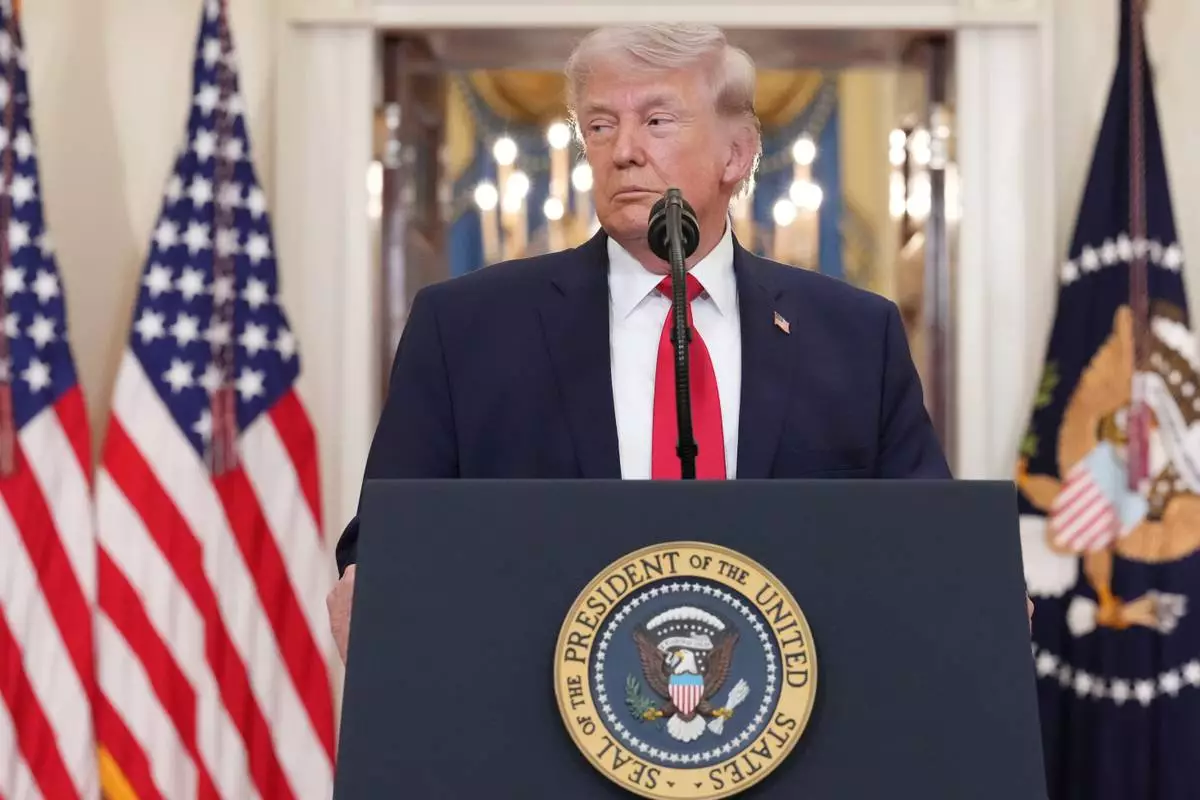
President Donald Trump pauses as he finishes speaking about the Iran war from the Cross Hall of the White House on Wednesday, April 1, 2026, in Washington. (AP Photo/Alex Brandon, Pool)